Offered by Galerie Lamy Chabolle
REQUEST INFORMATION

Decorative art from 18th to 20th century
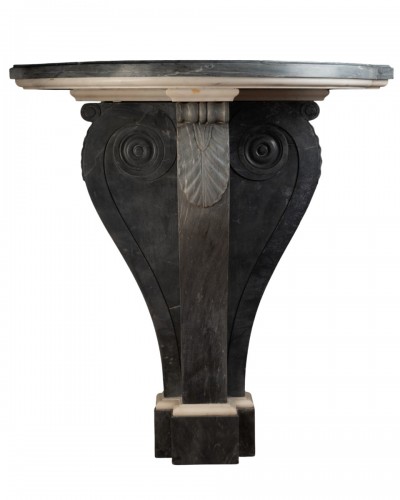
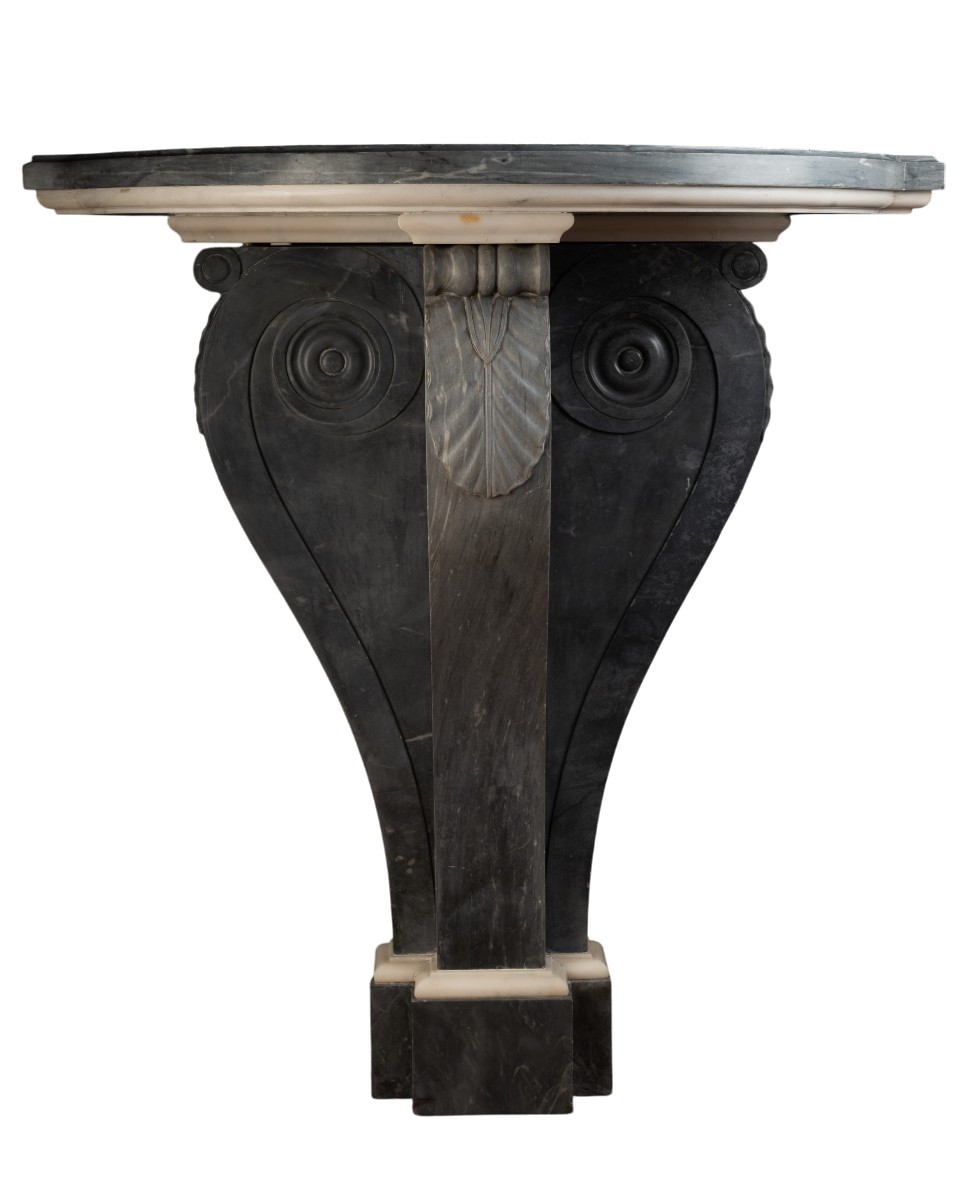
Demi-lune console table
Bleu turquin or bardiglio marble
Italy for the English market
Early 19th century
90.5 x 80 x 40 cm (35? × 31½ × 15¾ in.)
Provenance: collection of Victor Théophile Magnien, Paris, ca. 1900; his apartment, Paris, Faubourg Saint-Germain, thence by descent
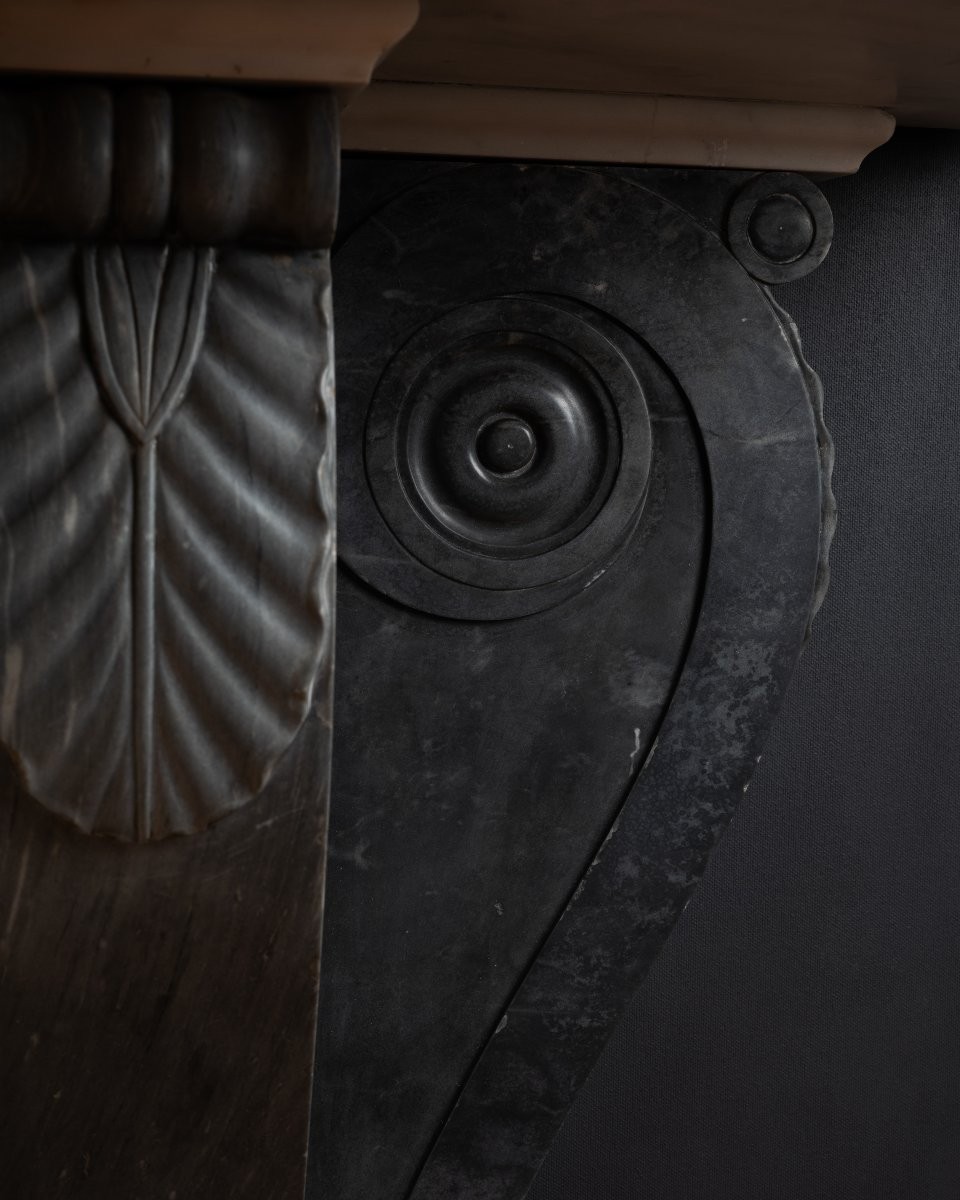
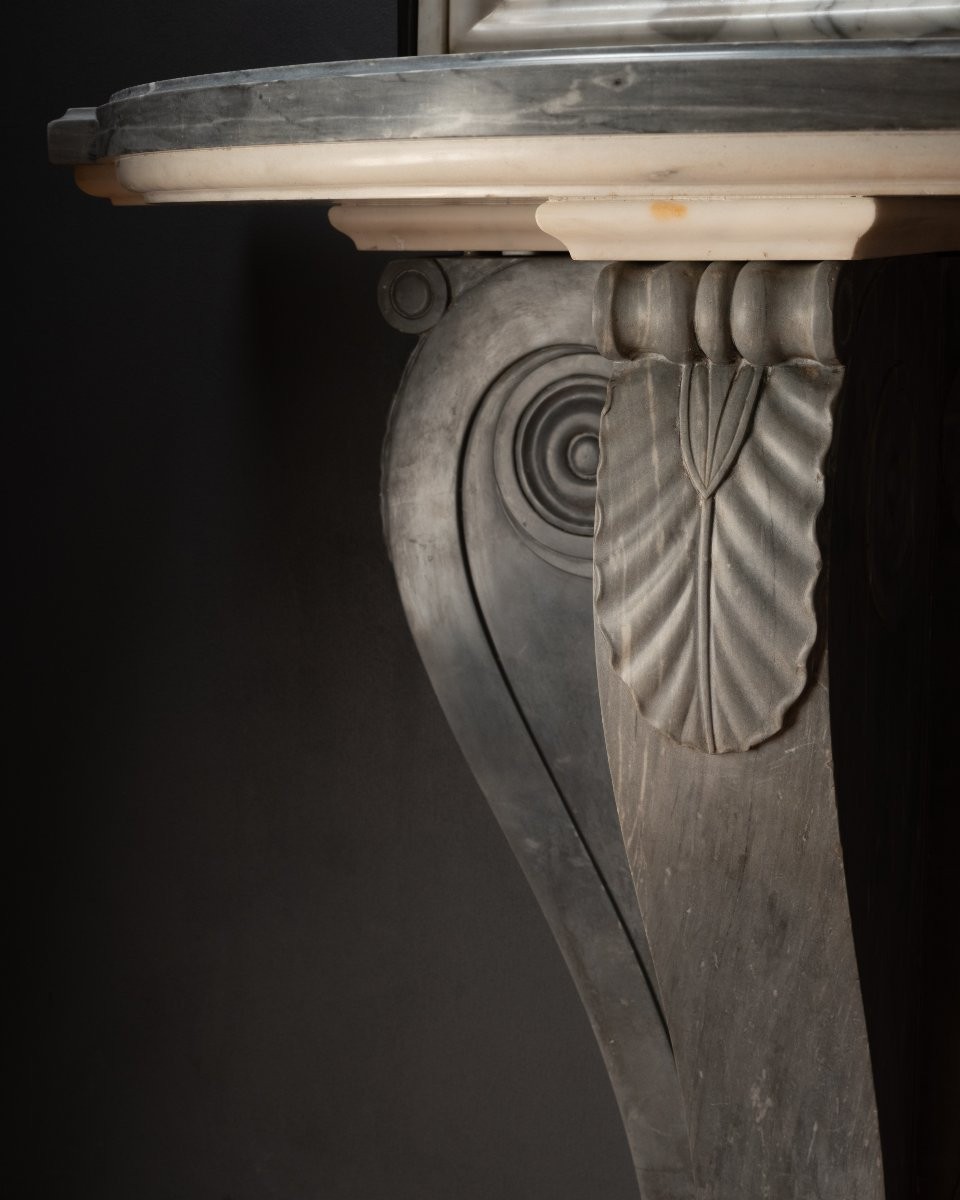
This scroll-leg console table in bleu turquin marble may be compared with a large console carved from the same marble that appeared at Sotheby's London Stone III sale in 2022, and most likely originating from Ickworth House, a country house designed by Mario Asprucci and built in Suffolk during the first third of the nineteenth century for the 4th Earl of Bristol, whose collections and furnishings were in large part assembled and commissioned in Italy during the Earl's Grand Tour.
Catalogued at that time as William IV — that is, the final period of the English Regency — the Stone III console shares with the offered piece the same motif of a rippled, veined water leaf adorning the scroll of each leg. The two consoles are distinguished, however, by the claw feet terminating the legs of the London example, and by the white Carrara marble ogee mouldings of the present console. Both pieces nonetheless fall squarely within the English Regency period, which extends from 1783 — the year of then-Prince-of-Wales George IV's majority and of the remodelling of Carlton House by the architect Henry Holland — to the end of William IV's reign in 1837, and which corresponds to the introduction and assimilation of neoclassicism into English furniture and interiors.
Archive photographs of the interior from which this demi-lune console originates — in which a large William III mirror and Blue John obelisks were also visible — reveal a discerning interest in English decorative arts of the eighteenth and nineteenth centuries.
See Steven Parissien, Regency Style, London, 1992.