Offered by Galleria la Bocchella
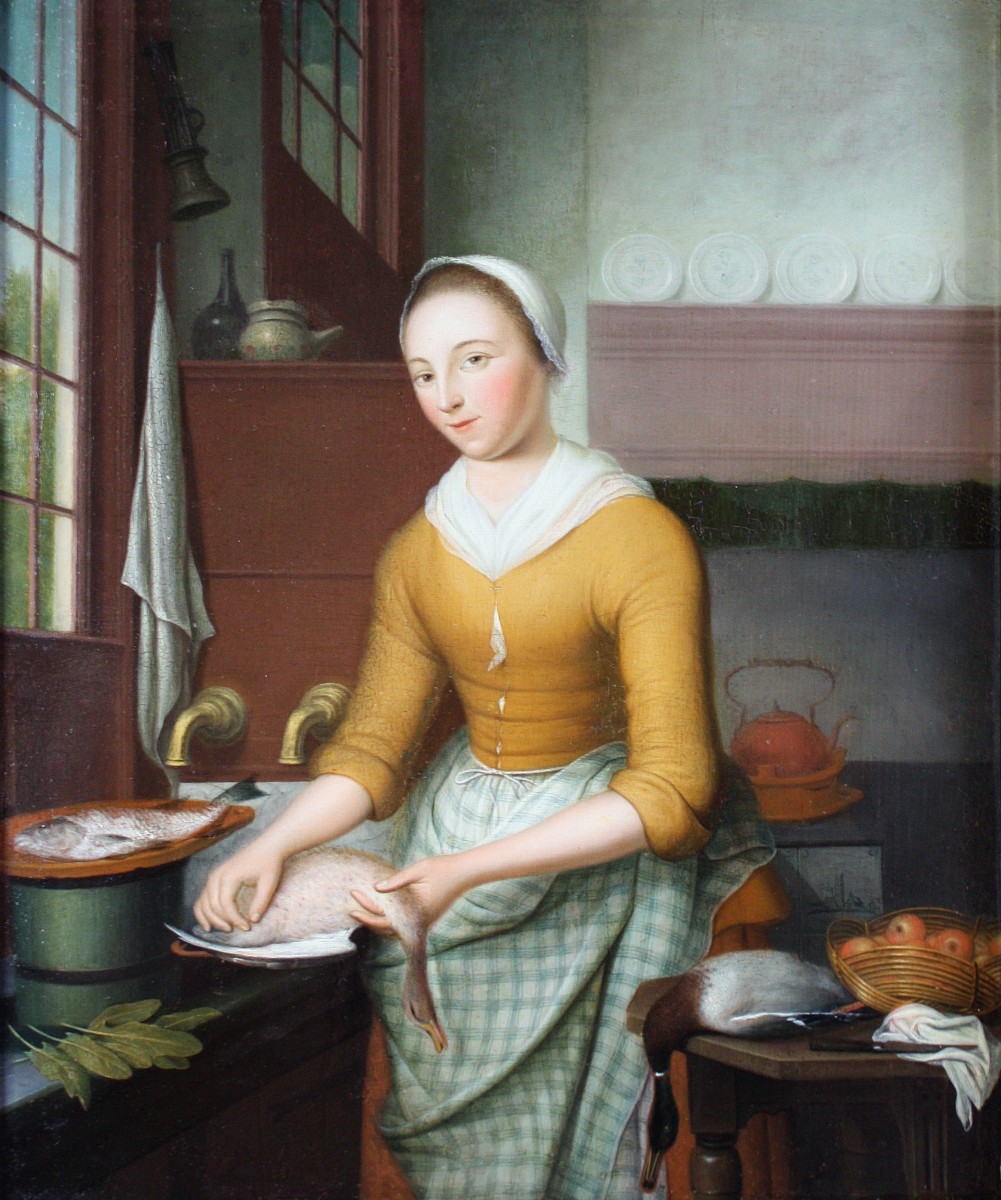
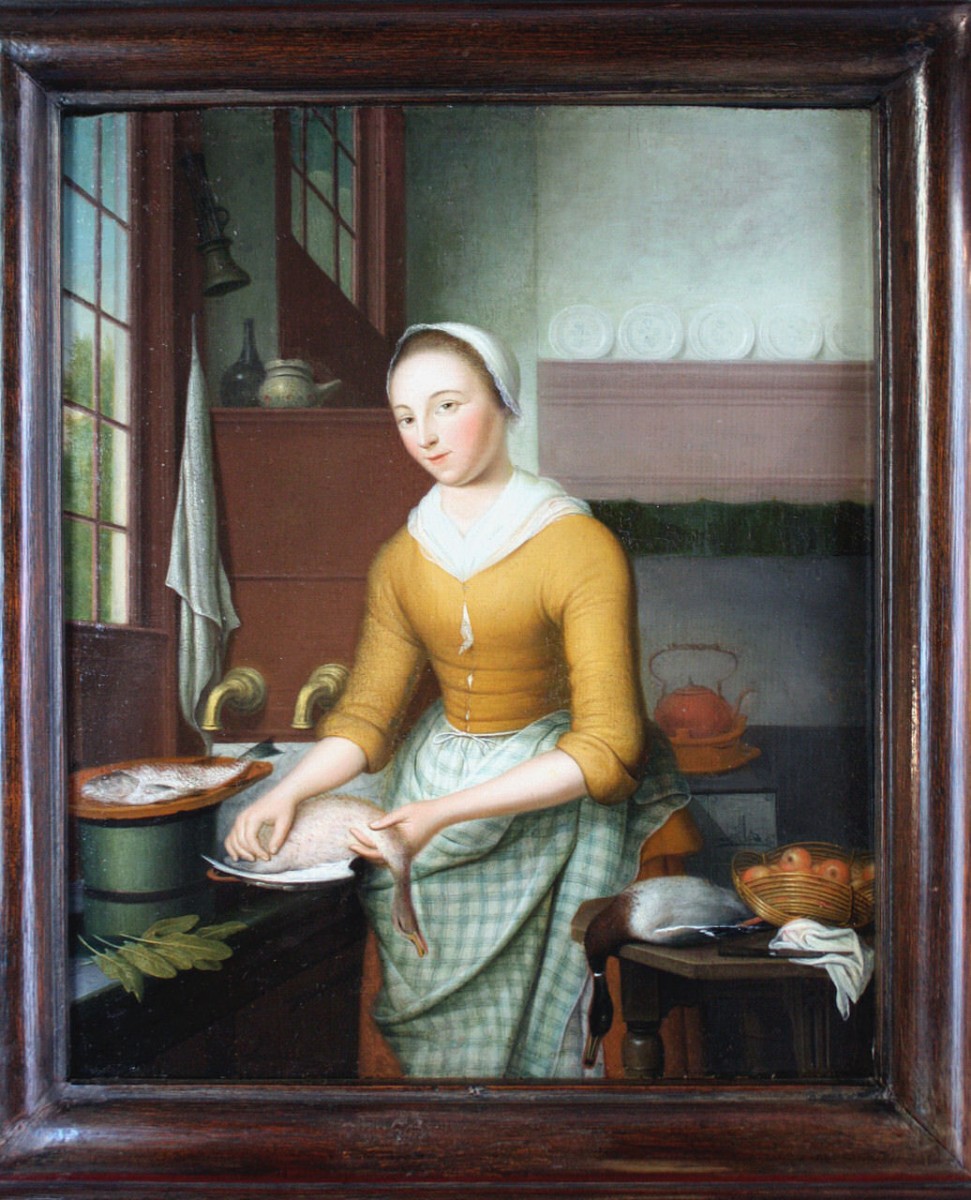

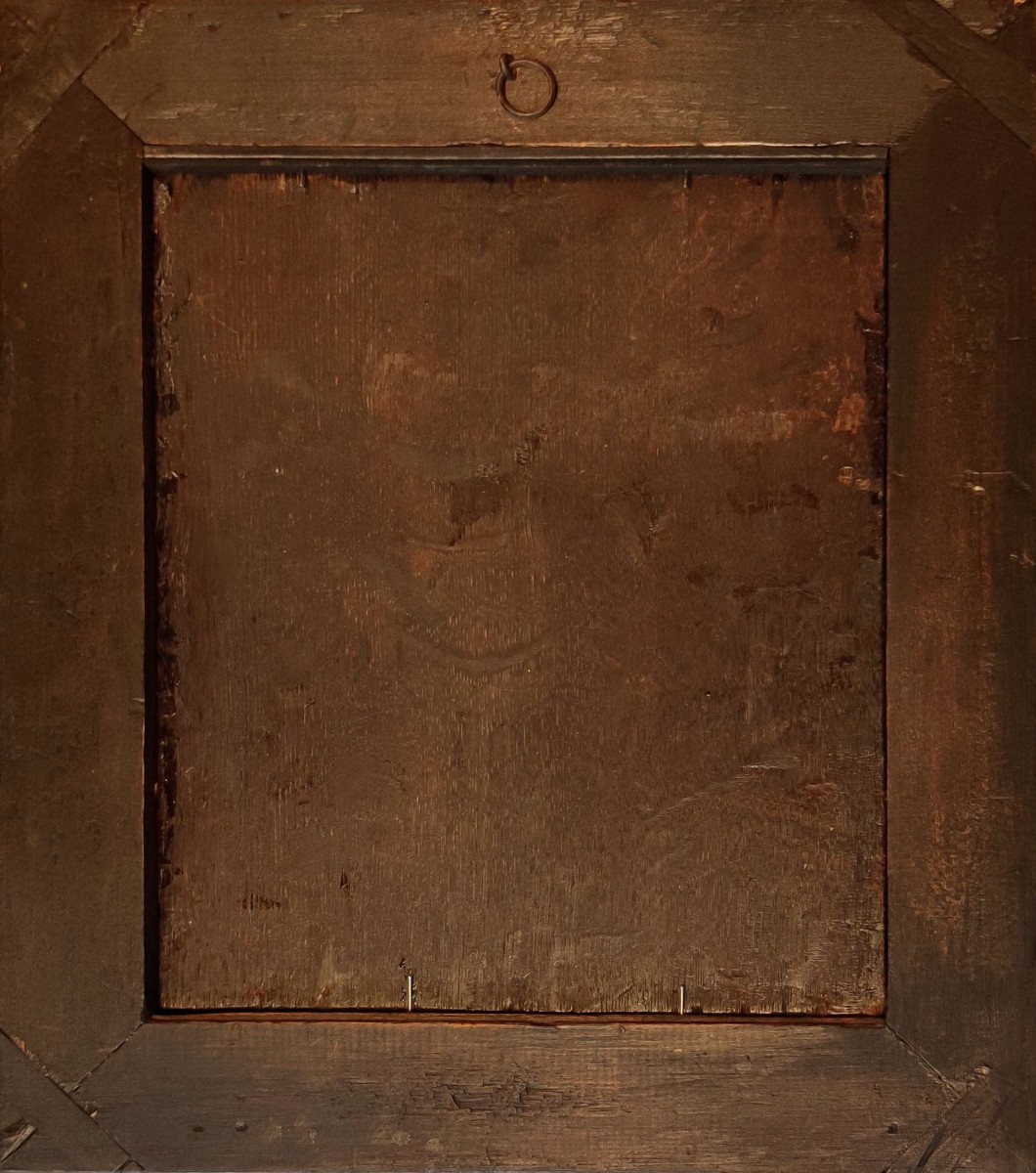
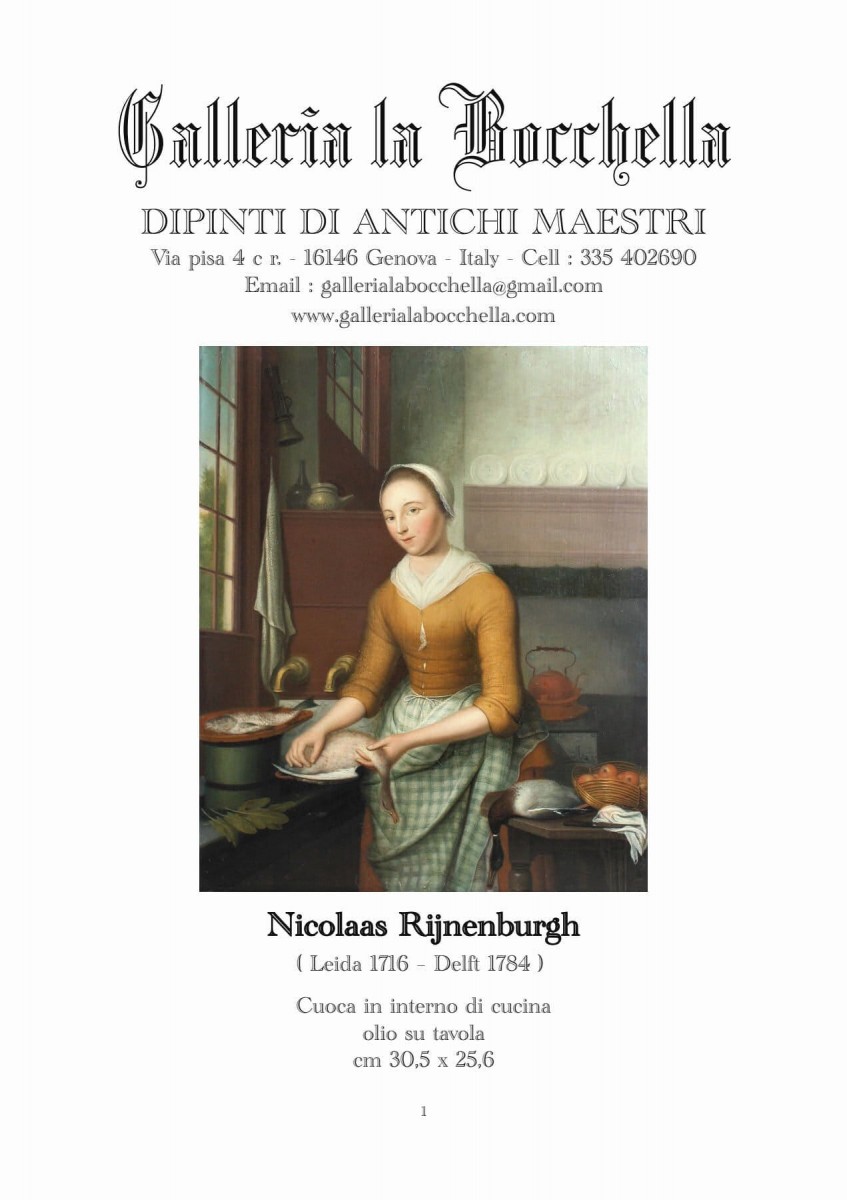
The painting is an oil on panel measuring cm. 30.5 x 25.6
Framed, it measures cm. 41.5 x 36
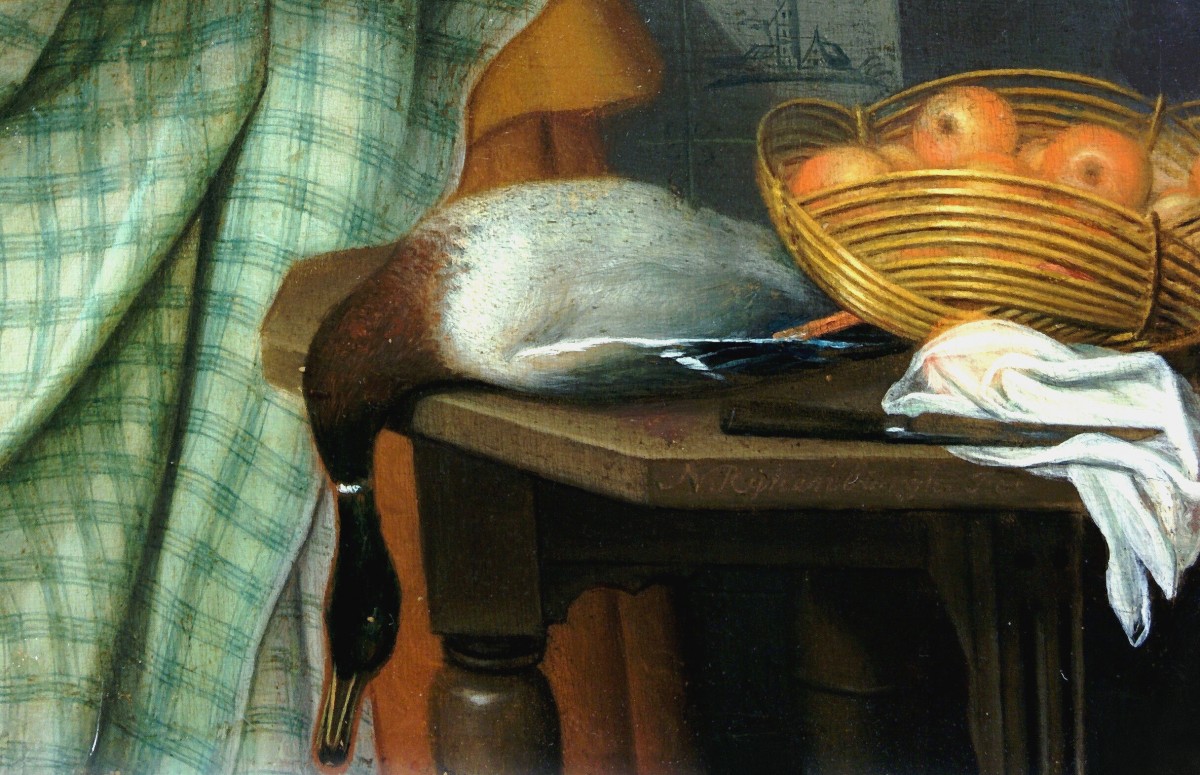
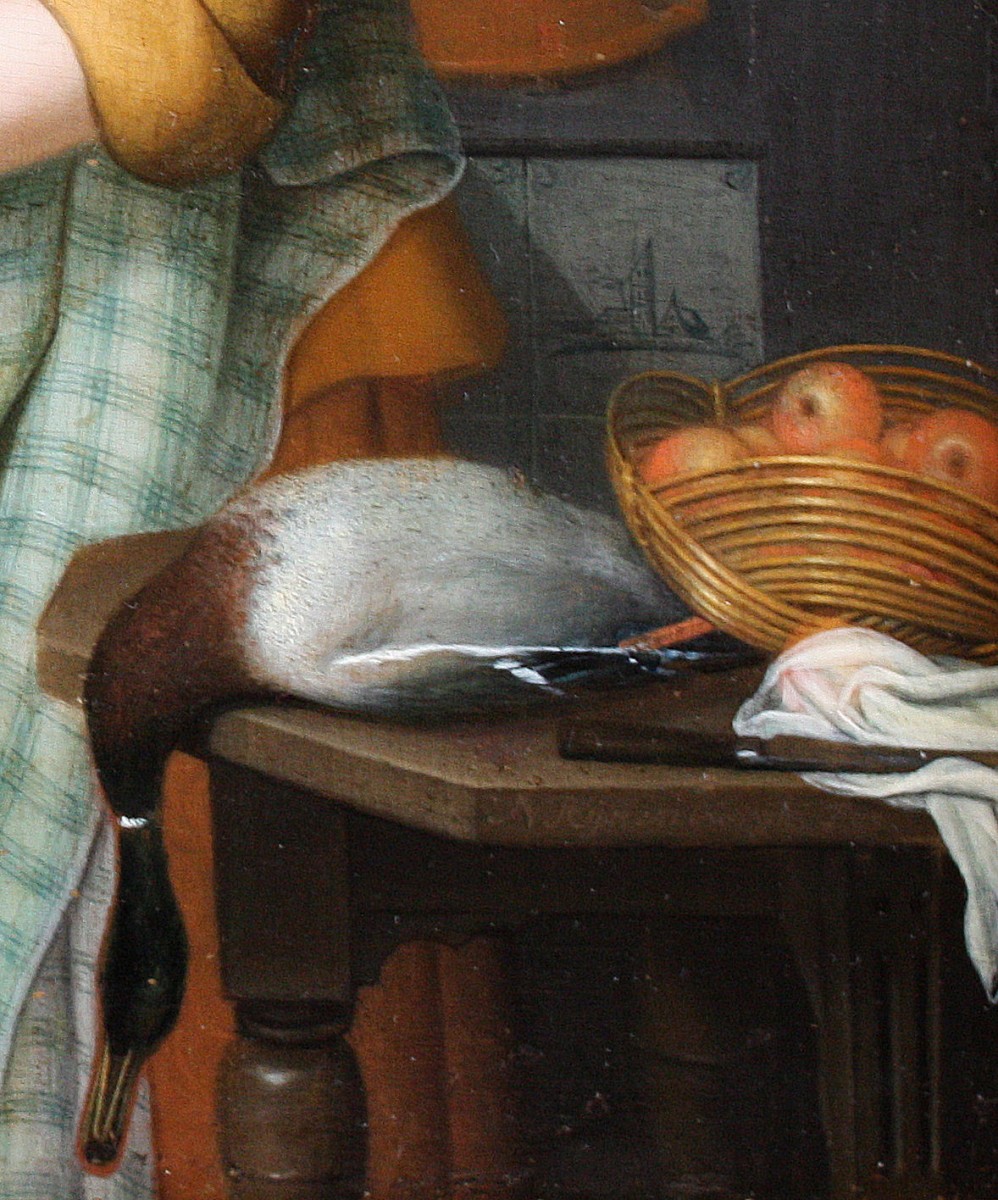
The painting is signed N. Rijnenburgh on the edge of the table.
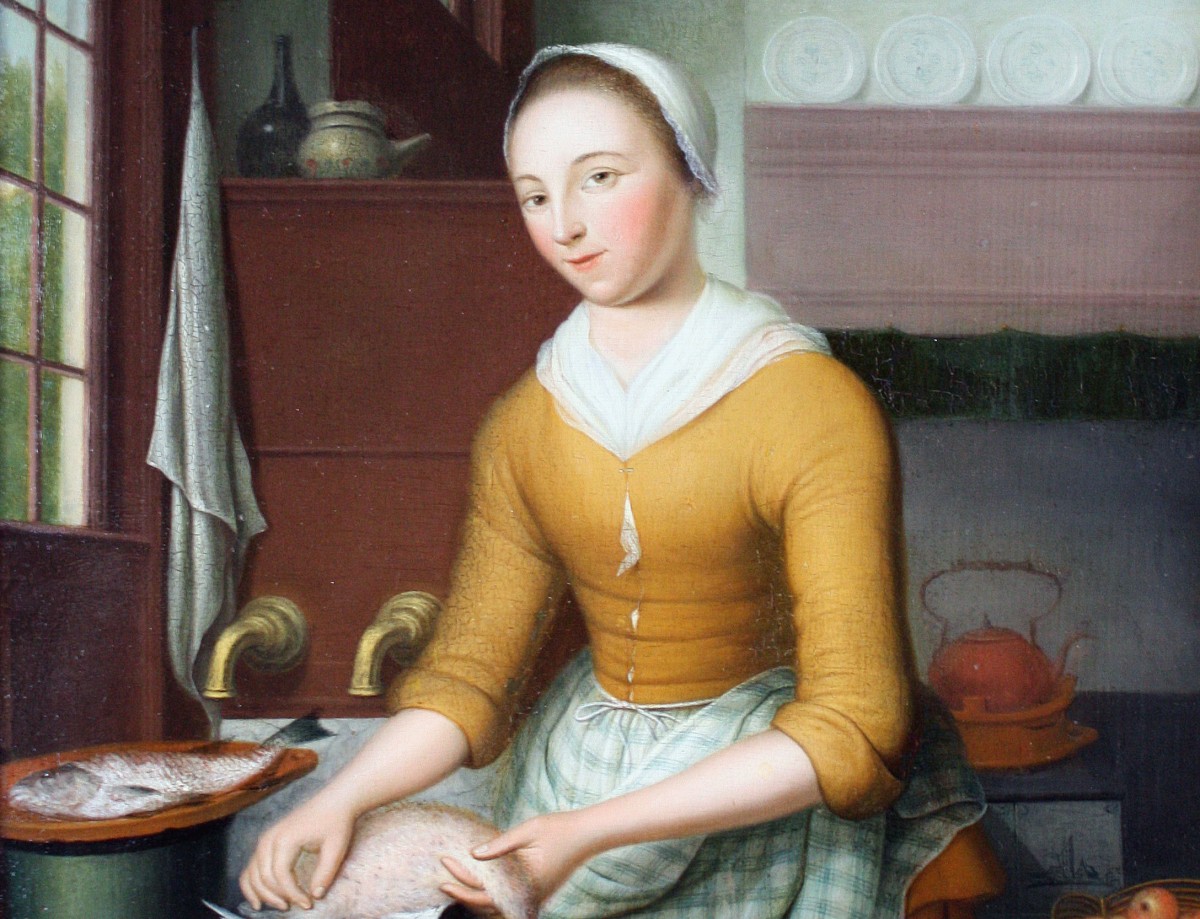
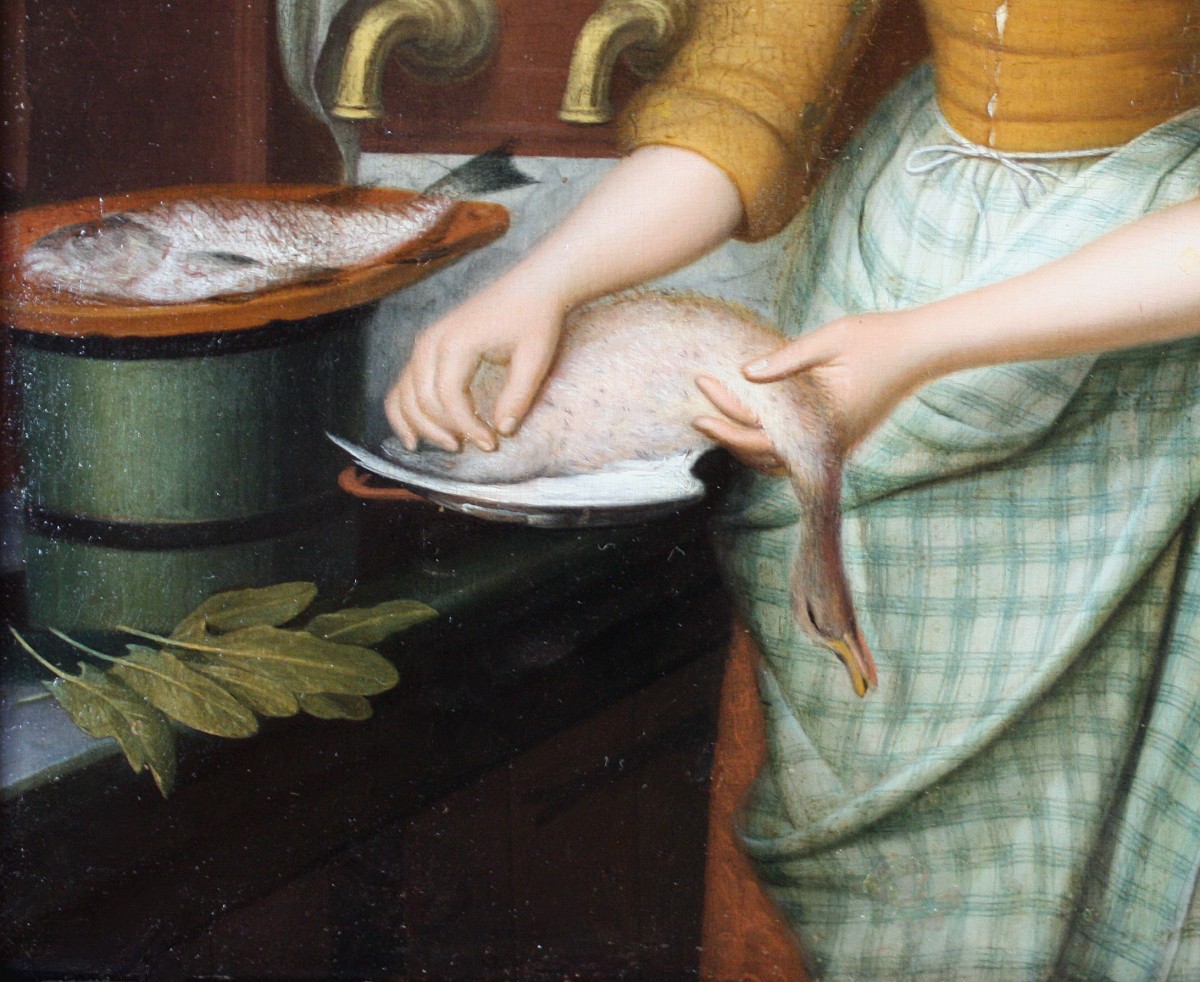
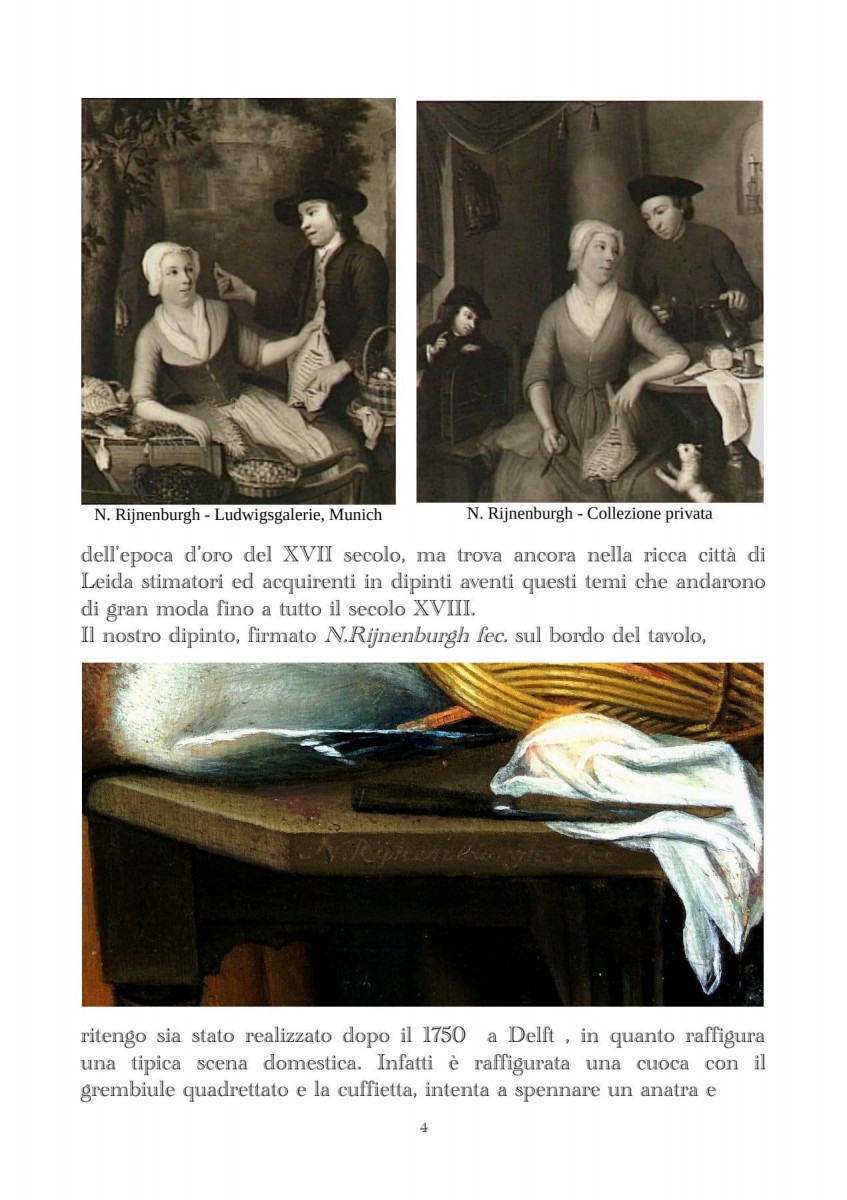
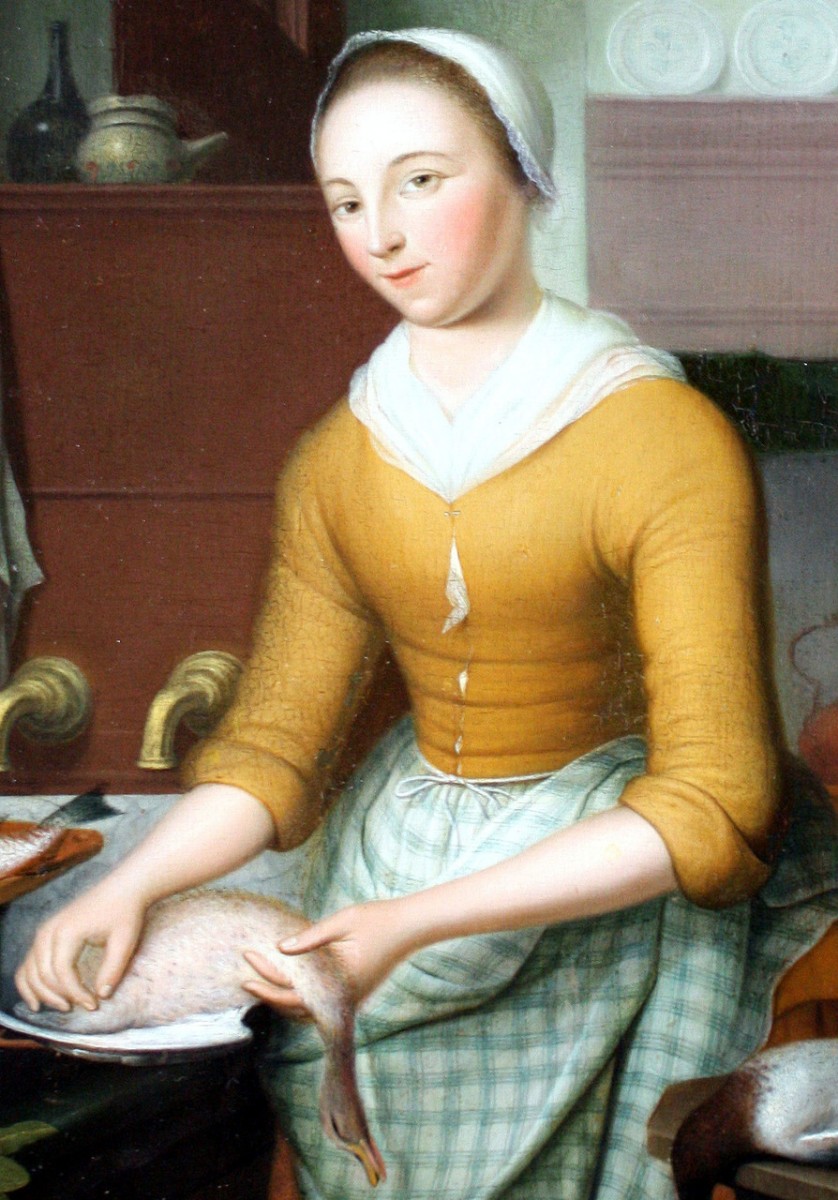
It depicts a young cook cleaning a duck and preparing food to cook in a kitchen interior. She wears typical work attire of the period; an ochre-colored cloak, a low-cut white slip, a checked apron, and a white cap.
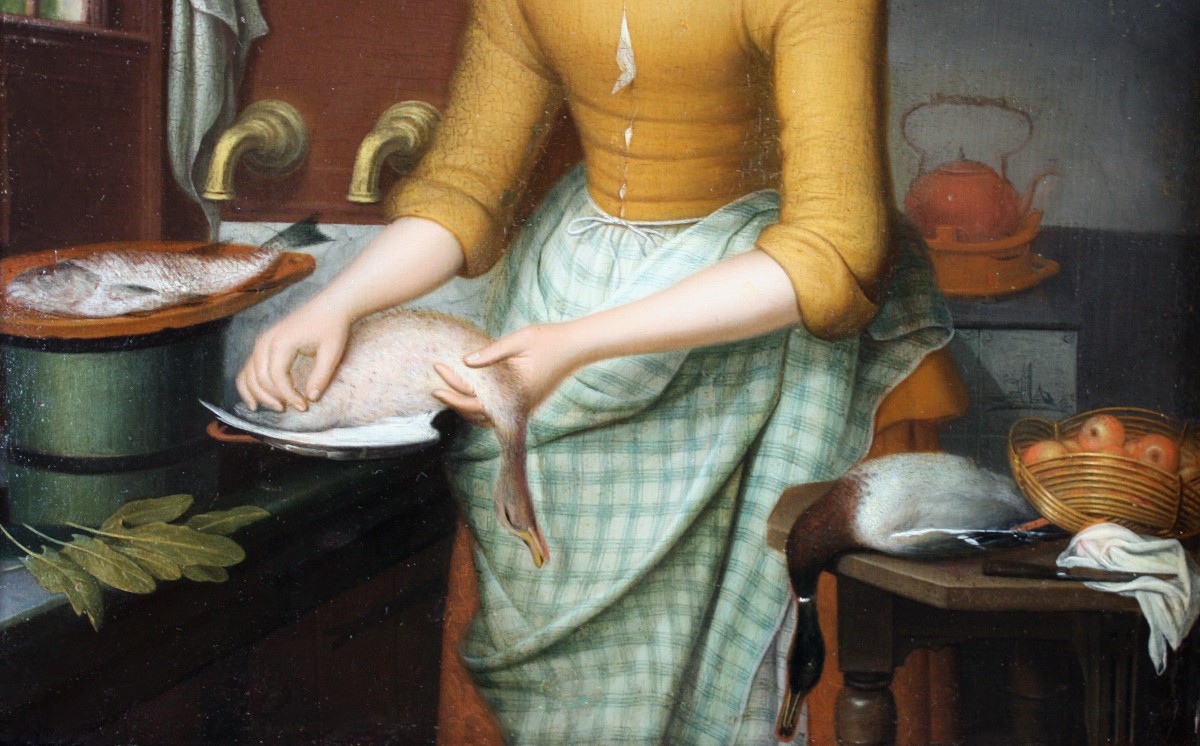
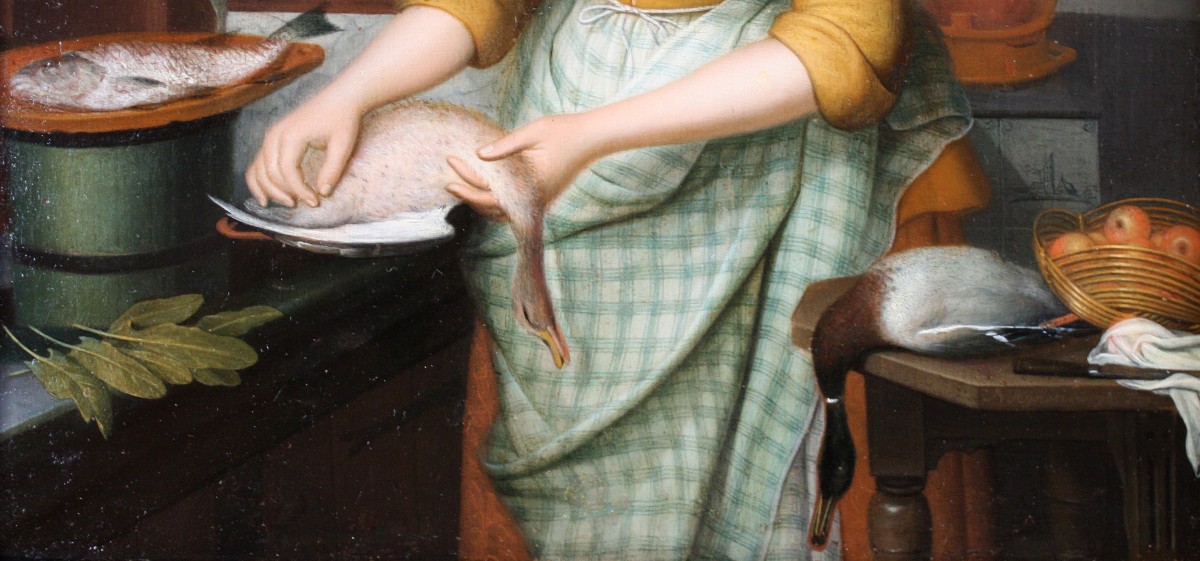
The scene is full of details that recall everyday life and domestic well-being, such as the game on the table, the copper cauldron in the background and the Delftware plates lined up on the shelf.
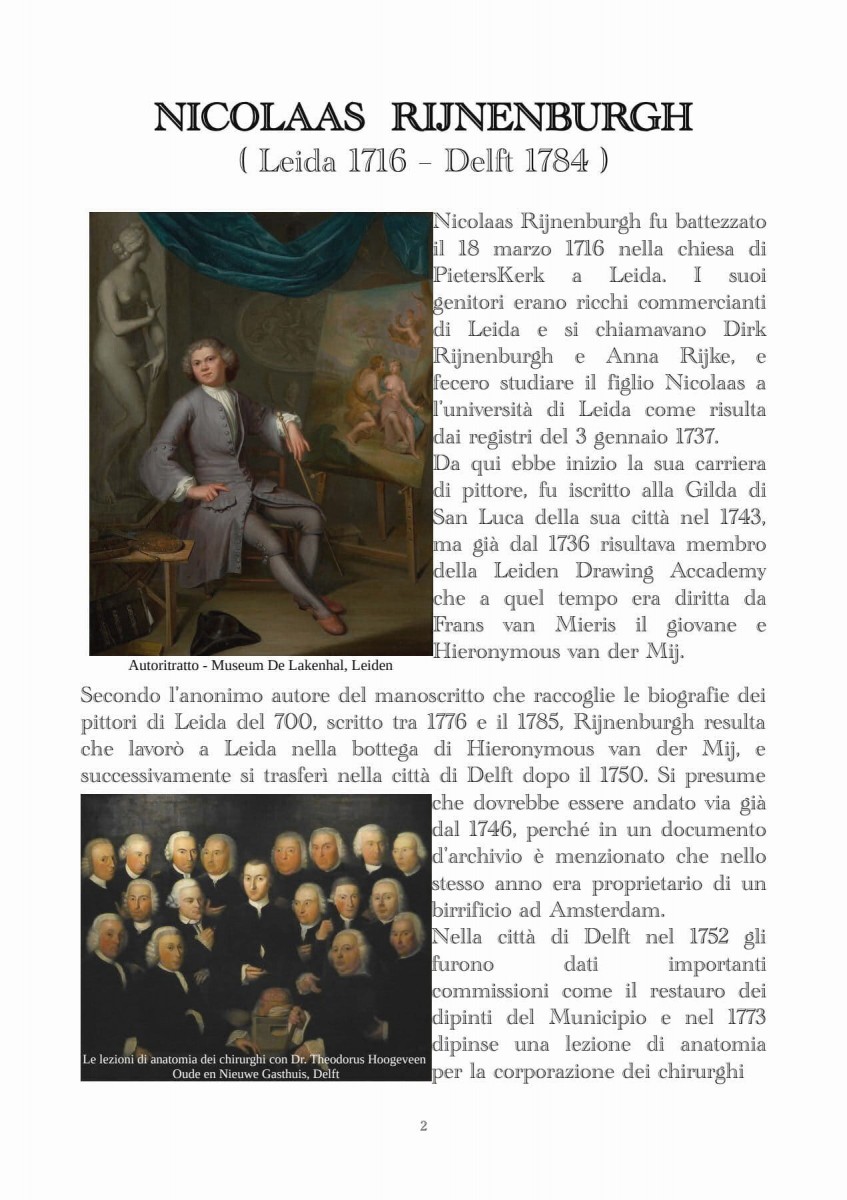
Nicolaas Rijnenburgh was baptized on march 18, 1716, in the Pieterskerk church in Leiden. His parents were wealthy merchants from Leiden and were called Dirk Rijnenburgh and Anna Rijke, and they sent their son Nicolaas to study at the University of Leiden, as can be seen from the registers of 3 January 1737. From there his career as a painter began, he was enrolled in the Guild of Saint Luke of his city in 1743, but already by 1736 he was a member of the Leiden Drawing Academy which at that time was headed by Frans van Mieris the younger and Hieronymous van der Mij. According to the anonymous author of the manuscript containing the biographies of 18th-century Leiden painters, written between 1776 and 1785, Rijnenburgh is recorded as having worked in Leiden in the workshop of Hieronymous van der Mij, and subsequently moved to the city of Delft after 1750. It is assumed that he must have left as early as 1746, because an archive document mentions that in the same year he owned a brewery in Amsterdam. In the city of Delft, in 1752, he received important commissions such as the restoration of the paintings in the Town Hall, and in 1773 he painted An Anatomy Lesson for the Surgeons' Guild.
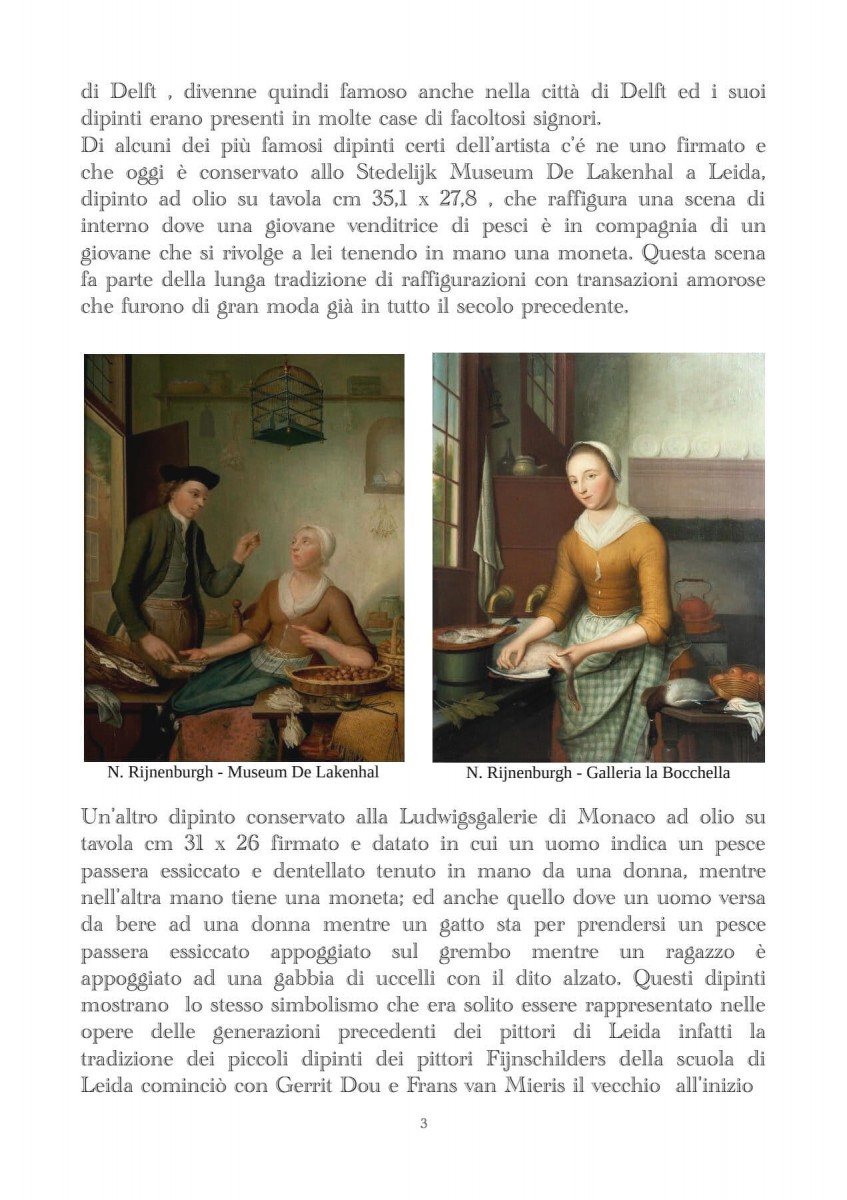
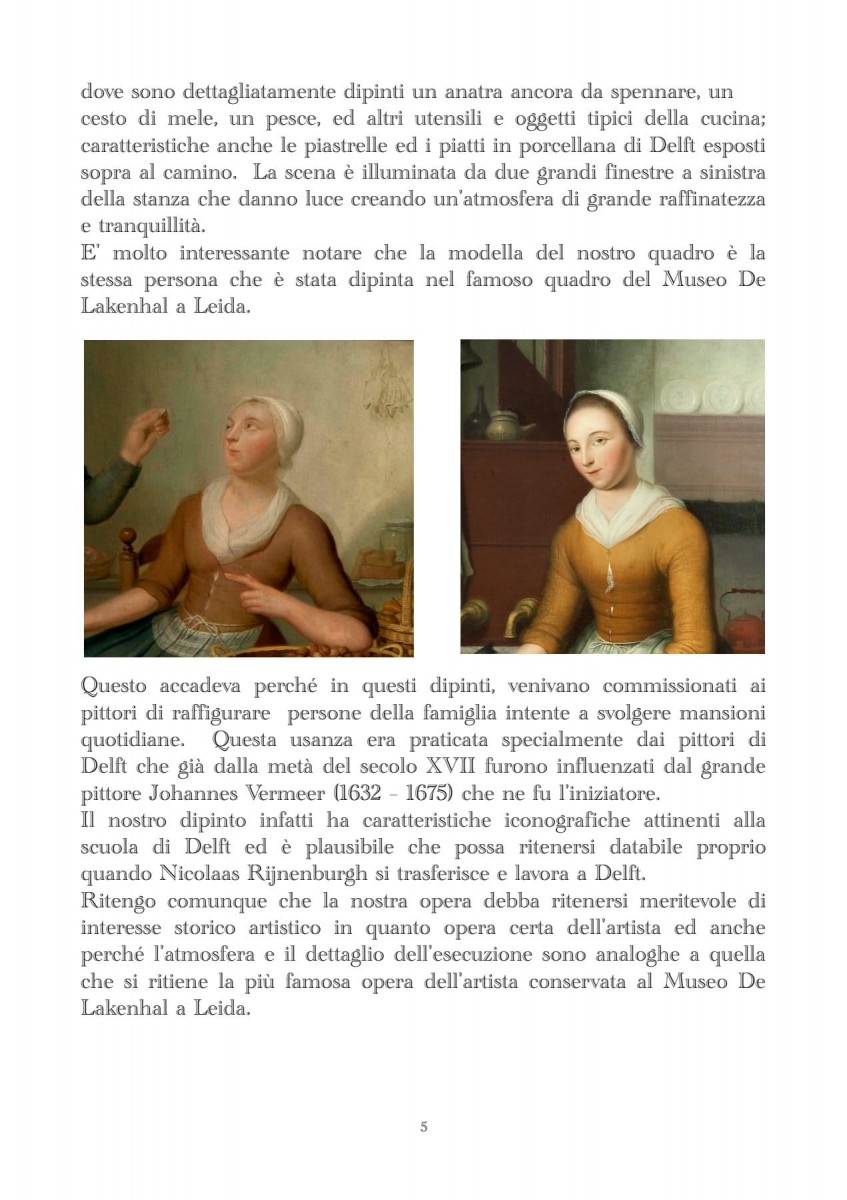
Self-Portrait - Museum De Lakenhal, Leiden. The Surgeons' Anatomy Lesson with Dr. Theodorus Hoogeveen Oude en Nieuwe Gasthuis, Delft, became famous in the city of Delft as well, and his paintings were present in many wealthy homes. Among some of the artist's most famous paintings, there is one signed which is now housed at the Stedelijk Museum De Lakenhal in Leiden. It is an oil painting on panel, 35.1 x 27.8 cm, depicting an interior scene in which a young fish seller is accompanied by a young man who is addressing her while holding a coin. This scene is part of the long tradition of depictions of love affairs that were very popular throughout the previous century. Another painting, preserved in the Ludwigsgalerie in Munich, is an oil on panel,
31 x 26 cm, signed and dated, in which a man points to a dried, serrated flounder held by a woman, while in the other hand she holds a coin; and another in which a man pours a drink for a woman while a cat is about to take a dried flounder from her lap, while a boy is leaning against a birdcage with a raised finger. These paintings display the same symbolism that was commonly represented in the works of previous generations of Leiden painters. Indeed, the tradition of small paintings by the Fijnschilders of the Leiden school began with Gerrit Dou and Frans van Mieris the Elder at the beginning of the Golden Age of the 17th century, but still found admirers and buyers in the wealthy city of Leiden for paintings featuring these themes, which remained highly fashionable until the 18th century. I believe it was created after 1750 in Delft, as it depicts a typical domestic scene. It depicts a cook wearing a checked apron and bonnet, intent on plucking a duck, and the detail of a duck still to be plucked, a basket of apples, a fish, and other typical kitchen utensils and objects is depicted. The Delft porcelain tiles and plates displayed above the fireplace are also characteristic. The scene is illuminated by two large windows on the left of the room, creating an atmosphere of great refinement and tranquility. It is very interesting to note that the model in our painting is the same person depicted in the famous painting in the De Lakenhal Museum in Leiden. This happened because in these paintings, painters were commissioned to depict family members engaged in everyday tasks. This custom was practiced especially by the Delft painters, who, as early as the mid-17th century, were influenced by the great painter Johannes Vermeer (1632–1675), who initiated it.
Our painting, in fact, has iconographic characteristics related to the
Delft School and it is plausible that it can be dated precisely
when Nicolaas Rijnenburgh moved and worked in Delft.
I believe, however, that our work deserves to be considered worthy of
artistic historical interest as a certain work by the artist and also
because the atmosphere and detail of the execution are similar to what is believed to be the artist's most famous work, preserved at the De Lakenhal Museum in Leiden.
Delevery information :
After receiving payment, we can arrange shipping of your paintings worldwide. You can request a quote or, if you have a trusted courier, let us know.