Offered by Spectandum
REQUEST INFORMATION
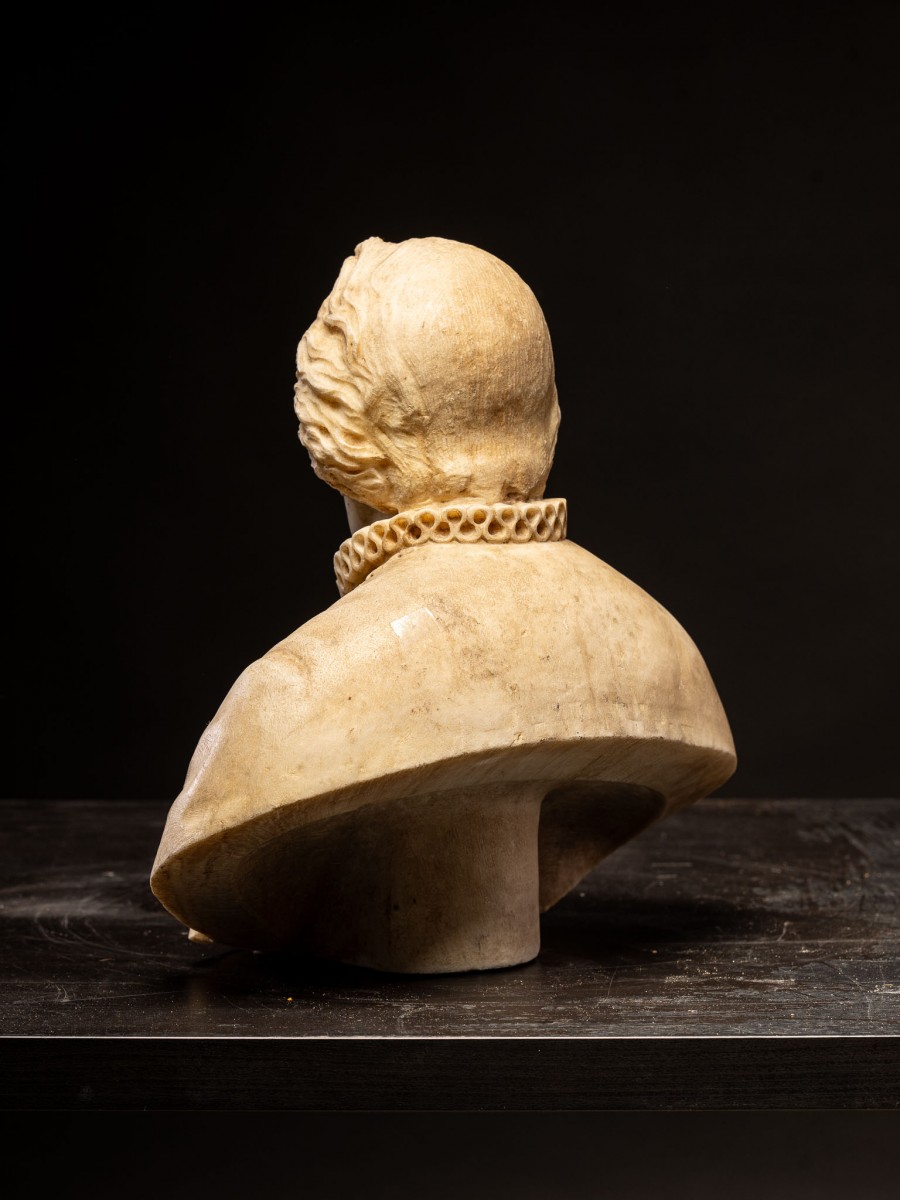
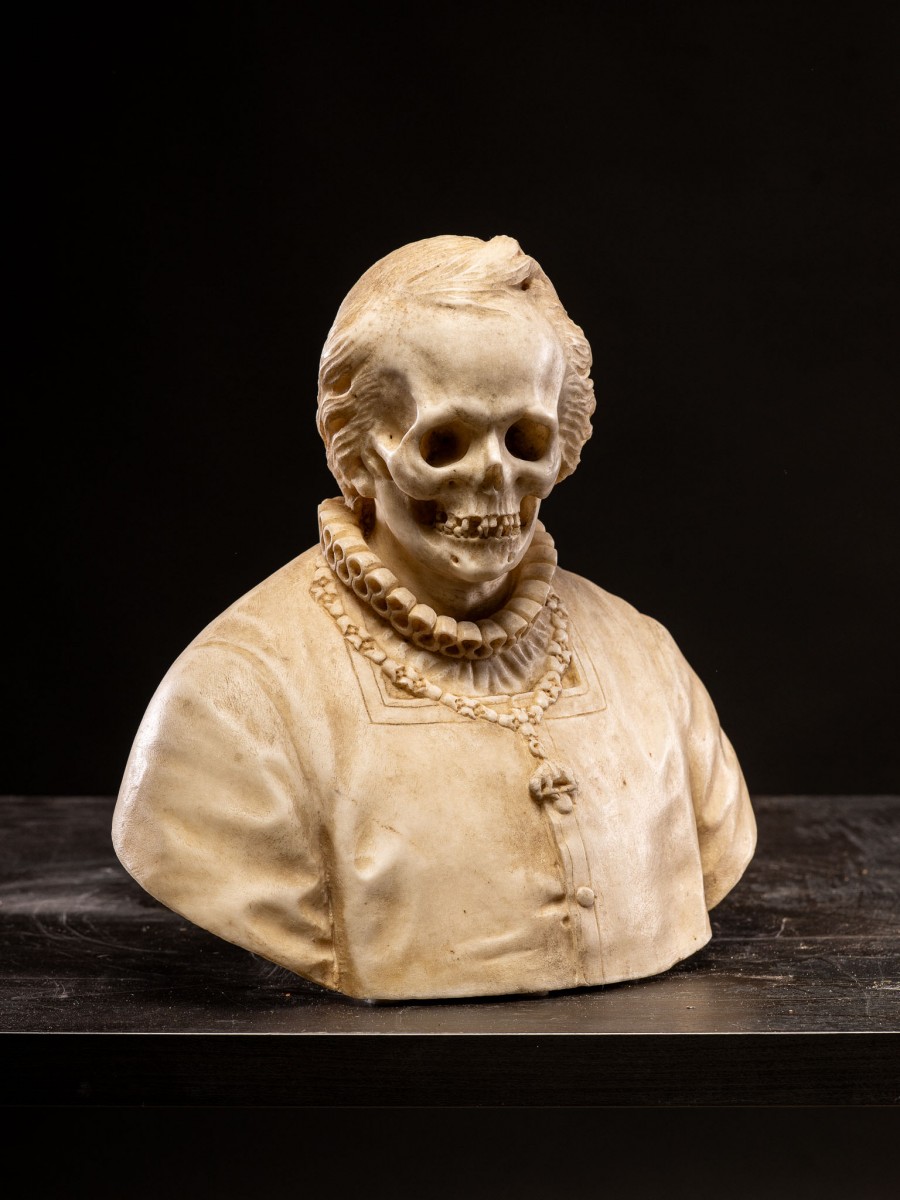

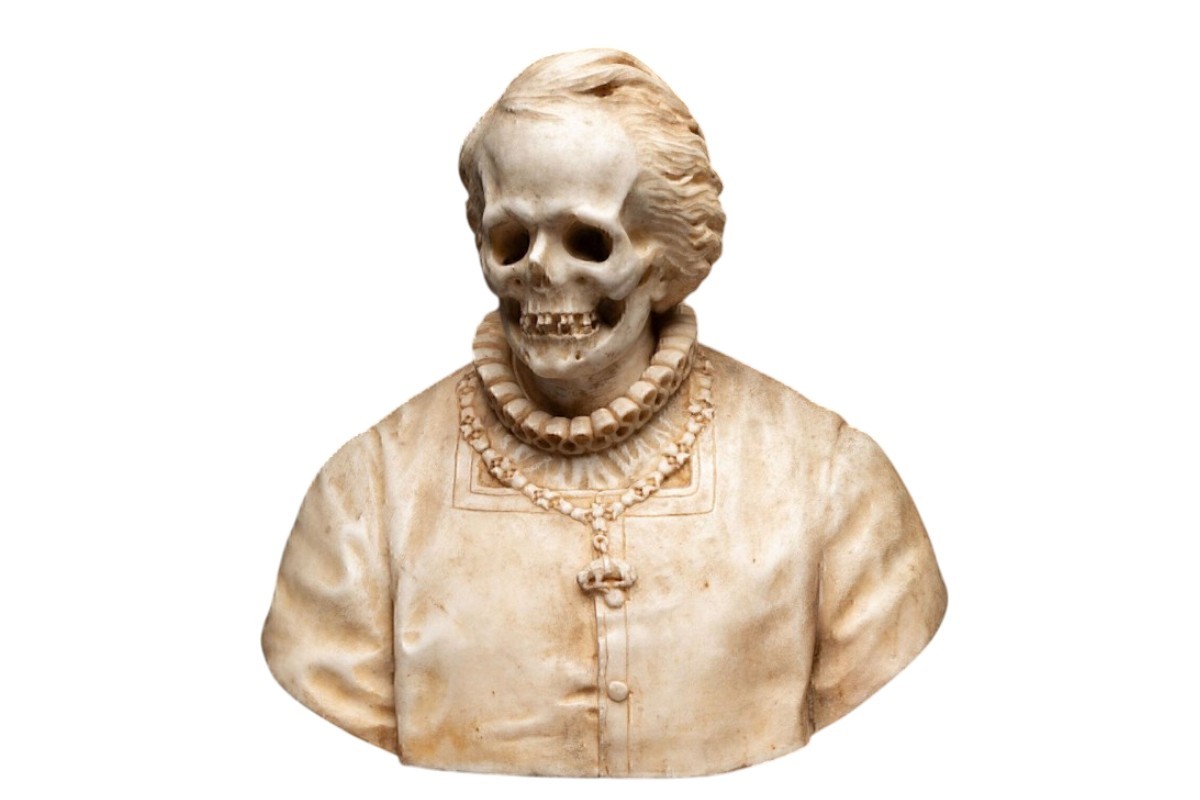
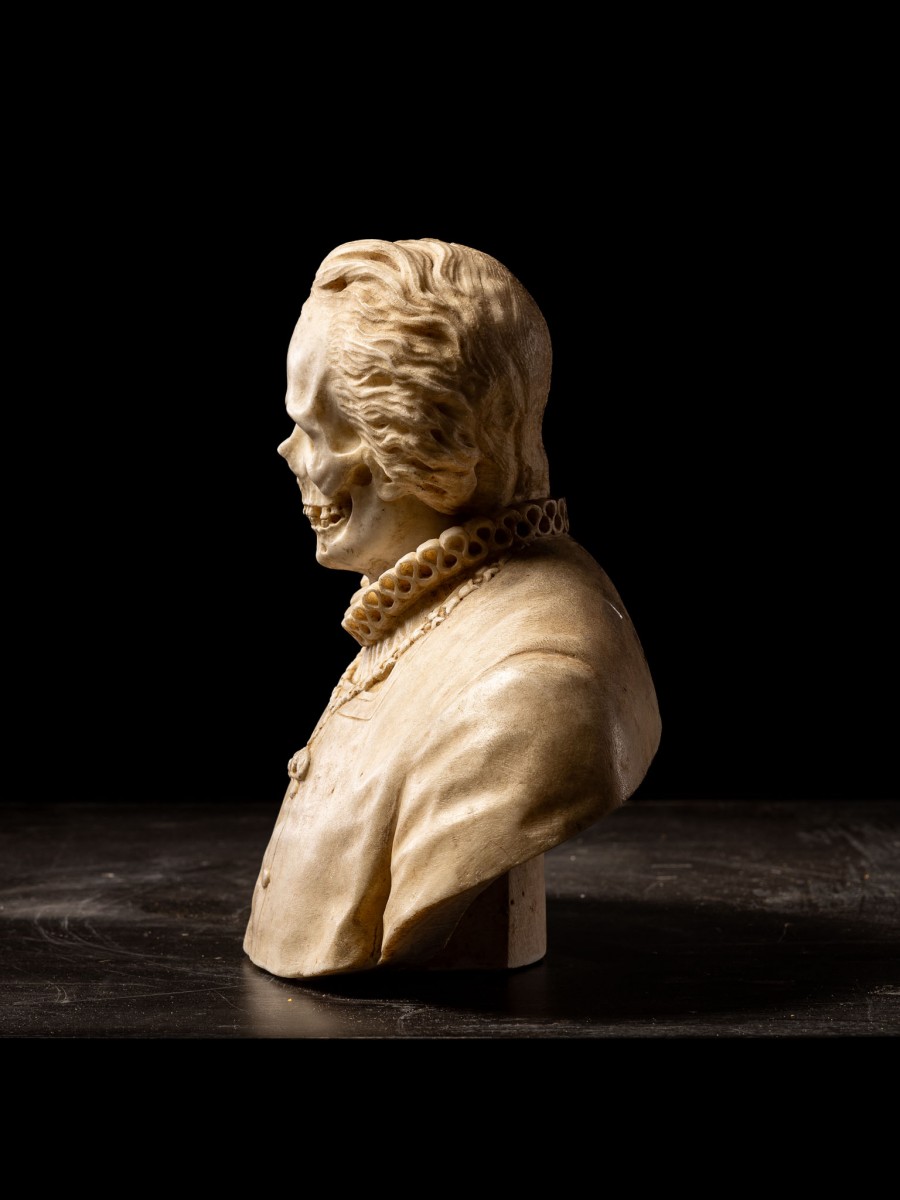
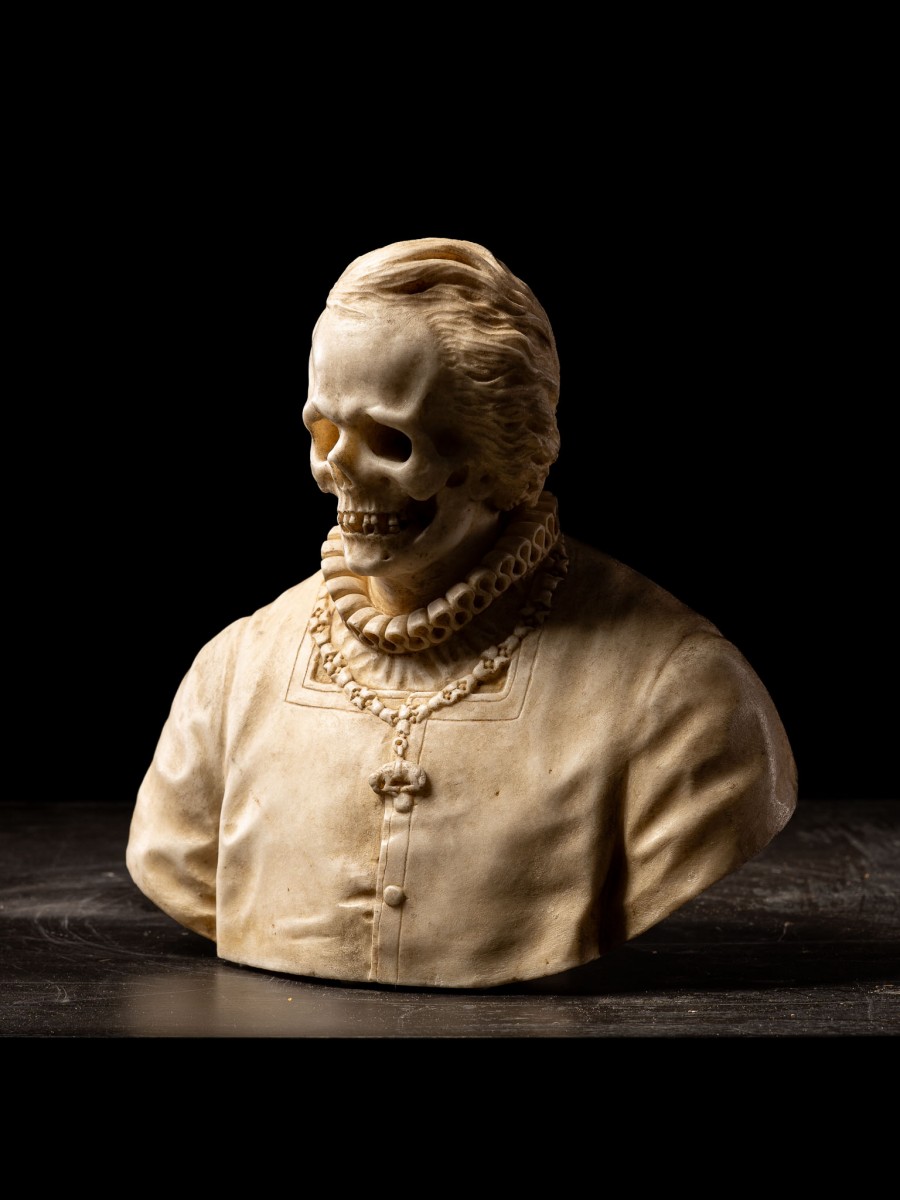
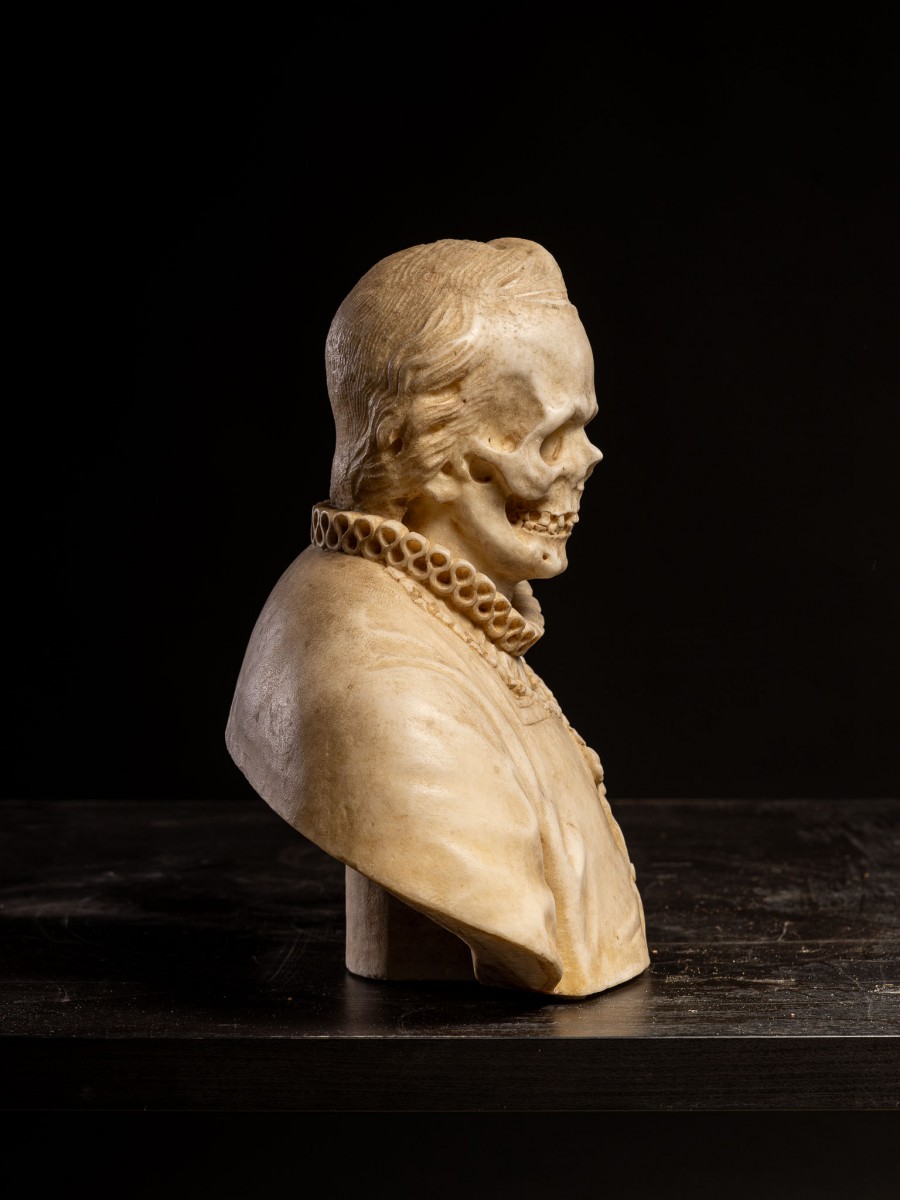
This marble bust unites worldly refinement and death in a single figure. The carefully carved costume and jewelry suggest social status and personal identity, while the skull replaces the living face. Such works belong to the tradition of vanitas or memento mori (“remember you must die”), intended to prompt reflection on the transience of life, wealth, and reputation.Comparable in meaning to Baroque vanitas still-life paintings—where skulls, timepieces, and extinguished candles symbolize mortality—this sculpture transforms those emblems into an embodied confrontation. Its modest scale suggests private contemplation, while the virtuosity of the carving intensifies the tension between permanence in stone and the inevitability of decay.Sculptural memento mori objects were produced in a range of materials and scales, from small devotional carvings to life-size skulls intended for study or contemplation. At 35 cm in height, this example likely functioned as a private object rather than a public monument, encouraging intimate reflection. The choice of marble underscores the paradox at the heart of the work: an enduring material employed to communicate impermanence.The technical finesse of the carving—softly modeled drapery, precise surface detailing, and anatomically legible bone—aligns the bust with the lingering Baroque taste. Rather than a purely macabre image, the sculpture serves as a philosophical reminder, confronting viewers with the tension between identity, time, and death.