Offered by Galerie Delvaille
REQUEST INFORMATION

French furniture of the 18th century & French figurative paintings
Parisian work, circa 1780
Height 148 cm - Width 102 cm - Depth 42 cm
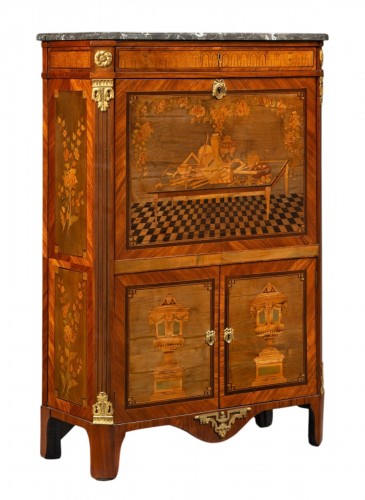
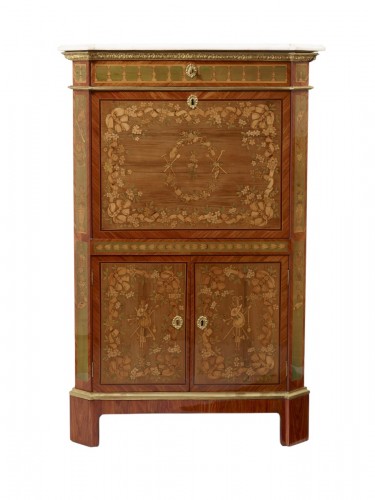
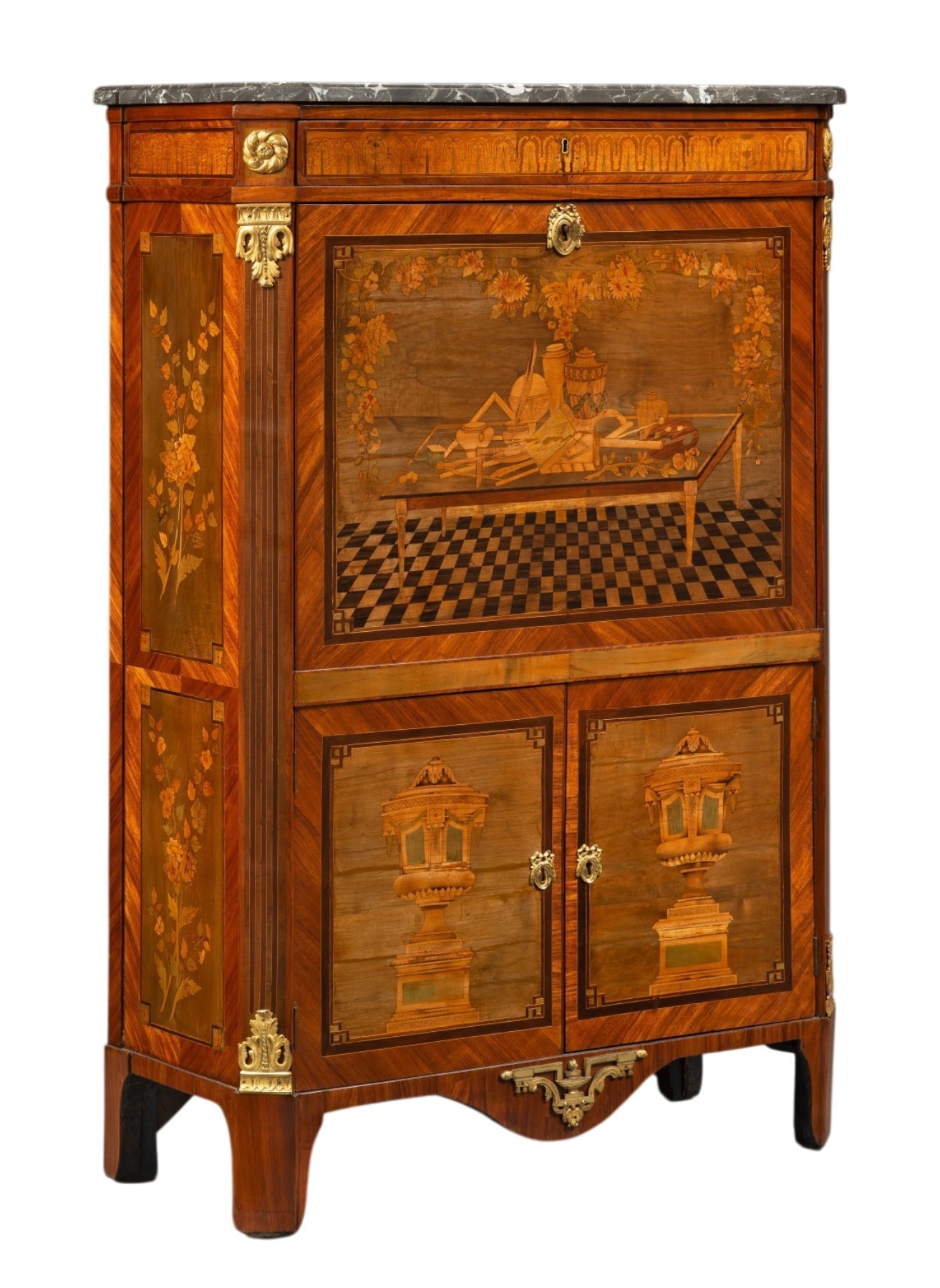
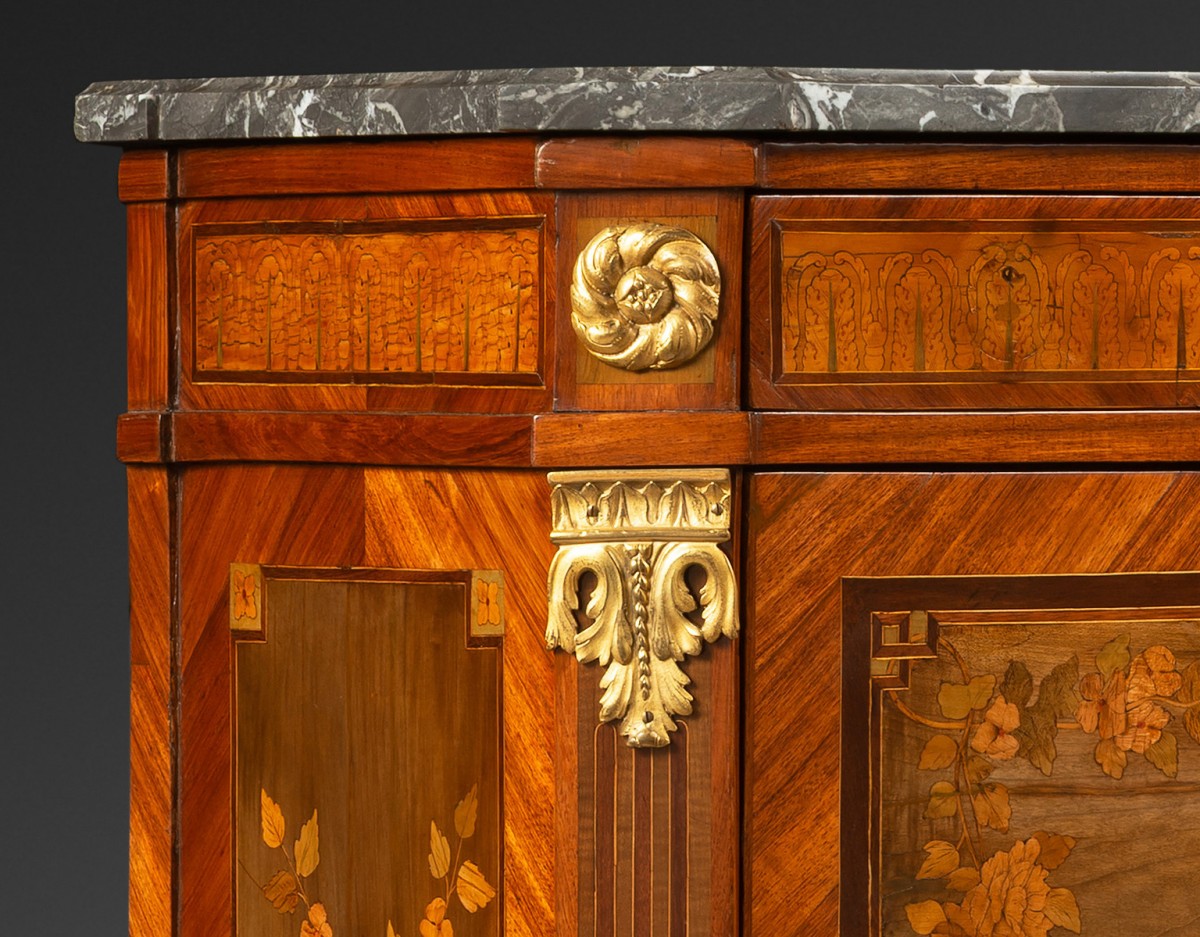
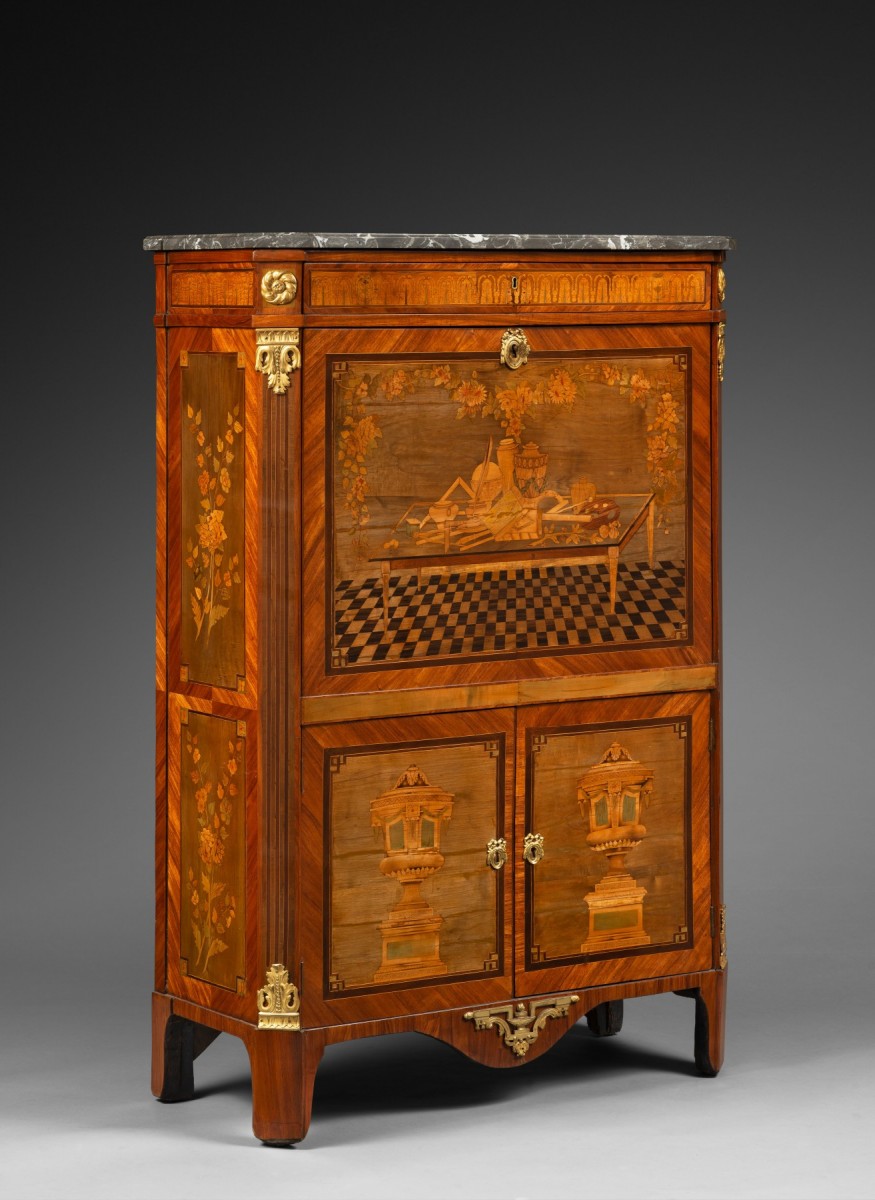
The architecture of this richly inlaid secretary, decorated with flowers and precious objects, rests on canted front supports. This type of secretary is infinitely rarer and more sought after than the numerous and commonplace secretaries with rounded supports or sharp corners.
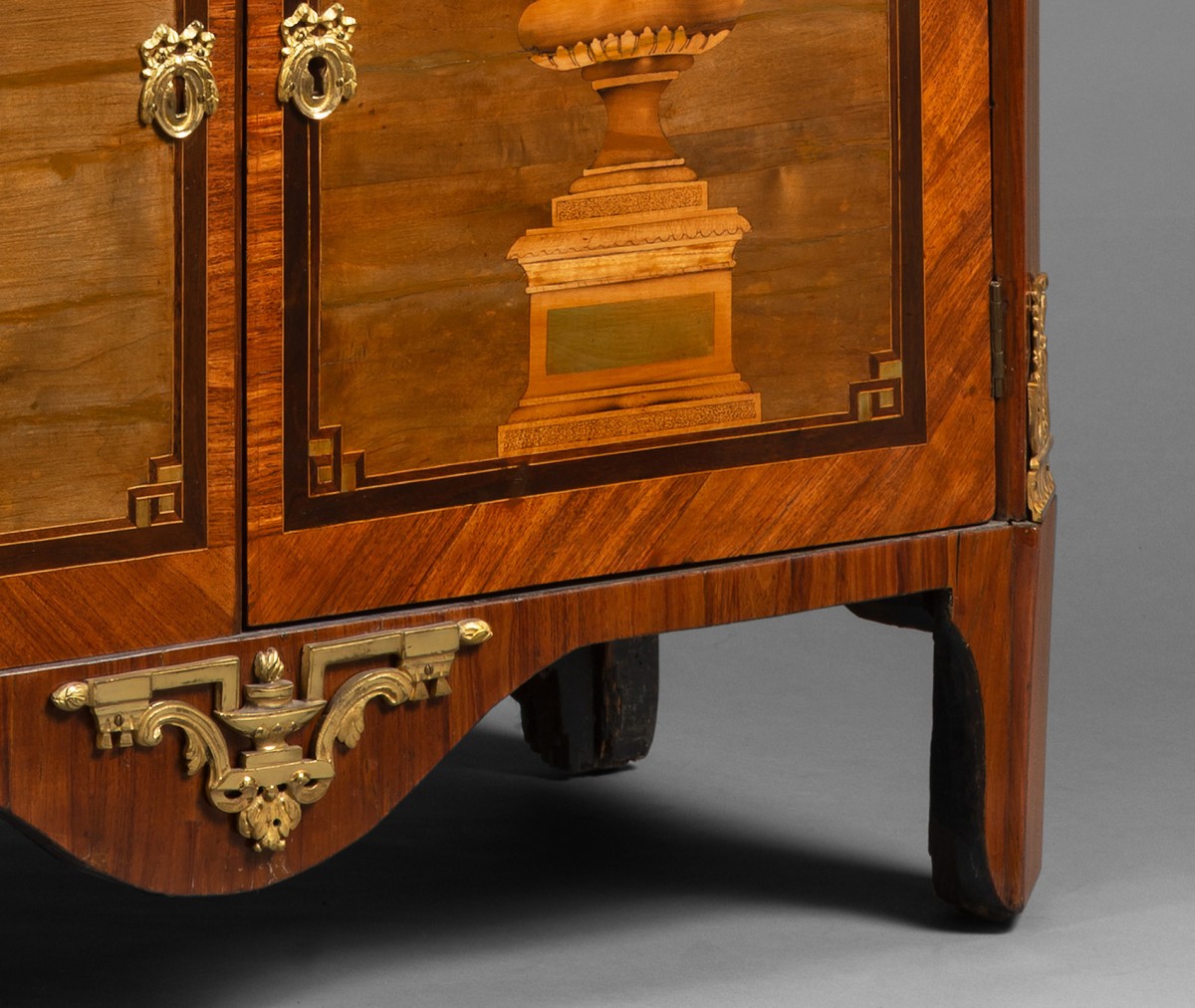
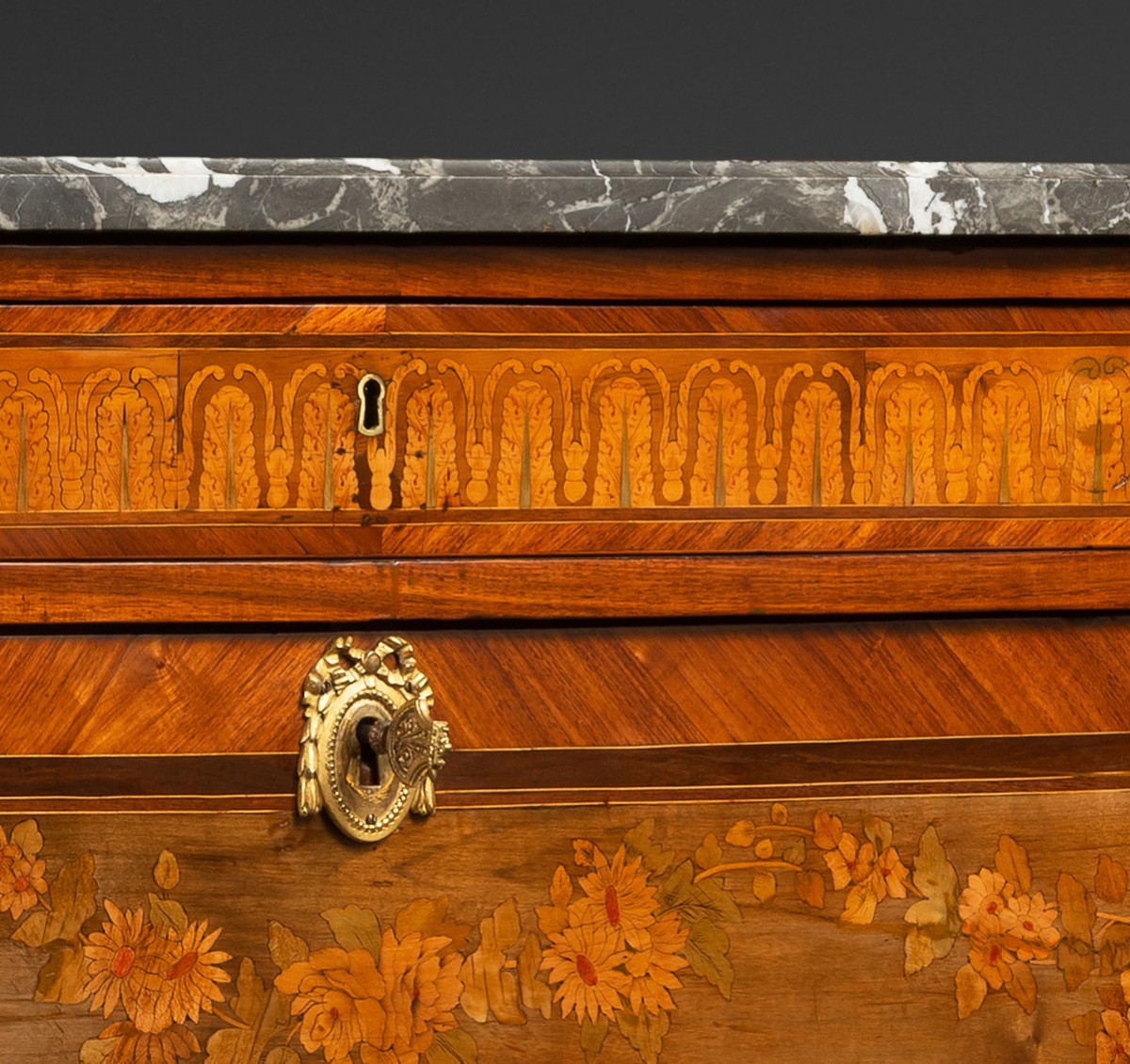
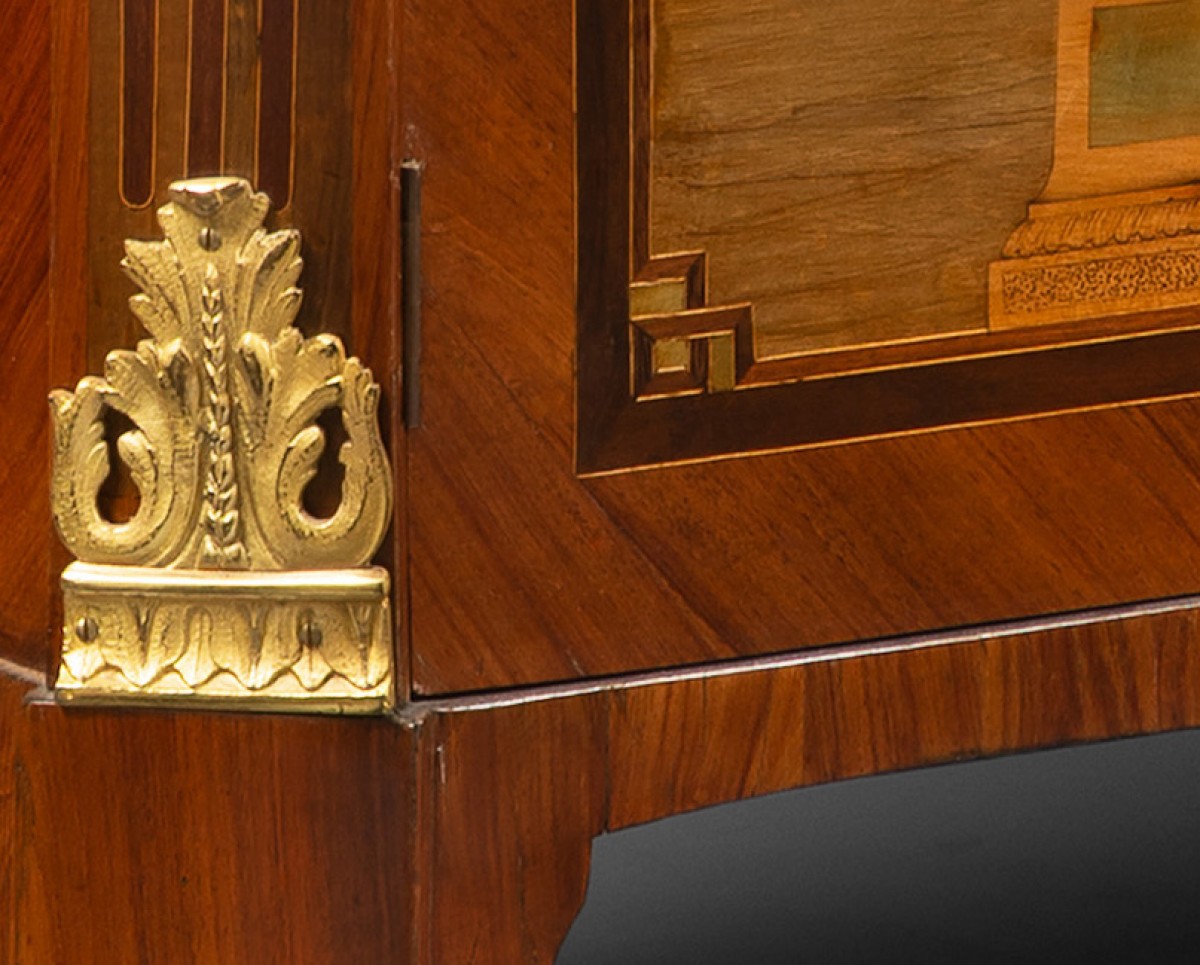
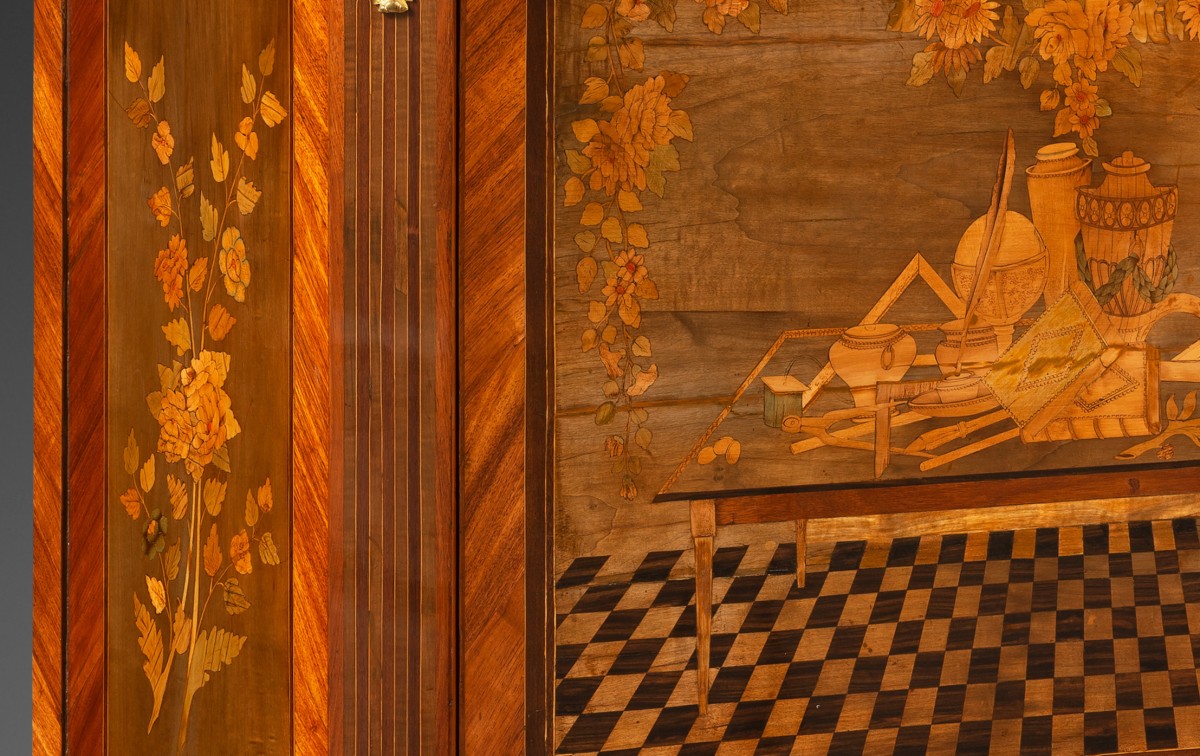
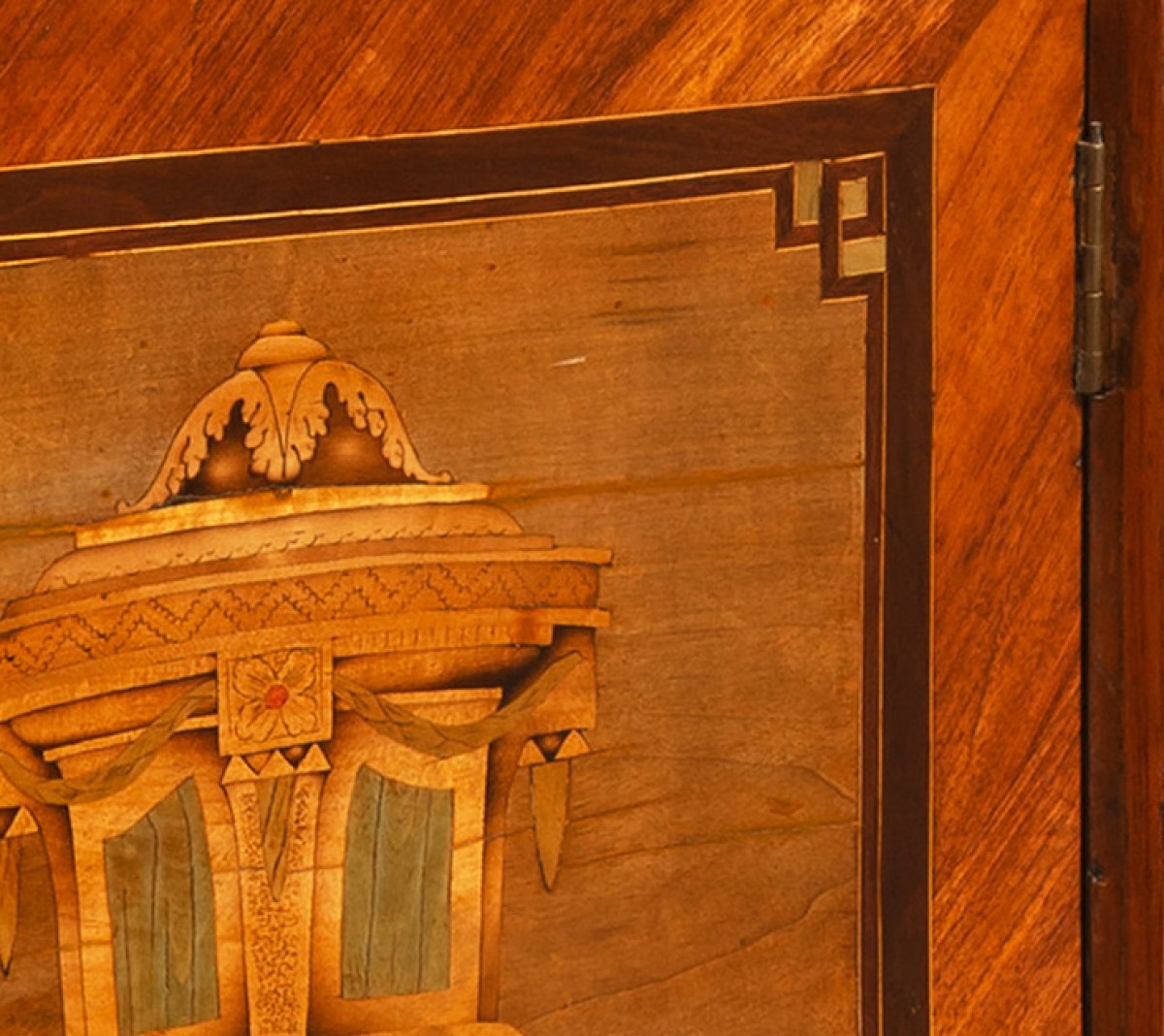
The front opens with a drop-front adorned with intricate marquetry: on a checkerboard pattern, a table displays objects on the theme of the Liberal Arts and the major arts, crowned by a beautiful garland of flowers. The lower section opens with two doors, each decorated with covered vases. The canted edges simulate fluted pilasters. Finally, the upper drawer is decorated with a frieze.
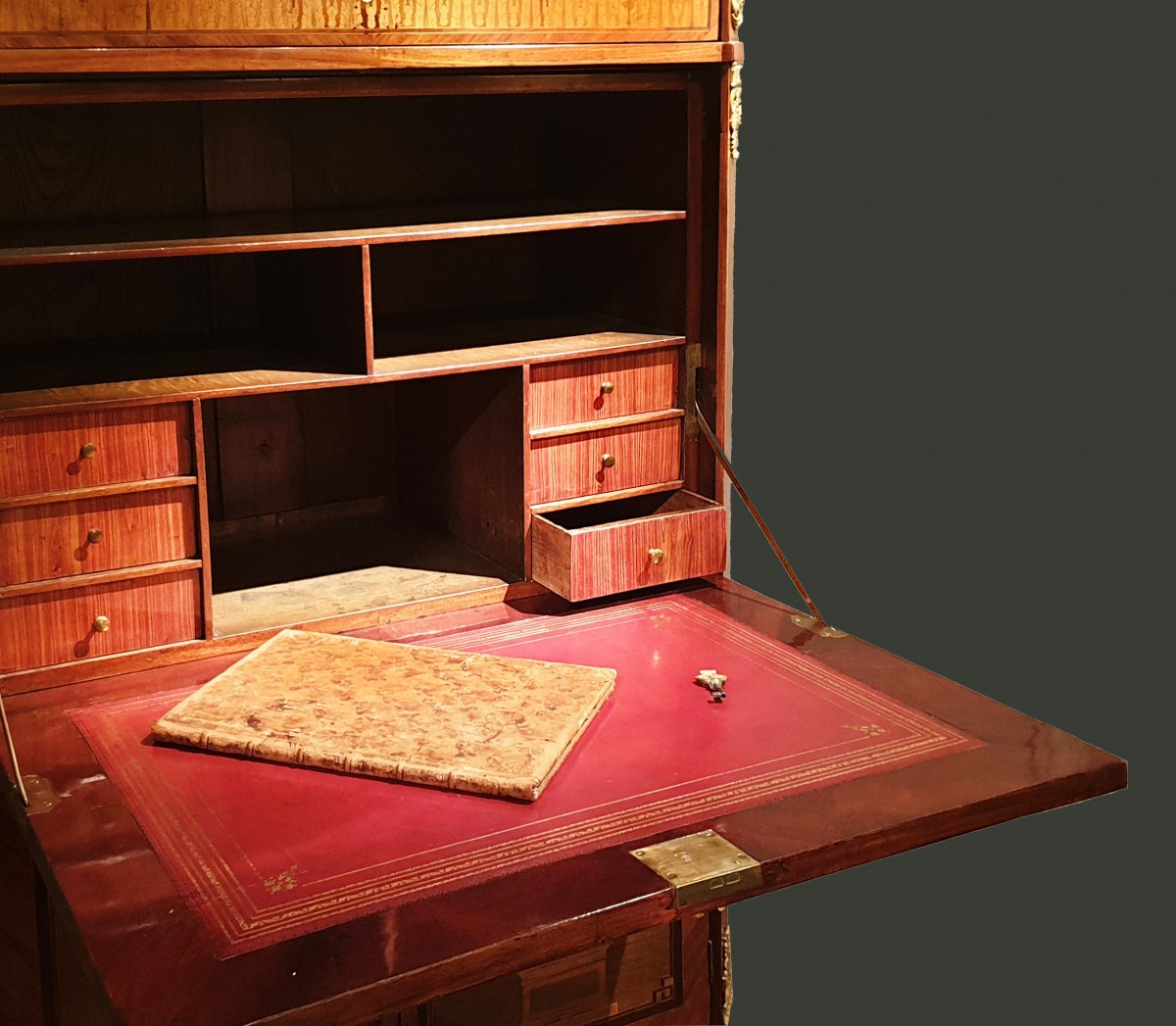
On the sides, there is marquetry of branches and flowers, of equal quality, arranged in three panels that echo the tiered arrangement of the doors, the drop-front, and the drawer of the front. Inside, six drawers and four compartments surmount the drop-front, which is covered in beautiful red leather tooled in gold.
The ten marquetry panels are set within frames whose corners feature Greek key decoration. The rich decoration was created using a wide variety of woods: sycamore, various stained fruitwoods, boxwood stringing, rosewood, and amaranth.
The secretary is adorned with beautiful neoclassical bronze mounts, finely chased and gilded. The top is covered with gray marble veined with white. This piece, in very good condition, has undergone only minor restorations and maintenance. It is now in perfect condition.
Stamped by Christophe Wolff (1720-1795), Master in 1755: He was one of the finest German cabinetmakers who came to practice his craft in France during the second half of the 18th century. Wolff's work is characterized by excellent craftsmanship. Known for his skillful marquetry, he produced furniture of the highest caliber, several pieces of which are preserved in institutions: The Louvre possesses a capuchin-shaped desk forming a bonheur du jour by him. Also in the Musée des Arts Décoratifs in Paris are a pair of corner cabinets and a commode from the Transition period. A small secretary desk inlaid with flowers, also by Wolff, is in the Musée Cognacq-Jay.