Offered by Galerie Laury-Bailly
REQUEST INFORMATION

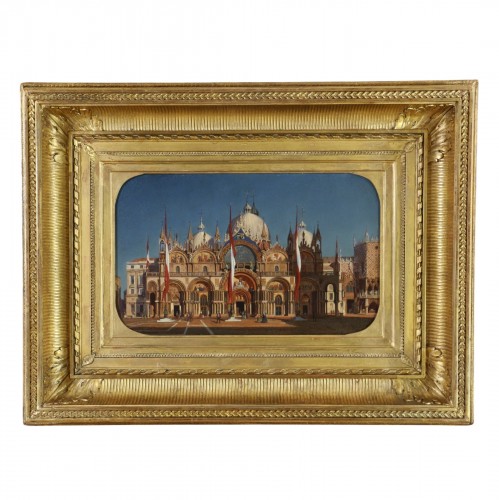
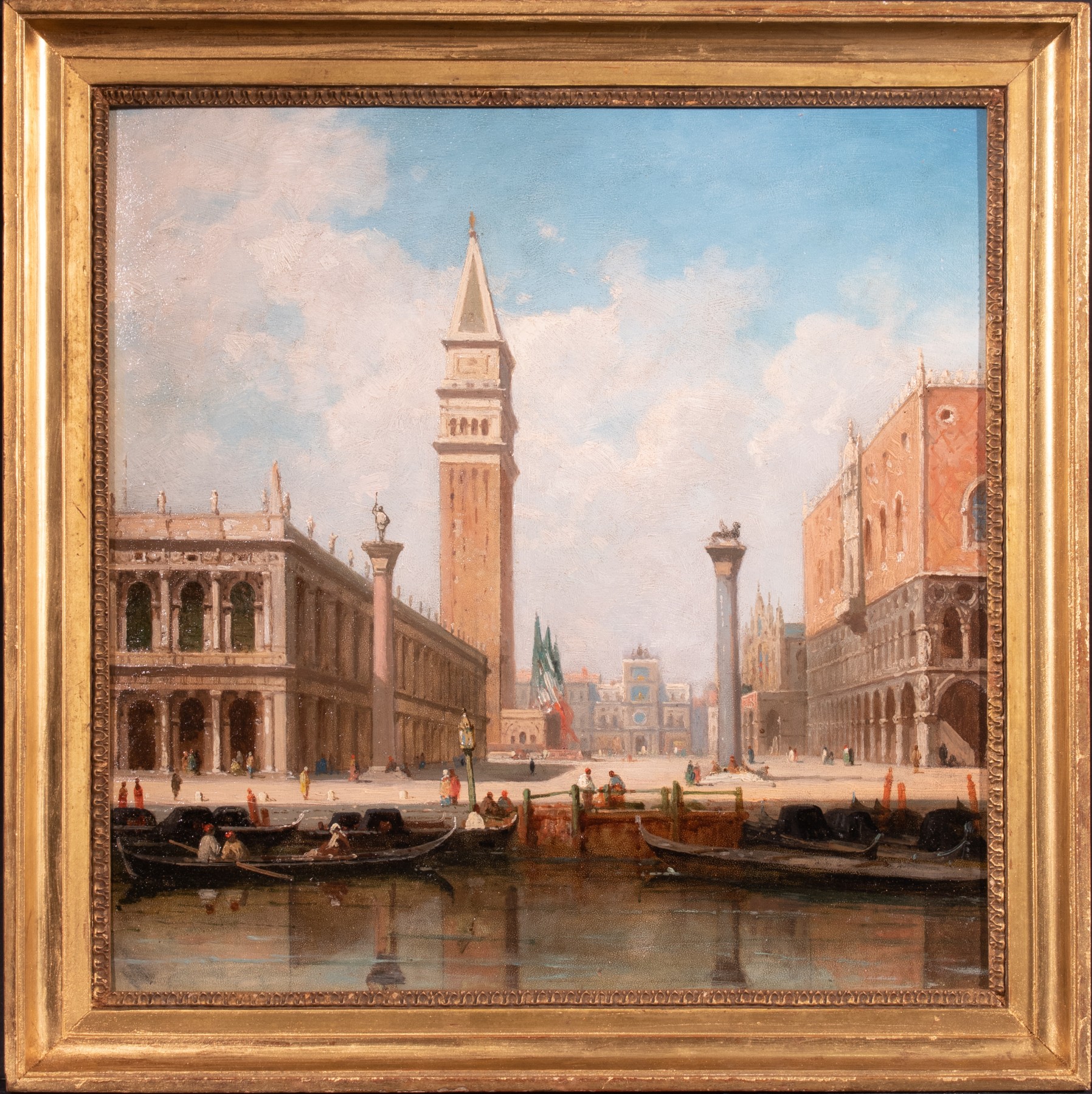
Venice, view of the Piazzetta and the Campanile of San Marco, oil on cardboard, dimensions 38 cm x 38 cm, with the frame 44 cm x 44 cm, attributed to Antoine Ponthus-Cinier (1812–1885).
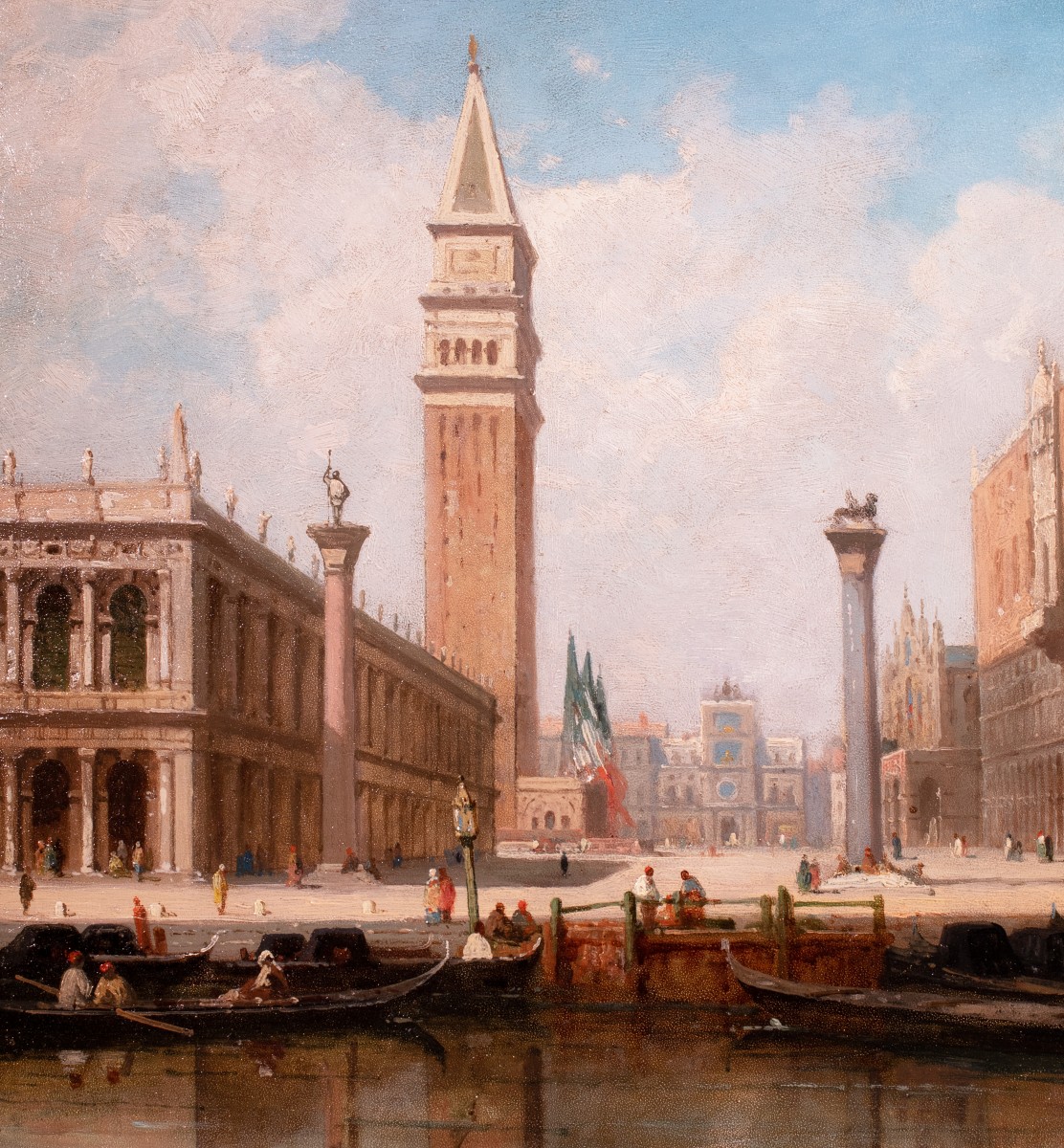
The work depicts a luminous and lively view of the Piazzetta San Marco in Venice, classically composed around the Campanile which dominates the scene.
On the left stands the Biblioteca Marciana, on the right the Gothic façade of the Doge’s Palace, while the two emblematic columns of the Piazzetta mark the opening onto the St Mark’s Basin.
In the foreground, gondolas and elegantly arranged figures animate the scene, reinforcing the picturesque and lively atmosphere characteristic of 19th-century Venetian views.
The light palette, cloudy skies, and architectural precision evoke the tradition of Italian vedutisti, which Ponthus-Cinier often studied and interpreted.
A painter from Lyon trained under Thierriat, Ponthus-Cinier is known for his architectural landscapes, his views of Italy, and his compositions of great topographical accuracy.
The attribution is based on:
the precise construction of architectural volumes
the light and slightly golden palette
the meticulous treatment of skies and figures
the technique on cardboard, frequent in his studies and small formats intended for the collectors’ market
Although the work is unsigned, these characteristics closely relate the painting to his Italian corpus from the 1840s–1860s.
The Piazzetta San Marco is one of the most frequently depicted motifs by traveling artists of the 19th century.
Ponthus-Cinier, like many French painters of his time, stayed in Italy and brought back numerous urban views, often intended for a bourgeois clientele fond of picturesque souvenirs.
This composition belongs to the tradition of vedute inherited from Canaletto and Guardi, but interpreted with a romantic sensibility characteristic of the 19th century.