Offered by Gregory Redding
REQUEST INFORMATION
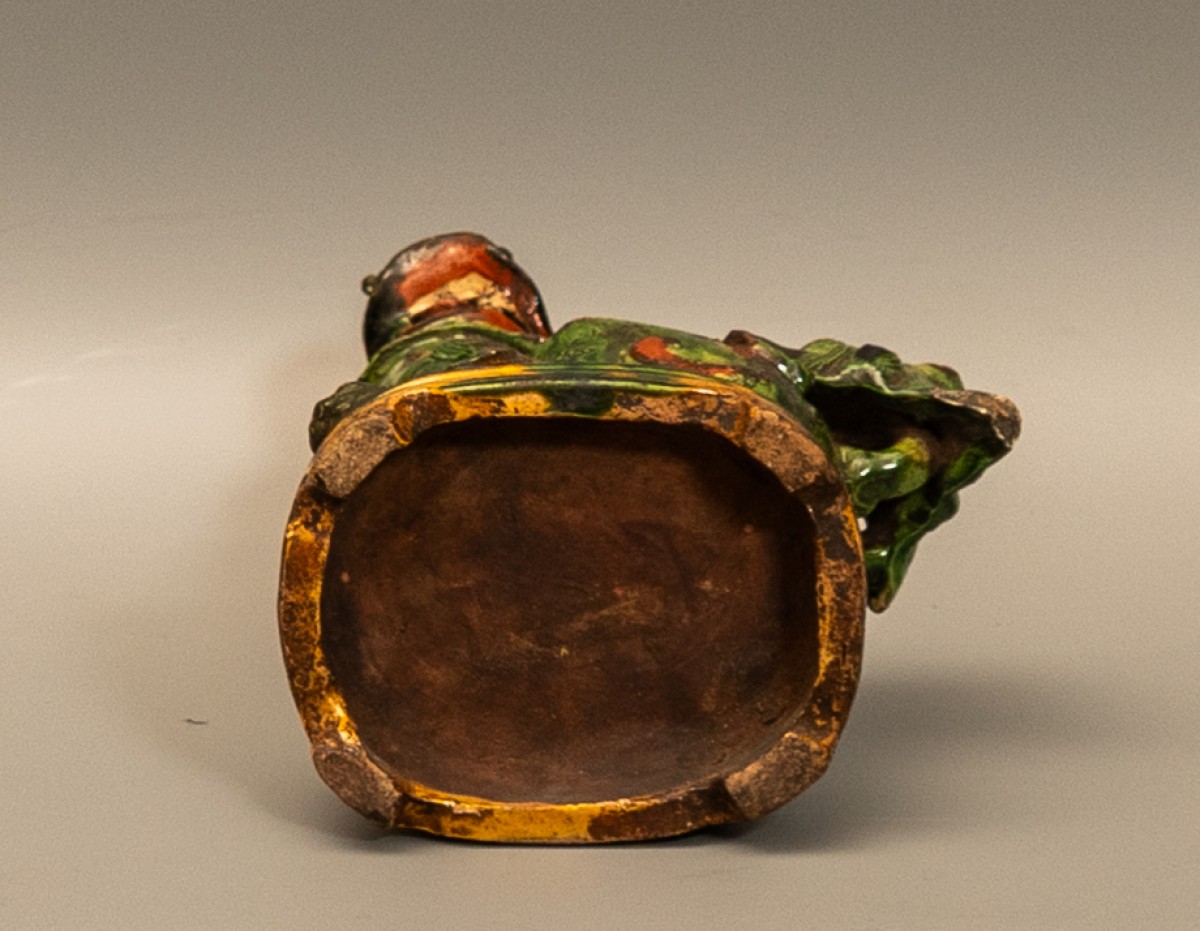

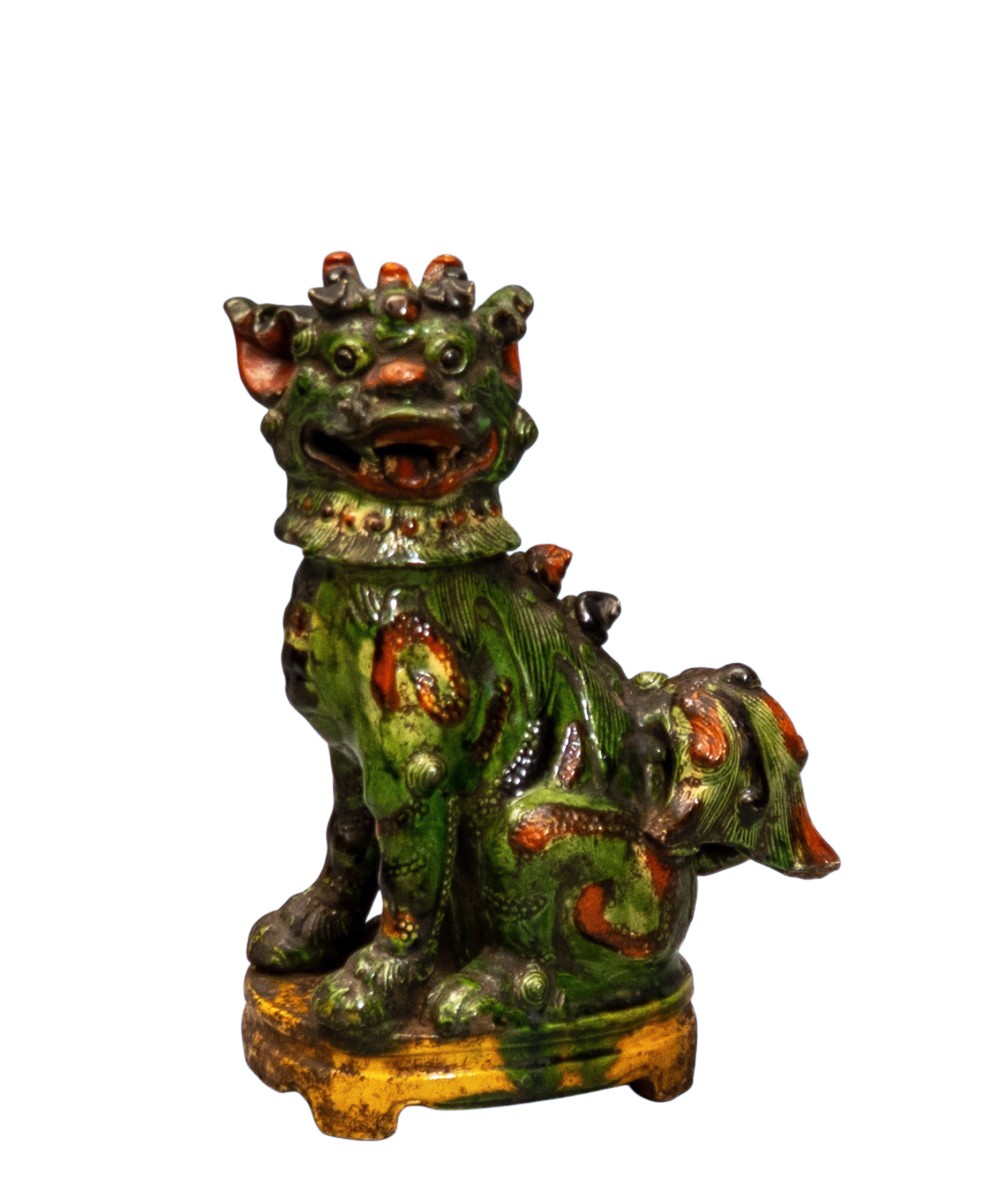
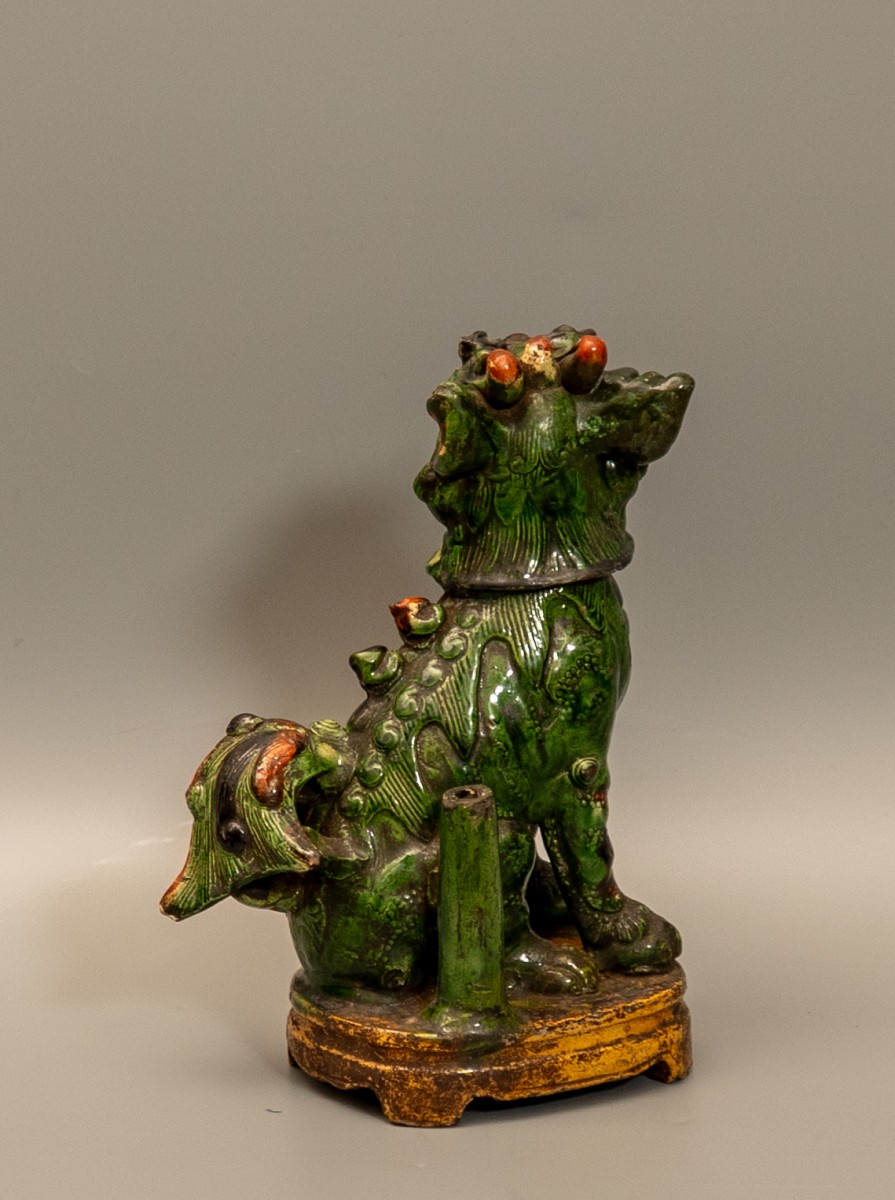
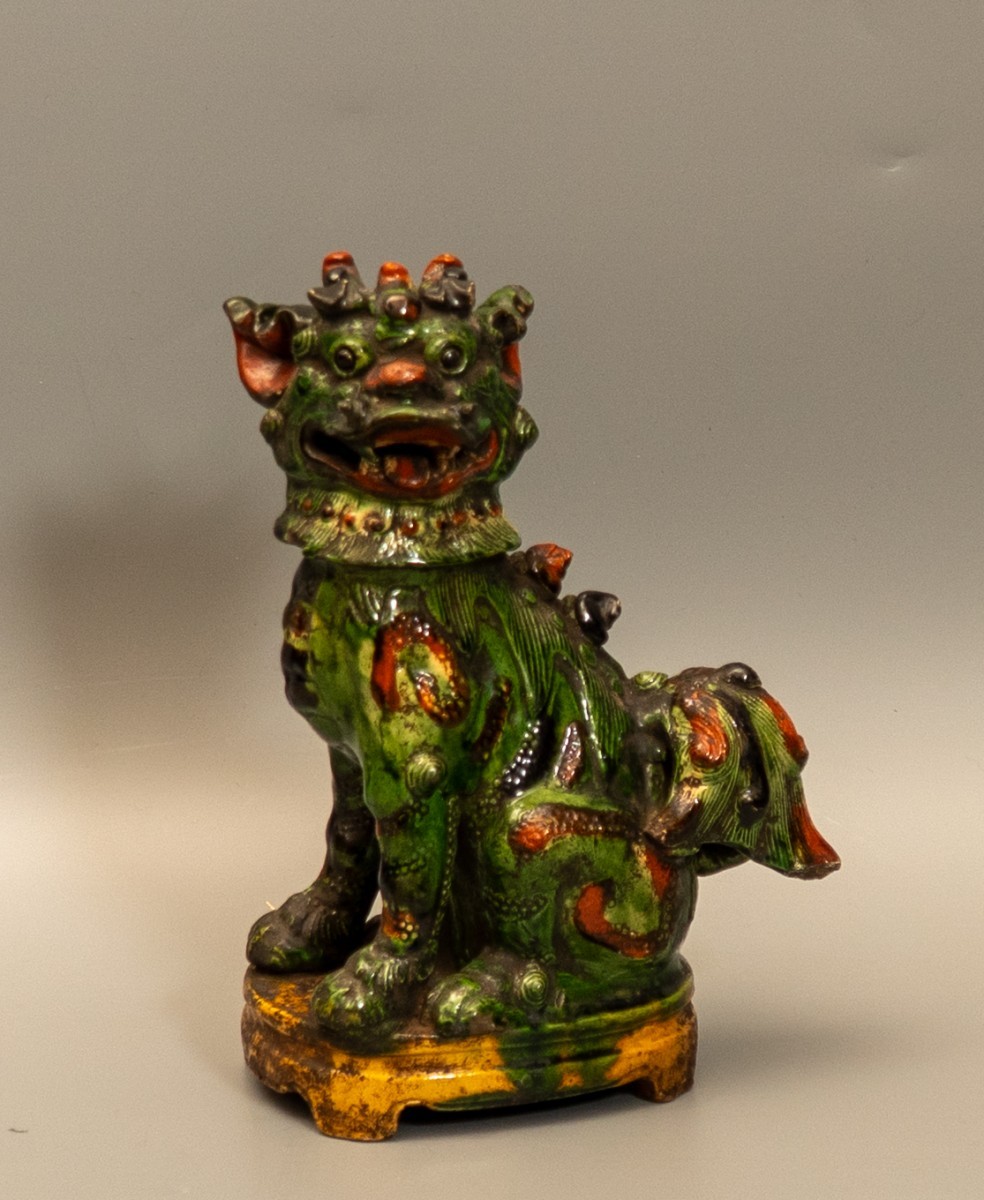
A boldly modelled and vigorously glazed Qing dynasty Buddhist guardian lion (sh?zi), glazed in the classic three-colour sancai palette of deep copper-green, amber-yellow and aubergine-black over a reddish-brown stoneware body.
The lion is depicted seated, head raised, mouth open to reveal teeth and tongue, the densely curled mane crowned with small horned bosses. The body is richly detailed with incised fur markings, a collar with pendant studs, and a small cub figure perched on the haunches; the upswept tail with flame-like lobes. A cylindrical candle socket between the forelegs confirms the piece's function as a candlestick bearer for altar or domestic use. The stepped rectangular base with bracket feet is glazed in amber-yellow. Base unglazed, revealing the characteristic reddish-brown northern Chinese stoneware body; hollow construction.
One small old chip to a horn of the mane crown with worn edges and consistent aged patina; minor wear to aubergine passages and base rim glaze consistent with age. No restoration.
Height 27 cm, width 18 cm.
Literature:
Valenstein, S.G., A Handbook of Chinese Ceramics, Metropolitan Museum of Art, New York, 1989 (rev. ed.), pp. 220–235 (for northern sancai stoneware wares of the Ming and Qing periods)
Vainker, S.J., Chinese Pottery and Porcelain, British Museum Press, London, 1991, pp. 180–186 (for Qing dynasty ceramic production and glazing traditions)
Wood, N., Chinese Glazes: Their Origins, Chemistry and Recreation, A&C Black, London, 1999, pp. 84–92 (for copper-green and lead-fluxed sancai glaze technology)
Medley, M., The Chinese Potter: A Practical History of Chinese Ceramics, Phaidon, Oxford, 1976, pp. 240–248 (for the continuation of the sancai tradition in northern kilns)
Cf. Sotheby's London, Chinese Ceramics and Works of Art, 12 November 2014, lot 132 (comparable sancai-glazed stoneware guardian lion, northern China, 18th century)