Offered by Torkild
REQUEST INFORMATION
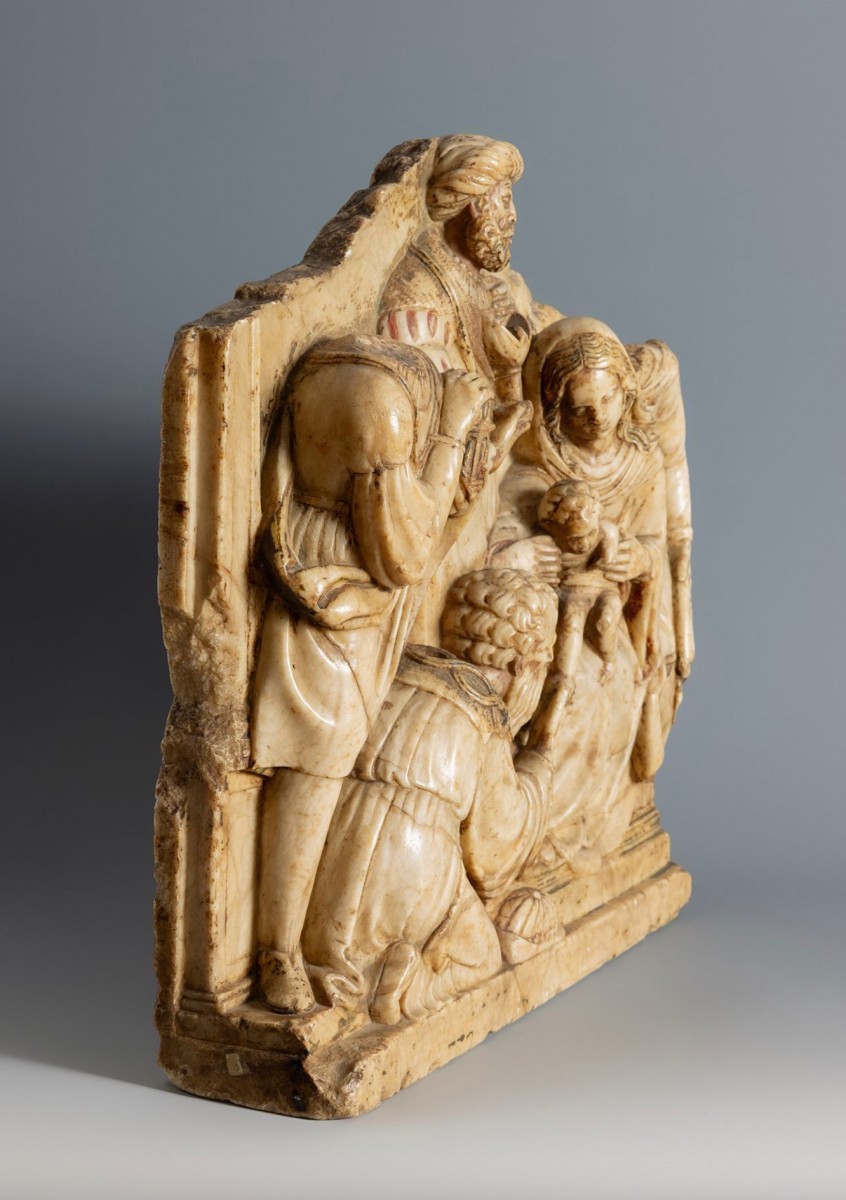
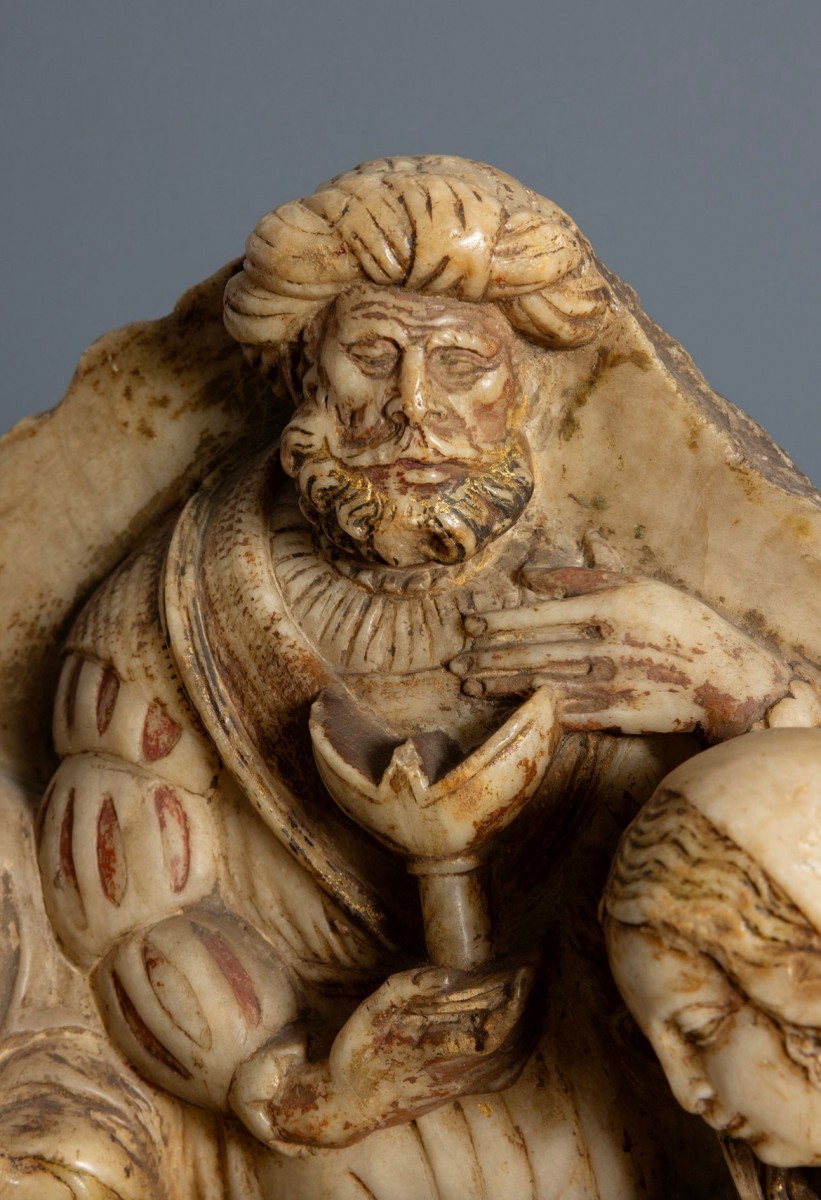

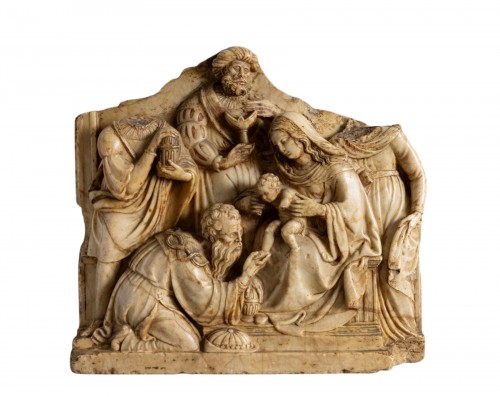
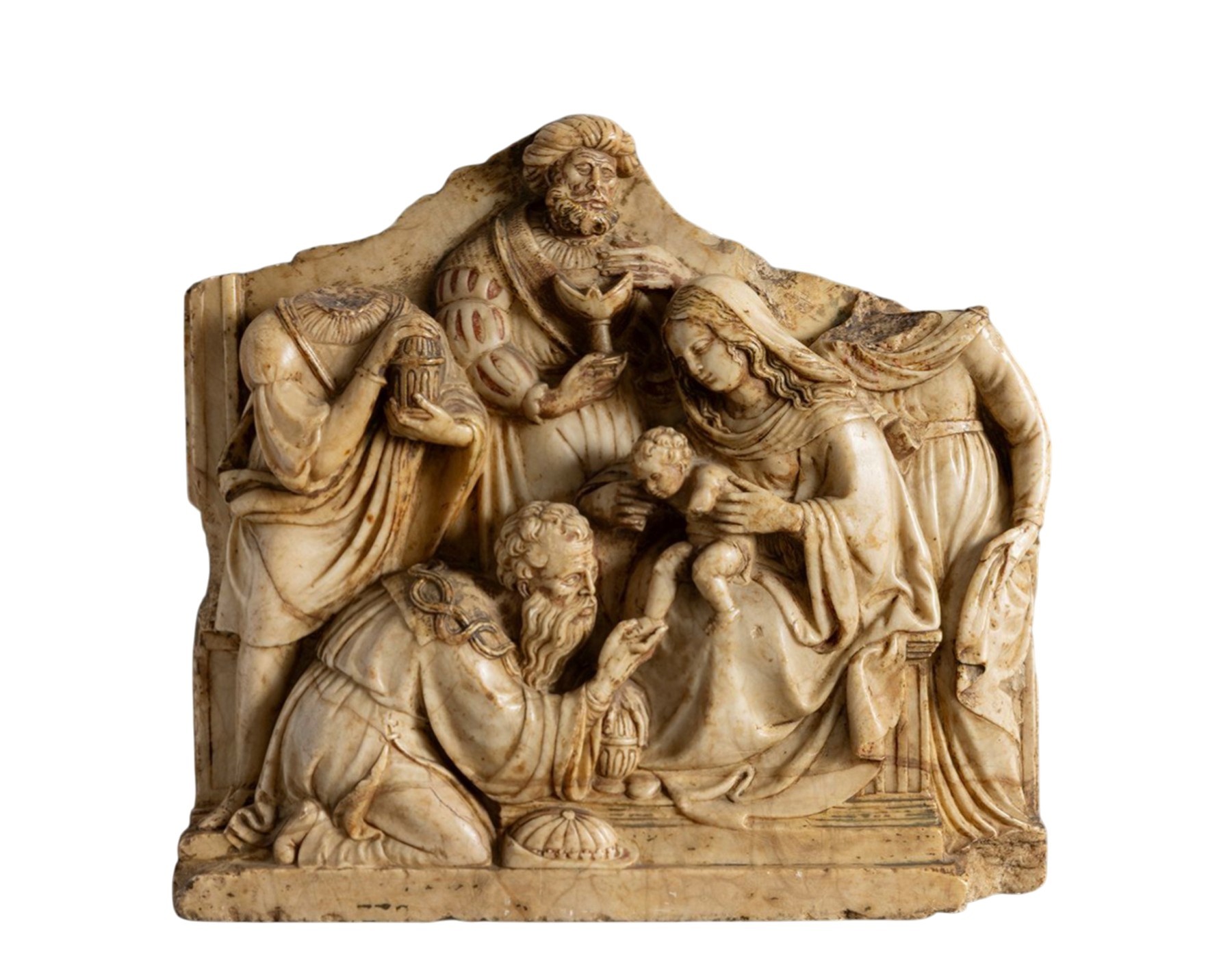
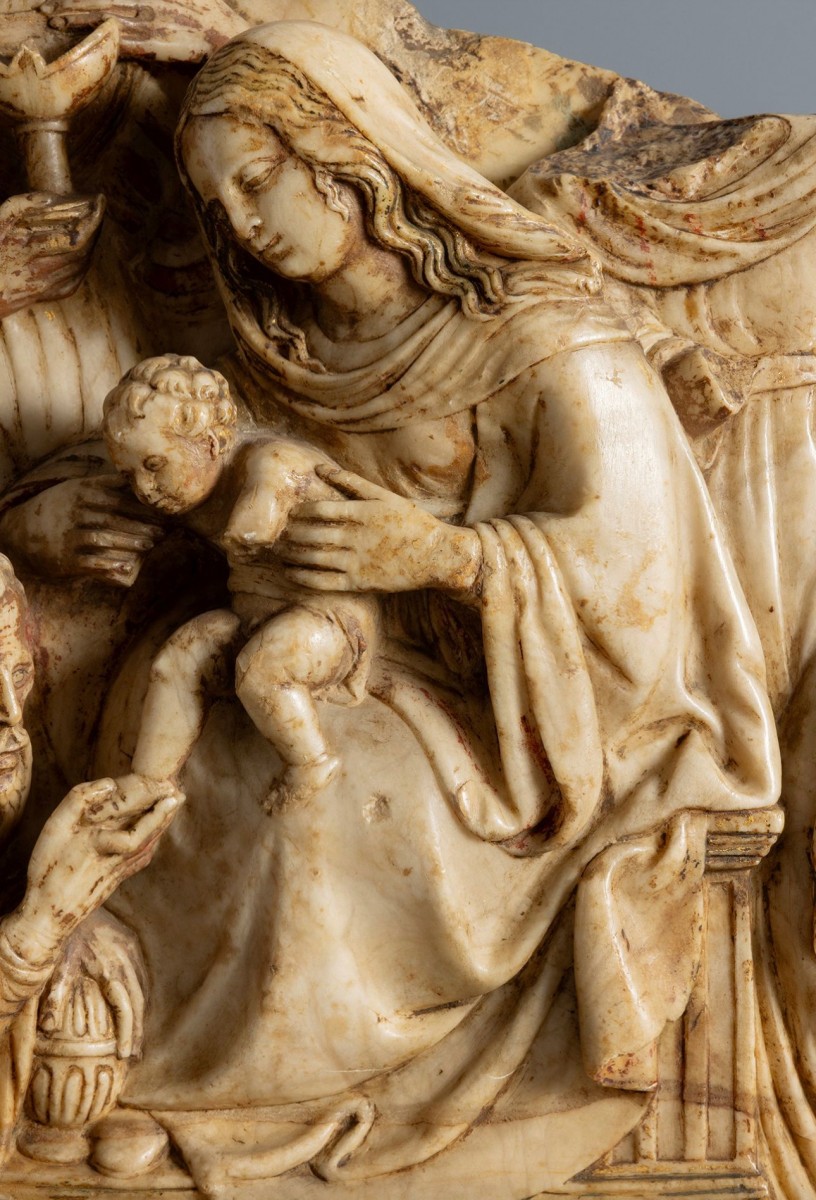
Alabaster sculpture with original polychromy and gilding
Mechelen (B), ca 1620
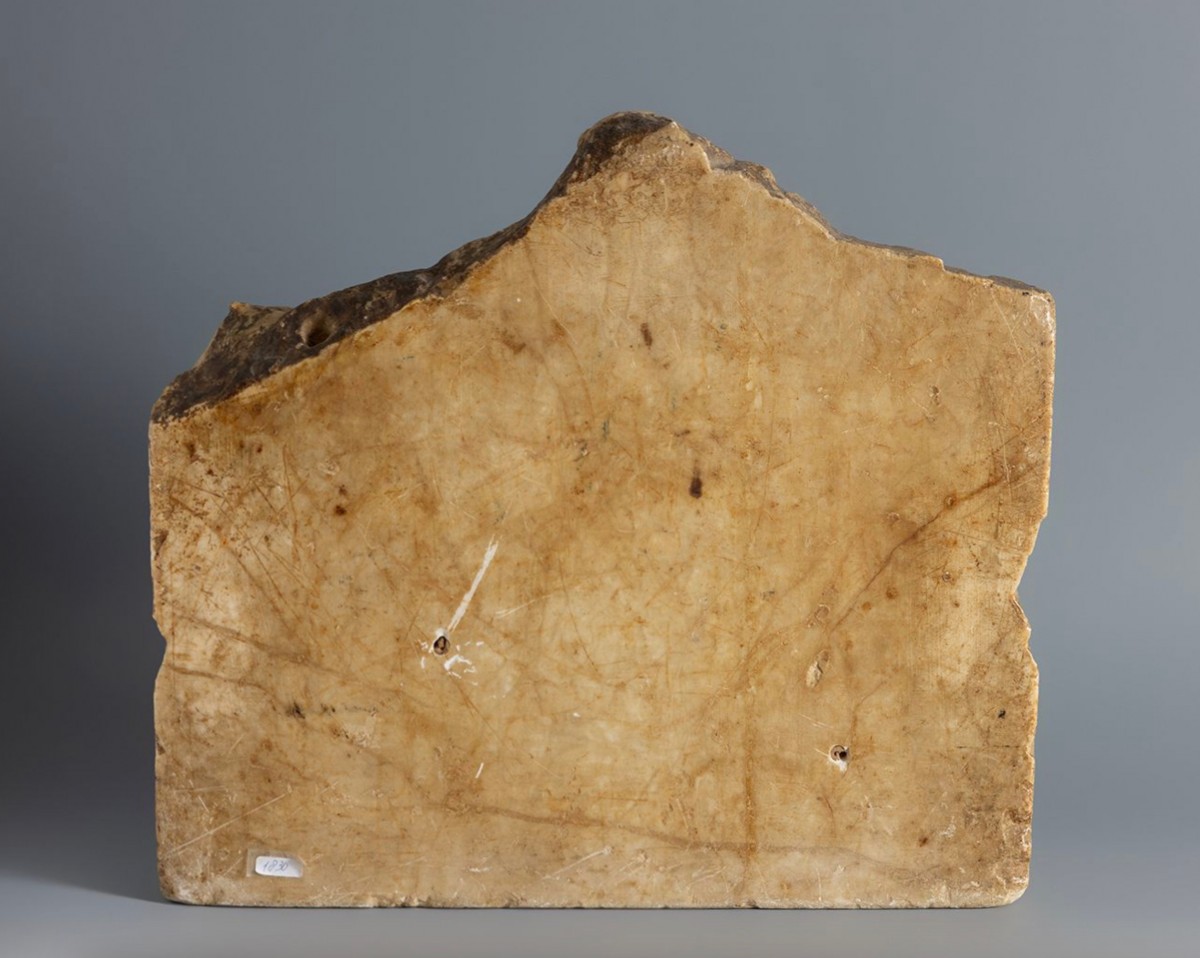
Dimensions : 37,5 x 33,5 x 8 cm
Literature :
A. Lipinska, ‘Alabastrum, id est, corpus hominis. Alabaster in the Low Countries, a cultural history’, in A.S. Lehmann, F. Scholten & H.P. Chapman (ed.), Netherlands Yearbook for History of Art 62: Meaning in materials, Leiden 2013, pp. 84-115.
Description :
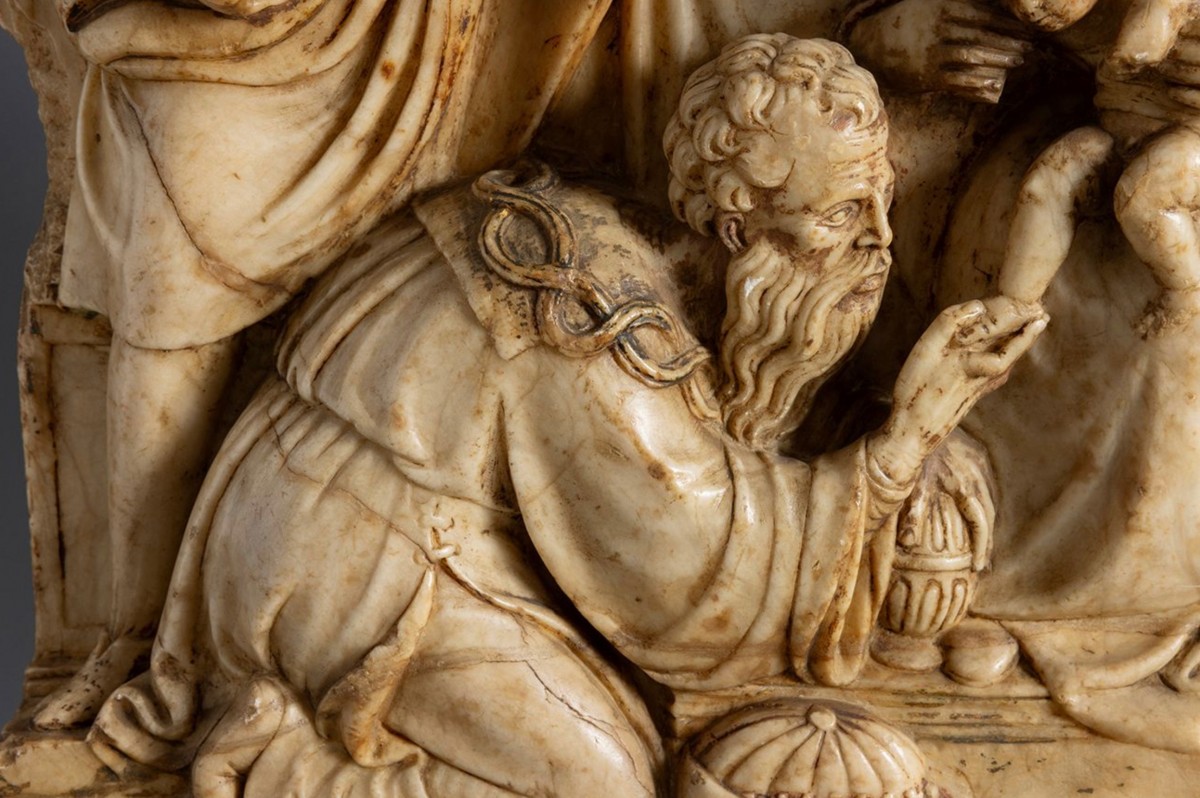
This alabaster sculpture with traces of original polychromy and gilding depicts the Adoration of the Kings, also known as the ‘Magis Adoratur’. In the centre of the scene is Mary, with Christ on her lap, bending forward. The three wise men or kings worship the child and offer him gifts of gold, myrrh and frankincense. Melchior is kneeling on the left and is touching the foot of the child. Behind him is Balthasar, and standing next to Mary is Caspar. Joseph is standing behind the seated Mary.??The adoration of the kings is celebrated on Epiphany, 6 January. The story of the adoration is derived from the following text from Matthew: ‘And when they were come into the house, they saw the young child with Mary his mother, and fell down, and worshipped him: and when they had opened their treasures, they presented unto him gifts; gold, and frankincense, and myrrh’. In Western art tradition, the wise men or astrologers are traditionally depicted as three kings and are given the names ‘Melchior’, ‘Baltasar’, and ‘ Caspar.
This alabaster sculpture was manufactured in Mechelen. Between the 1560s and 1630s the city was one of the most important European centers for the manufacture of alabaster objects. It was no coincidence that the Malines alabaster became famous. Alabaster cutters and woodcarvers were united in the same guild (alabaster is a soft stone that is processed in a similar way to wood), which meant that a great deal of knowledge and experience was shared. This tradition of alabaster carving was revived when the Court of Margaret of Austria settled in Mechelen and it effectively became the capital of Burgundy. The demand for richly decorated works of art increased, and the artistic circles around the Court provided new impulses and ideas. Mechelen’s excellent trade network ensured the distribution of art and utensils made of Malines alabaster throughout northwest Europe.