Offered by Galerie Thierry Matranga
REQUEST INFORMATION
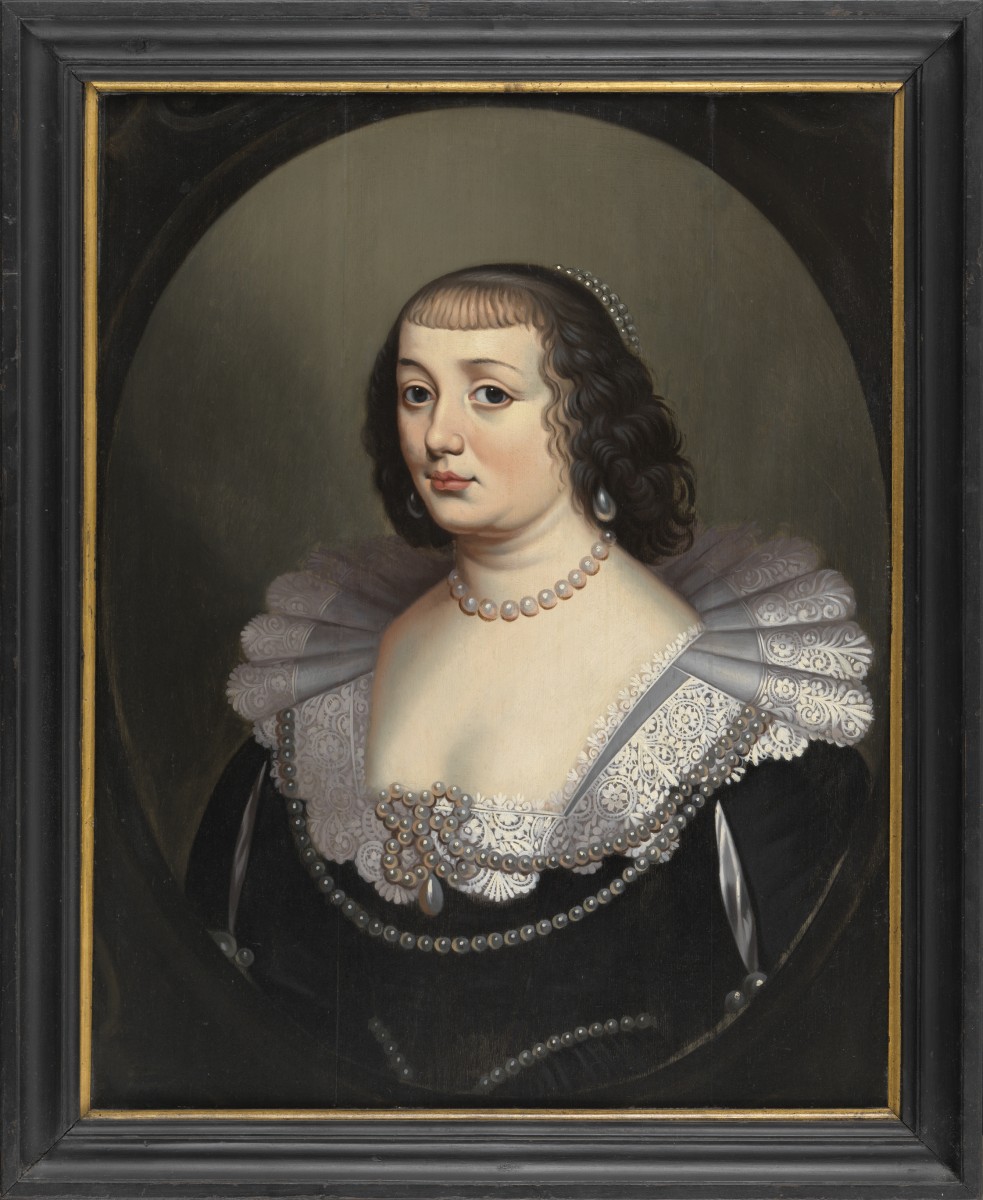
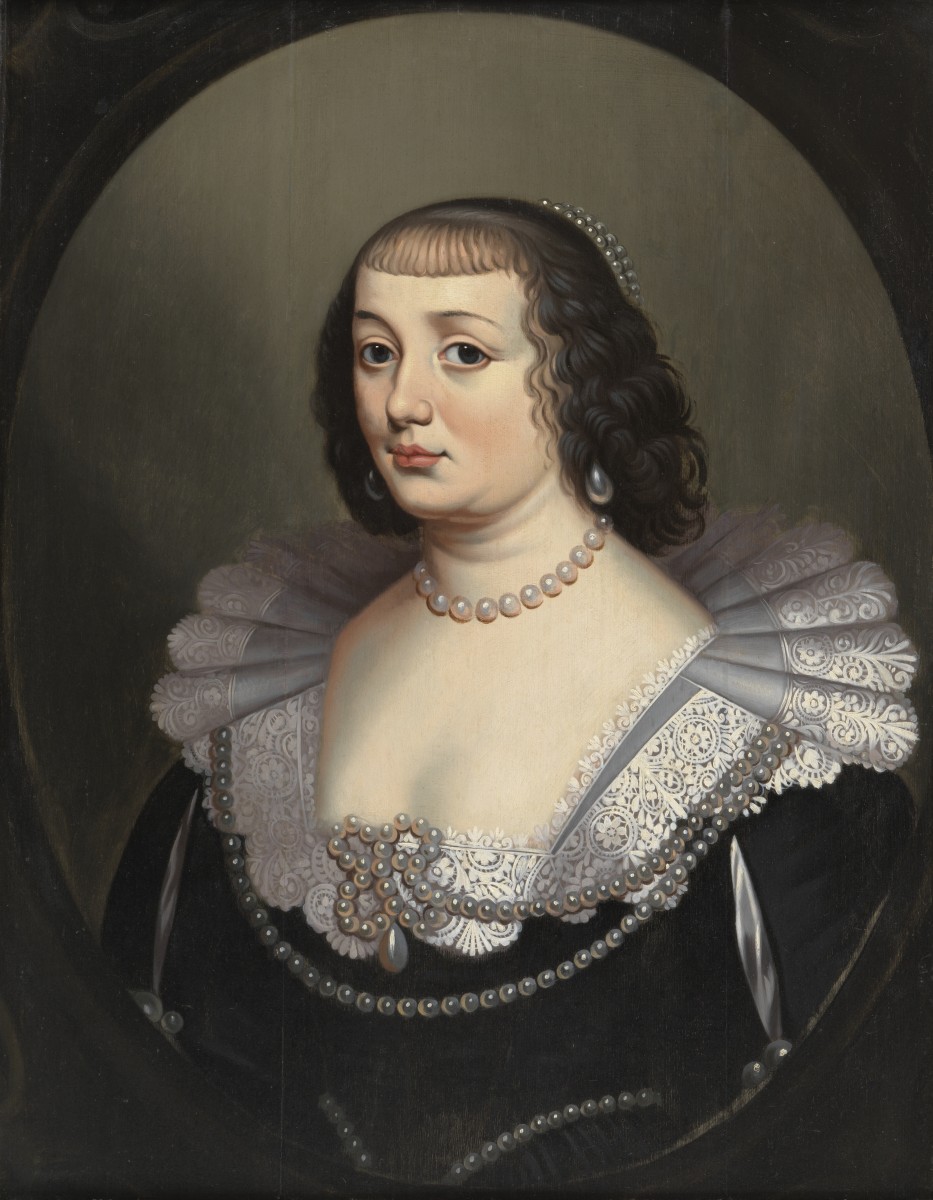

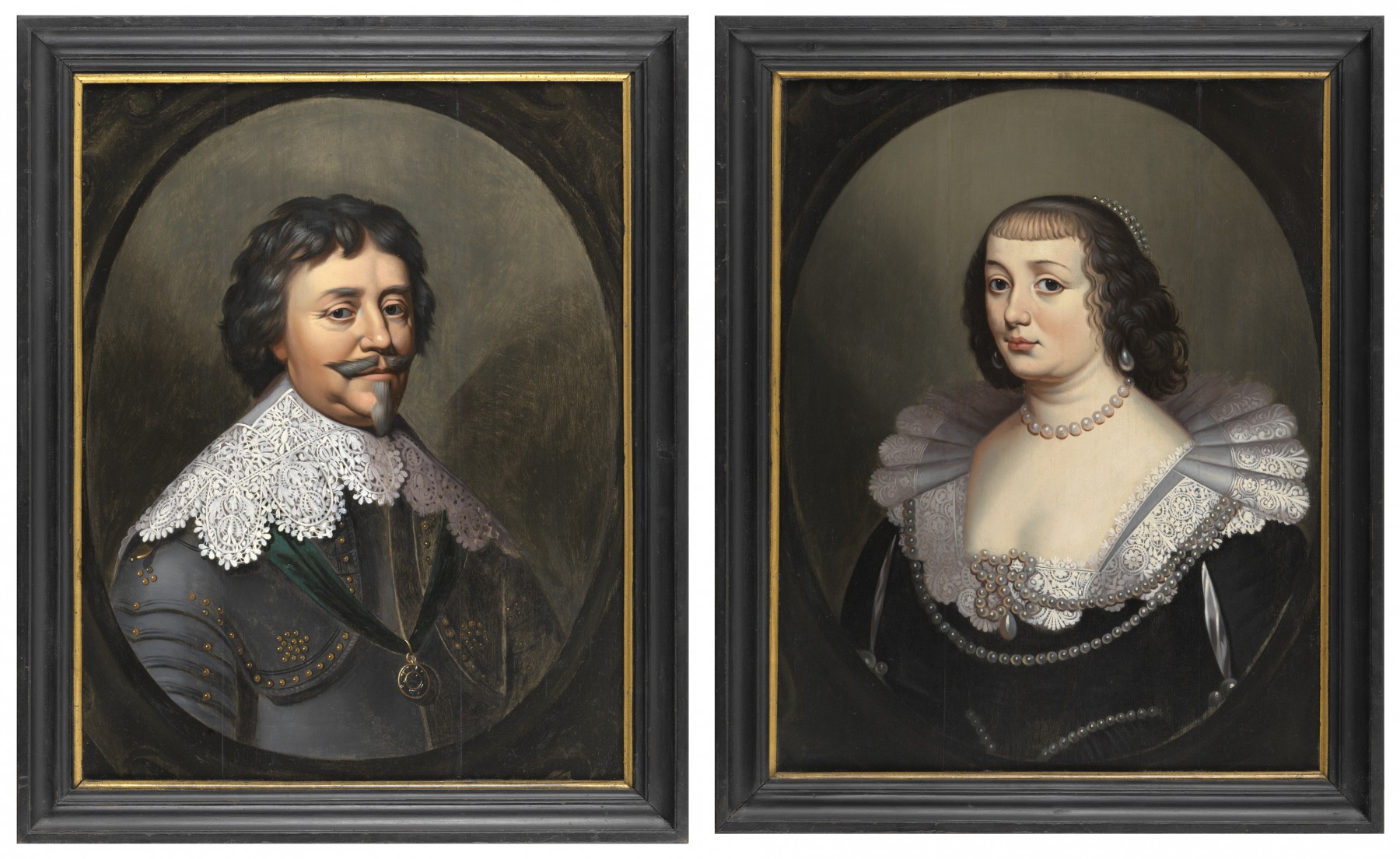
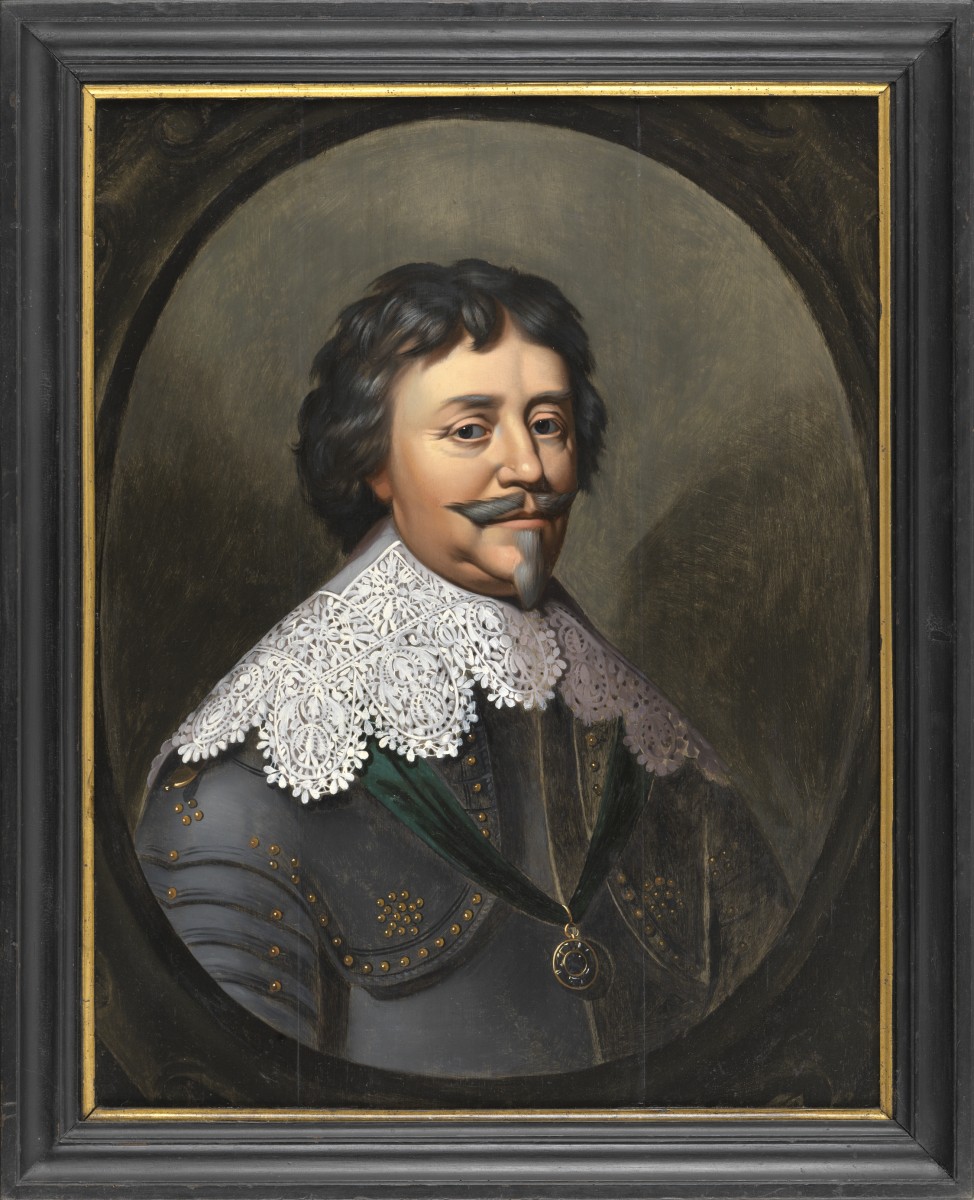
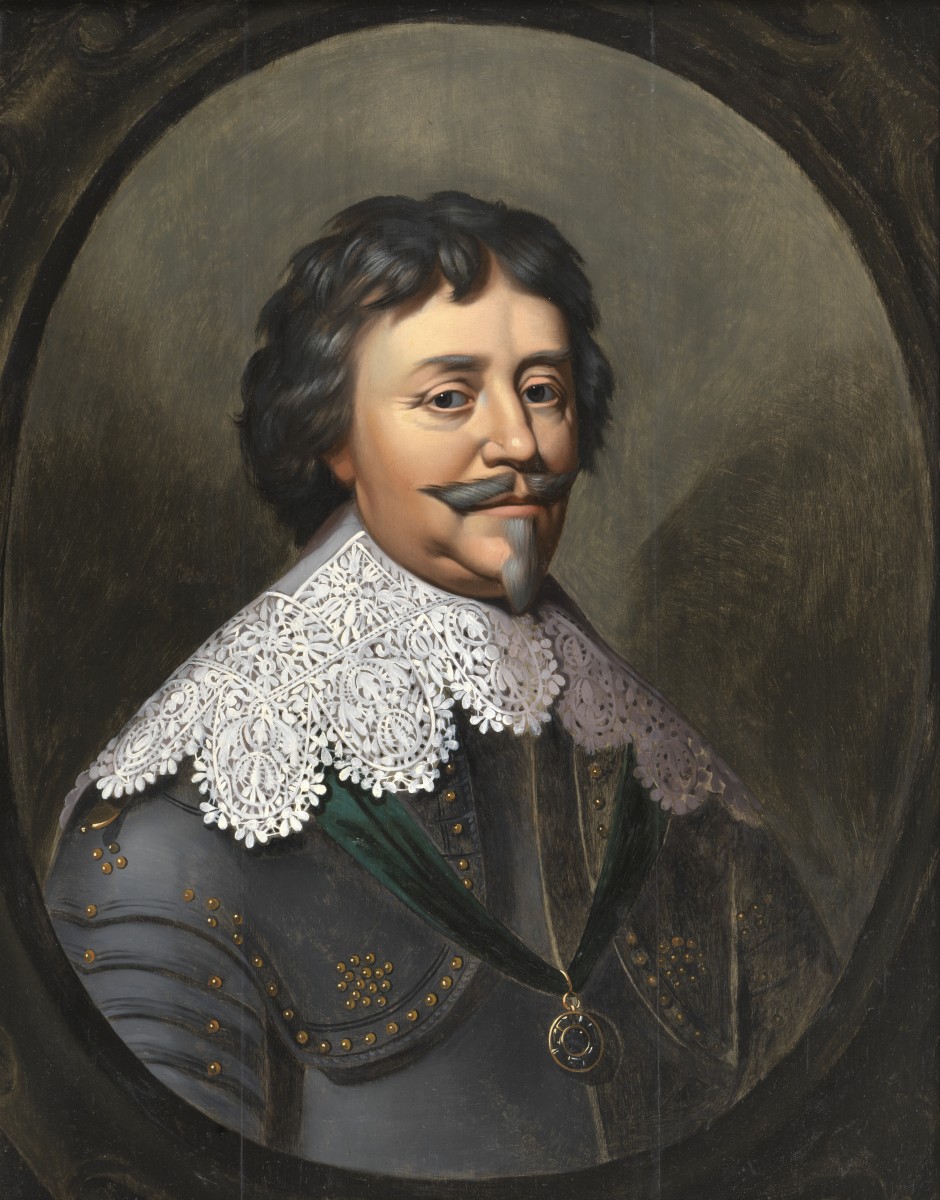
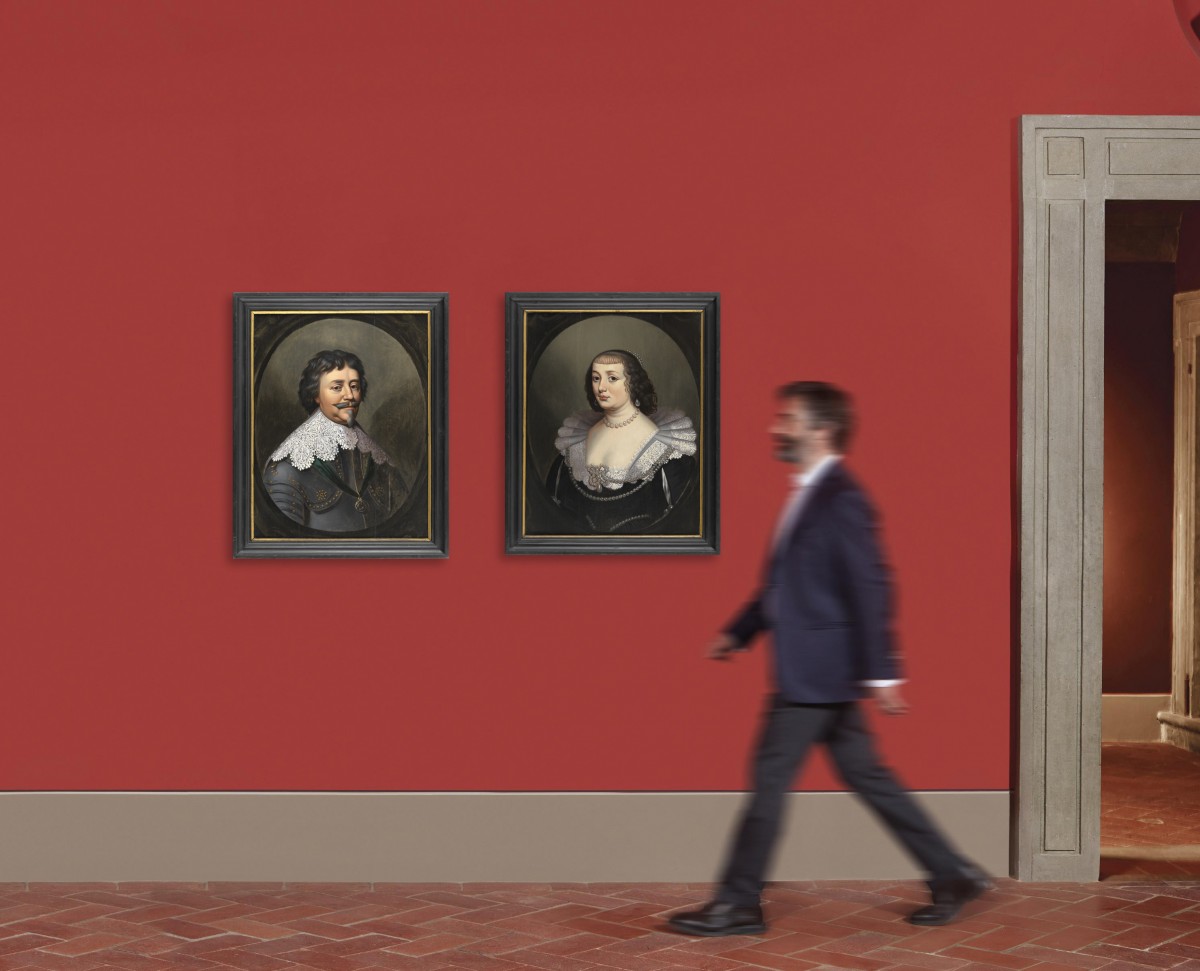
Pair of portraits from the 17th century Dutch school, follower of Gerrit van Honthorst. Oil on oak panels.
The Stadtholder of the United Provinces and his wife are both depicted within feigned oval frames, a common convention in the mid-17th century, creating the illusion of the sitters appearing through a window opening.
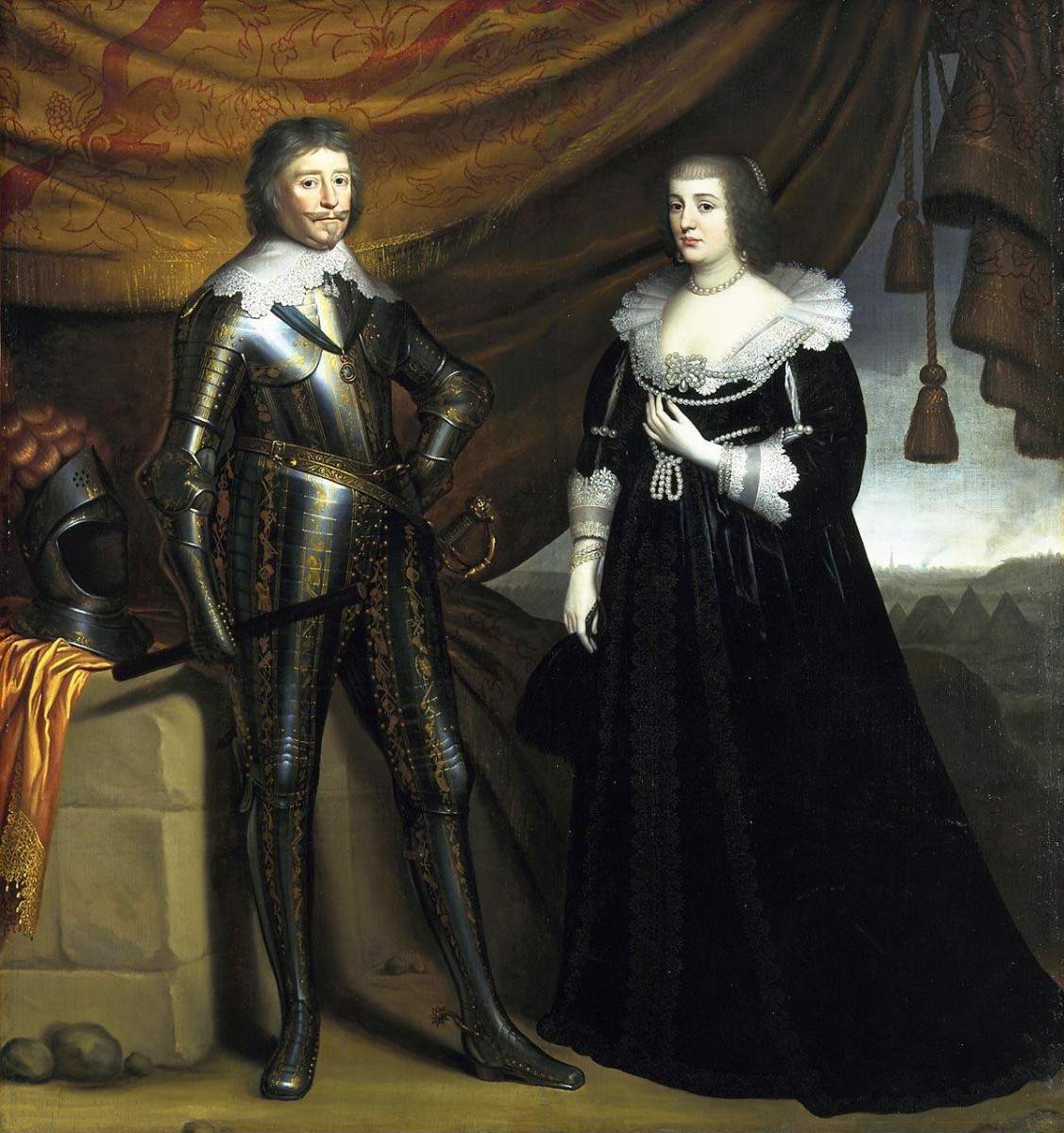
The relationship between these two portraits and the celebrated double portrait of Frederick Henry of Orange-Nassau and Amalia van Solms, painted by Gerrit van Honthorst in 1637–1638 and now preserved at the Mauritshuis, is striking. One finds the same costumes, the same bust-length composition, the same lateral lighting, and the same intention to present the couple with dignity and restraint.
These panels are, however, later in date and belong to the generation of painters who, after 1640, adopted and disseminated Honthorst’s formulas throughout the United Provinces and the Southern Netherlands. The execution—precise and measured—suggests the activity of a Dutch or Flemish workshop of this generation, connected to the artistic circles of Utrecht or The Hague, where Honthorst’s influence remained strong.
These two portraits stand as a tribute to the princely couple, commemorating the Stadtholder who skillfully strengthened the power of the United Provinces, and his wife, who contributed to making the court of The Hague a major artistic centre.
What is particularly striking is the way the painting combines the Protestant restraint of the North with a discreet sensuality of materials. Nothing is ostentatious; everything lies in nuance—in the silent intensity of the gazes, in the way light glides across lace or catches a pearl. The feigned ovals, far from being a simple device, become the very space in which the magic of portraiture unfolds: a threshold where the sitters, both present and distant, seem to step forward beyond the surface of the panel.
Both portraits are soberly set in profiled blackened wood frames.
Dimensions:
Amalia van Solms: 75 x 59.5 cm – 83 x 68 cm with frame
Frederick Henry of Nassau: 75.5 x 60 cm – 84 x 68.5 cm with frame
Biography:
Son and grandson of painters, Gerrit van Honthorst (Utrecht 1592 – 1656) trained with Abraham Bloemaert in Utrecht. At just 18, he moved to Rome, where he was deeply influenced by the art of Caravaggio (Michelangelo Merisi). He fully embraced the new aesthetic introduced by Caravaggio, and his talent quickly attracted attention. Powerful patrons—including Cardinal Scipione Borghese, Grand Duke Cosimo II de' Medici, and especially the Marquis Giustiniani, with whom he resided—secured him major commissions for churches in Rome. His works, marked by strong contrasts of light, earned him the nickname “Gherardo delle Notti” (“Gerard of the Nights”).
Returning to Utrecht in 1620, he established a successful workshop with numerous collaborators. In 1628, he was invited by Charles I of England to his court, where he painted several portraits. In 1635, he produced large historical compositions for Christian IV of Denmark, and in 1637 he became the favourite painter of the court of Frederick Henry of Orange-Nassau. He created mythological scenes, decorated the Huis ten Bosch in The Hague, and painted numerous portraits, including those of members of the House of Orange-Nassau.
Bibliography:
– Gerrit van Honthorst 1592–1656, exhibition catalogue, Centraal Museum Utrecht / National Gallery of Art Washington, Zwolle: Waanders Publishers, 1999.
– Papi, Gianni, Gherardo delle Notti, Gerrit Honthorst in Italia, Edizione dei Soncino, 1999.
– Dutch Portraiture in the Age of Rembrandt and Frans Hals, Mauritshuis, The Hague: Waanders Publishers.
– Slive, S., Dutch Painting 1600–1800, New Haven / London: Yale University Press, 1995.
– de Jongh, E., Portretten van echt en trouw. Huwelijk en gezin in de Nederlandse kunst van de zeventiende eeuw, Amsterdam: Rijksmuseum / Zwolle: Waanders Publishers, 1986.
– Falkenburg, R., The Portrait in the Netherlands, London: Phaidon Press, 2003.