Offered by Galerie Thierry Matranga
REQUEST INFORMATION
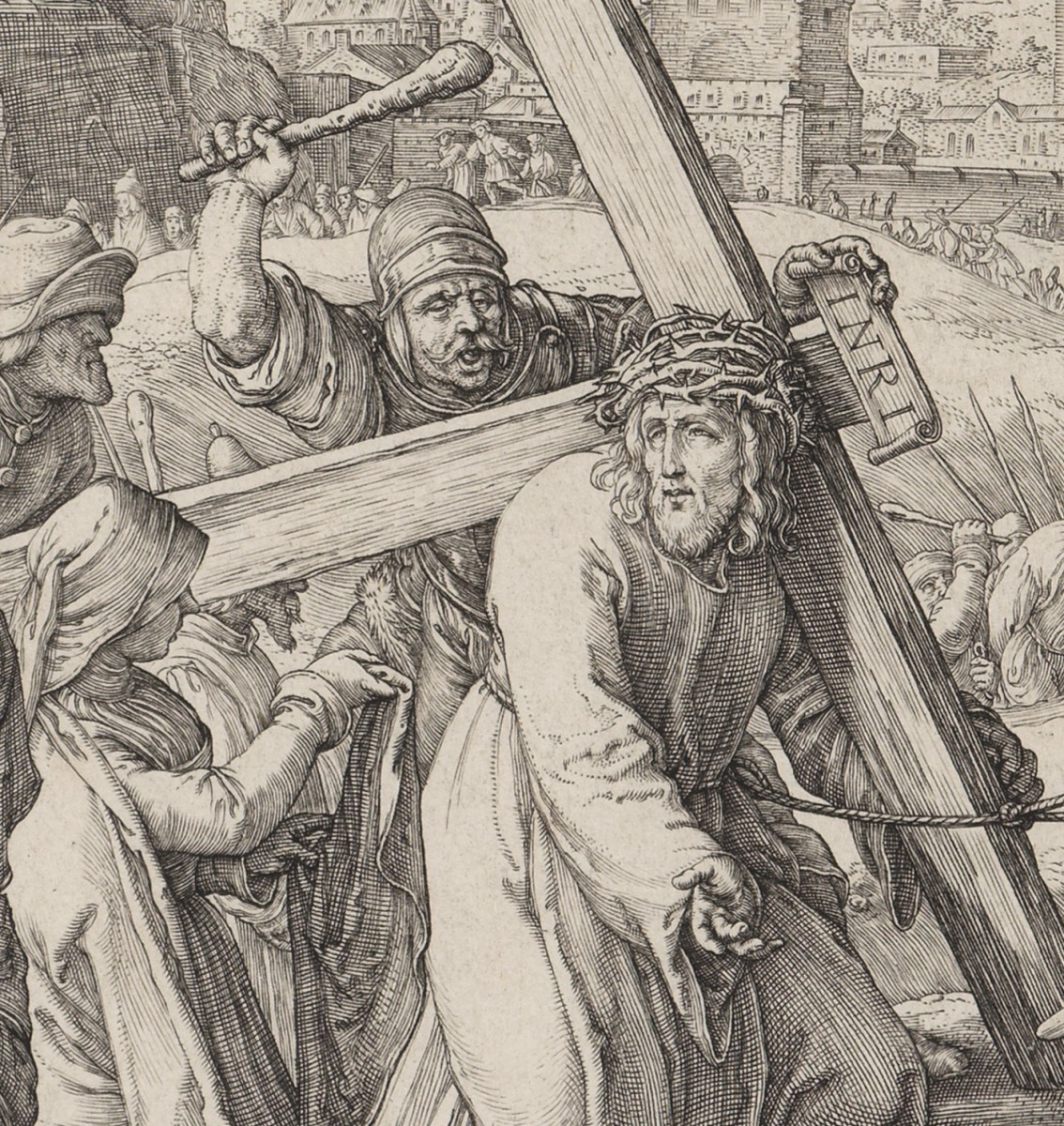
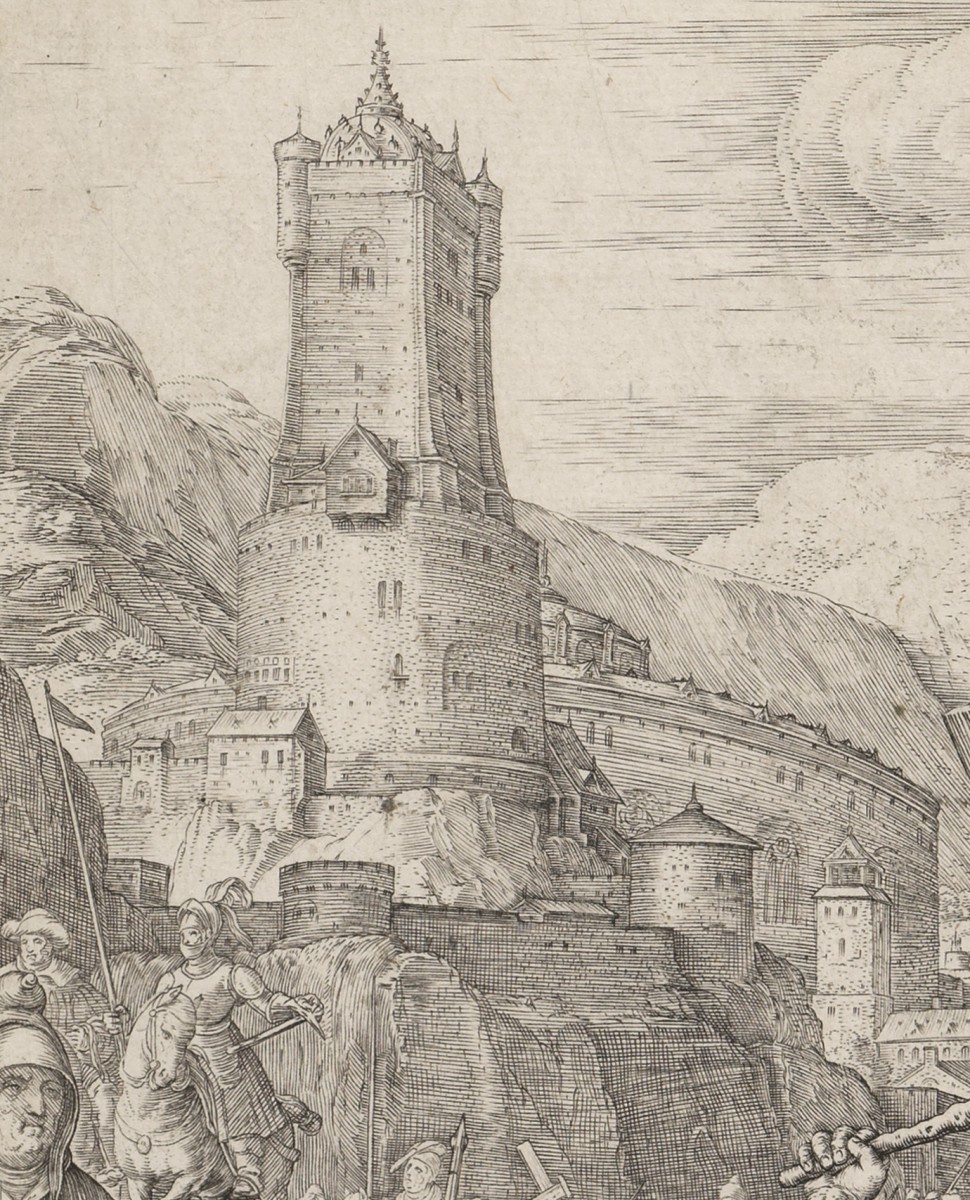

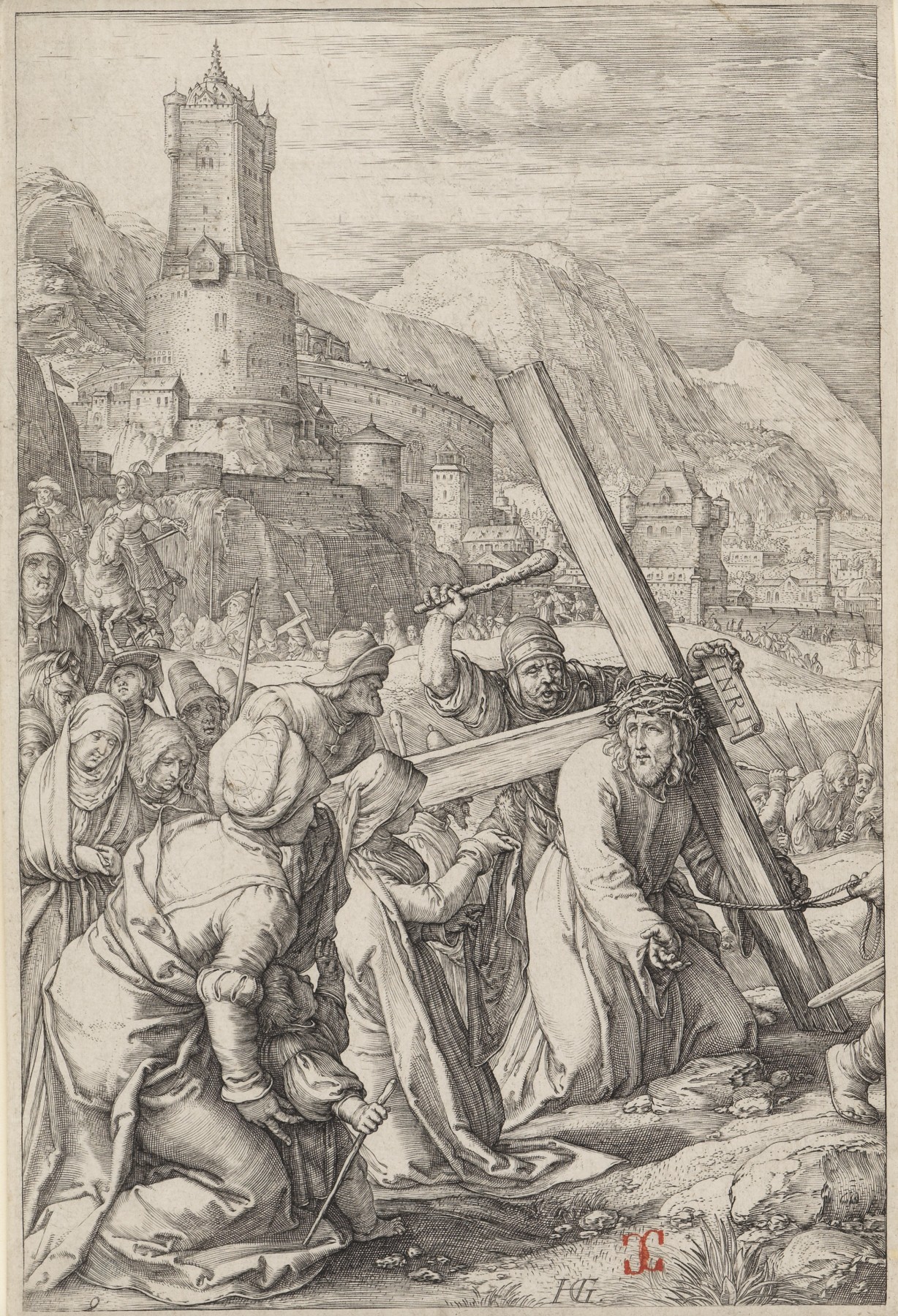
“Christ Carrying the Cross” or “The Ascent to Calvary”, Hendrick Goltzius, circa 1596–1598
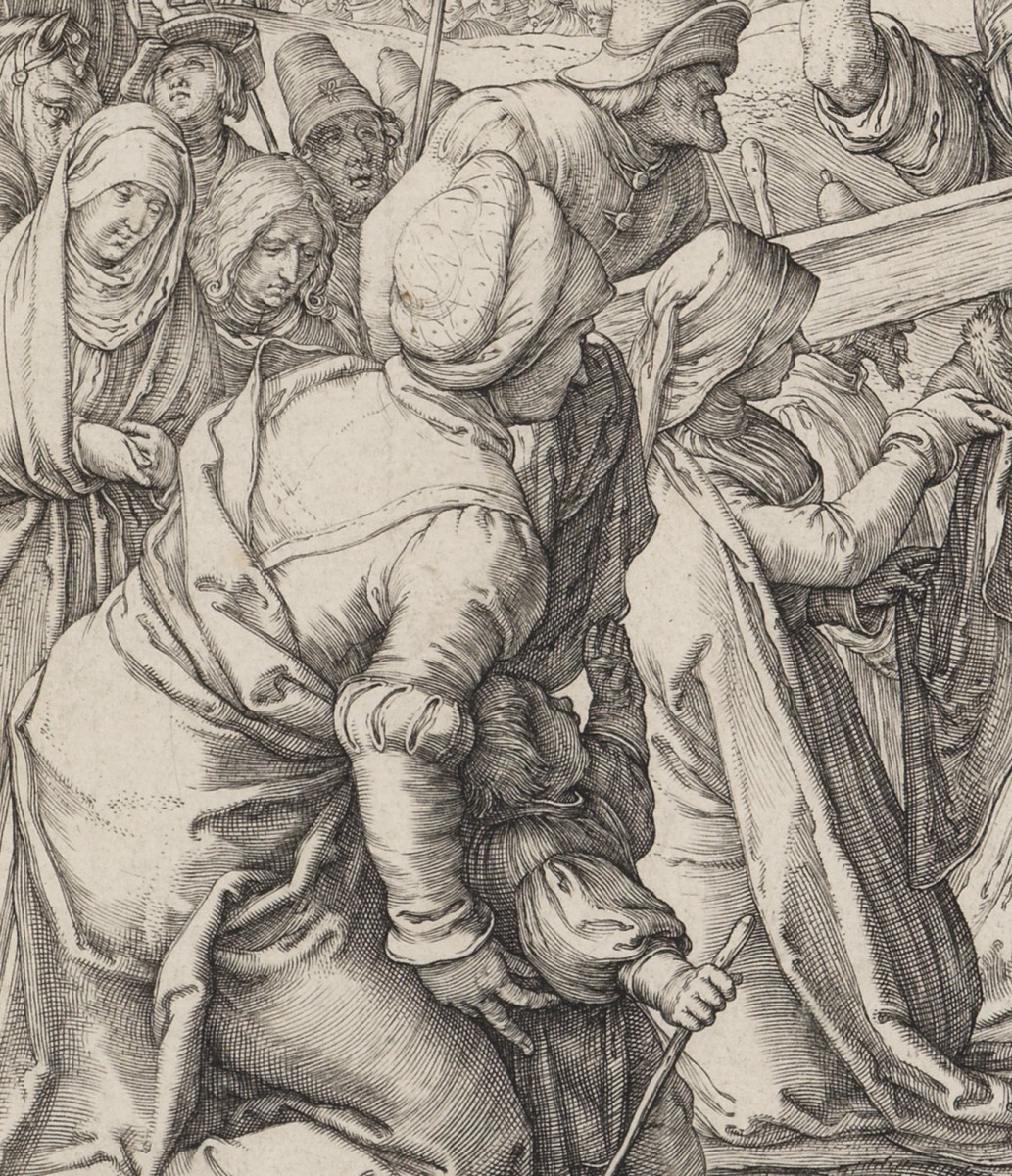
Our sheet is one of the twelve prints illustrating the Passion of Christ engraved by Goltzius between 1596 and 1598. These engravings reflect the influence of the Dutch artist Lucas van Leyden, both in the choice of figures and in the engraving technique itself. Unlike his usual graphic style, characterized by an expressive line that widens and narrows around the figures and the background, Goltzius here uses fine and regular lines, interspersed with long straight hatchings, characteristic of the manner of van Leyden. In Northern Europe, at the end of the 16th century, there was a renewed interest in the work of Lucas, and this series belongs within that context. The same can be said for Goltzius’s famous Pietà, inspired by Albrecht Dürer, as well as for the Circumcision and the Adoration of the Magi, taken from his series “The Life of the Virgin”. The series of the Passion of Christ enjoyed immense popularity during Goltzius’s lifetime and long after his death.
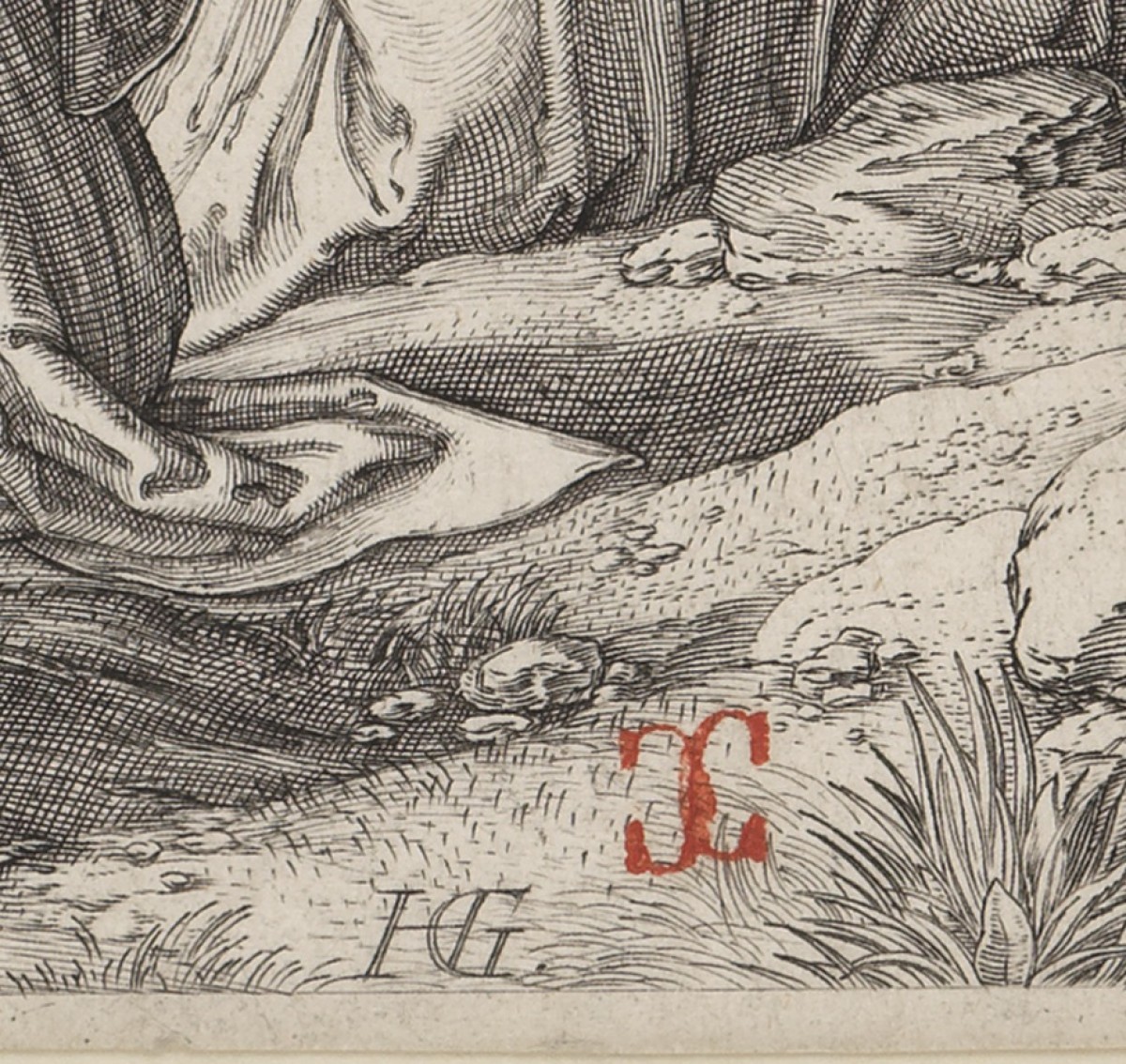
Goltzius’s interlaced monogram HG is located at the foot of the plate, with a collector’s mark in red ink (two interlaced Cs to be identified) beside it.
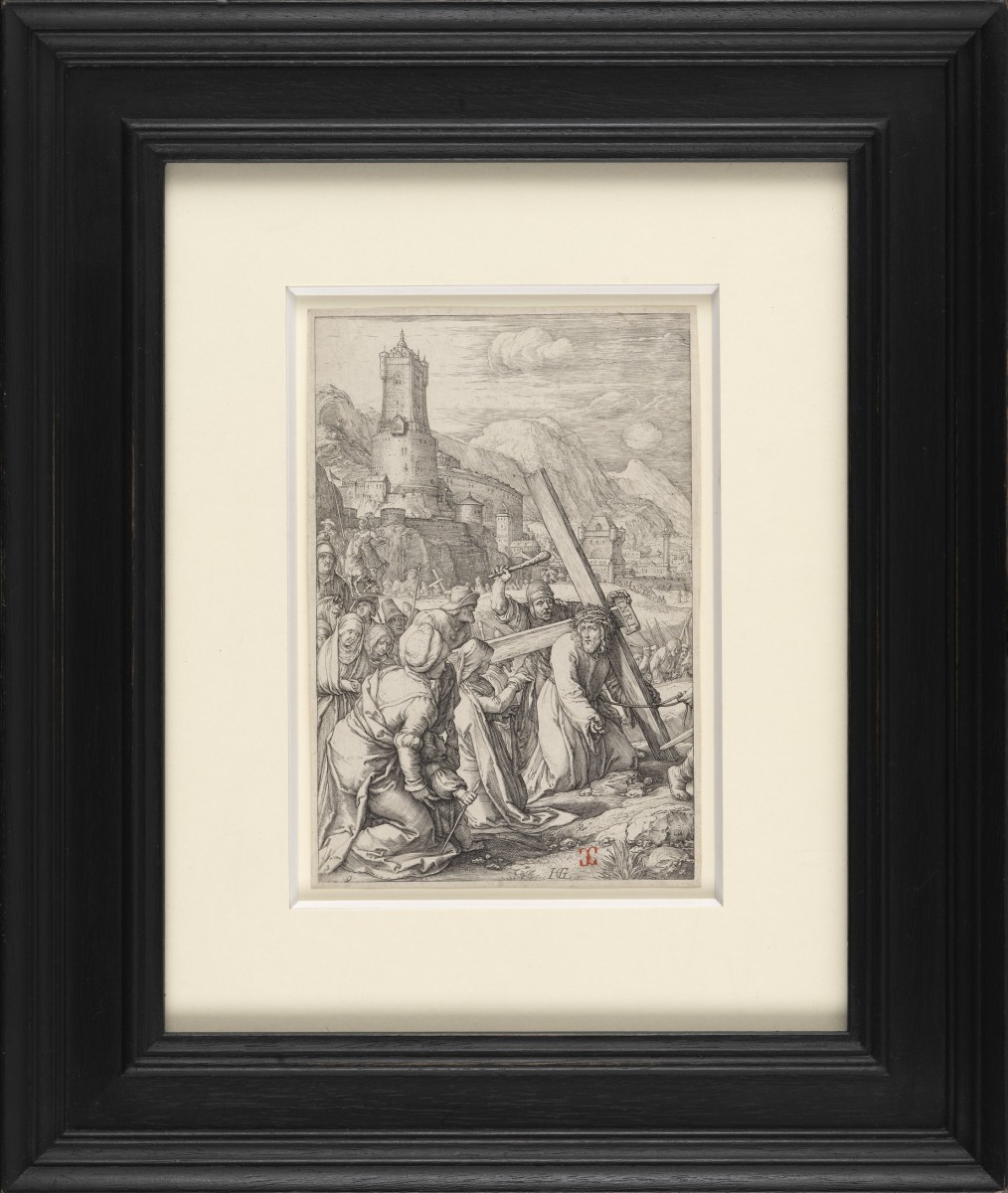
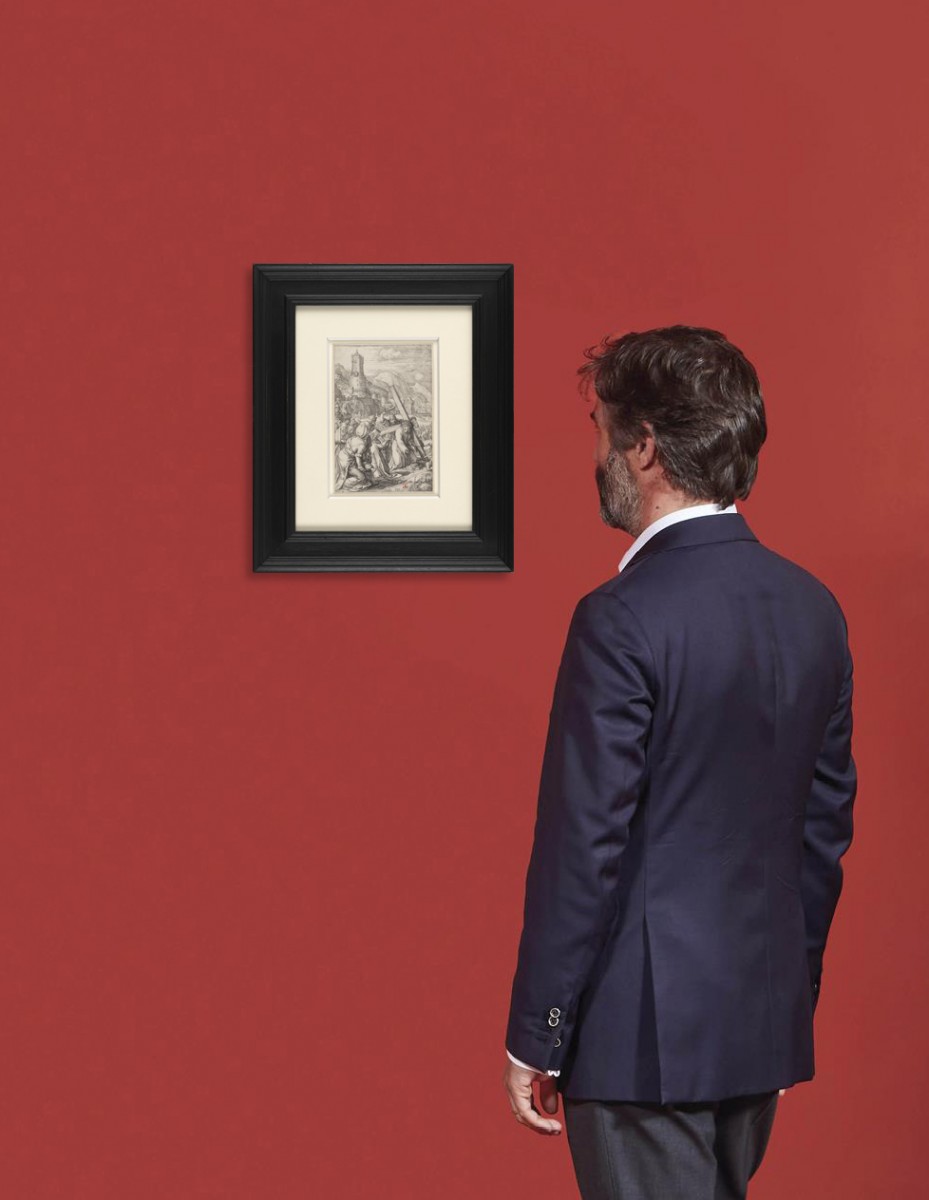
Our engraving is presented under a beveled mat, beneath anti-reflective and UV-protective glass, in a wide blackened wooden frame.
Dimensions: 20 × 13.5 cm (sheet) – 40.5 × 34 cm with the frame
Biography:
Hendrick Goltzius (Mülbracht 1558 – Haarlem, Jan. 1, 1617) was born into a family of painters but began his artistic career as an apprentice to the engraver Dirck Volkertsz. Coornhert in 1574. He followed his master to Haarlem in 1577, where he worked until the end of his life, with the exception of a stay in Italy in 1591 which had a considerable impact on his art. His friend Karel van Mander described the influence that the “sweet paintings of Raphael” had on him, but especially the “naturalism of the flesh by Correggio,” the “important contrasts of shadow by Titian,” and the “superb materials and fabrics of Veronese.” These discoveries led him to abandon the late Mannerism of his early career in favor of a more classicizing approach based on the Late Renaissance, and to begin working in oil painting, a medium he had not practiced before. In 1582, Goltzius opened his own printing workshop, which allowed him to distribute his engravings and become considerably wealthy. Having suffered from fragile health throughout his life, he died in 1617; the city of Haarlem marked his funeral by ringing the bells for half an hour.