Offered by Dei Bardi Art
REQUEST INFORMATION
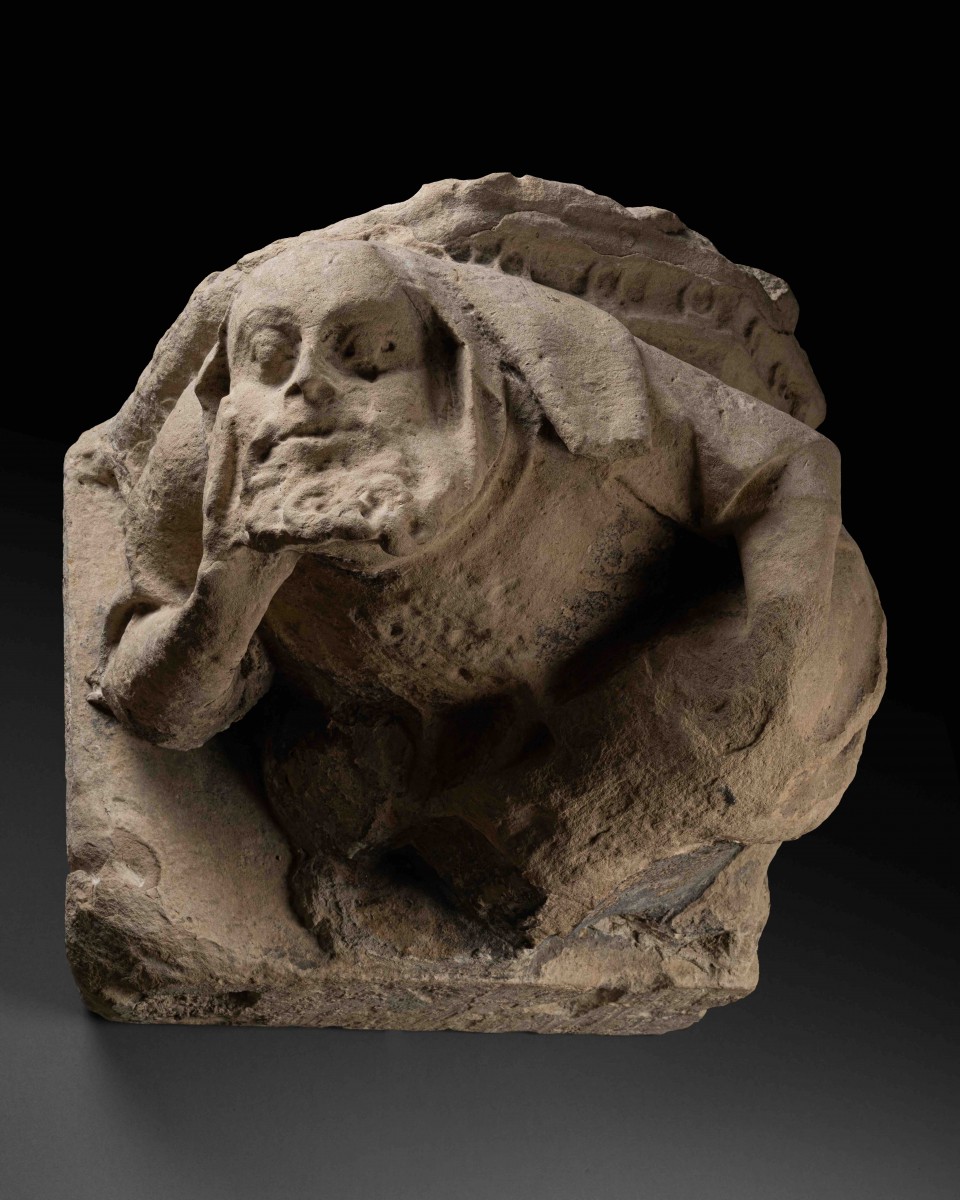

Sculptures and works of art from the Middle Ages and the Renaissance
Gothic Corbel
France, 15th century
limestone
36 x 44 x 45 cm
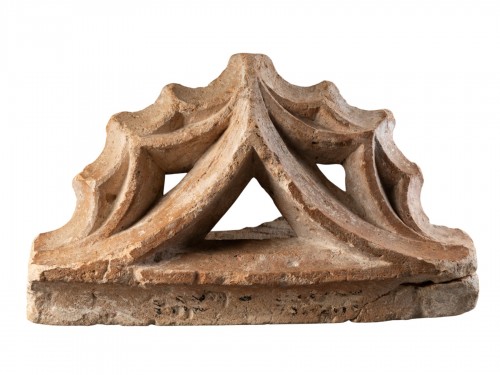
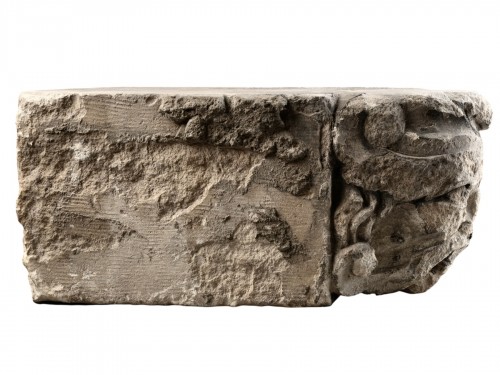
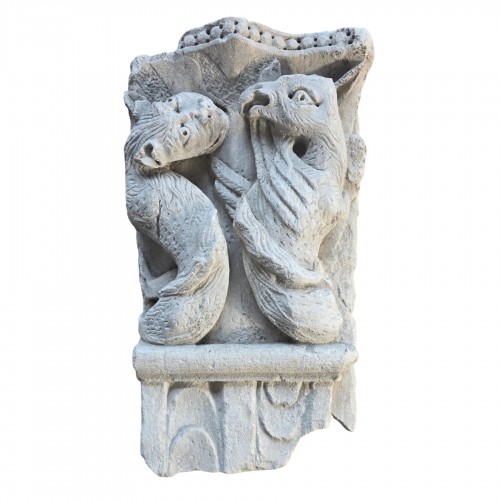
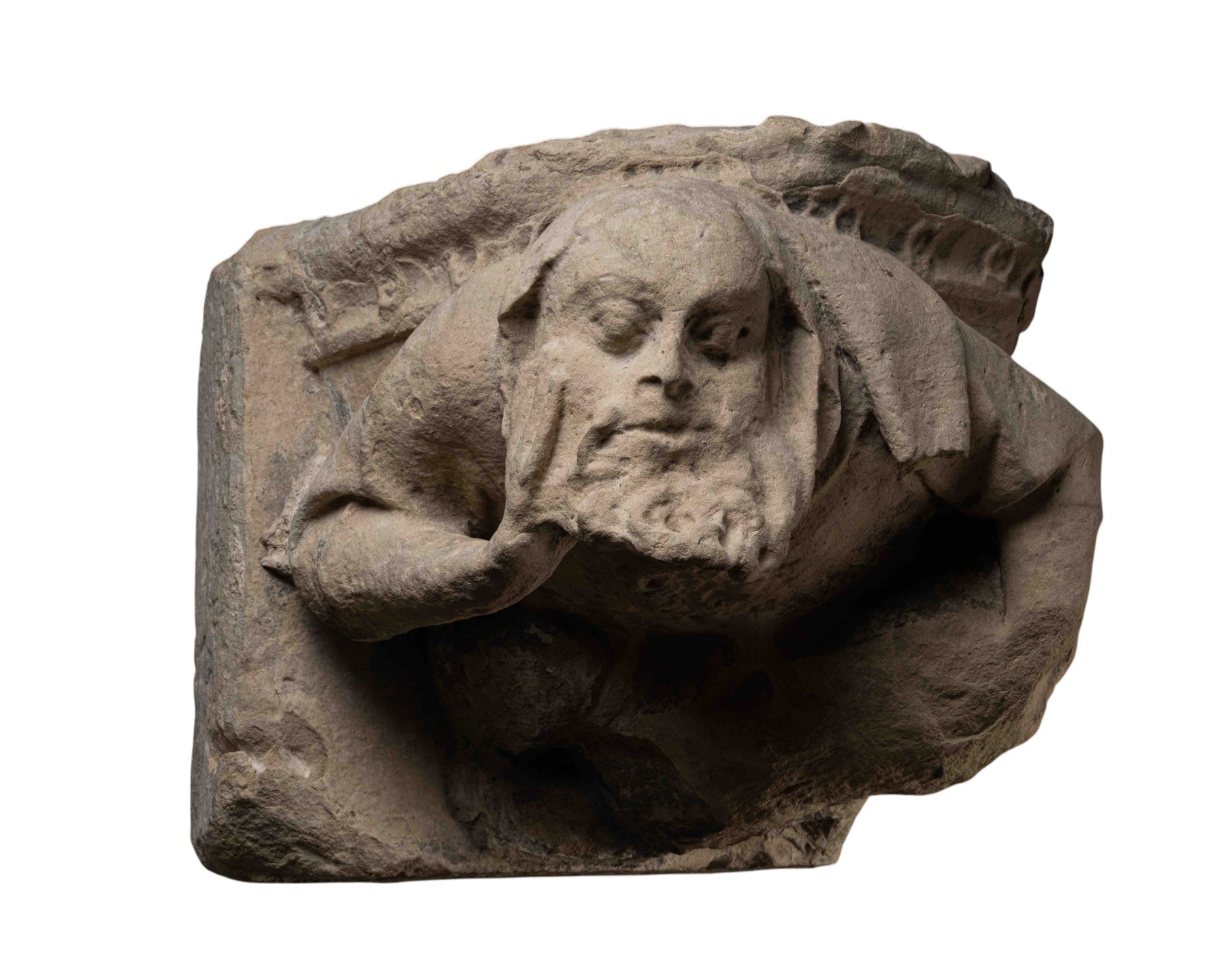
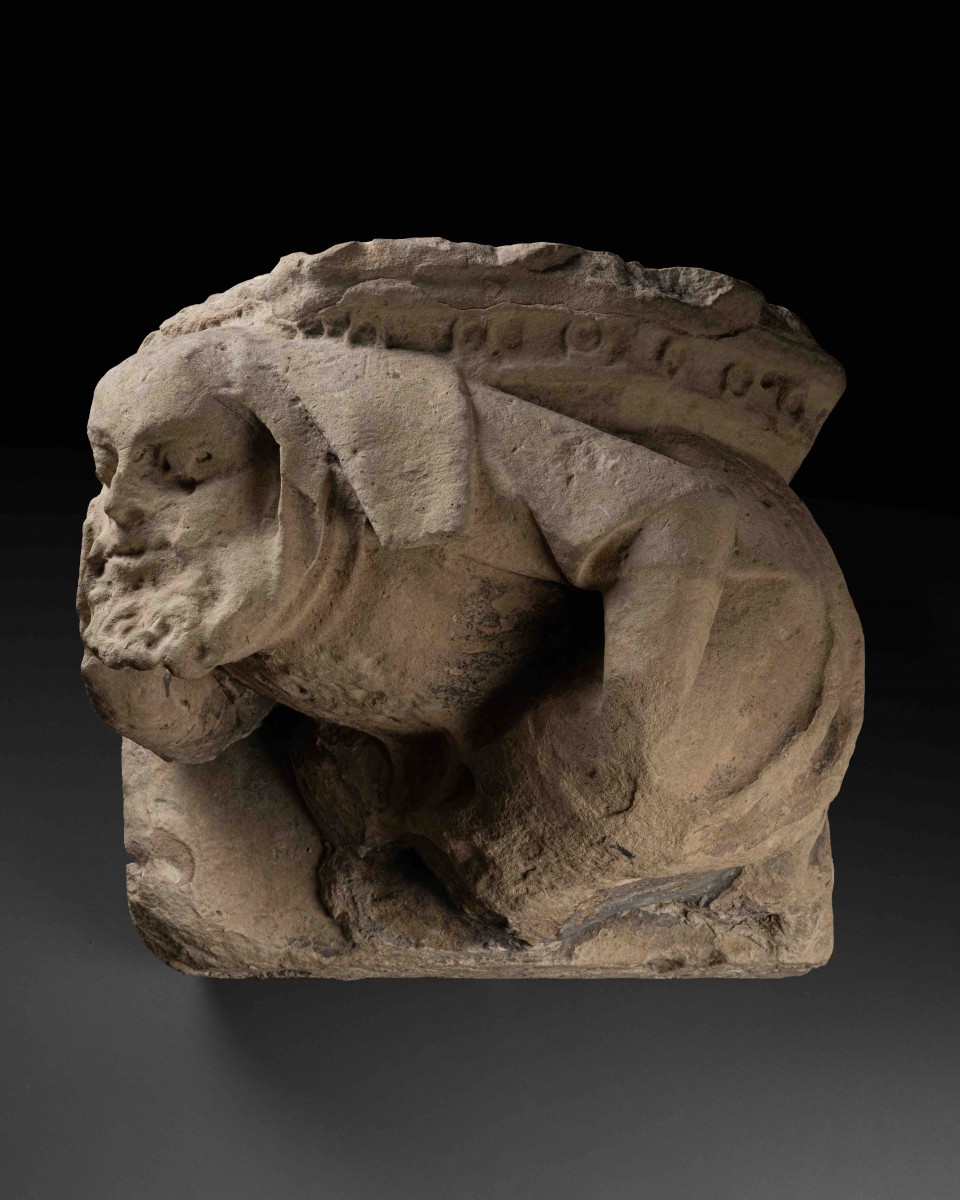
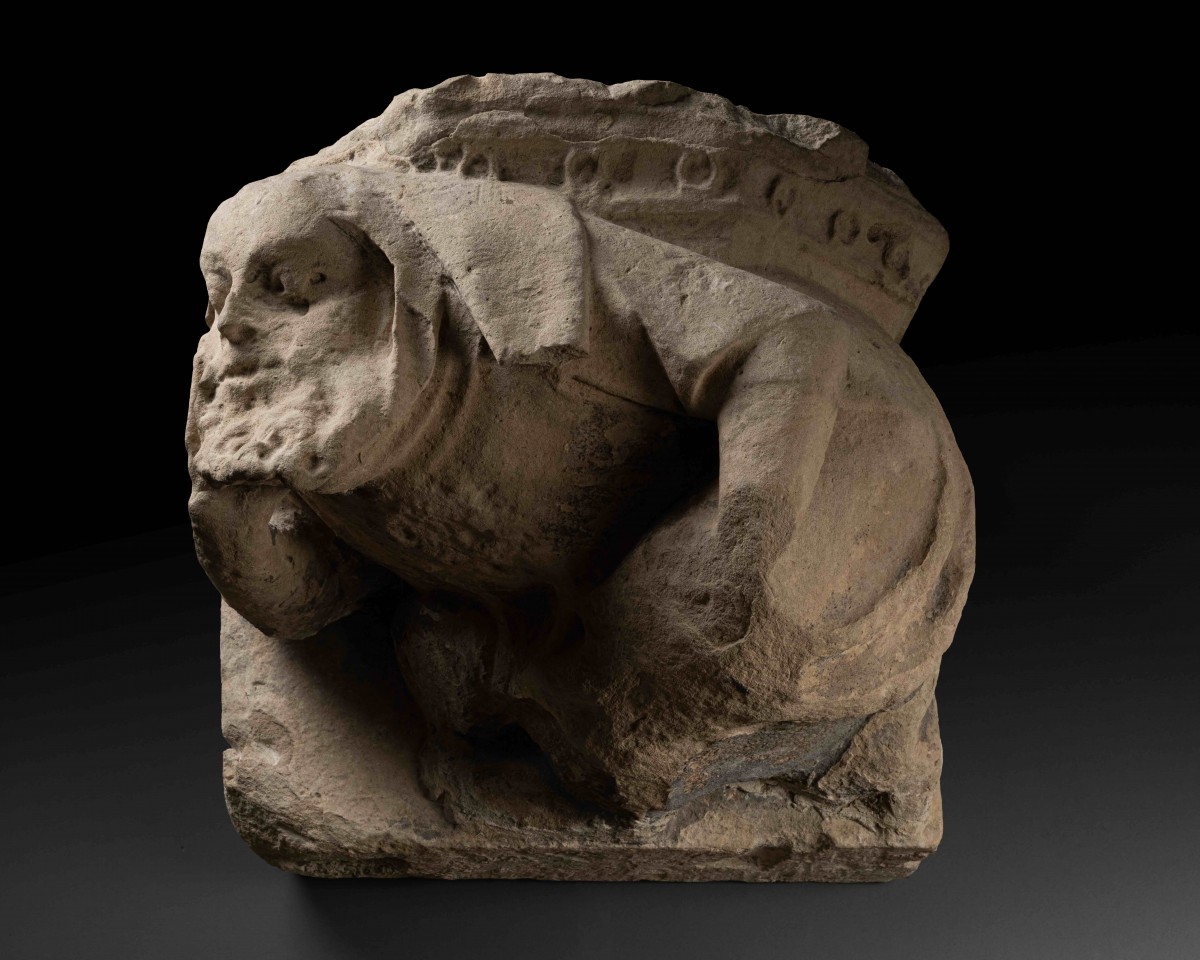
This imposing culot, carved in stone and dating from the fifteenth century, exemplifies the expressive vitality and imaginative freedom characteristic of late Gothic architectural sculpture in France. Conceived as a structural termination—most likely supporting the springing of a rib, vault, or arcade—the work belongs to the rich corpus of culots, corbels, and consoles that animated ecclesiastical and civic interiors during the late Middle Ages.
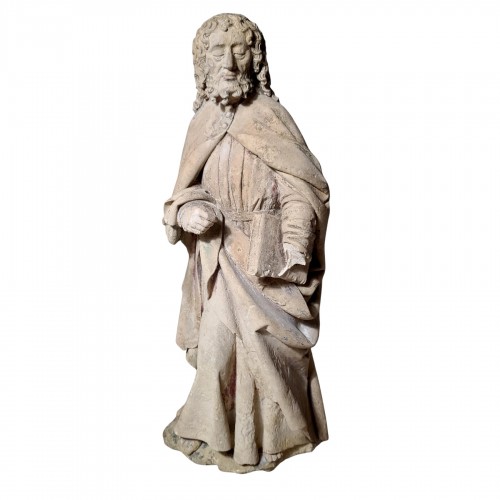
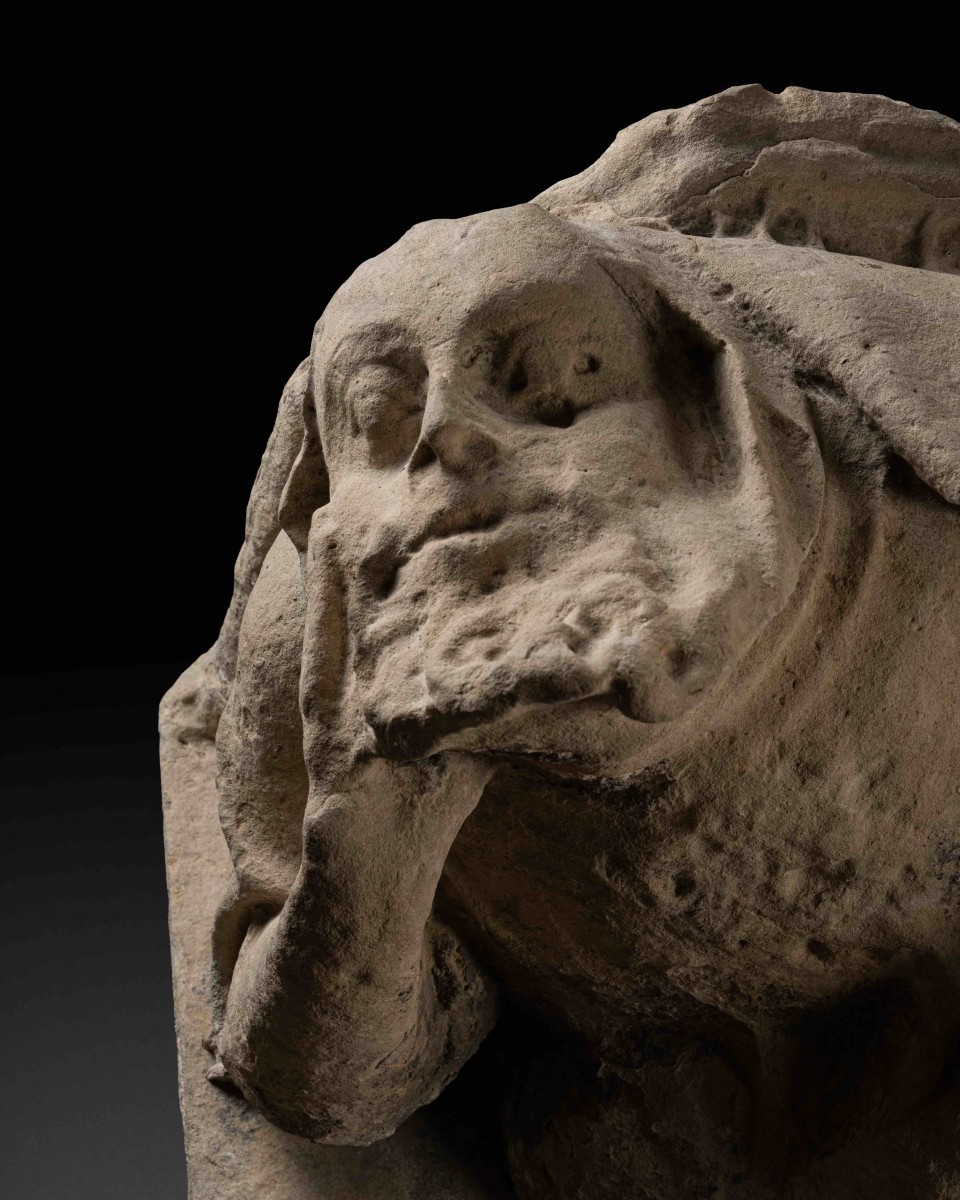
The sculpture depicts a bearded male figure emerging from the stone block, his head inclined and his right arm raised beneath the chin in a distinctly contemplative gesture. Rather than conveying physical strain or structural effort, this pose evokes introspection and thought, recalling established medieval visual conventions associated with prophets, sages, or inspired figures. The heavy-lidded eyes, deeply carved beard, and slightly furrowed brow reinforce this meditative character, lending the face a solemn, inward-looking expression.
Such reflective figures appear frequently in late Gothic architectural sculpture, where culots, corbels, and consoles provided artists with spaces for narrative and symbolic invention. The gesture of the hand supporting the chin finds compelling parallels in sculptural programs of the period, notably among prophet figures and contemplative heads carved for choir screens, portals, and vault supports. Comparable examples may be observed in the Flamboyant Gothic decoration of the Cathedral Notre-Dame in Rouen, as well as in the sculpted culots of the choir at Chartres Cathedral, where expressive heads punctuate the architectural rhythm of the interior.
Similar expressive heads appear in Burgundian contexts, particularly in the sculptural ornament of the Chartreuse de Champmol near Dijon and in the Monastère Royale de Bru, whose influence continued to shape regional production well into the fifteenth century.