Offered by Conservatoire Sakura
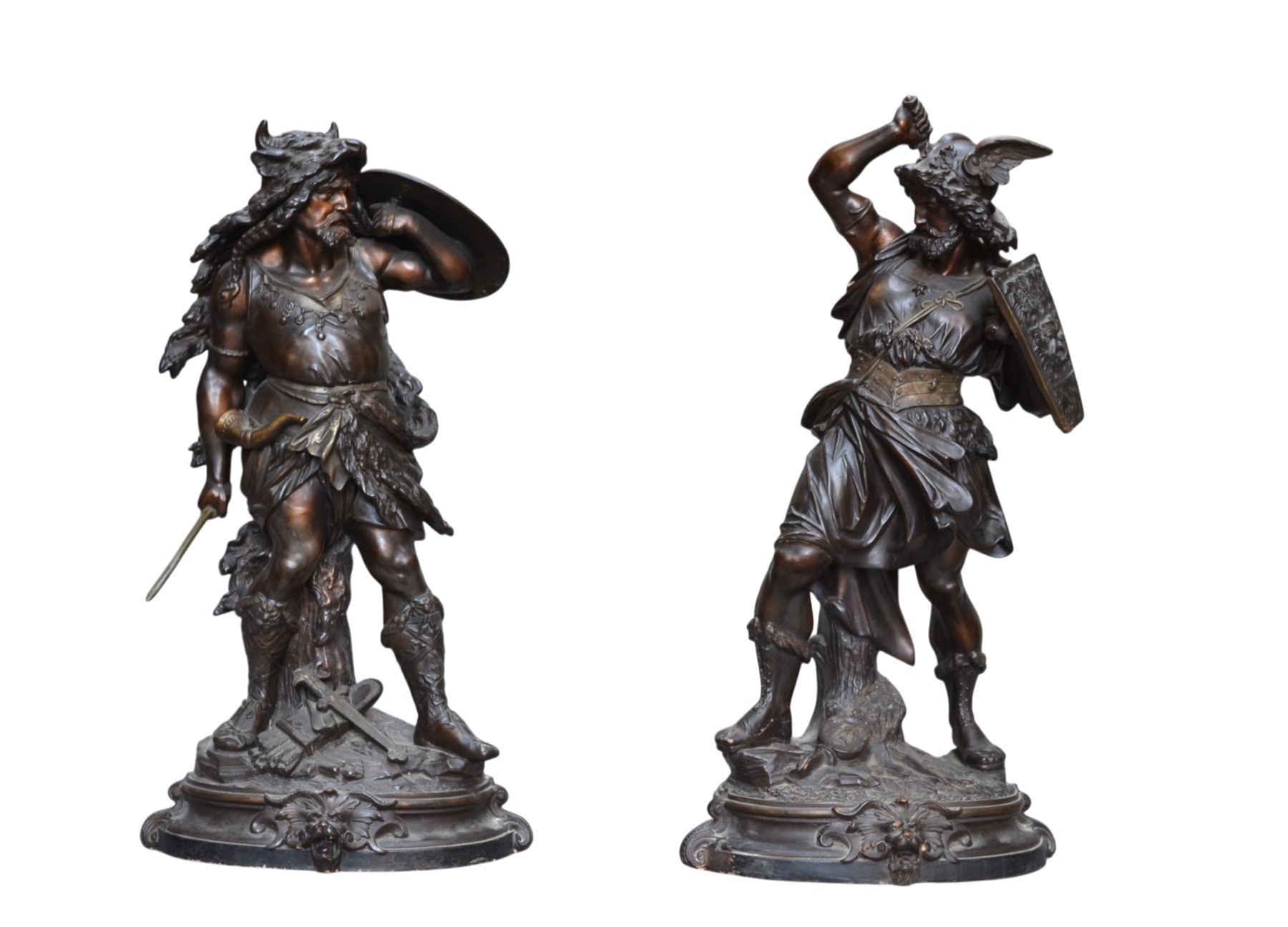
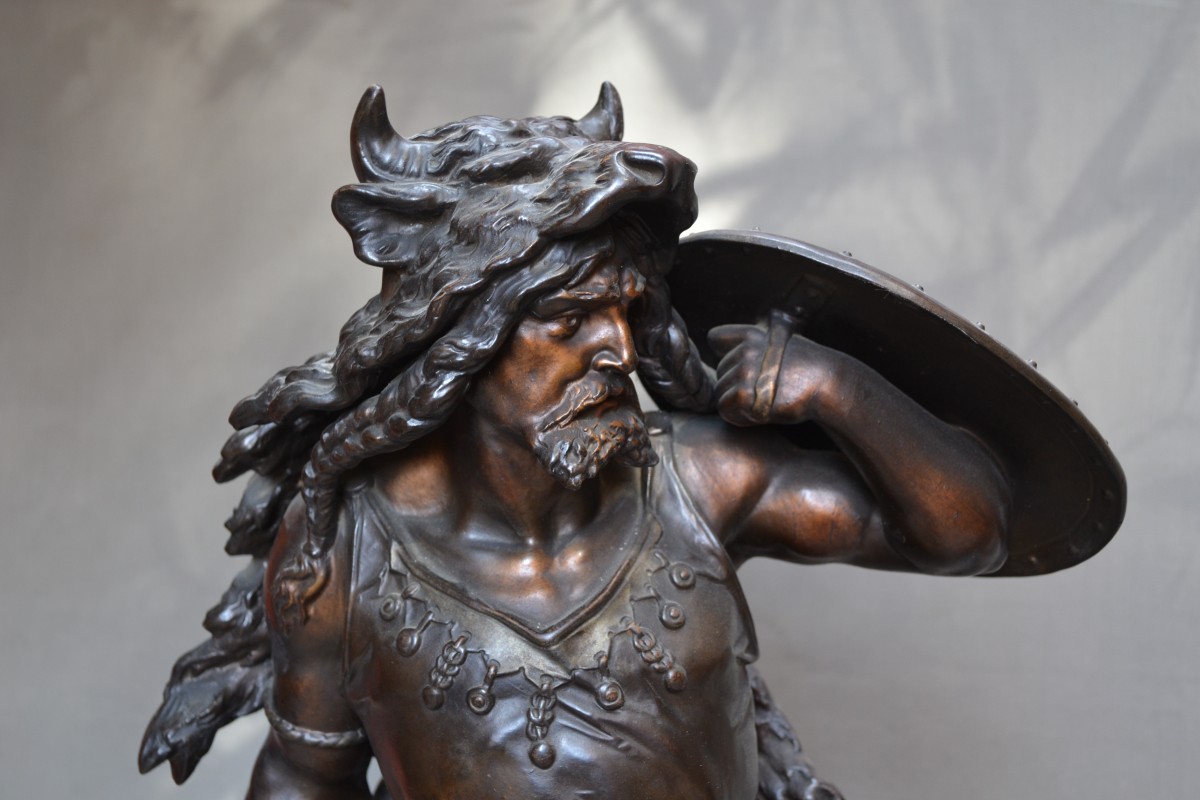
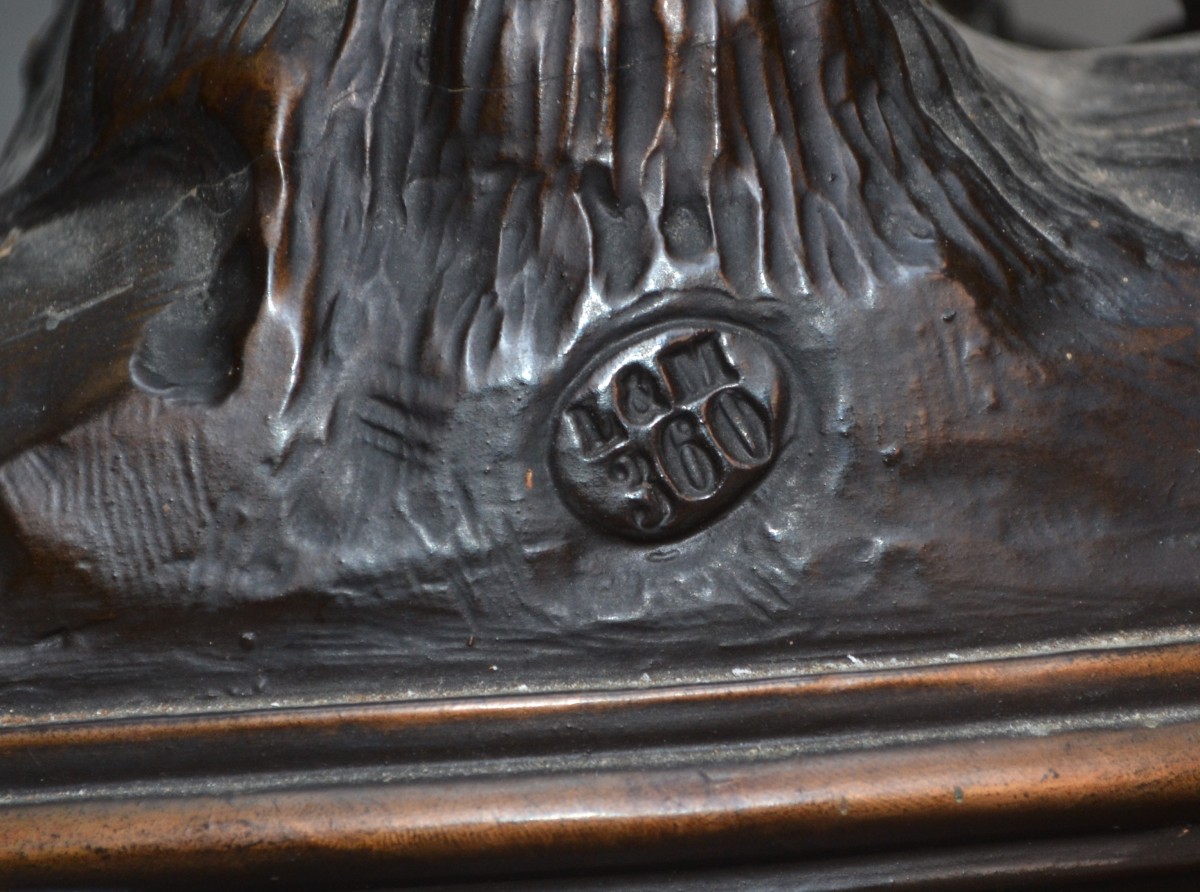
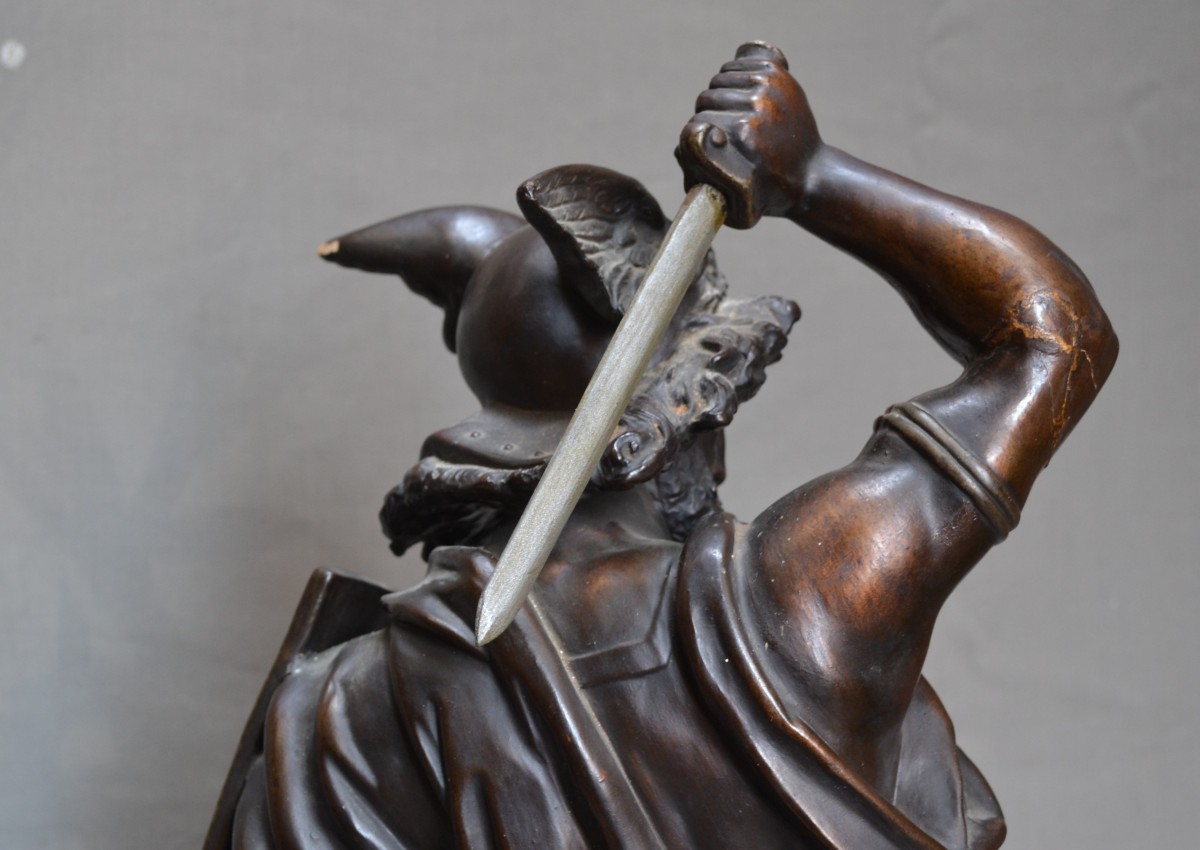
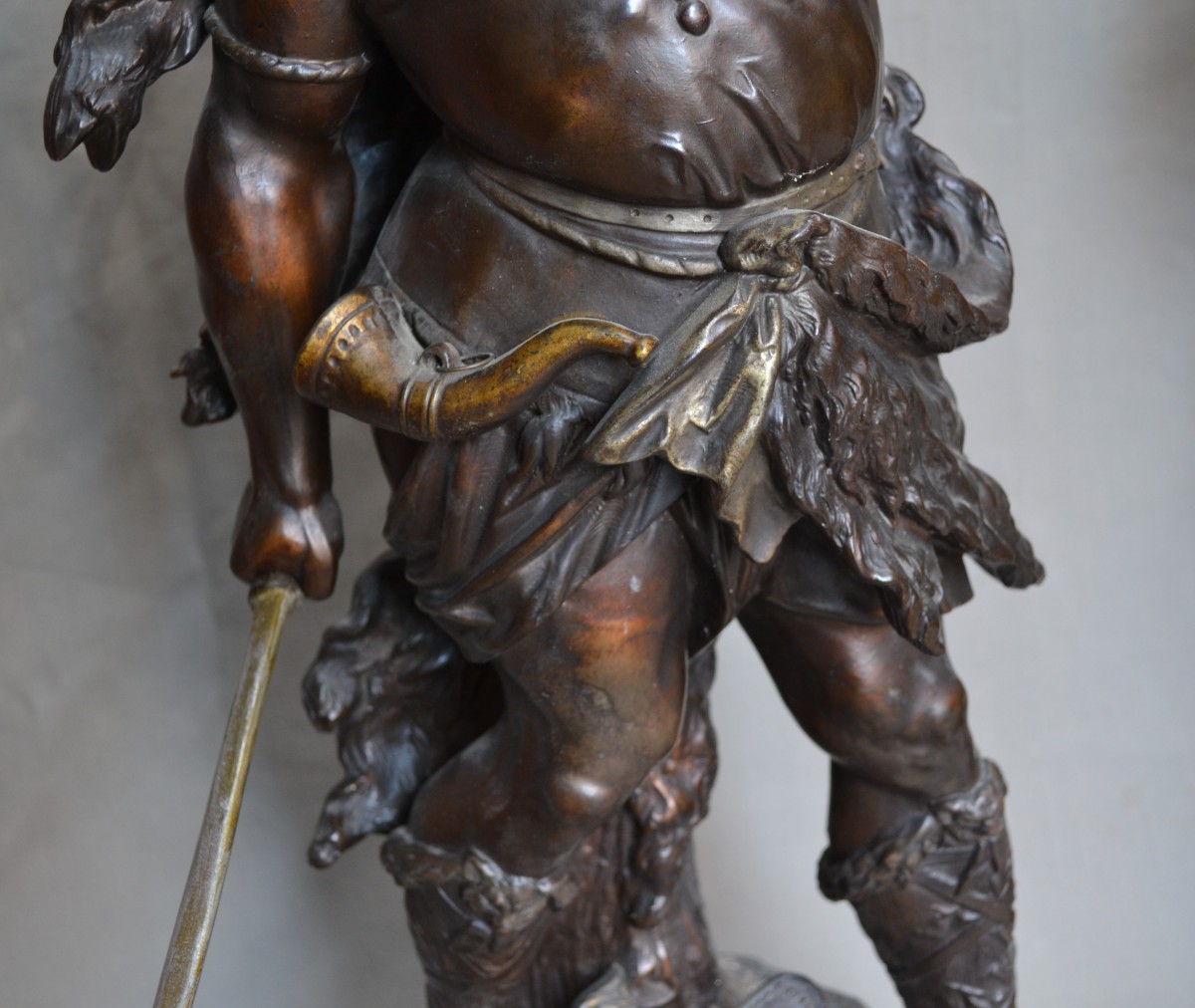

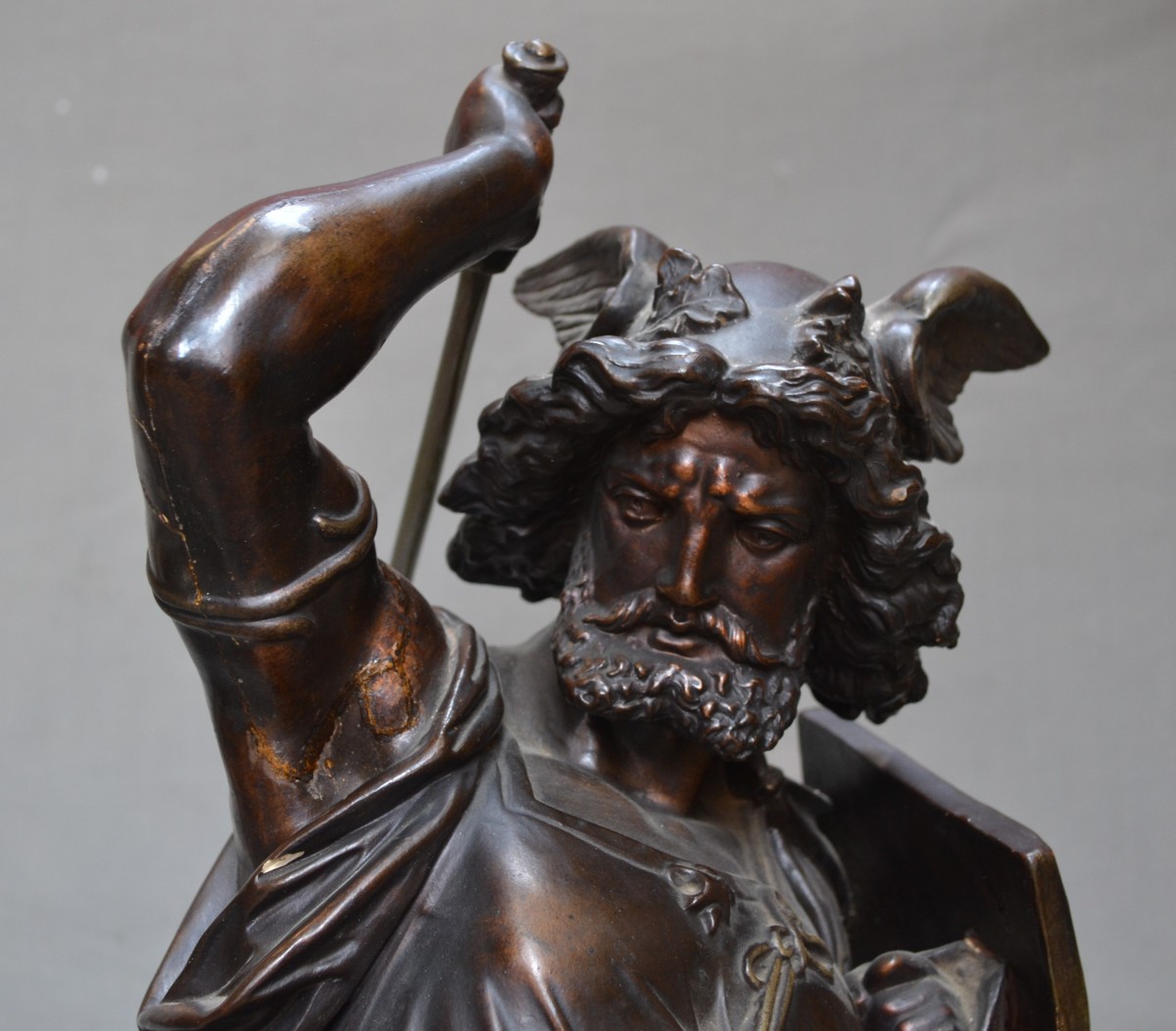
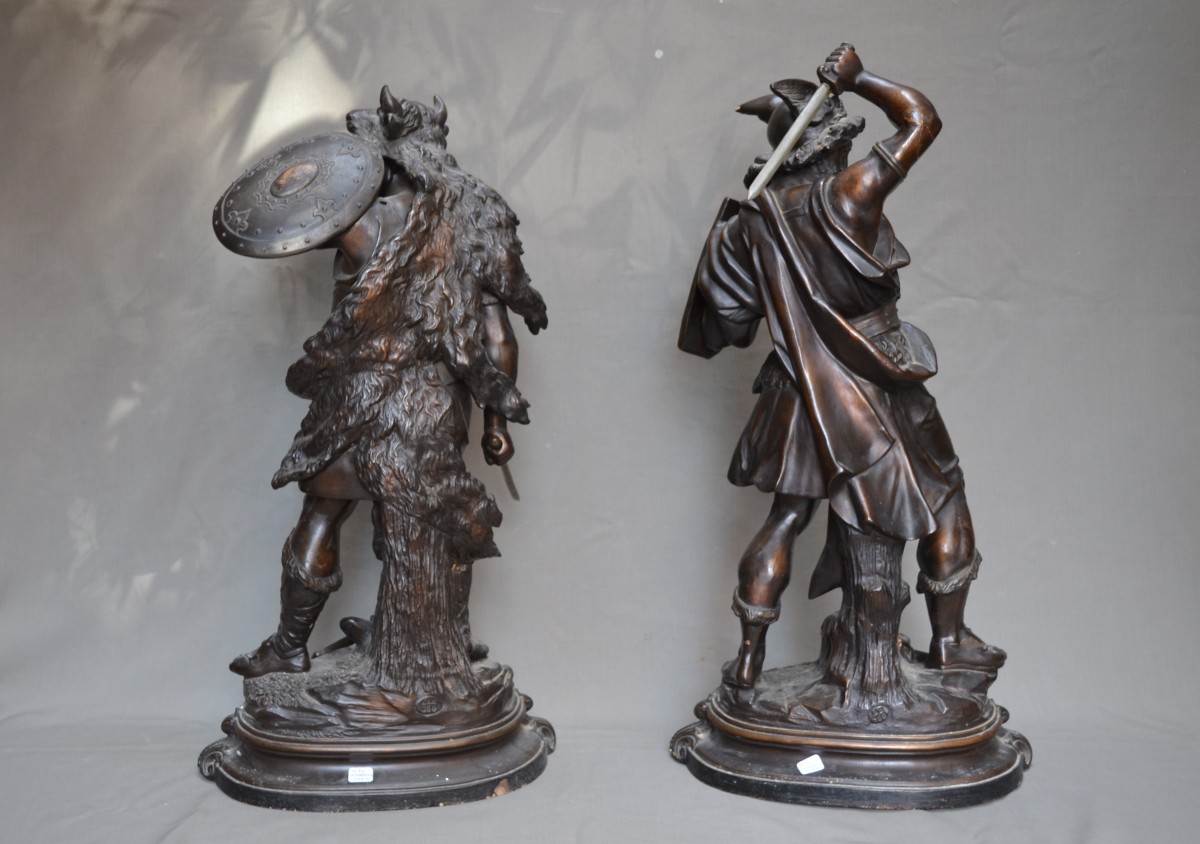
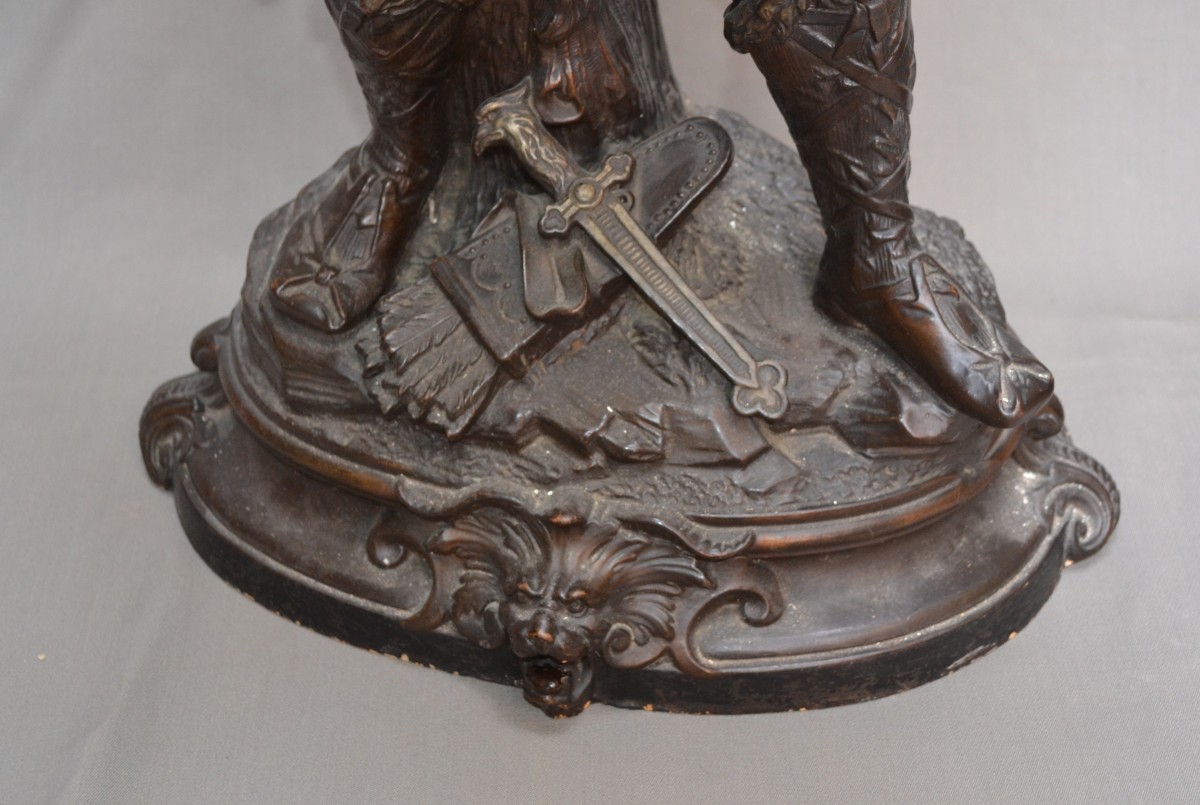
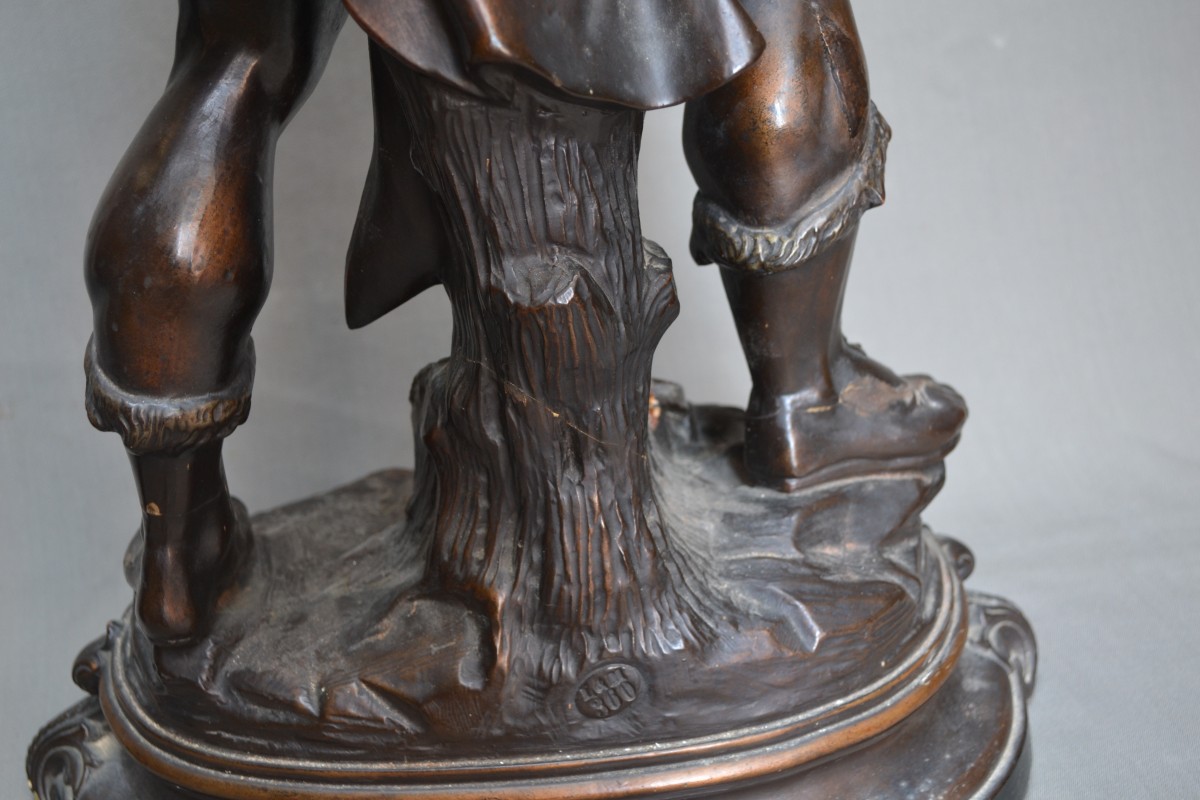
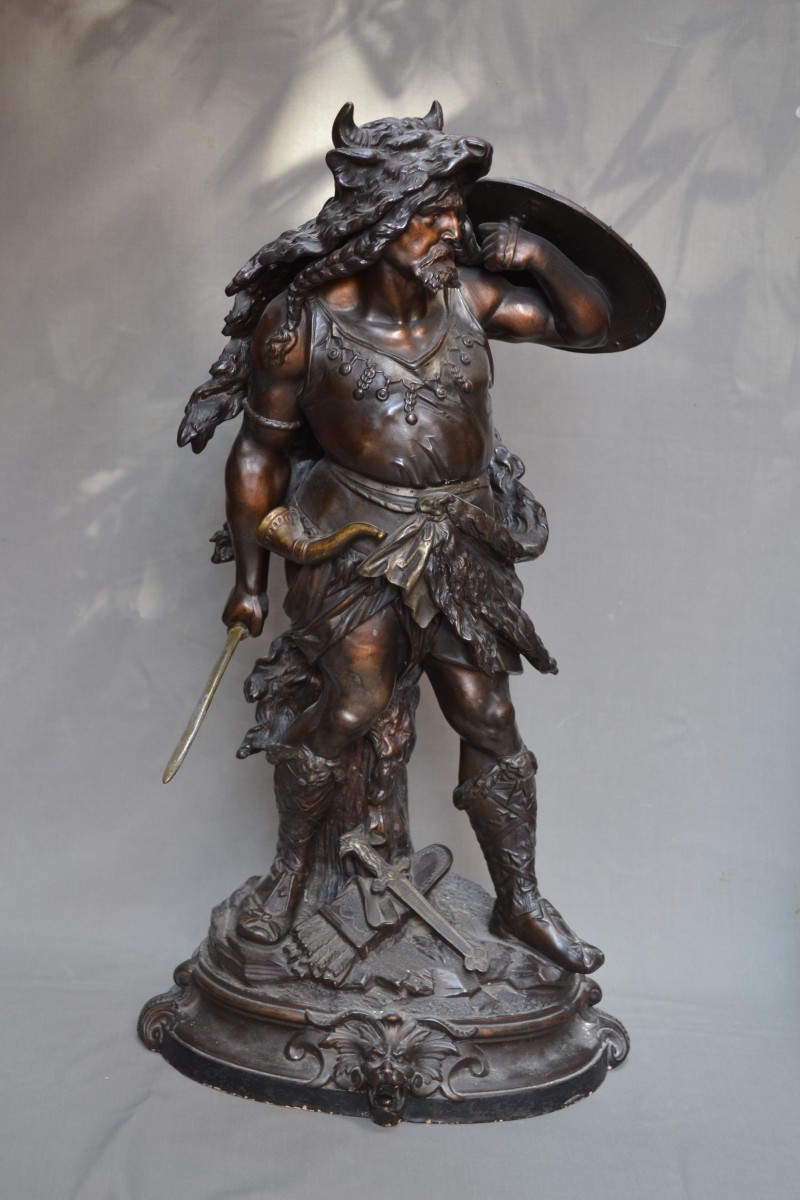
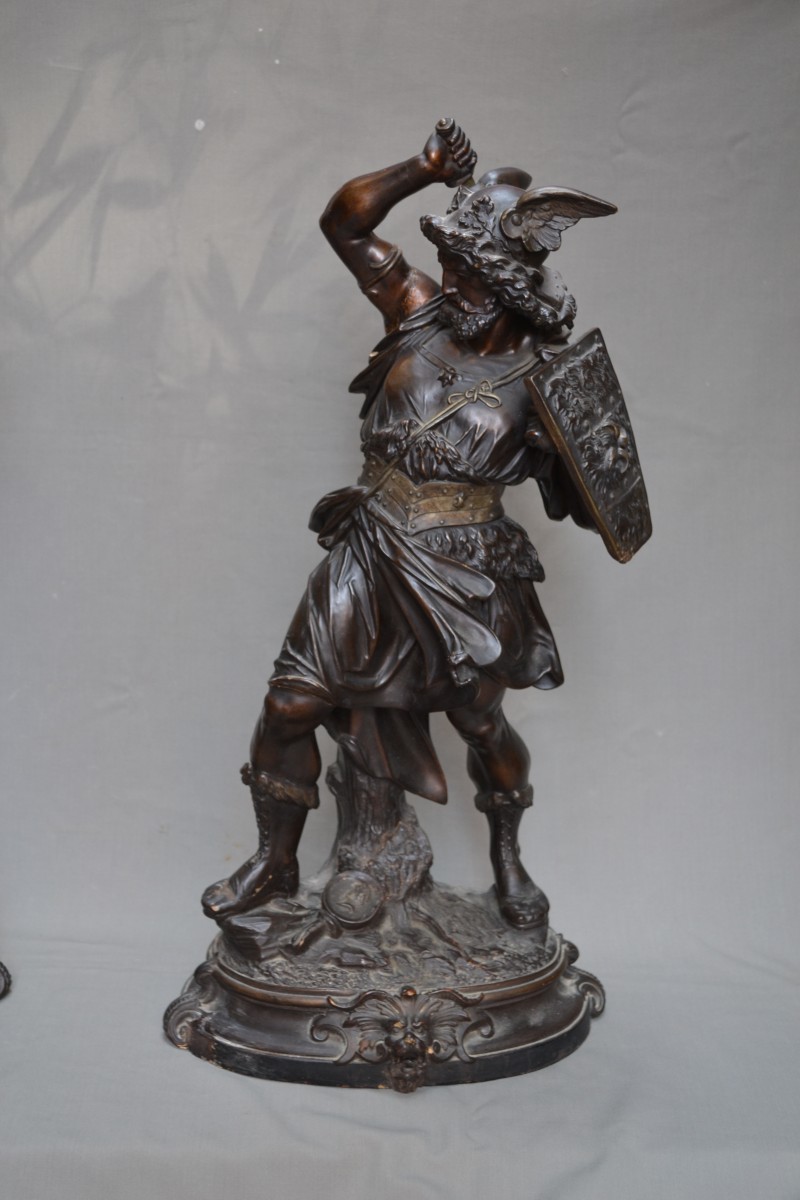
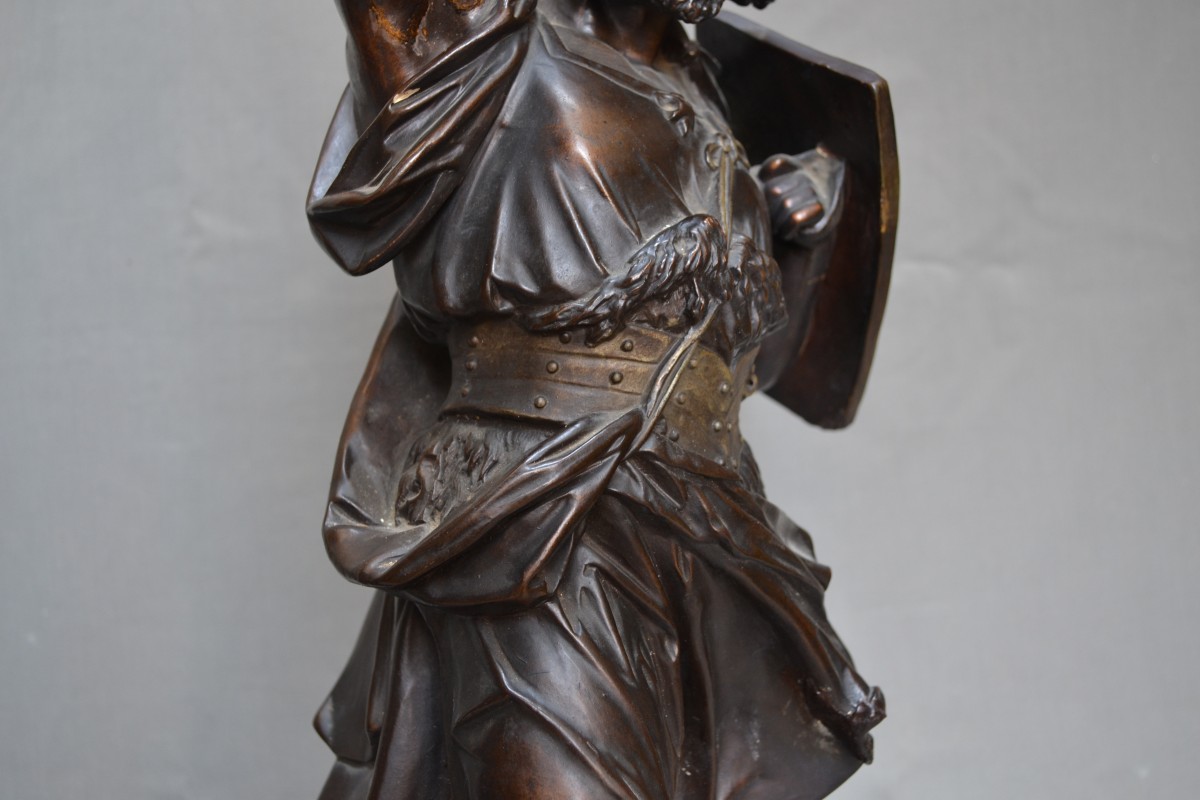
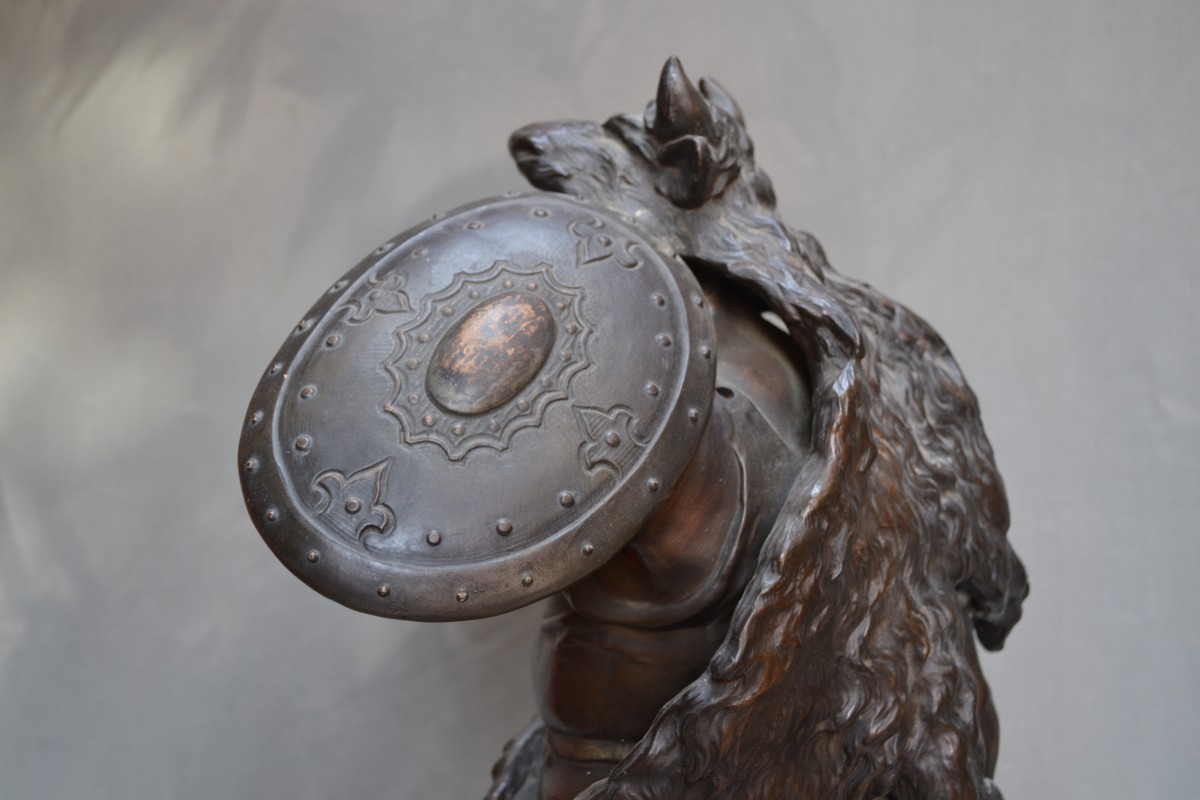
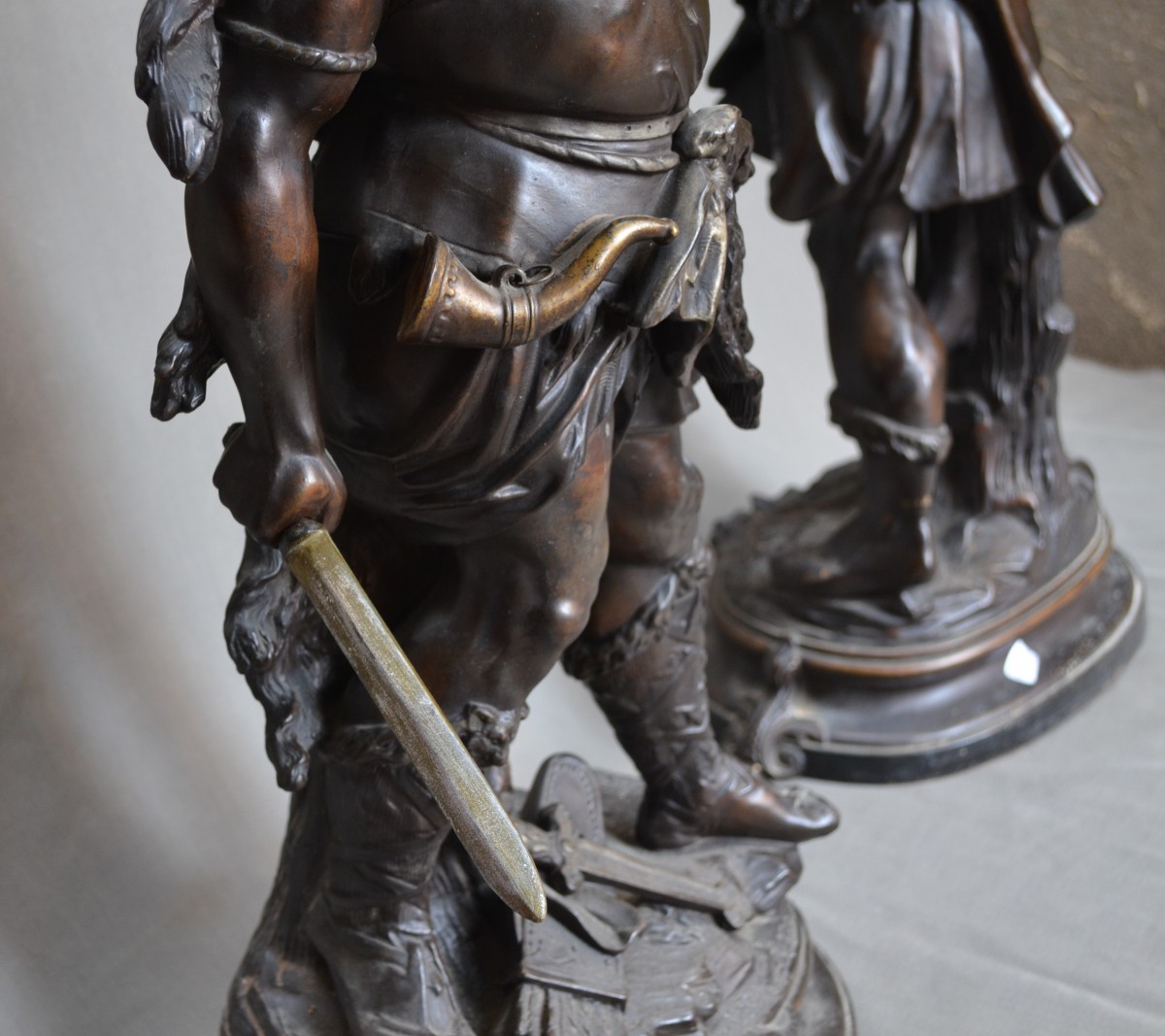
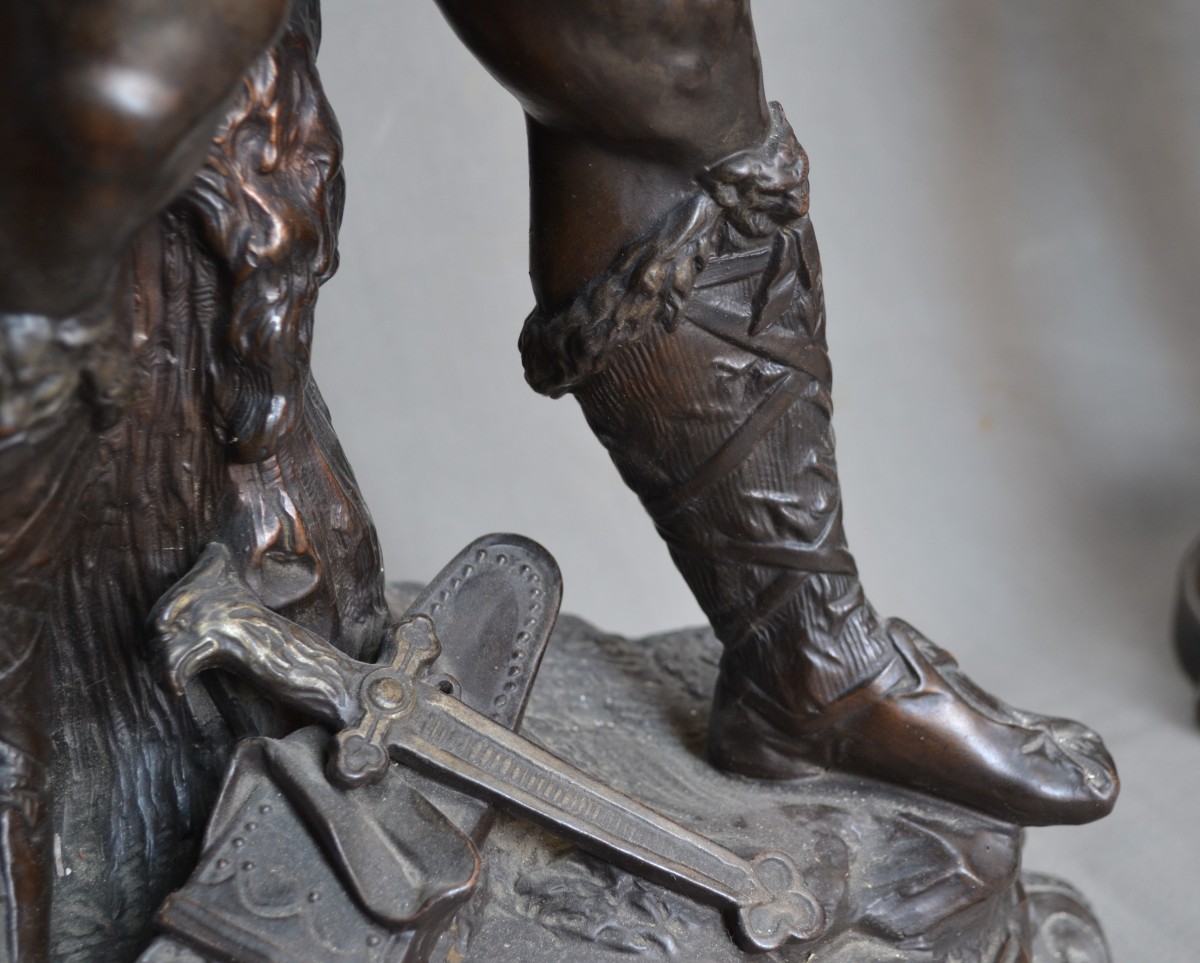
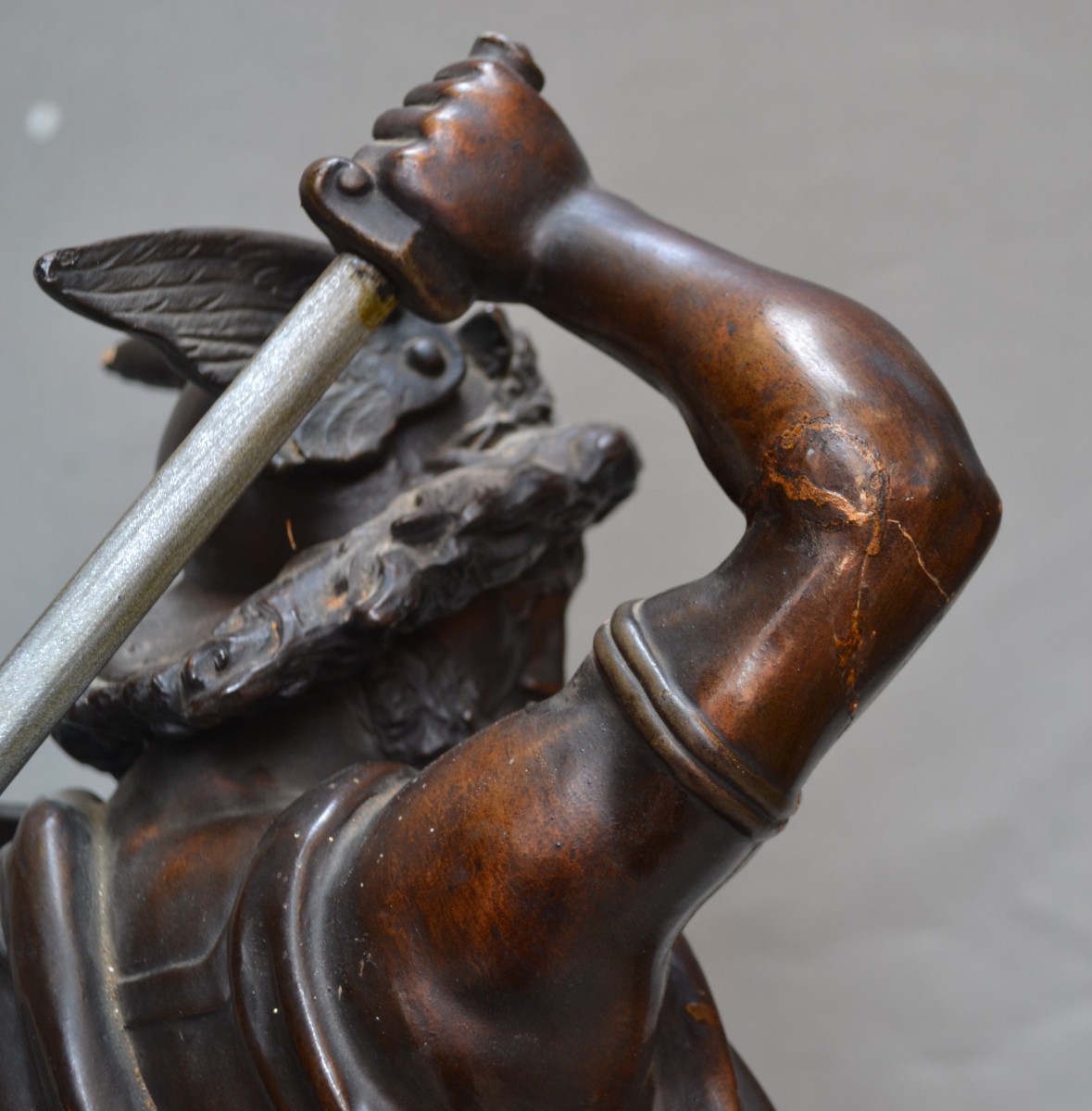
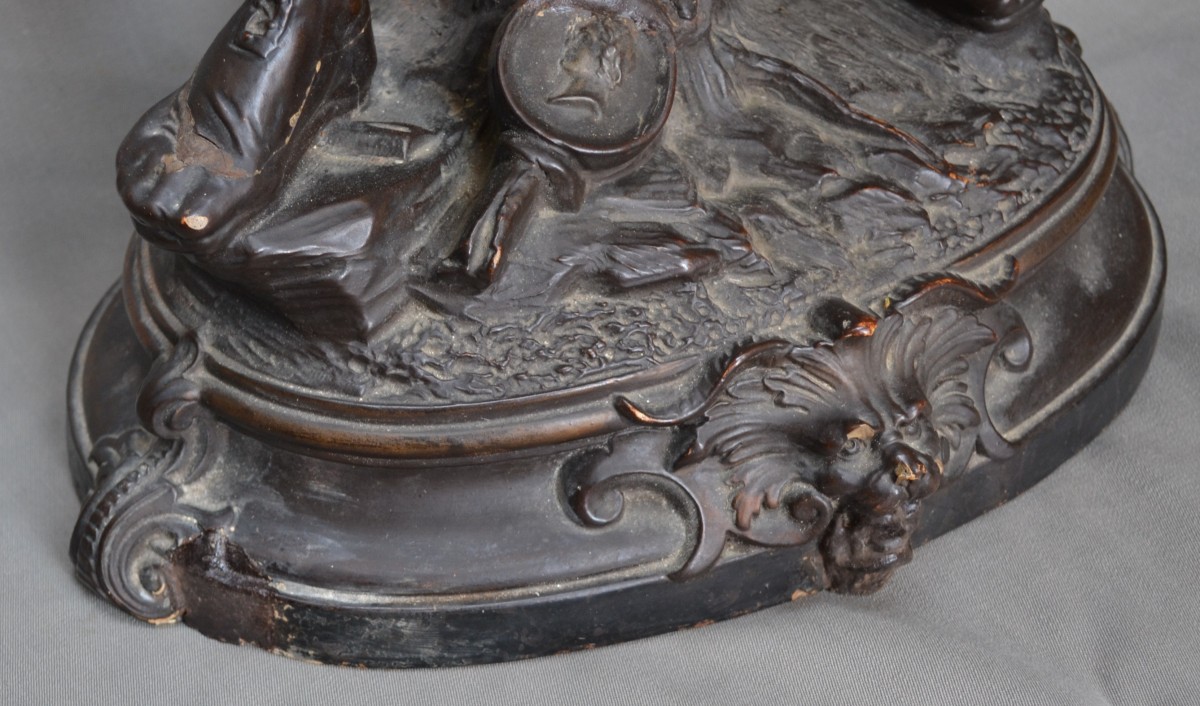
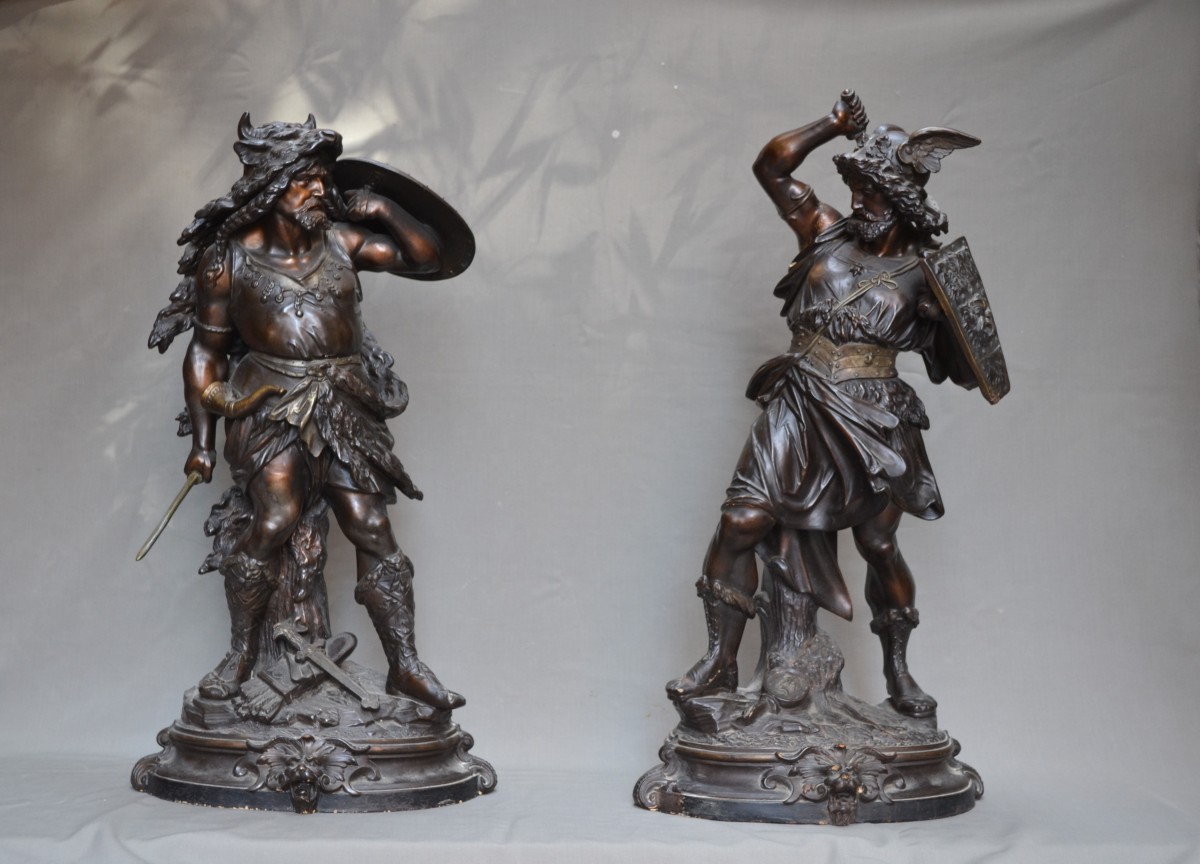
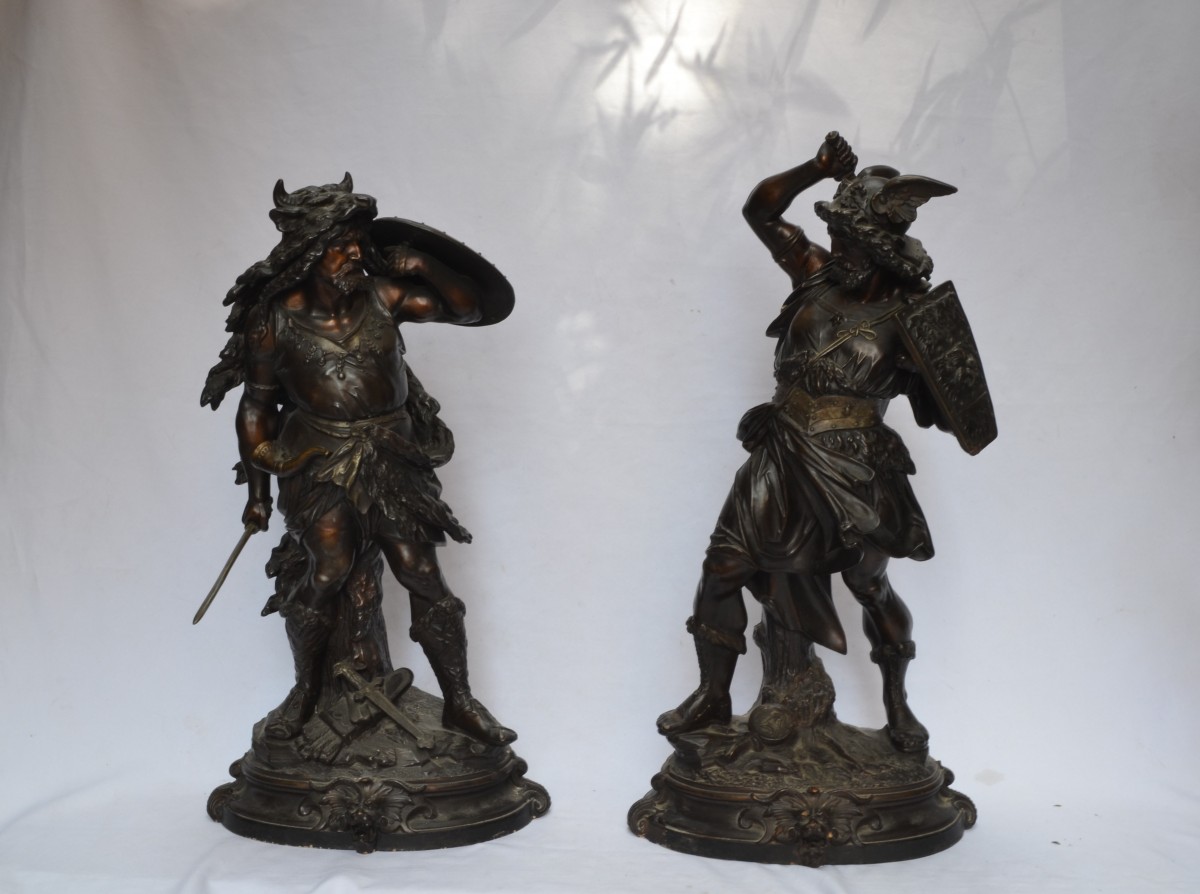
Ceramic statues from L'Isle-Adam or Villenauxe-la-Grande by Létu & Mauger. The two warriors are in a fighting stance. The winged helmet of the first warrior suggests a Celt, as at the end of the 19th century, for artists, the winged helmet was an attribute of the Gauls. An interesting detail: a medallion depicting the head of a Roman Emperor wearing a laurel wreath is trampled underfoot by one of the warriors, while a sword and quiver lie on the ground at the feet of the other. We believe this depicts the epic of Brennus, the Gallic chieftain who, in the 4th century BC, captured Rome, demanding a large ransom in gold to leave. During the weighing of the gold, the Romans disputed the weight. Despite the agreements made, Brennus then threw his sword into the scales to obtain even more gold, declaring the famous "Vae Victis" (woe to the vanquished). The medallion depicts defeated Rome, and the sword is believed to be the one used in the weighing. On the back of the statues, the L&M mark was stamped before firing, along with the number 360. These are exceptional statues due to their large size and unusual subject matter; indeed, these workshops primarily produced religious subjects or statues of little interest. It is possible that these two warriors were a special, unique commission from a wealthy collector, but it is more likely that these statues existed in bronze, with wax models serving as prototypes. The ceramic is, in places, covered with bronze powder and lacquered to imitate bronze. The swords are made of wood powdered with silver and lacquered, and appear to be original. Heights: 70 and 65 cm. Numerous accidents have been reported; they were previously restored with Martin varnish and the aesthetics of the sculptures do not suffer at all; all the accidents are visible in the photos.
Delevery information :
International deliveries in the best conditions. Careful packaging. I travel with important items as needed.