Offered by Cristina Ortega & Michel Dermigny
REQUEST INFORMATION
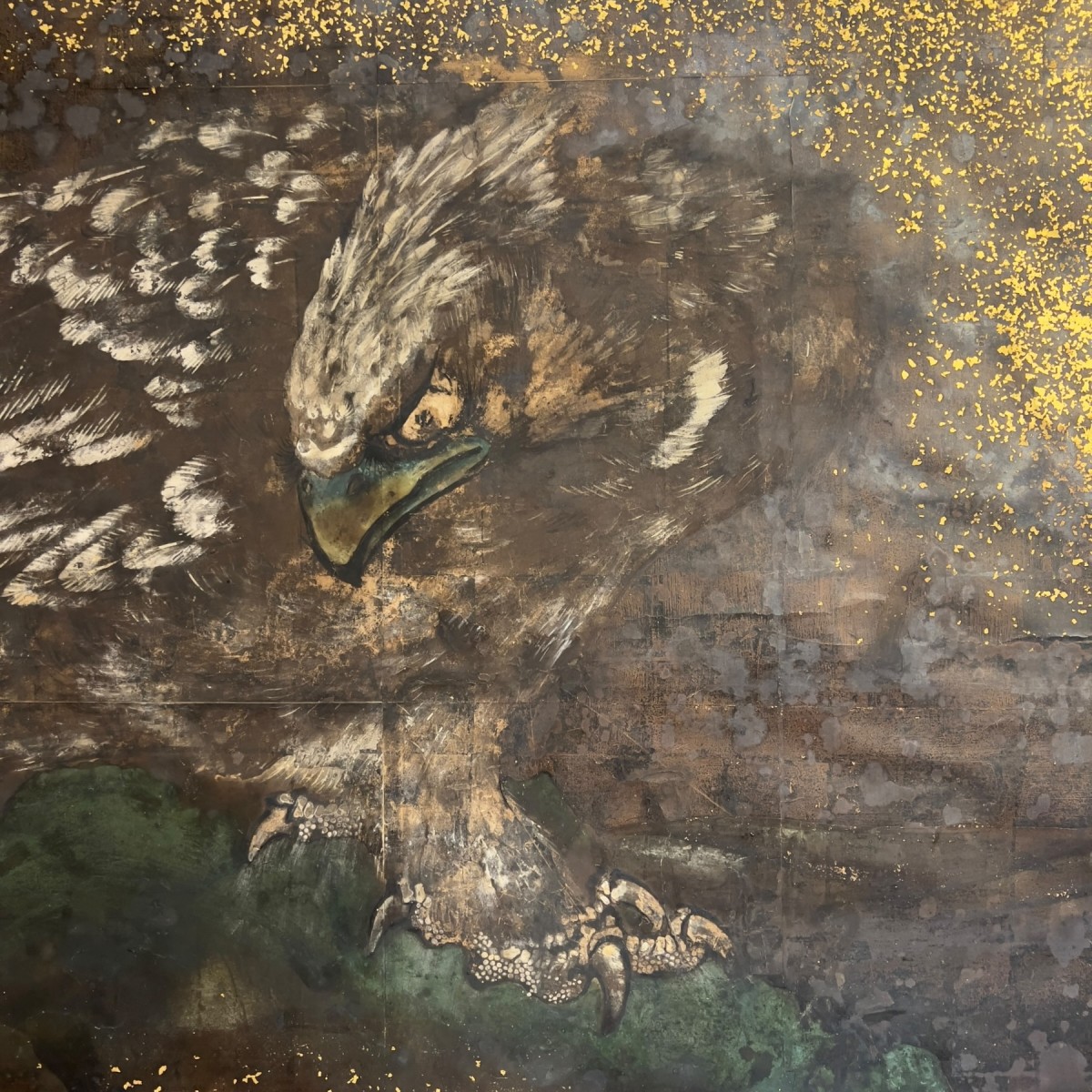
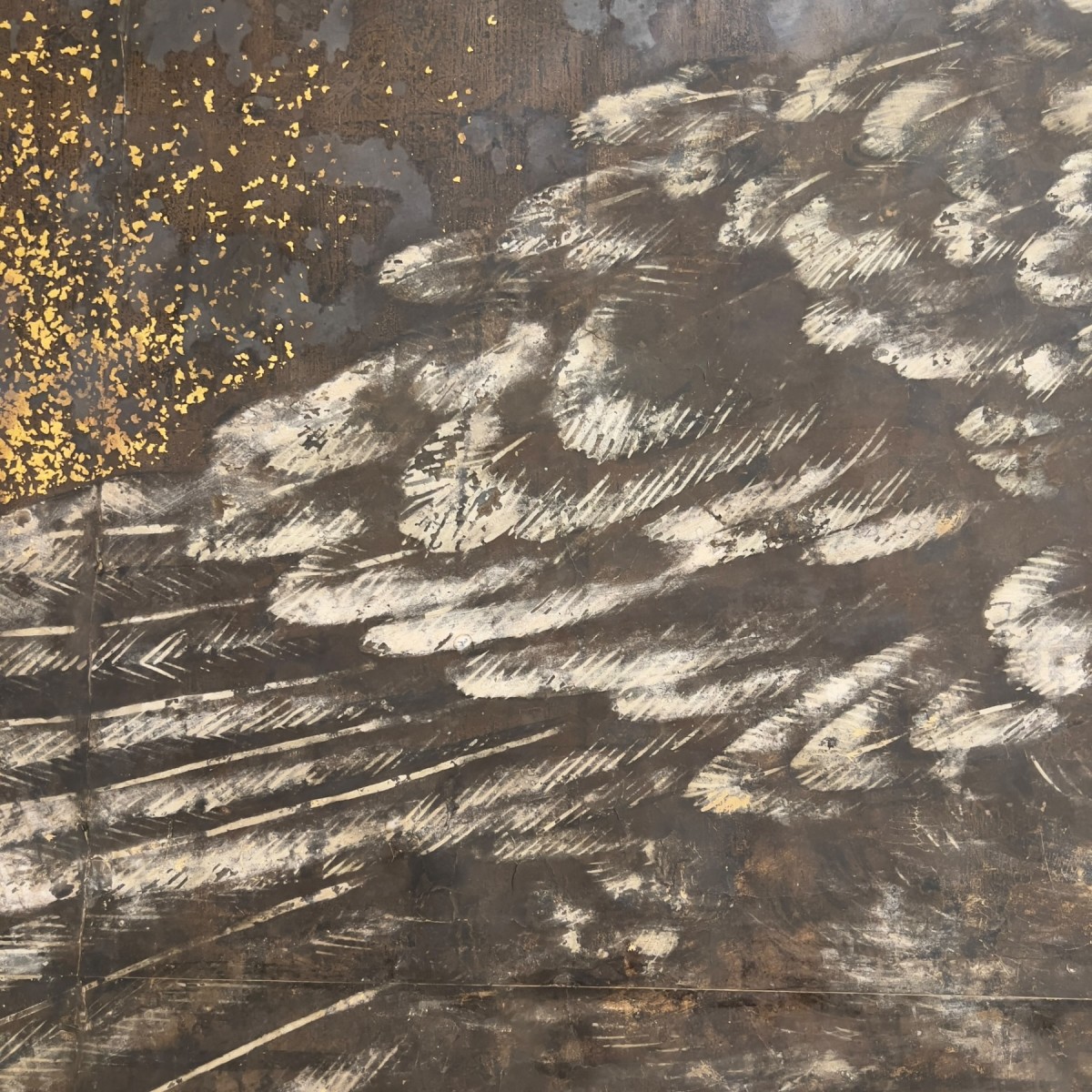

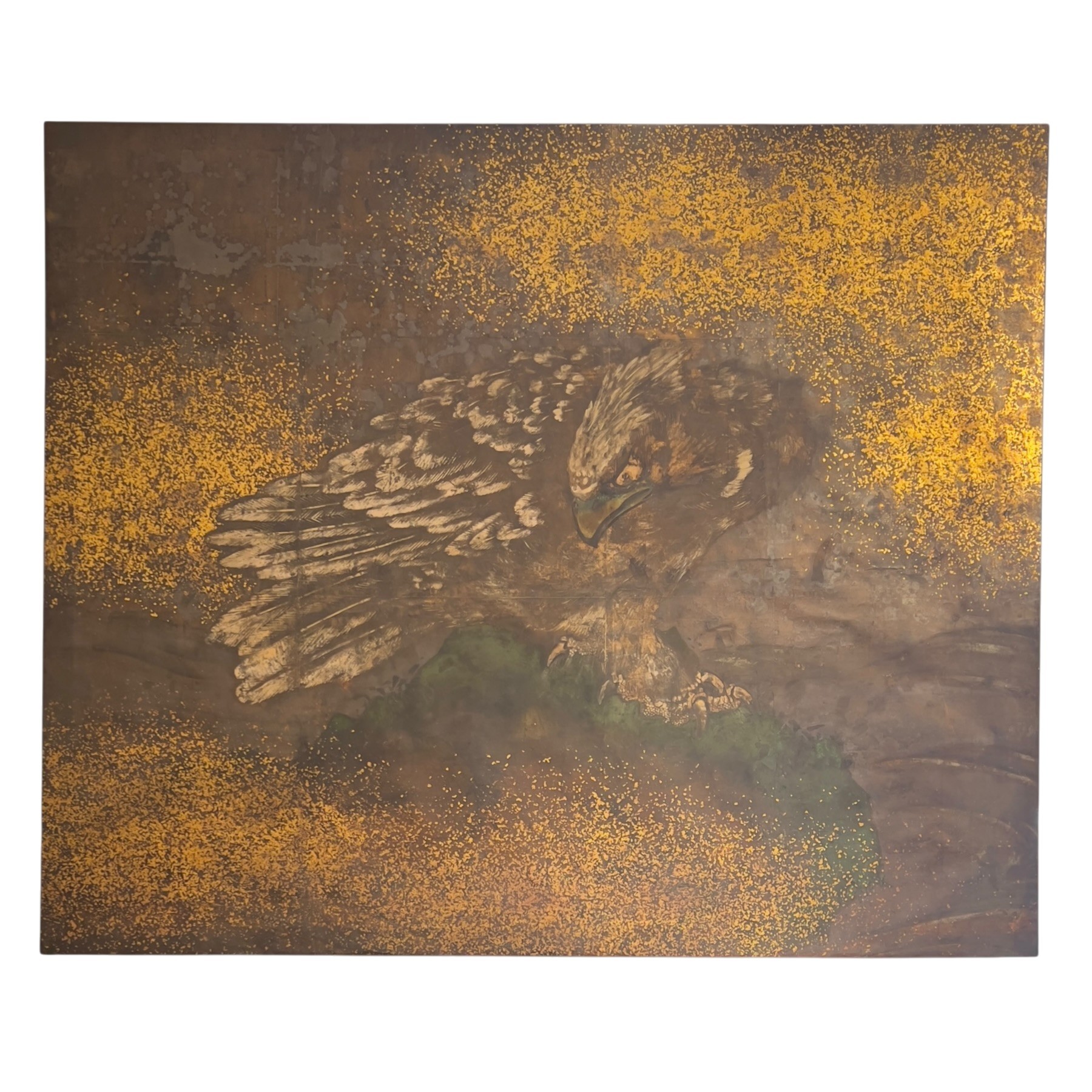
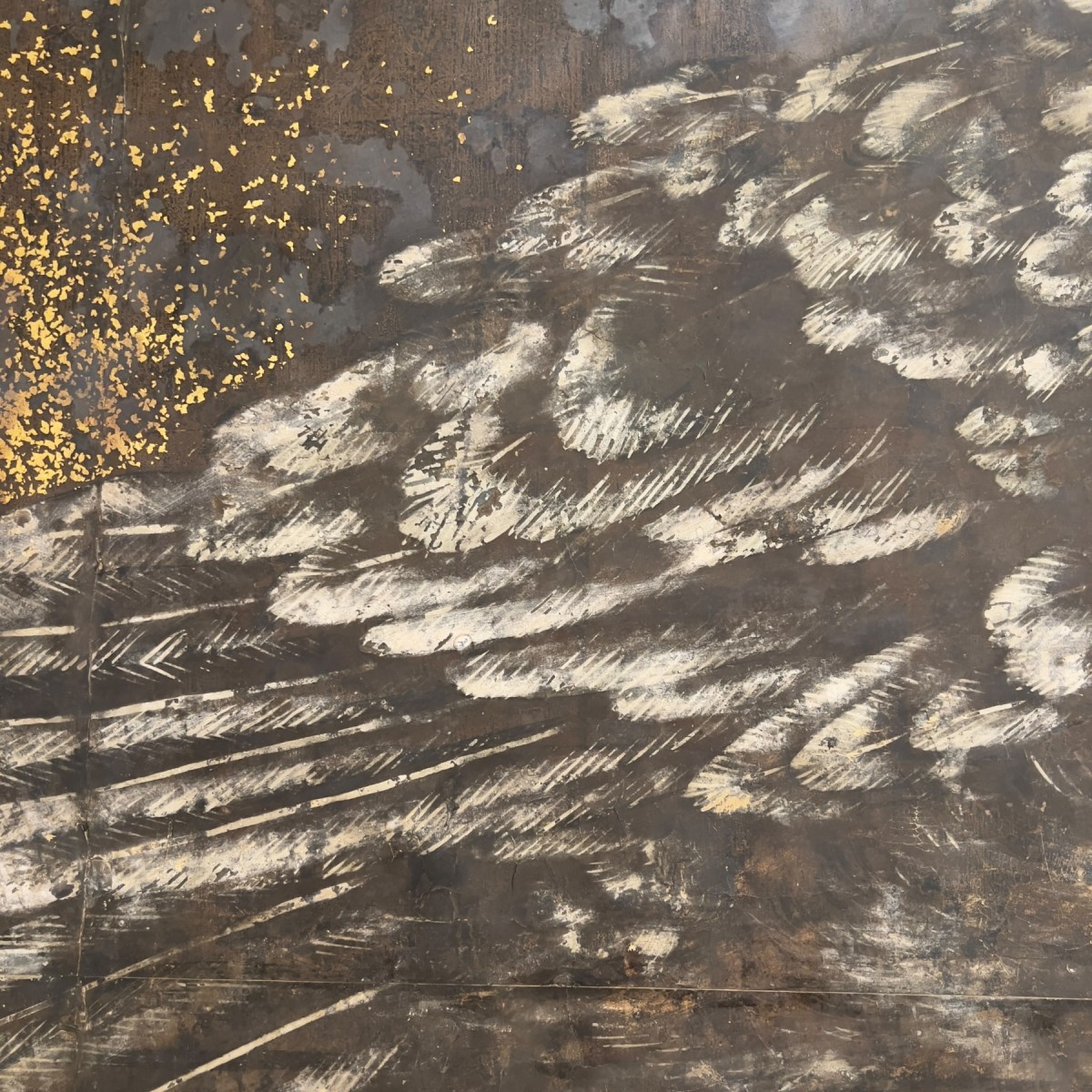
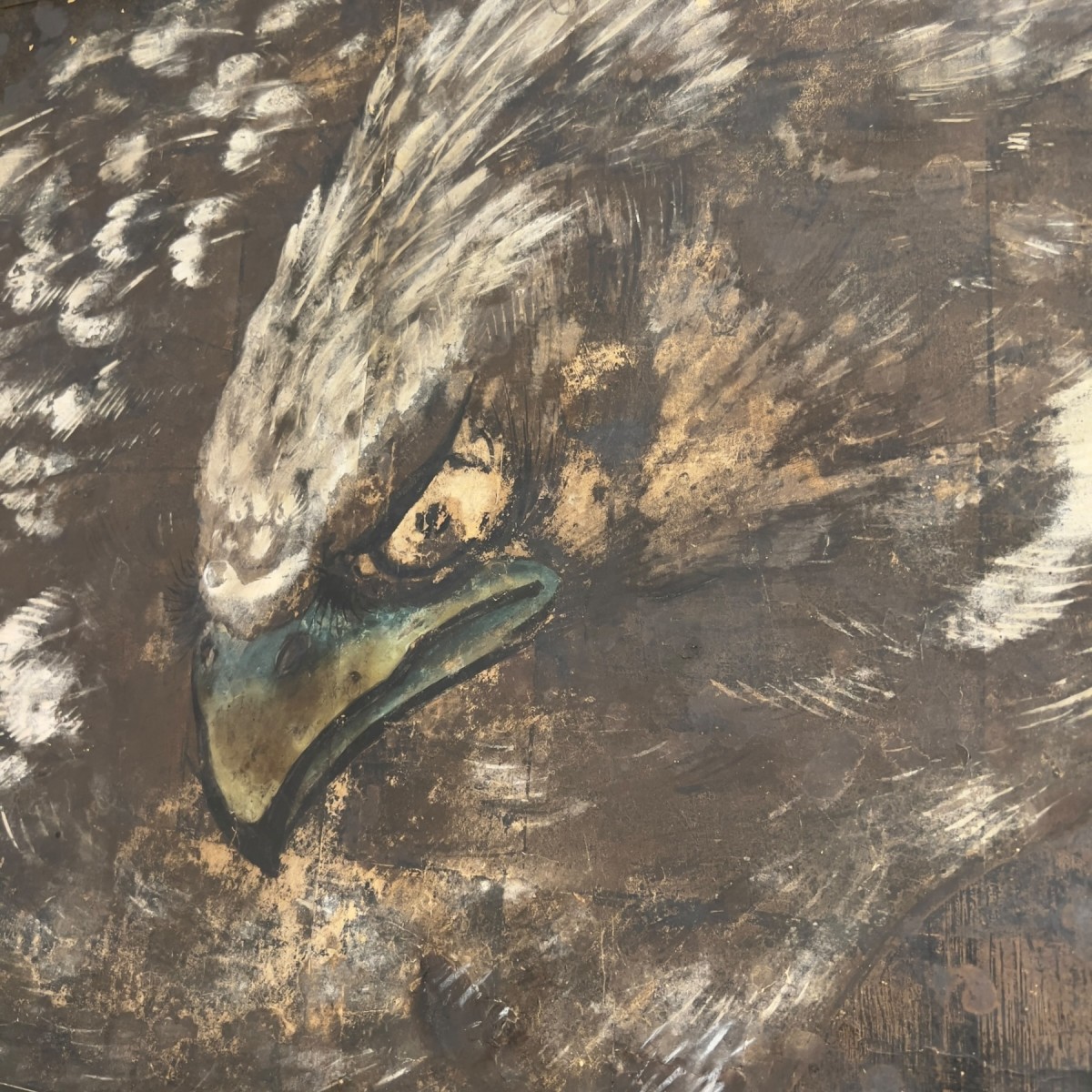
An exceptional panel depicting a monumental eagle captured in an attitude of meditative power. The bird of prey, rendered with remarkable technical virtuosity, stands out against a brown-gold ground animated by a subtle sprinkling of gold (sunago).
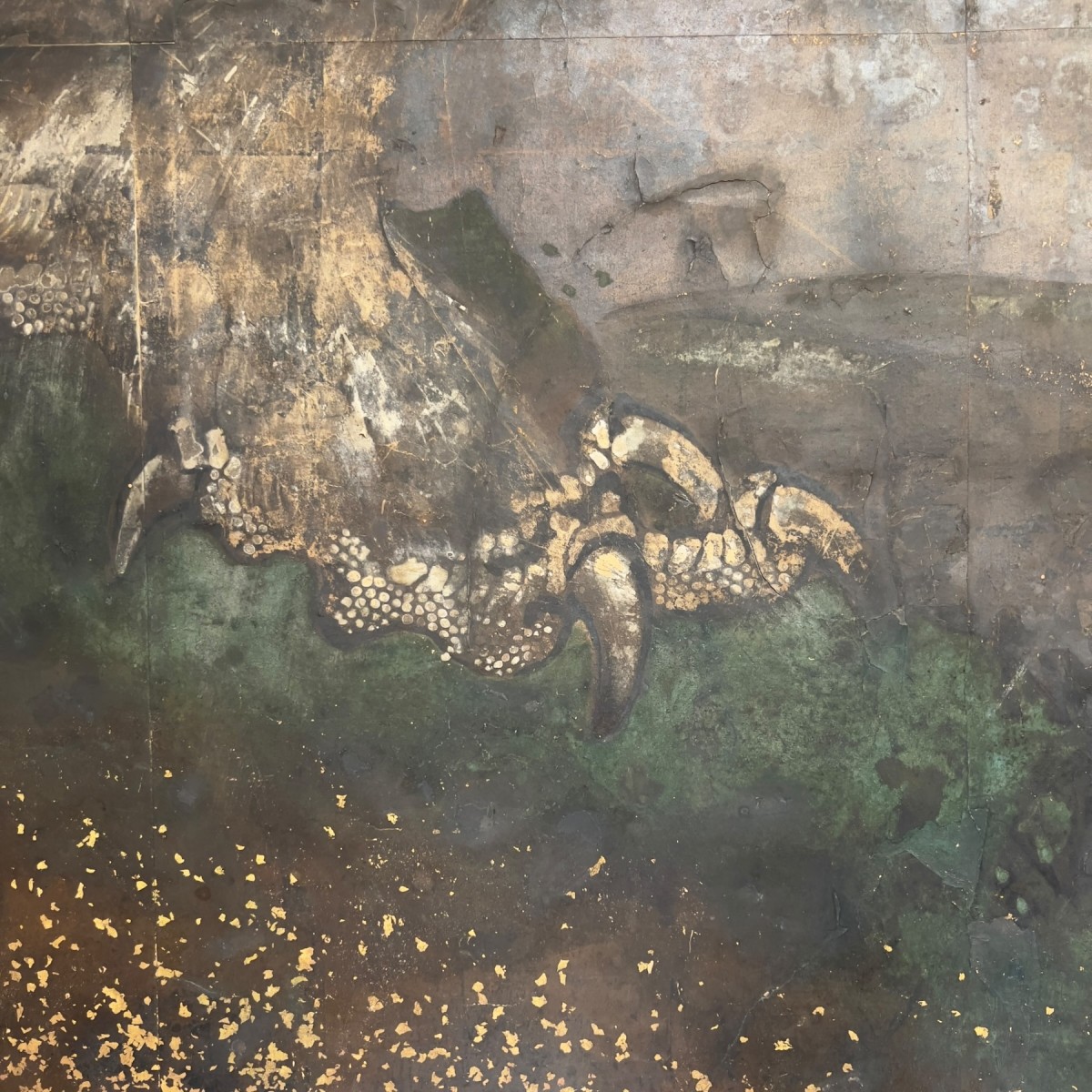
The technique combines Chinese ink (sumi), mineral pigments—malachite green for the ground and talons, shell white (gofun) highlights on the plumage, and a yellow-green azurite treatment for the beak—with gold powder scattered over a brown ink ground, a process characteristic of the Momoyama–Edo transition. The composition, centered on the eagle, together with its restrained palette and monumental treatment, directly evokes the aesthetic of the Soga school, which specialized in birds of prey from the 16th century onward.
Unlike folding screens (by?bu) or hanging scrolls (kakemono), which were designed for mobile display, this panel was integrated into the fixed architecture of a feudal lord’s palace (daimy? yashiki) or an imperial residence. This architectural format makes it a prestigious commissioned work, reserved for reception rooms where the raptor symbolized military power and the authority of the master of the house.
Condition: an aged surface showing wear, craquelure, and a few losses attesting to its age; visible paper joints, normal for the period (traditional oshi?e?bari laminated construction).
During the Momoyama period (1568–1615) and the early Edo period (1603–1868), paintings on sliding panels known as fusuma (fusuma?e) were the preferred support for Japanese monumental art. Integrated into castles (shiro) and palaces, they structured interior space while proclaiming the status and values of the patron.
The motif of the raptor—eagle or falcon—occupies a central place in the iconography of warrior power. From the 12th century onward, falconry (takagari) was the preserve of the military aristocracy. Oda Nobunaga, Toyotomi Hideyoshi, and Tokugawa Ieyasu all practiced it intensively, and in 1612 the shogunate prohibited court nobles from owning birds of prey, thereby consolidating the warrior monopoly over this symbol of strength. Fusuma decorated with raptors adorned audience halls and waiting rooms for vassals, as evidenced by the celebrated Matsutaka?zu (Pines and Hawks) by Kan? Sanraku at Nij? Castle (1626) and at Daikaku?ji.
Dimensions and Rarity
Measuring 120 × 144 cm, this panel belongs to the monumental format of palace fusuma. By way of comparison:
– Fusuma at Nij? Castle: approximately 173 cm in height
– Fusuma at Daikaku?ji (13 panels by Sanraku): approximately 125–150 cm in height
The oversized eagle (larger than life) amplifies the visual impact—a device typical of the Momoyama style, intended to impress.
Unlike screens and scrolls, fusuma were fixed elements, permanently exposed to light, thermal variations, and daily wear. Their survival rate is therefore very low, due to castle fires, dismantling, and reuse of materials. The ancient fusuma that have come down to us are mostly preserved in Zen temples (Daitoku?ji, My?shin?ji), where they benefited from institutional protection. A fusuma panel of this scale, outside a museum collection, represents a great rarity on the art market.
Attribution
Soga School, circle of Soga Nichokuan, late Momoyama / early Edo period (c. 1600–1630)
Dimensions & Technical Characteristics
Height: 120 cm
Width: 144 cm
Support: paper mounted on a fusuma frame, hollow structure with paper backing
Technique: Chinese ink (sumi), mineral pigments (malachite, azurite, gofun), gold powder (sunago) on a brown ground
Period: Late Momoyama / early Edo period (c. 1600–1630)
Provenance: Japan, probably the Kansai (Kyoto–Osaka) region; French private collection, acquired from the Edo Gallery in the 1980s
School: Soga, circle of Soga Nichokuan
Delevery information :
A special care is given to packing. Bigest pieces are crated.
All our shippings are insured with tracking.
As we do a lot of shippings, we do have very special rates. Please inquire!