Offered by Costermans Antiquités
REQUEST INFORMATION

Old Masters paintings, 16th, 17th and 18th furnitures and works of art
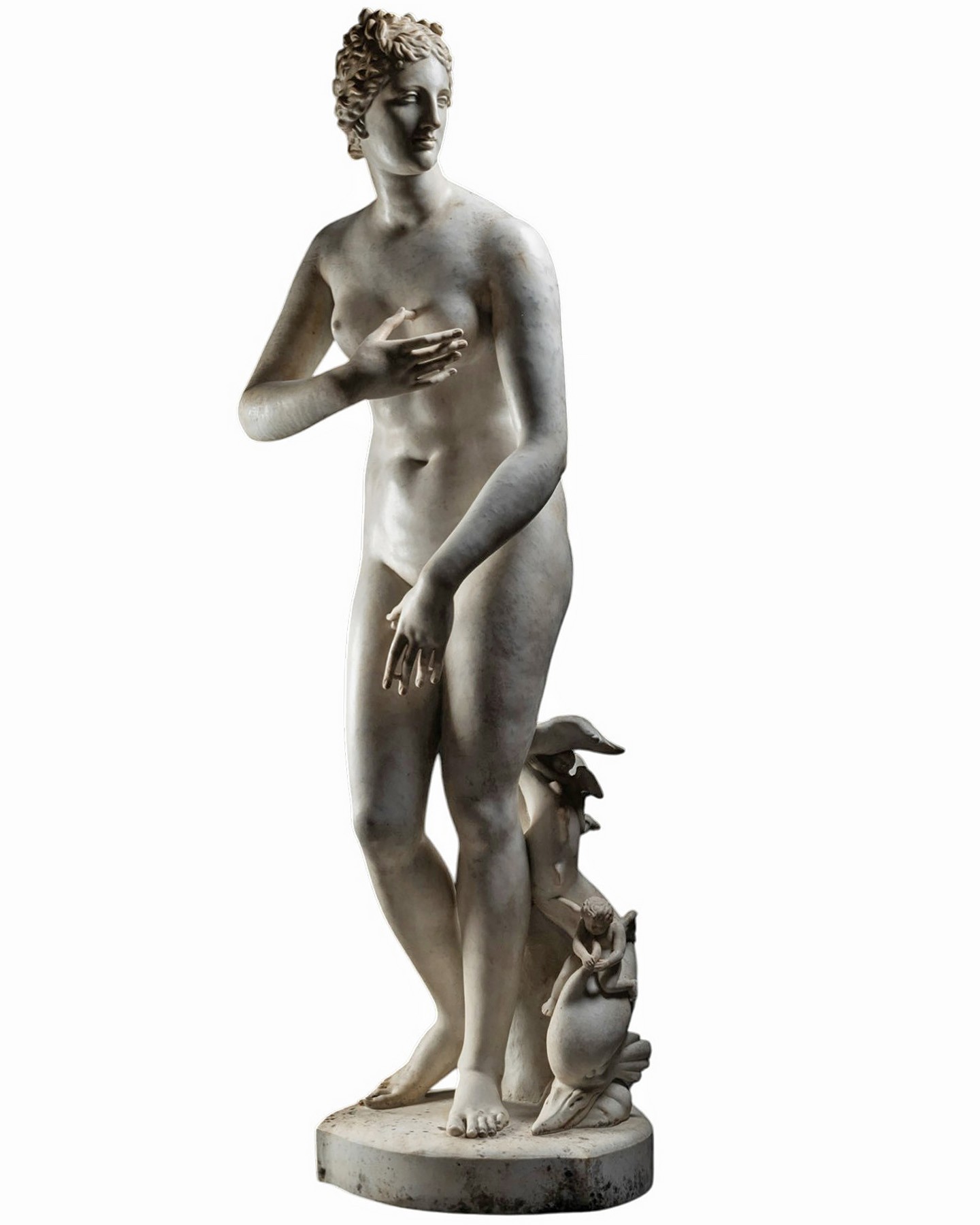
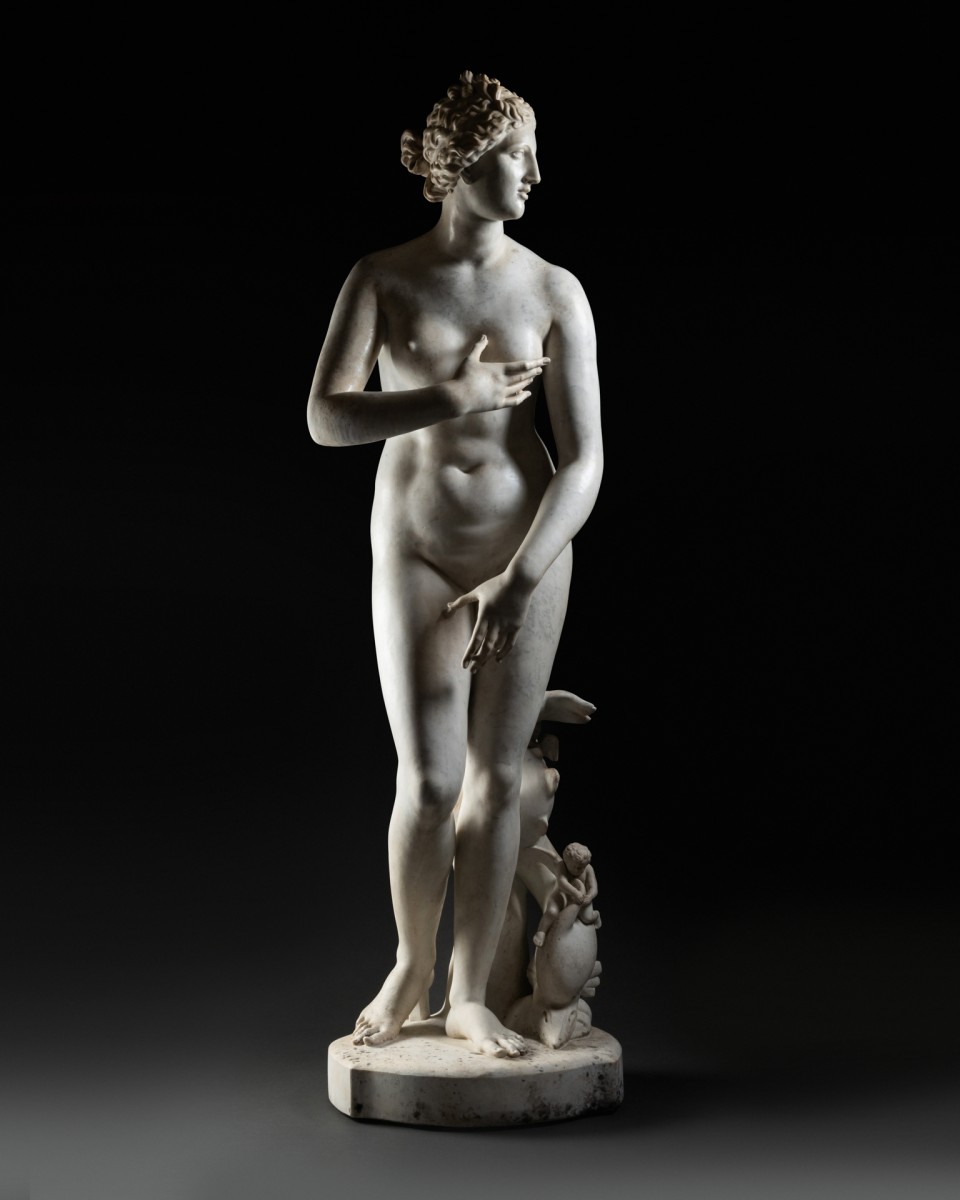
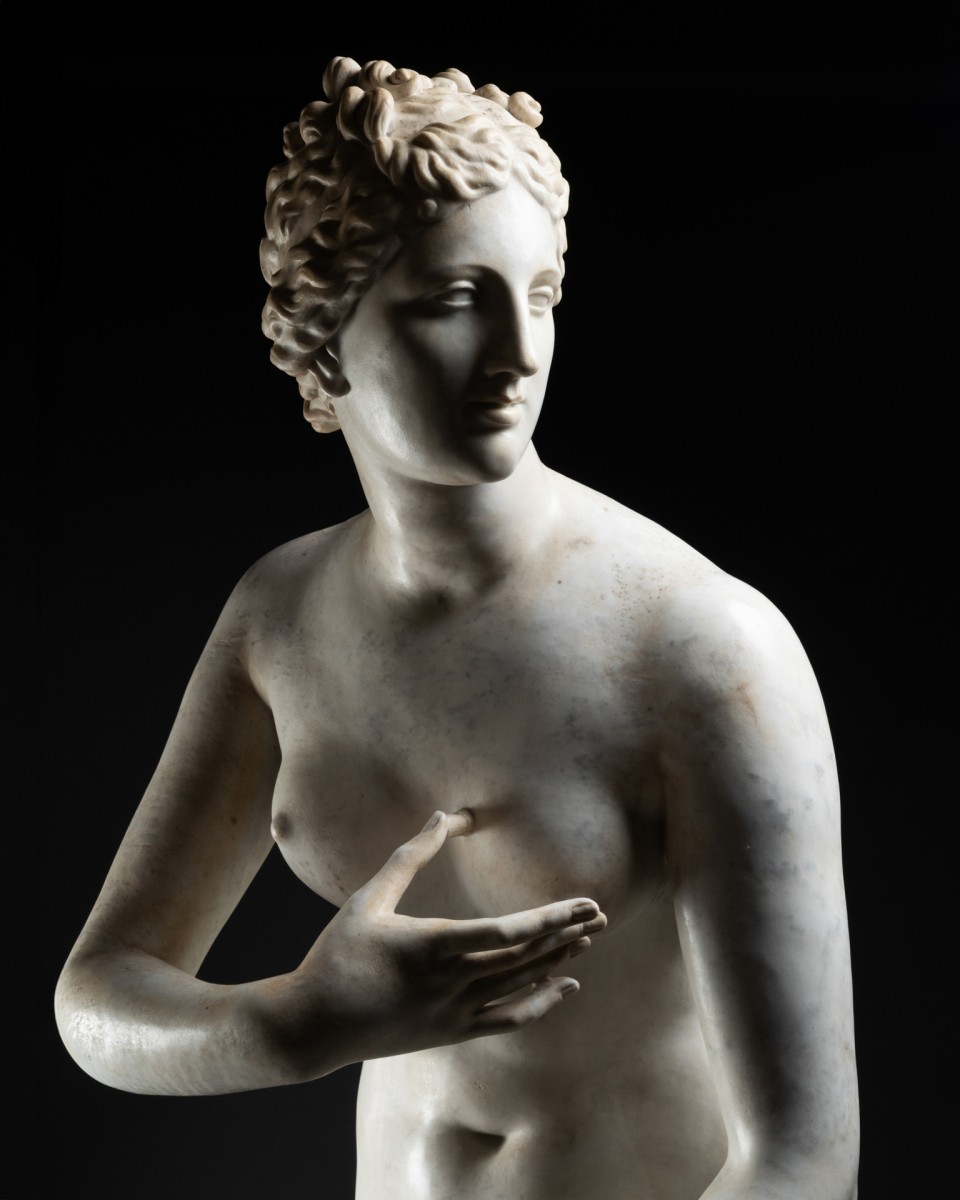
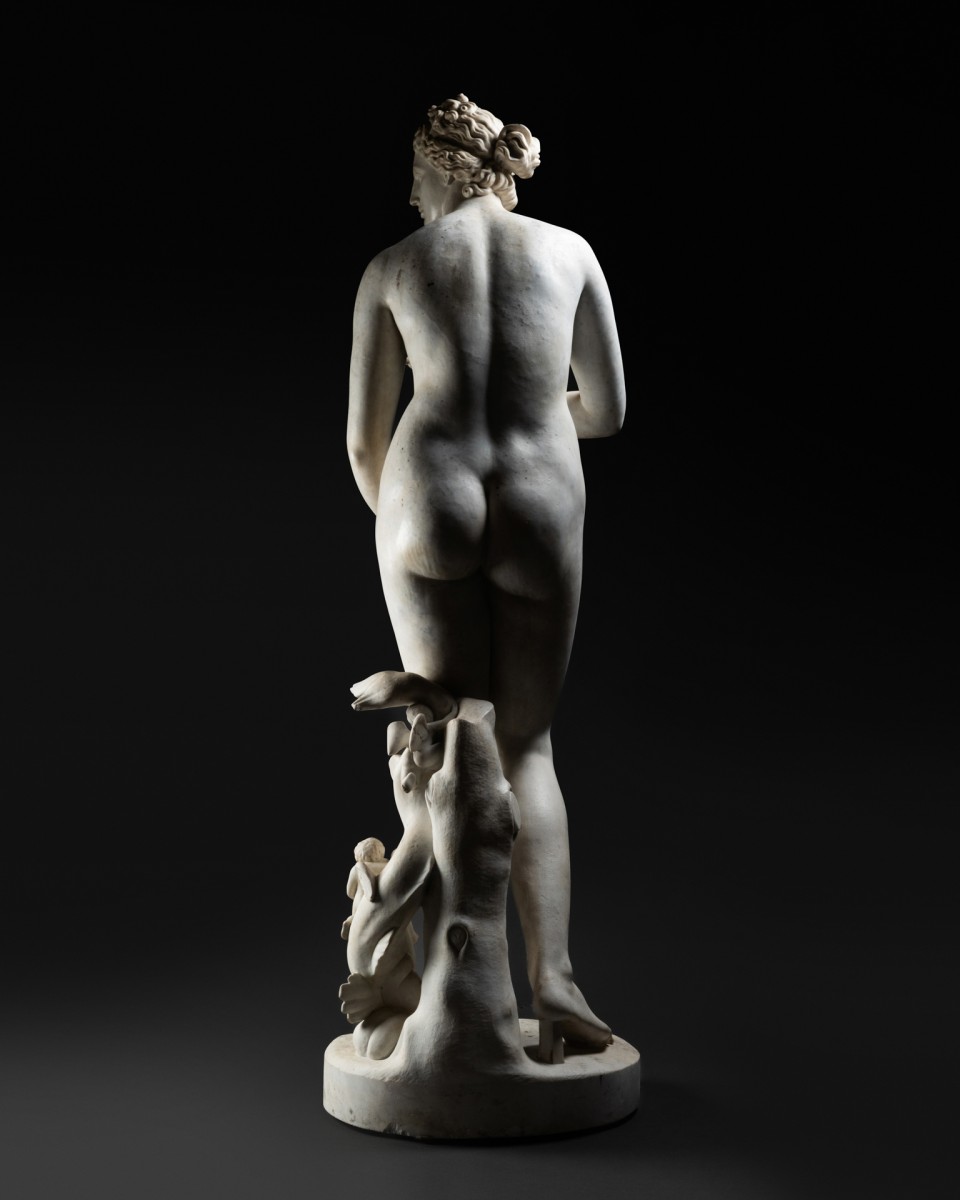
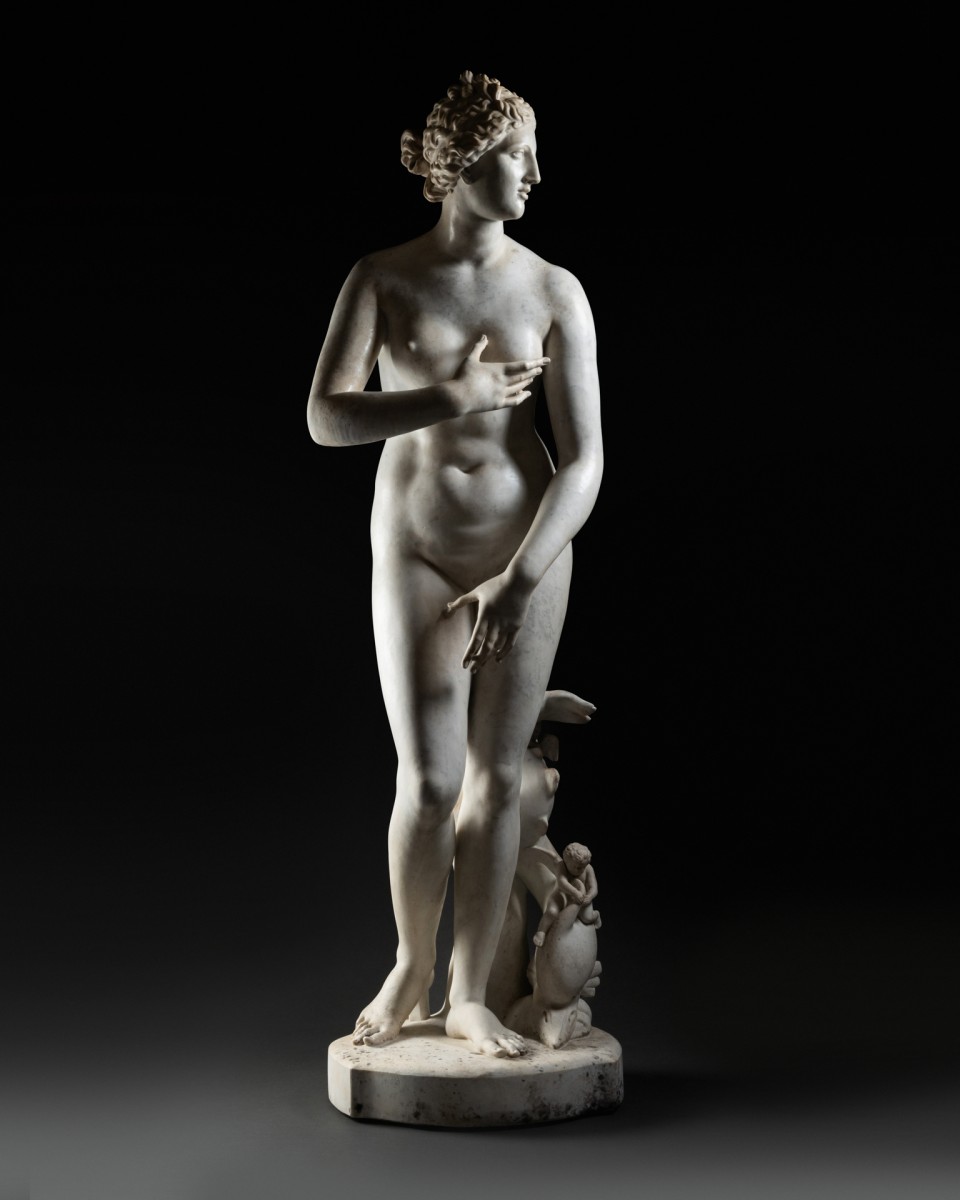
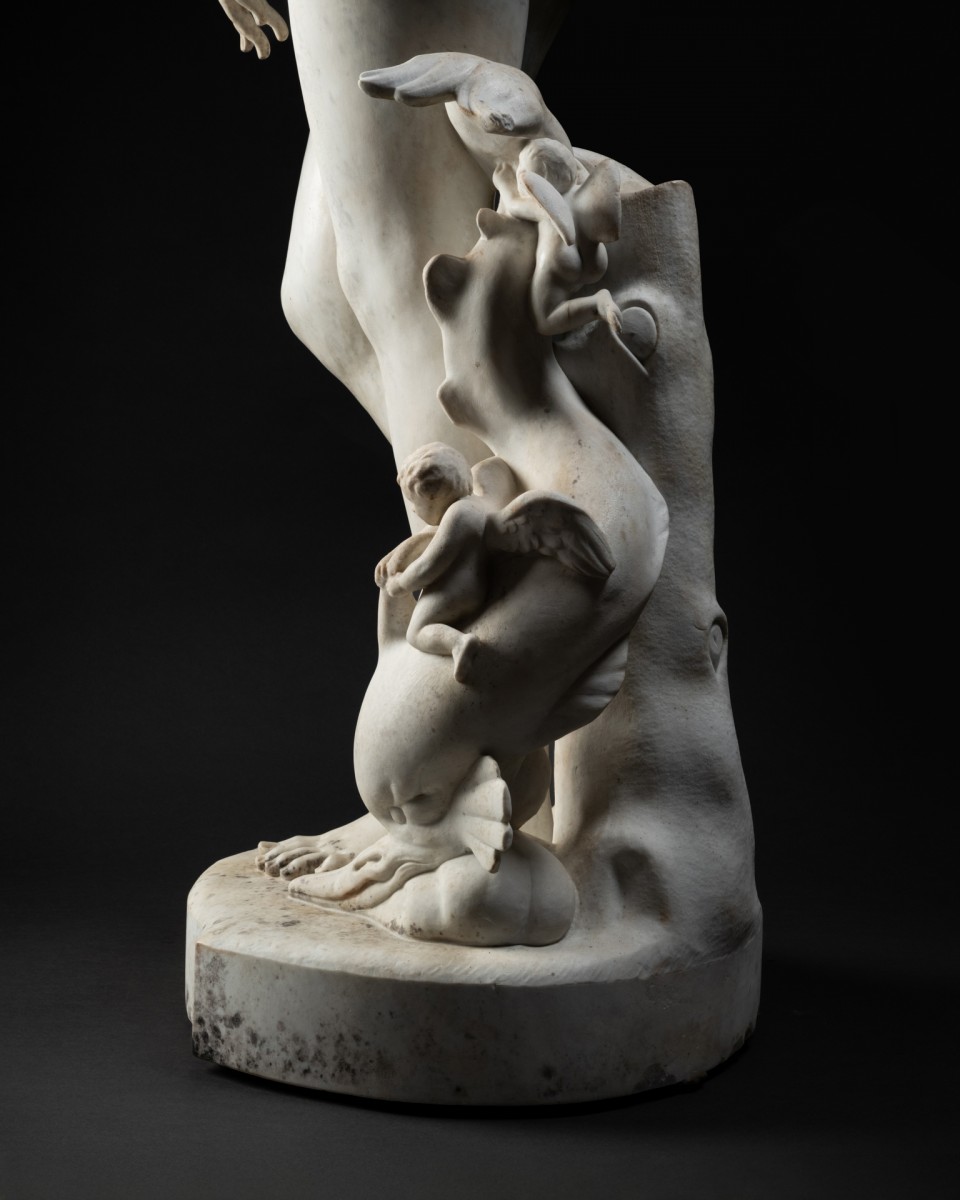
Marble, Rome, 19th century
Based on an ancient model, the Medici Venus, now preserved in the Uffizi Gallery, Florence.
H 163 x W 47 x D 50 cm ; H 64 1/8 x W 18 ½ x D 19 2/3 inches
The goddess is depicted in a fleeting, transient pose, as if caught in the act of emerging from the sea, alluded to by the dolphin at her feet.
The Medici Venus is one of the most famous antiquities. Louis XIV, for example, owned no fewer than five versions of this statue. Even today, many life-size statues can be admired in the great parks of Europe. In bronze reduction, it was one of the most familiar antiquities in collectors' cabinets: in the portrait of Claude-Henri Watelet painted by Greuze around 1763-1765, the art lover and author of L'Art de peindre is depicted with a compass and a notebook, observing a bronze statuette of the Venus de Medici, as if he were about to deduce the ideal proportions of the female figure from the sculpted example.
According to Piero Ligorio, the statue was discovered in Rome, near the Baths of Trajan, in the vineyard of the Bishop of Viterbo, Sebastiano Gualtieri. It immediately became part of the prelate's collection and, in 1566, was acquired by Alfonso d'Este. In 1575, it was sold to Ferdinand de' Medici, who decided to include it in the collection of antiquities at the Villa Medici in Rome. The statue remained in this sumptuous Roman residence for over a century. In 1677, it was transferred to Florence along with other masterpieces such as the Knife Grinder and the Wrestlers. These famous works were displayed in the Tribune, the most precious space in the Uffizi, and Venus became the symbol of the Florentine museum as a whole. The statue's prestige is reflected in subsequent events and in its history of successive collections. In 1802, Napoleon ordered its transfer to Paris. The French period lasted until 1816, when the statue was returned to its original location in Florence.
Unusually for an ancient statue, the Venus has an identified author. The pedestal bears his signature: Cleomenes, son of Apollodorus, a sculptor active in Athens in the 1st century BC.
High-quality versions of this statue, as well as other famous busts and figures from Antiquity, were produced in bronze and marble in Rome and elsewhere.