Offered by ClassicArtworks Stockholm
REQUEST INFORMATION

Old Master Paintings and 19-20th-Century Scandinavian Arts
Jakob Kulle (1838–1898) Sweden
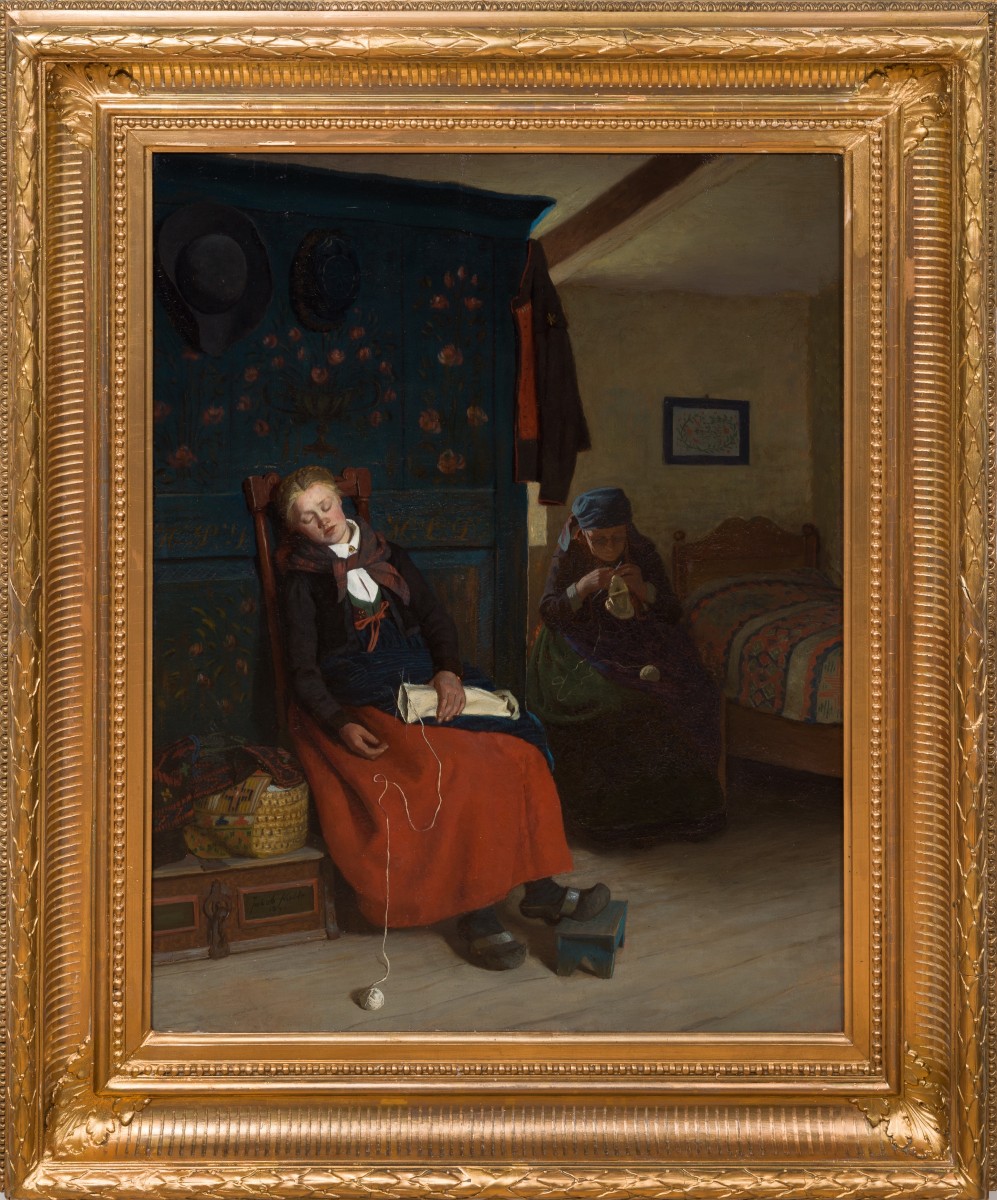
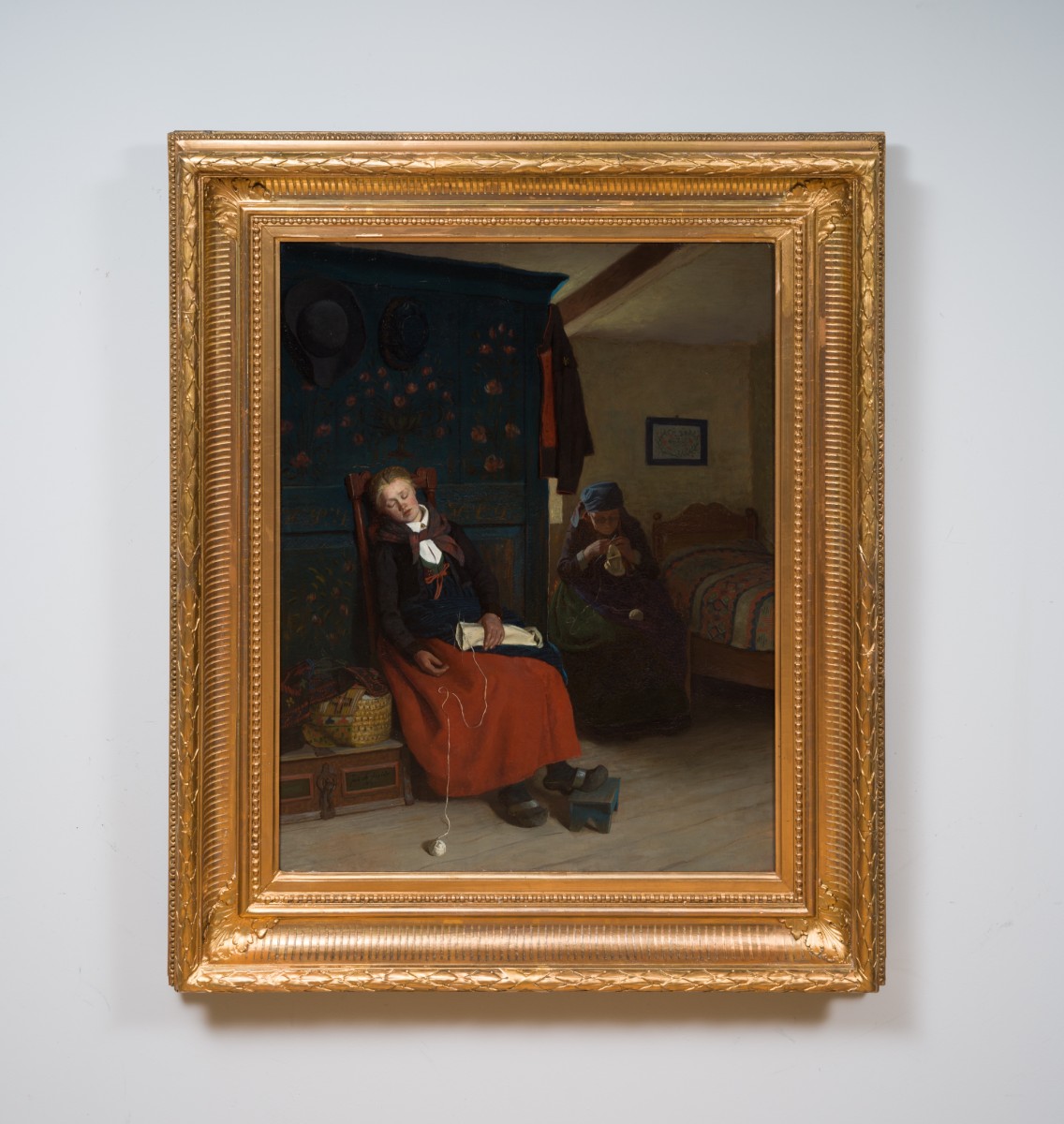
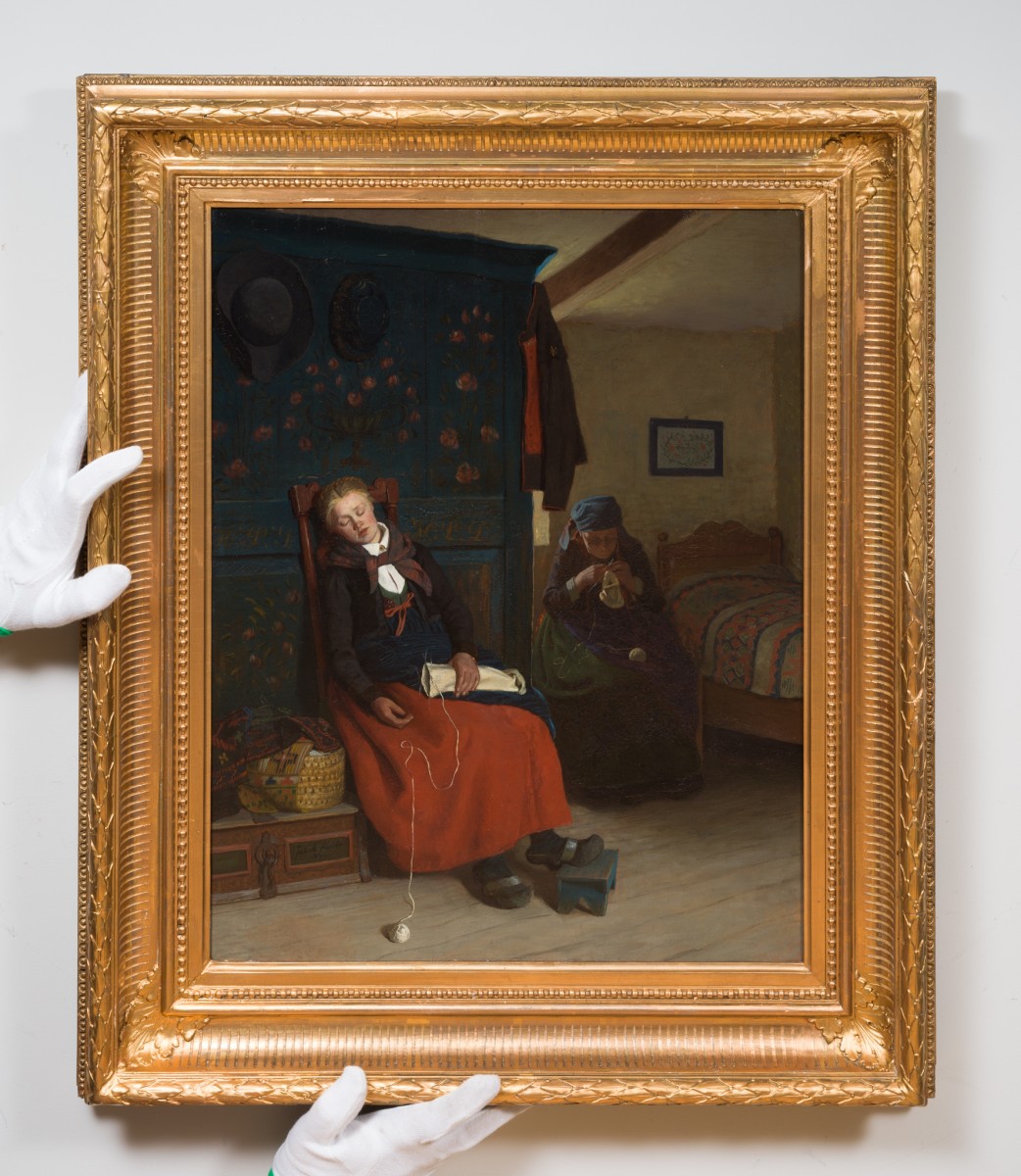
An Afternoon Nap, 1877
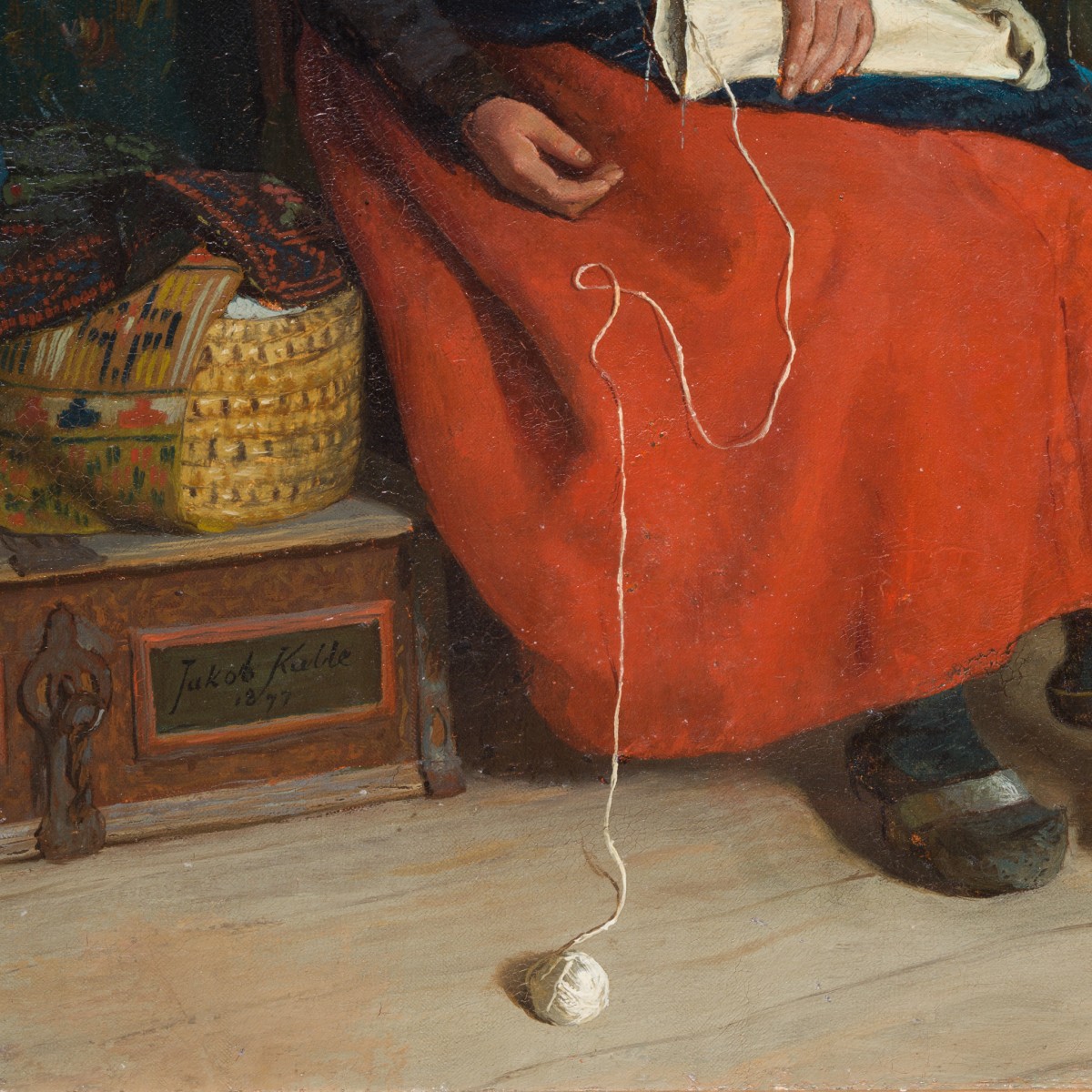
signed and dated
oil on canvas
unframed 61 × 48 cm (24 × 18.9 in)
framed 79 × 67 cm (31.1 × 26.4 in)
Provenance:
Purchased directly from the artist.
Thereafter by descent in the family until we acquired it in 2025.
Essay:
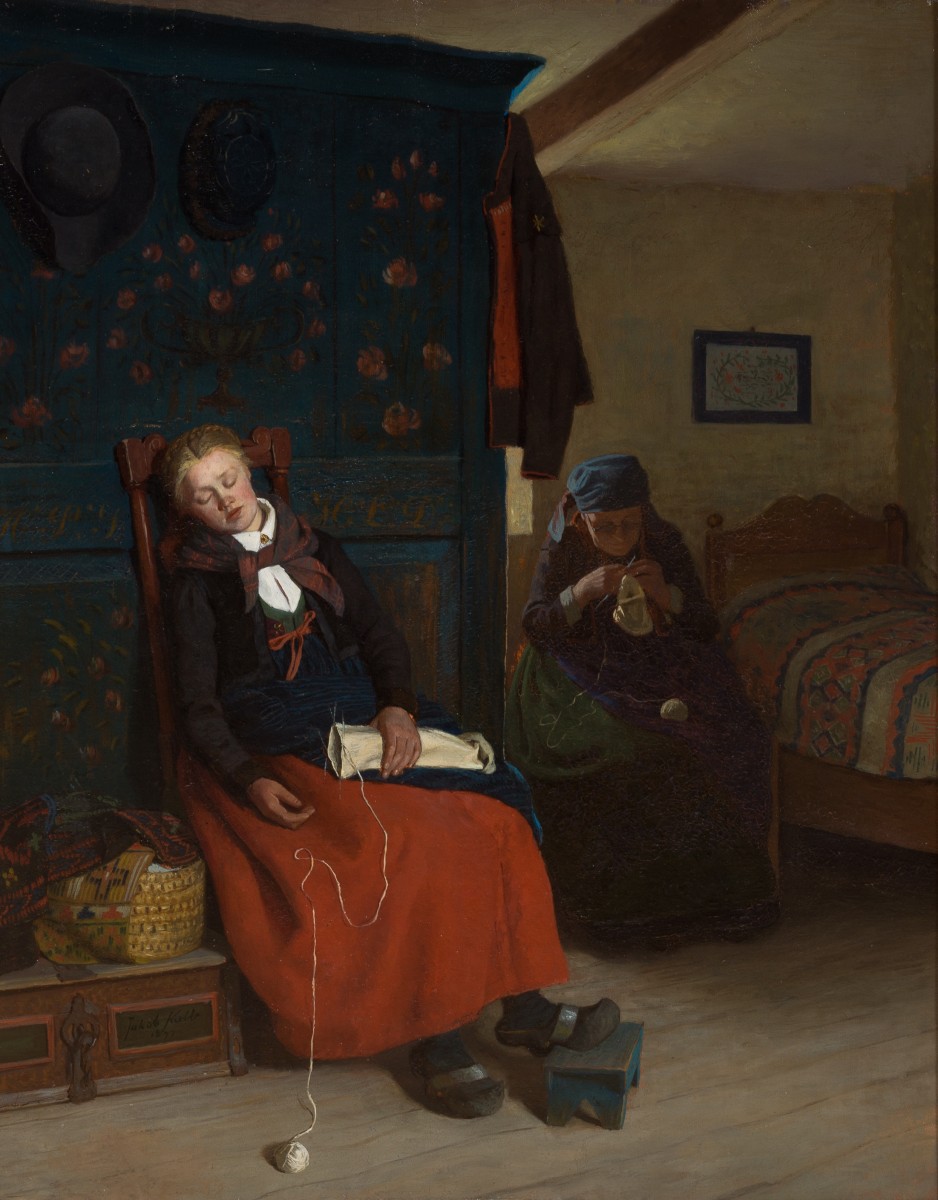
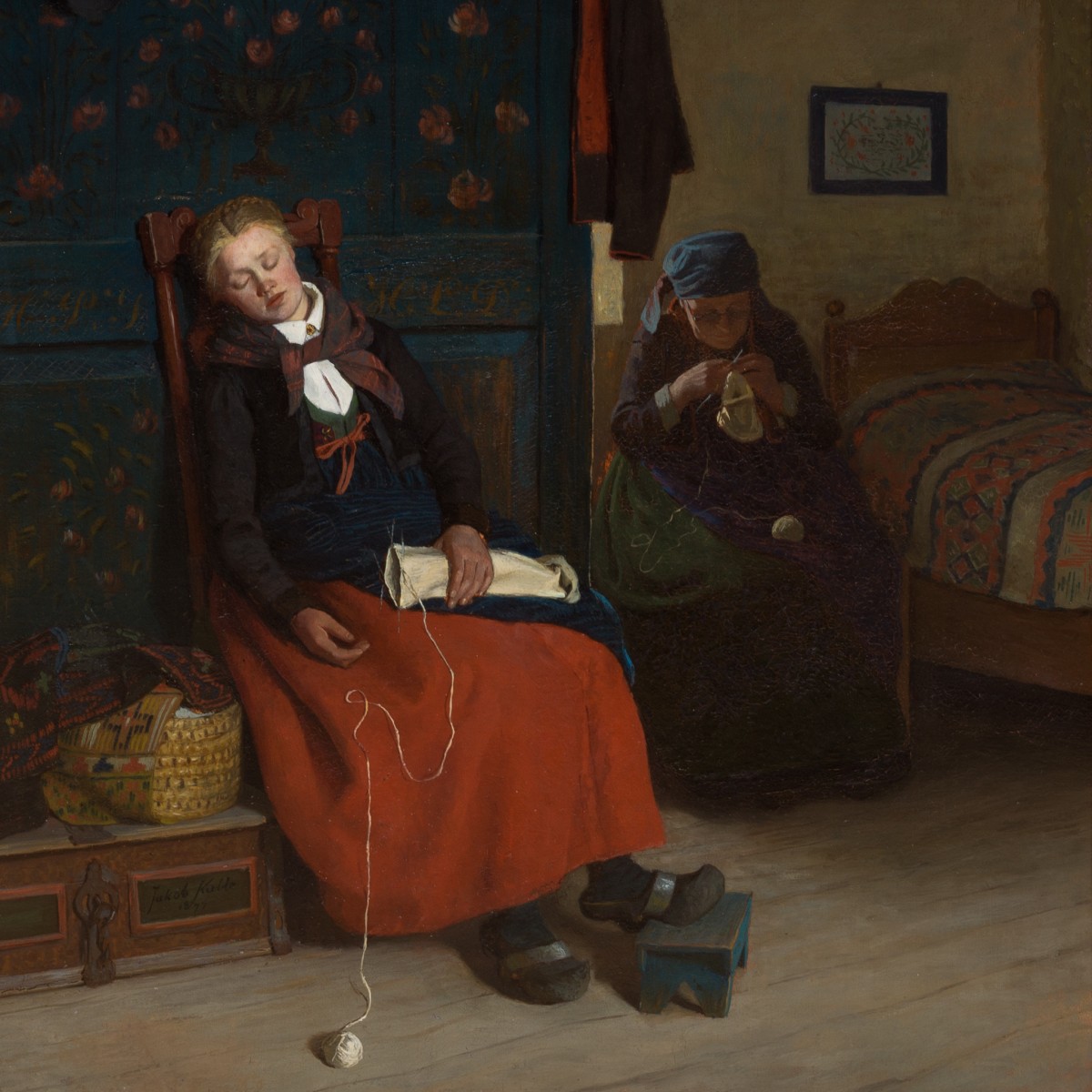
Painted in 1877, An Afternoon Nap belongs to the rich tradition of Swedish nineteenth century genre painting. Jakob Kulle presents an intimate domestic interior in which everyday life unfolds quietly and without theatricality. A young girl has fallen asleep in a chair while working with yarn, her head gently inclined to one side in a moment of complete rest. The stillness of the scene contrasts with the quiet activity of the older woman seated further back in the room, who continues her needlework.
The composition is carefully balanced between the two figures. The sleeping girl occupies the foreground and immediately draws the viewer’s attention. Kulle has rendered her features with remarkable sensitivity, capturing the softness of sleep and the calm expression of a young face at rest. Her traditional clothing introduces strong areas of colour, particularly the deep red skirt and the darker blue apron, which stand out against the more subdued tones of the interior. The folds of the fabric and the delicate white scarf are painted with refined precision, emphasizing the tactile qualities of the textiles.
One of the most striking details in the painting is the ball of yarn that has rolled from the girl’s lap onto the floor. The thread runs loosely from her hands down across the skirt and onto the wooden floorboards where the small white ball rests. Kulle models this object with such care that it appears almost three dimensional. It anchors the foreground and enhances the illusion of depth within the room.
Behind the figures stands a beautifully painted cupboard decorated with floral motifs in deep blue and green tones. Hats and garments hang above it, suggesting the rhythm of daily life within the household. To the right a bed covered with patterned textiles adds warmth and domestic character to the scene. These elements are not merely background decoration. They contribute to the narrative atmosphere of quiet work, rest, and modest rural life.
Jakob Kulle was born in Lund in 1838 and initially trained as a goldsmith before dedicating himself to painting. He later studied at the Royal Swedish Academy of Fine Arts in Stockholm. Throughout his career he became known for genre scenes depicting the life of the rural population of southern Sweden, particularly in Skåne. His paintings often combine careful observation with an almost ethnographic interest in interiors, clothing, and handicraft traditions.
This attention to material culture is clearly visible in An Afternoon Nap. The textiles, furniture, and everyday objects are rendered with exceptional care, reflecting the artist’s deep familiarity with the domestic environment he portrays. Kulle’s background in decorative arts likely strengthened his sensitivity to pattern, surface, and colour harmony.
Despite its modest narrative, the painting reveals a high level of technical mastery. The controlled lighting, the careful modelling of faces and fabrics, and the balanced composition demonstrate Kulle’s ability to transform an ordinary moment into a compelling work of art. The scene feels both intimate and authentic, offering a quiet glimpse into the rhythms of nineteenth century domestic life.
Condition report:
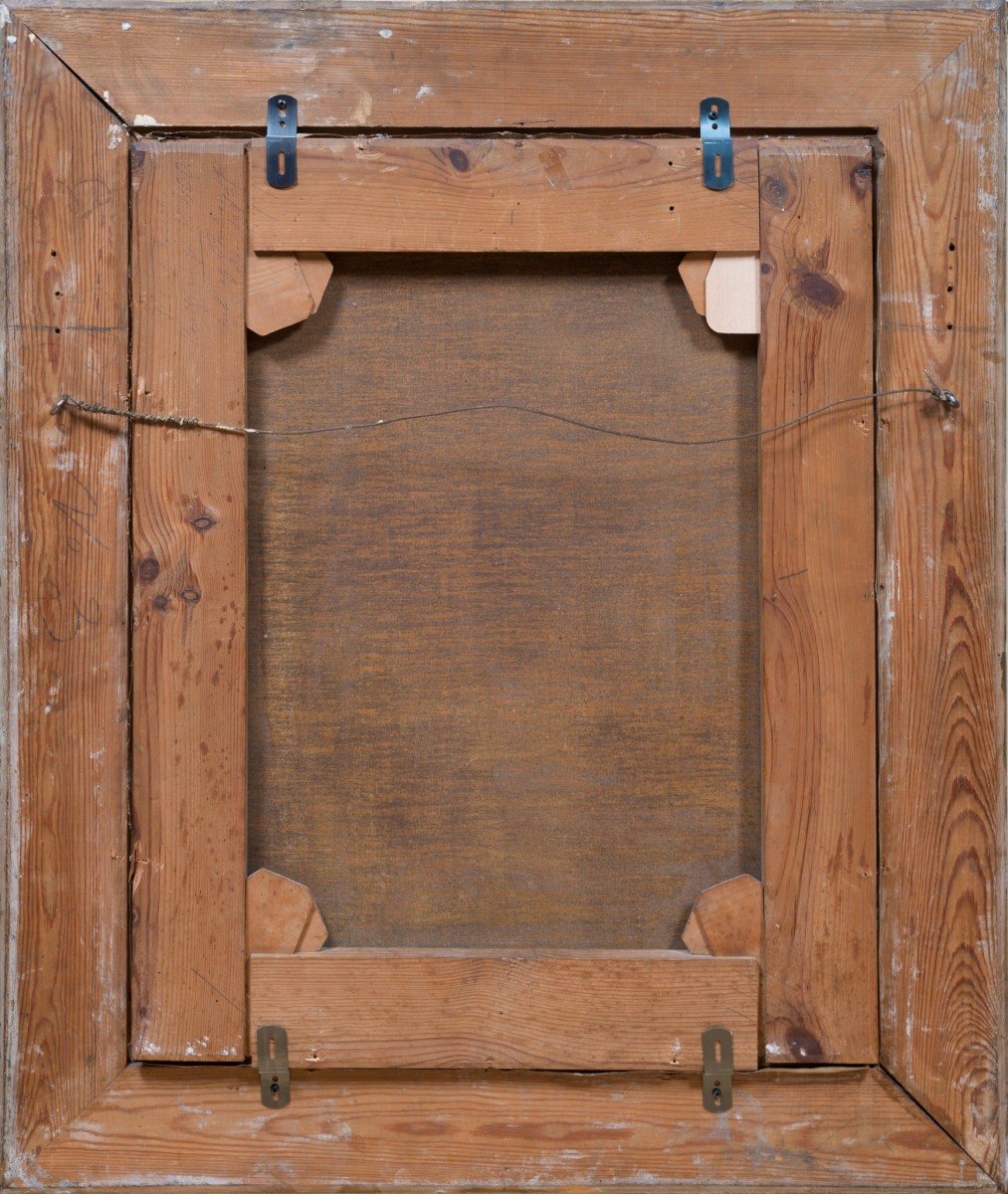
The painting underwent comprehensive conservation treatment in 2025. Earlier craquelure was stabilised, areas were carefully retouched, and the old varnish was removed. The painting now presents in very fine condition with clear colours and strong depth. The frame is original. As with many nineteenth century frames, there are historic repairs and minor restorations, but overall it presents well and is ready to hang.
Delevery information :
We offer free worldwide shipping, and all paintings are sent in custom-built wooden crates for the highest level of security for our customers.