Offered by Galerie PhC

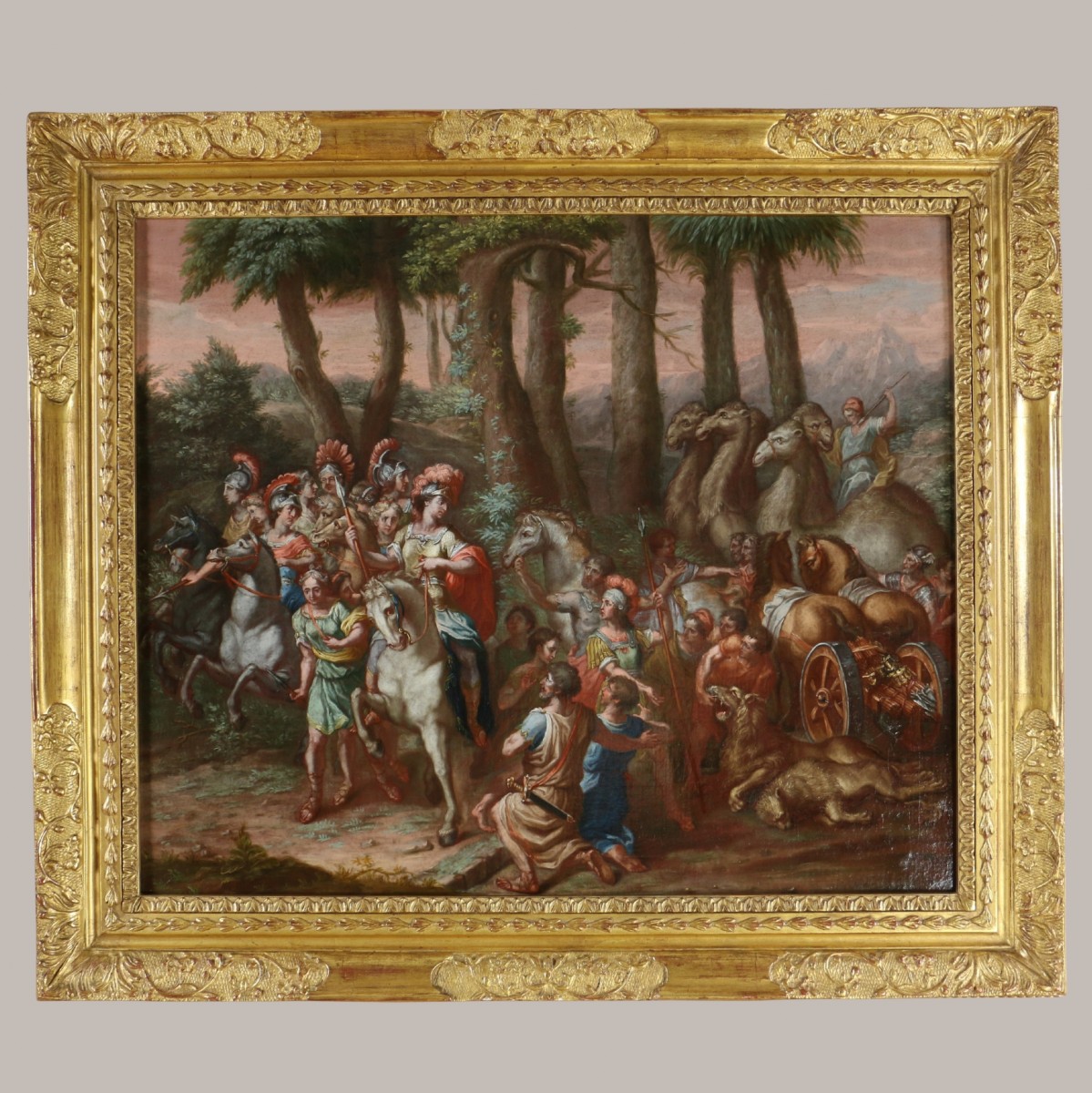



European paintings from the 17th, 18th and 19th centuries.
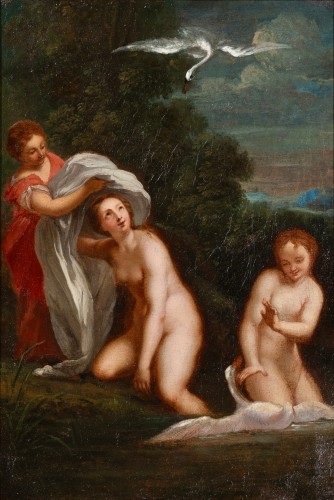
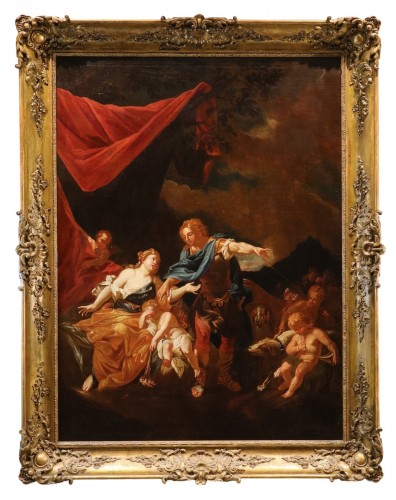
Relined canvas, 74 cm x 61 cm.
Framed, 91.5 cm x 79 cm.
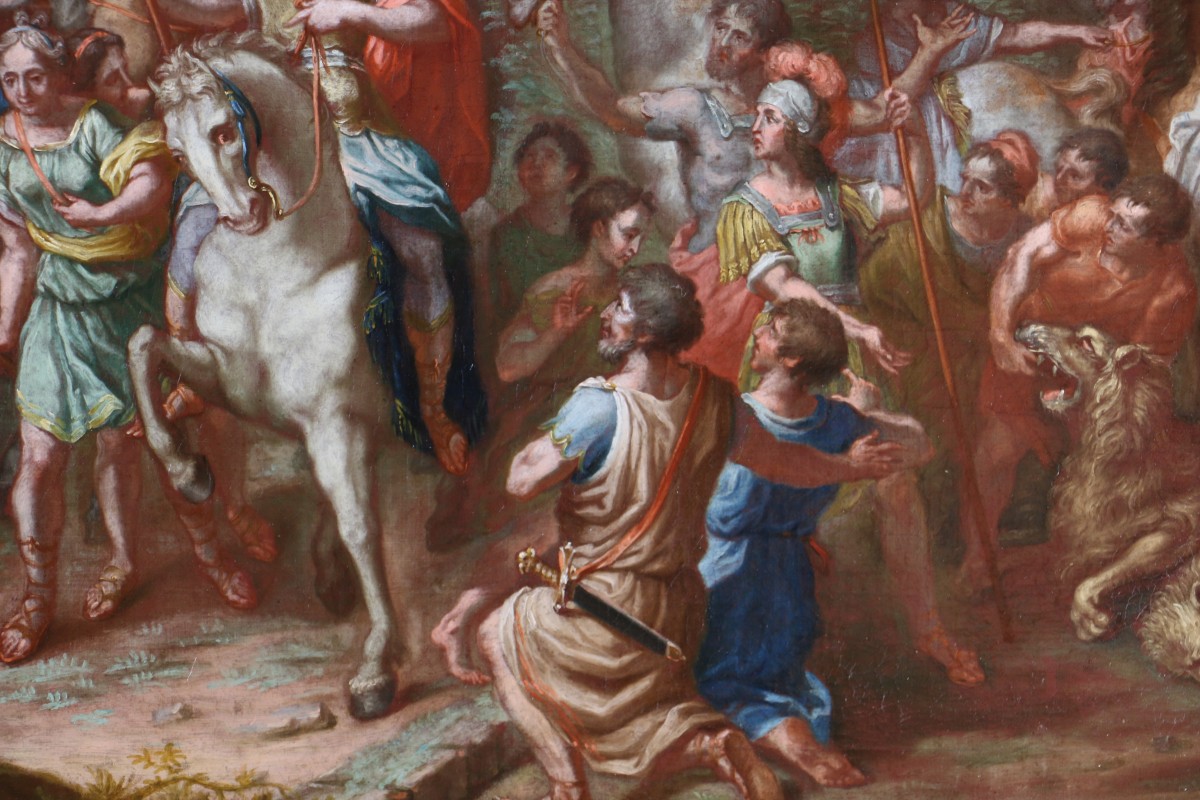
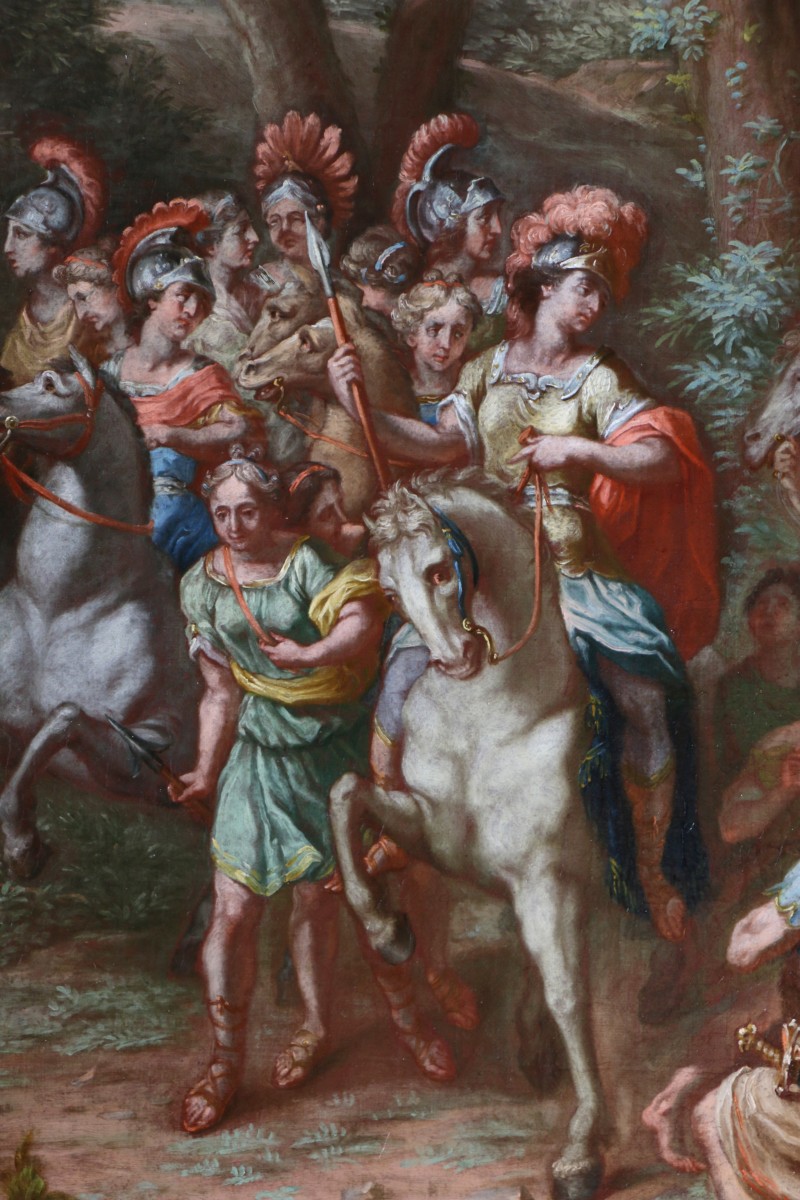
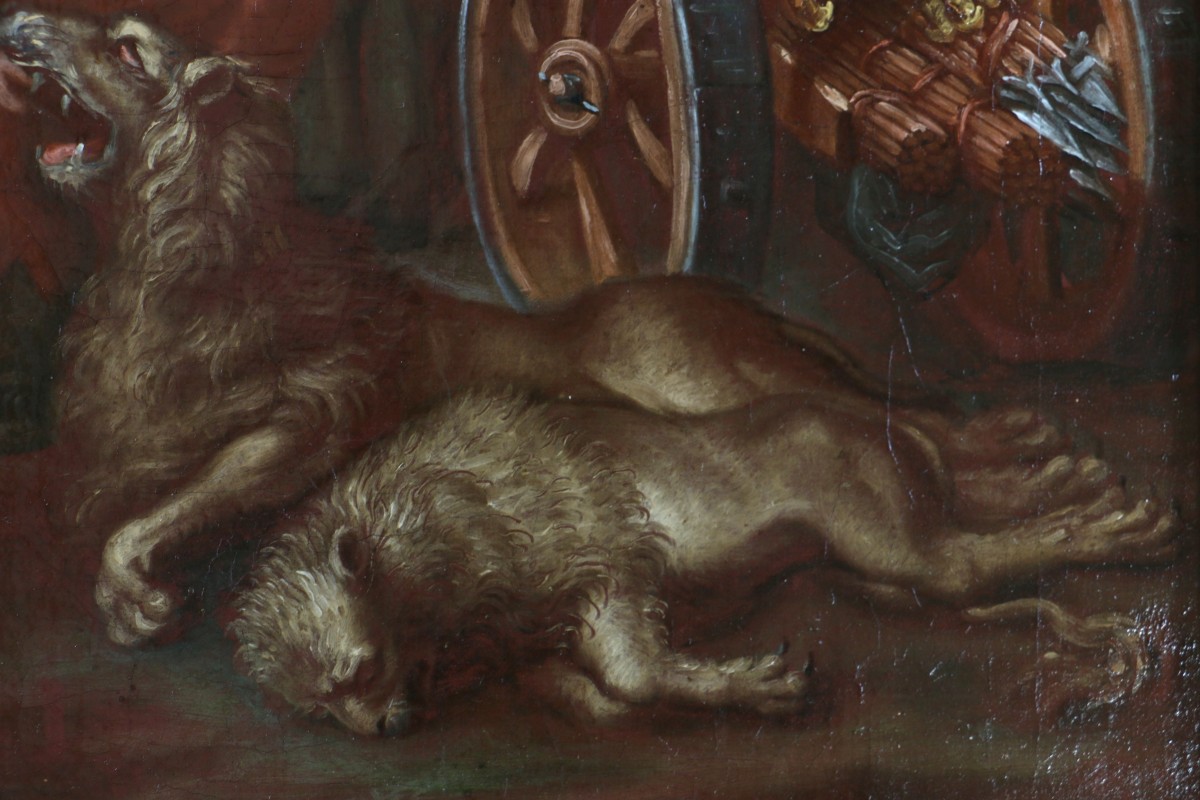
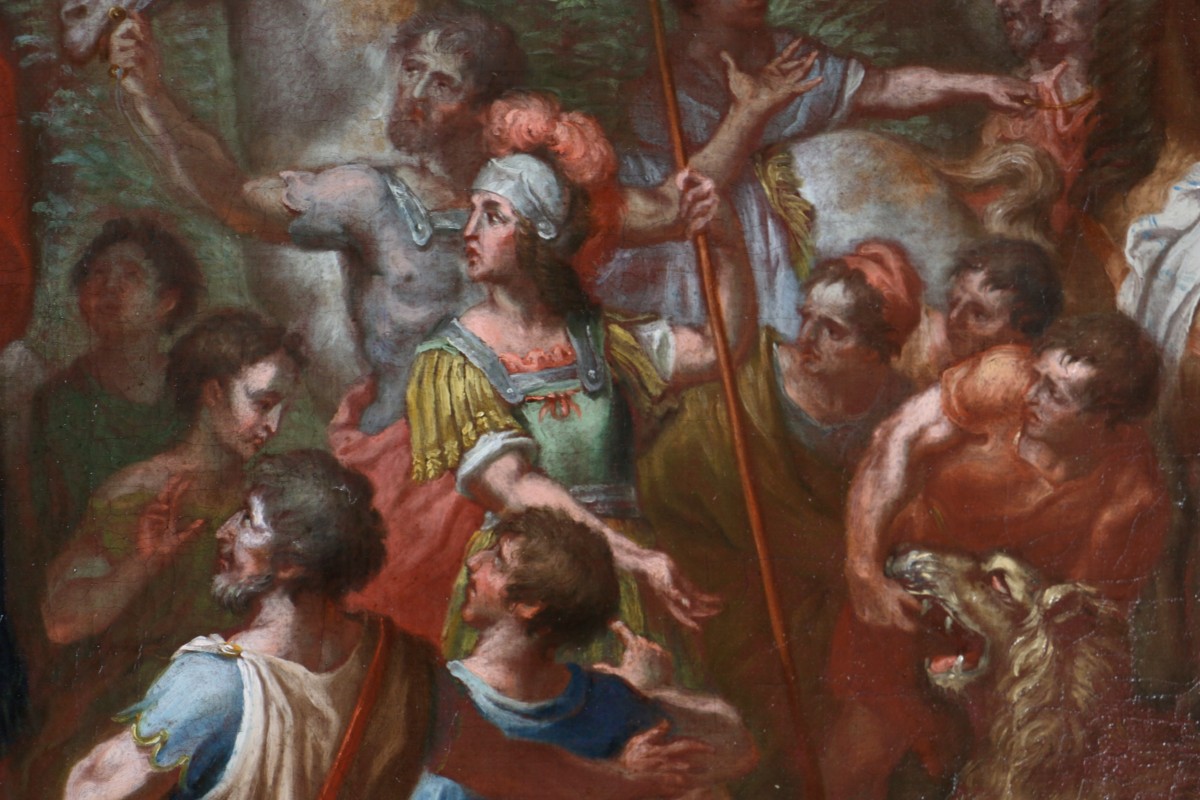
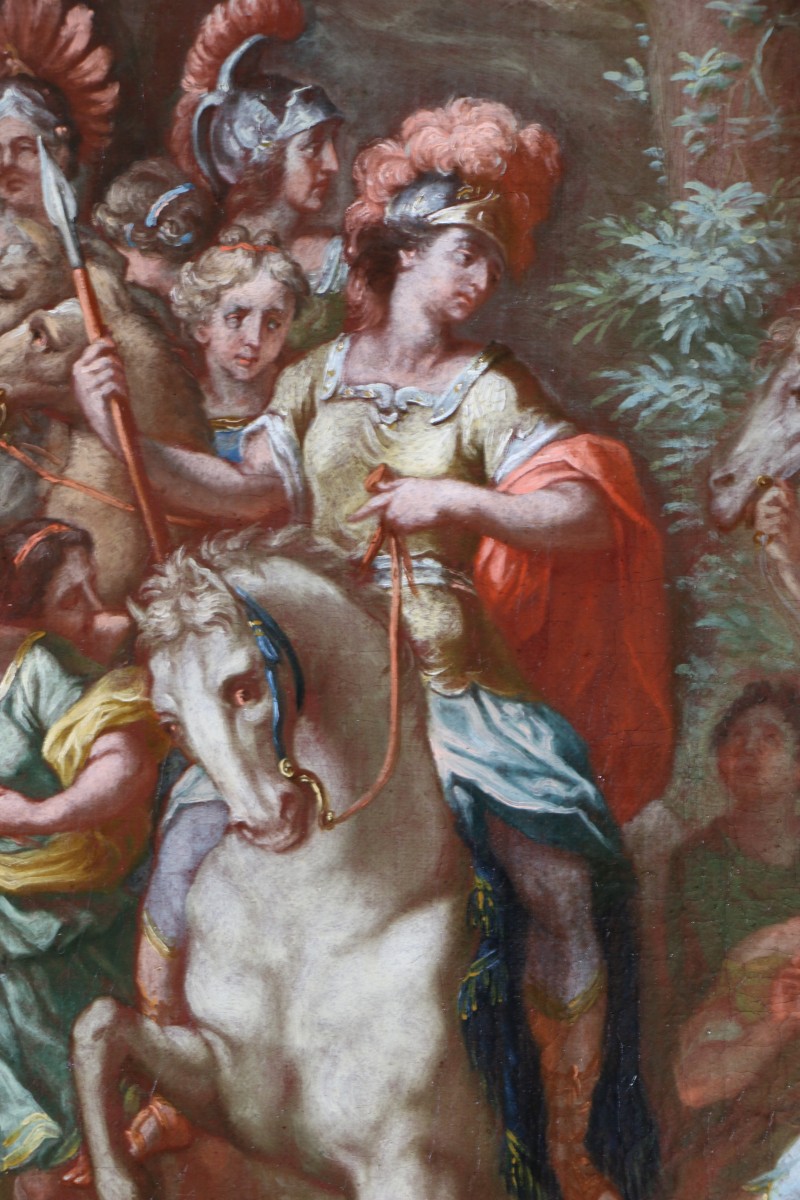
A stylistic analysis of the work places it within the Viennese academic milieu of the mid-18th century. The painting exhibits several characteristics found in the production developed in Vienna around Michelangelo Unterberger (1695-1758), a leading figure in history painting within the Habsburg territories during this period. The influence of Giovanni Battista II Pittoni (1687-1767) should also be noted. The modeling of the figures is distinguished by light flesh tones with rosy undertones, treated with gradual blending and soft transitions between light and shadow. The draperies are rendered with ample and relatively simplified folds, while the brushwork remains thin and unimpregnated. The faces also exhibit recurring physiognomic types: oval faces, elongated noses, and slightly elongated eyes, characteristic of Viennese academic painting in the first half of the 18th century. Several secondary elements, the treatment of the horses, the simplification of the military helmets, and the decorative rendering of the foliage, reinforce this stylistic connection. While certain affinities can be noted with the autograph works of Michelangelo Unterberger, the execution appears more synthetic and less elaborate.
Michelangelo Unterberger (1695–1758),
a painter of Tyrolean origin active primarily in Vienna, is one of the important figures in history painting in the Habsburg territories during the mid-18th century. His work lies at the crossroads of the late Baroque tradition of Central Europe and the influence of Italian painting, which profoundly marked his style. Born in Cavalese, in the Tyrol then under Habsburg rule, Unterberger initially received his artistic training in his native region before continuing his studies in Italy. Like many Central European painters of his time, he undertook a pivotal period in Rome, where he was directly exposed to the great traditions of Italian Baroque painting. The study of the Italian masters, particularly those of Roman Classicism and the Late Baroque, helped shape his pictorial language: balanced compositions, elegant figures, and soft modeling of flesh tones. Around 1720, Unterberger settled in Vienna, where he developed the bulk of his career. The Habsburg capital was then experiencing intense artistic activity, stimulated by imperial, aristocratic, and ecclesiastical commissions. The painter quickly gained a solid reputation there as the creator of large religious and historical compositions for churches, monasteries, and noble residences. His style is characterized by clear and harmonious painting, with rosy skin tones and draperies in luminous colors. The compositions are generally structured by groups of figures arranged in a legible manner, often within a space opening onto idealized landscapes. This aesthetic reflects the evolution of history painting in the Habsburg Empire during the 18th century, which combined the Baroque heritage with a growing taste for elegance and narrative clarity. Unterberger also played a significant role in artistic training in Vienna. He was appointed professor and later rector of the Vienna Academy of Fine Arts, a central institution in disseminating academic taste throughout the Austrian territories. Through his teaching, he helped train a generation of painters active in the Austro-Hungarian Empire and Central Europe. His works include numerous altarpieces and religious decorative cycles, as well as history paintings for churches and religious institutions. His oeuvre contributed to the establishment of a Viennese style of history painting, influenced by Italian art but adapted to the cultural context of the Habsburg Empire. Michelangelo Unterberger died in Vienna in 1758, leaving behind the image of a major artist and teacher of 18th-century Austrian academic painting.
Delevery information :
All our paintings benefit from careful and secure packaging. No geographic restrictions.