Offered by Poncelin de Raucourt Fine Arts
REQUEST INFORMATION

Paintings and drawings, from 16th to 19th century
Andrea Boscoli
(Florence, 1560 – Rome, 1608)
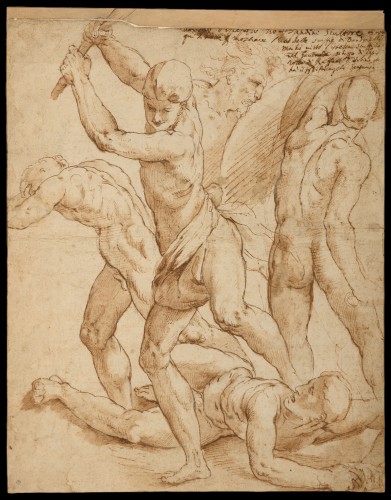
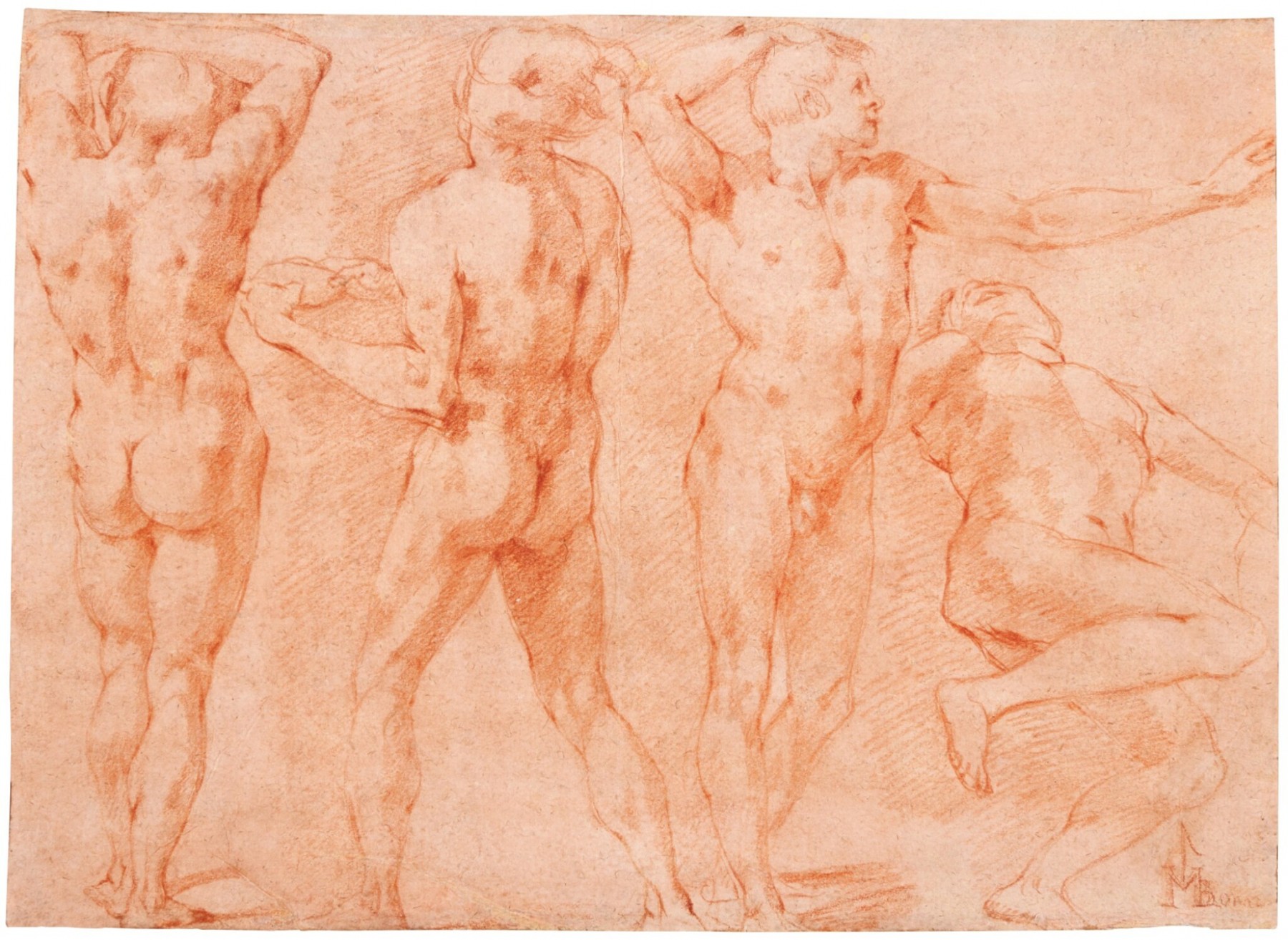
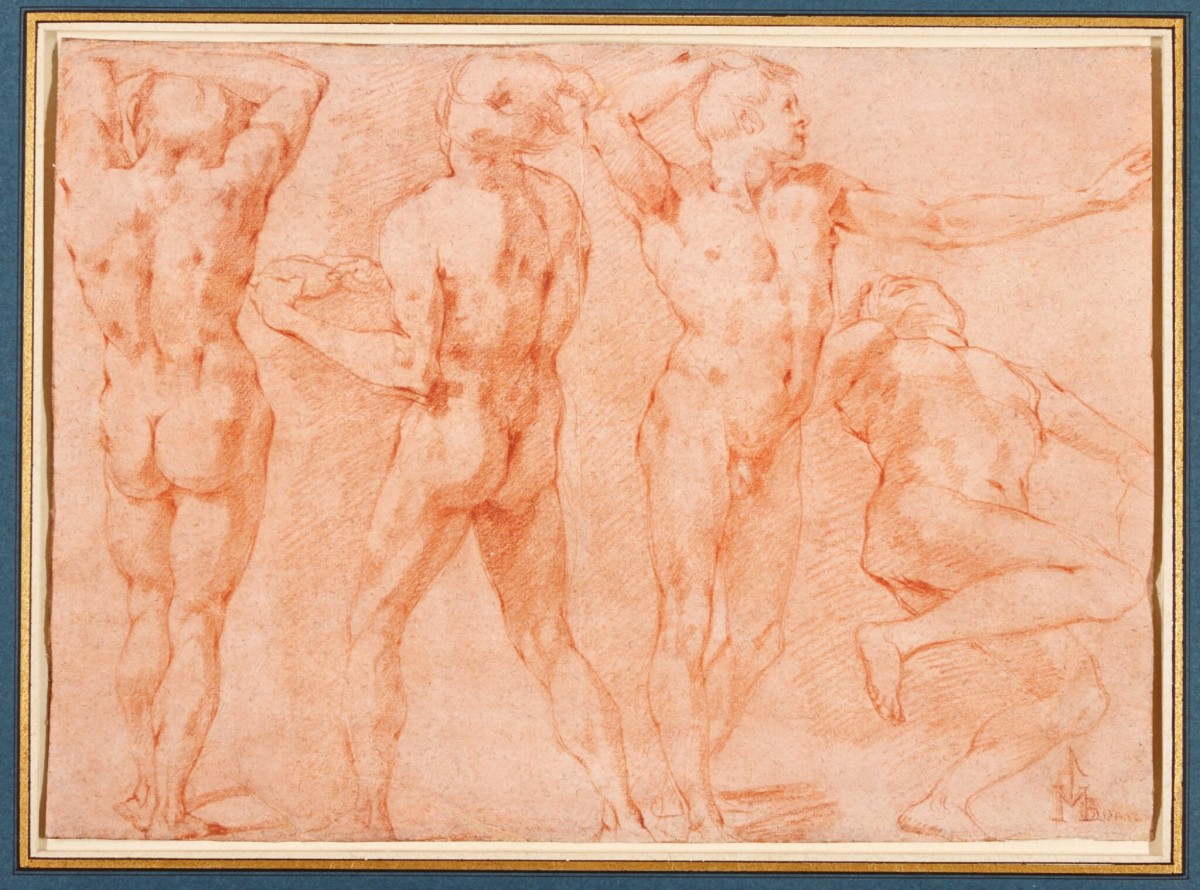
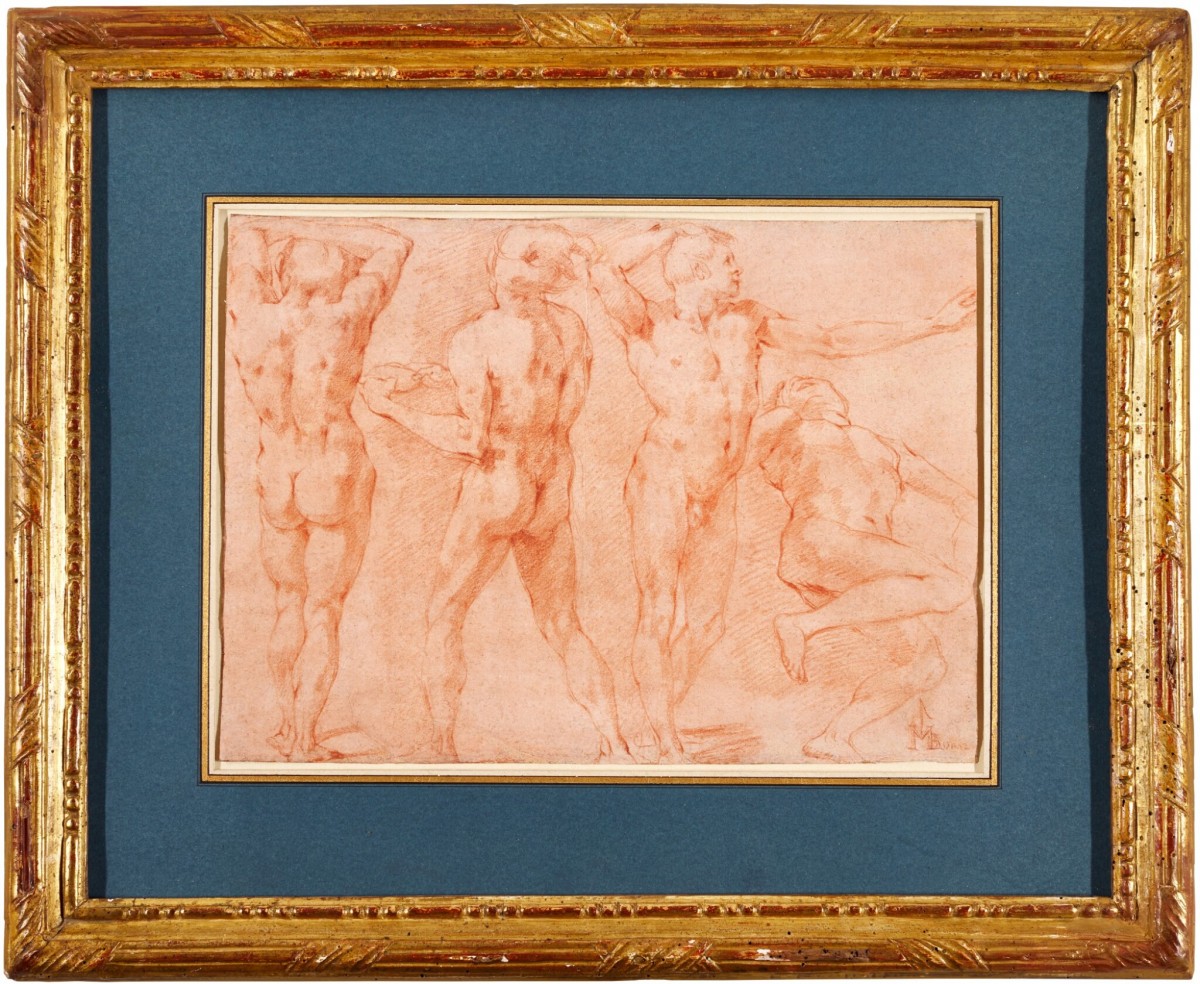
Four Male Nudes
Red chalk on lightly pink-tinted paper
269 × 378 mm (unframed); 475 × 575 mm (framed)
Provenance:
Collection of the Dukes of Schwarzenberg;
Arnold Otto Meyer, Hamburg
Andrea Boscoli, born in Florence in 1560 and active until his death in Rome in 1608, belongs to the generation of Florentine artists working at the turn of the sixteenth and seventeenth centuries, heirs to late Mannerism. Trained under Bernardo Buontalenti and Santi di Tito, he developed a personal style informed by the graphic research of his contemporaries. Although best known for his pen and ink drawings heightened with wash, the present sheet is a remarkable example of his use of red chalk, a medium he particularly explored in the late 1580s.
The composition brings together four male academies studied from different viewpoints: two figures seen from behind, one in profile with an outstretched arm, and a fourth crouching in a dynamic twist. The ensemble evokes a studio exercise drawn from the live model, a fundamental practice in Florence at the time, where anatomical study had remained central to artistic training since Michelangelo. The former attribution to Buonarroti, inscribed on the verso, further attests to the sculptural power of these figures, whose pronounced musculature and internal tension recall the great Michelangelesque tradition.
Boscoli adopts here an angular and energetic line, characteristic of his graphic language. The contours are incisive, while delicate hatching subtly models the volumes. The slightly pink ground warms the composition and lends the bodies an almost tactile presence. The variety of poses, combining stability and movement, reveals a sustained interest in issues of posture and balance, in the spirit of the research of Giovanni Battista Naldini and other Florentine artists in the lineage of Pontormo.
This sheet stands out for the unusual scale of its figures, more monumental than in many of the artist’s known drawings. It demonstrates a confident command of anatomy and a keen sense of formal synthesis. Through these studies, Boscoli moves beyond mere academic exercise: he explores the internal dynamism of the human body, transforming study into a true pictorial meditation on the male figure.
Rare on the market, red chalk drawings of this quality eloquently illustrate the vitality of Florentine draftsmanship around 1600, where tradition and experimentation merge in learned and refined elegance.