Offered by Antichità San Felice

Philipp Peter Roos, known as Rosa da Tivoli (St. Goar, August 30, 1657 – Rome, January 17, 1706)
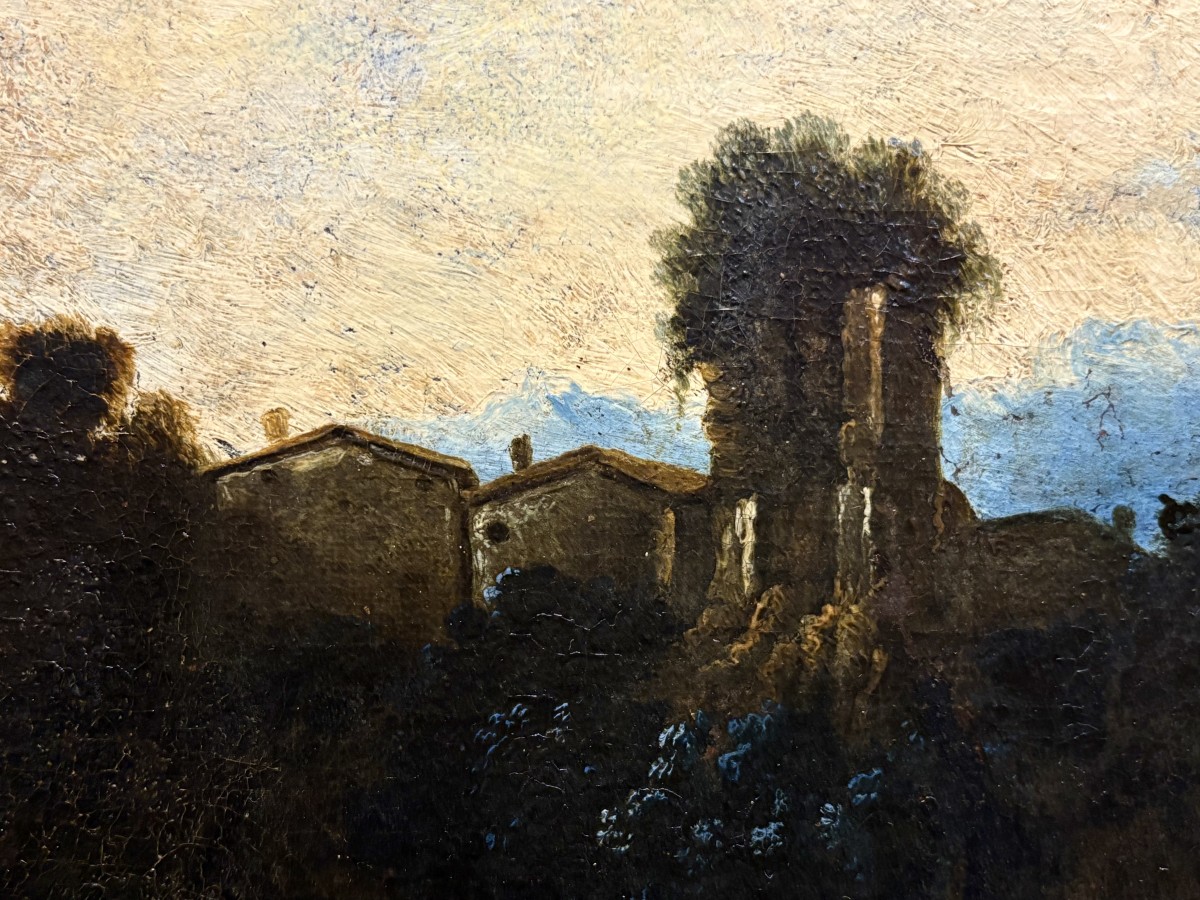
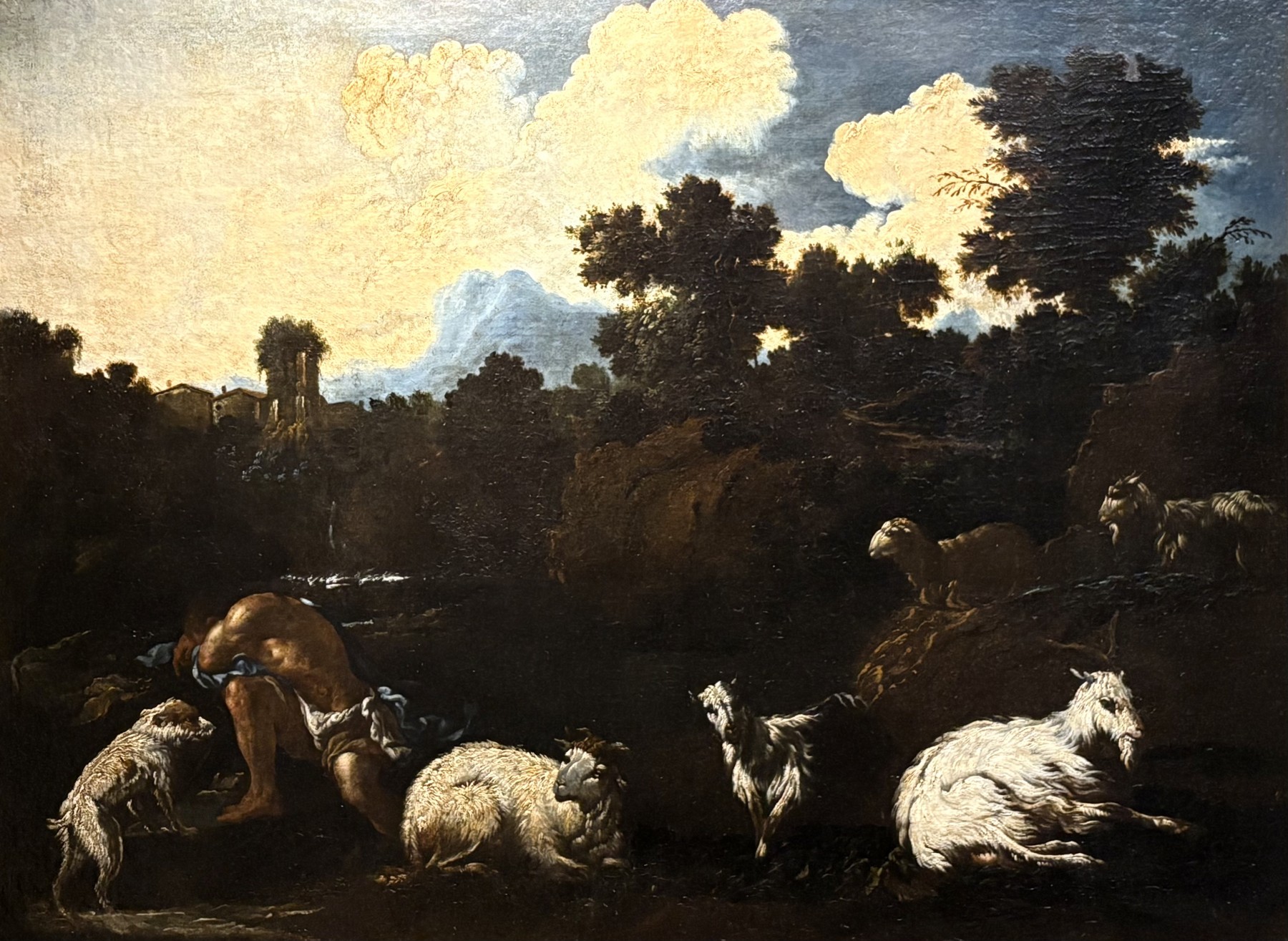
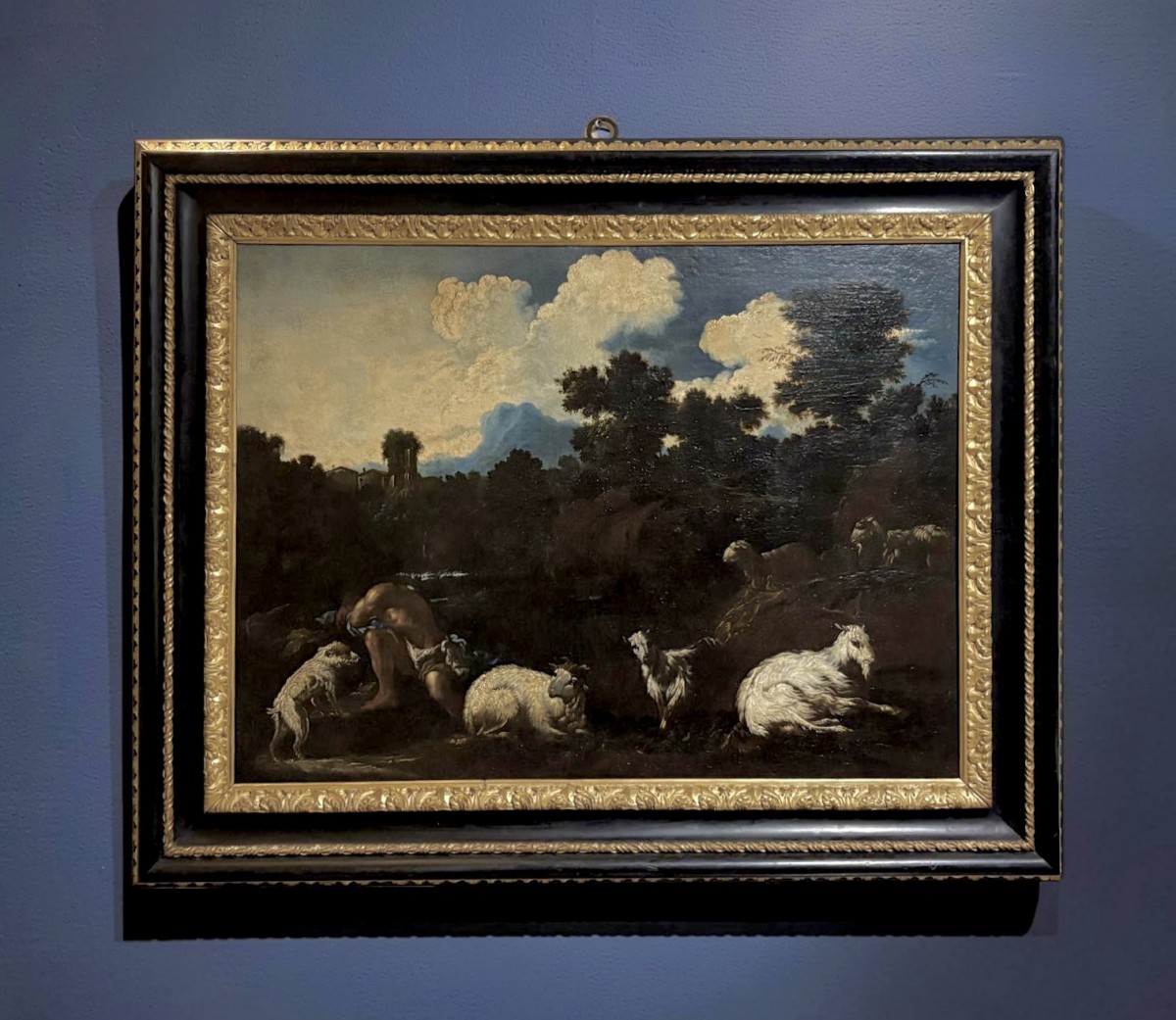
Herds in front of the Old Waterfall in Tivoli
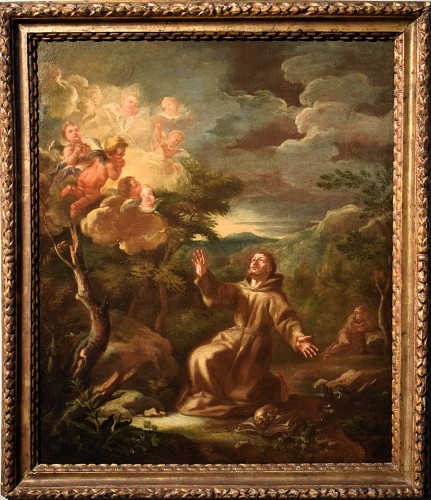
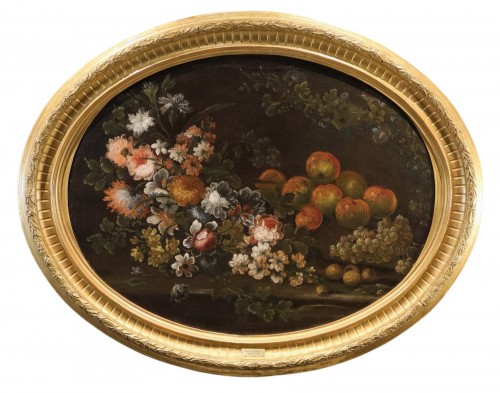
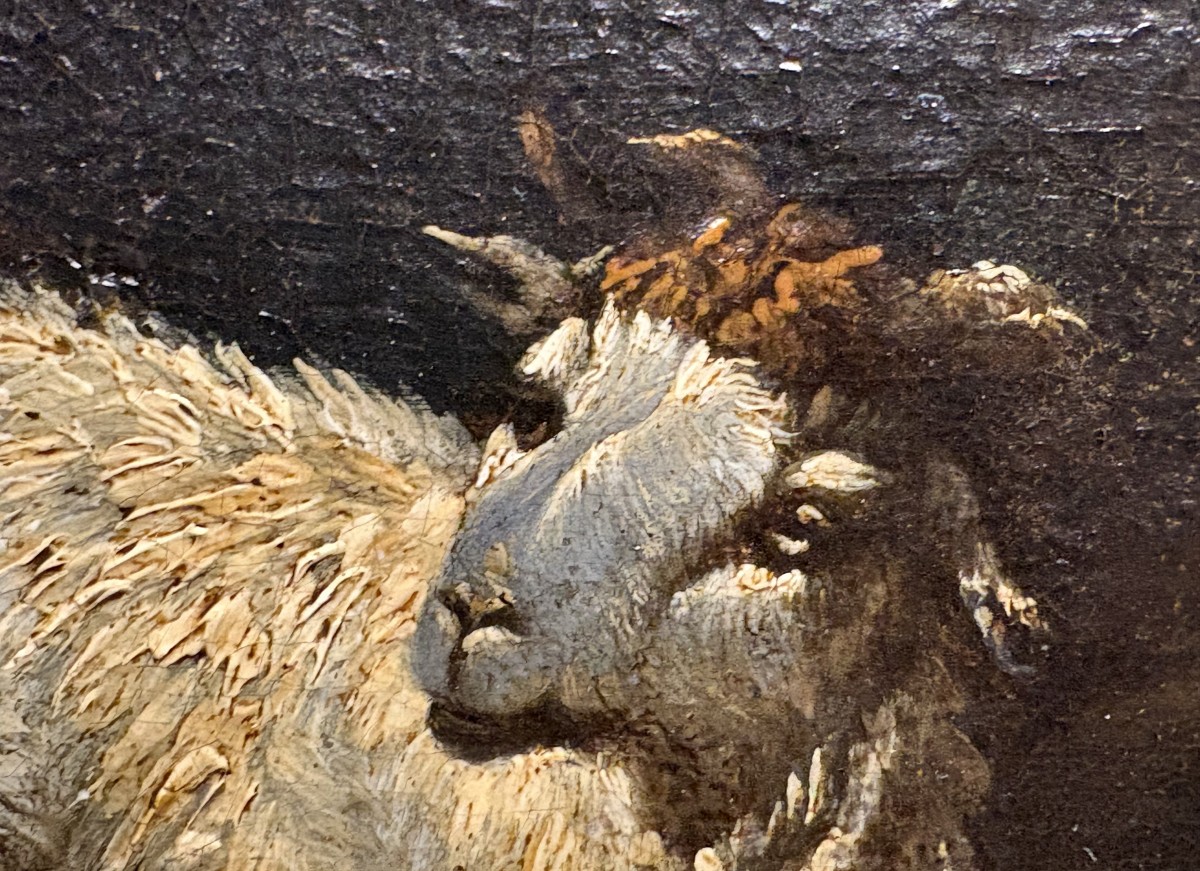
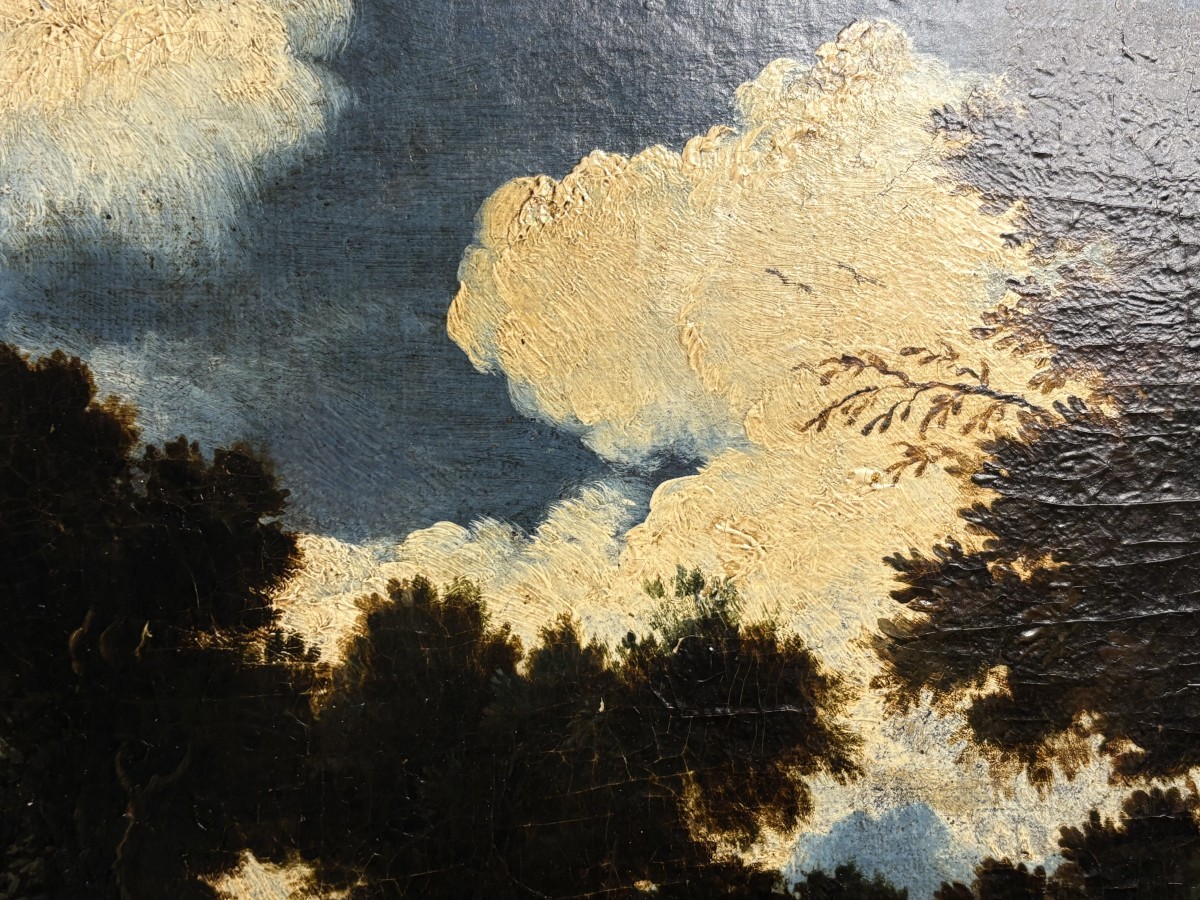
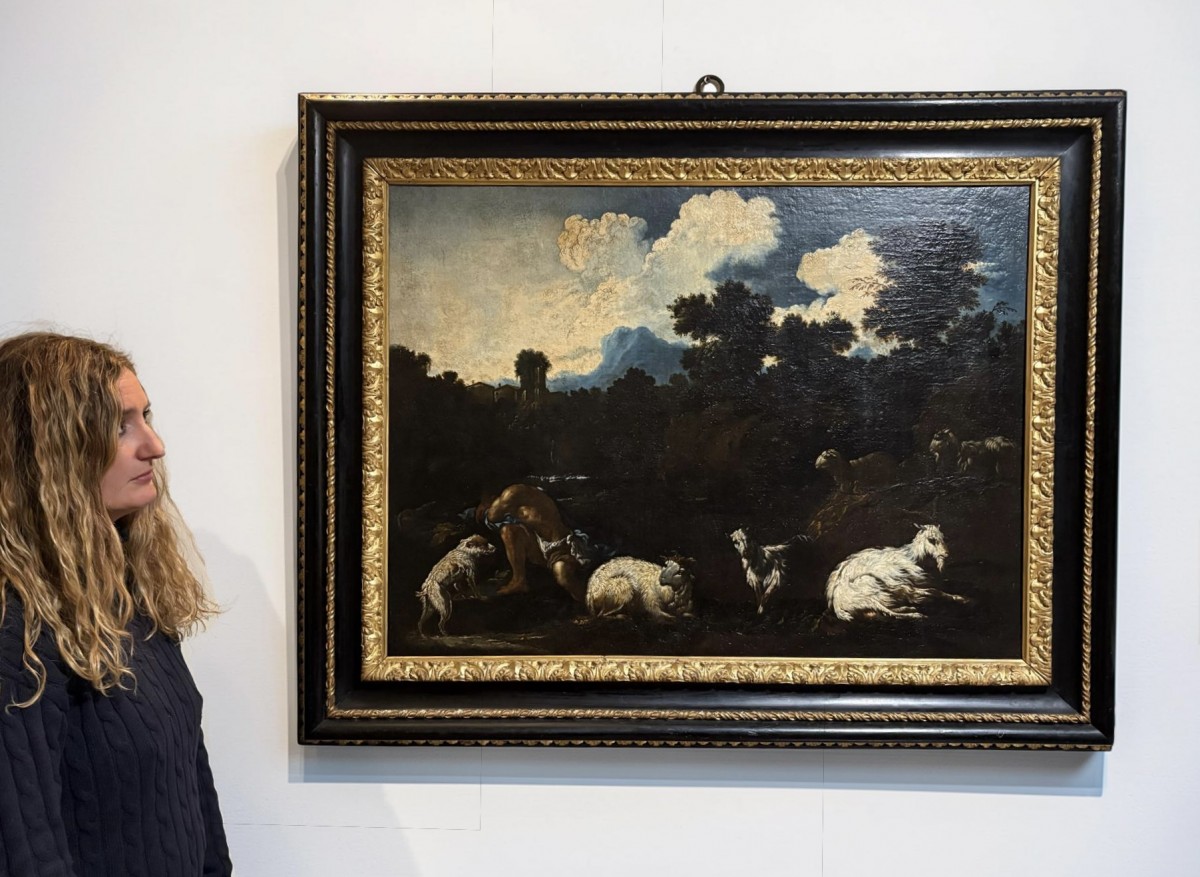
A beautiful, large canvas attributed to Philipp Roos, better known as Rosa da Tivoli, has joined our collection. The canvas comes from a private Roman collection and has reached us intact, with its splendid original Maratta frame. To restore it to its former splendor, it was simply entrusted to the expert hands of our trusted restorer, who performed an impeccable yet painstaking cleaning, as the painting was covered in nearly 400 years of dirt and old varnish.
A beloved and hated artist, with a fiery temperament and little inclination to compromise, he devoted his entire life to his favorite genre: animal painting. Roos comes to Italy from his native Germany. Son of the German portrait and animal painter Johann Heinrich Roos, Philipp Peter Roos belonged to a lineage of painters and engravers active north of the Alps since the late 16th century. He trained in Amsterdam, following the Italian-inspired Dutch tradition of painters such as Berchem and Dujardin, and arrived in Italy in 1677 on a scholarship from the Landgrave of Hesse, on the condition that he return to his court. However, disregarding the Landgrave's conditions, he never returned to Germany. He studied in Rome with Giacinto Brandi, whose daughter Maria Isabella he married in 1681, after embracing the Catholic faith.
Brandi, a traditionalist Baroque painter with close ties to ecclesiastical circles, did not hold his son-in-law in high regard; indeed, he had attempted in every way to oppose the marriage. Even the Roman environment that surrounded him was not favorable: in an Italy, and especially in Rome, where the entirely humanistic cult of figure and history painting was shared by connoisseurs and collectors, where one asserted oneself through altarpieces, Roos's figure was pushed to the margins. Tired of this environment that did not appreciate and marginalized him, Roos bought a house near Tivoli, in that Roman countryside that, already made famous by the landscape painters of the previous generation (Claude Lorrain first and foremost), would become an almost mythical place in the eighteenth century, an Arcadia that perhaps never really existed except in those paintings and in the travel memories of the grand tourists, who already gazed at Italy through those canvases, in a virtuous short circuit.
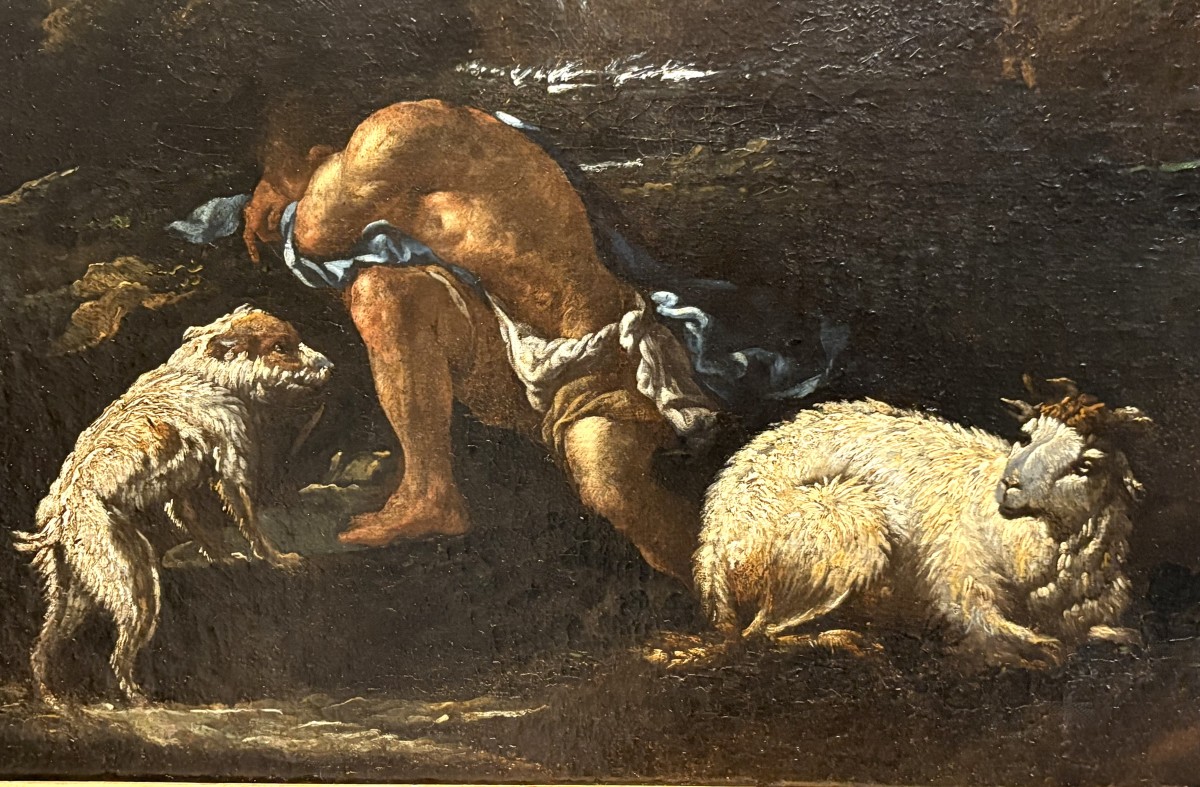
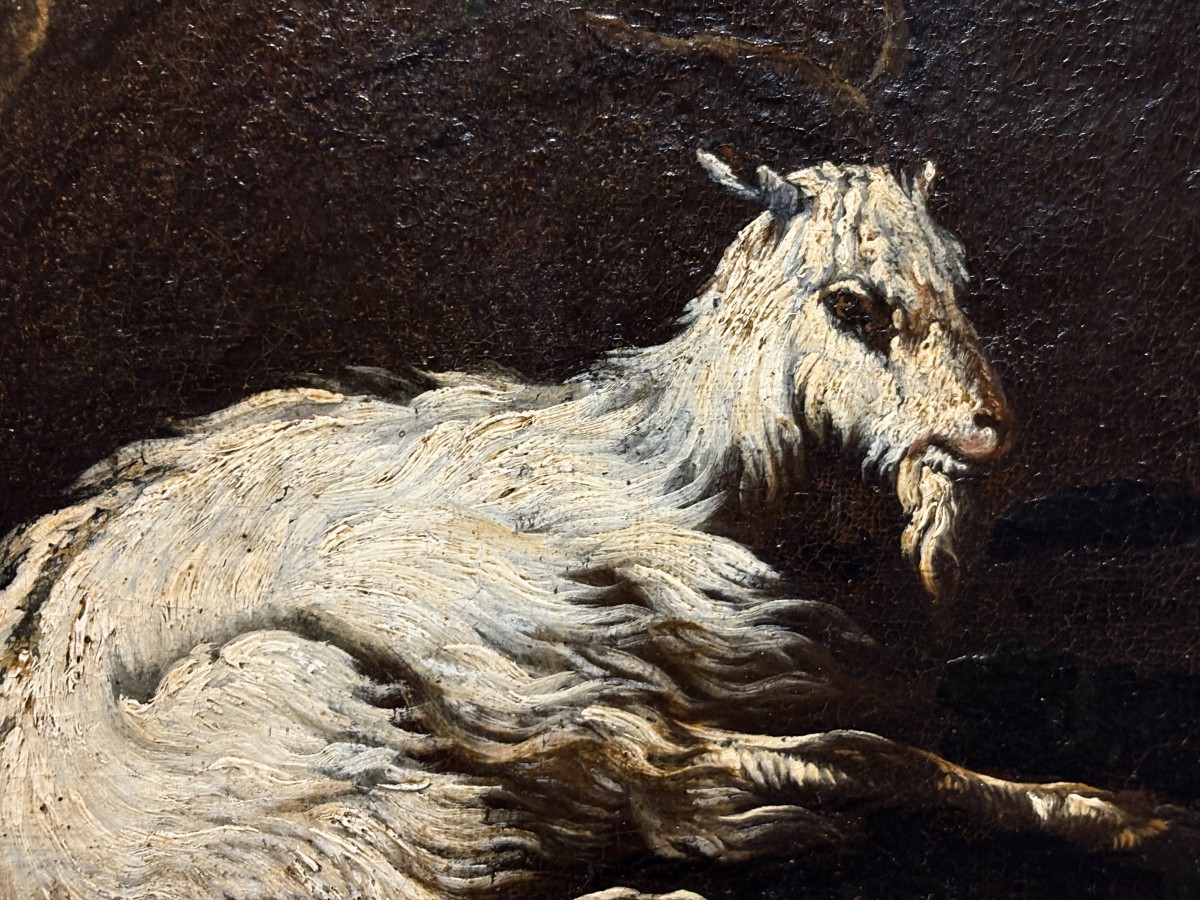
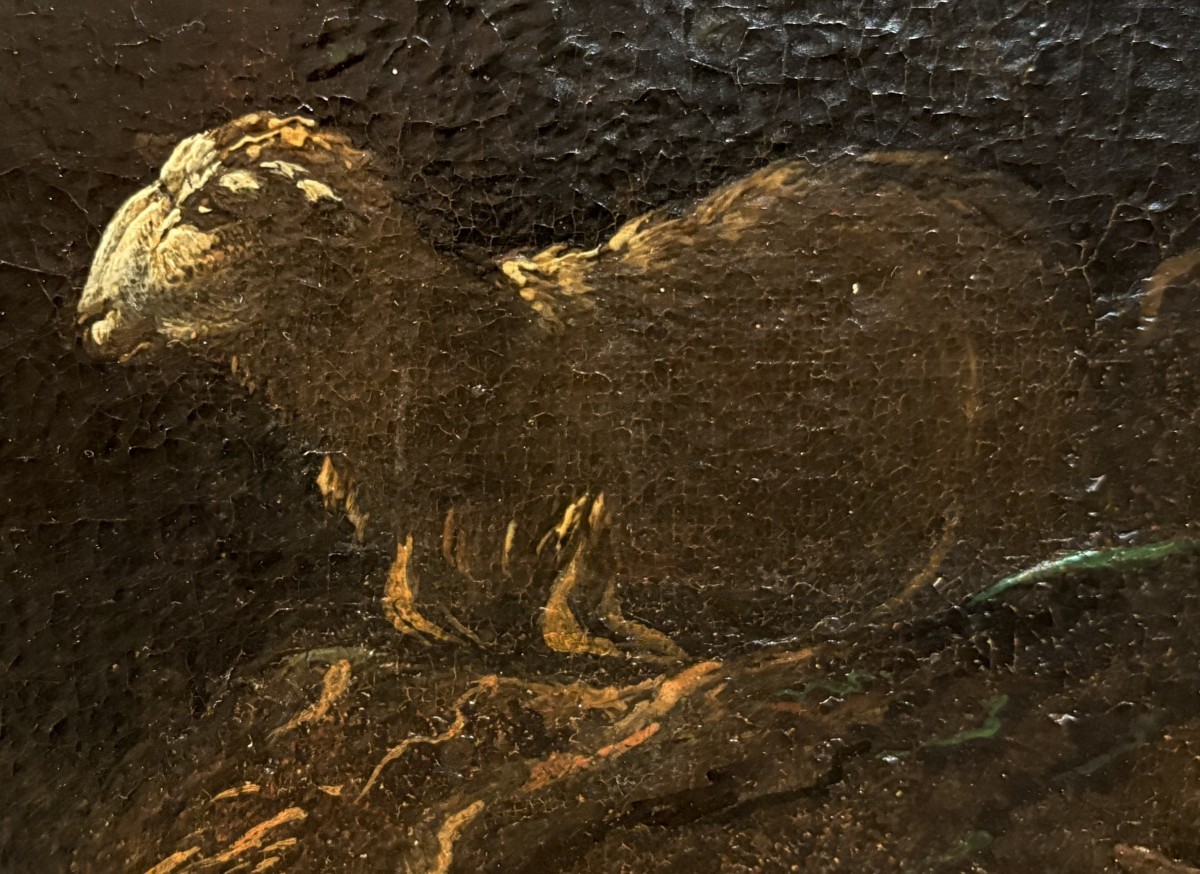
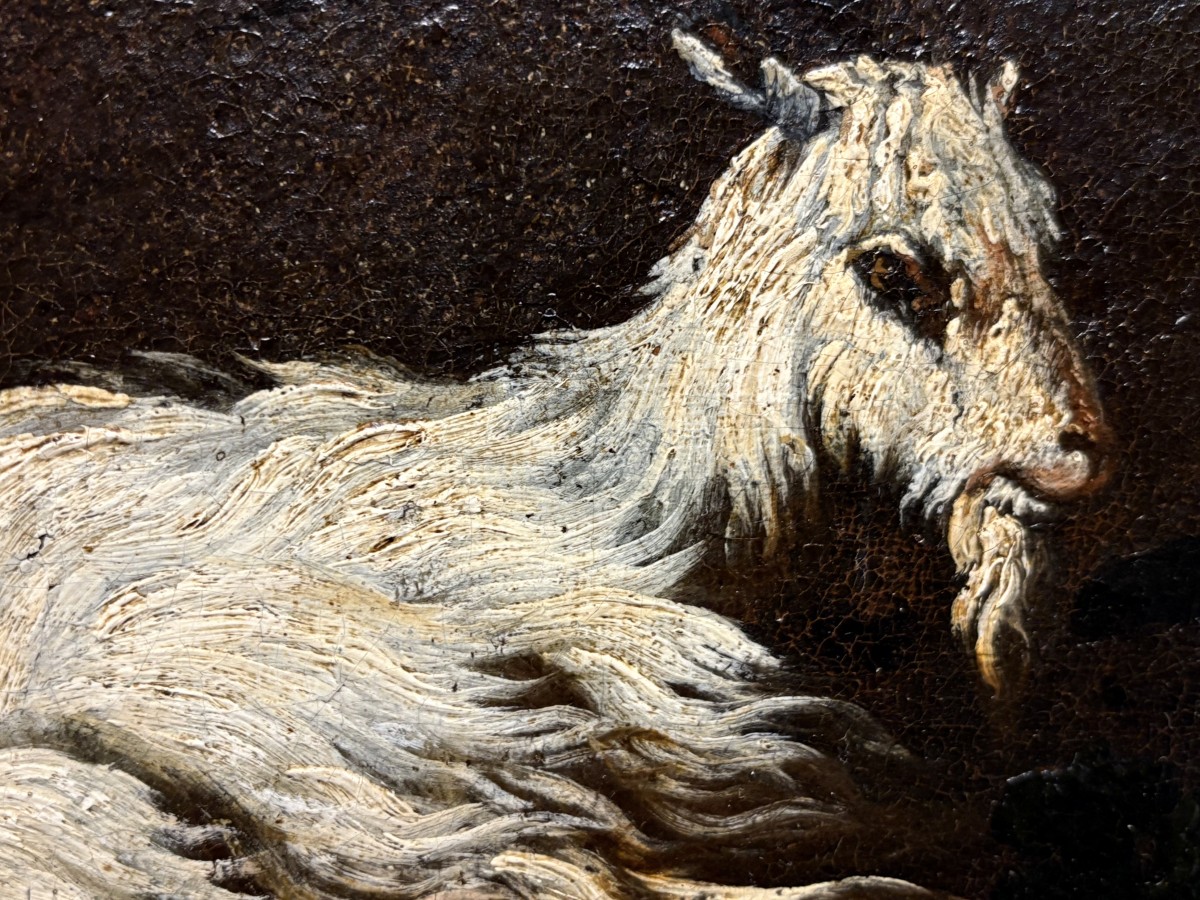
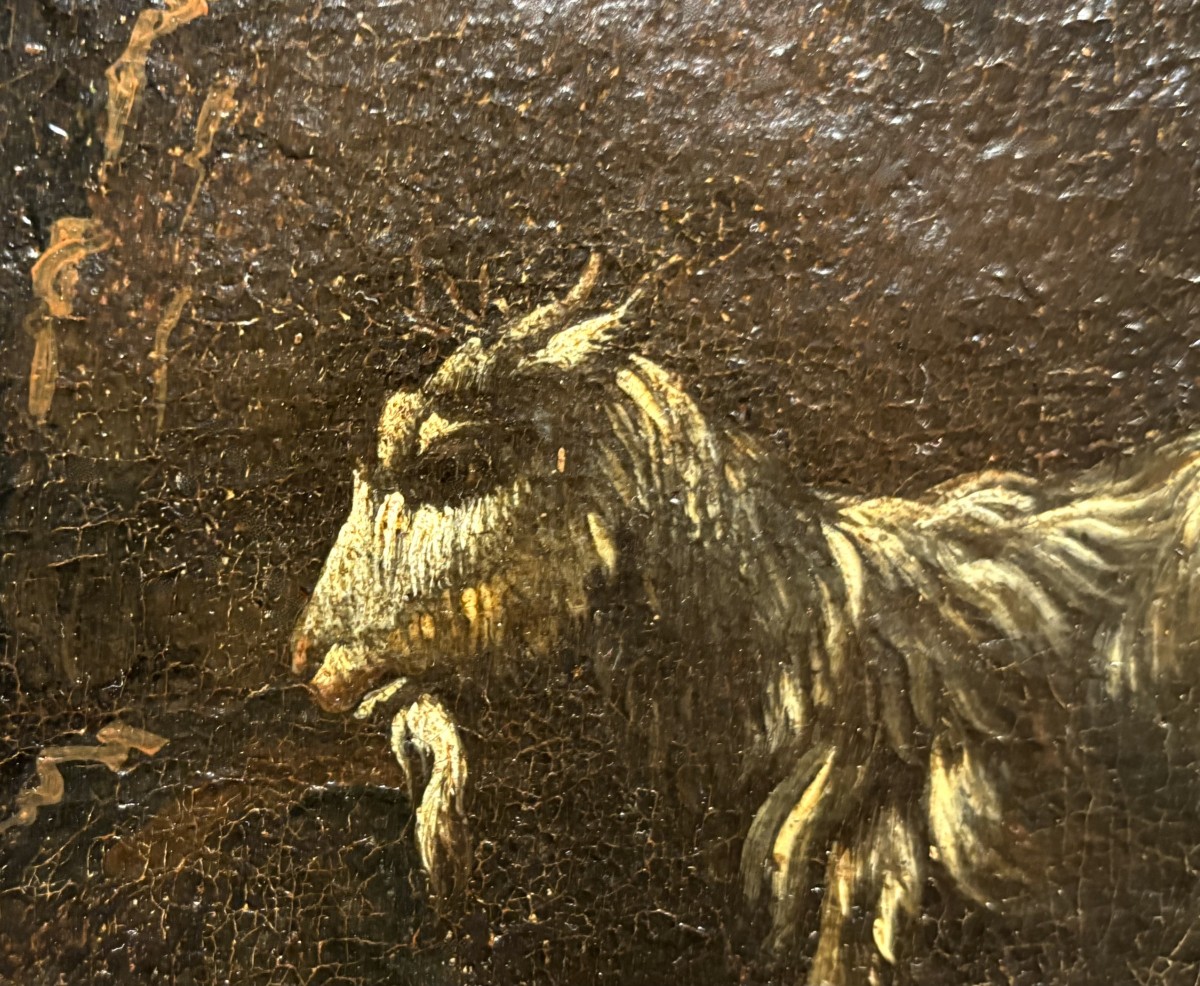
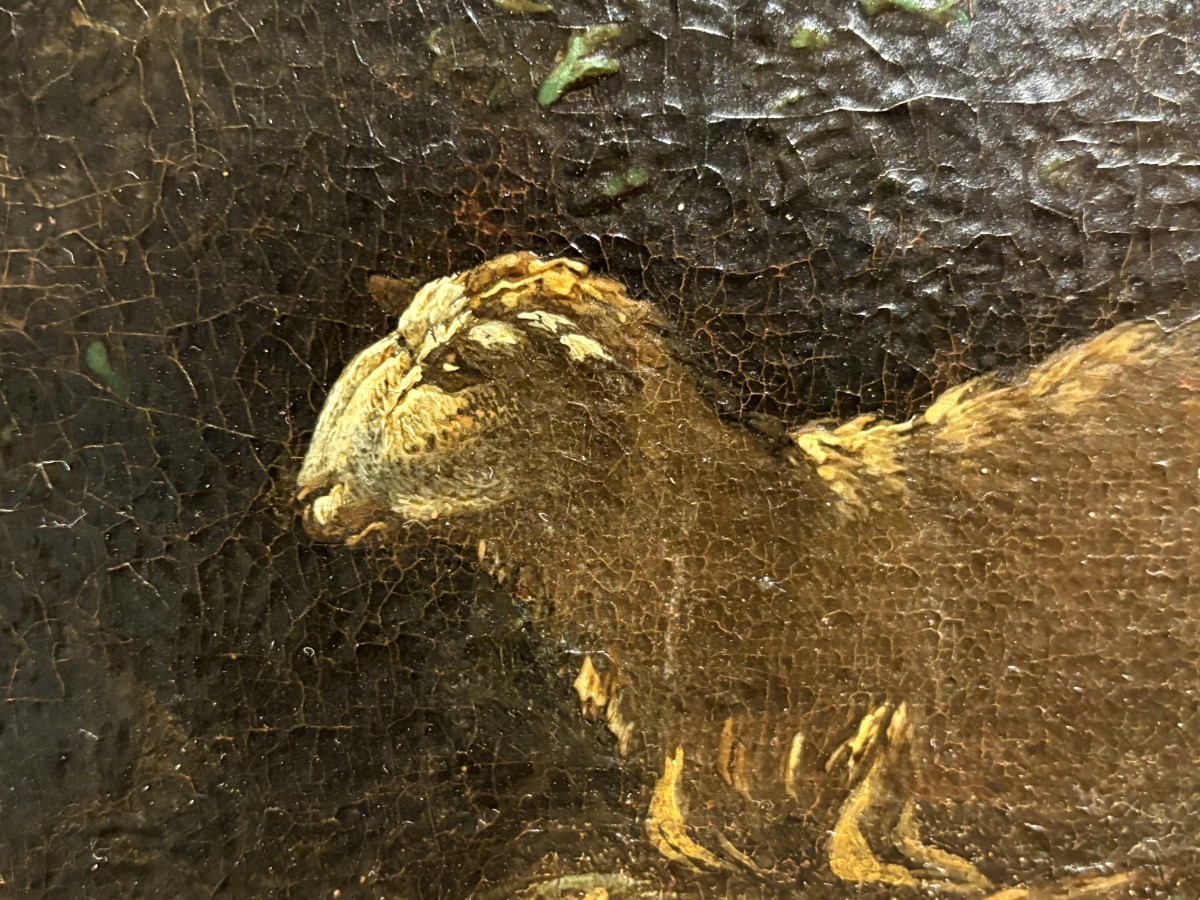
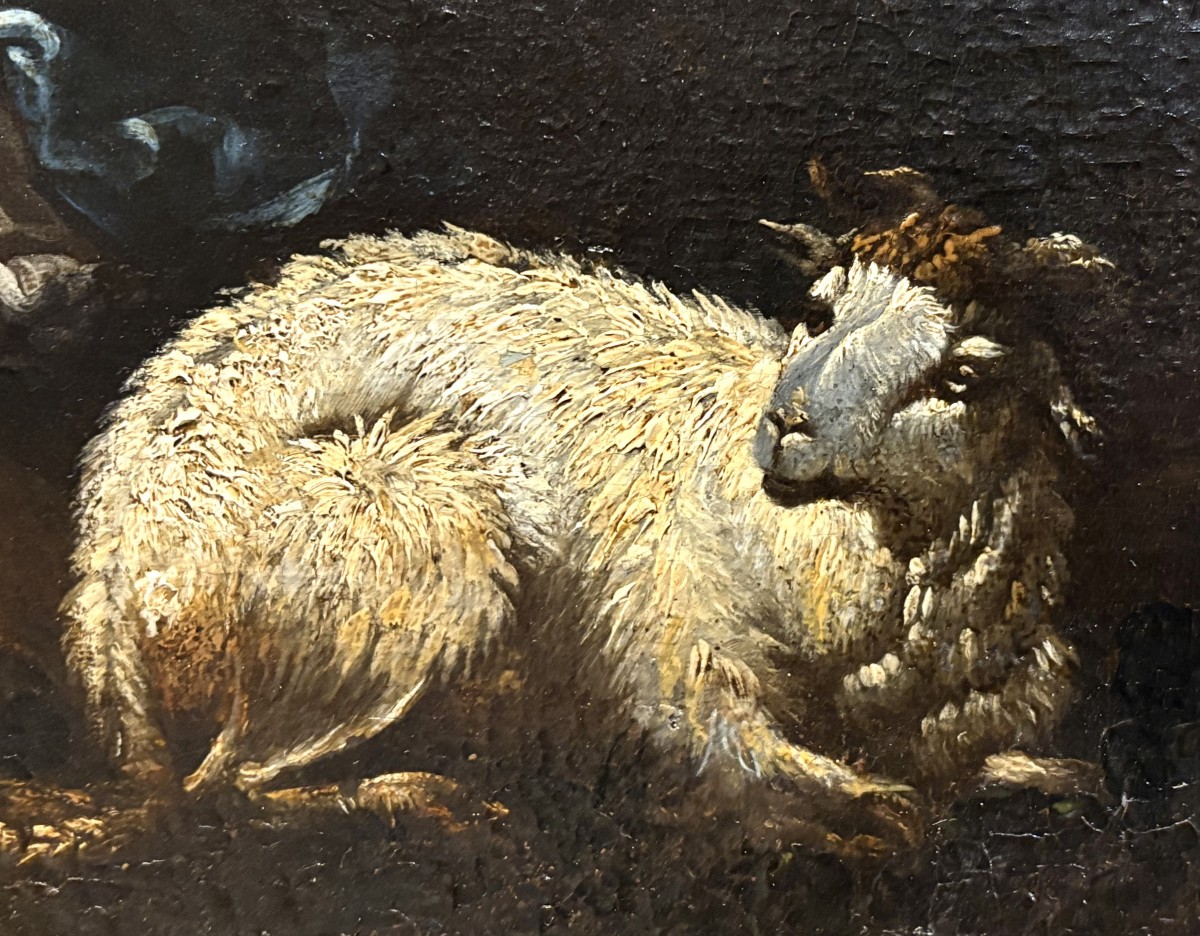
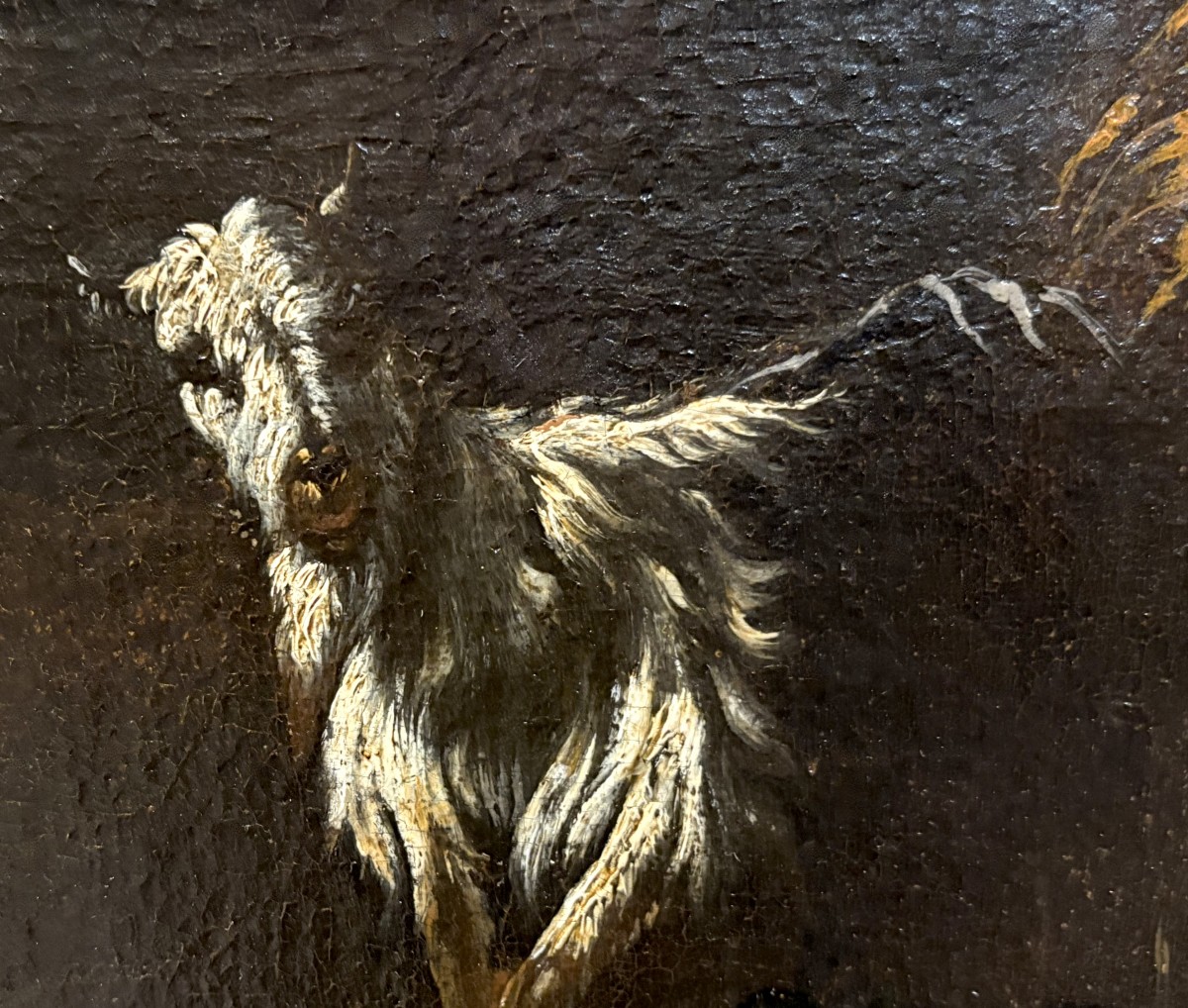
This ramshackle house, which his Dutch colleagues ironically called Noah's Ark, was located in the San Paolo district, still known today as "vicolo del Riserraglio." Here, Roos personally raised the animals—primarily goats, sheep, and rams—which he later depicted in his paintings. A gruff and solitary man, he preferred the company of livestock to that of people. His paintings are characterized by a ghostly, gloomy, and savage tone, painted with intense, sometimes almost crude, brushstrokes and a strong contrast between light and shadow. The animals are always in the foreground, with an almost material rendering of their fleeces: there are sheep and goats with twisted horns, the inevitable dogs, occasionally cows and horses.
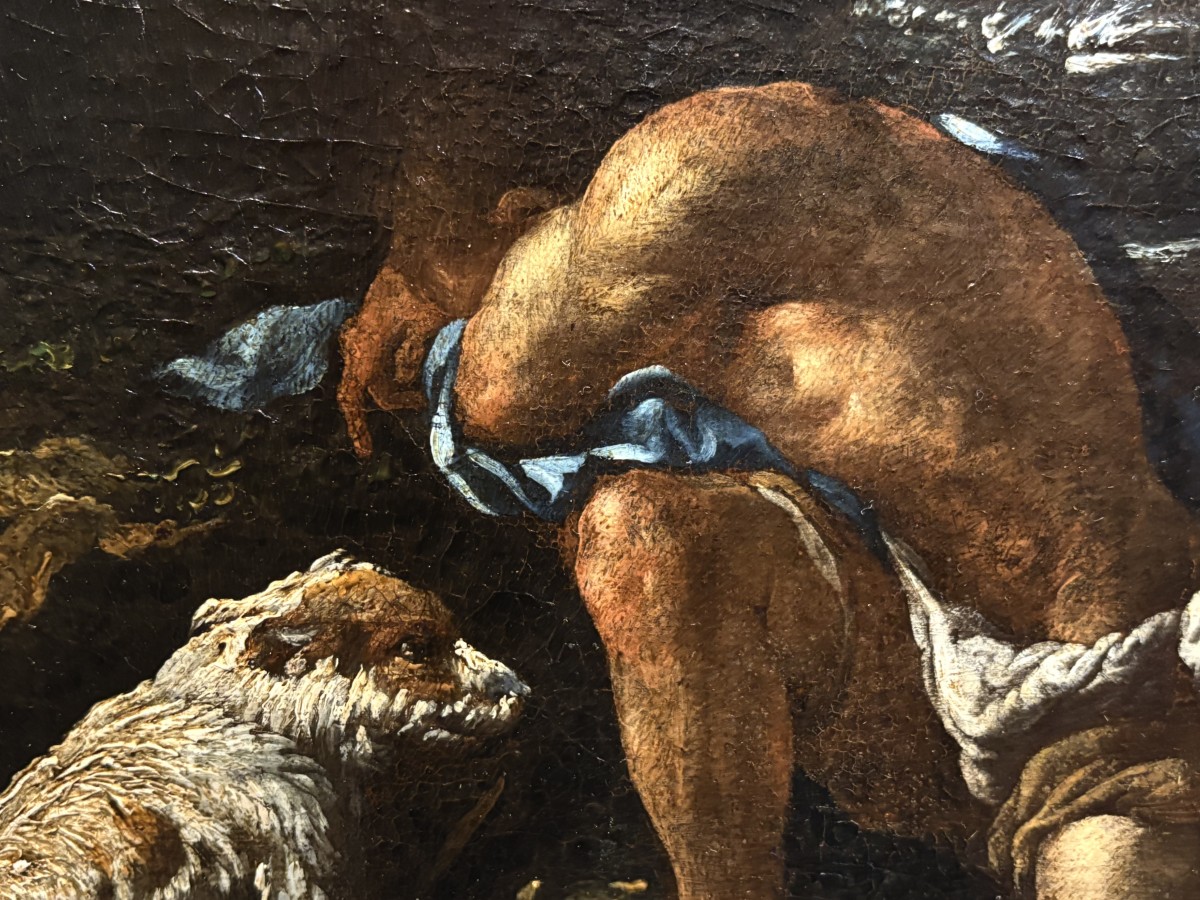
Roos softly moves an impasto paint, carefully depicting the animals' coats in various positions and movements, creating spontaneous compositions. In the background are shepherds and a landscape of rocks and ruins within valleys and mountains, predominantly yellow-brown in hues, painted with a creamy brushstroke. In the background, blue mountains set against pink skies and clouds.
Philipp became a master of this animalistic genre, attracting numerous imitators, fascinated by his distinct style. Returning to Rome in 1691, he devoted himself almost exclusively to landscapes.
Roos's work marked a decisive shift in the direction of landscape and animalistic painting in Rome in the late seventeenth century: figures such as Brandi, De Marchis, Locatelli, and Londonio clearly perceived his influence, inheriting his stylistic features, both technically and iconographically.
The imitators were so numerous that for years every painting of herds appearing on the art market was attributed to Roos. More in-depth studies conducted in recent years have allowed us to identify the painter's distinctive characteristics, isolating his authentic style. Our painting was compared with numerous canvases clearly attributed to Roos. Among these, we noticed a group of three canvases held at the Pinacoteca Tosio in Brescia, which are truly similar in their rendering of the animals and the background. One in particular, the "Figure of a Shepherd Drinking from a Stream," seems to depict the exact same person as our painting.
The landscape behind the scene also caught our attention: it clearly recalls the old waterfall in Tivoli, a work of which Gaspar van Wittel left us a trace in 1736, before its modifications after the flood of 1826.
The painting and frame are intact and in excellent condition.
Measurements
canvas 100 x 75 cm
frame 123 x 100 cm
Delevery information :
Antichità San Felice takes care of organizing the packaging, home delivery and all the administrative formalities related to the shipment.
Antichità San Felice works with several service providers selected for their professionalism, in order to ensure delivery of works of art in the best conditions.
For the packaging of the goods, we involve craftsmen who were responsible for the construction of custom-made wooden crates.
For transport, depending on the case, we involve the most suitable service provider.
All shipments from Antichità San Felice are covered by value insurance. It is important to note that the Customer must indicate on the dispatch note any reservations upon receipt of the object, in order to be able to bring the insurance into play.
Payments accepted:
bank transfer
online bank card
paypal (+3.4% Europe +5% rest of the world)