Offered by Tobogan Antiques
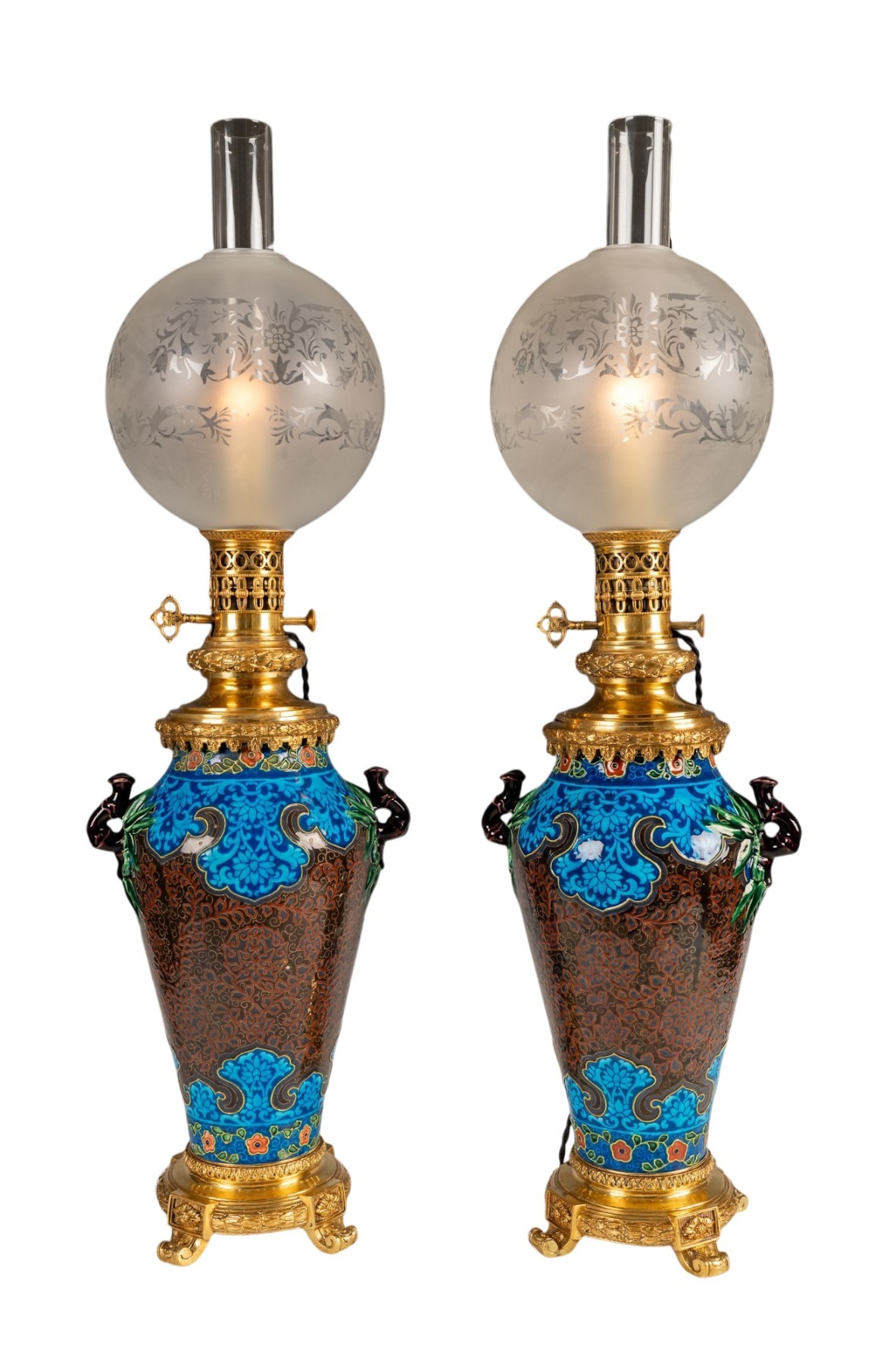
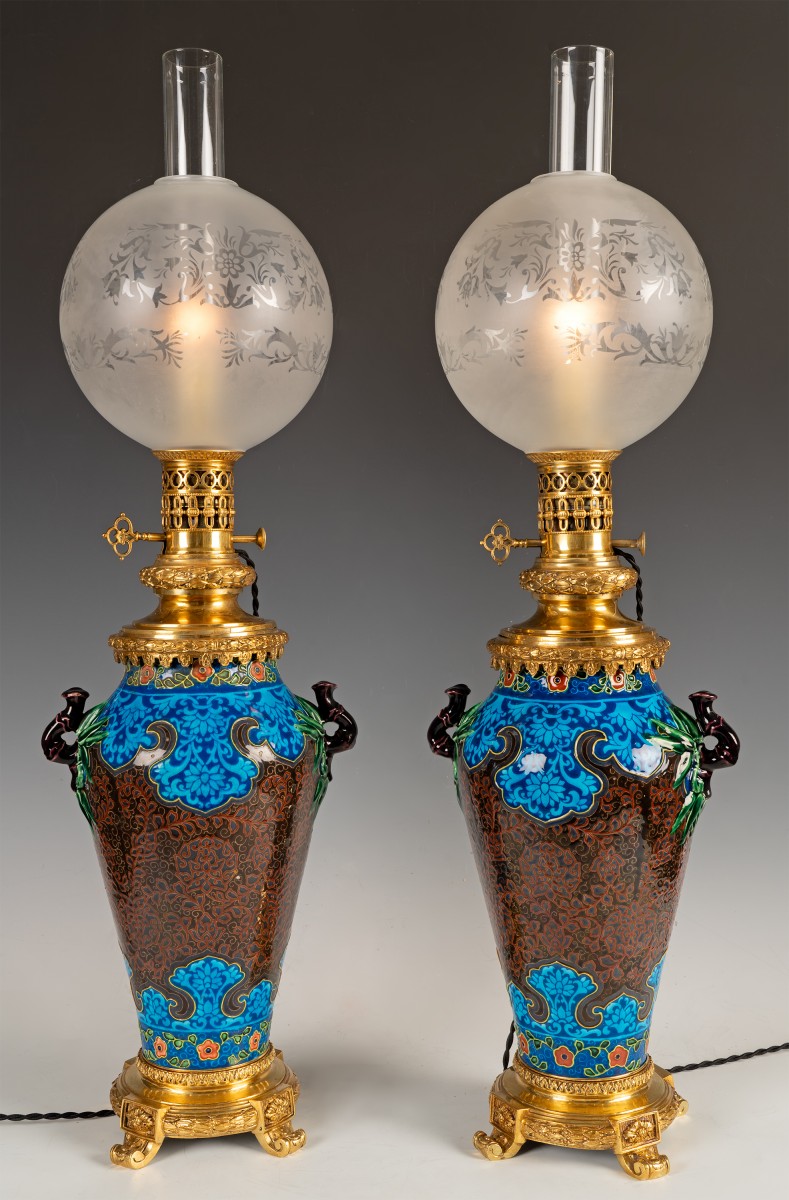
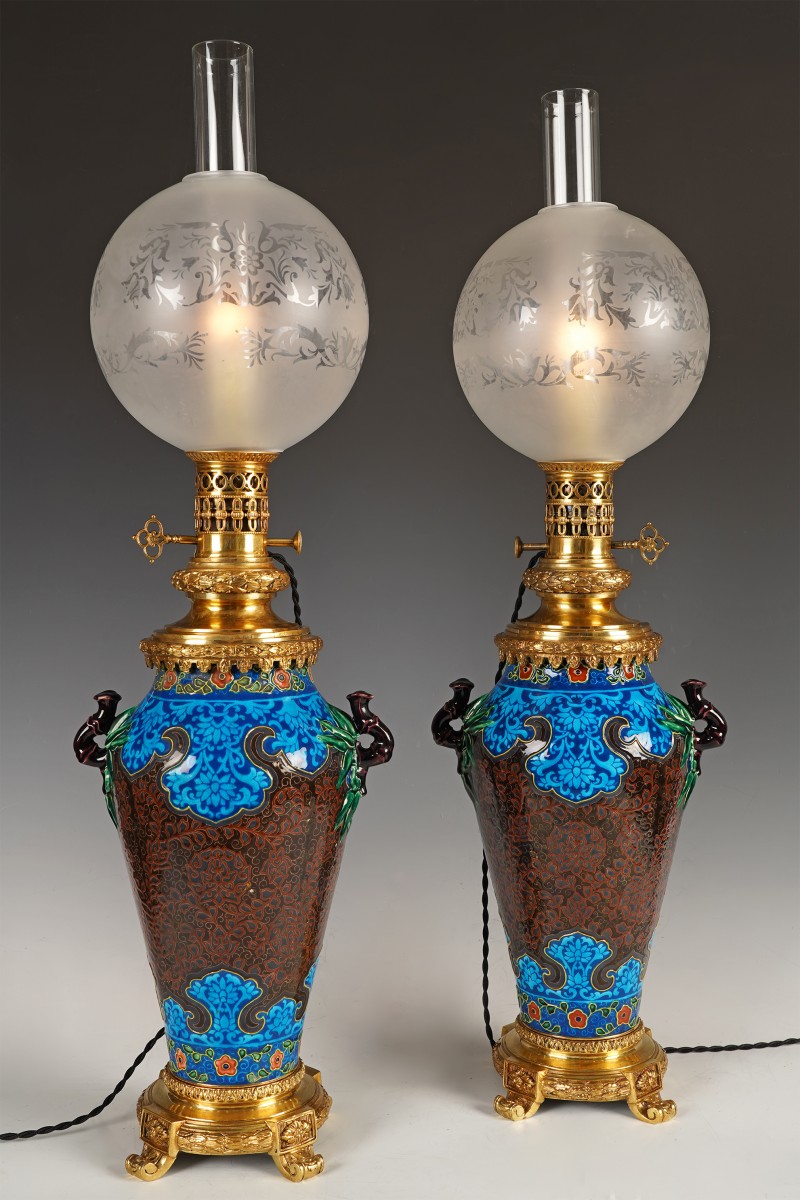
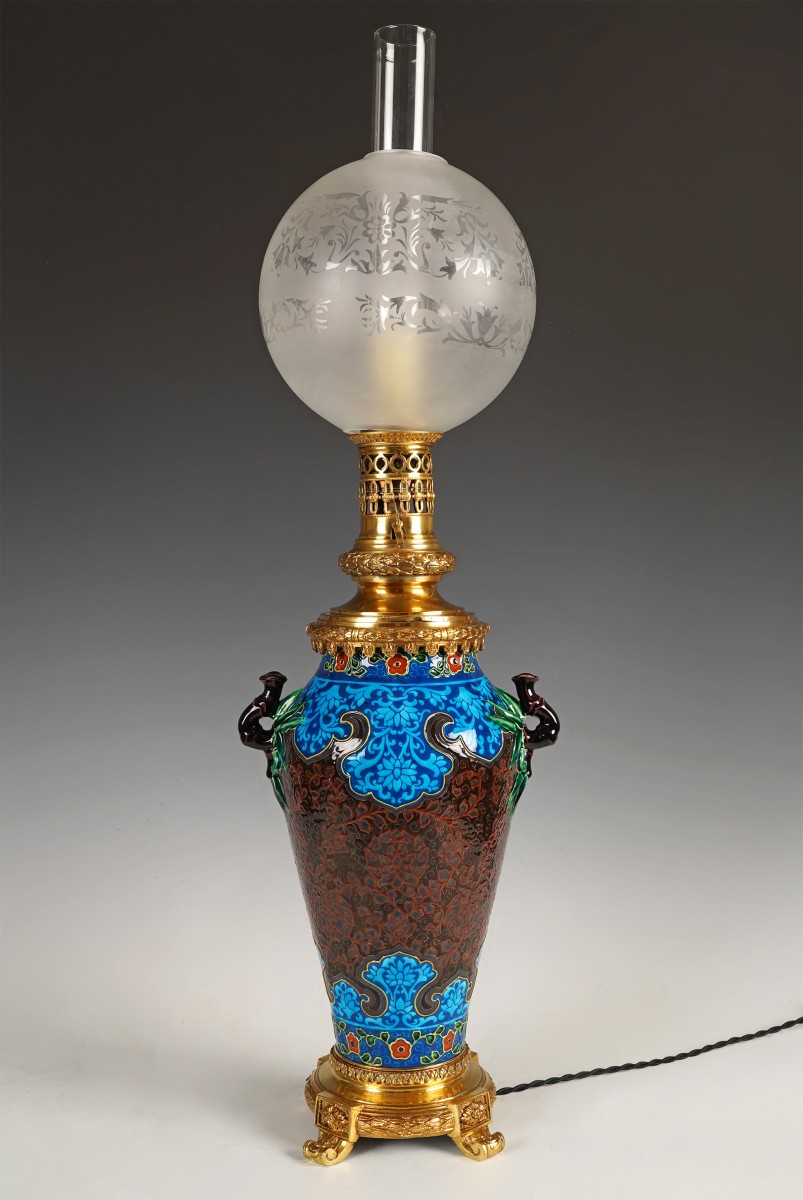

Height with globe : 80 cm (31,5 in.) ; Width : 25 cm (9,8 in.) ; Depth : 18 cm (7 in.)
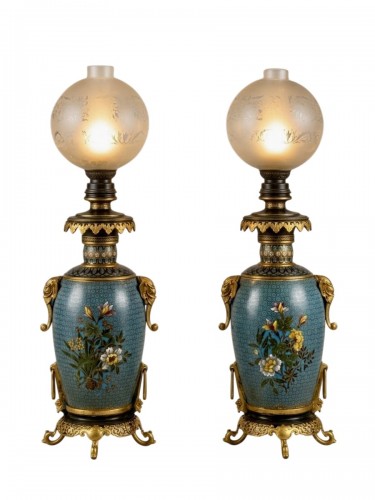
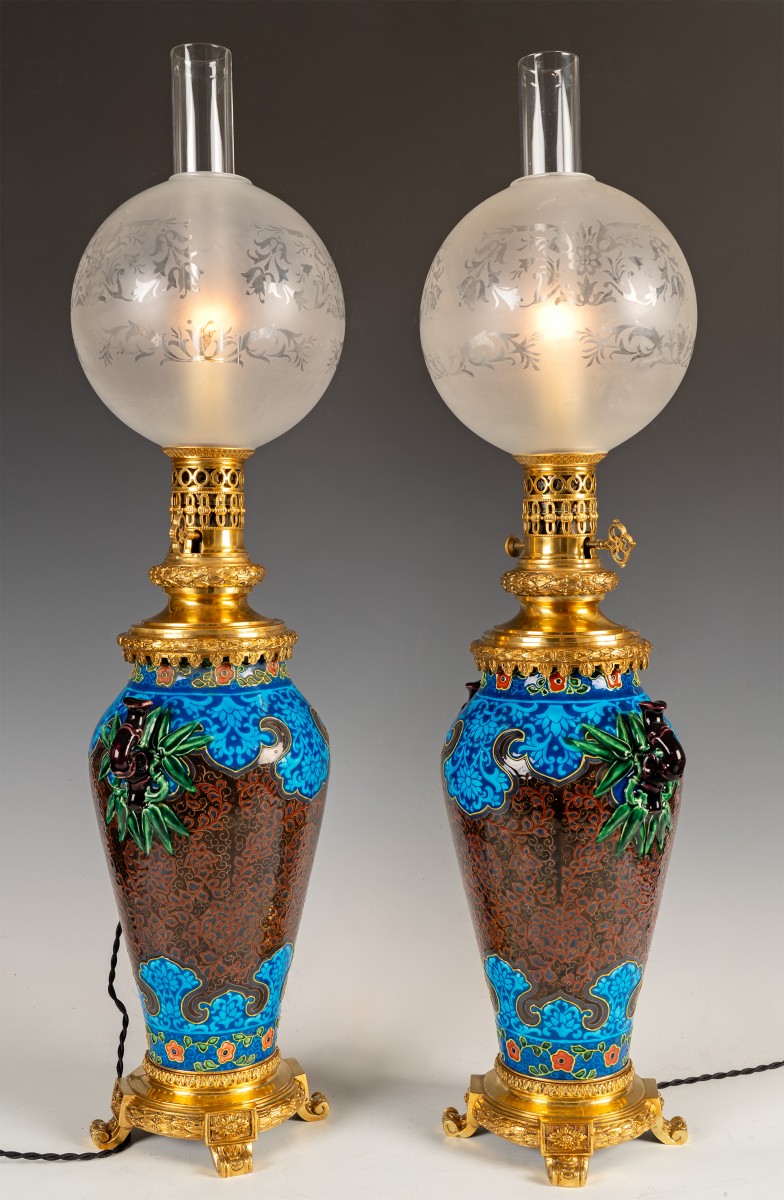
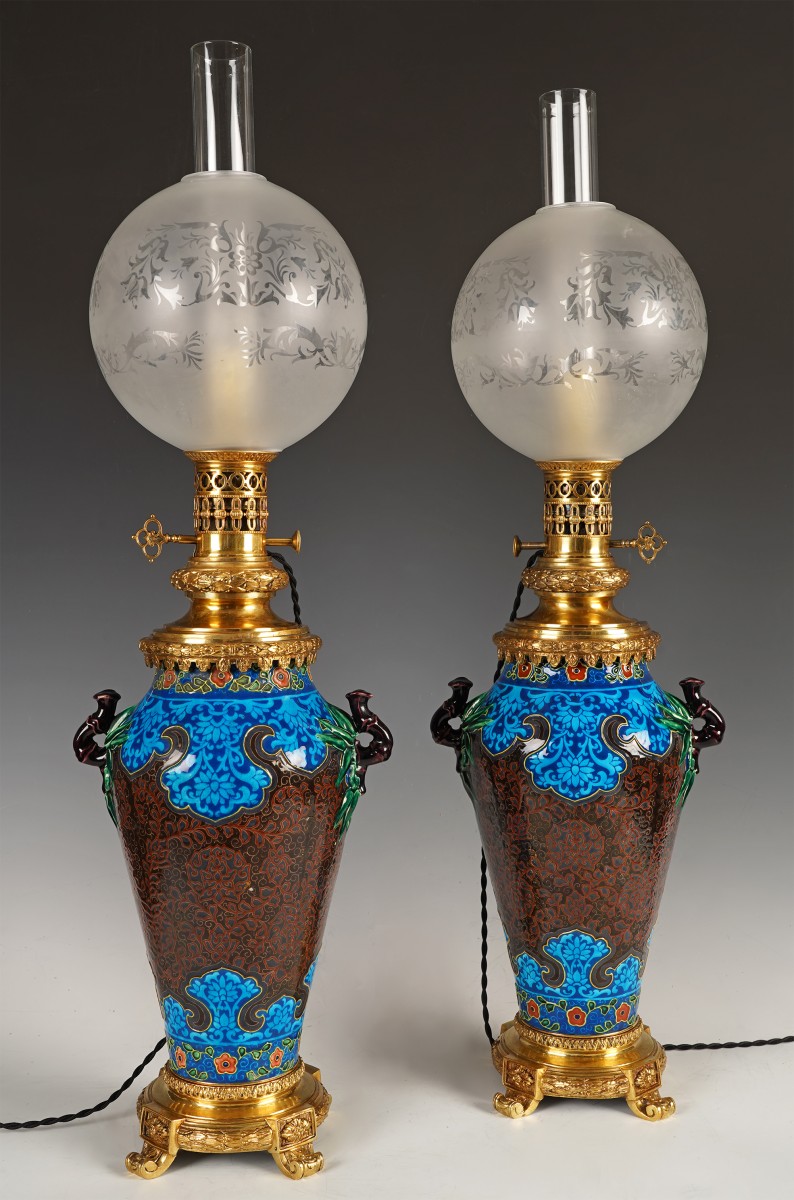
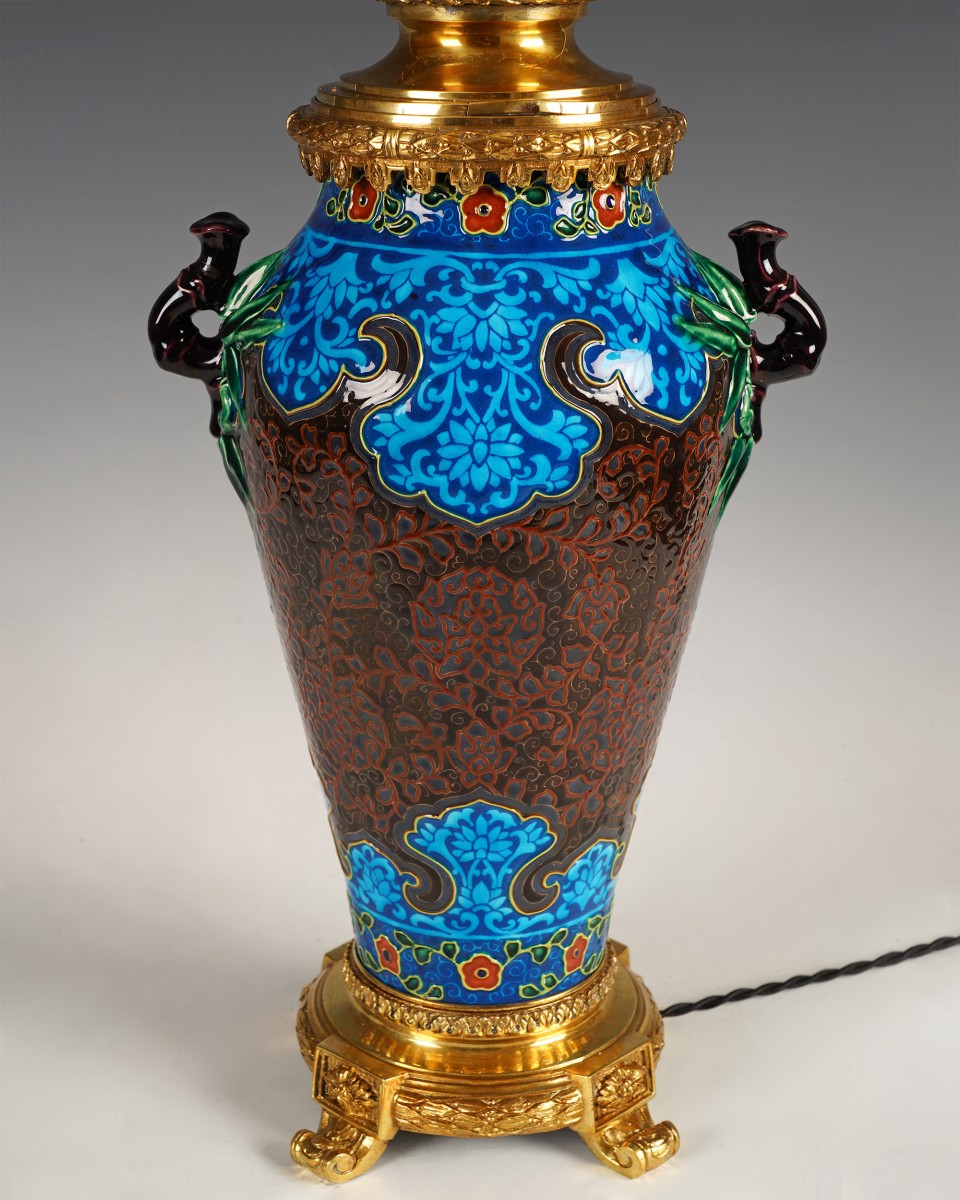
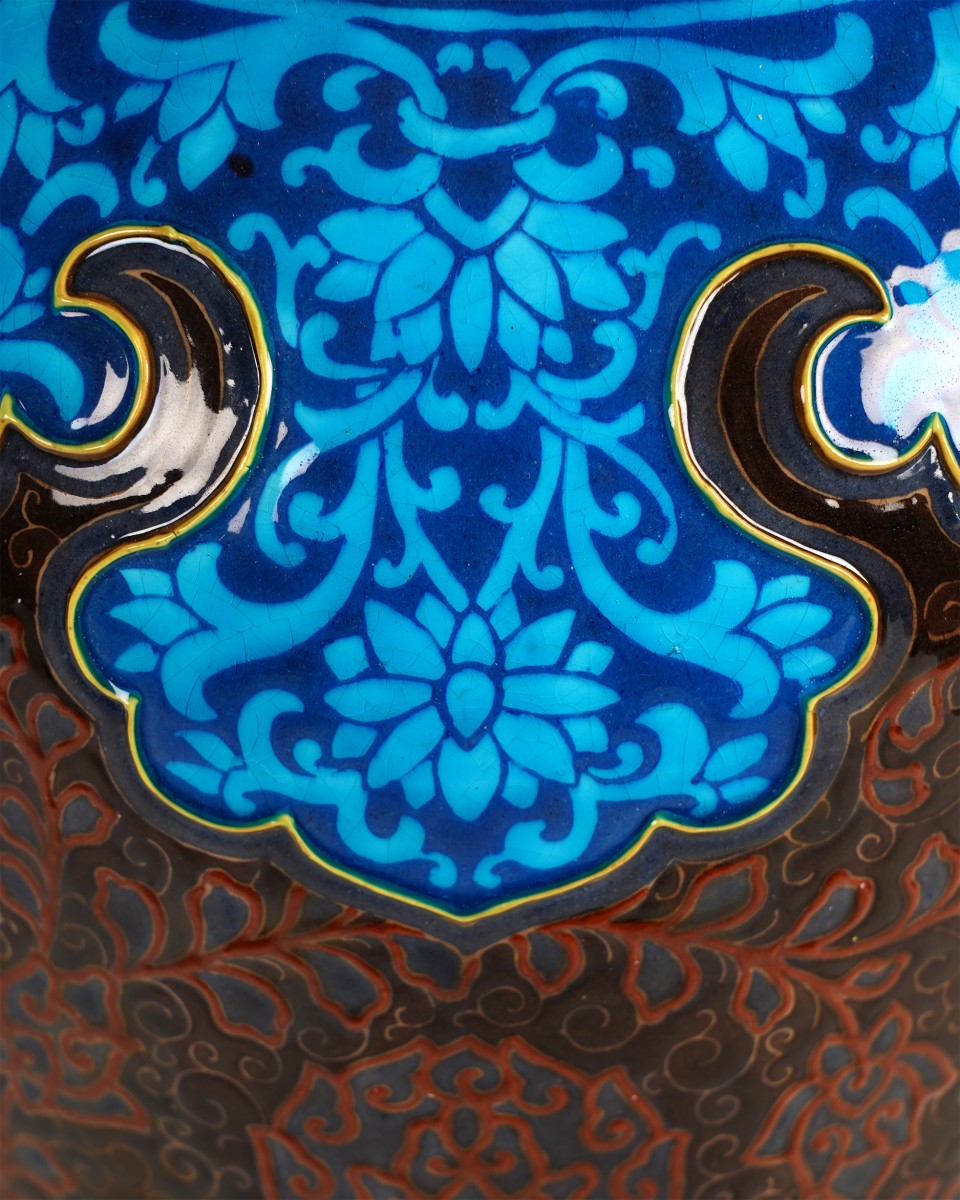
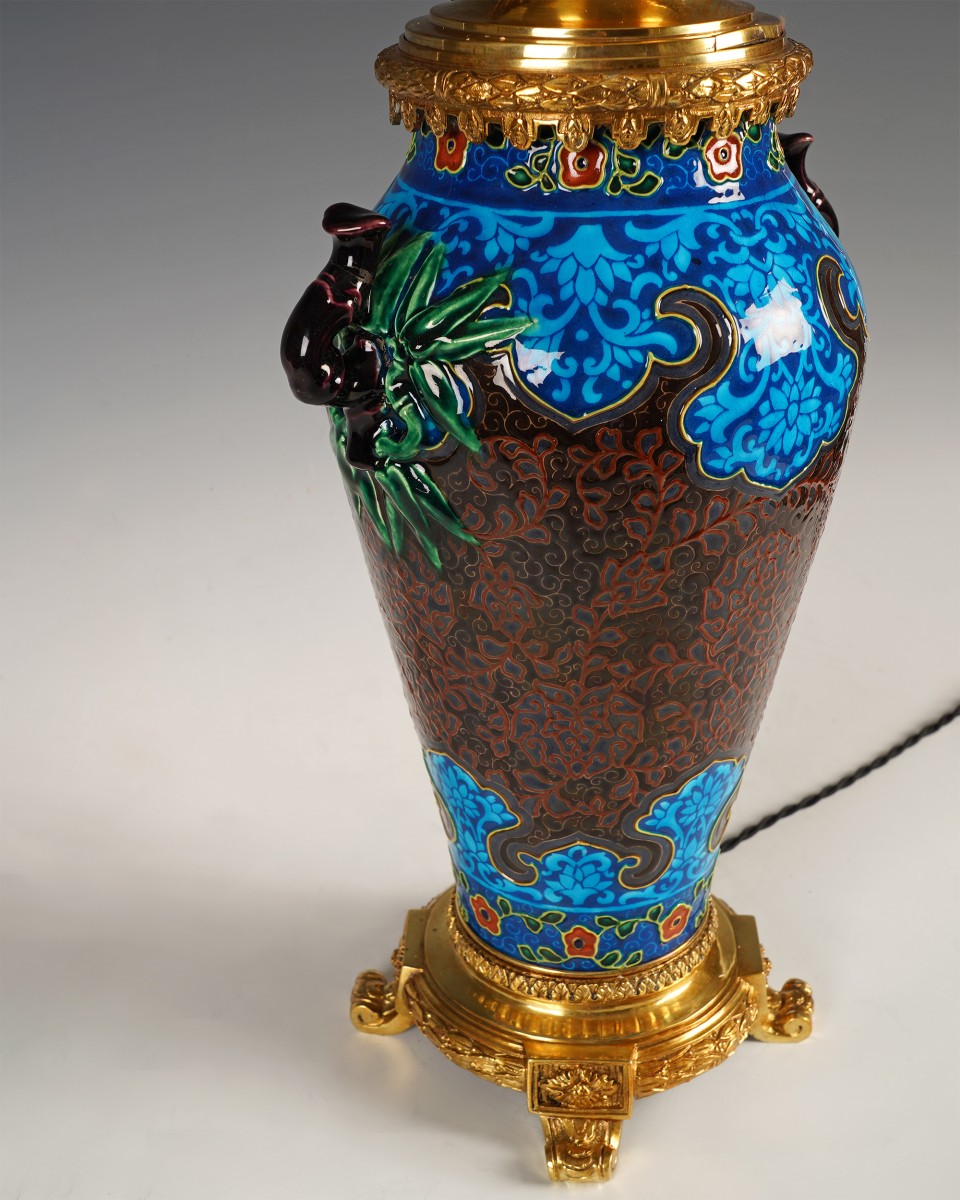
Beautiful pair of baluster-shaped faience lamps, originally oil-fired, featuring a central decoration of arabesques and stylized scrollwork in iron-red on a manganese-brown background, framed by turquoise and cobalt-blue cartouches with palmettes and symmetrical fleurons. The whole is encircled at the upper and lower sections by a frieze of red flowers on a blue background. The applied side handles take the form of stylized bamboo branches, their leaves unfolding across the body. The whole is set within a finely chased and gilt bronze mount composed of a friezes and ribbon-tied torus laurel moldings, and rests on a base ending in four scrolled feet surmounted by small floral-cast blocks.
This pair of lamps belongs to the Neo-Orientalist and Historicist production of the second half of the 19th century. The polychromy, dominated by intense blues, deep brown, and red highlights, reflects the European rediscovery of Iznik and Safavid Persian ceramics, which were highly fashionable following the Universal Exhibitions (notably those held in Paris in 1855 and 1867). The Vieillard manufactory distinguished itself by its ability to reinterpret these Oriental models into a decorative vocabulary suited to French taste.
Biography :
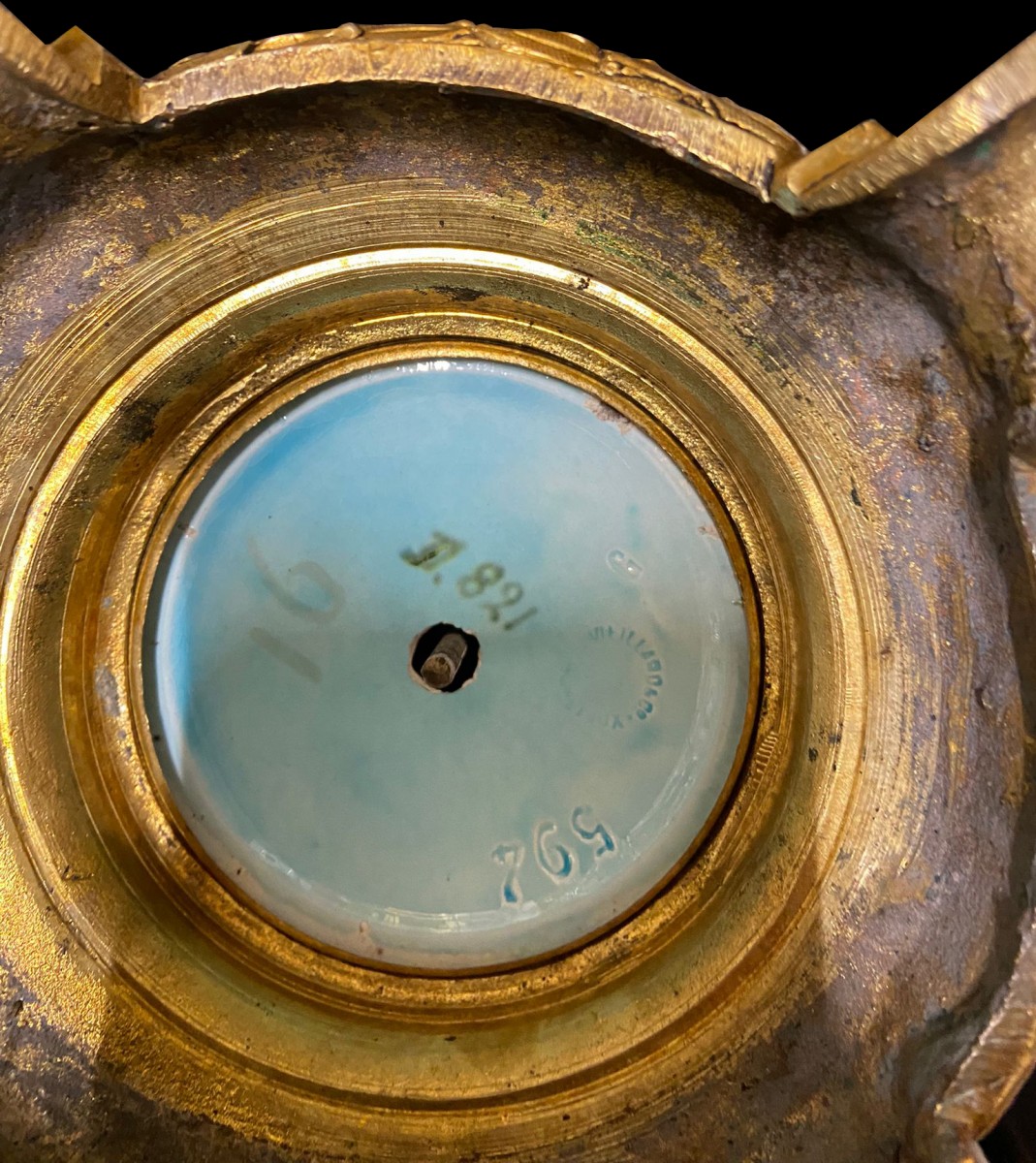
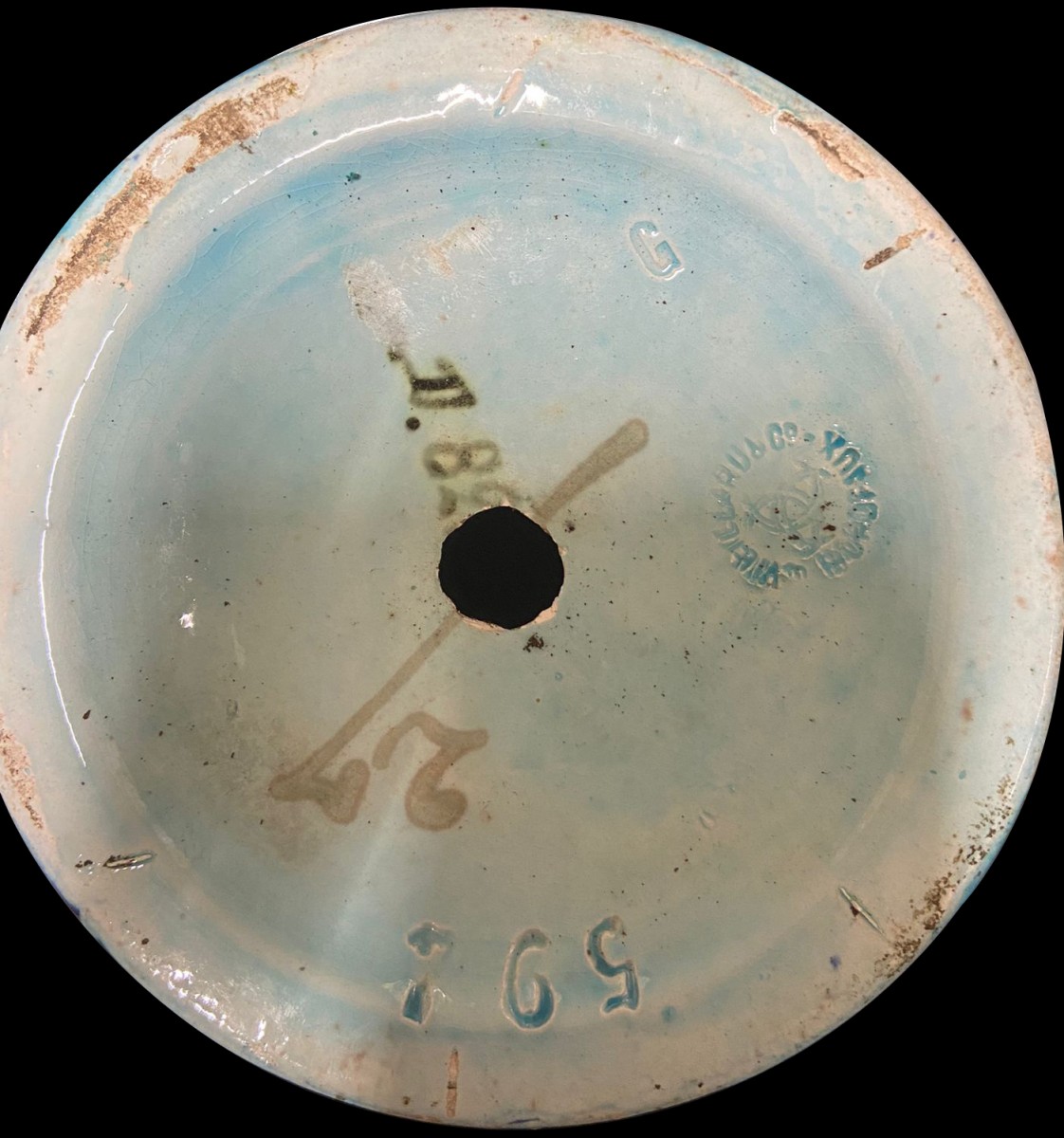
Bordeaux knew at the beginning of the 19th century a great development of fine earthenware due to the establishment of a manufacture by Boudon de Saint-Amans. That factory was however quickly sold to David Johnston, whom opened a factory in Bacalan that counted then up to 700 workers. The production became industrial, with printed patterns of varied colors. Jules Vieillard took after in 1845 David Johnston’s company. His work was crucial to the industrial success of the Bacalan manufacture and also to the artistic quality, which was unanimously celebrated during the famous Universal Exhibitions. His earthenware even earned the generic name of « Vieillard ceramics ». In his last period, Jules Vieillard developed an exceptional Orientalism through his creations. In 1865, his sons Charles and Albert, took after the factory under the company name of « Manufacture Jules Vieillard et Cie », and produced a lot of various designed pieces, particularly decorated with birds and flowers. However, their printed decors were of quite poor quality. To solve that problem, they decided to renew the forms of the pieces, evolving towards fashionable decorative pieces, such as lamps, jardinieres and vases. As for the oldfashioned decoration, the artistic department worked hard under the direction of Amédée de Caranza newly arrived around 1875. This ceramist from Longwy, launched there in 1872 the famous eponymous enamels « Emaux de Longwy », renewing the ornemental vocabulary with his technique of partitioned enamel. His decorations mainly evoked the brilliance of Persian and Japanese objects. But, as Caranza left Longwy to Bordeaux, Longwy couldn’t keep any longer its exclusivity. Caranza became then the manager of the Vieillard factory workshop in 1882, which knew thus a new momentum, until his departure a few years later, probably in 1885. The Vieillard factory closed down in 1895.