Offered by Poisson et Associés
REQUEST INFORMATION

Paintings, sculptures and art objects from the 15th to the 17th century
The griffin, or grype, is a legendary creature with the head of an eagle and the body of a lion, possessing the ears of a horse, though it sometimes presents variations.
It appears in Elam at the end of the 4th millennium BC and in Egypt around 3000 BC, with an iconography that was continually refined throughout antiquity by the influence of Mesopotamian, Greek, and then Roman cultures. It is often associated with local deities and heroes (Gilgamesh, Seth, Egyptian kings, Apollo, Dionysus, Eros, or Nemesis). In Greece, Herodotus, in his Histories, places its habitat in Northern Europe, near gold deposits. Meanwhile, Pliny the Elder, in Natural History, describes this creature with its hooked beak as originating in Ethiopia.
In the Middle Ages, however, it was identified as a bird, and its existence was not doubted. It gradually gained popularity in the art of western regions, was the subject of scholarly commentary in medieval bestiaries and encyclopedias, and even appeared in several works of romance. By the end of this period, it was being used in heraldry.
The opinicus and the hippogriff are related to the griffin. Symbolically, the griffin is viewed negatively by Christianity due to its hybrid, creature-like nature. This fear is amplified by the medieval belief that the griffin dismembers humans.
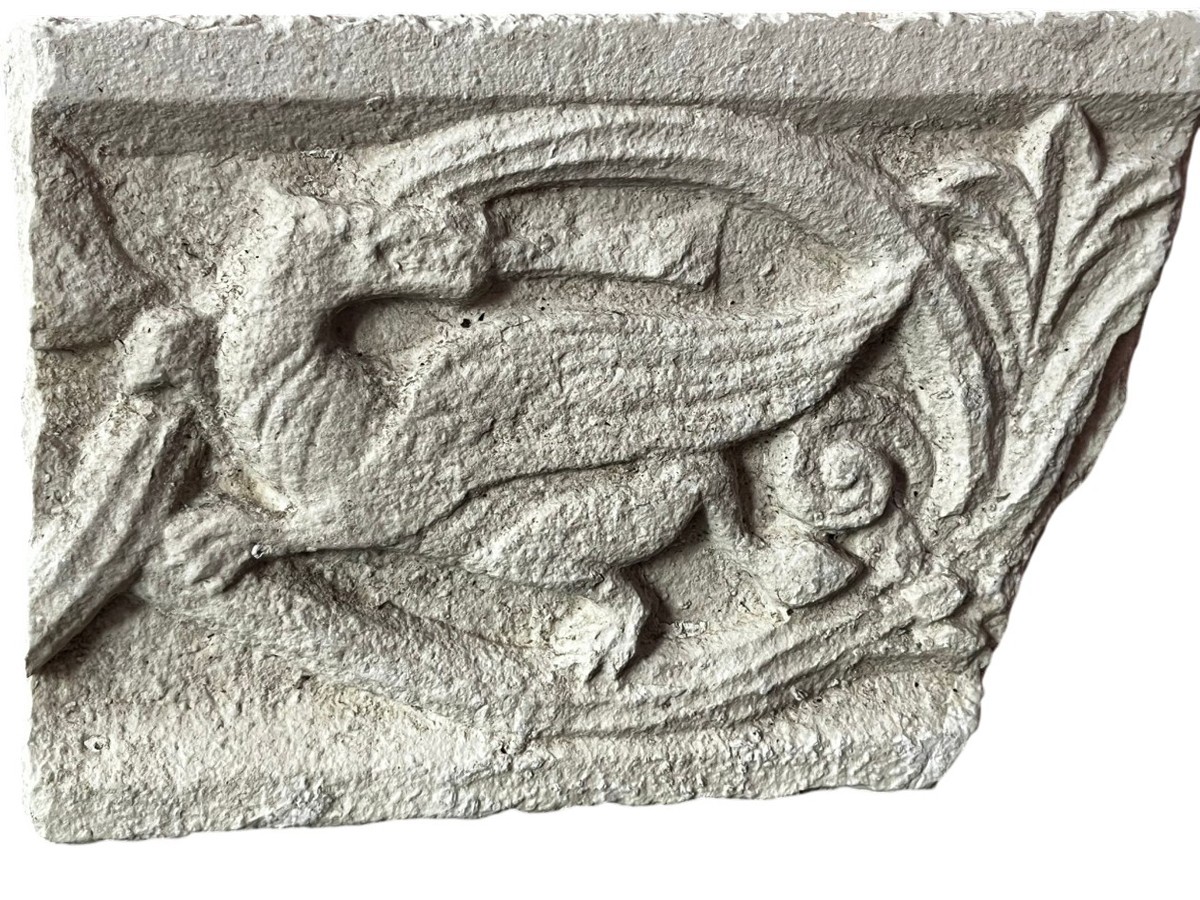
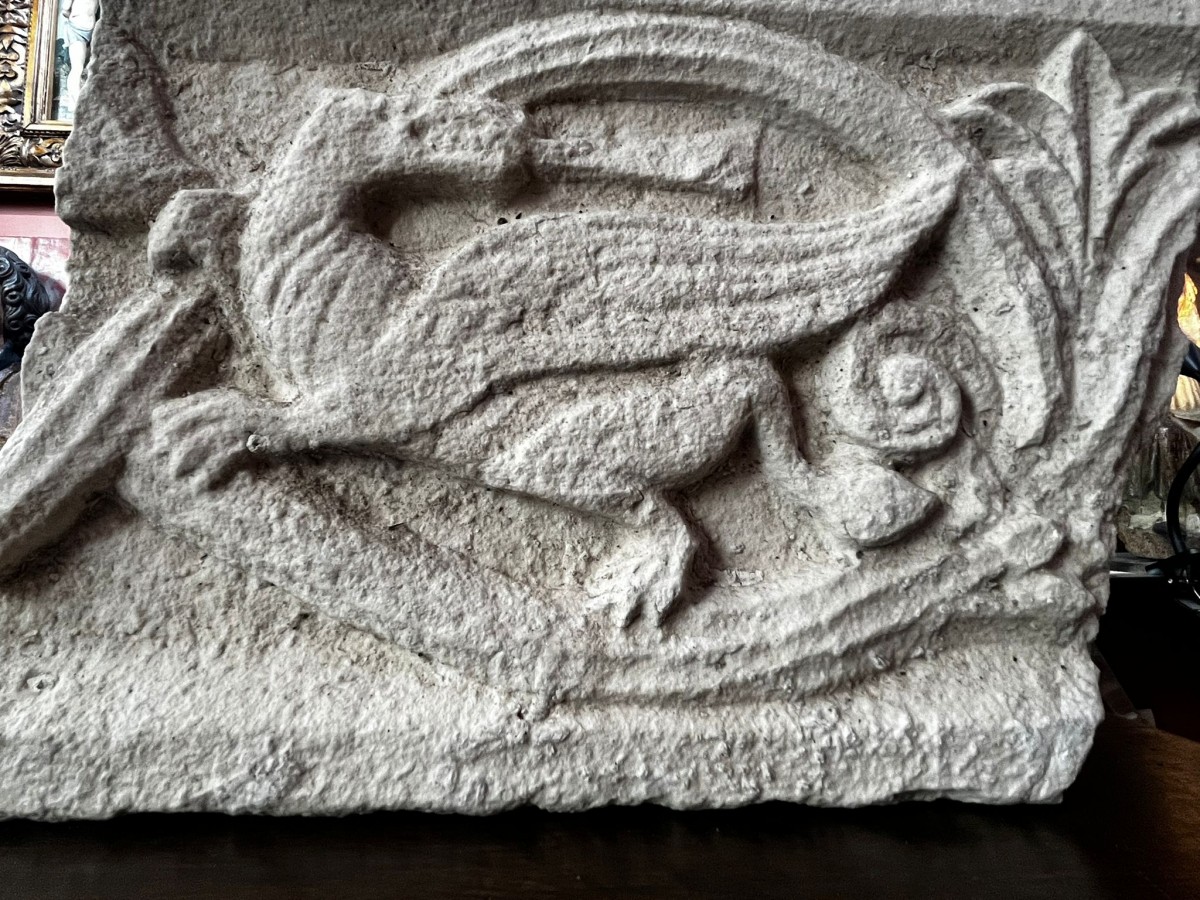
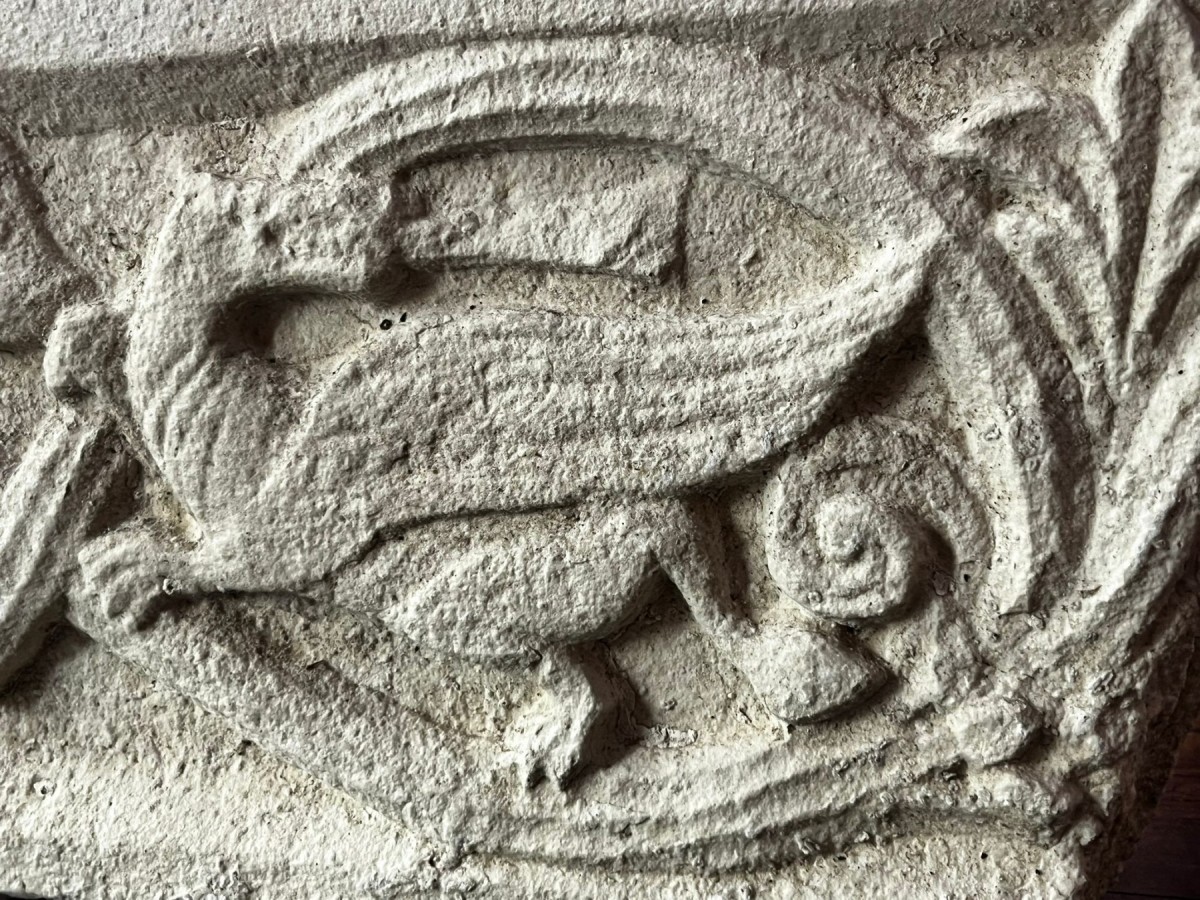
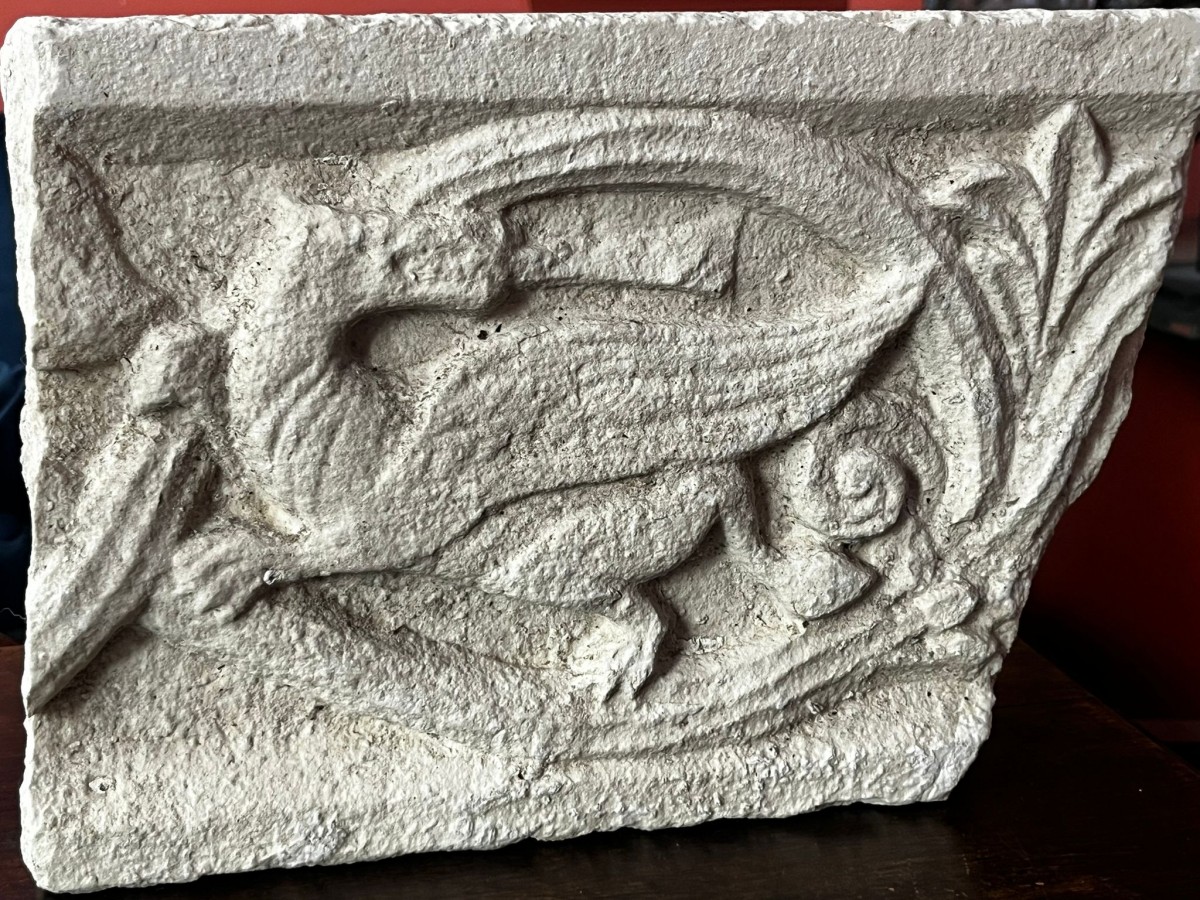
Carved from a single block of limestone, our griffin sits naturally within a setting of scrolling foliage that extends across the entire space. Viewed in profile, its hybrid characteristics are readily apparent: a lower body resembling that of a lion and an upper body with claws reminiscent of an eagle.
French work from the 12th century
Height: 33.5 cm
Width: 22.2 cm
Depth: 6 cm