Offered by Kolhammer & Mahringer Fine Arts
REQUEST INFORMATION

Specialised with sculptures and old master paintings
Il-de-France Around 1285
Sand-lime brick
Remains of original polychromy
Height 80 cm
With a style-critical analysis by Dr. Arthur Saliger, former curator of the medieval department in the Belvedere, Vienna and a scientific pigment analysis by Prof. Dipl.Ing. Dr. Manfred Schreiner, former head of the Institute for Science and Technology at the Academy of Fine Arts, Vienna.
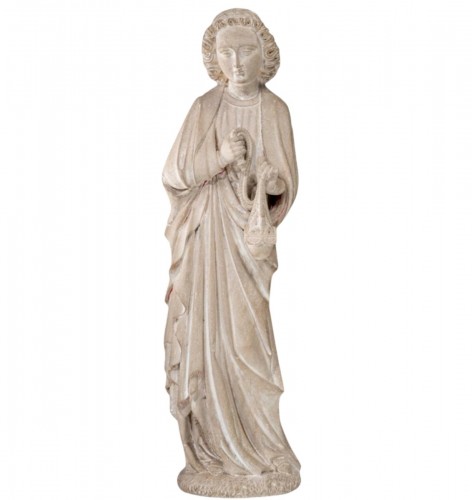
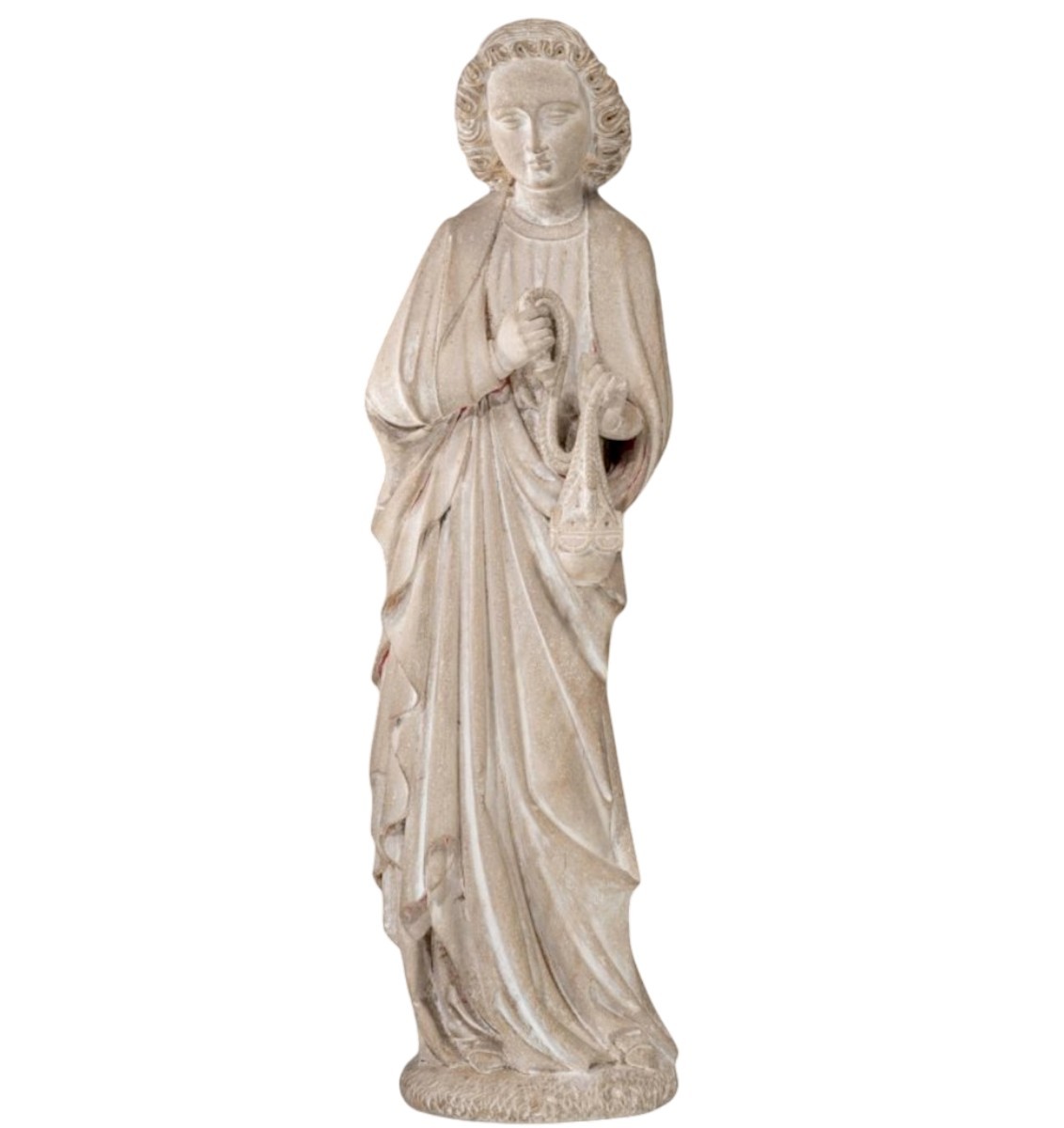
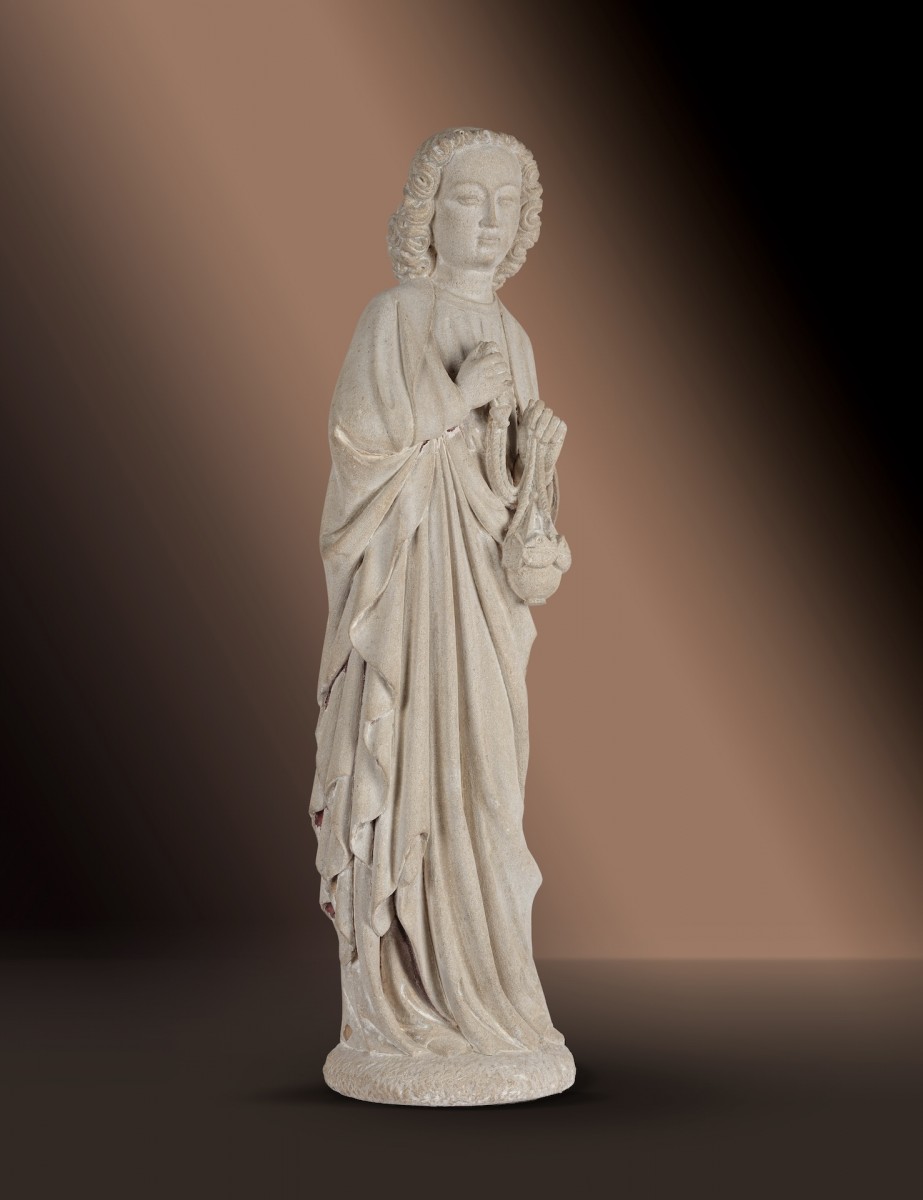
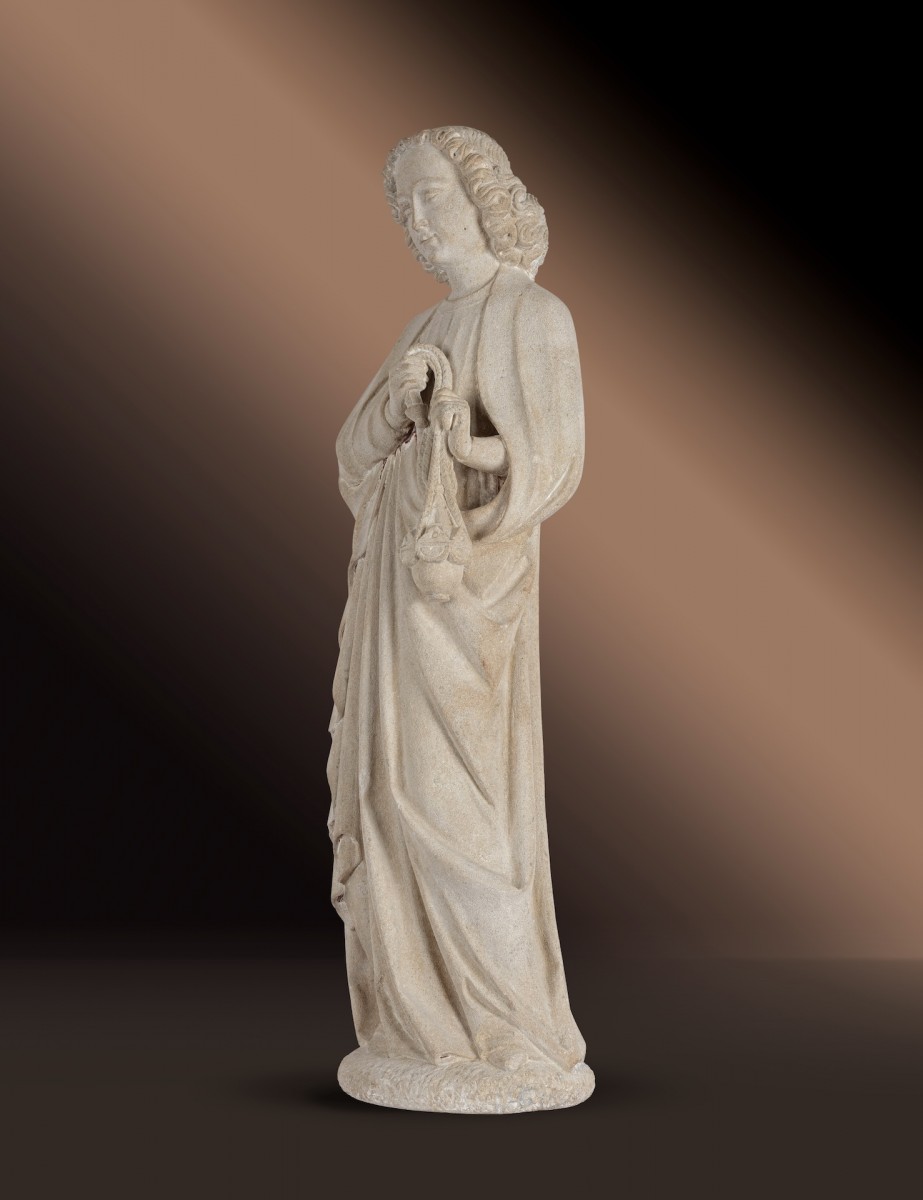
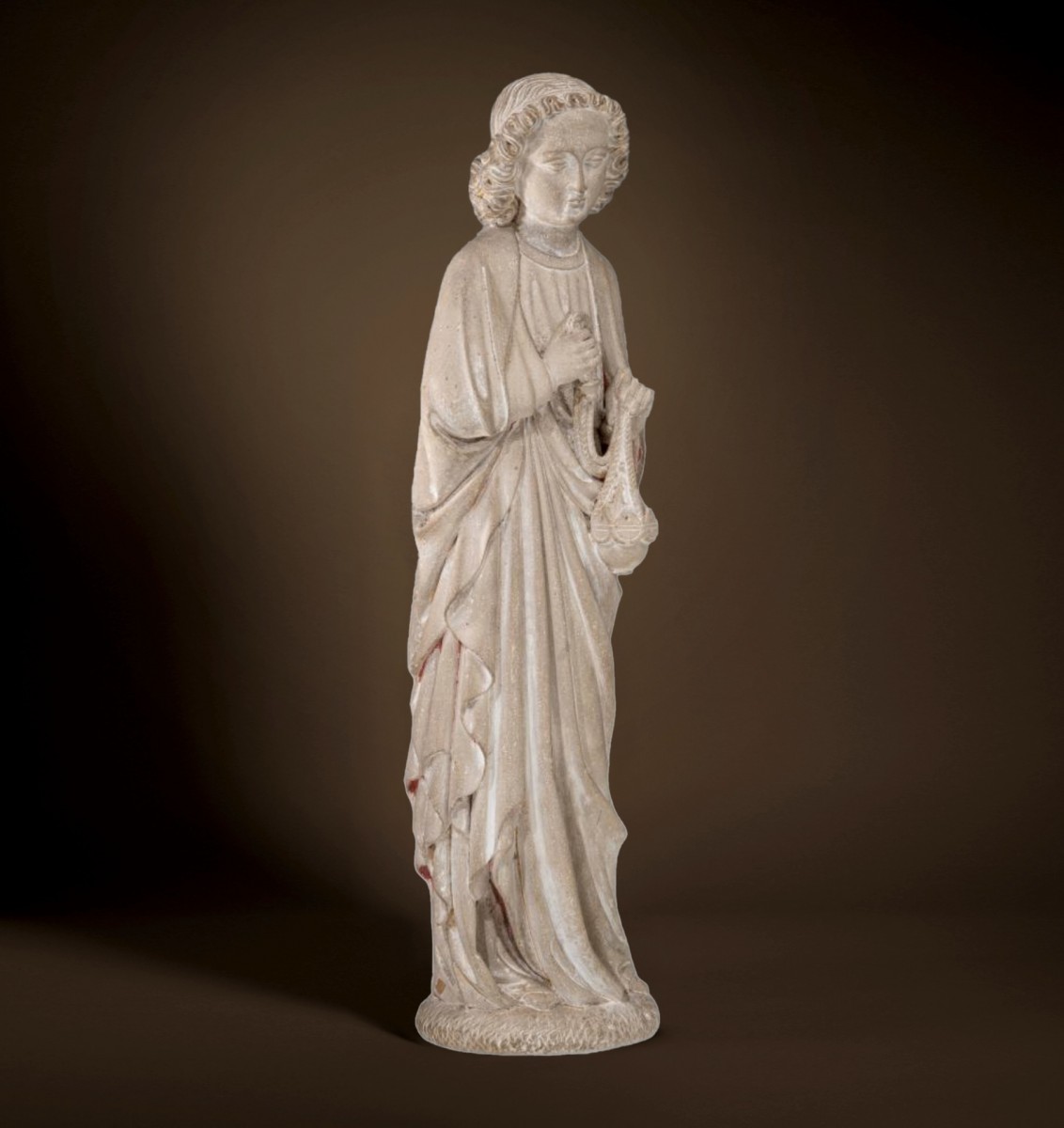
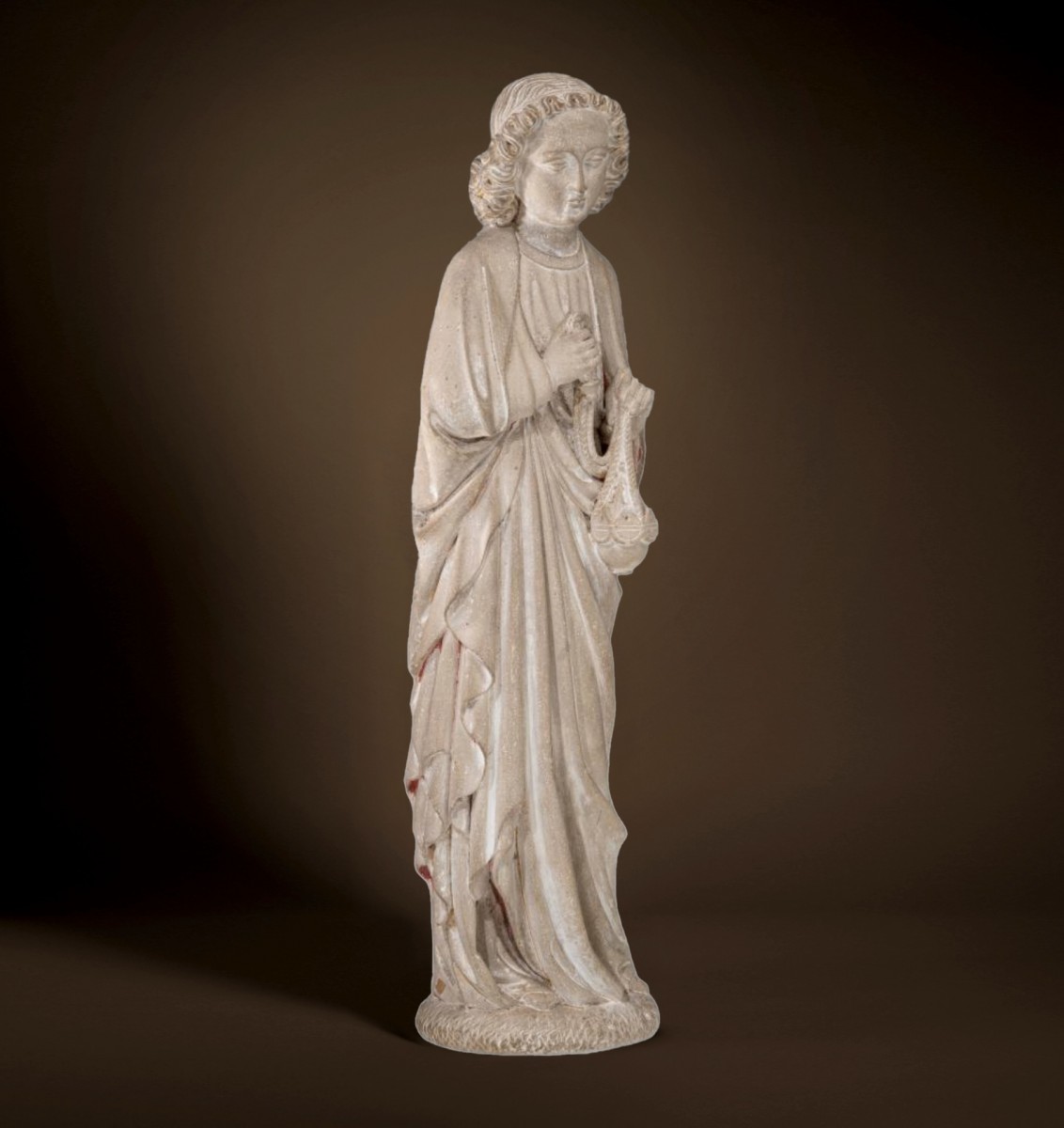
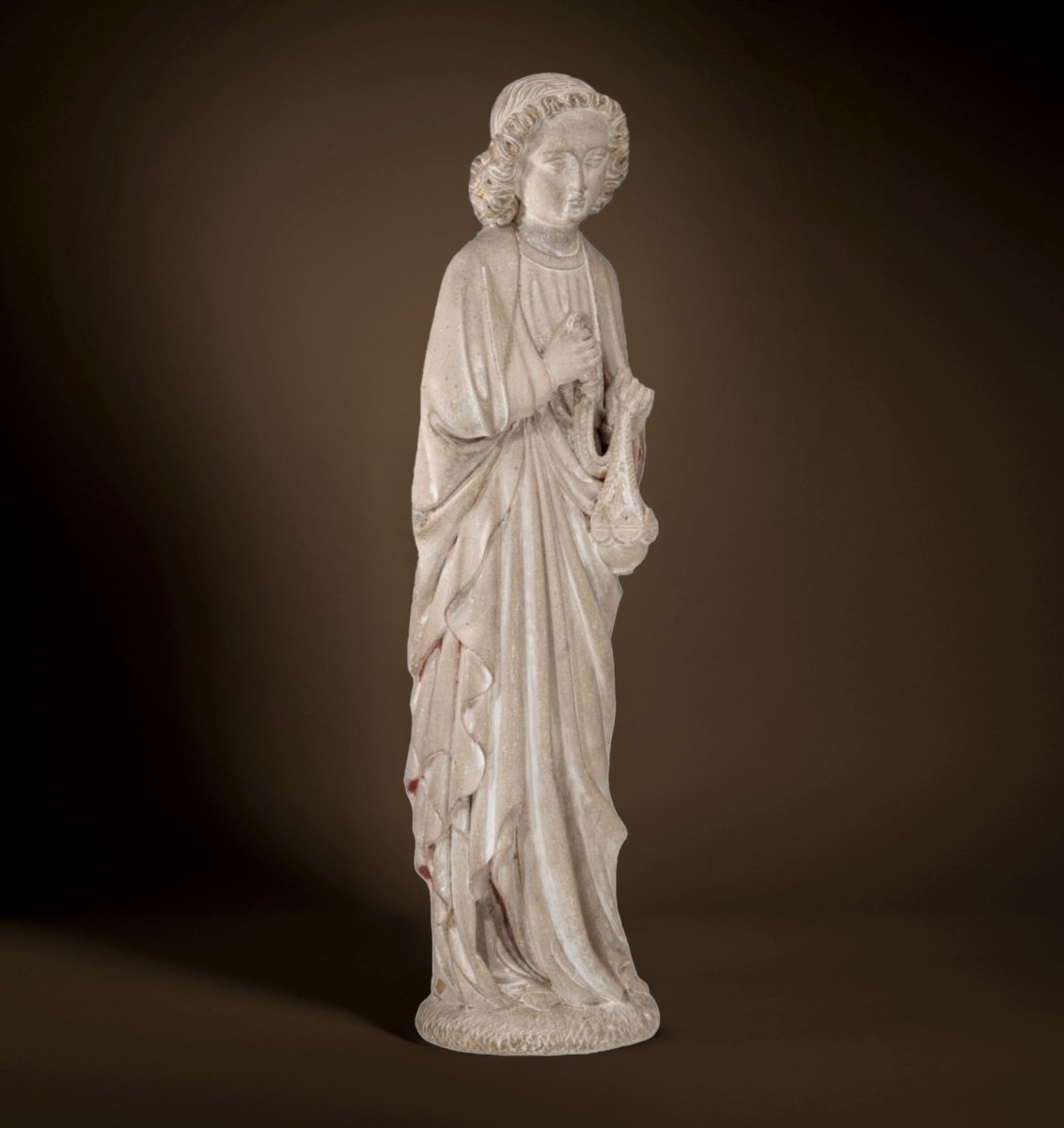
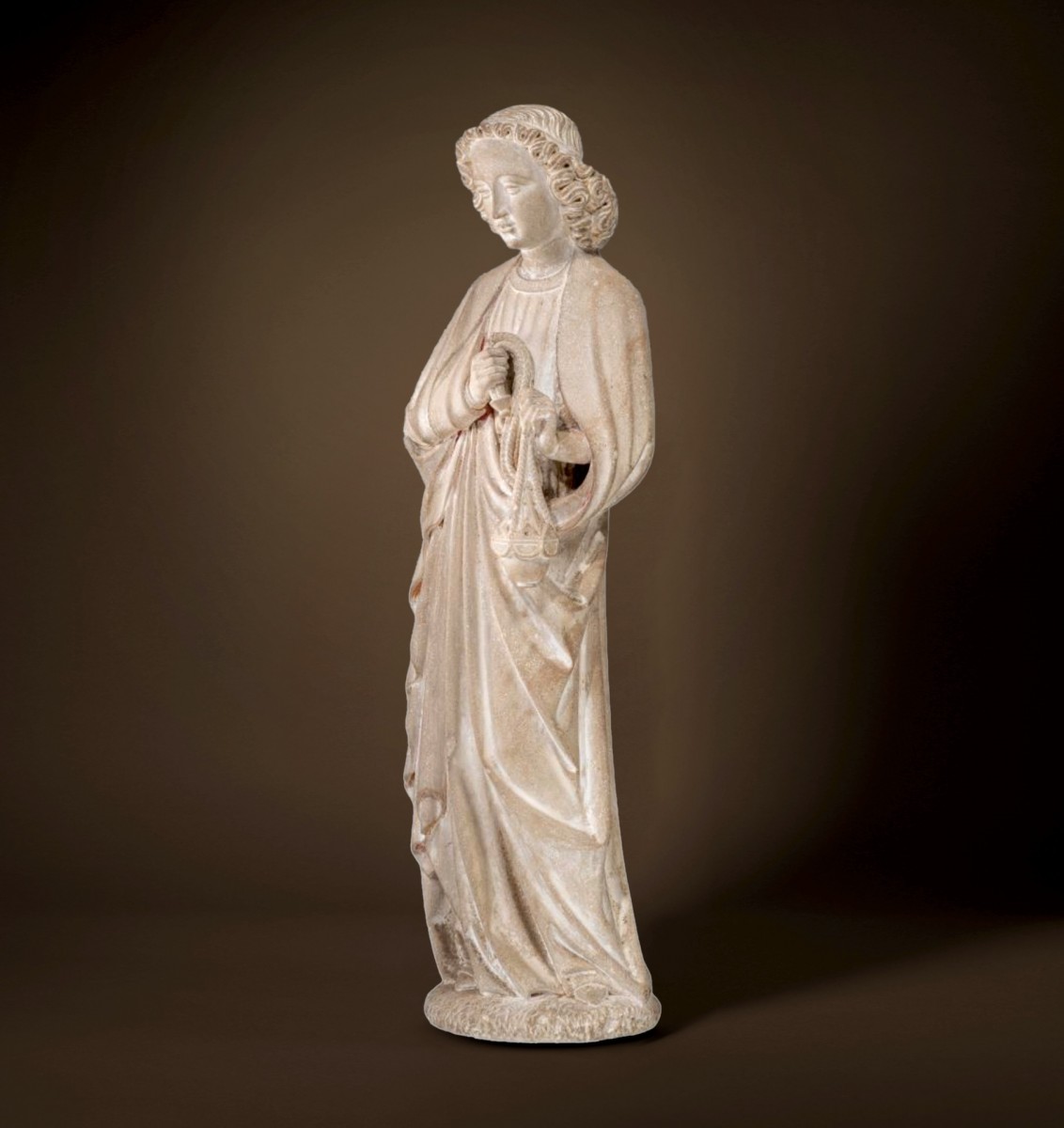
Liturgical figure of a young man with censer
Style-critical analysis
The “toga”-like clad, strikingly slender figure of a youth in an extremely steeply curved posture (80 cm high) is made of a strikingly light-colored, fine-pored limestone, whereby the sculpturally formed surface is “darkened” thanks to the patination and the authentic habitus of the stone can be found on the underside of the base plate. Since there are slight traces of polychromy in the fold valleys of the raised cloak cape clamped by the right angled arm, under which even smaller traces of an “original” polyment could be ascertained, it can be assumed with certainty that this sculpture must have been painted in its original state, which can be deduced a priori not least from the “porous” surface texture. As this sculpture has been sculpted on all sides, it can be reliably assumed that its original “installation site” was at best in a canopy without a rear wall, or – more likely – as a completely “free-standing” “acroter” figure, such as those above slender pilons either on the crowns of “Saint-Sépulchre” (= Holy Sepulchre of Christ) monuments (see the one as a polygonal structure from the cloister of the cathedral of Constance from around 1260, or – on the openwork spire of the pilgrimage church “Maria Straßengel” near Graz, completed in 1366) can be named as quasi “arbitrary” examples, or – not least the attribute of the spire (= censer) – is also conceivable in the context of a tabernacle-shaped altar canopy (= ciborium).
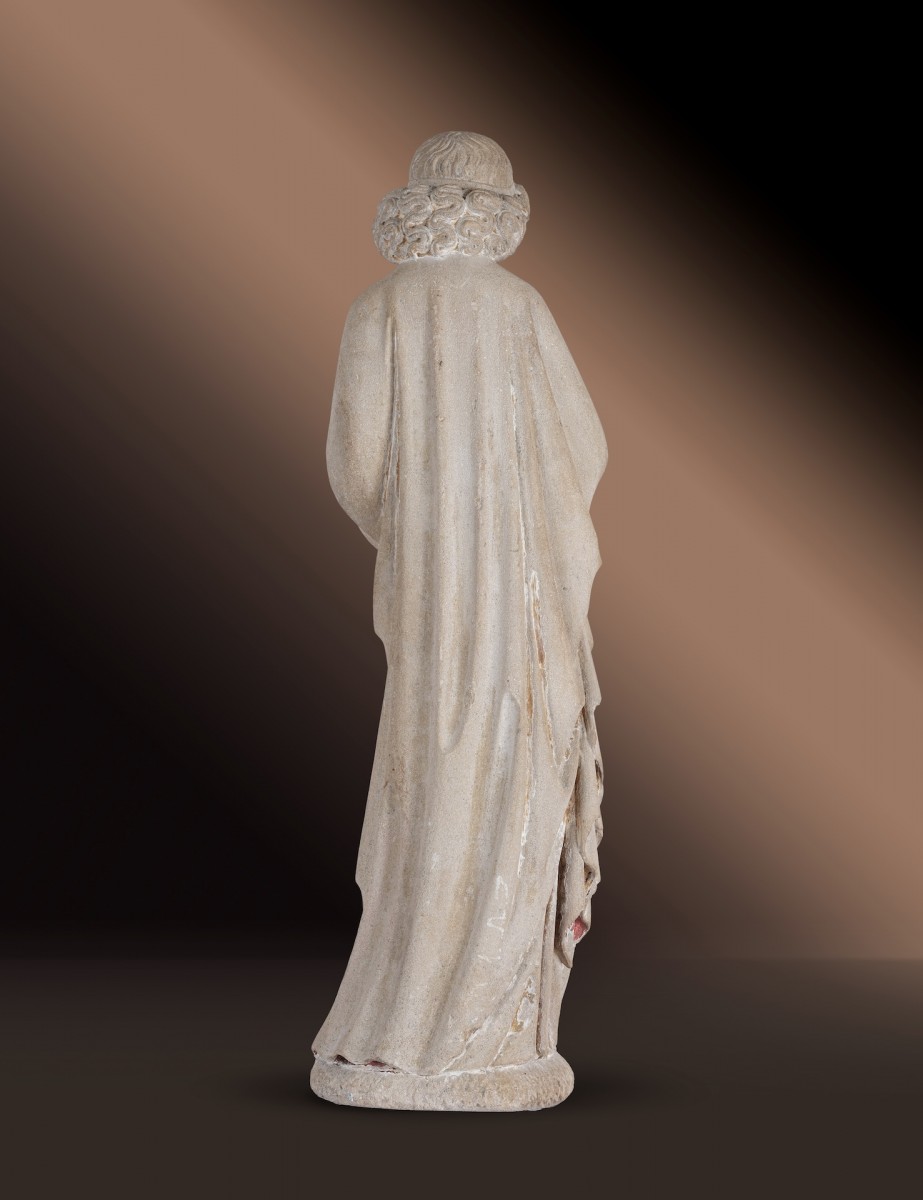
The extremely “vertically” elongated, steeply curved body “axis” is probably most clearly revealed in its individual “style-defining” habitus in the back view of this sculpture, whereby the “downward sloping” tubular folds, which are increasingly gaining volume towards the base plate, form two lateral, counter-rotating (i.e. upward-striving) troughs, The tubular folds, which “fall downwards” from the “smooth” shoulder section and increasingly gain volume towards the base plate, form two laterally opposing (i.e. upward-striving), flap-shaped hollows and a centrally arranged, downward-directed, long “hollow” of this kind, creating a lively dynamization within the genuinely “long-stemmed” drapery ensemble. On the left flank of this statue, this seemingly “initiated” dynamic corresponds to the opposing “thrusts” within the descending fold congestion in the formally increasing individualization of the cascading folds of the mantle drapery, which causes increasingly “angular” breaks towards the base plate. In this context, the cloak section covering the left bent arm describes a hollow space, almost stereometric in appearance, which – due to the disposition of the cloak drapery – is genetically motivated by the garment enveloping the figure’s body in its resulting haptic ductus. In contrast, the right side of this sculpture below the right elbow area is characterized by successively increasingly acute-angled arrangements, which are however gently defused in the “knees” of the garment folds, not least due to the already described “pinching” gathering of the drapery by means of the upwardly bent right arm, whose ascending tubular folds converge towards the right forearm on the one hand and form strikingly curvilinear hemlines on the other (the corresponding French idiom “curviligne” authentically expresses this style-defining phenomenon onomatopoeically). The characteristic style of the drapery of the coat enveloping the body contrasts with the “dress”, which can only be seen in the upper chest cut-out, from whose neckline, formed by a simple band, delicate parallel folds literally “trickle down”.
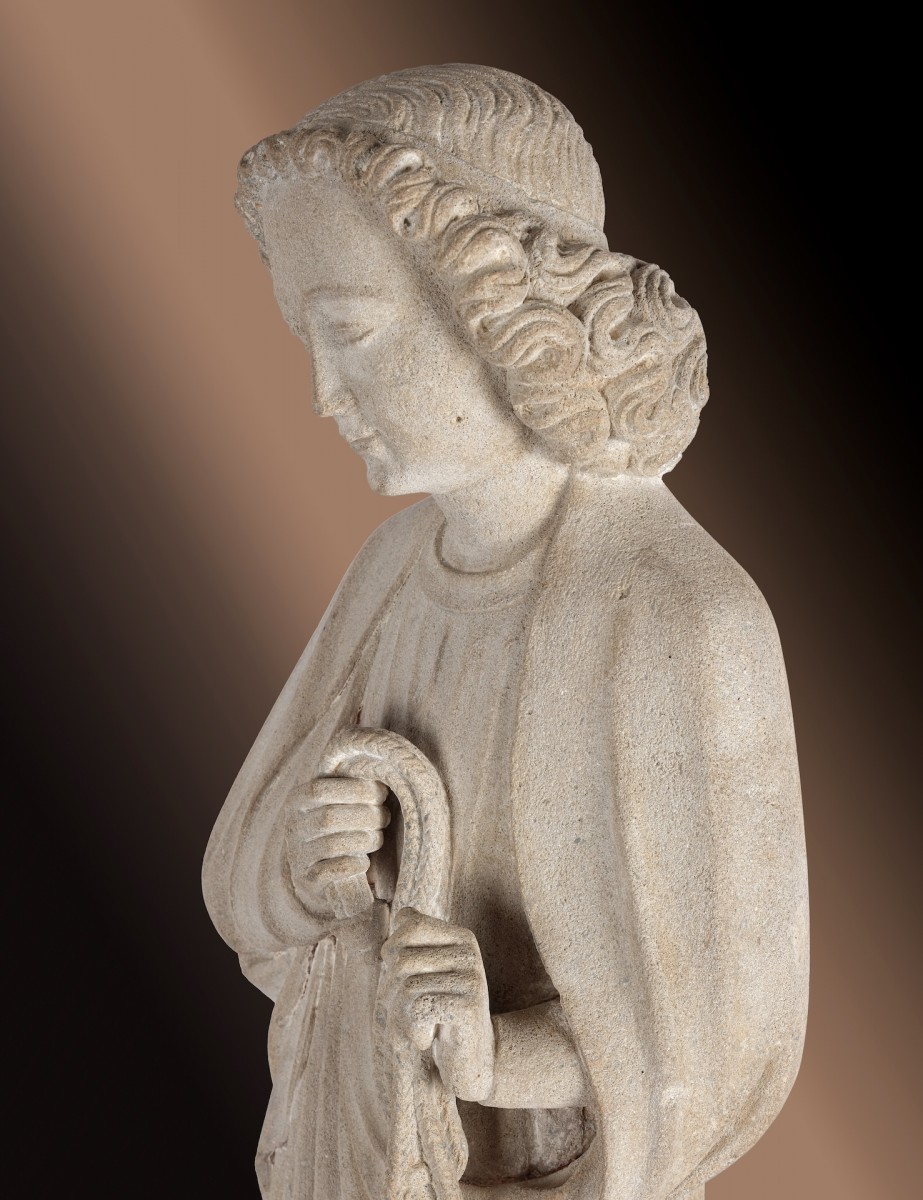
The disposition of the garment thus characterizingly described ultimately results from the individually motivated, opposing posture motif of the vectorially quite opposite, angled arms arranged closer to the chest, whose poses can be explained motivically by the strikingly “object-archaeologically” authentically rendered turribel – including the curving chain. In the chord with the higher right hand and the lower pose of the left, the “mobile” character of the finely articulated chain of the turribel is emphasized in the steeply curved course; since this very chain is held by both hands, the “hanging weightiness” of the incense burner creates its authentically comprehensible effect.
The almost “spherical” head, characterized by “even features”, is distinguished in the highly oval face both by the continuously “curved” lines, consisting of the extremely gently curved brows and the emphatically narrow bridge of the nose, as well as by the emphatically narrow eye slits and the strikingly narrow mouth (in the narrow width of the nostrils of the nose!) with the barely indicated corners of the mouth. An almost “nimbus”-like, large wavy wreath of hair masses, whose linear style – despite its constant plasticity – now frames the barely oval face with the enriching use of drilling technology in the curl centers, stands out strikingly from the rounded skull calotte, which is furrowed by curvy strands of hair in the expansive, sculptural habitus.
Both in the slender, elongated proportions of the body, as well as in the steeply curved style of the posture and finally in the formal finesse of the sculptor’s treatment of the “surfaces” of the sculpture, it is a sculptural creation of an unmistakably “courtly” character, which allows conclusions to be drawn as to its original dedication, which was certainly representative.
The iconography
In the still outstanding section on the specific art-historical classification of this present sculpture, reference should be made in advance to the “Angels of Poissy”, which, according to the arguments of Béatrice de Chaucet-Bardelot and Jean René Gaborit (see the catalog in book form for the exhibition “L’Art au temps des Rois Maudits – Philippe-le-Bel et ses fils, 1285-1328”, Paris, Grand Palais 1998, no. 42 A-G, pp. 89 ff.) most likely belonged either to an ensemble depiction of a “Last Judgement” or a “Coronation of Mary” on one of the former transept portals, but most likely to the portal of St. Louis of the royal priory church of Poissy: Apart from the fact that these usually also have chiseled wings and consistently contain attributes of the Passion of Christ (=Arma Christi) and can therefore be ruled out as figures for a genuine context for a “funerary” dedication, the representation in question of the present wingless youth figure (in fact, there is not the slightest trace of a possibly imaginable assembly of either wings carved in wood or worked in metal) with the striking reproduction of a tower rib in complete reproduction of its authentic, The striking depiction of a tower tribune in complete reproduction of its authentic, then contemporary appearance thus also fulfills the iconographic aspect apostrophized by the two aforementioned authors – Chaucet-Bardelot and Gaborit – according to which such depictions with liturgical devices could indeed be causally related either to funerary dedications or to those on ciboria-like altar canopies. Since this sculpture obviously never had angel wings, it can therefore hardly be interpreted as an “angel” figure, but rather as a young man serving in a liturgical action and thus to be assigned to the personal milieu of an altar boy.
In fact, the head shaped like a diadem by means of the striking hairstyle, the volume of the strands and the unconventionally wavy curls in the “wreath” around the high forehead and temples, can be found in numerous versions within the genre of such youthful figures, as they – sometimes carved in metal or wood and shaped as angels – can be found both in reliquaries and in furniture. carved in metal or wood and designed as angels – can be found both in reliquaries and in ecclesiastical furniture, where for the former both fragments of the Gertrude Shrine of Nivelles, largely destroyed in 1940 (see Danielle Gaborit-Chopin, in: catalog in book form for the exhibition “L’Art au temps des Rois Maudits – Philippe-le-Bel et ses fils, 1285-1328”, Paris Grand Palais 1998, no. 117, p. 188 ff.), as well as other angels, mostly in a steeply curved pose (see item, no. 119, p. 192, Angels carrying relics, in Ascoli Piceno, San Pietro Martire, as well as no. 122, p. 198 f., from San Domenico in Bologna, as well as no. 125, p. 201 from the Bargello in Florence and no. 126, p. 202 from the Louvre in Paris) and for the latter the two angels carved in oak as corresponding counterparts (item, Francoise Baron, nos. 19, 20, p. 63 f.) from the last third of the 13th century should be mentioned. In contrast to the curvilinear consistency of the surface characteristics of the wavy and wreath-like hair masses, the comparative examples cited have an ultimately “atmospheric” habitus, i.e. one oriented towards the organic model, whereas in the present “liturgical youth” an almost “artisanal” exact precision in the linéament oriented towards goldsmith’s work is given in an emphatically autonomous “ornamental” character which – what has not yet been mentioned – just in cherubs’ heads above the tabernacle of the Art Nouveau church “Am Steinhof” (!) in Vienna could at best be said to have an apparent “afterlife”. This initially seemingly “superficial” formal cross-reference is of mental relevance simply because the phenomenon of medievalist receptions, especially in “Viennese Art Nouveau”, has not even been thematically inaugurated, although – as has just been shown – formal ingredients are quite consistent. In any case, the precision observed in the “ornamental” detailing, which is almost “meticulously” followed, is clearly distinguished from the aforementioned comparative objects in precisely this specific degree and extent, which once again strengthens the assumption of its original dedication as an architecturally largely unbound acroter figure of a piece of sacred architectural furniture
Attempt at an art-historical classification and dating
The comparative indicators “suitable” for assessing the stylistic character of the compared statuary works, which are also thematically “close”, nevertheless provide “favorable” factors for both a “locally” targeted and a “temporally” oriented, specifically “art-historical classification”, especially since significant criteria can be made for this to such an extent of probability. If the view of the back of this sculpture, which is “sculpturally” formal on all sides, allows us to unmistakably state the extremely steep and curved axis of the body as well as the specific ingenuity expressed in the posture, which will contribute to further conclusions, the almost frieze-like, curvilinear ornamental ductus in the projecting crown of hair is also evident in precisely this view of the back. What in the previously mentioned comparative works by Engels, which are quite “similar” in type, especially in the hairstyle, can nevertheless be understood as decoratively implemented empirically oriented “atmospheric” details, despite the formal tendency towards differently rhythmic stylizations, is found in the conspicuously protruding wreath of hair in the present youth figure, transposed into an “abstracting”, largely “autonomous” version of the genuine formal opportunity – that of parallel wavy strands within the sculpturally protruding wreath of hair – in favor of an individual frieze of tightly curved, but in their sculptural volumes adequate formations with the additional use of drilling technique in the hubs of the curls: The figurative “chevelure” becomes a frieze-like transposed, abstractly autonomous “ornement”! This same formal style also dominates the “diadem”-like wreath of hair framing the face. This aesthetic tendency in favour of the heightened autonomous unfolding of forms also follows the systematizing decorative component mentioned at the beginning, which is probably not “superficial” but can nevertheless be seen in the opposing, steeply-strung trough folds on the backs of the floor-length garment. The trough-like fold valleys of the vectorially diverging fold slips in the cloak cape on the left flank of the sculpture – i.e. below the bent arm -, which according to the structure are derived from cascading bowl folds with nevertheless given butt-like breaks and creases, as they are found in sculptures from just before the middle of the 13th century, especially in ivory sculptures, are also decorative. In contrast, the mighty tubular fold, which converges with the right arm and is clamped by the right arm, is an archetypal topos of developmental history, ultimately leading to the late Gothic period. In contrast, the cascade of pointed parabolic folds with the significant curvilinear hem shows a formal and stylistic idiom that is coherent with the late classical phase of Reims and Parisian cathedral sculpture, The sculptural representations of Sophocles – which ultimately go back to the antique tradition of the sculptural representations of Sophocles, most of which have been handed down in Roman copies – can also be traced back to this idiom, especially in the sculpture of the “Reims Joseph Master”, and a noticeable succession can also be observed in the bent arms of the present liturgical youth figure, which are covered by the drapery.
The strikingly steep and curved bend in the vertical body axis, especially in the back view – seen from behind, it is just to the left, and in the front (or frontal) view, thanks to the contraposture of the arms, it is therefore barely noticeable to the left – experiences a vectorial counter-component in the head, which is turned slightly to the left and gently tilted forwards. This axial curvature, which can also be found in the sculptural objects compared above, where it is also recruited from the ambient milieus and the resulting “justifications” of the postural motifs, but in the present case is independent of such “carrier roles”, requires a more precise explanation: It is indeed reminiscent of autonomous ivory sculptures of medium size, as occurs frequently in depictions of the Madonna with the infant Jesus, where it is ultimately justified by the haptic specification of the ivory tooth and has thus been aesthetically “utilized” to motivate a mutually oriented turning pose from mother to child and vice versa. Since such ivory sculptures were created exclusively in the “courtly” milieu and the stylistic idiom of ivory sculptures has often been oriented towards monumental stone sculptures in the relevant research to date, a correction must now be made to the extent that such a traditional conclusion can by no means be attested exclusive validity. In the same way that the monumental classical-Gothic cathedral architecture in its formal vocabulary subsequently drew both the sacred furnishings and the liturgical equipment to comparatively formally hypertrophic increases in motivic and stylistic creative development and only in individual cases “reciprocally” spread to the sacred architecture of the late High Gothic and Late Gothic periods, a similar influence of ivory sculptures on monumental sculpture can be apostrophized – especially in the case of genuinely “courtly” foundations – for which the statue in question is considered an exemplary exhibit, as some of the striking comparative idioms mentioned can actually be found in the genre of sacred applied arts.
A special perspective of meaning can be attributed to the liturgical youth figure of his physiognomy, which appears “mask-like” only “superficially” due to its highly oval contour, whose chin area is concentric to the neckline of the undergarment, and thanks to its high forehead, as well as the already apostrophized continuous ductus of the “brow-nose-brow line”, the narrow mouth and the delicate chin: Both the slits in the eyes, which simulate a seemingly “thoughtful” expression in the way they are rendered, which was certainly brought out more clearly by the original polychroming to be assumed, as well as the aforementioned succinct characterizations at the corners of the mouth, all in all suggest a thoroughly vividly sensual habitus. The slit eyes in particular, which were executed in numerous sculptures from the courtly milieu of the time by the French King Philip the Fair (=Philippe-le-Bel), sometimes in a more precise form, can also be found – a little later and possibly mediated via Arnolfo di Cambio – in the strikingly characterizing articulations of the gazes in Giotto’s frescoes.
The comparatively named sculptures are – almost unanimously – dated to the ninth decade of the 13th century. However, the fact that the present sculpture is “distant” from these works in terms of its developmental history does not a priori imply that it was created at a different time; rather, this circumstance can be explained by a more far-reaching ensemble of influences in the extended circle of the “Ile-de-France” in the last quarter of the 13th century, which is why it is conceivable that this sculpture was created around 1285. The sculpture in question is a striking example of how the development of sculptural creation in the Ile-de-France from the elongated figure of Virtue from the ensemble of the Descent from the Cross (Paris, Louvre, see Danielle Gaborit-Chopin, in the catalog in book form for the exhibition “L’Art au temps des Rois Maudits, Philippe-le-Bel et ses fils, 1285-1328”, Paris Grand Palais 1998, no. 83, pp. 143 f.) to the “robe and body figure” of the early 14th-century sculpture of Saint Magdalene (item,Francoise Baron, no. 54, pp. 107 f.), which respects the body’s volumes despite its slender proportions.) by Écouis, whose “robe” consists of grooved strands of large-lined hair that completely cover the entire body (except for the feet, the folded hands and the face) and is thus characterized by large-curved ornamental linéament. It is precisely this splendor of hair, which “envelops” almost the entire body, that also conveys the plastic consistency of the body of this Magdalene sculpture in its ornamental course. The examples thus cited as antipodes of the style-oriented development – the aforementioned Descent from the Cross of 1270 in the Louvre and the Magdalene of Ècouis – confirm the dating of the liturgical youth sculpture presented in this vote to around 1285!