Offered by Galerie PhC
REQUEST INFORMATION

European paintings from the 17th, 18th and 19th centuries.
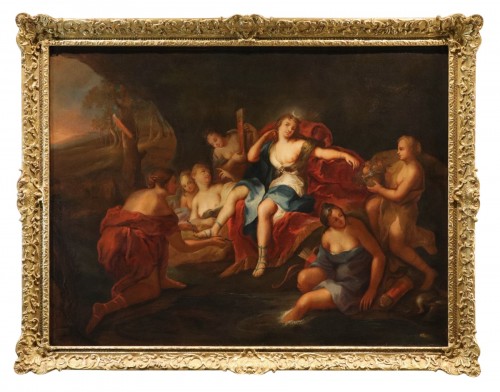
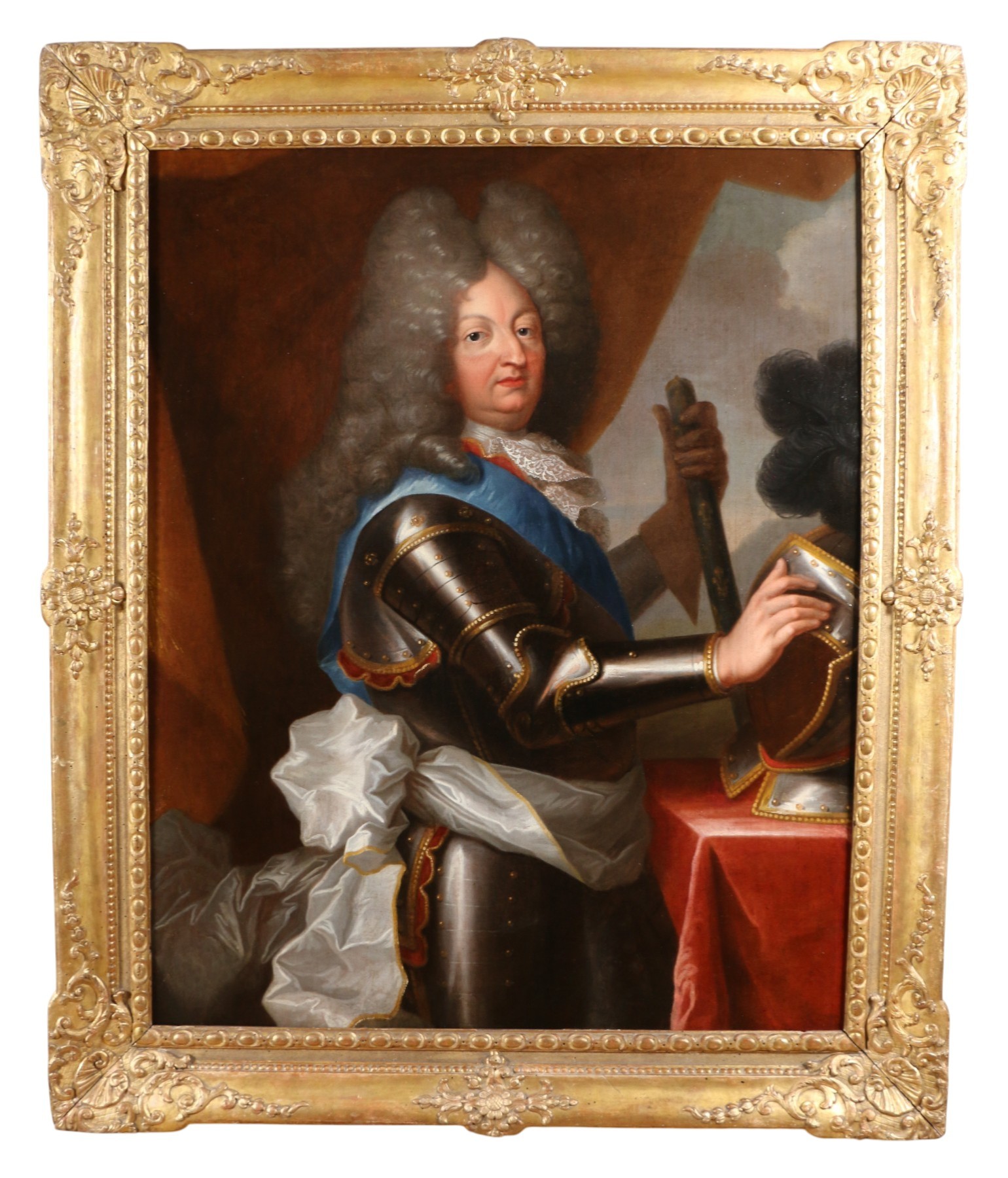
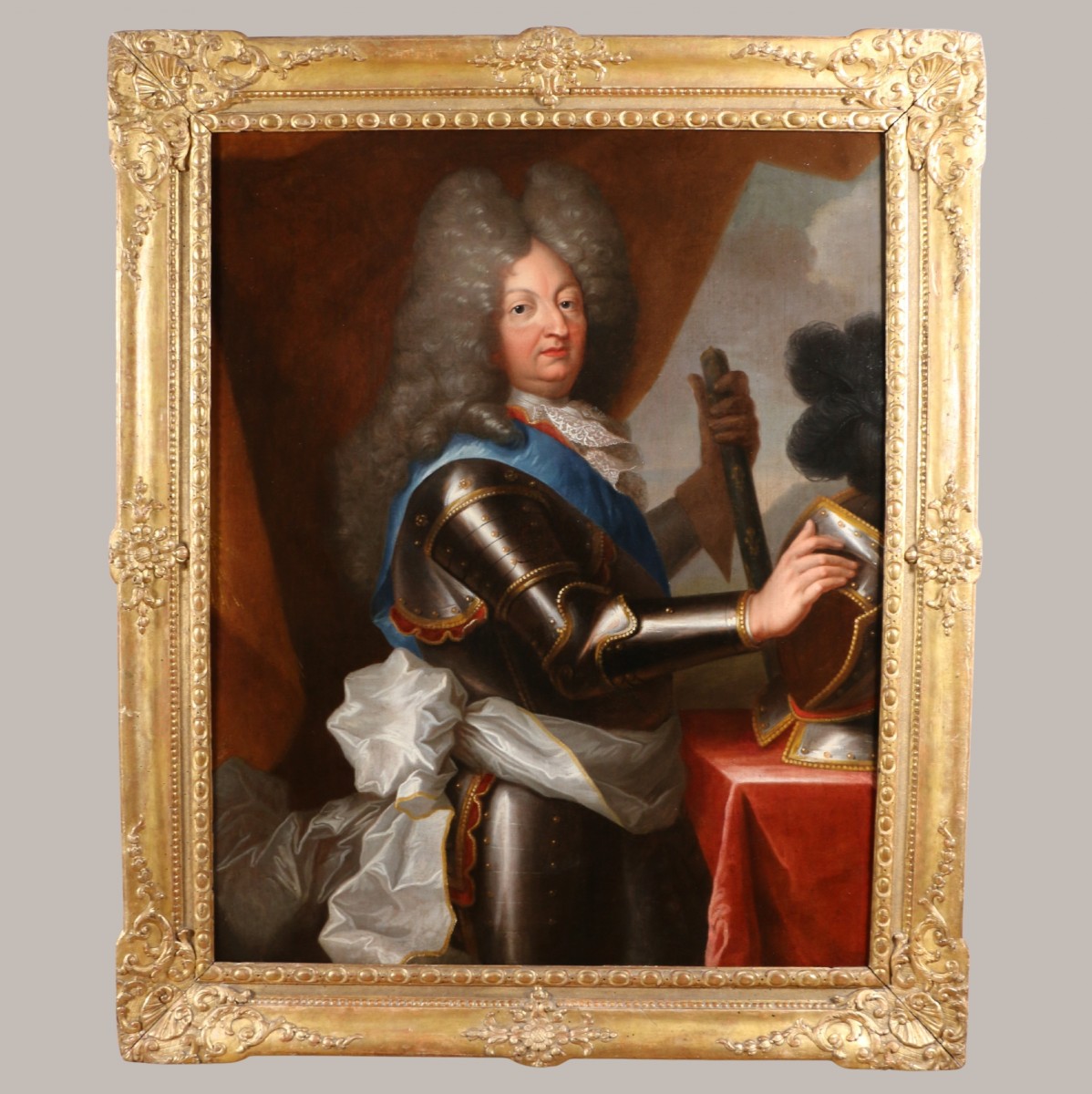
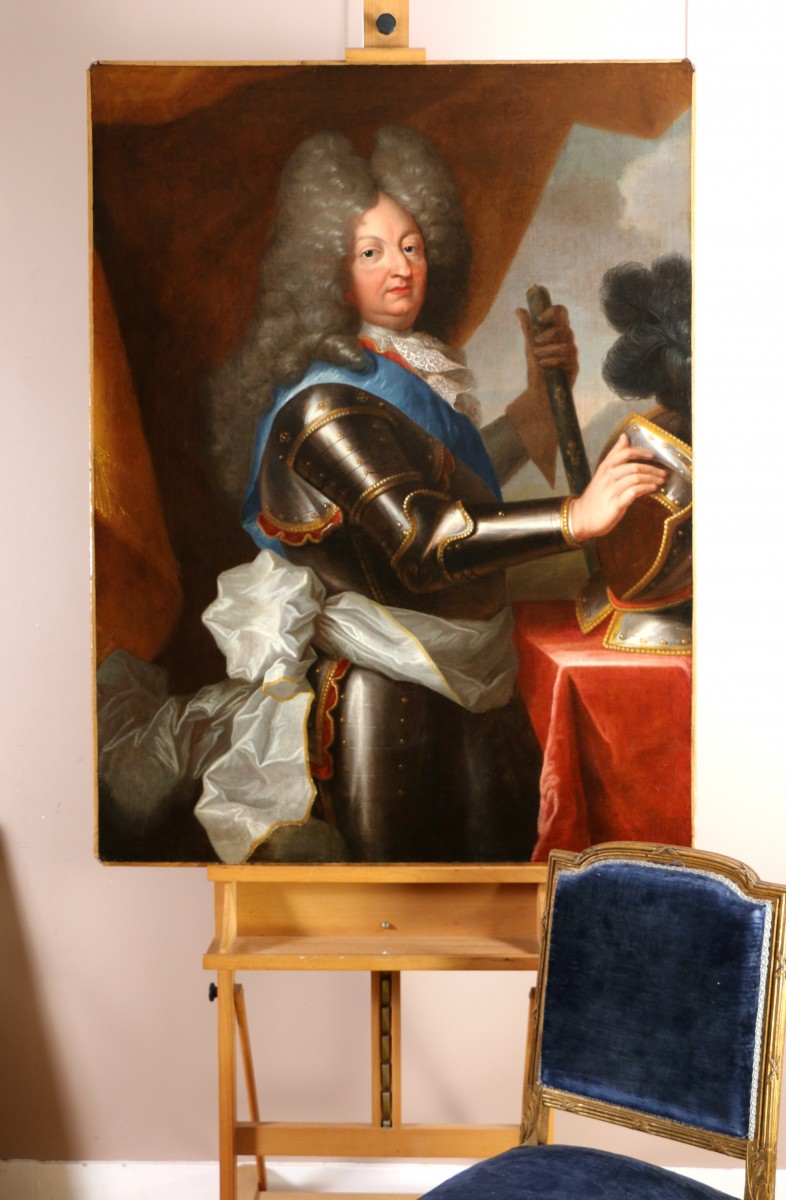
Relined canvas, 129 cm x 97 cm
Antique frame, 144 cm x 120 cm
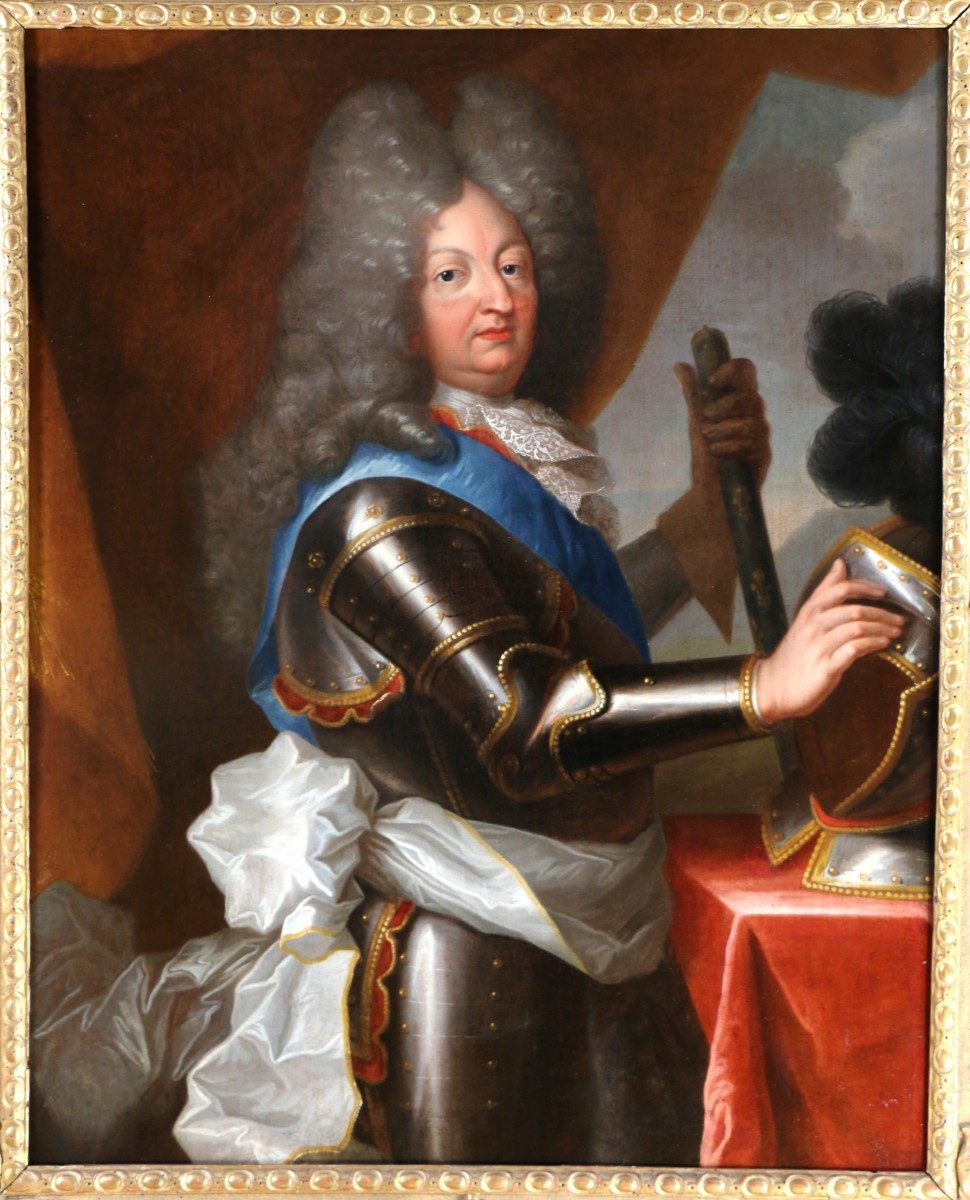
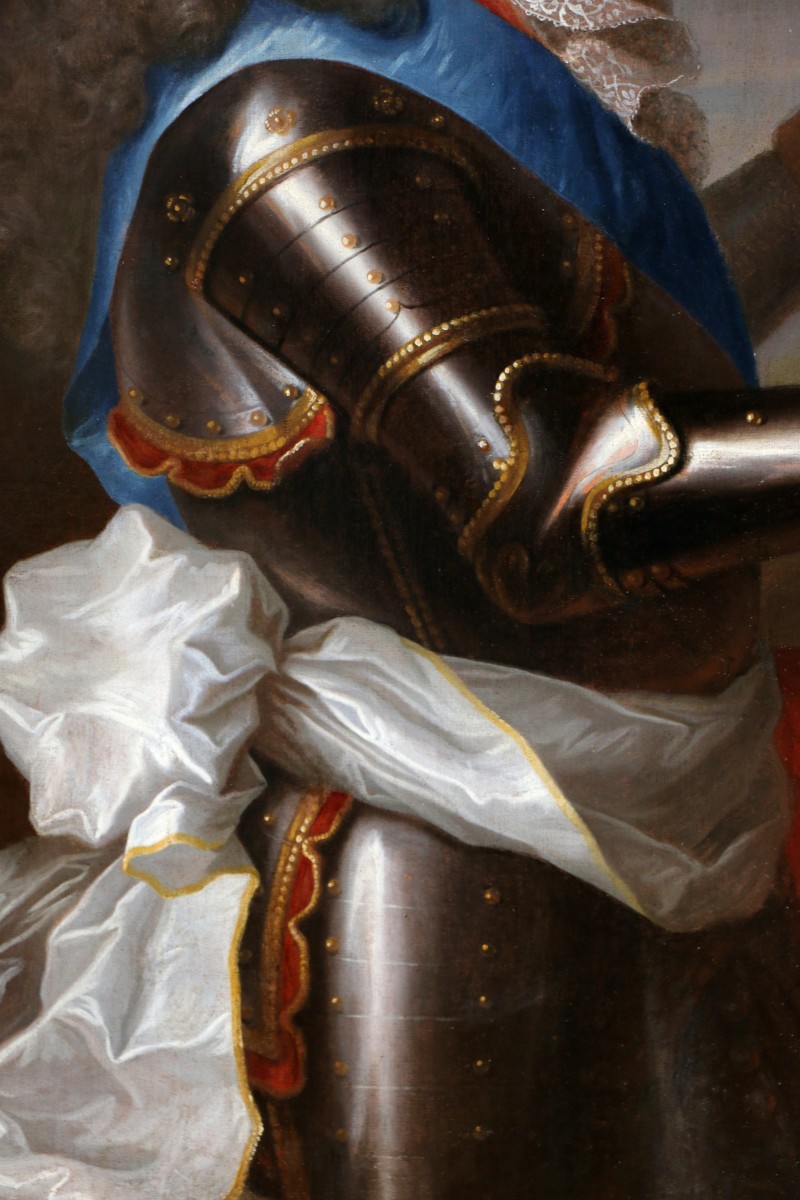
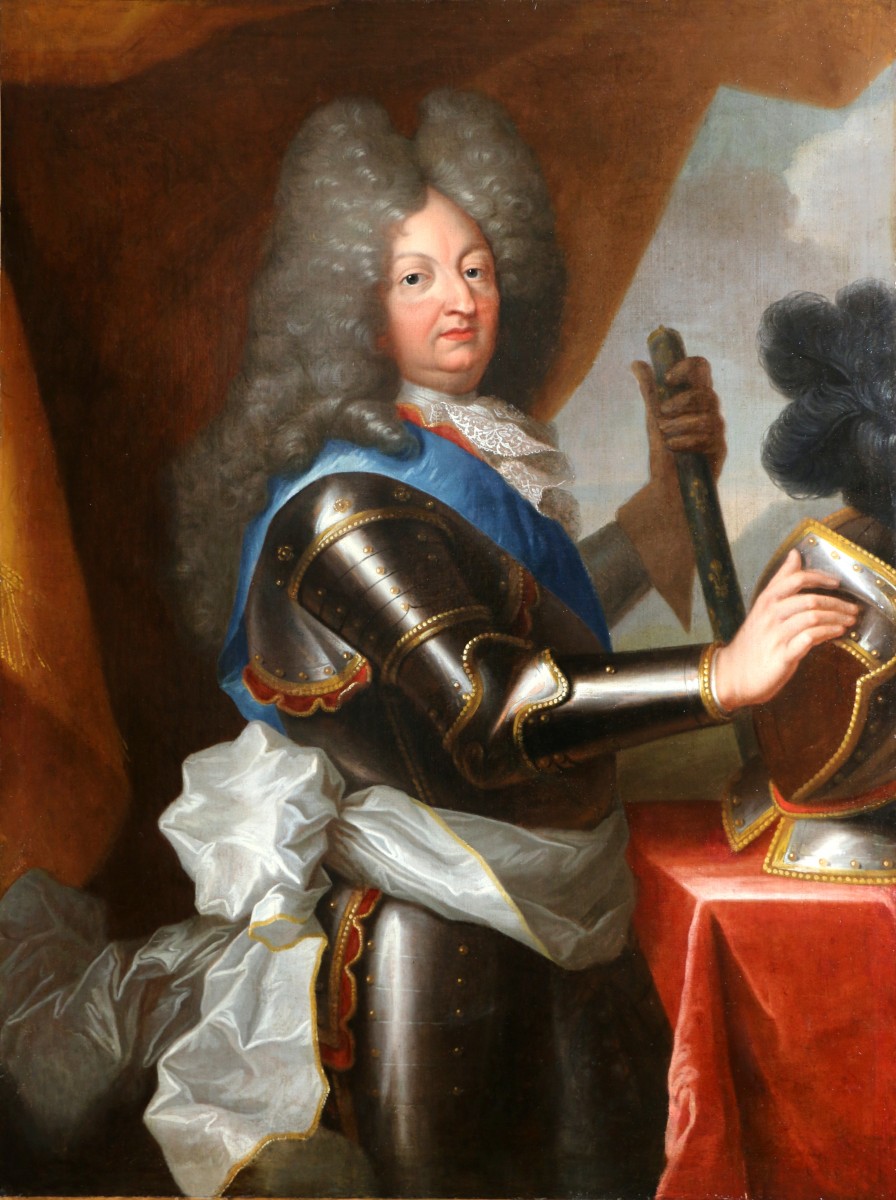
This superb painting, magnificently framed, is a workshop version. Please note that the frame obscures 6 cm of the artwork at the top and 6 cm at the bottom; the attached photograph without the frame shows the work in its entirety.
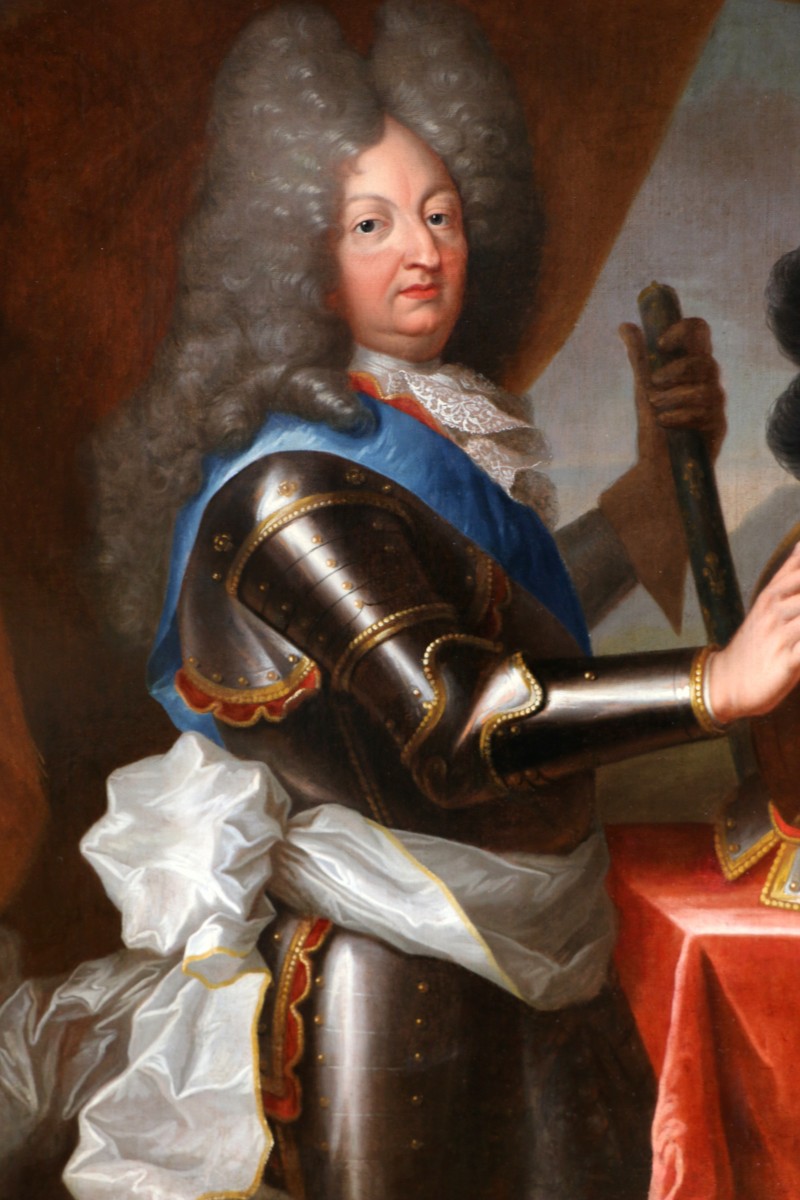
The Grand Dauphin (1661-1711).
Louis of France, known as Monseigneur or the Grand Dauphin, born November 1, 1661, at the Château de Fontainebleau and died April 14, 1711, at the Château de Meudon, was the eldest son of King Louis XIV of France and Queen Marie-Thérèse of Austria. He was, by right, Dauphin of France, as the firstborn son of the king. Dying before his father, he never ascended the throne, but he was the father of King Philip V of Spain and the grandfather of the future King Louis XV of France. He was a great collector and an enlightened aesthete, amassing remarkable works of art for his residences, notably the Château de Meudon, where he also gathered a refined and cultured court. The Grand Dauphin often retreated there rather than remaining at Versailles; he reportedly felt freer there. It must be said that affairs of state did not seem to truly interest him, although he enjoyed military service. It was in this field that he distinguished himself through a feat of arms: the capture of the citadel of Philippsburg in 1688, during the War of the League of Augsburg. His glory was then immortalized by the painter Pierre Mignard, author of a now-famous painting. His illustrious father, initially pleased to see his heir finally taking an interest in affairs of state, nevertheless resented this sudden renown, it is said. He did not hesitate to make his voice heard when necessary, notably during the revocation of the Edict of Nantes, which he opposed (Louis XIV would have been better off following his son's lead on this matter), and when it came time to designate an heir to the Spanish crown: it was his younger son, the Duke of Anjou, who was chosen. On the family front, he married Marie-Anne of Bavaria in 1680. Three children were born of this union:
— Louis of France (1682-1712), Duke of Burgundy;
— Philip V (1683-1746), Duke of Anjou;
— Charles of France (1686-1714), Duke of Berry.
Marie-Anne of Bavaria died very young, at the age of twenty-nine, in 1690. The Grand Dauphin thus became a widower at twenty-eight; in 1695, he secretly married Émilie de Joly de Choin, former lady-in-waiting to Mademoiselle de Blois, who, incidentally, had dismissed him. The Grand Dauphin died on April 14, 1711, at his château in Meudon, four years before his father, Louis XIV.
Hyacinthe Rigaud (1659-1743)
Hyacinthe Rigaud, born in Perpignan on July 18, 1659, and died in Paris on December 29, 1743, was a French painter specializing in portraiture. Born in the former province of Catalonia (his real name in Catalan was Jacint Rigau-Ros i Serra), he spent the majority of his career in Paris. Noticed by Louis XIV, whom he painted in a now-famous portrait, Hyacinthe Rigaud became highly sought after by the nobility of France and Europe, while maintaining a very loyal regional and local clientele. The young Hyacinthe Rigaud honed his skills under Antoine Ranc (along with Jean Ranc, Antoine's son) in Montpellier around 1671, before moving to Lyon four years later. It was in these two cities that he became familiar with Flemish, Dutch, and Italian painting, the works of Rubens, Van Dyck, Rembrandt, and Titian, whose paintings he later collected. Arriving in Paris in 1681, he won the Prix de Rome in 1682, but did not make the trip to Rome, on the advice of Charles Le Brun. Admitted to the Royal Academy of Painting and Sculpture in 1700, he rose through the ranks of this institution until his resignation in 1735. According to the French art writer Louis Hourticq, "Rigaud, upon his death, left behind a gallery of great figures with which our imagination now populates the Hall of Mirrors; Rigaud is essential to the glory of Louis XIV and he contributed to the radiance of a reign whose majesty he captured." These are veritable "photographs," faces that Diderot described as "letters of recommendation written in a language common to all men." Rigaud's canvases now grace the greatest museums in the world. His oeuvre is considerable, with more than 1,500 known to date. The artist benefited from a workshop rich in renowned painters, including Jean Ranc, Marc Nattier, Jean le Gros, Robert de Tournière, and many others (more than thirty throughout his career).
Delevery information :
All our paintings benefit from careful and secure packaging. No geographic restrictions.