Offered by Galerie PhC

European paintings from the 17th, 18th and 19th centuries.
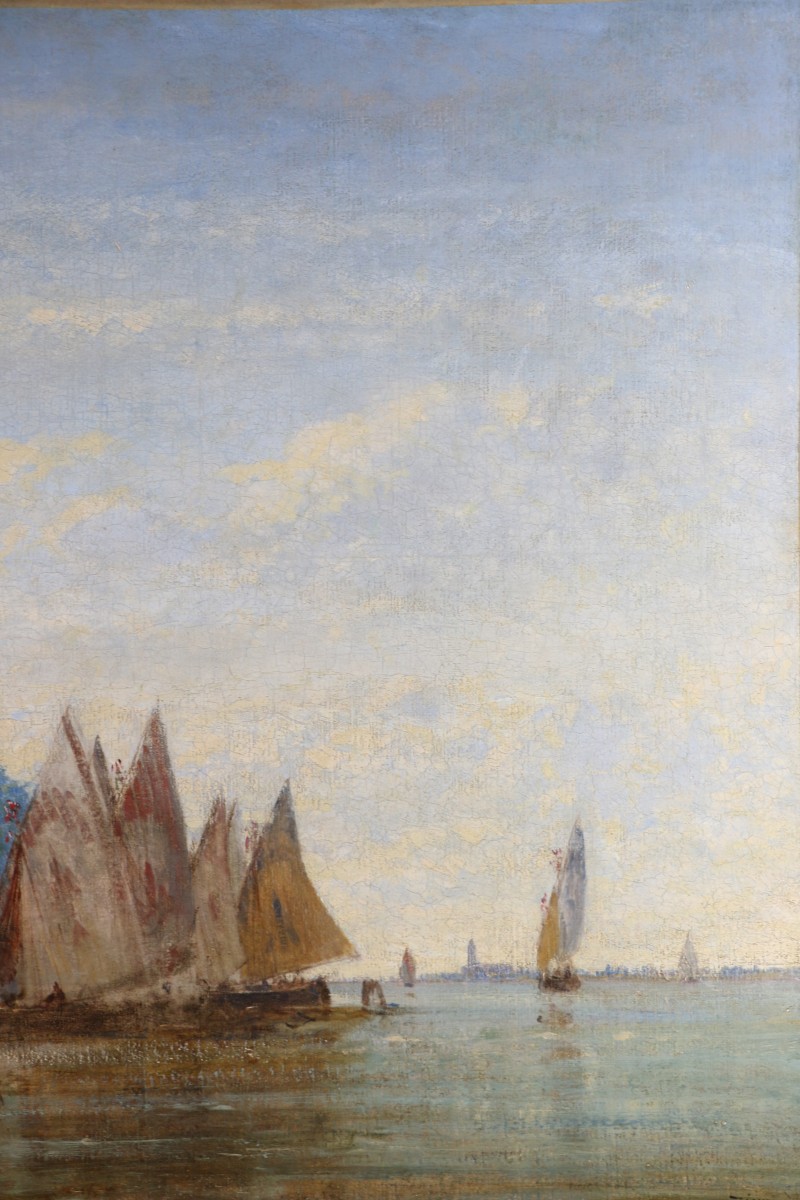
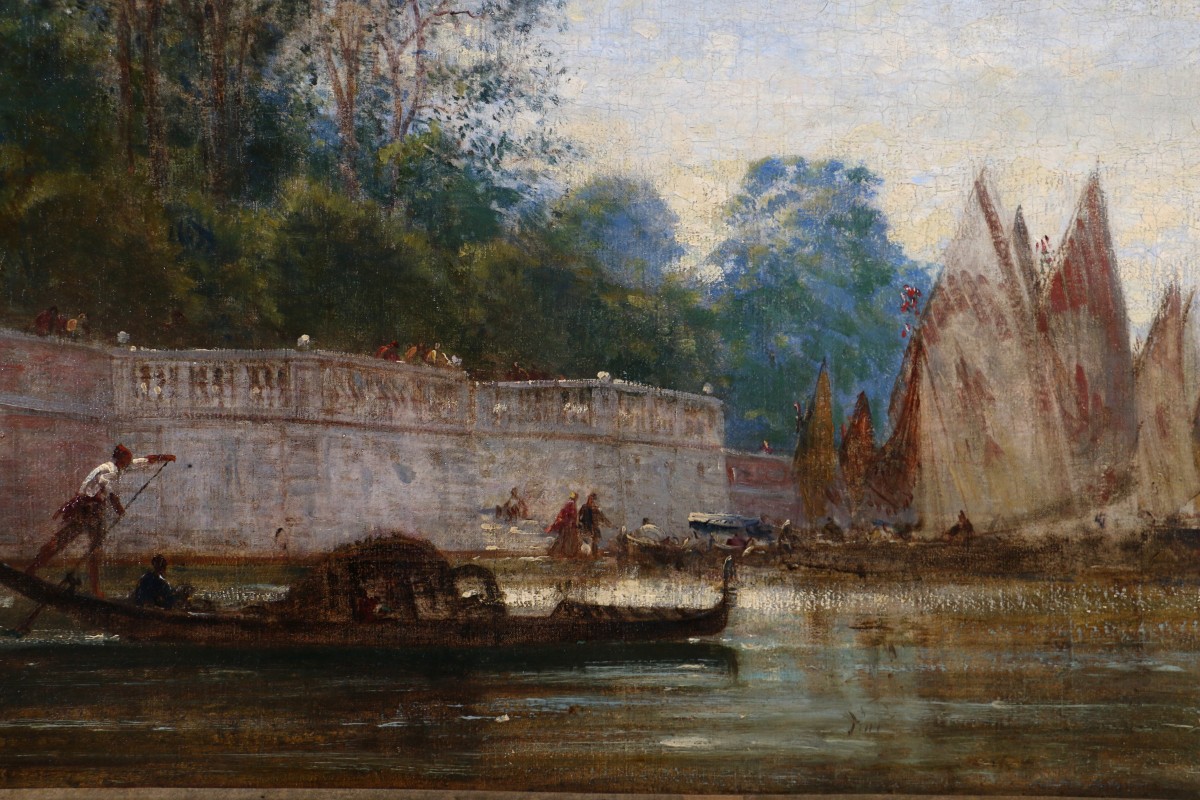
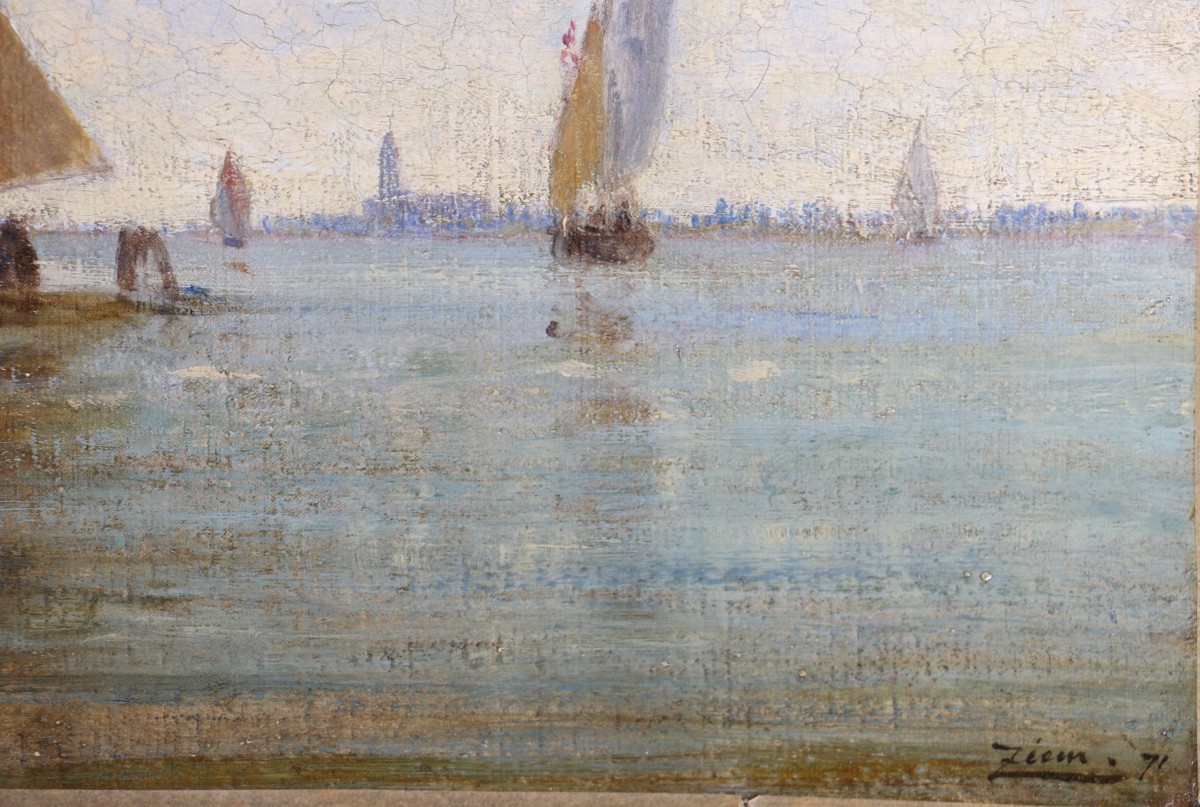
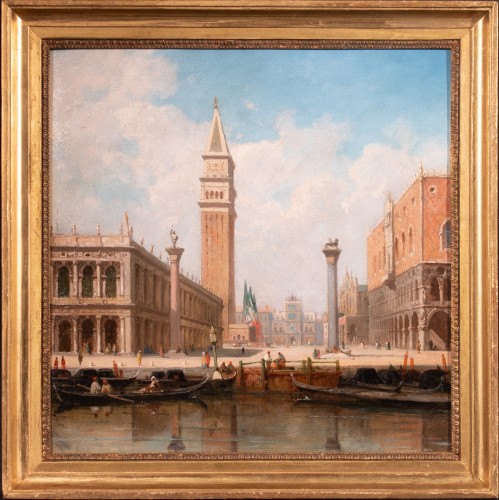
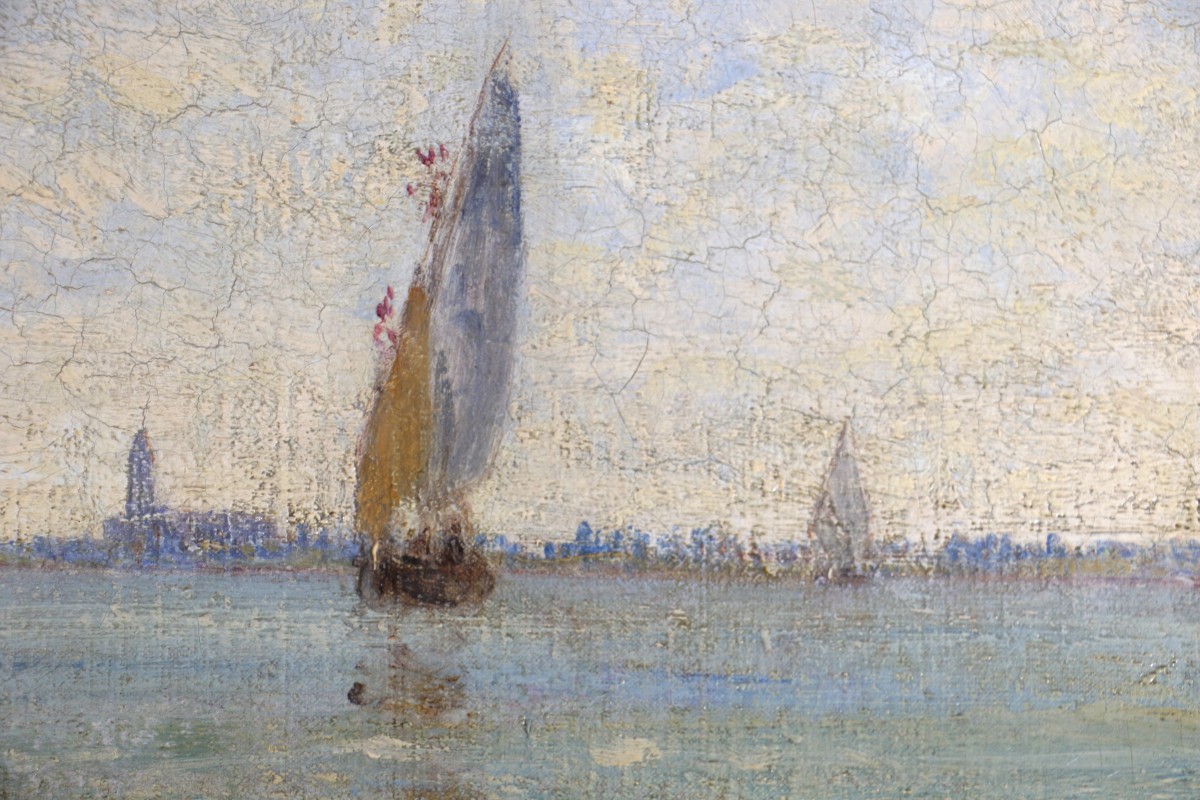
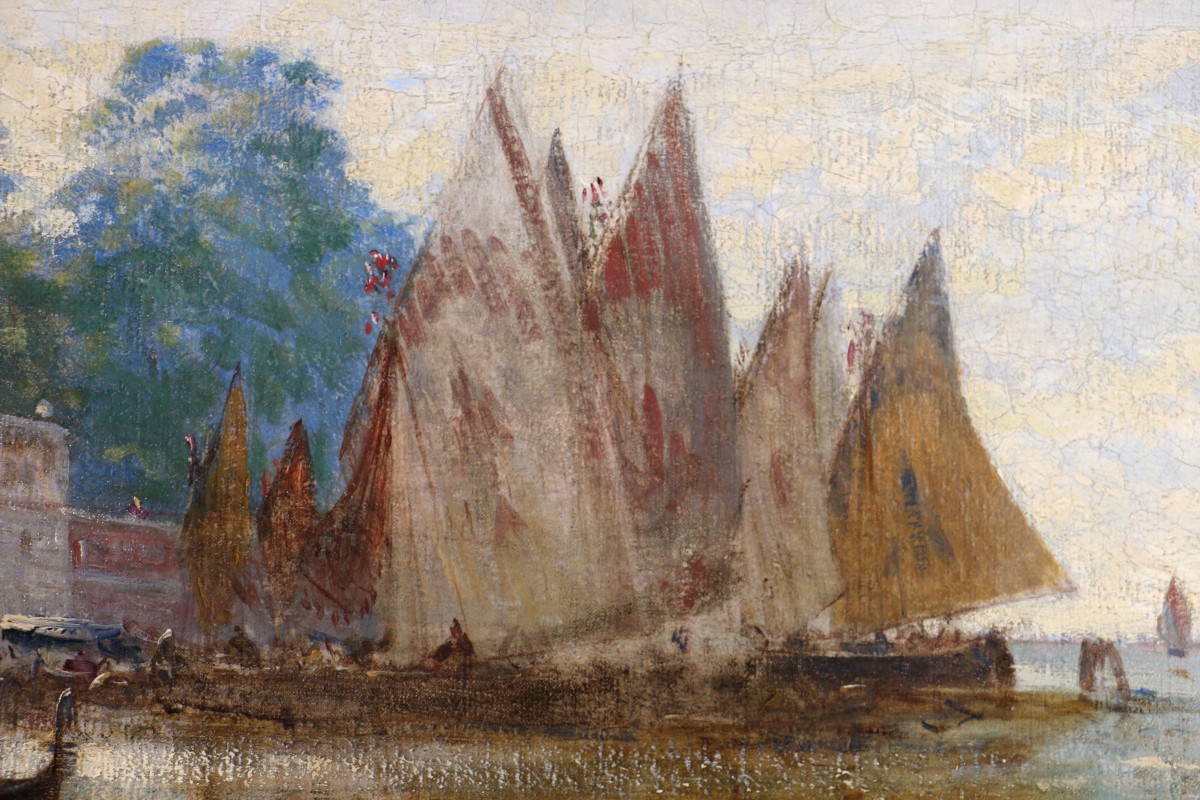
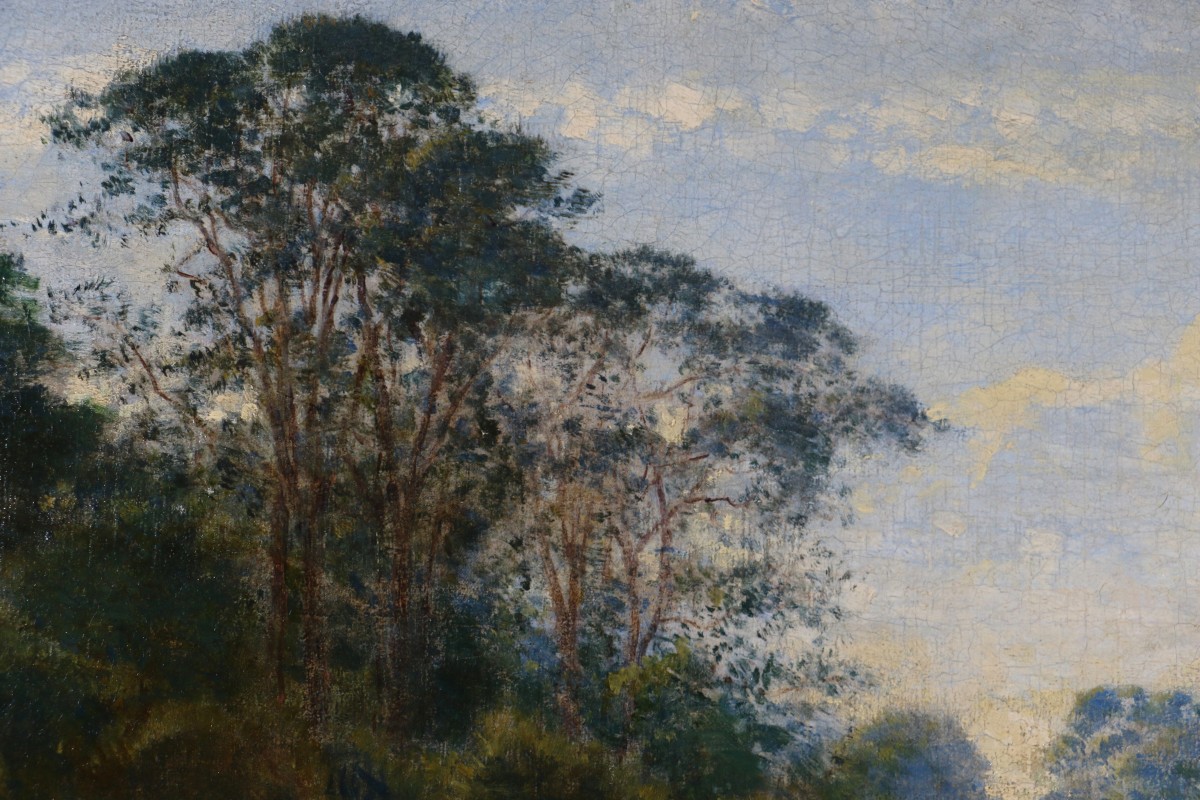
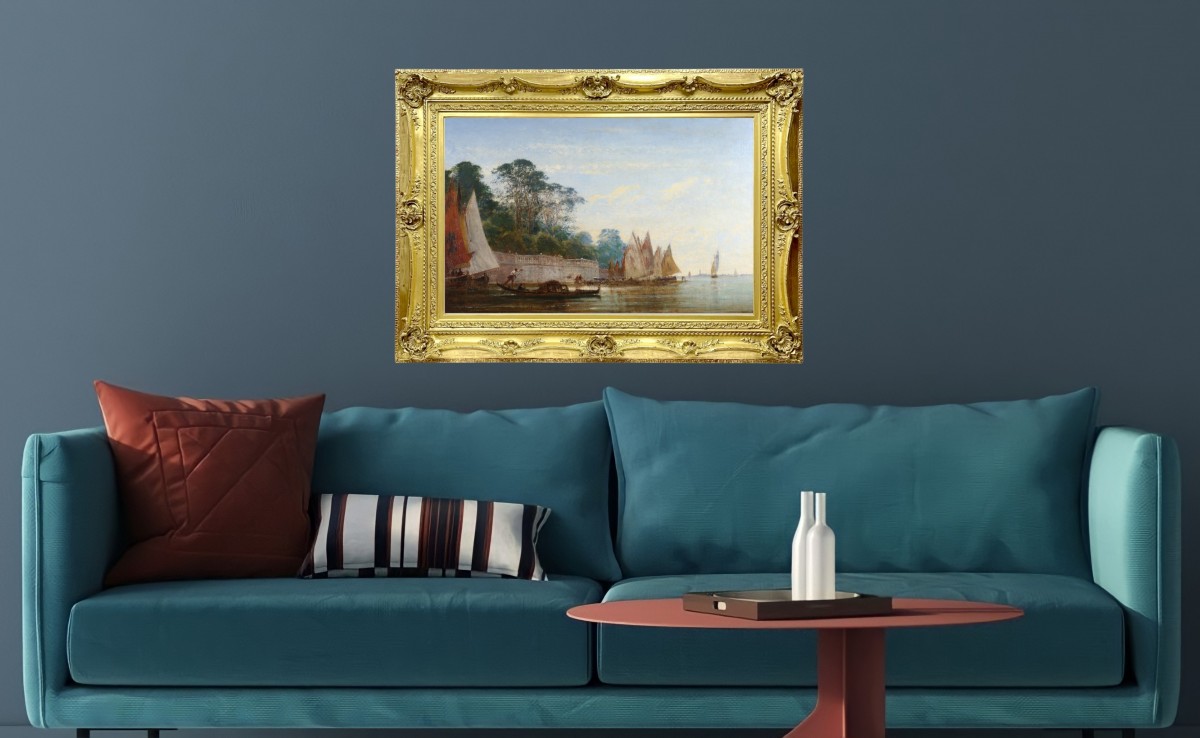
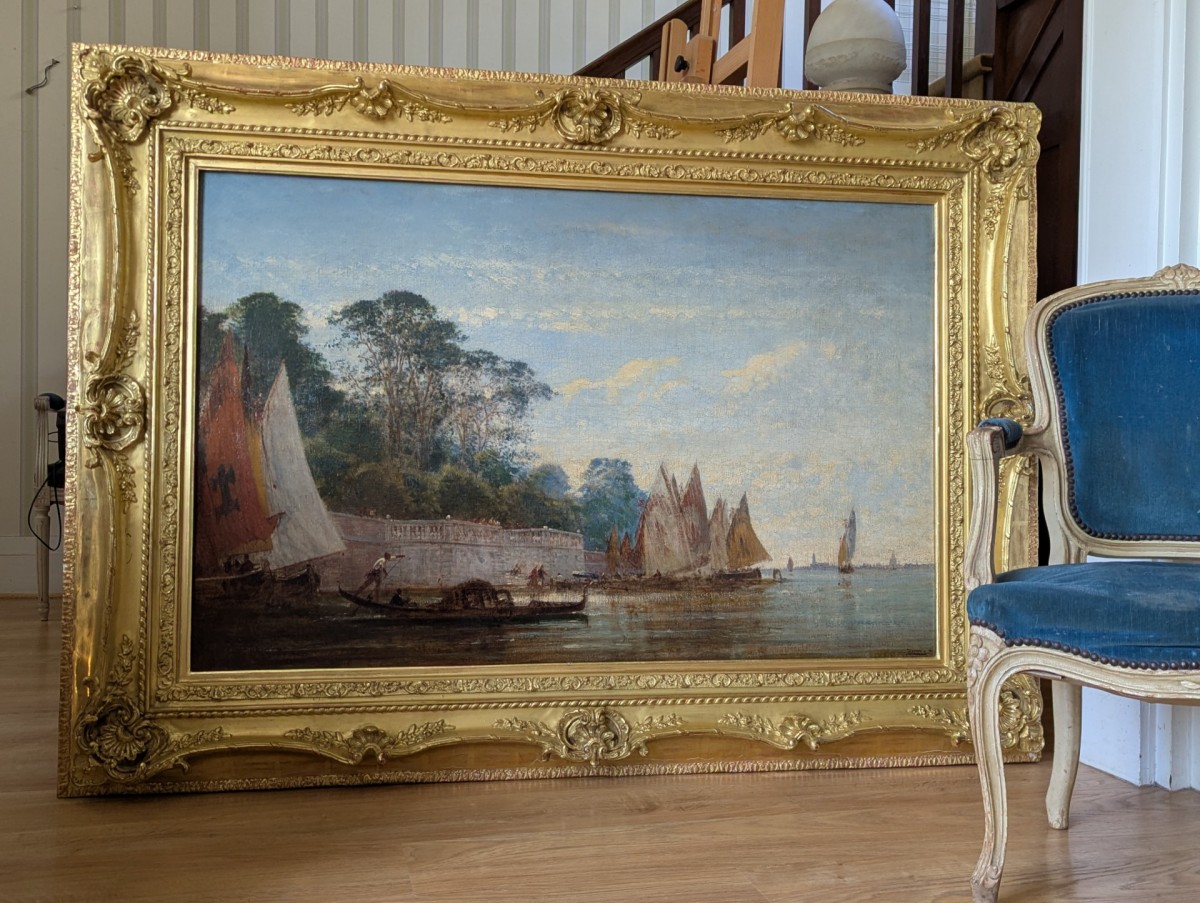
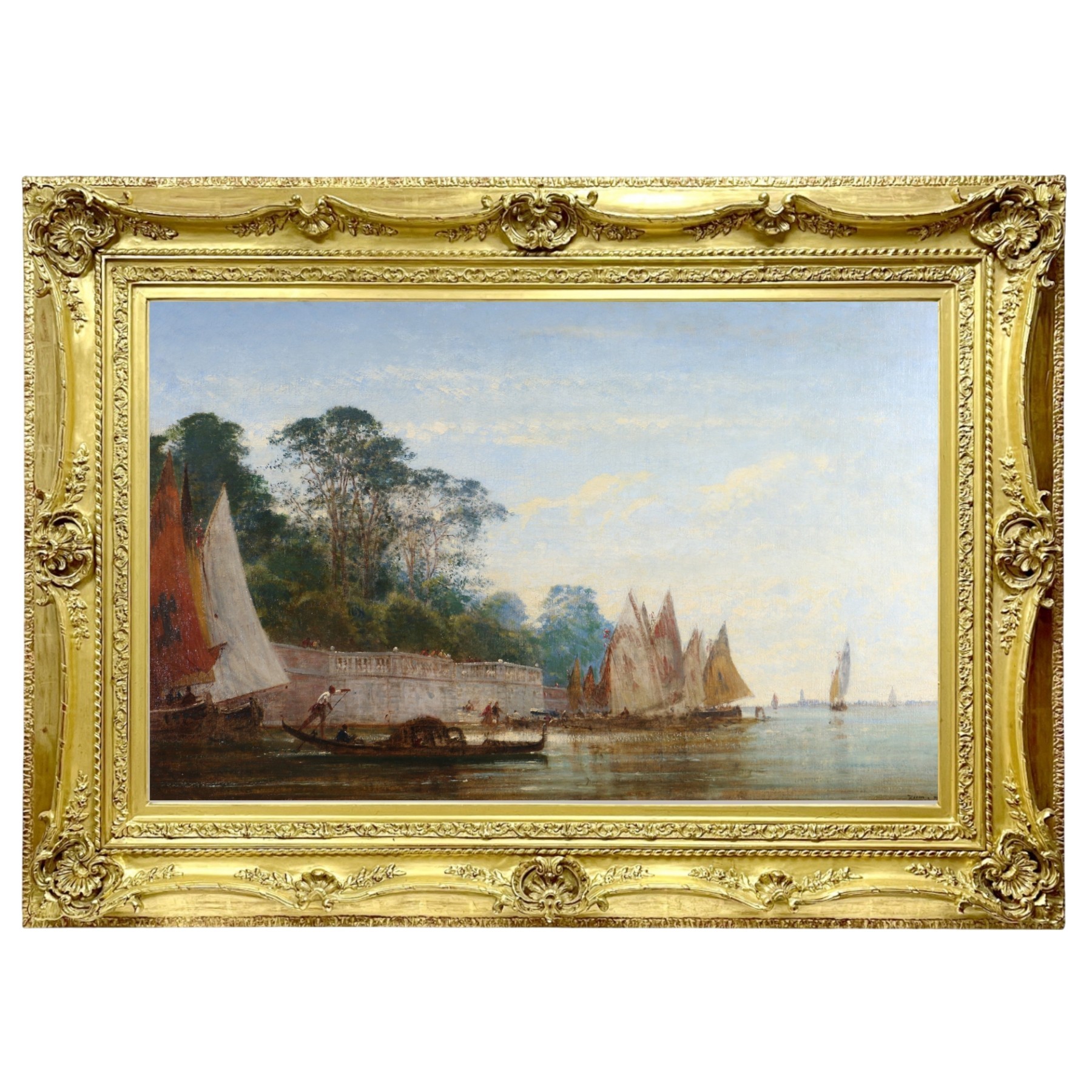
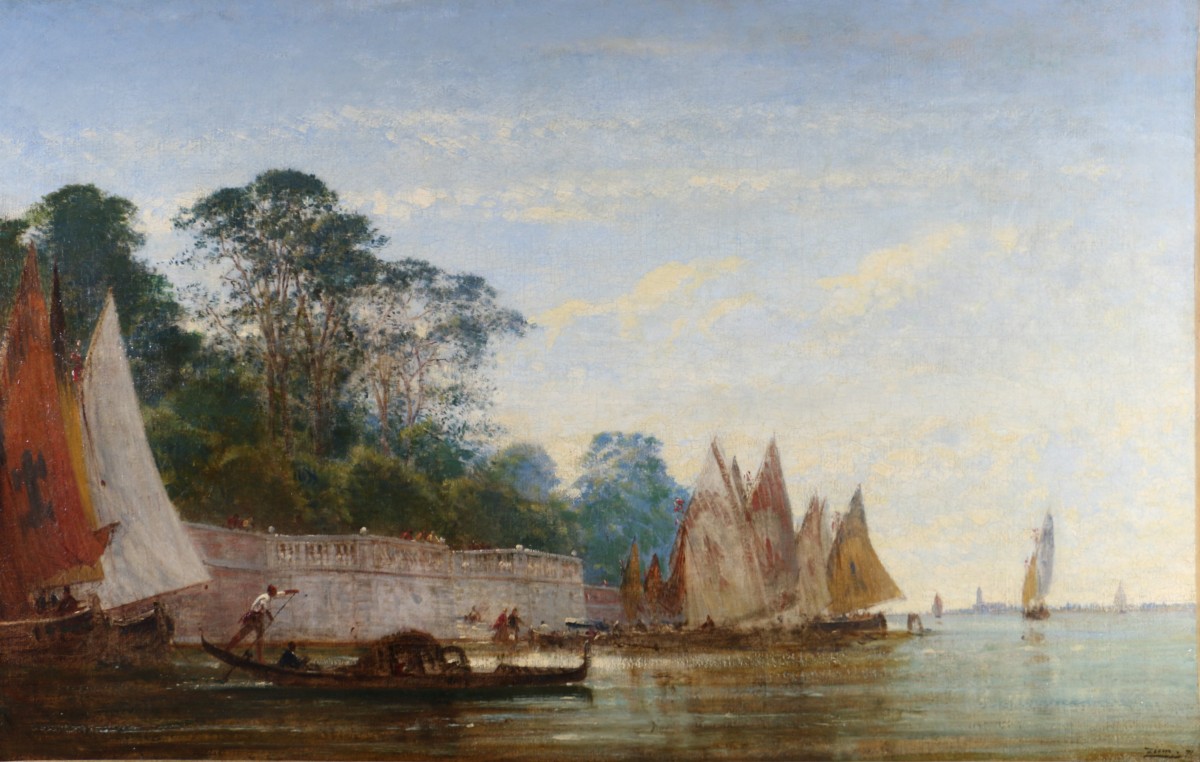
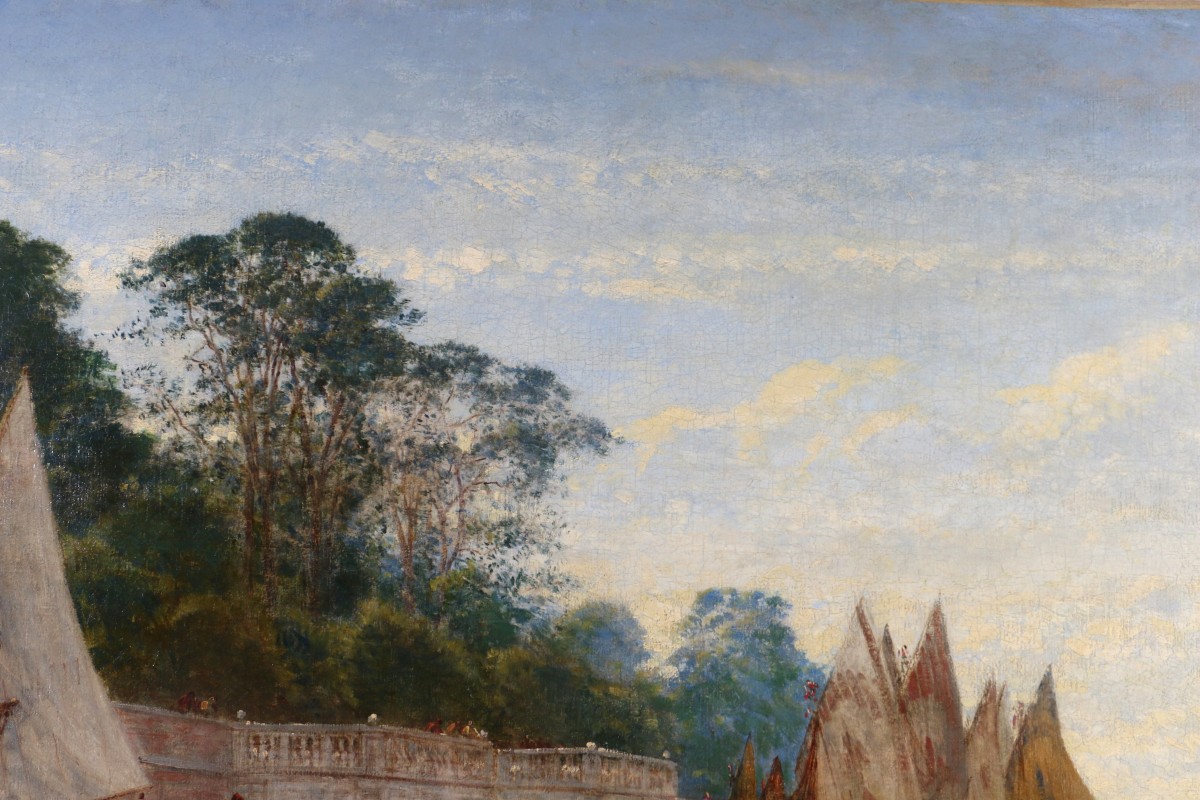
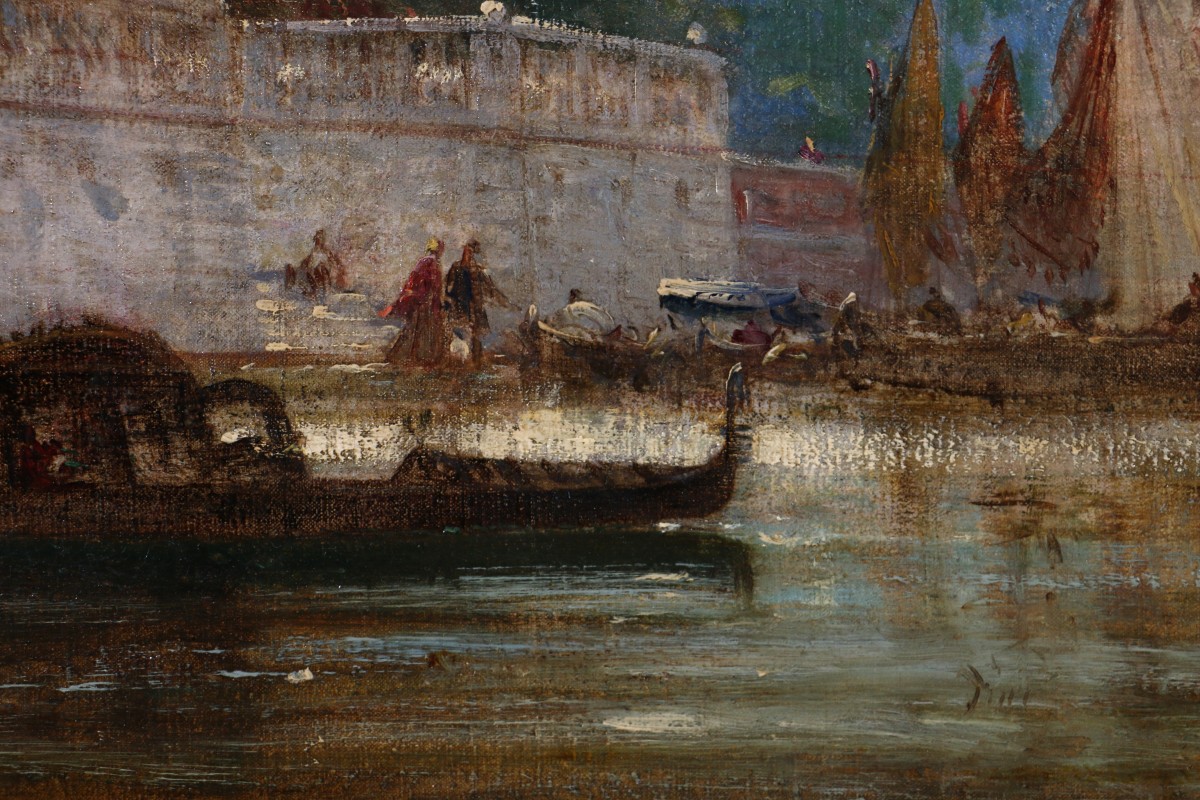
Félix Ziem (1821-1911), signed and dated 1871. Venice, the French Gardens.
Relined canvas, 127 cm x 82 cm.
Frame, 162 cm x 116 cm.
Our work has been certified by the Félix Ziem Association, represented by Mr. Mathias Ary Jan and Mr. David Pluskwa. Certificate number 293/0324 will be given to the buyer. Furthermore, our painting will be included in the artist's forthcoming catalogue raisonné.
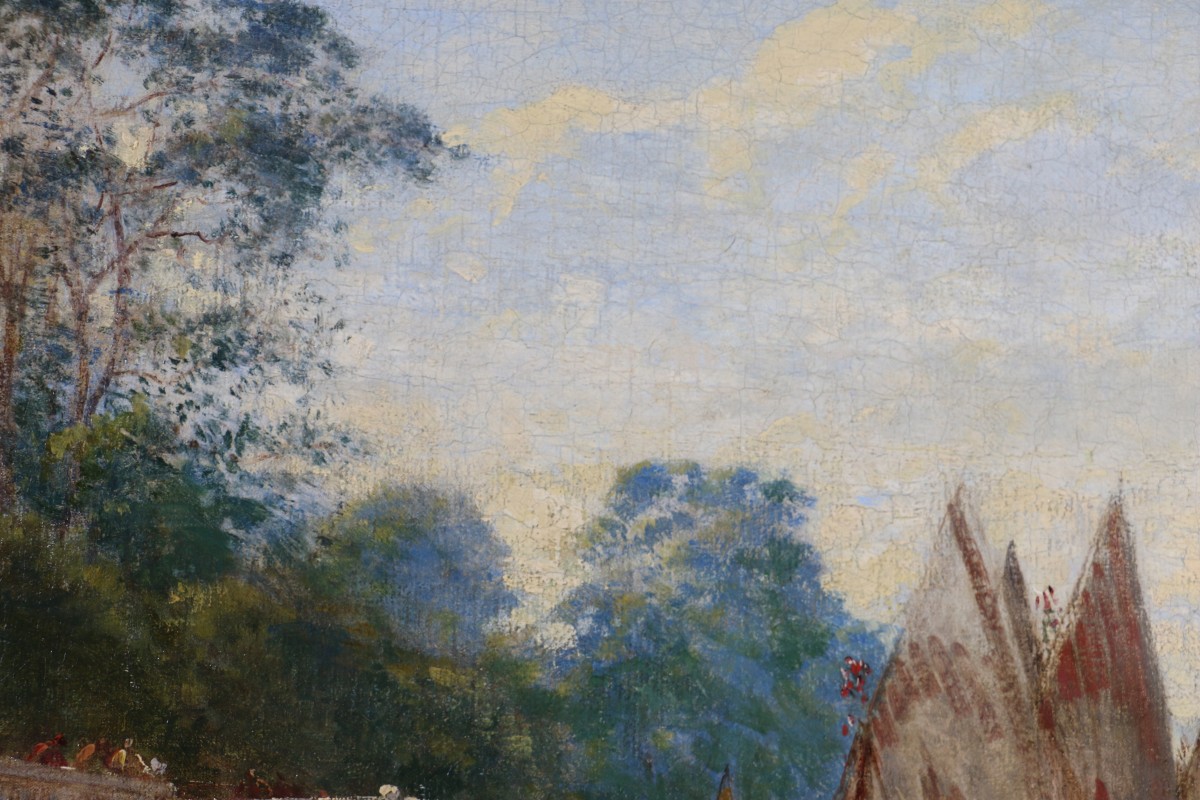
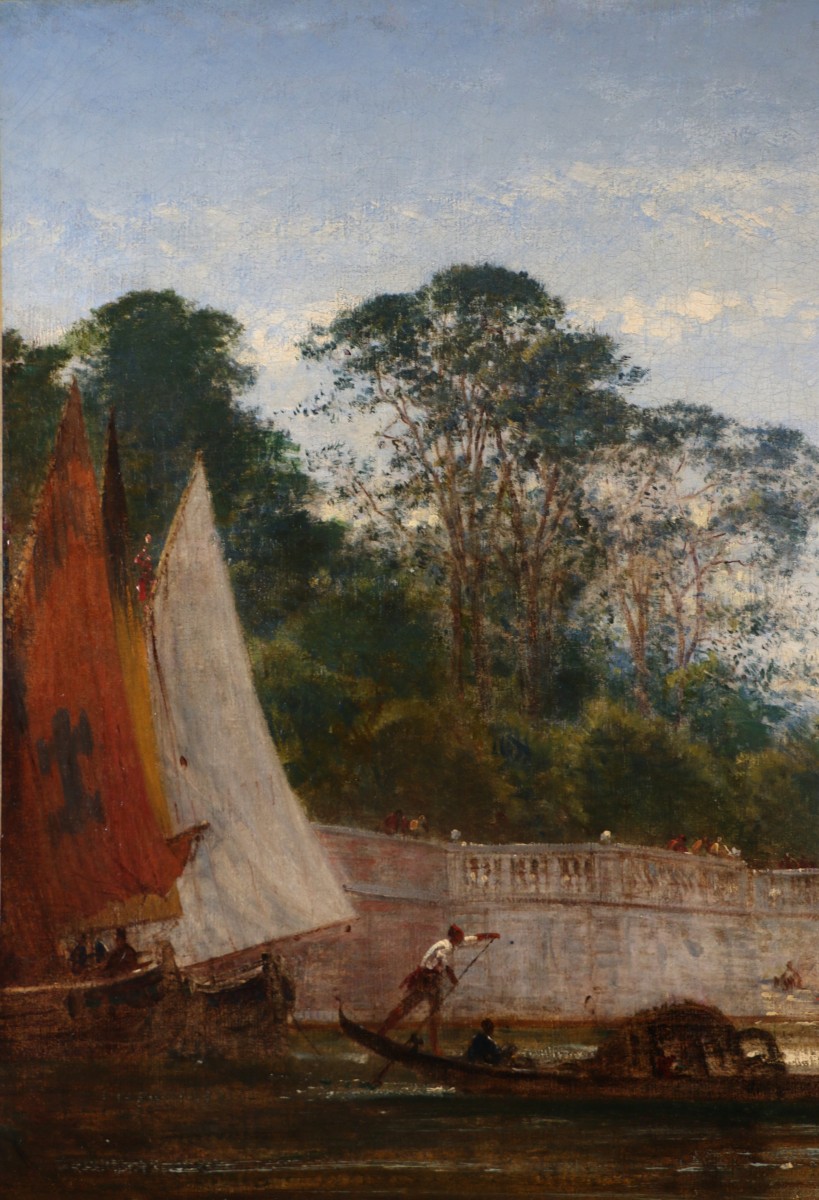
This exceptional painting by Félix Ziem offers a lively view of the main entrance to the French Gardens in Venice (commissioned and created by Napoleon I). Dated 1871, it was painted by an artist at the height of his powers, before the turn of the 1880s. The overall impression does not yet overshadow the attention to detail; quite the contrary. The color palette is, of course, very rich, but it remains somewhat restrained, even though one can discern a hint of the more autonomous, even uninhibited, colors of later decades, particularly in the central section of the trees. While they are in the background and, as such, should be discreet, the artist chooses to use a light blue with highlights of green. This central area of ??the composition then becomes central to the viewer's gaze, drawn by this color. Water and sky occupy a prominent place in Ziem's ??work; he pays particular attention to the light in his skies and the reflections in the water, and our painting is a magnificent example of this.
Félix Ziem, his painting:
His early works are executed with a light impasto reminiscent of his first profession as a watercolorist. He is close to the plein air painters of the time, such as Corot and the Barbizon painters. Around 1855, Ziem's ??art takes a new direction. This is where his period of flourishing began. The artist specialized in views of Venice and Turkey. With extraordinary technical virtuosity, his brushstrokes were fine and delicate, relatively smooth. Fond of enriching his paintings with impasto, he created masterpieces of poetry, lyricism, and balance, transposing onto canvas an almost fantastical vision of Venice and the Orient in general. This explains his considerable success. From the 1980s onward, his painting evolved; his brushstrokes became freer and more fluid, and the colors intensified. The overall impression took precedence over attention to detail, to the point of the subject almost disappearing. Like other painters, such as Boudin and Jongkind, to name just a few, he participated in the avant-garde movements of the early 20th century. Throughout his life, he paid particular attention to atmospheric variations and, therefore, to the representation of light on all things.
Félix Ziem, his life:
Ziem studied drawing and architecture at the École des Beaux-Arts in Dijon in 1837-1838 and won first prize in the 1838 competition in the architecture-composition category. He left the region to join his brother, who had settled in Marseille. He was hired as a foreman. The Duke of Orléans, who was visiting Marseille, discovered his work and commissioned three watercolors from him in 1840. From then on, Ziem devoted himself to his career as a painter and draftsman. He opened a drawing school on the Old Port, which at times welcomed more than twenty students. In 1840, he discovered Martigues, where he would return to set up a studio in 1860. In 1841, he left Marseille for Italy. He stopped for a time in Nice, where wealthy English and Russians resided, forming part of his clientele. In 1842, he discovered Italy, and especially Venice, which became the principal source of inspiration for his painting. There he met the Duchess of Baden and Prince Gagarin. Presumably at the latter's urging, he traveled to Russia in 1843. He became watercolor teacher to the Grand Duchesses in Saint Petersburg. There he met Horace Vernet. He then traveled throughout Italy (Genoa, Milan, Florence, where he stayed for eight months), and the South of France. In 1847, he made his first trip to Constantinople from Venice. In 1848, he was in Rome. In 1849, his father died. He exhibited views of the Bosphorus, Rome, and Venice for the first time at the Paris Salon. He became a regular exhibitor there. He then settled in Paris, on the Quai Malaquais, and divided his time between the capital and the Fontainebleau forest, where he became friends with Théodore Rousseau and Jean-François Millet. He painted scenes of daily life, portraits, and rural landscapes, which temporarily linked him to the Barbizon school, where he painted from 1853. He bought a house at number 56 Grande Rue, which he occupied from 1907 to 1911. 1856 was the year of his great journey to the Orient: Constantinople, Turkey, Lebanon, Greece, and Egypt, where he traveled down the Nile to Khartoum. He frequently used the recomposition of subjects in his Montmartre studio, as evidenced by his numerous sketchbooks. He ended his journey in Sicily.
Delevery information :
All our paintings benefit from careful and secure packaging. No geographic restrictions.