Offered by Galerie PhC
REQUEST INFORMATION

European paintings from the 17th, 18th and 19th centuries.
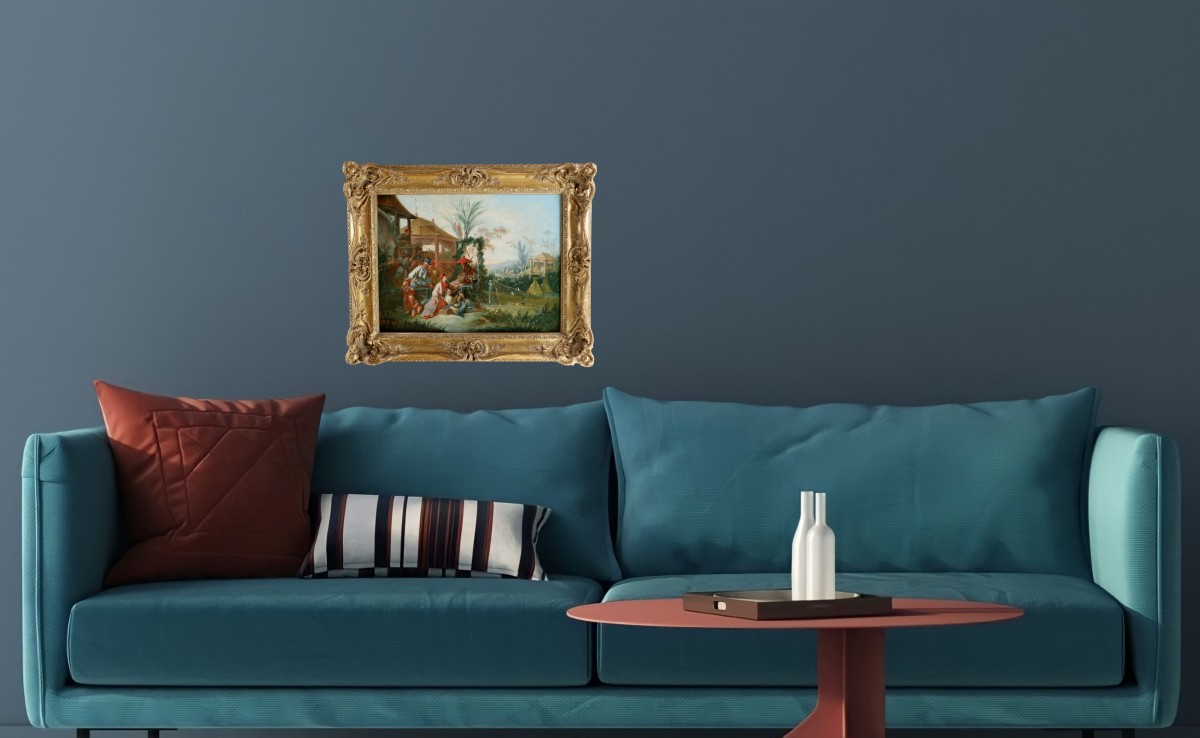
Relined canvas, 59 cm x 46 cm.
Antique frame, 75 cm x 61 cm.
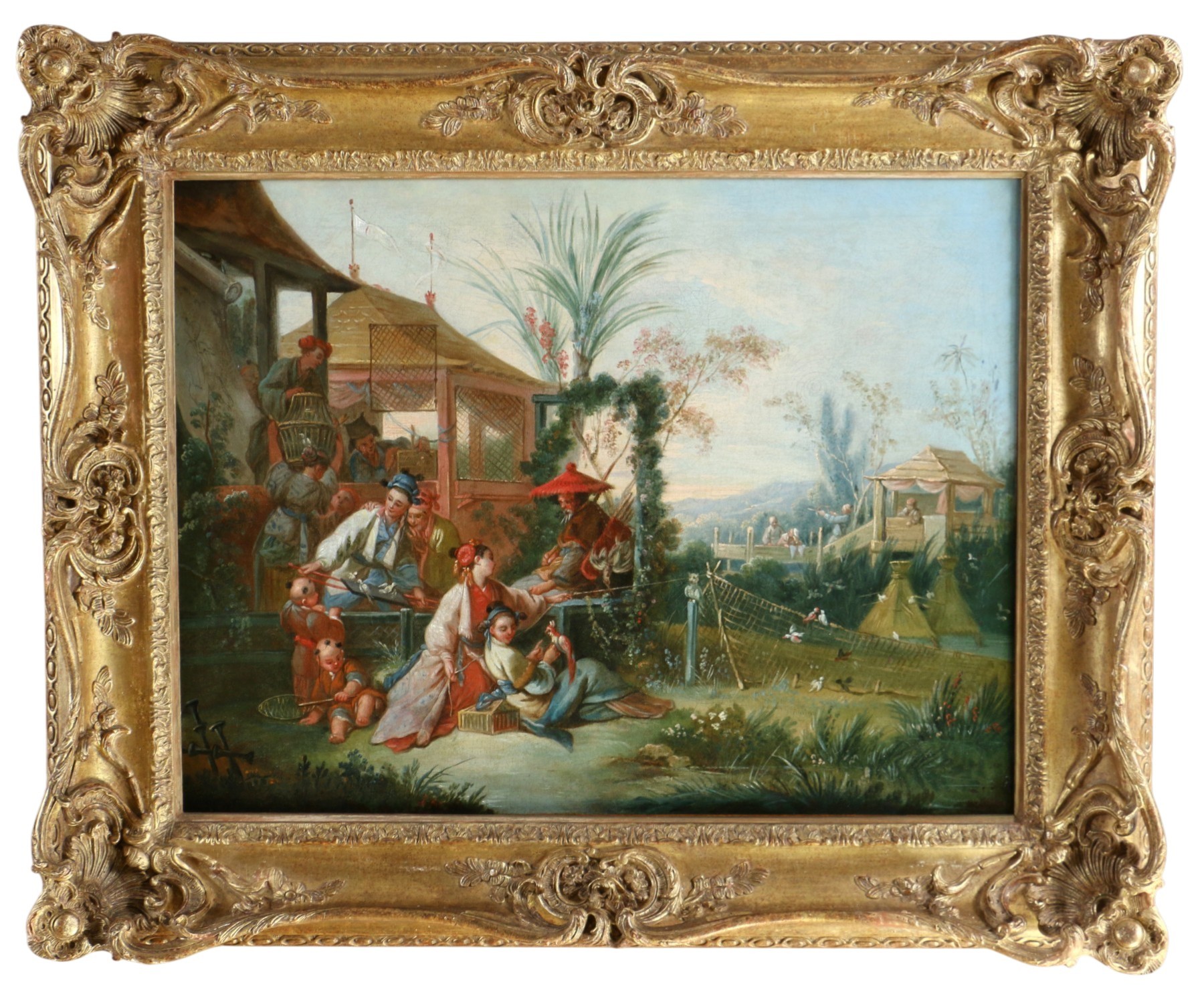
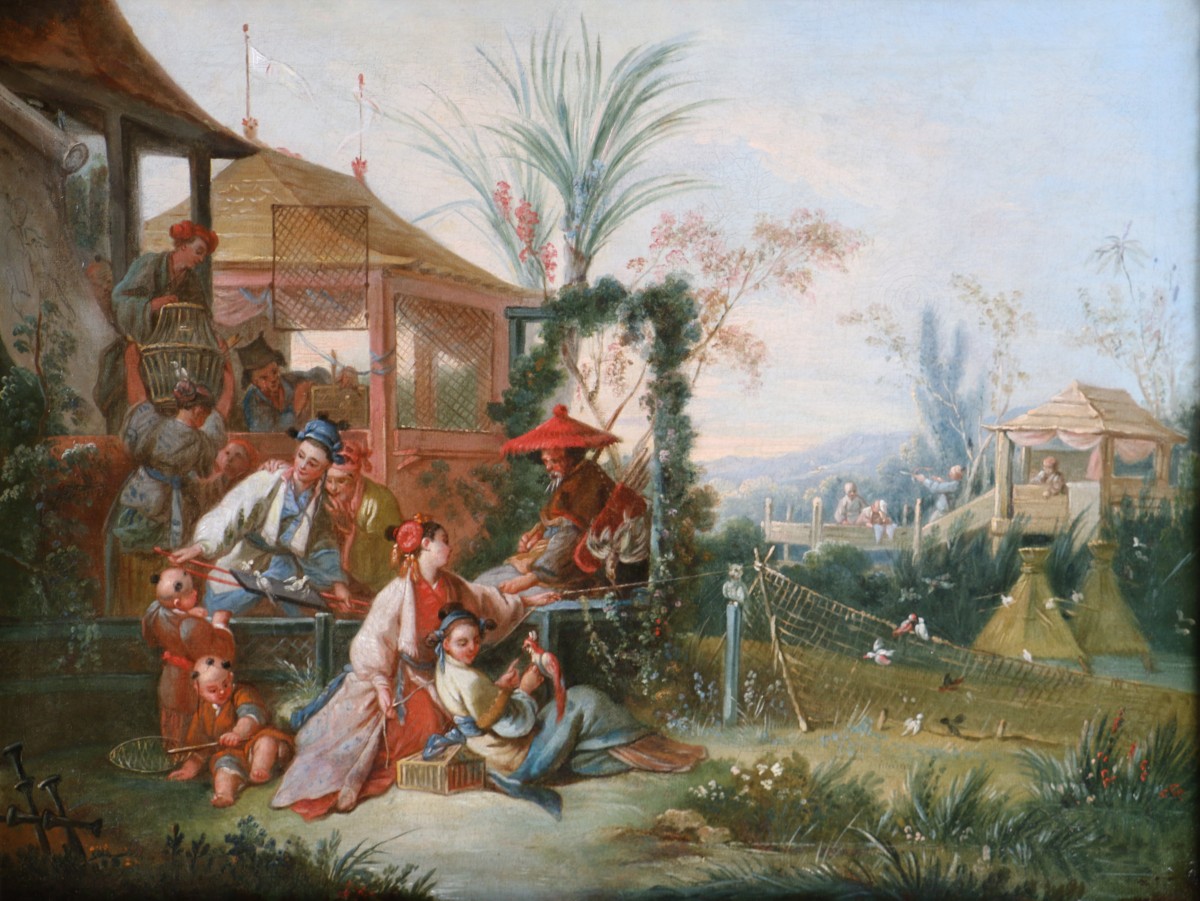
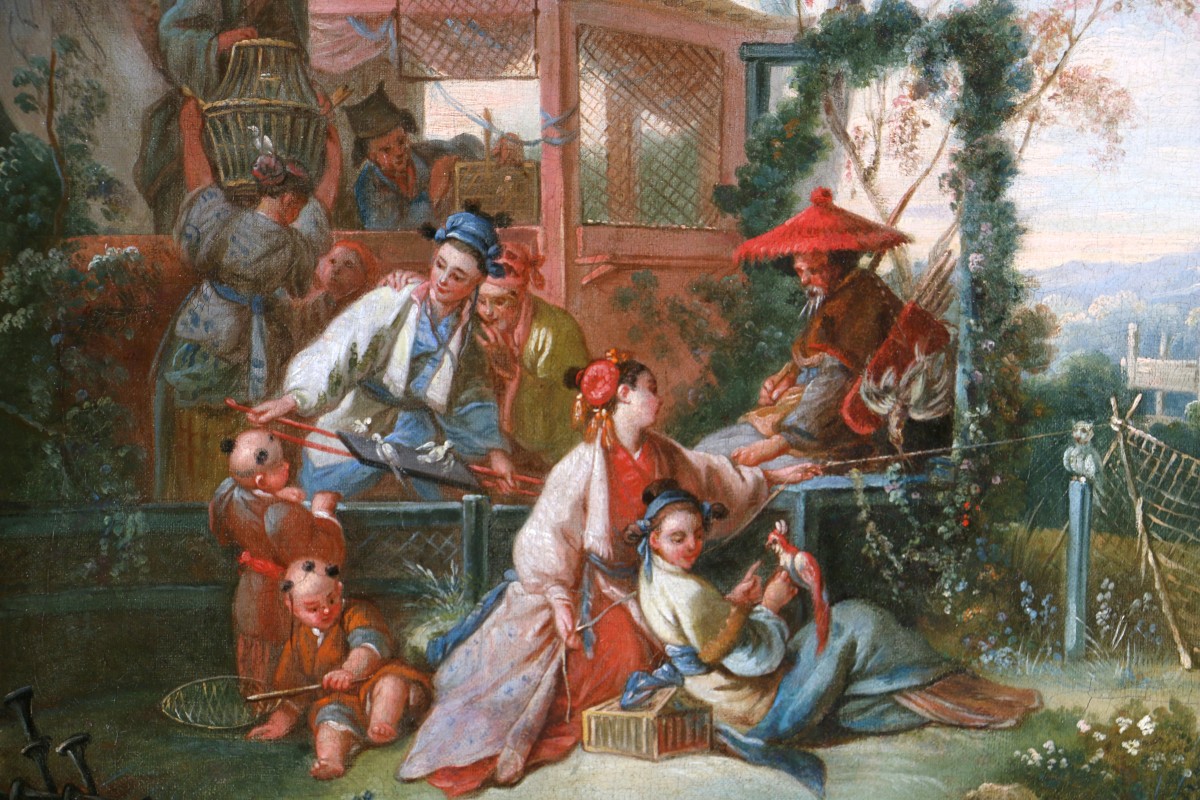
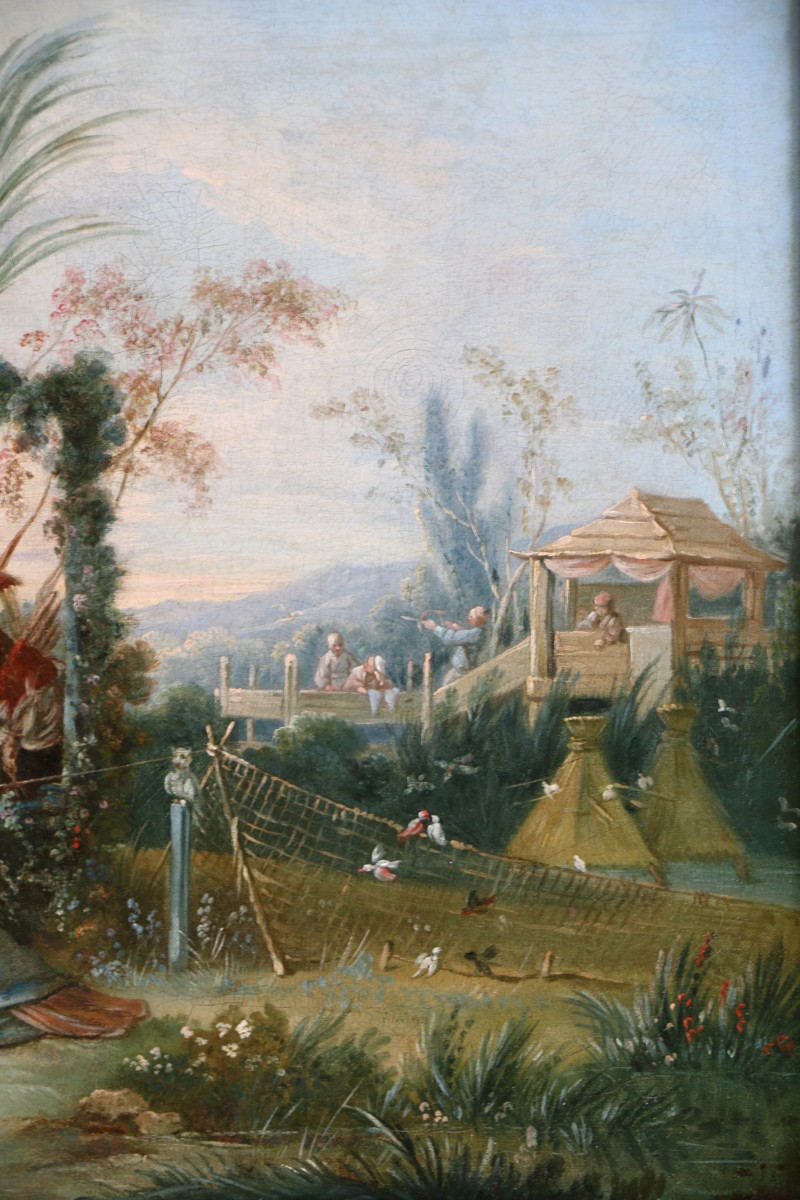
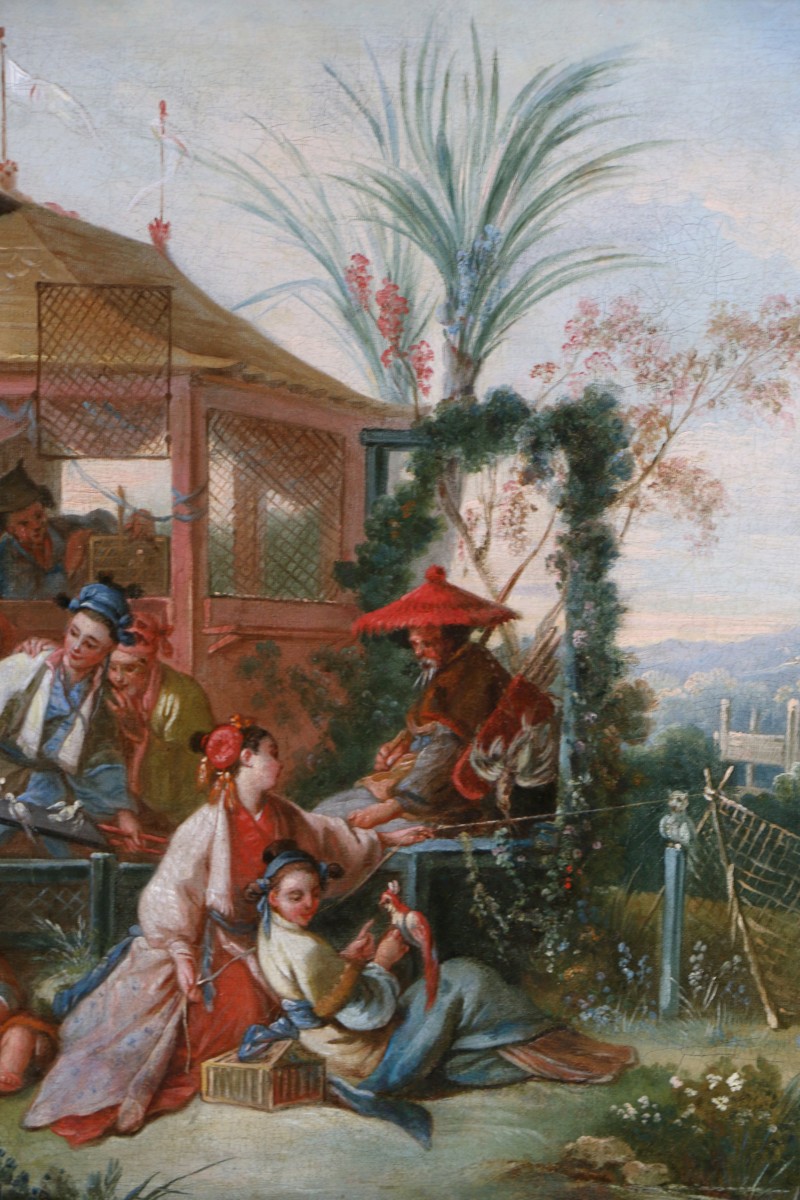
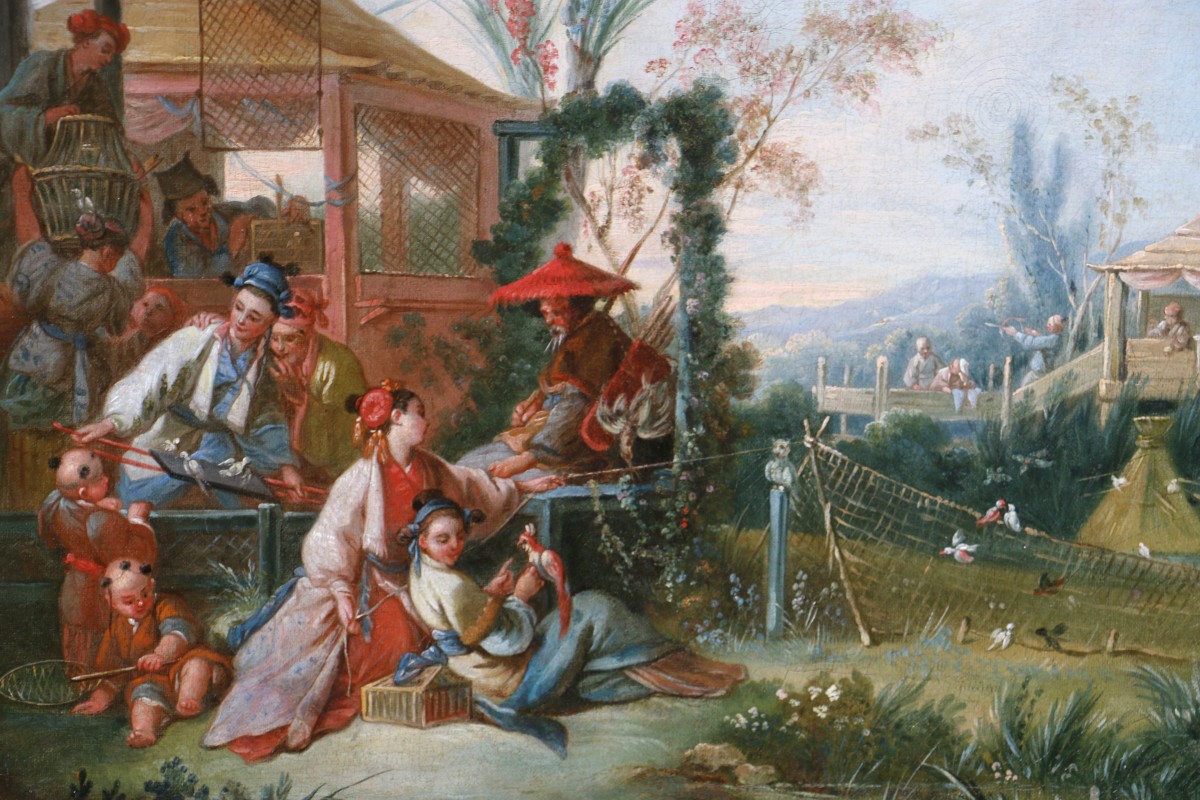
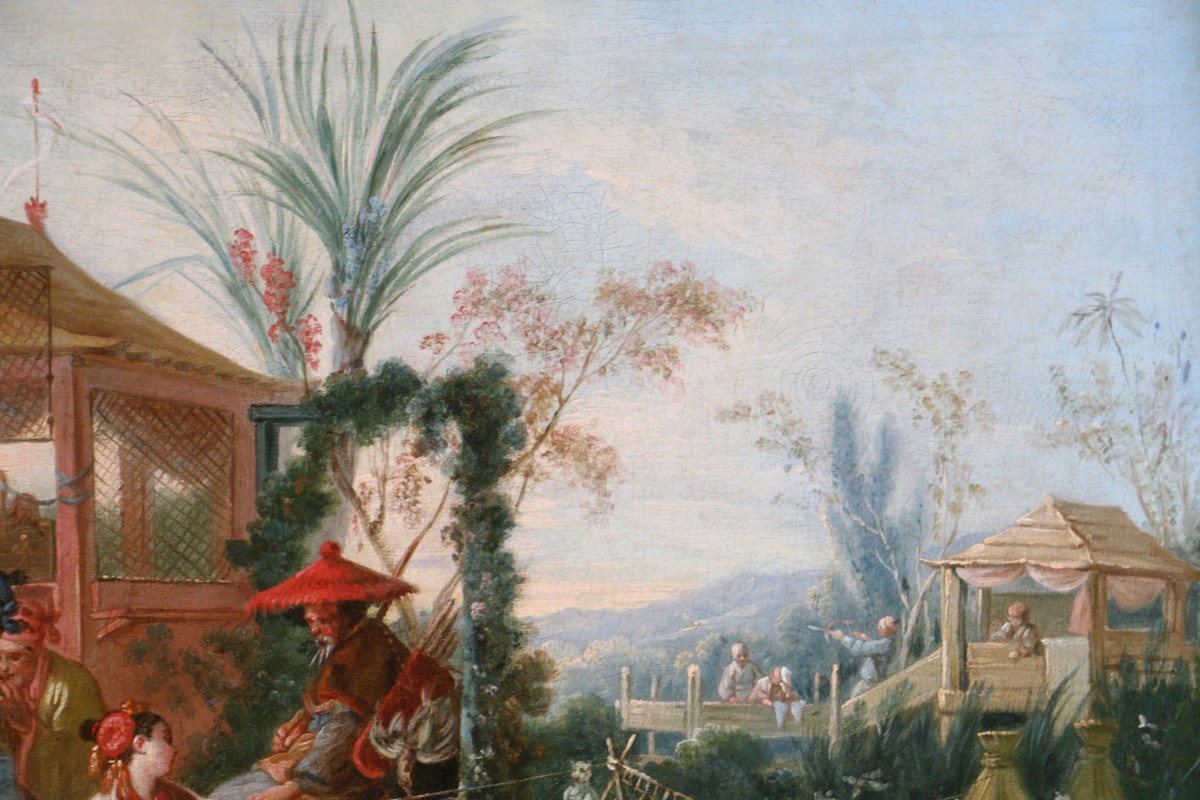
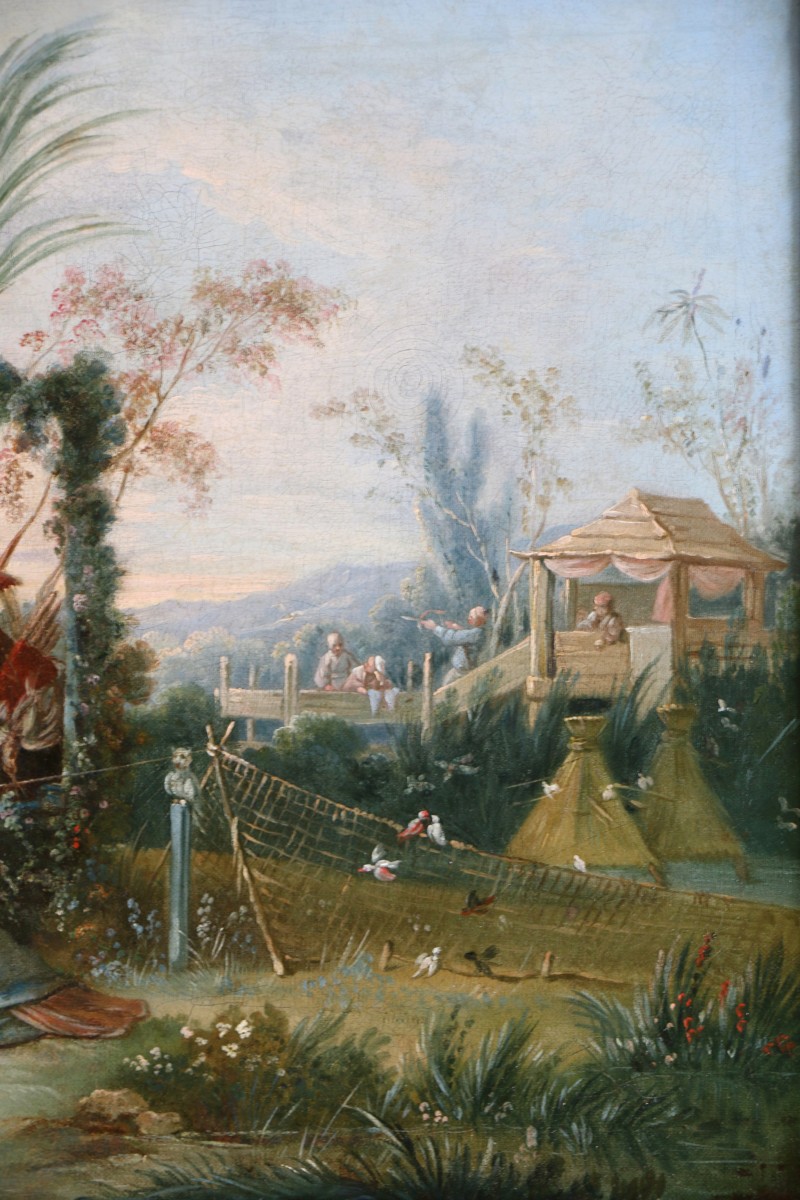
This composition belongs to the series of chinoiserie scenes developed by François Boucher in the early 1740s, notably for the cartoons executed for the Beauvais manufactory. It revisits the theme of the Chinese Hunt, characteristic of the Rococo taste for a fantasized Far East, blending decorative elegance with gallant narrative. It is a workshop replica, with variations, of the painting that can be admired at the Besançon Museum. The scene unfolds in a lively landscape: in the foreground, several figures dressed in idealized Chinese fashion tend to captured birds. A young woman, her complexion delicately rosy, sits examining a bird she holds gracefully, while another female figure, turned towards a male figure wearing a red conical hat, animates the composition with a fluid, theatrical gesture. To the left, children participate in the scene with charming spontaneity, one holding a net, the other observing the birds. The background opens onto an openwork pavilion and a lakeside landscape punctuated by light architecture, stylized exotic vegetation, and birds in flight, creating a balance between setting and atmospheric depth. The palette, dominated by pastel tones, coral pinks, milky blues, and soft greens, as well as the elongated grace of the female figures, directly recalls the stylistic vocabulary of François Boucher in the 1740s. The treatment of the flesh tones, modeled with fine overlays and rosy highlights, and the decorative fluidity of the drapery, testify to an execution originating from his immediate circle. The precise and meticulous brushwork displays a methodical construction of forms and transitions slightly more pronounced than in the master's most accomplished autograph works, suggesting the involvement of an active collaborator within the workshop, possibly Jean-Baptiste Le Prince. The assertive decorative character of the vegetation and the fidelity to the original composition argue in favor of a version executed under the master's direction, probably intended for a private patron. Due to its pictorial qualities and its stylistic proximity to Boucher's innovations, this work can reasonably be attributed to the workshop of François Boucher around the mid-18th century.
The Workshop of François Boucher:
In the mid-18th century, the workshop of François Boucher was one of the most active and influential centers of artistic production in Paris. A favorite painter of the court and a major figure of the Rococo style, Boucher developed a particularly structured workshop system, capable of meeting the considerable demand emanating from the aristocracy, private collectors, and royal manufactories. A prolific and diverse output: Boucher's work was not limited to easel painting. He also provided cartoons for tapestries (notably for Beauvais), designed models for Sèvres porcelain, created overdoors, wood paneling, as well as mythological, pastoral, and chinoiserie compositions. This diversity necessitated an efficient workshop organization, where assistants and students actively participated in the execution of the works. An immediately recognizable style: The pictorial language developed by Boucher—supple lines, light and pearly colors, luminous flesh tones with rosy tones, and dynamic and decorative compositions—constitutes a true "workshop hallmark." Assistants were trained to faithfully reproduce this formal vocabulary, which explains the stylistic similarities between certain autograph works and workshop versions. Students and collaborators: Several artists passed through Boucher's workshop and subsequently disseminated his aesthetic. Among them were Jean-Baptiste Le Prince, active in the 1750s, and Jean-Baptiste Huet, who would go on to have a significant career in decorative and animal painting. The workshop played a crucial role in the European dissemination of the French Rococo style. Boucher's compositions were copied, adapted, and transformed into engravings and tapestries, contributing to the establishment of a widely circulated iconographic repertoire.
Delevery information :
All our paintings benefit from careful and secure packaging. No geographic restrictions.