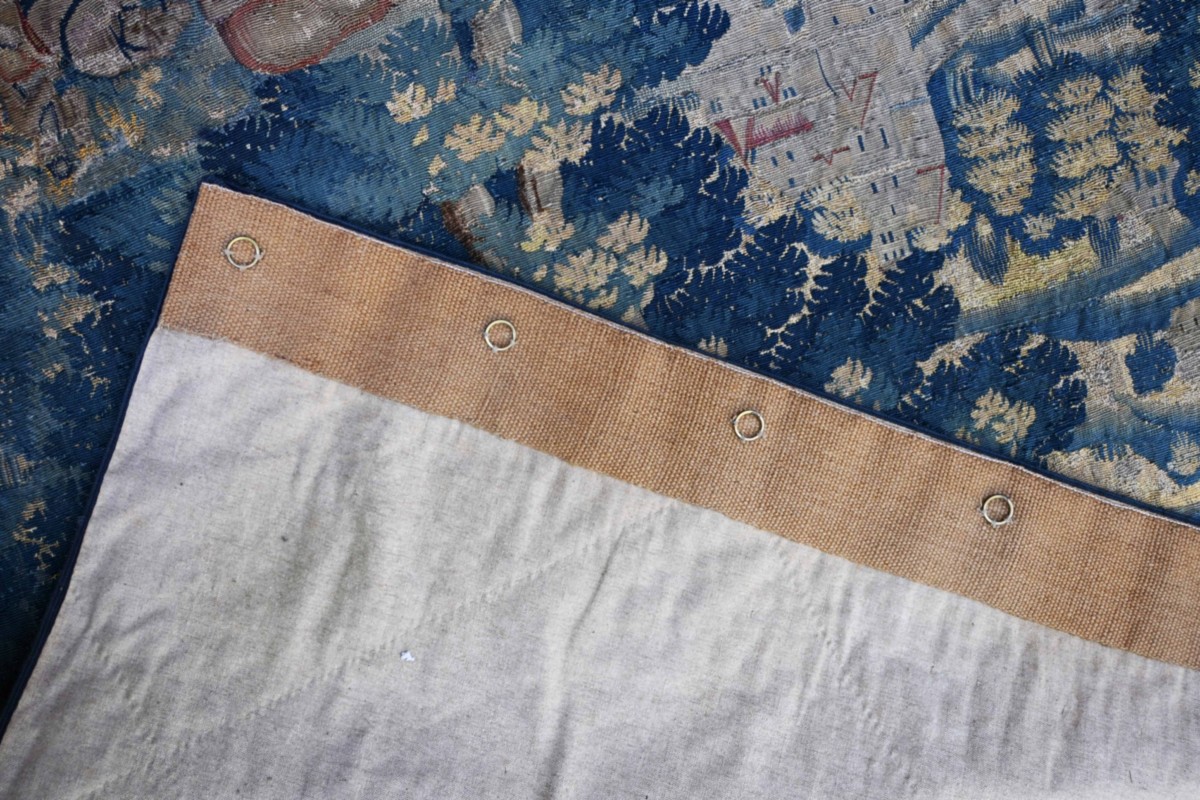
Offered by Galerie Lissier
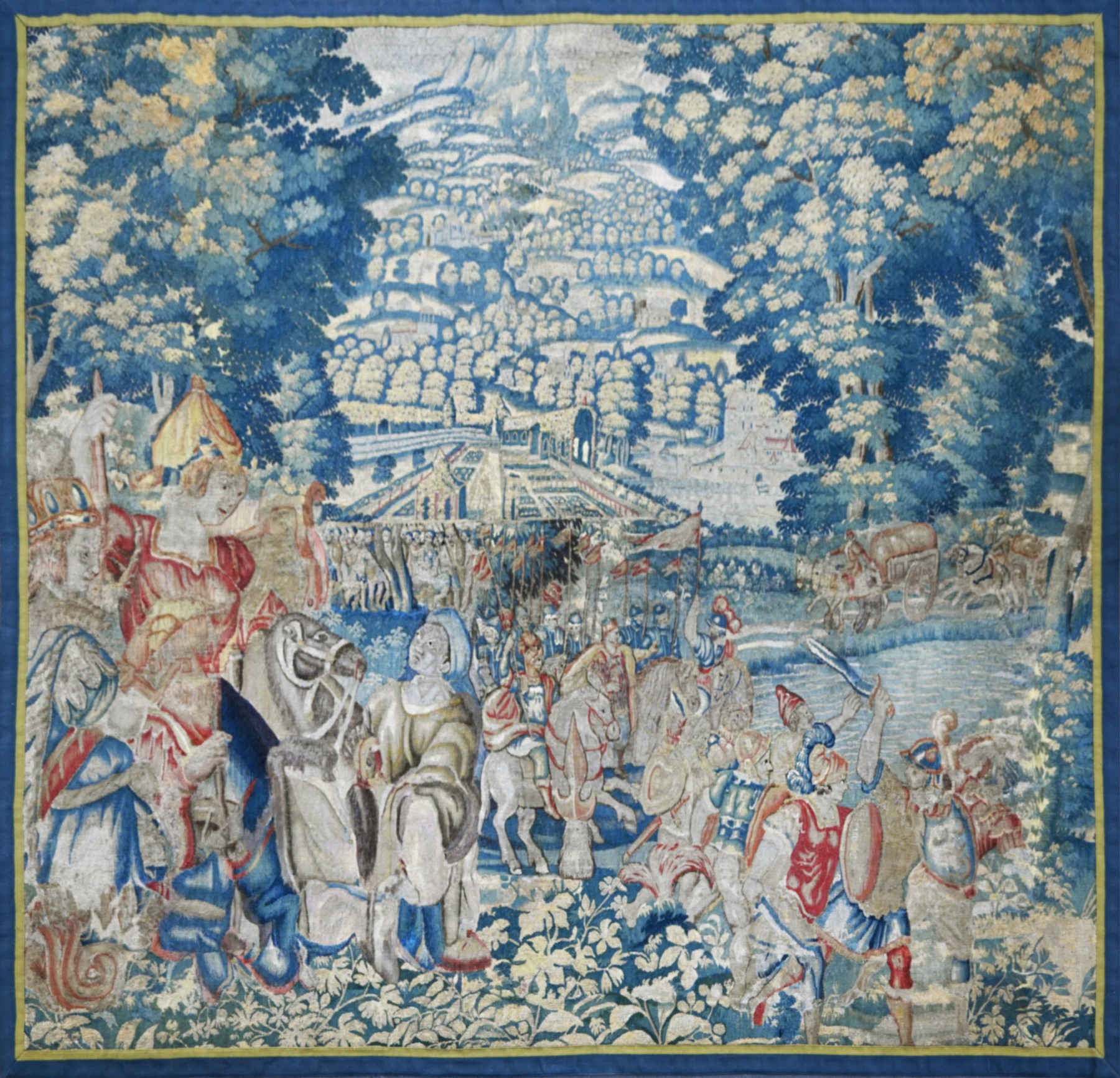
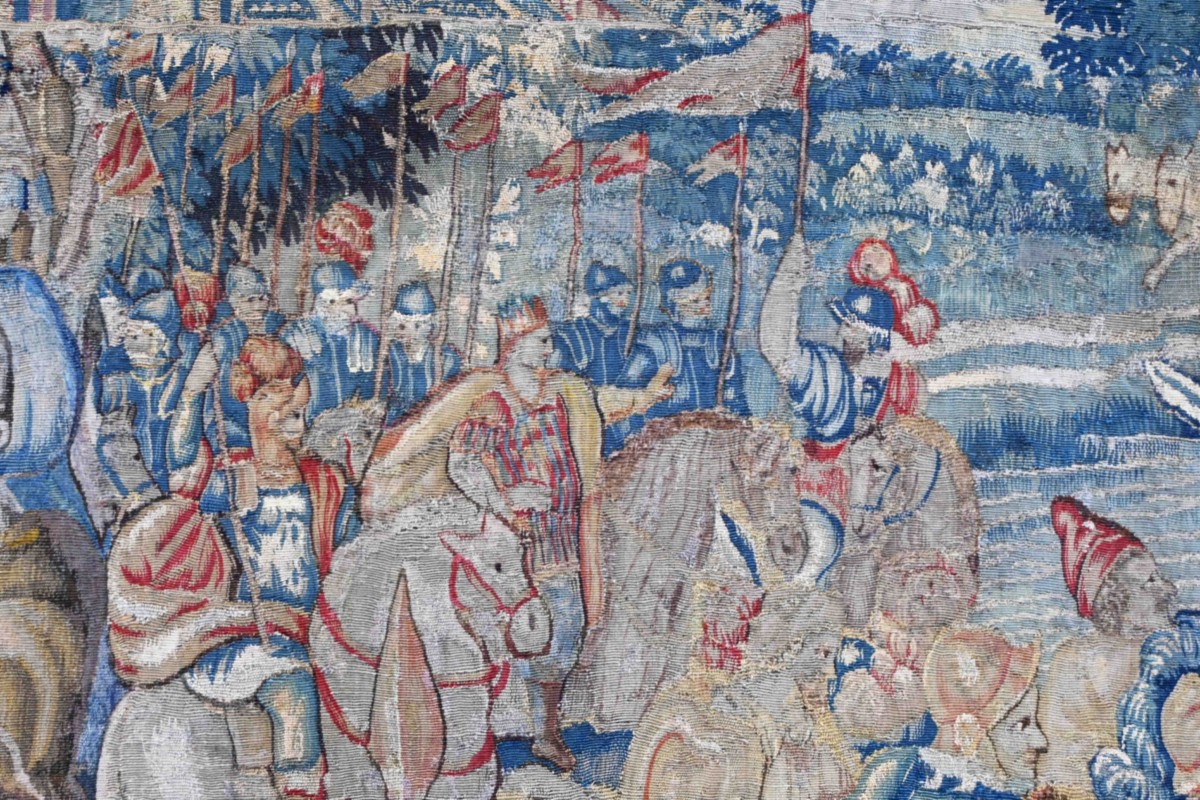
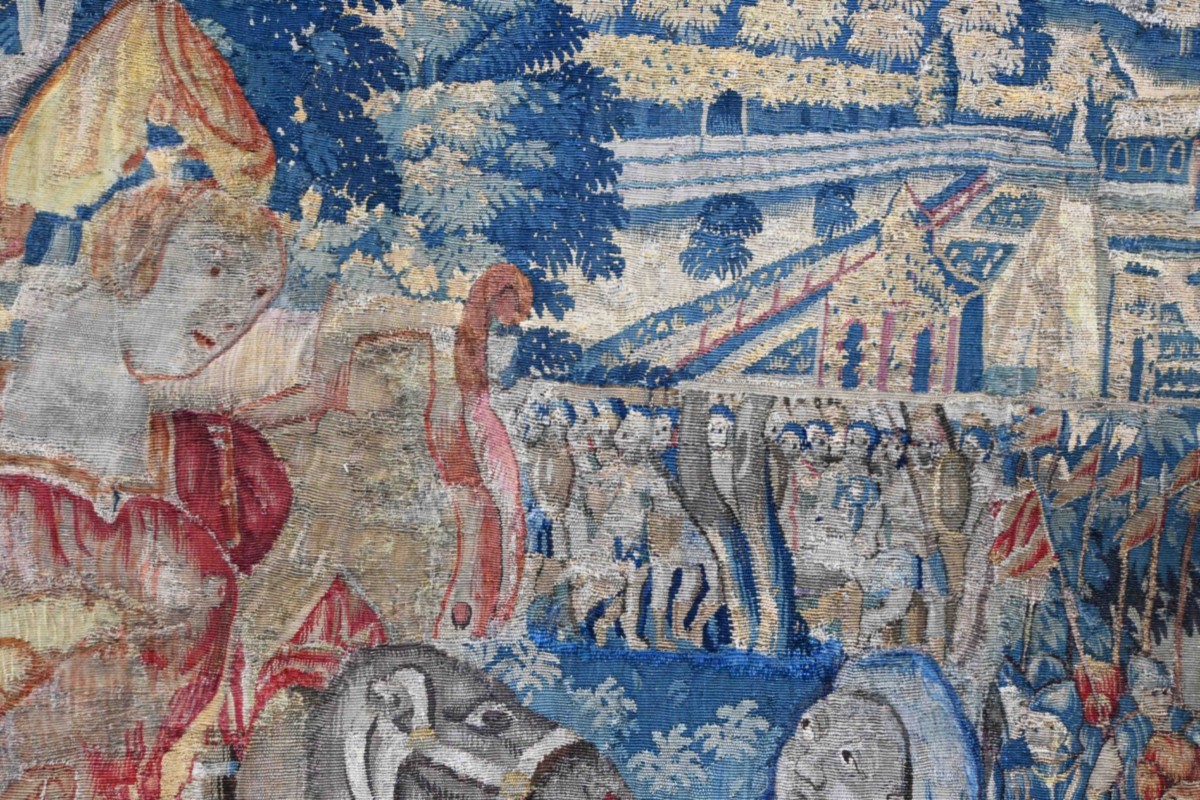

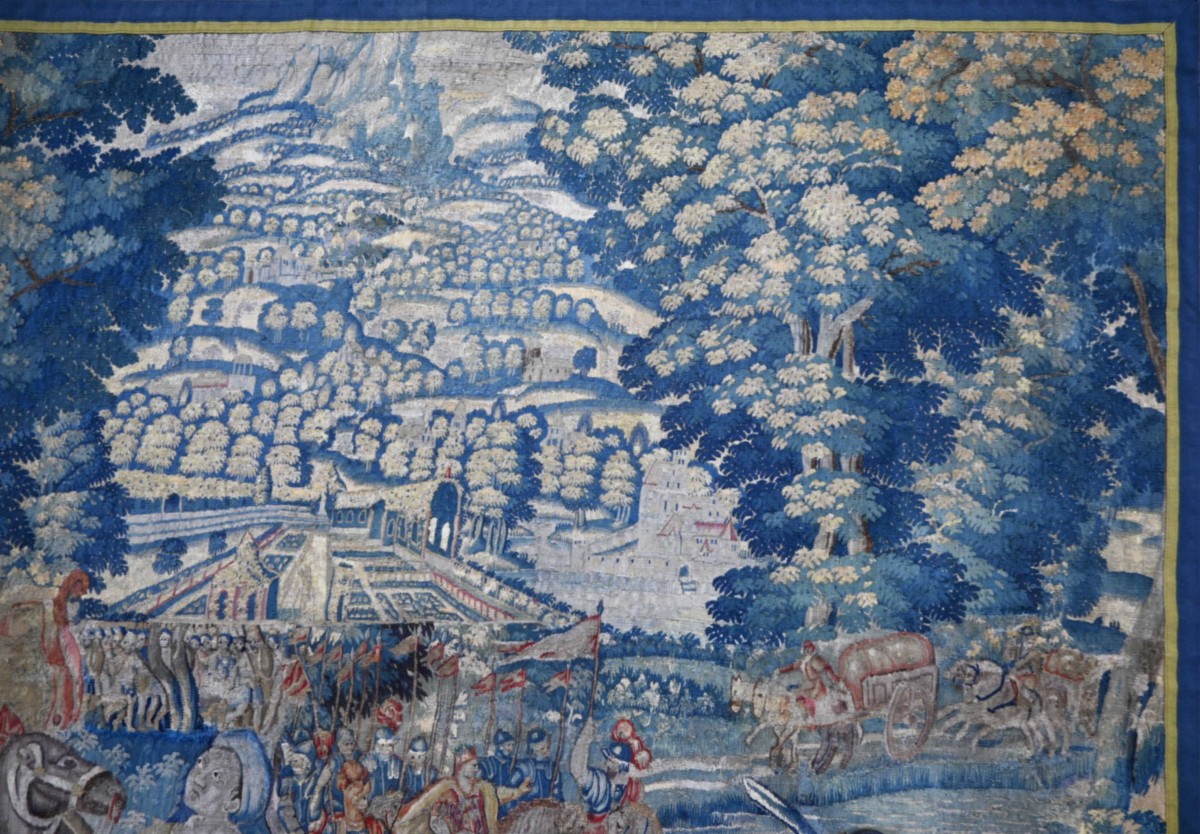
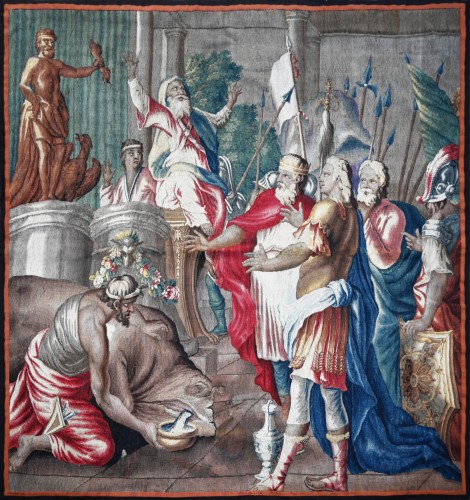
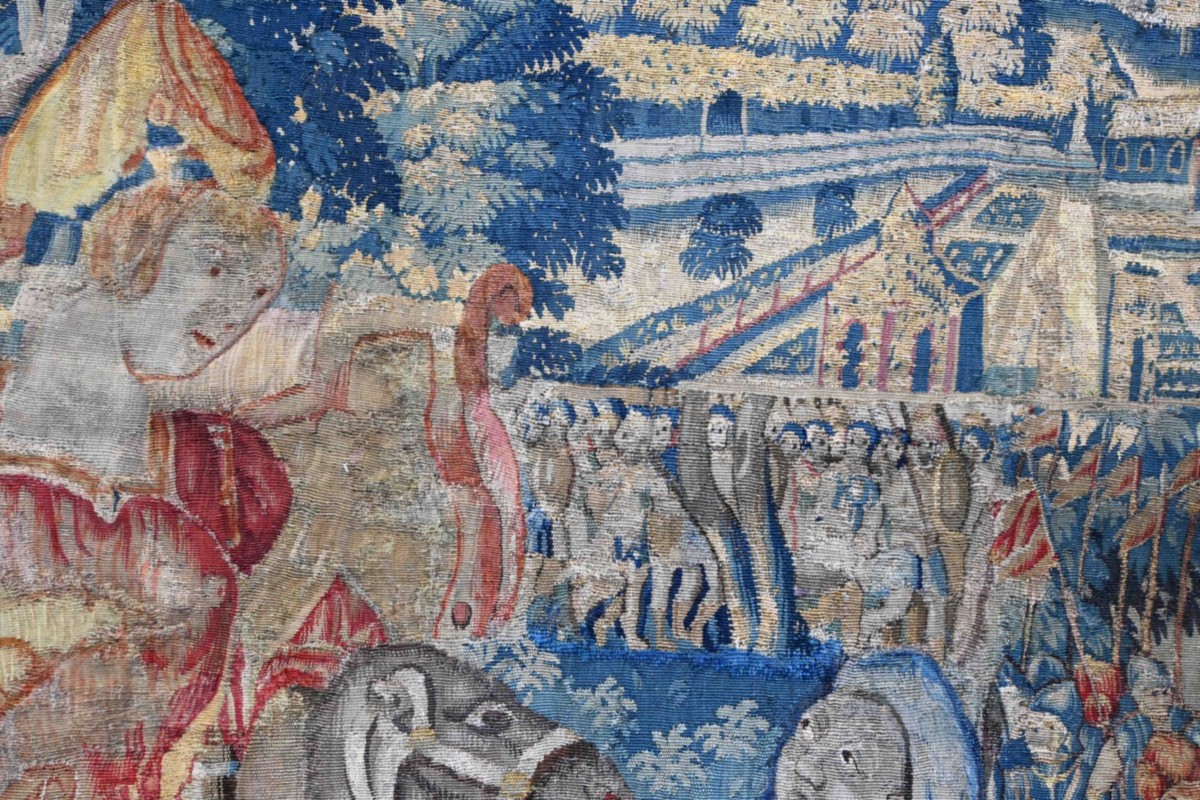
This tapestry from the Brussels Manufactory, dating from the 16th century, is a masterful work that illustrates the transition between Renaissance aesthetics and the beginnings of the Baroque. It depicts the departure of a monarch, likely an idealized biblical or historical figure, embarking on a "holy war."
Here is a detailed analysis of its composition and iconography:
1. Composition and Perspective
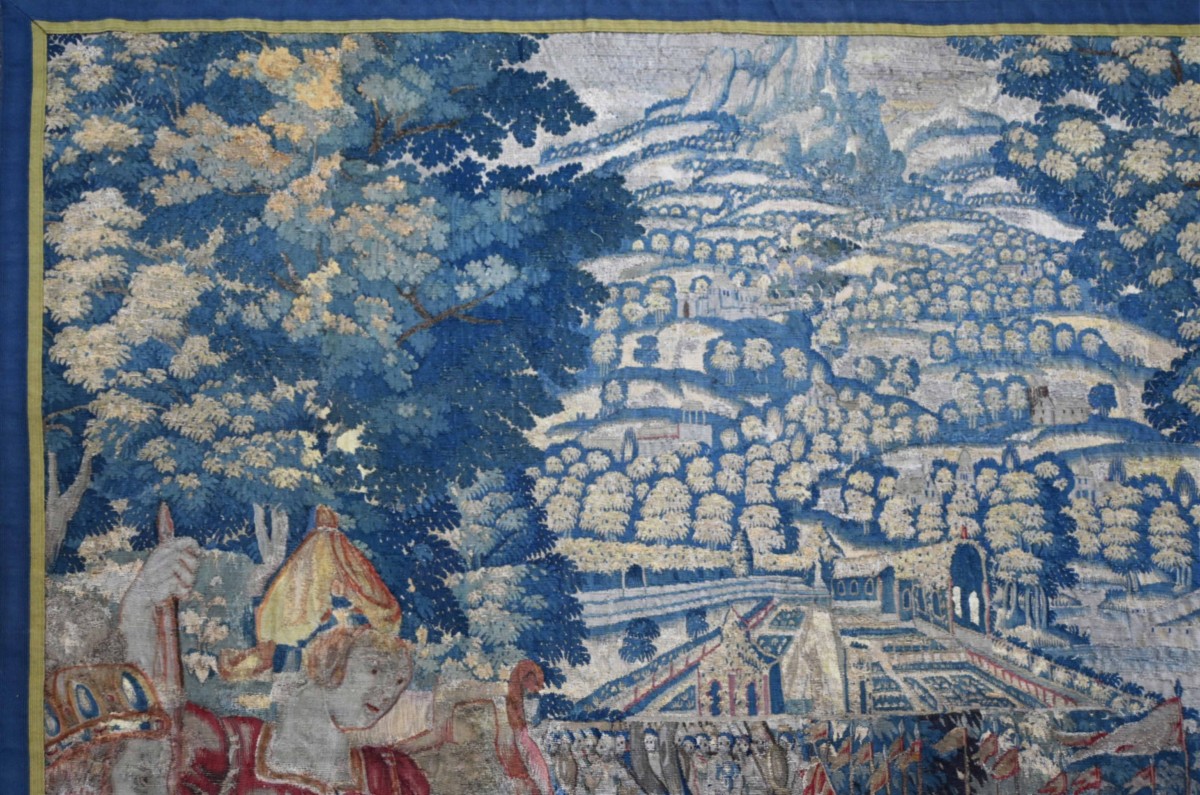
The work employs a layered composition typical of Mannerism. The perspective is not linear but rises vertically:
The foreground: Occupied by the main figures on an imposing scale, creating an effect of immediate proximity.
The middle ground: A marching army, composed of cavalry and infantry carrying lances and banners, creates a dynamic connection to the city.
The background: A rugged landscape rising towards the top of the tapestry, dotted with wooded hills and fortifications, evokes a heavenly Jerusalem or an ideal fortified city.
2. The Main Group (Left)
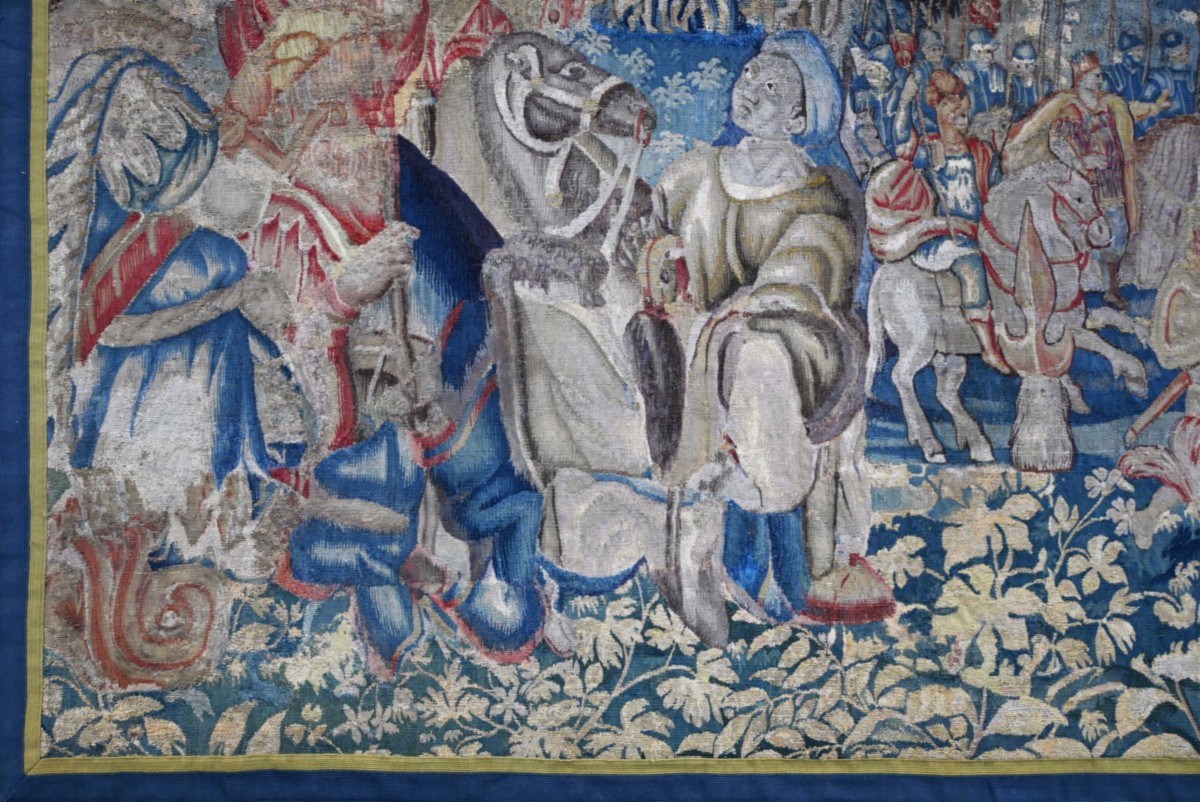
The monarch, the central figure, is depicted with great nobility.
Attributes: He wears rich clothing (shades of red and blue) and an ornate headdress that emphasizes his status.
Interaction: He appears to be taking leave or receiving a blessing. The presence of harnessed horses and kneeling figures reinforces the solemnity of his departure.
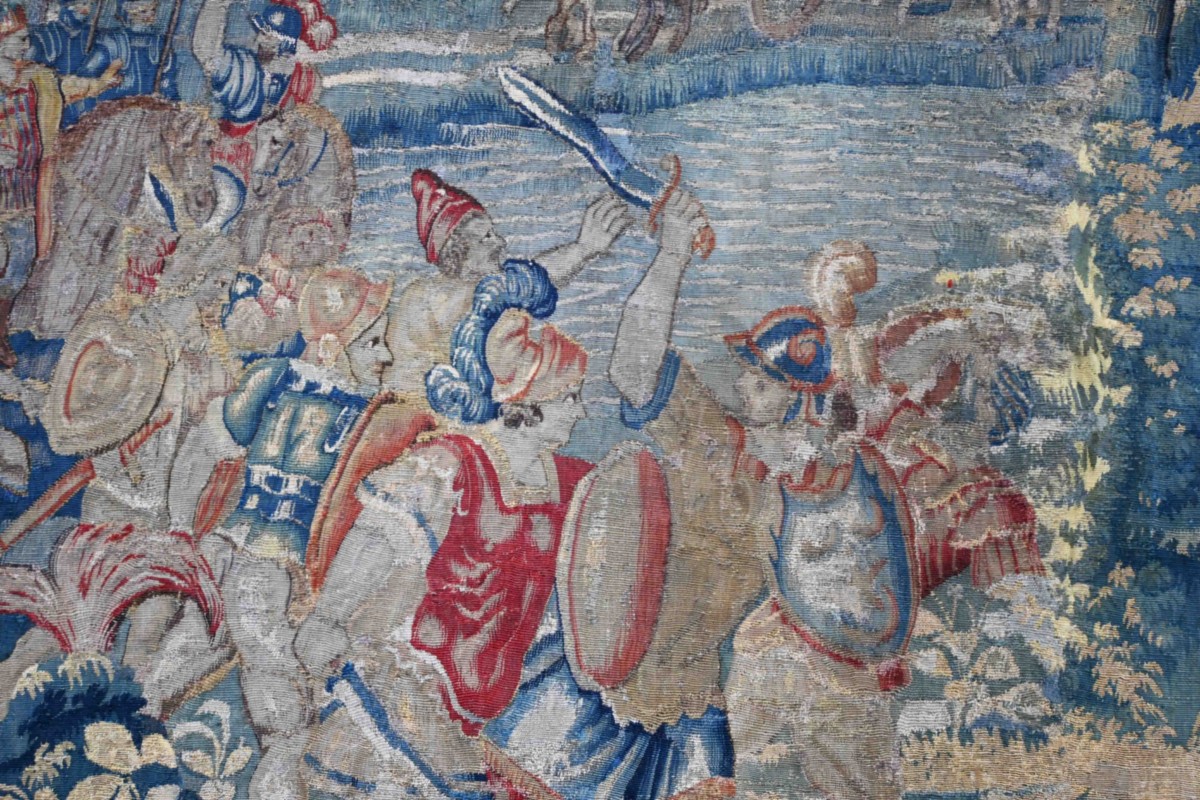
3. The Battle Scene (Right)
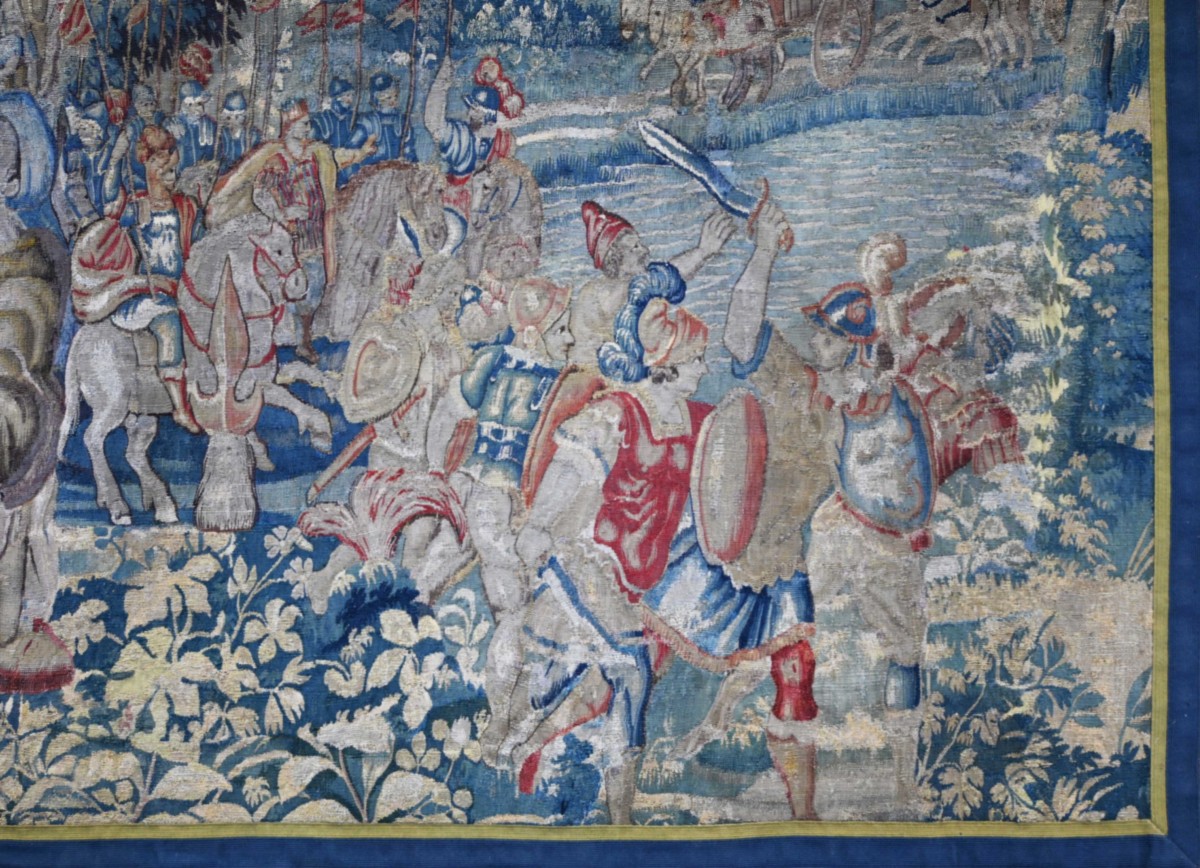
In the lower right, the action intensifies. Soldiers in antique-style armor (reminiscent of the "all'antica" style popular during the Renaissance) are visible.
One of them raises a sword, while others carry round shields.
This section illustrates the turmoil of war and the warrior courage required for the sacred undertaking.
4. Landscape and Architecture
The tapestry is remarkable for its depiction of nature:
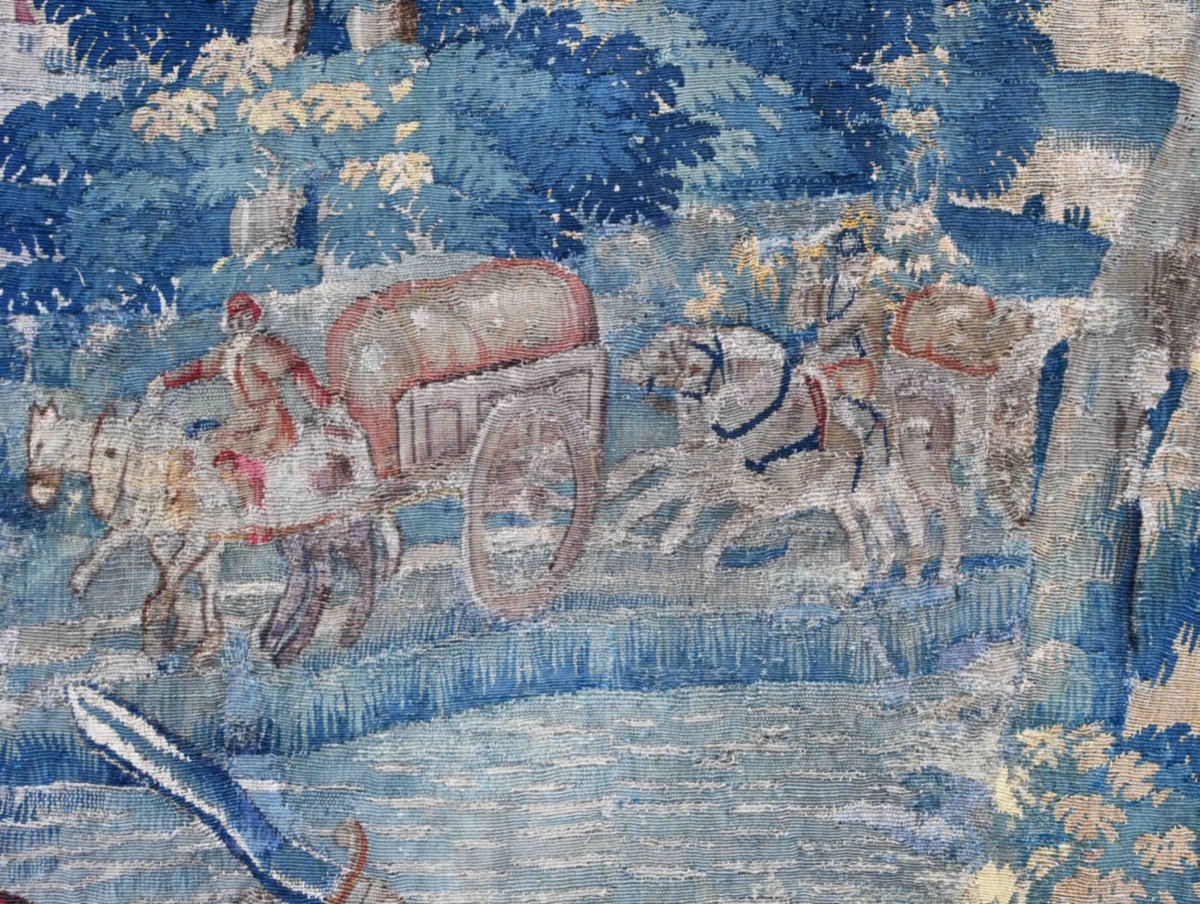
Greenery: The trees with their dense foliage and the floral motifs at the bottom of the piece (late mille-fleurs) demonstrate Brussels' expertise in rendering organic textures.
The City: In the center, an architectural structure with arcades and orderly gardens suggests an advanced civilization, perhaps the palace the king is leaving.
Technical Characteristics of Brussels
This piece displays the hallmarks of Brussels workshops of the period:
The color palette: A predominance of blues (indigo/pastel) and yellows/ochres, likely originally gold or yellow silk threads that captured the light.
The detail of the weaving: A density of threads that allows for the rendering of facial expressions and the musculature of horses with almost painterly precision.
Historical note: From the 16th century onwards, Brussels was the world center of tapestry. These works were not merely decorative; they served as political and religious propaganda for the sovereigns, illustrating their piety and military power.
Delevery information :
Delivery Terms at Galerie Lissier :
We take great care to ensure that every work of art purchased on Anticstore reaches you safely and in the best possible condition.
Delivery:
All our merchandise is shipped free of charge via renowned carriers such as UPS or DHL, with full tracking, worldwide. We ensure that each tapestry or rug is delivered in secure packaging, guaranteeing its protection and integrity.
Customs Fees:
For deliveries outside the European Union, any customs duties, import taxes, or fees related to customs formalities are the responsibility of the buyer. We recommend consulting local authorities to understand the specific requirements in your country.
Our goal is to provide you with a serene and prestigious shopping experience, from our gallery to your space. Every acquisition reflects our commitment to quality, safety, and impeccable service.