Offered by Kolhammer & Mahringer Fine Arts
REQUEST INFORMATION

Specialised with sculptures and old master paintings
Nikolaus Weckmann
Ulm 1481 - 1526 Ulm
Carved limewood
Polychrome painted & gilded
Height 132 cm
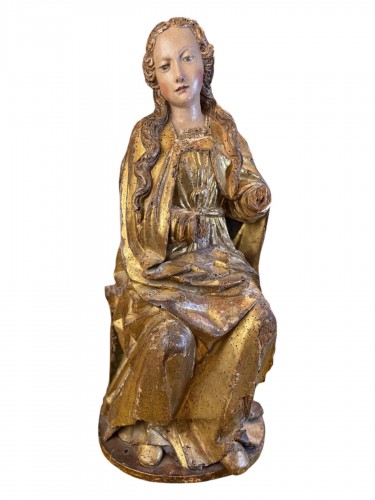
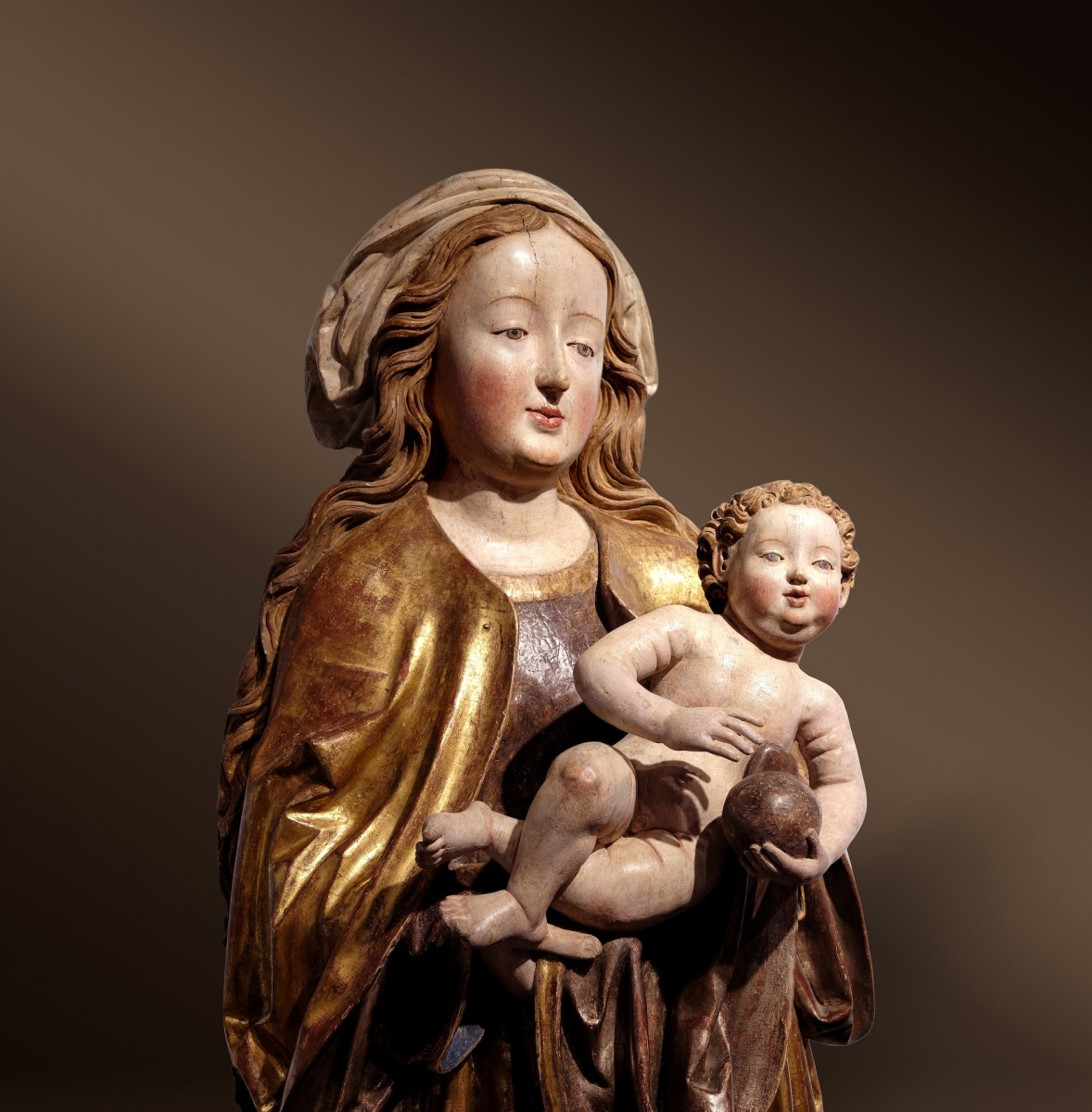
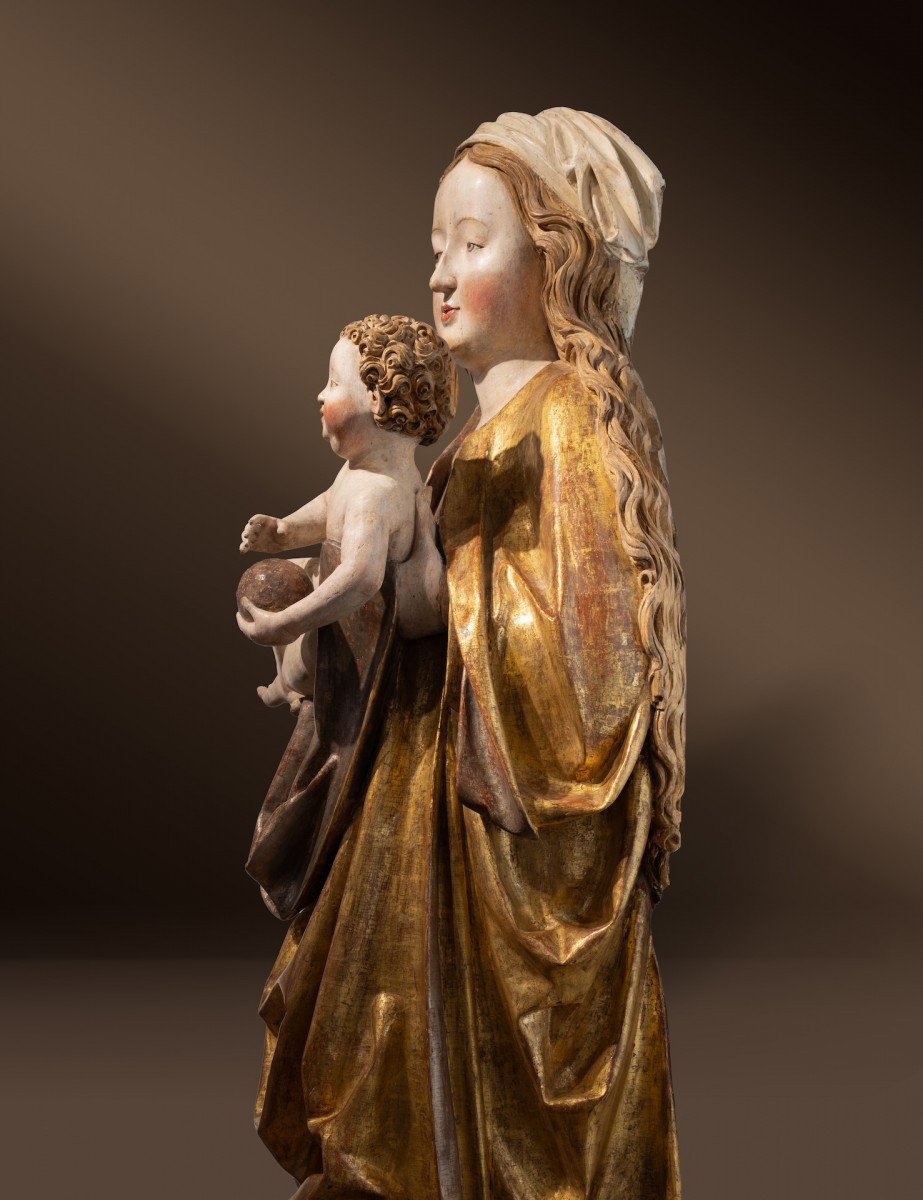
Museal Madonna – Niklaus Weckmann
Niklaus Weckmann was an important sculptor who was active in the late 15. and early In the 16th century, Weckmann was mainly active in the southern German city of Ulm. Famous for his detailed wood carvings, Weckmann is associated with the Ulm School, which combined elements of late Gothic realism with the emerging ideals of the Renaissance. His workshop produced numerous religious sculptures, altarpieces and devotional figures, which played an important role in the artistic landscape of his time. Weckmann’s works are characterized by lifelike details, emotional depth and a refined treatment of drapery.
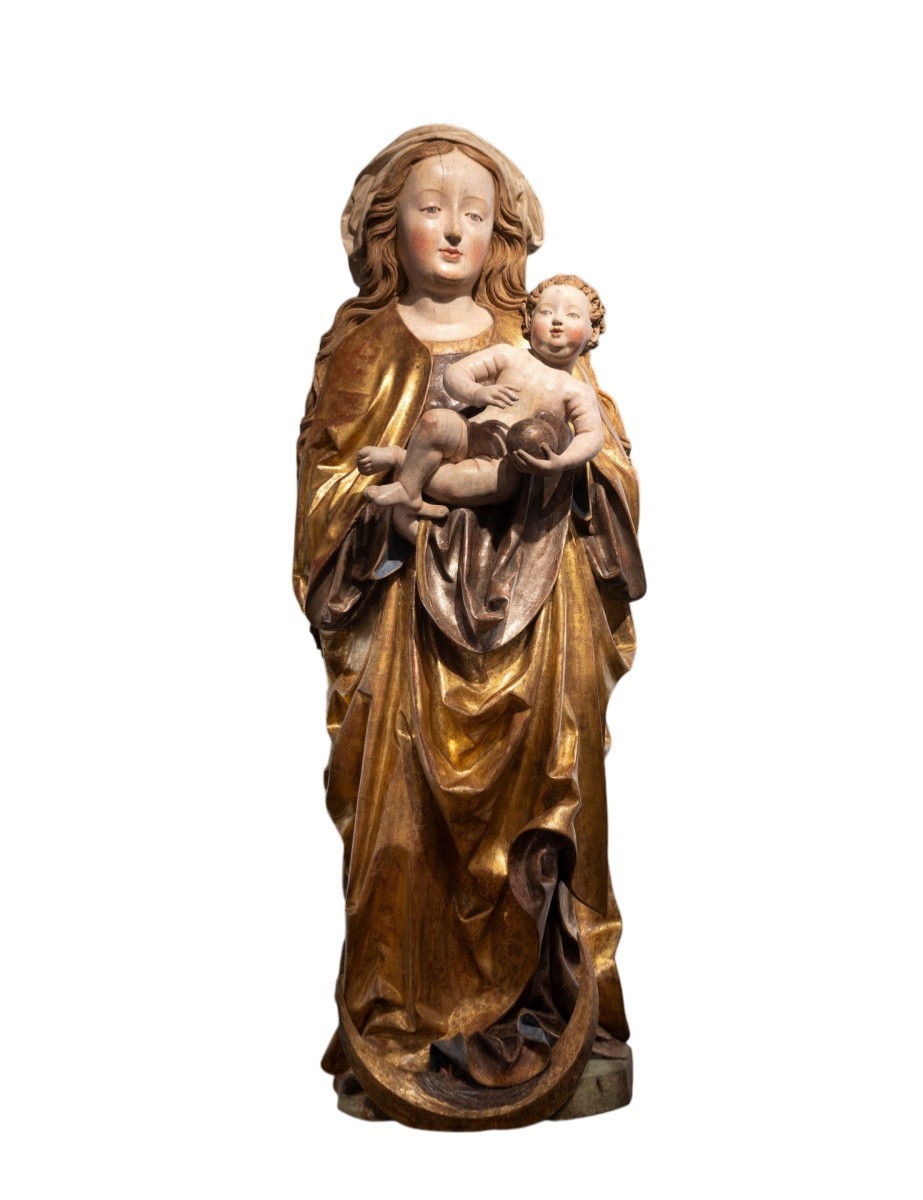
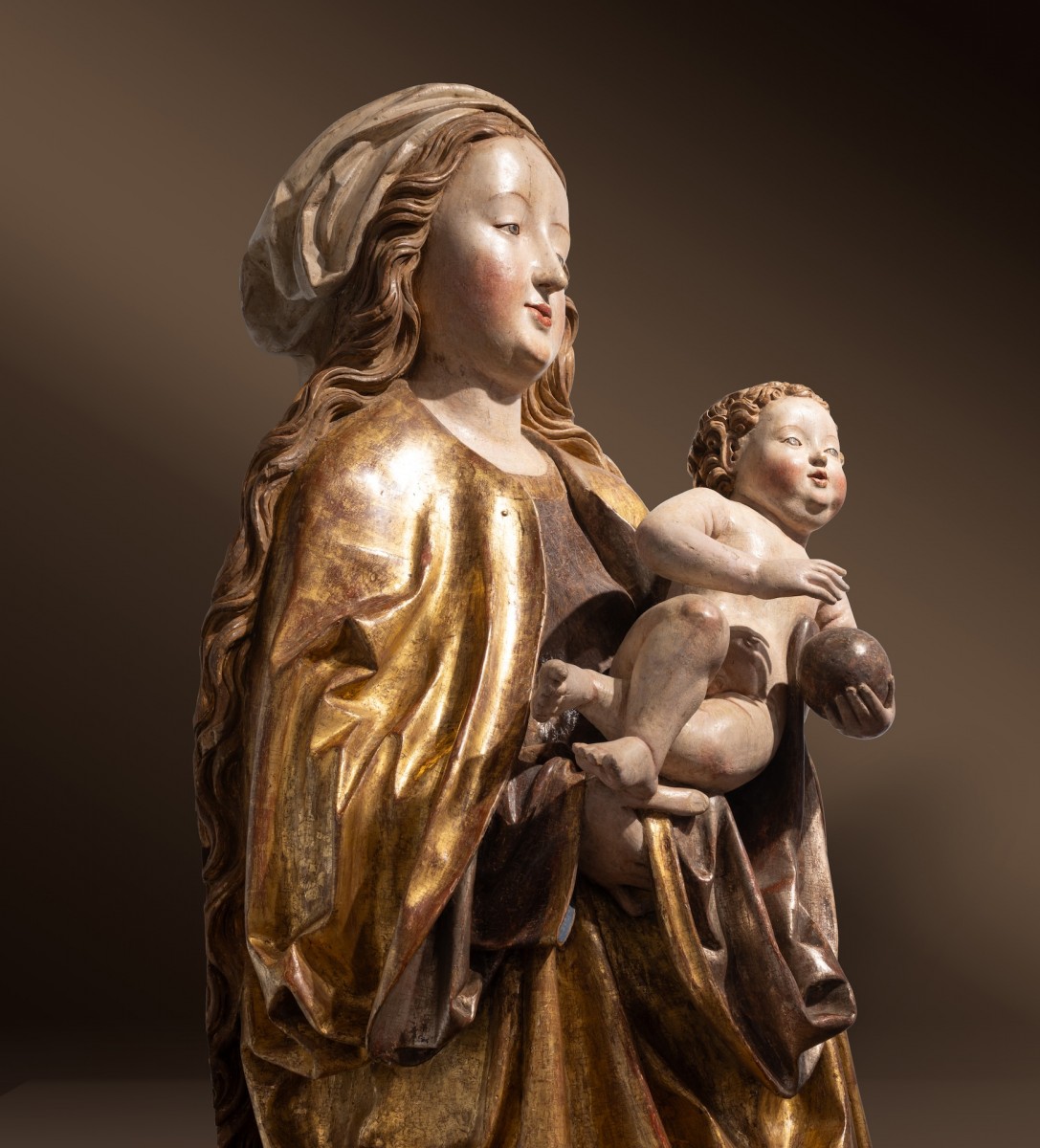
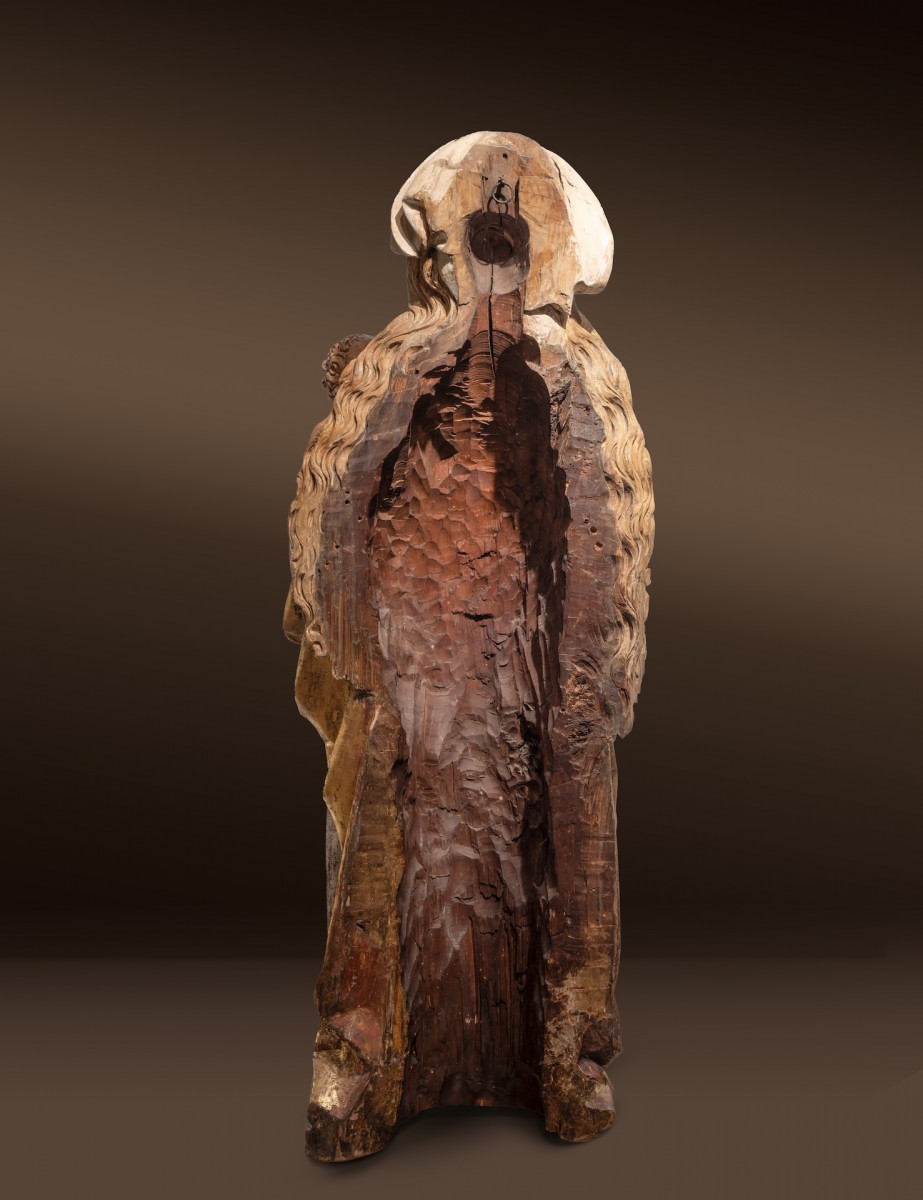
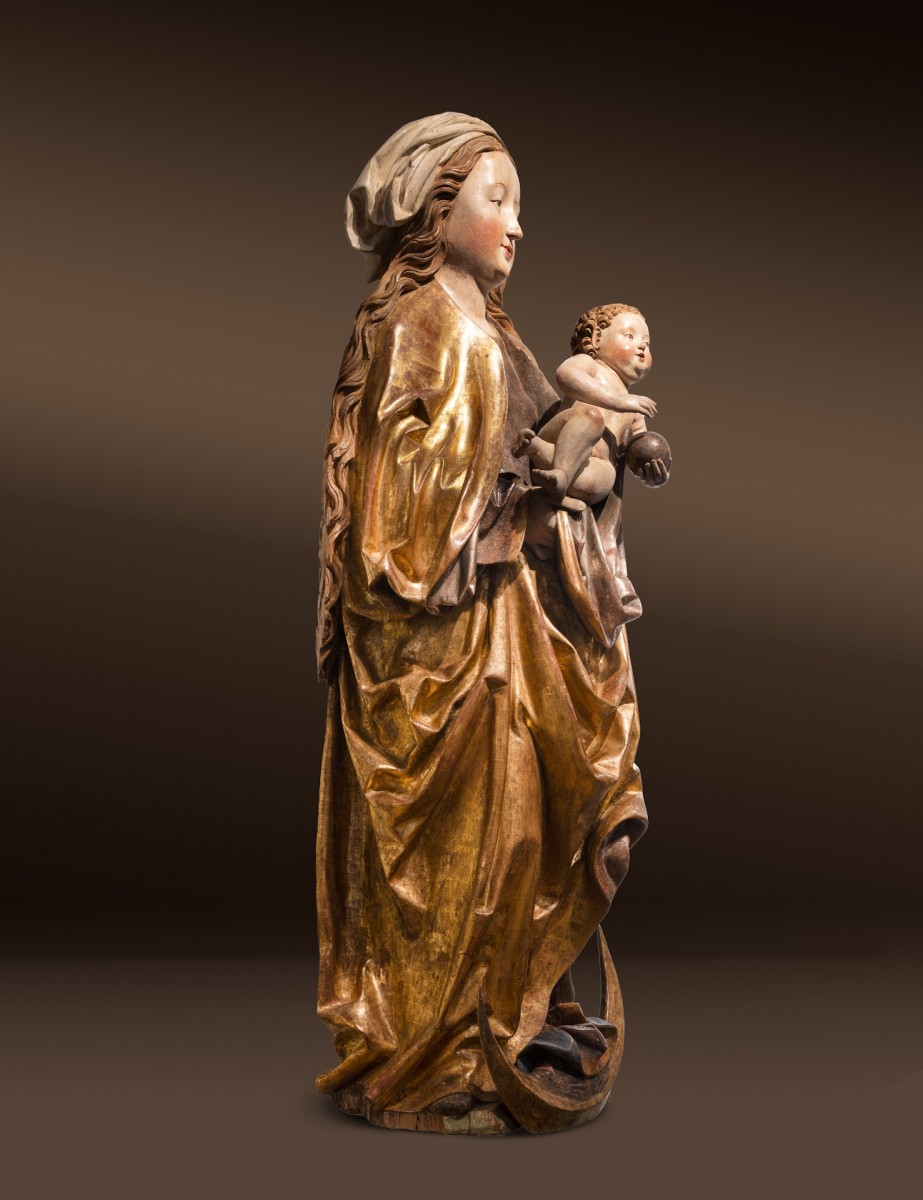
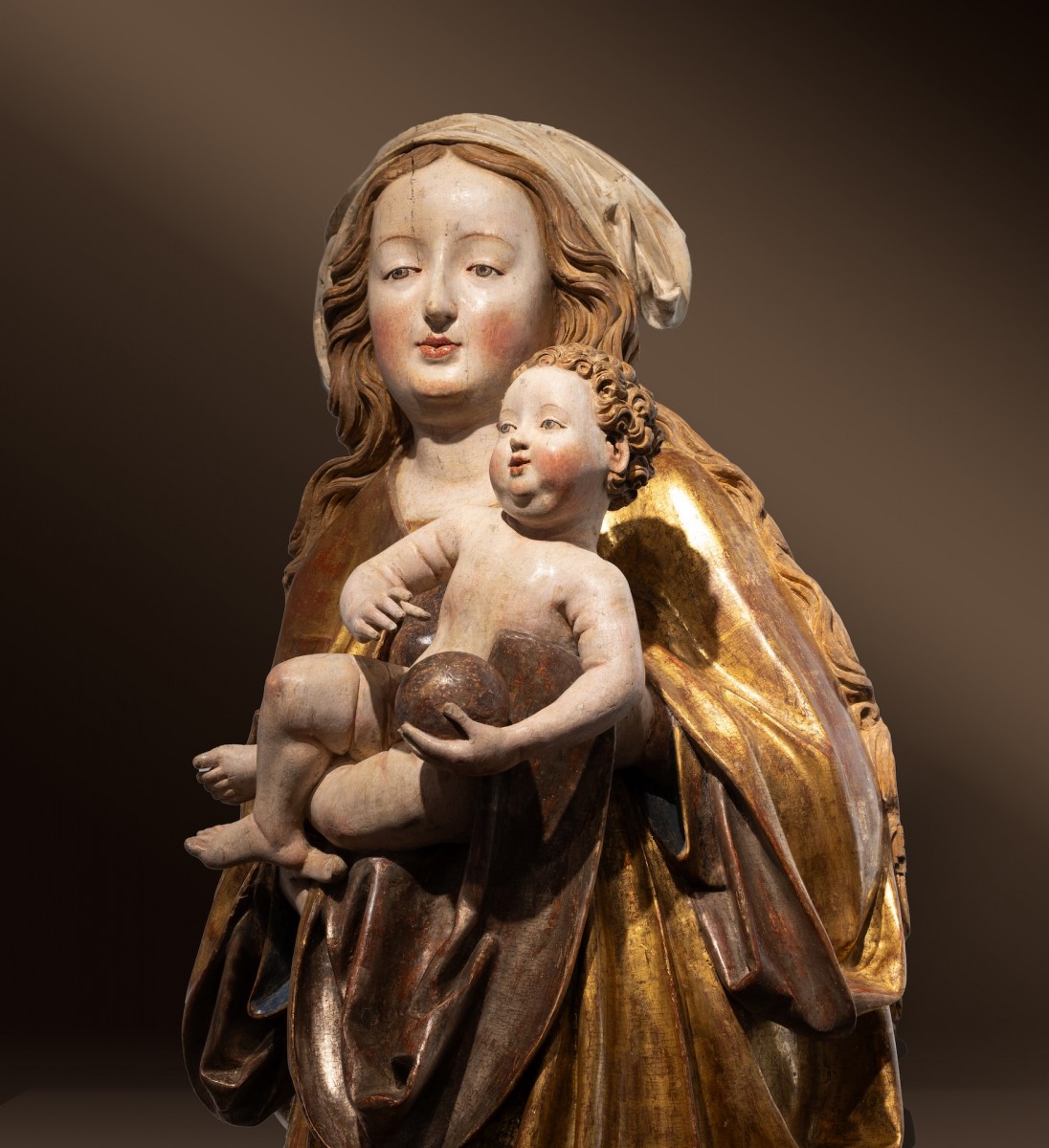
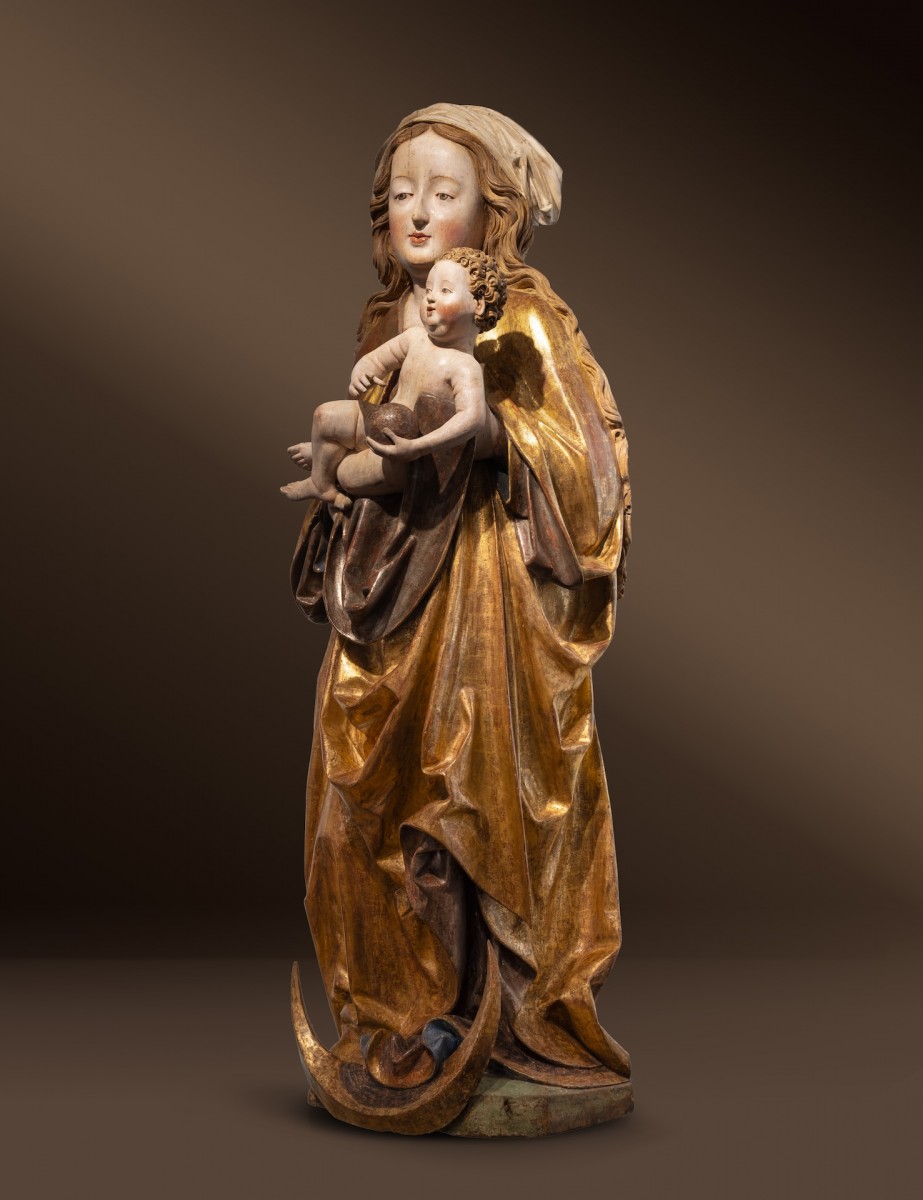
This Madonna by Niklaus Weckmann is a masterful depiction of the Virgin Mary, characterized by both elegance and complexity. It is comparable to that of the wing relief of the former high altar of the parish church of Attenhofen from around 1515 (now in the Ulm Museum). Mary is depicted standing gracefully and presenting the naked Christ child in her arms. Her eyes are turned slightly downwards, probably to address the viewer in a subtle, contemplative manner. She wears a traditional veil, which is placed halfway over her long, wavy hair styled in typical Gothic curls, emphasizing both her virginal status and her maternal dignity. This is a characteristic feature of Weckmann, as is the woodpecker hole on the head of the Marian figure.
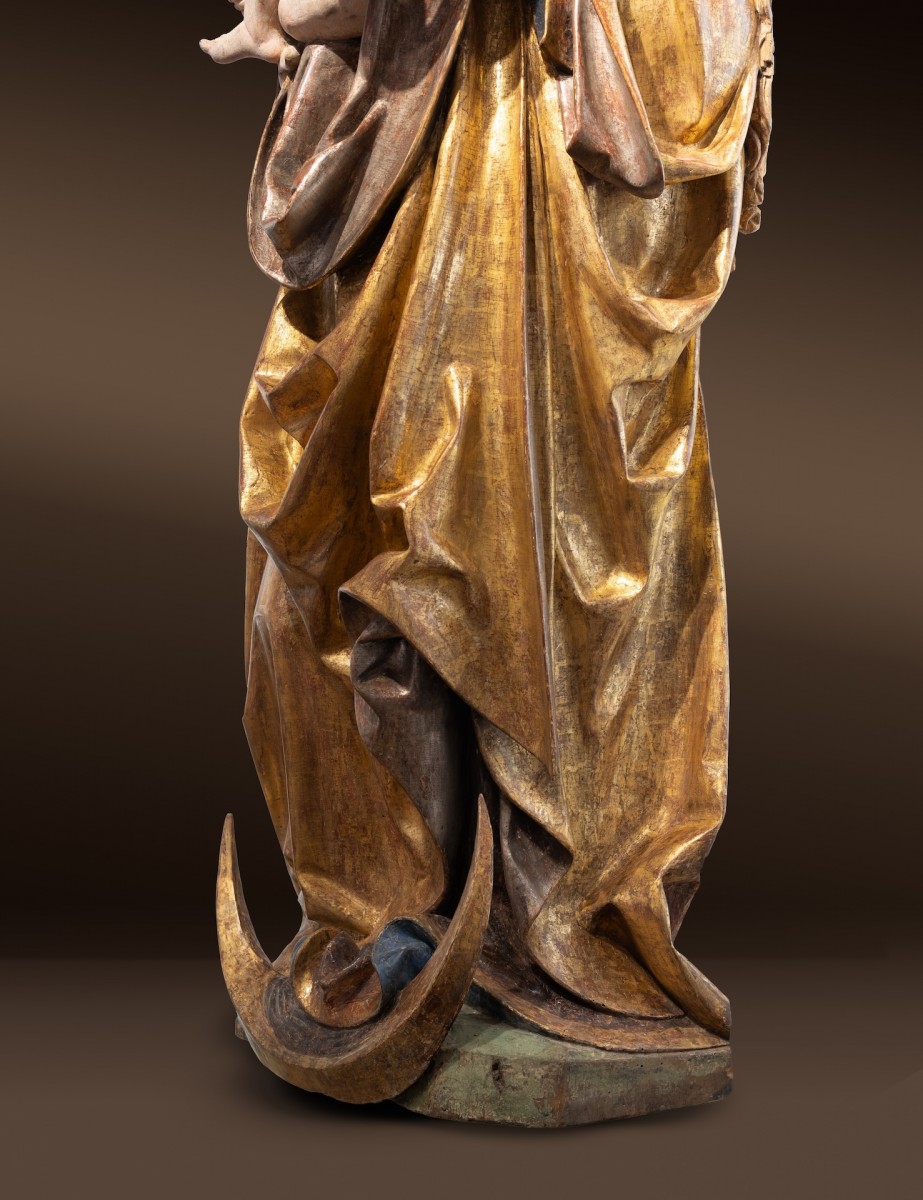
The draping of her garment is extremely detailed and demonstrates Weckmann’s ability to create different textures – from smooth, ‘wet’ folds to more voluminous and dynamic fold configurations. Mary stands on a crescent moon, a symbol of her immaculate conception often associated with depictions of the apocalyptic woman. This iconographic element further emphasizes her divine status and her role as Queen of Heaven.
The infant Jesus is emphasized by the large fold of Mary’s cloak. Mary does not touch the child directly, but uses the cloak to present him to the viewer. This subtle detail underlines the divine nature of Christ and emphasizes his worthiness of presentation. Jesus sits at an angle on Mary’s arm and has his small, chubby feet crossed, lending the composition an air of naturalism and innocence. In his left hand he holds an orb, symbolizing his role as Salvator Mundi, the saviour of the world, while his right hand is raised in a gesture of blessing or speaking. His expression is lively, with slightly parted lips and alert eyes, which are complemented by the flushed cheeks and bring the figure to life.
This sculpture embodies the stylistic characteristics of the late Gothic period, which is characterized by realistic details and an emphasis on the humanity of the devotional figures. The complex folds of Mary’s robe and the lifelike facial expressions of the two figures reflect Weckmann’s ability to capture both the spiritual significance and human warmth of his subjects. Mary and the Infant Jesus are not only a devotional object, but also a testament to the sculptor’s craftsmanship and artistic sensibility, making him an important figure in the development of German sculpture at the transition from the Gothic to the Renaissance.
Literature:
Barbara Maier-Lörcher, Masterpieces of Ulm Art, Ostfildern 2004.
Brigitte Reinhardt (ed.), Michel Erhart & Jörg Syrlin the Elder: Late Gothic in Ulm, Ulm 2002.
Barbara Schäuffelen and Joachim Feist, Ulm: Portrait of a Cityscape, Stuttgart 1987.