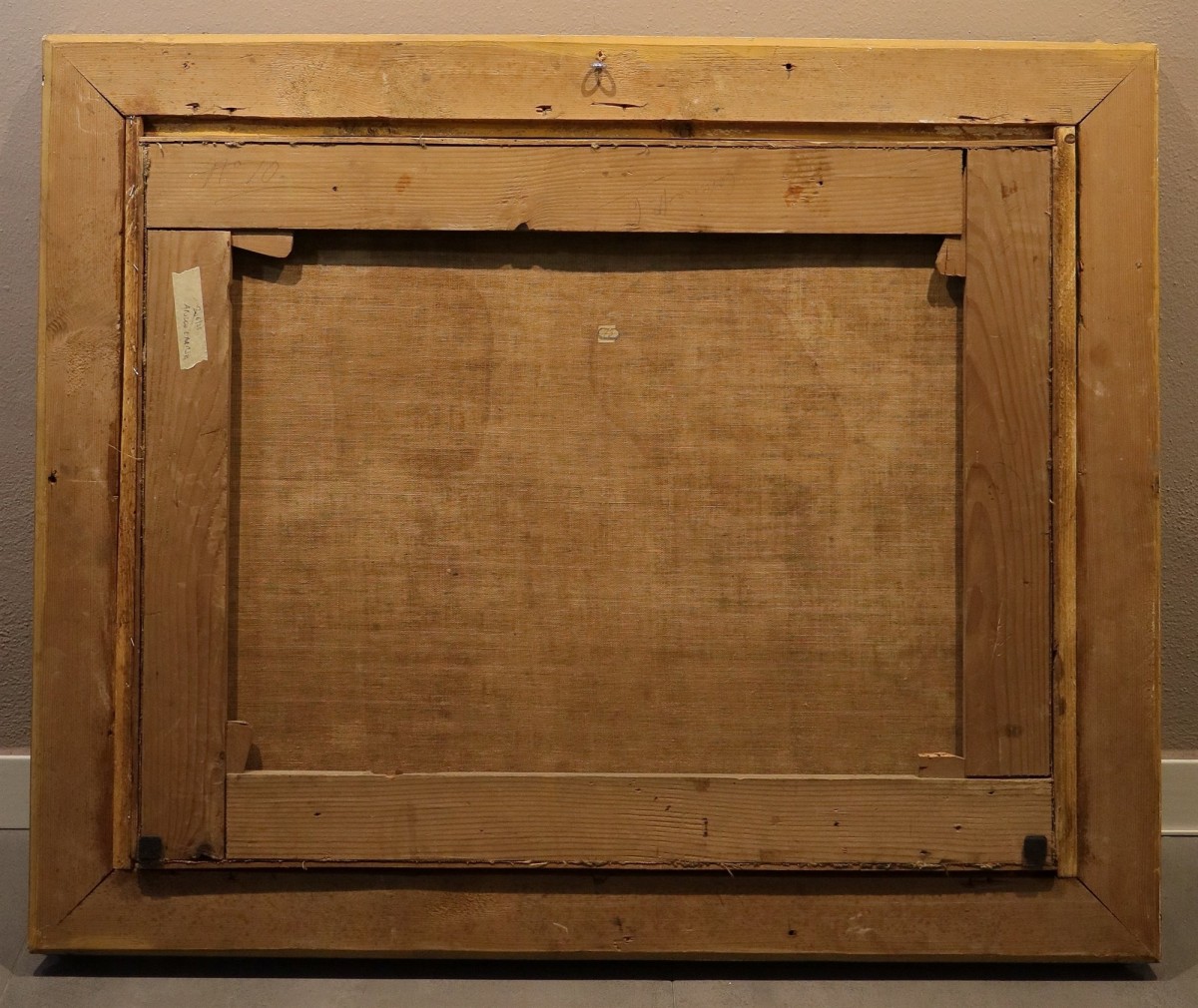
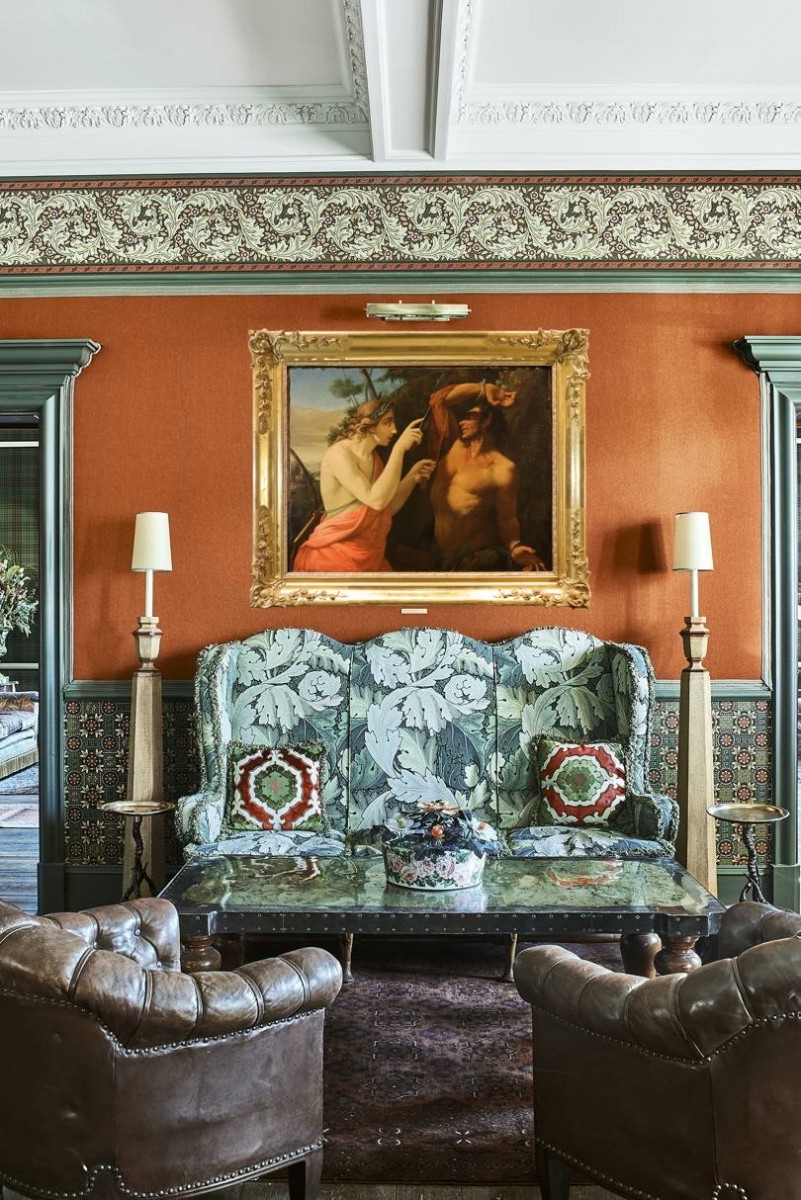
Offered by Antichità Castelbarco
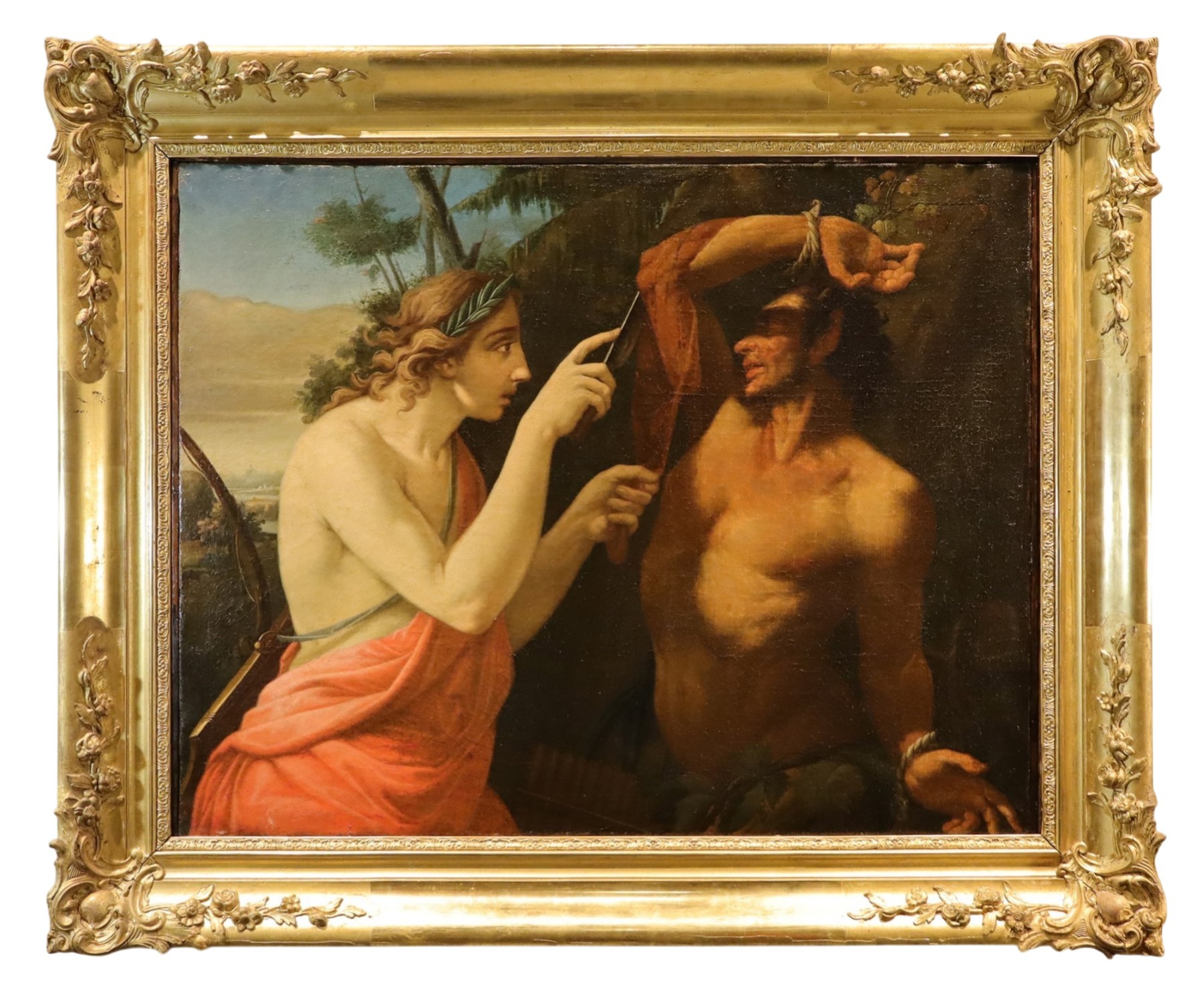
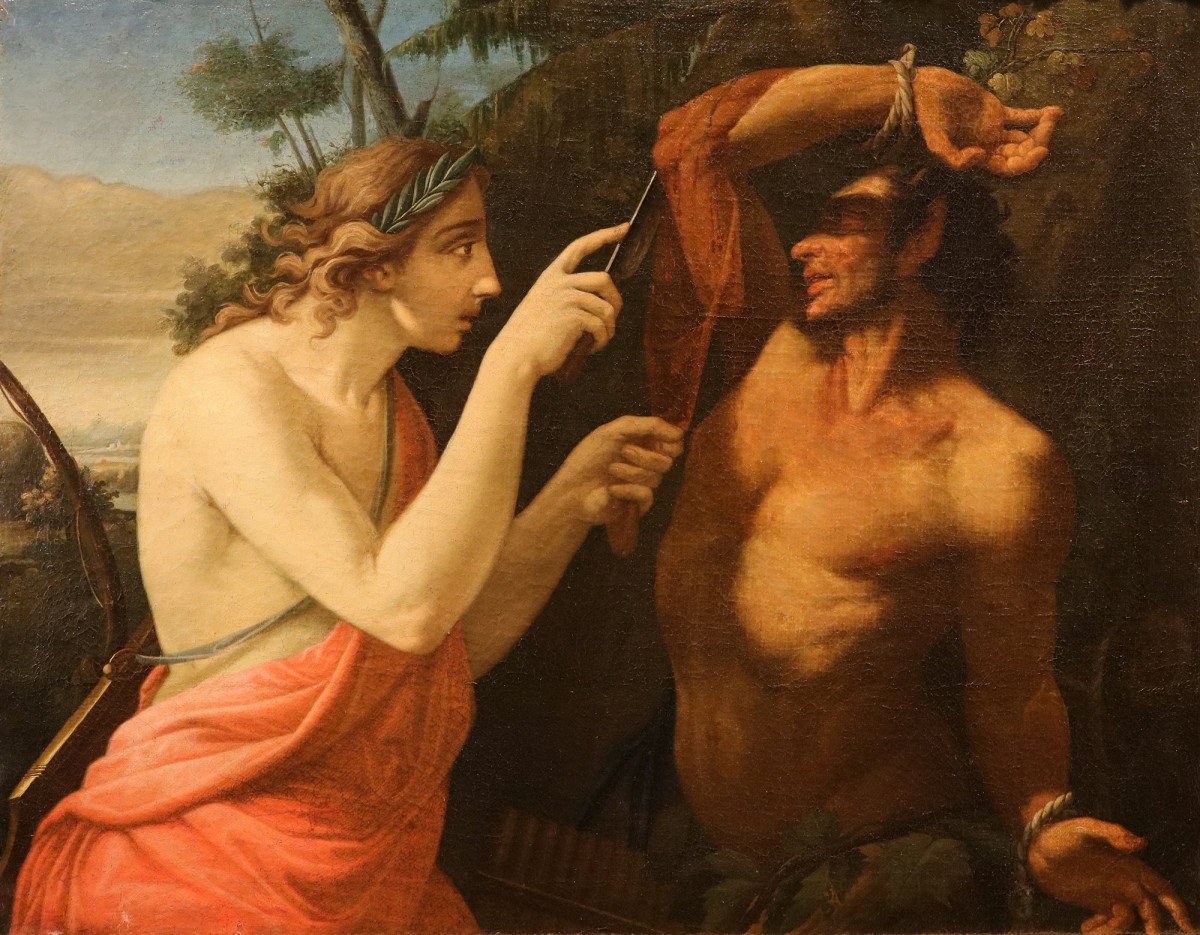
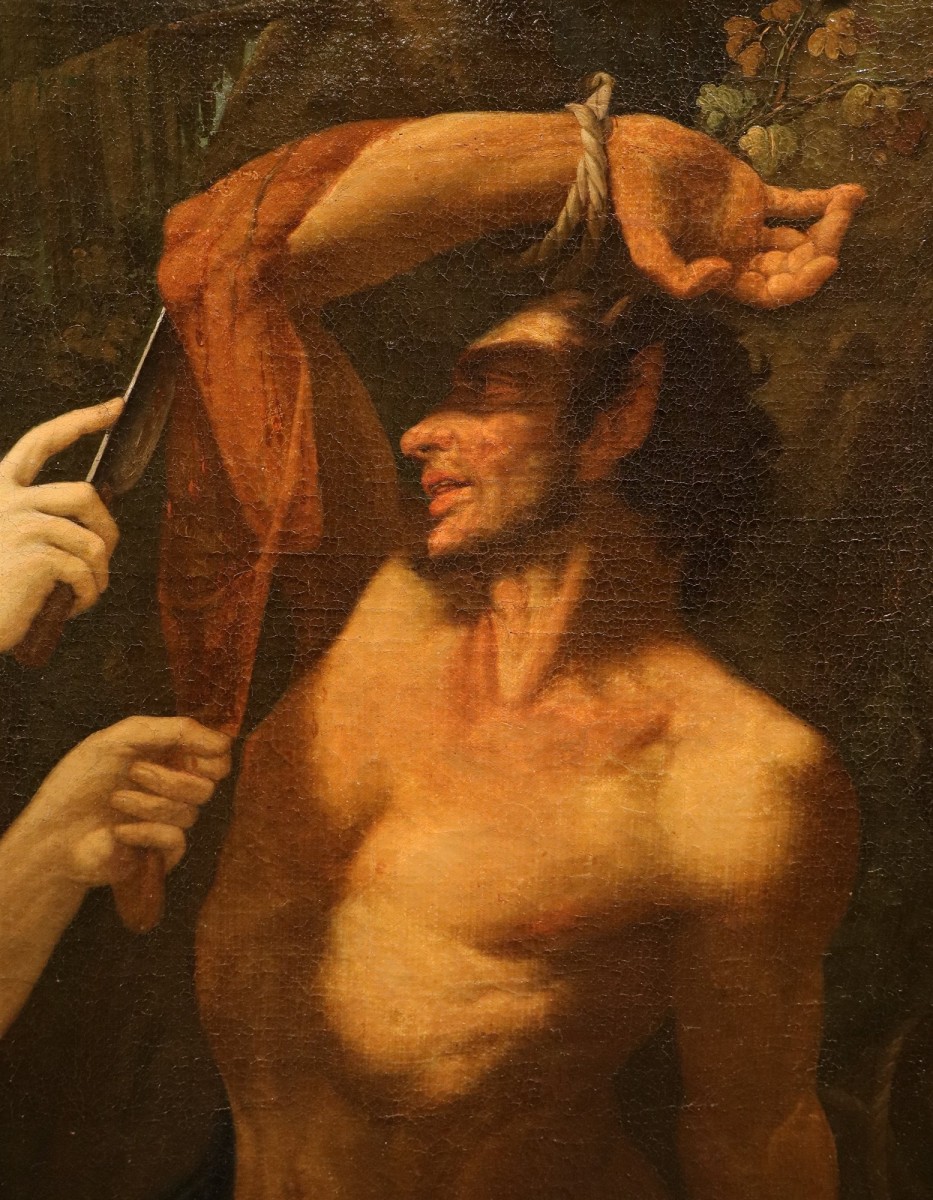
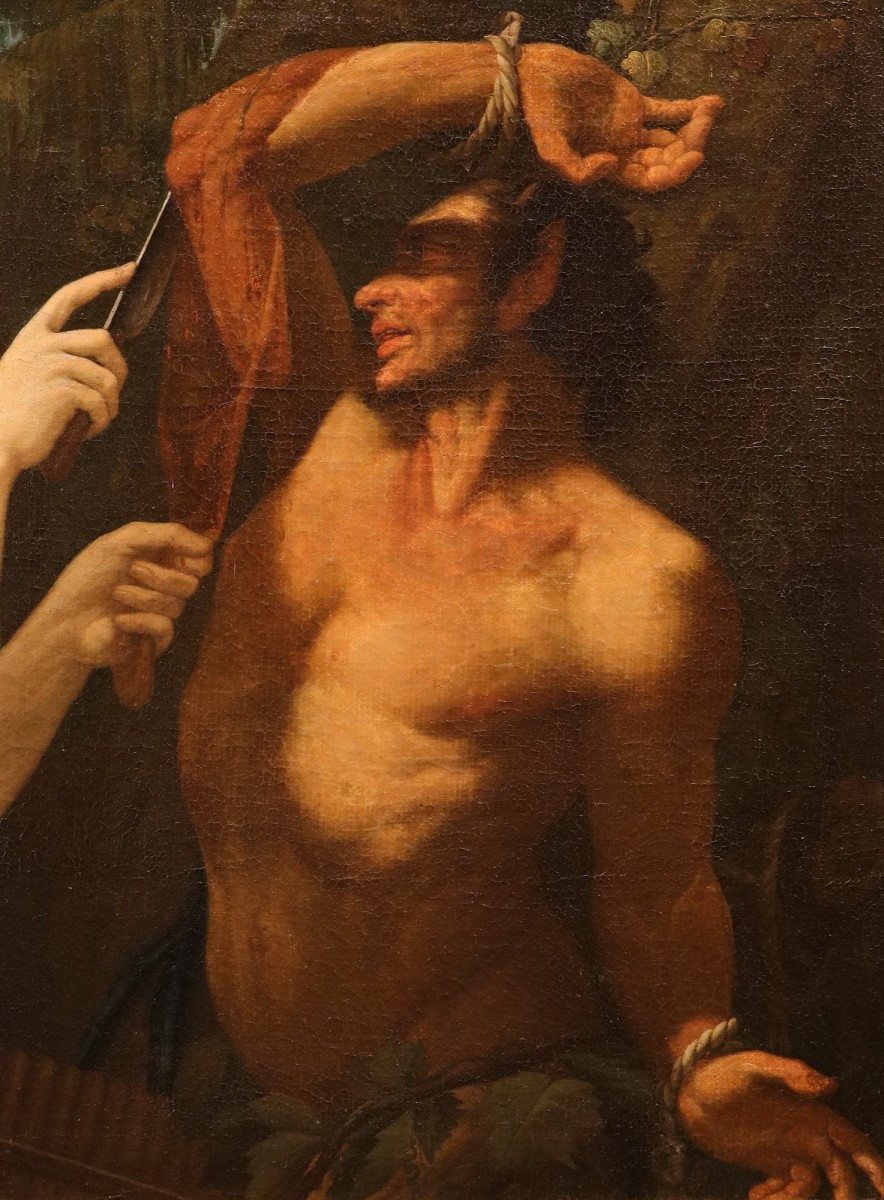
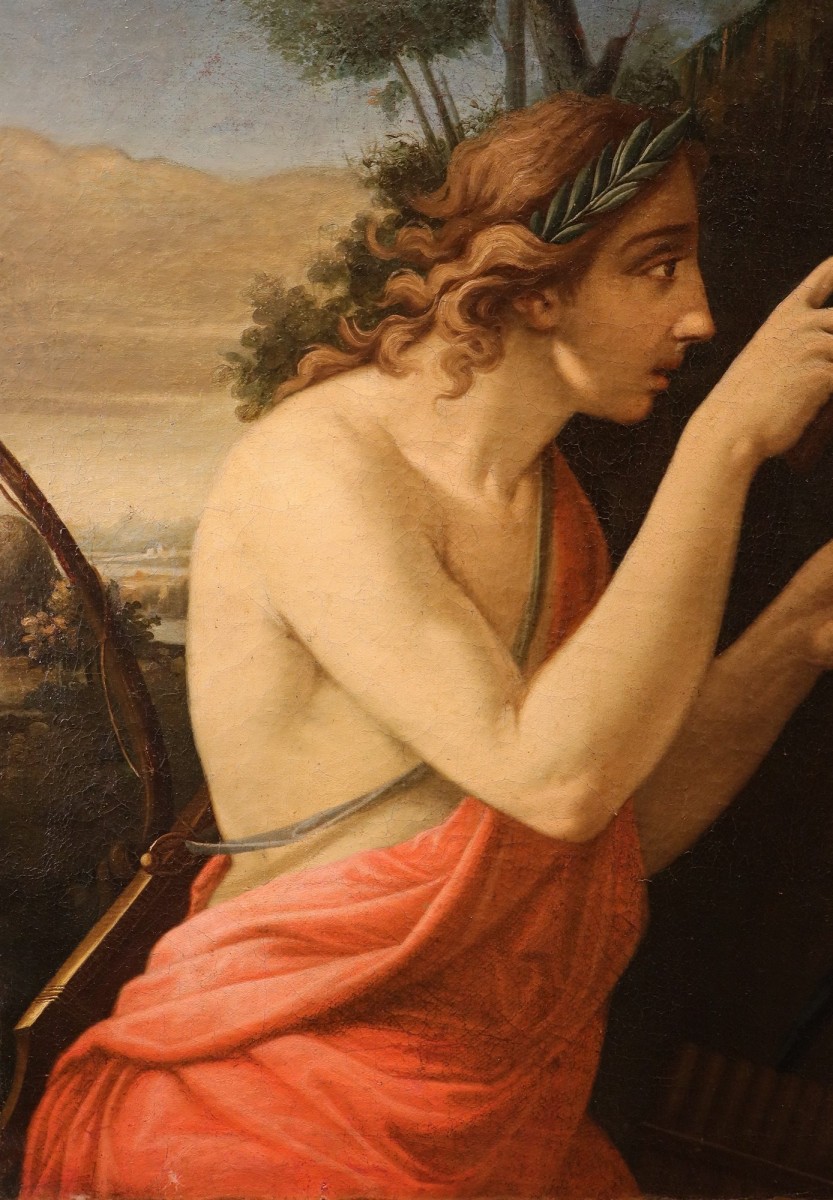

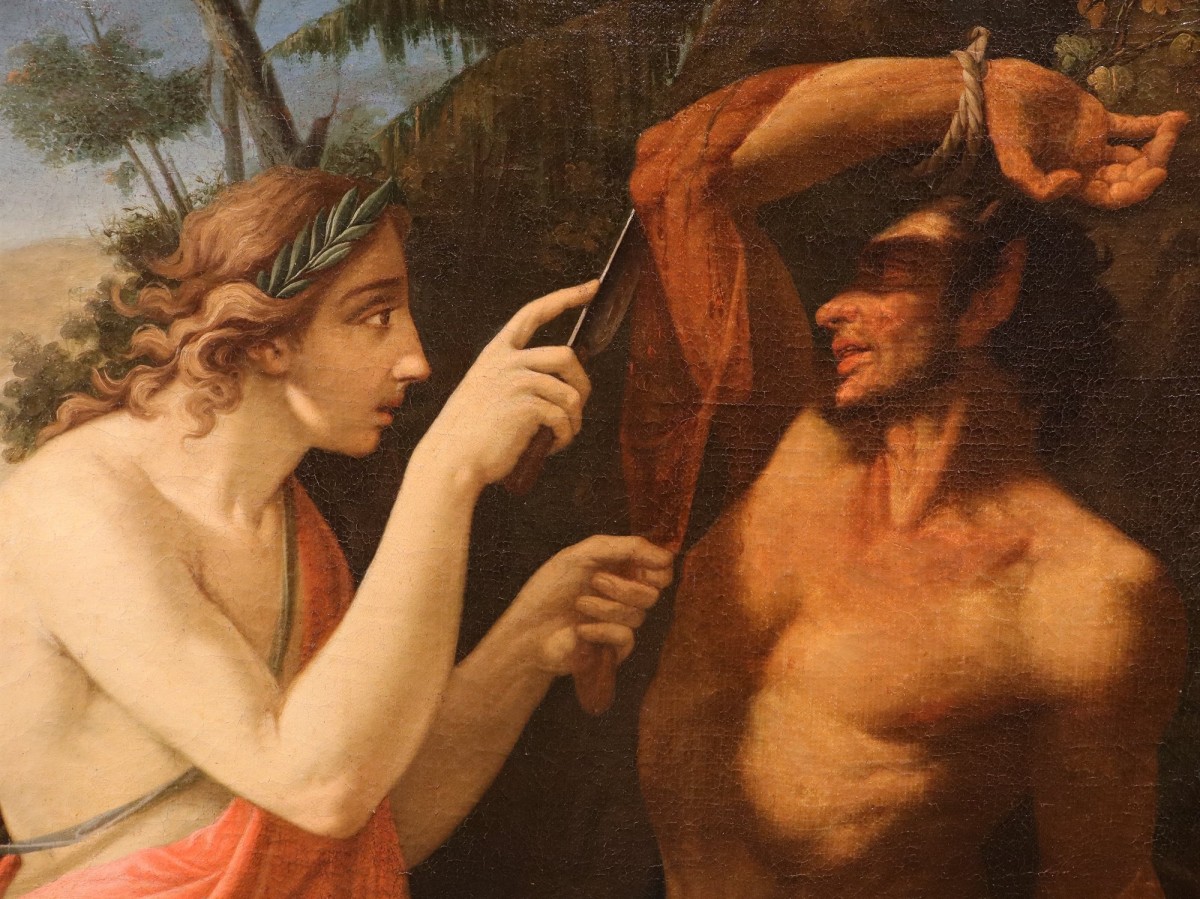
Apollo and Marsyas, Pompeo Girolamo Batoni (Lucca 1708 – Rome 1787) circle
oil on canvas (65 x 83 cm. - framed 84 x 102 cm.)
Provenance: Private collection, Rome
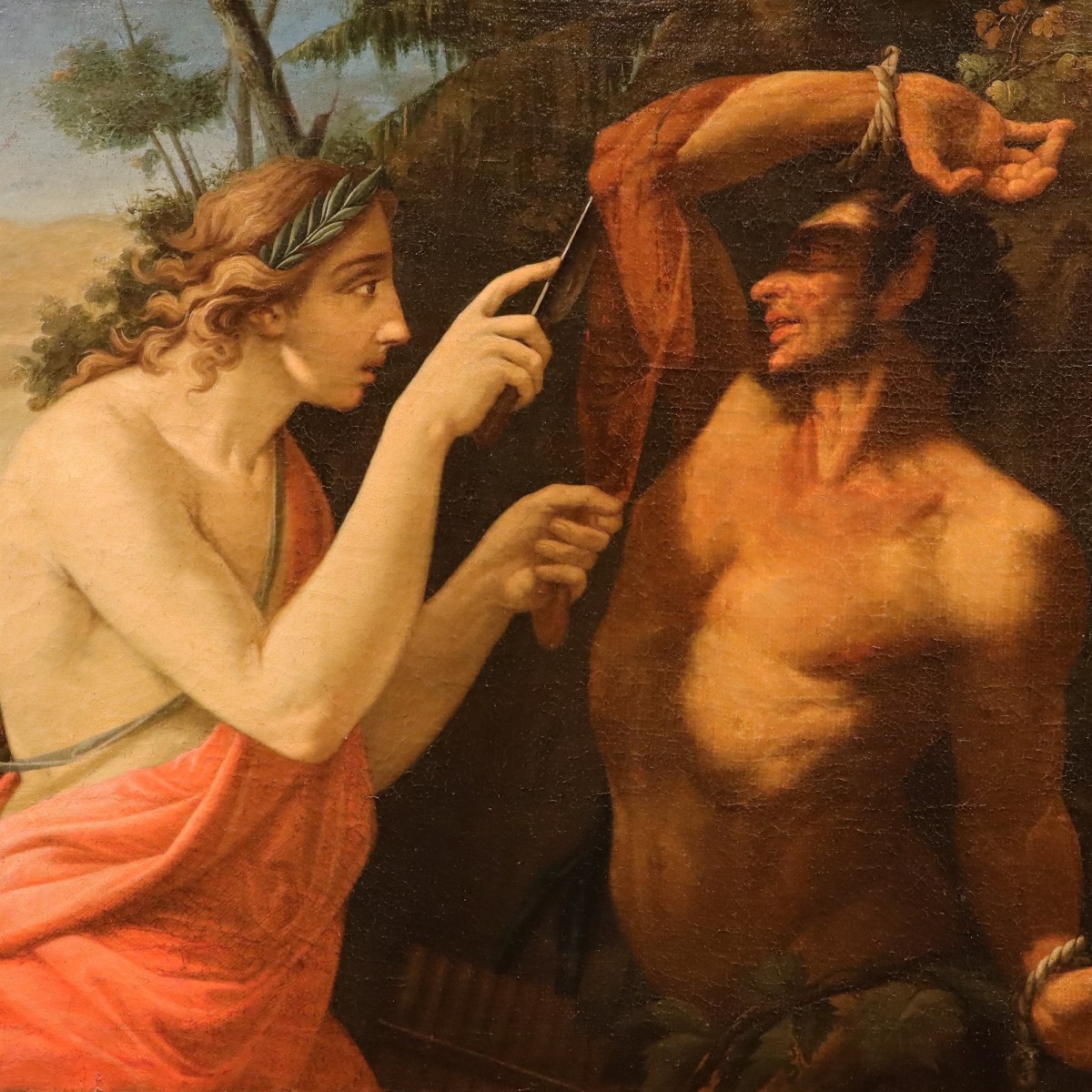
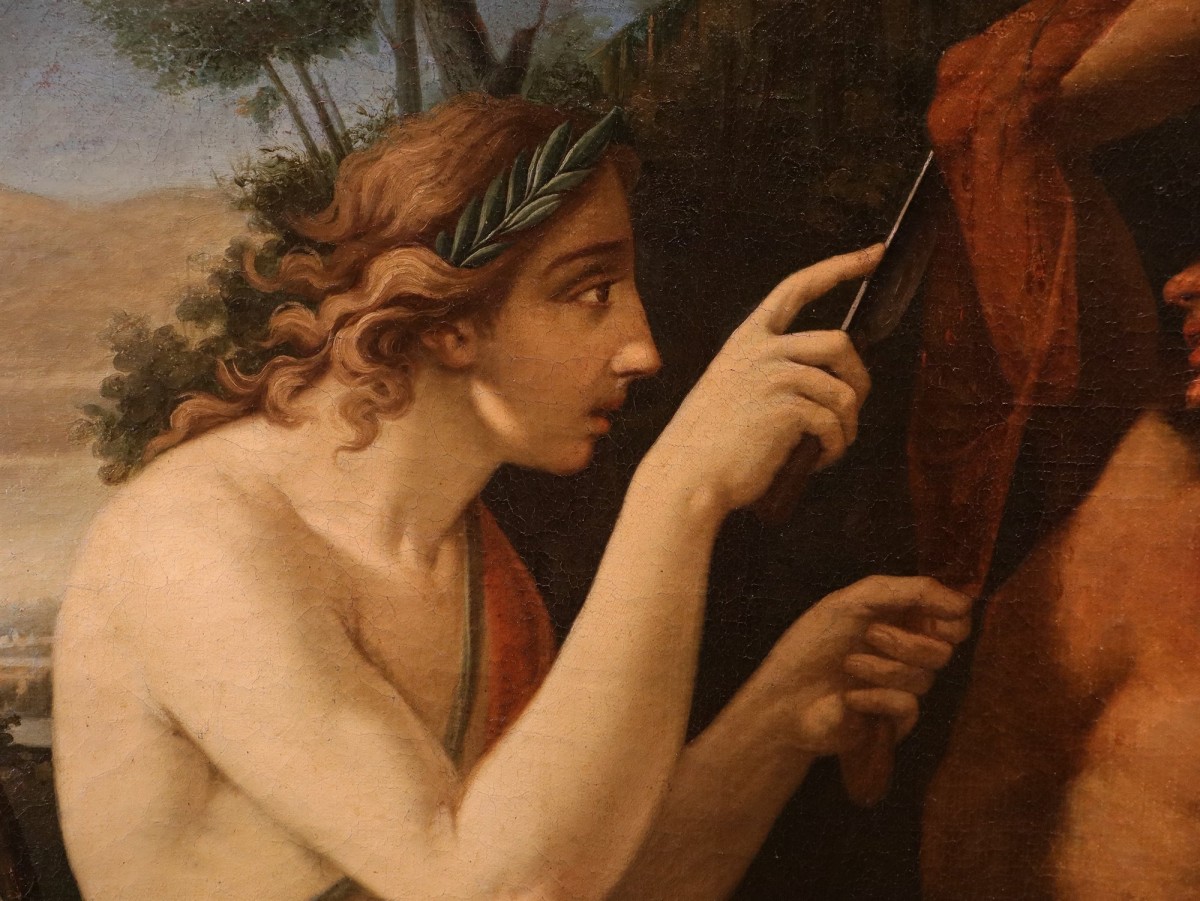
The subject of the painting is taken from the mythological tale of the musical competition between the god Apollo and the satyr Marsyas, narrated by the poet Ovid in Metamorphoses (book VI, lines 282-400, and book XI, lines 150-194). After discovering the double-reed flute (aulos) invented by the goddess Athena, the satyr Marsyas became so skilled at playing it that he dared to challenge the god Apollo with his lyre in a musical contest. Having lost, thanks to a clever stratagem by Apollo, he was punished for his arrogance.
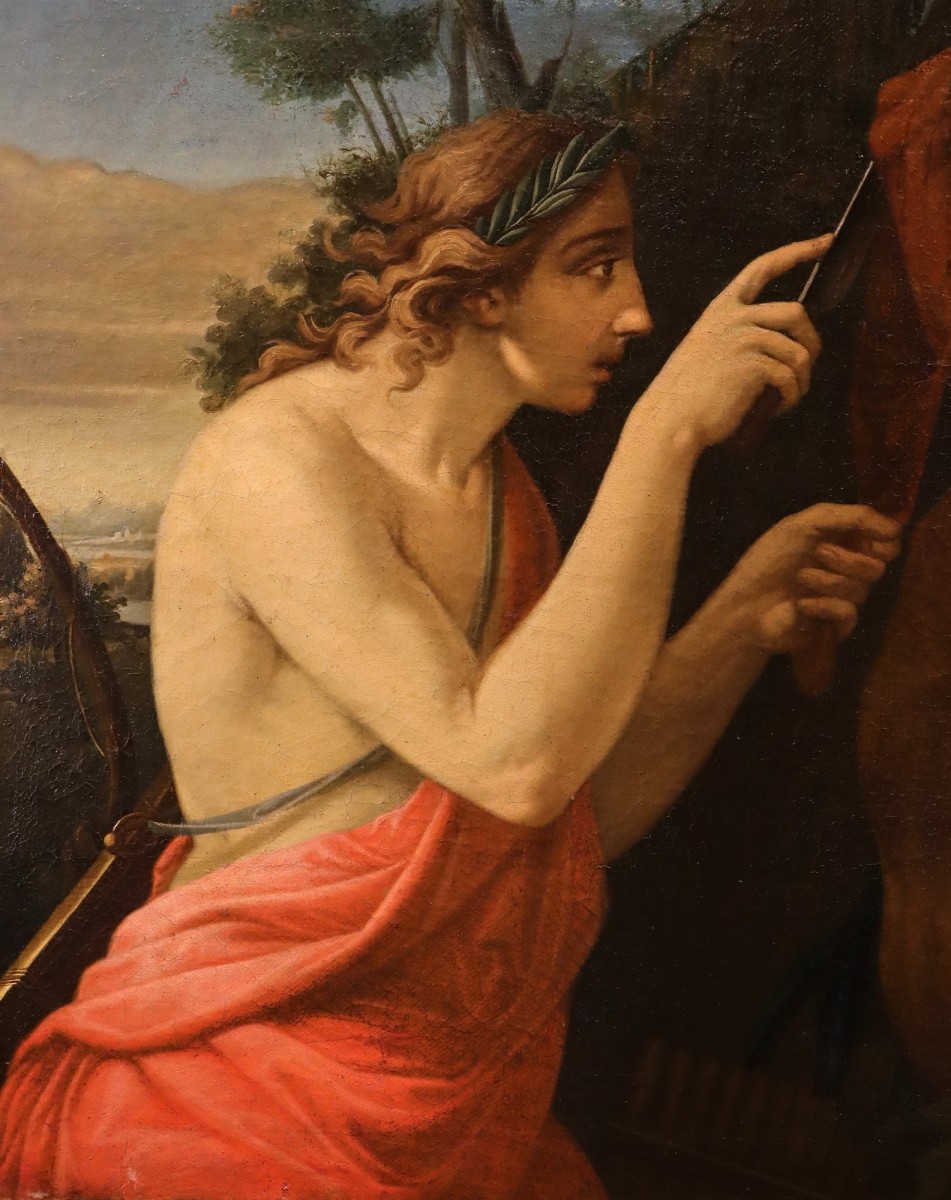
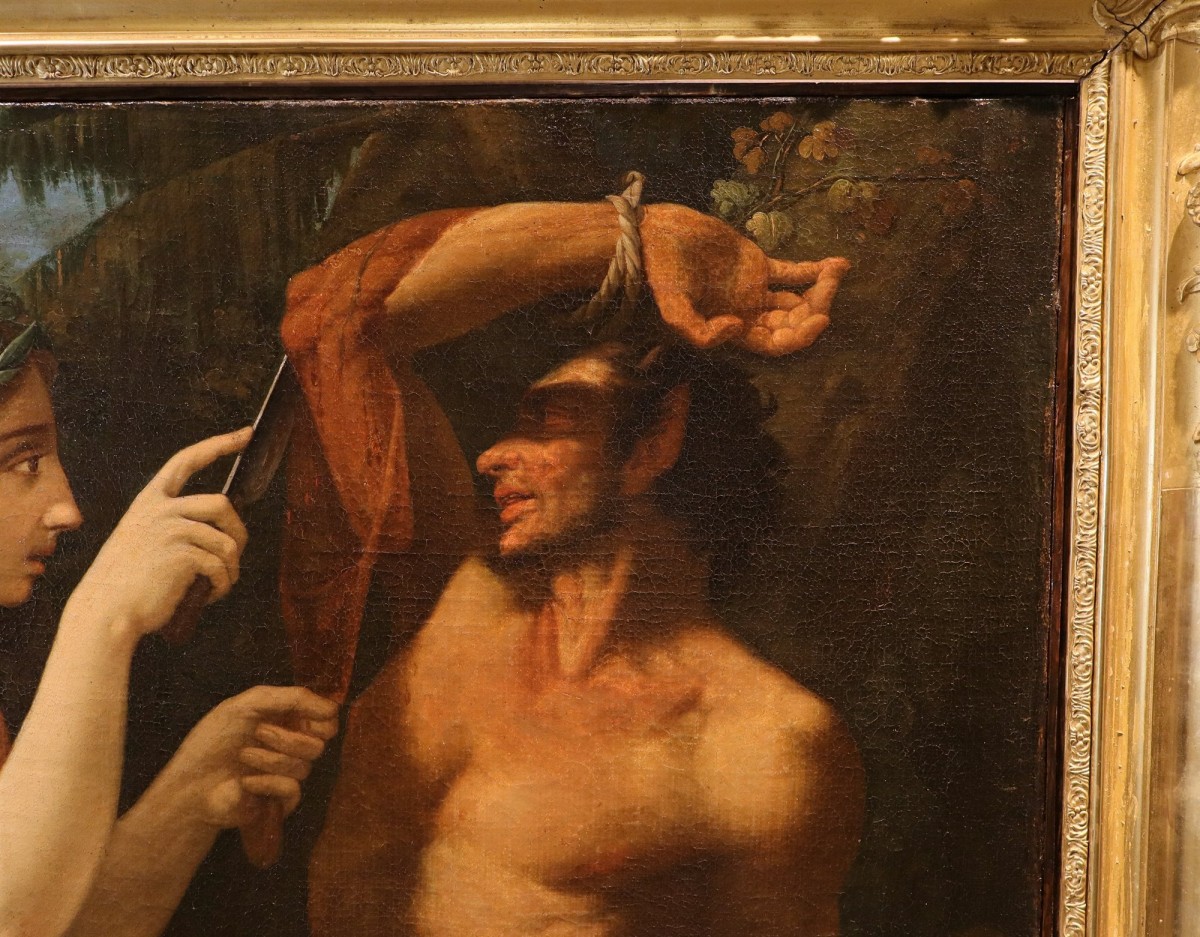
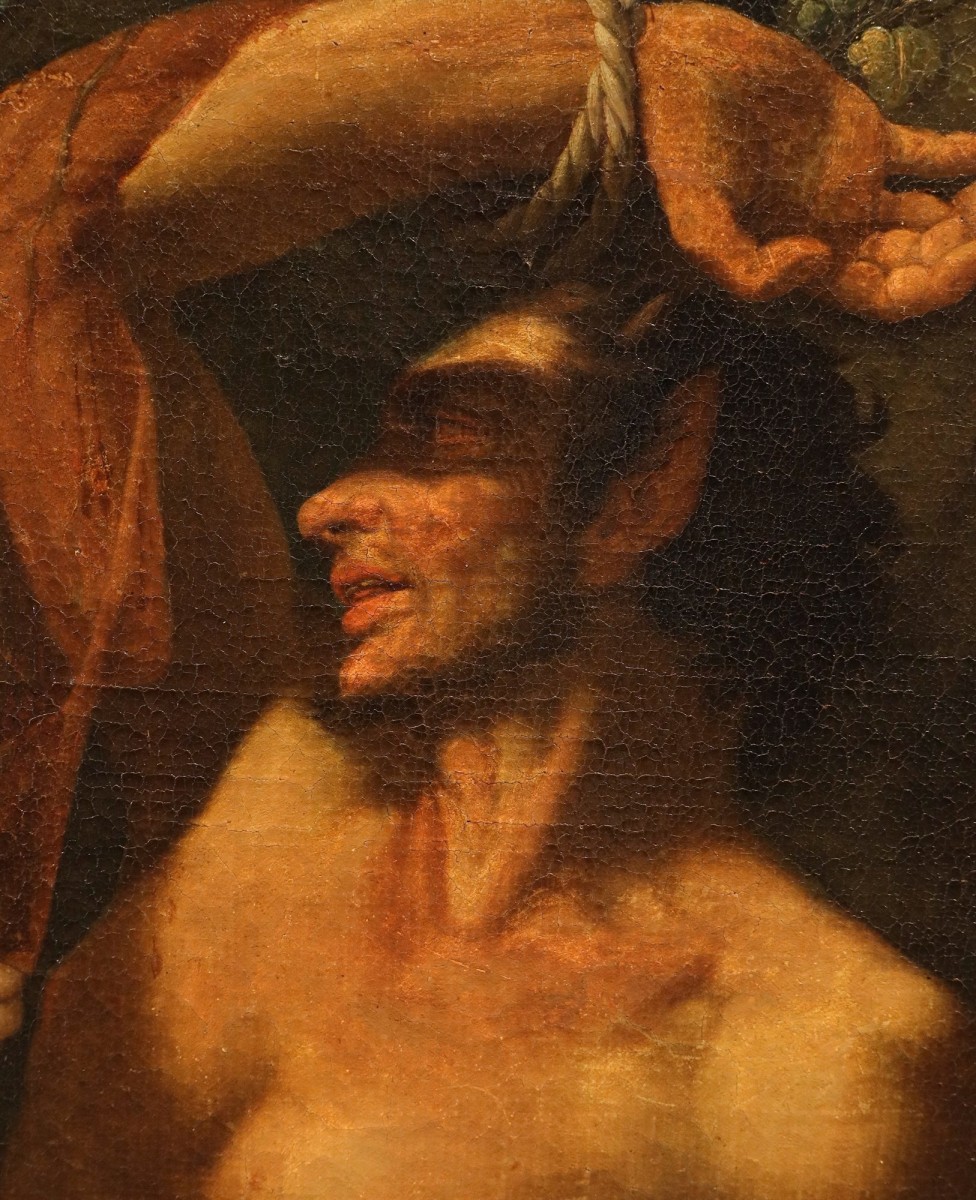
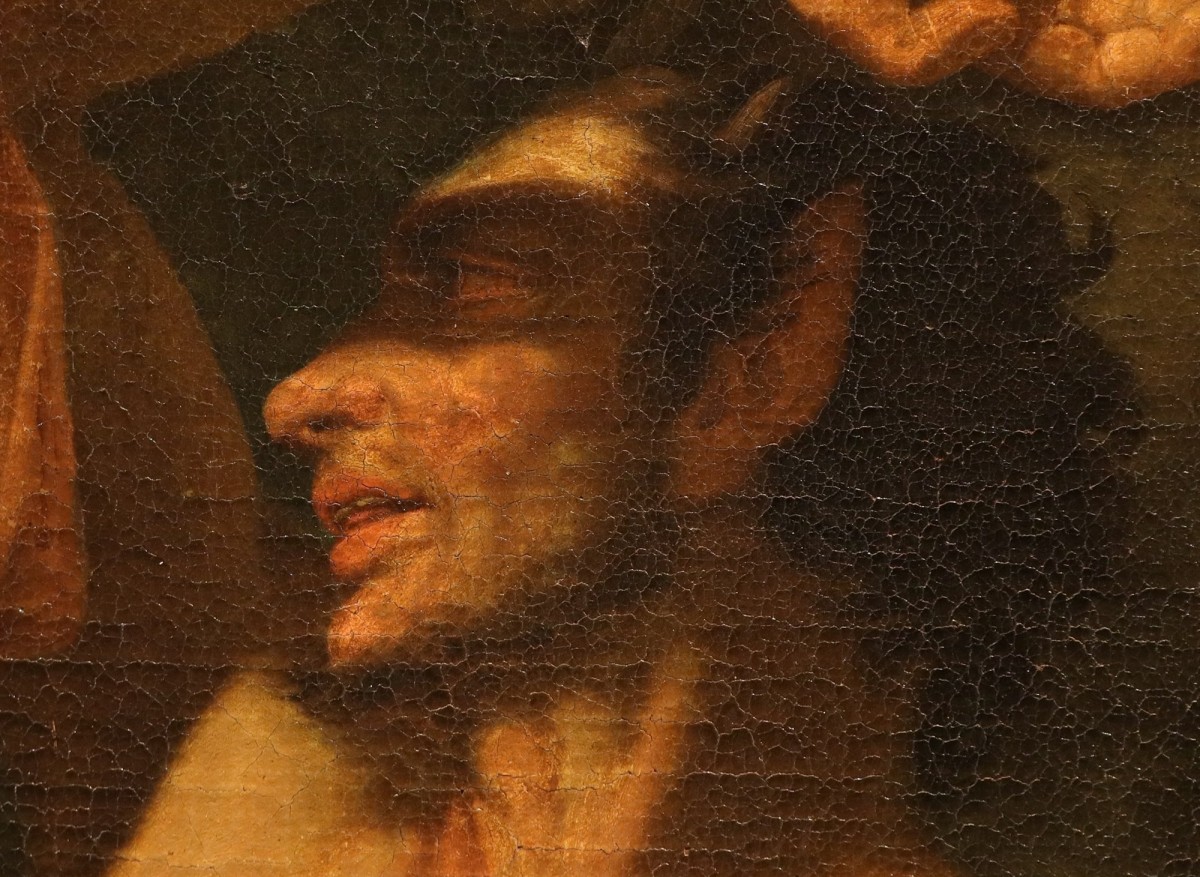
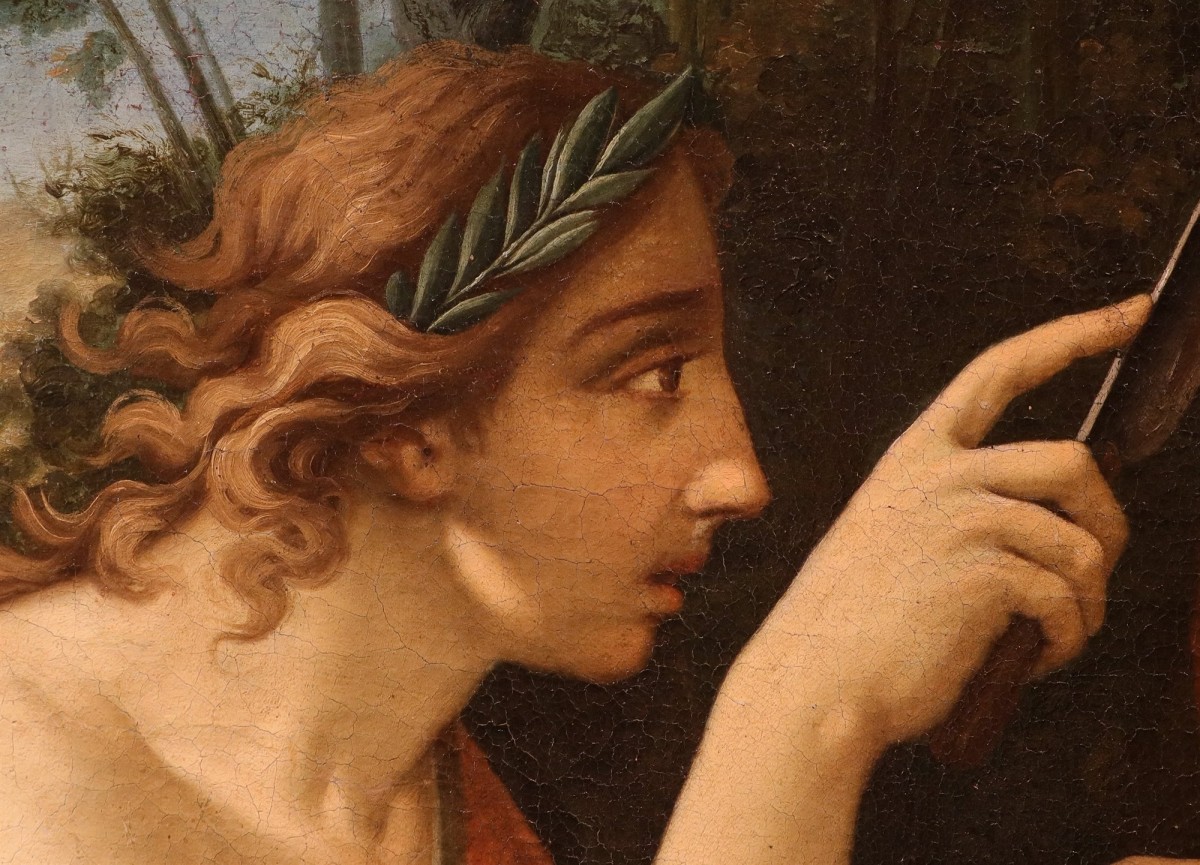
The scene, set in a wooded landscape, captures the most dramatic moment of the story, namely the execution of the punishment chosen by the vengeful Apollo, winner of the contest: the god, recognisable by his laurel wreath and the bow on his back, holds a sharp instrument and grabs a flap of Marsyas' skin, who is tied to a tree trunk with his hands raised, in order to skin him.
The theme of Apollo and Marsyas was a favourite among authors in the 17th and 18th centuries because of its symbolic value, alluding to the struggle between celestial harmony and reason (personified by Apollo) and human pride (Marsyas), between rationality and pure passion. the punishment, although cruel, is a kind of purification ritual: the skin represents the outer appearance, which is removed to unmask vanity and reveal the true essence, in a painful but purifying process. ù
The work can be attributed to a neoclassical painter of the Roman school active in the 18th century, from the entourage of Pompeo Girolamo Batoni (Lucca 1708 – Rome 1787).
The defined drawing, the colour range, the compositional balance and the plasticity of the anatomies reflect the eighteenth-century taste for the new vision of neoclassical art, which also embraced mythological themes and of which Batoni was a great exponent, with the abandonment of the excessive and redundant Baroque aesthetic in favour of a return to the principles of balance, composure and serenity.
Originally from Lucca, Pompeo Batoni moved to Rome at the age of twenty, where within a few years he began to receive prestigious commissions, with a career that continued to flourish for over fifty years and saw him engaged, with the decisive collaboration of his sons, in an impressive number of commissioned paintings. Excellent condition, complete with gilded frame.
Delevery information :
We take care of and organise the transport of the purchased works, both for Italy and abroad, through professional and insured carriers.
We take great care We personally take care of the packaging, to which we devote a great deal of care: each work is carefully packed, first with arti- cle material, then with a custom-made wooden box.
Should you have the desire to see this or other works in person, we would be happy to welcome you to our gallery in Riva del Garda, Viale Giuseppe Canella 18, we are always open by appointment only.