Offered by Antichità Castelbarco
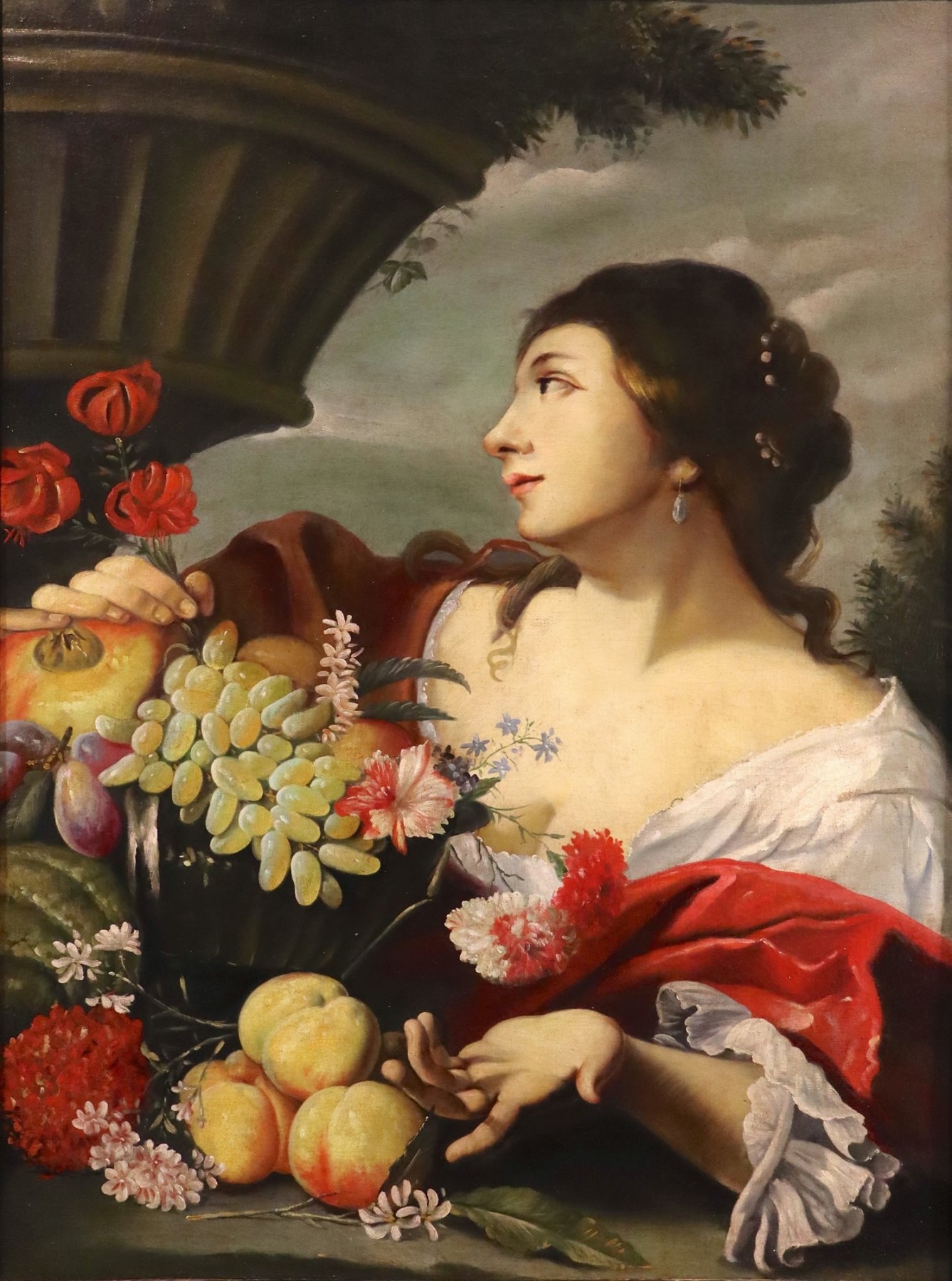
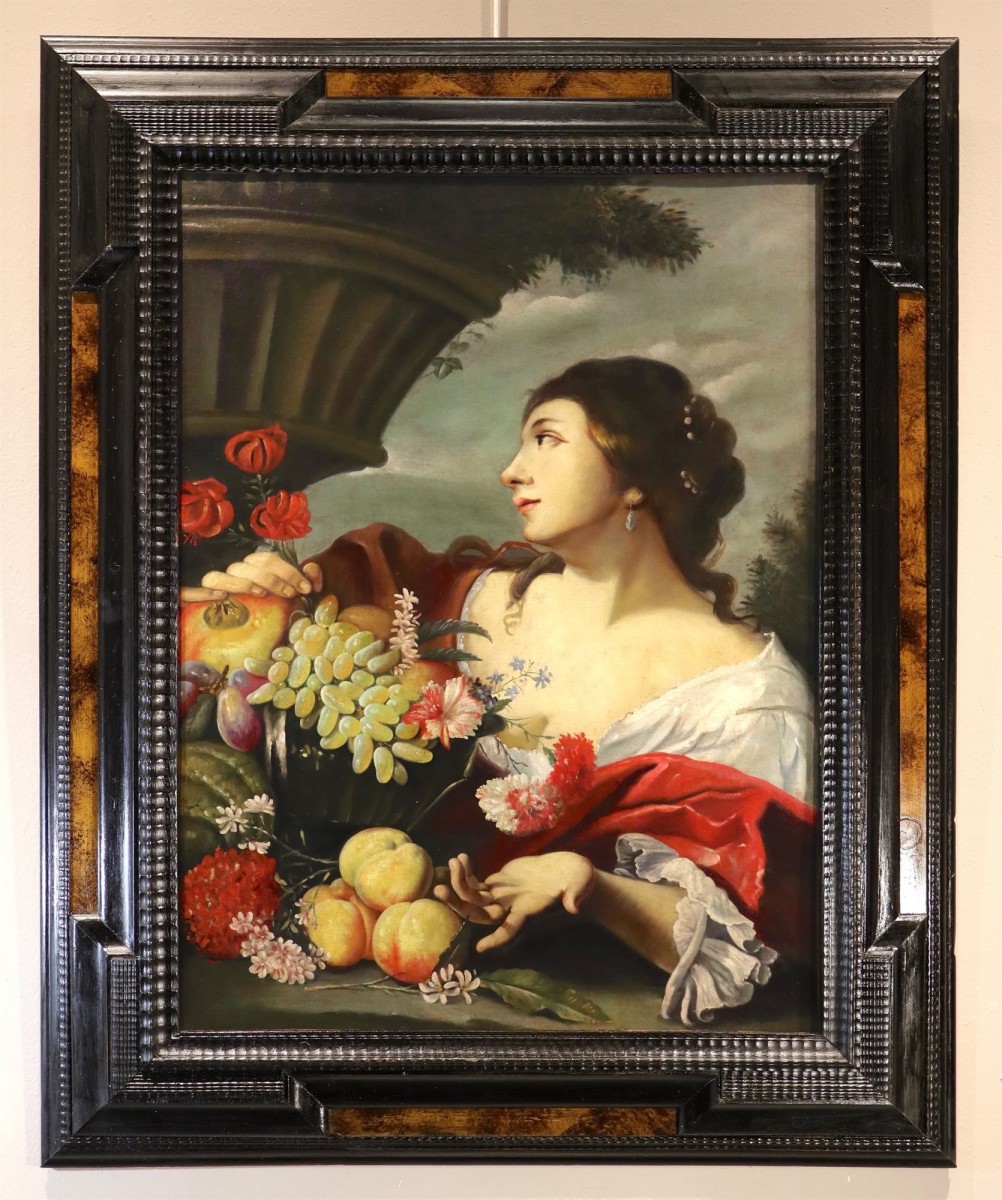

Abraham Brueghel (Antwerp 1631 - Naples 1690) workshop of
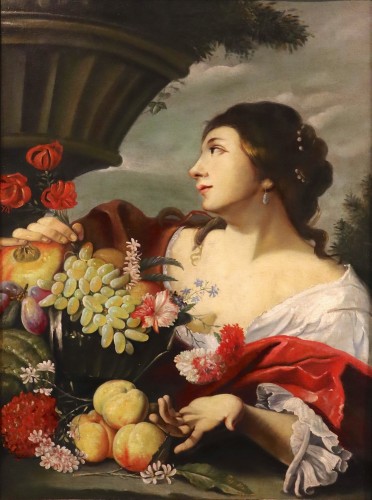
Maiden with Flowers and Fruit (as Allegory of Summer)
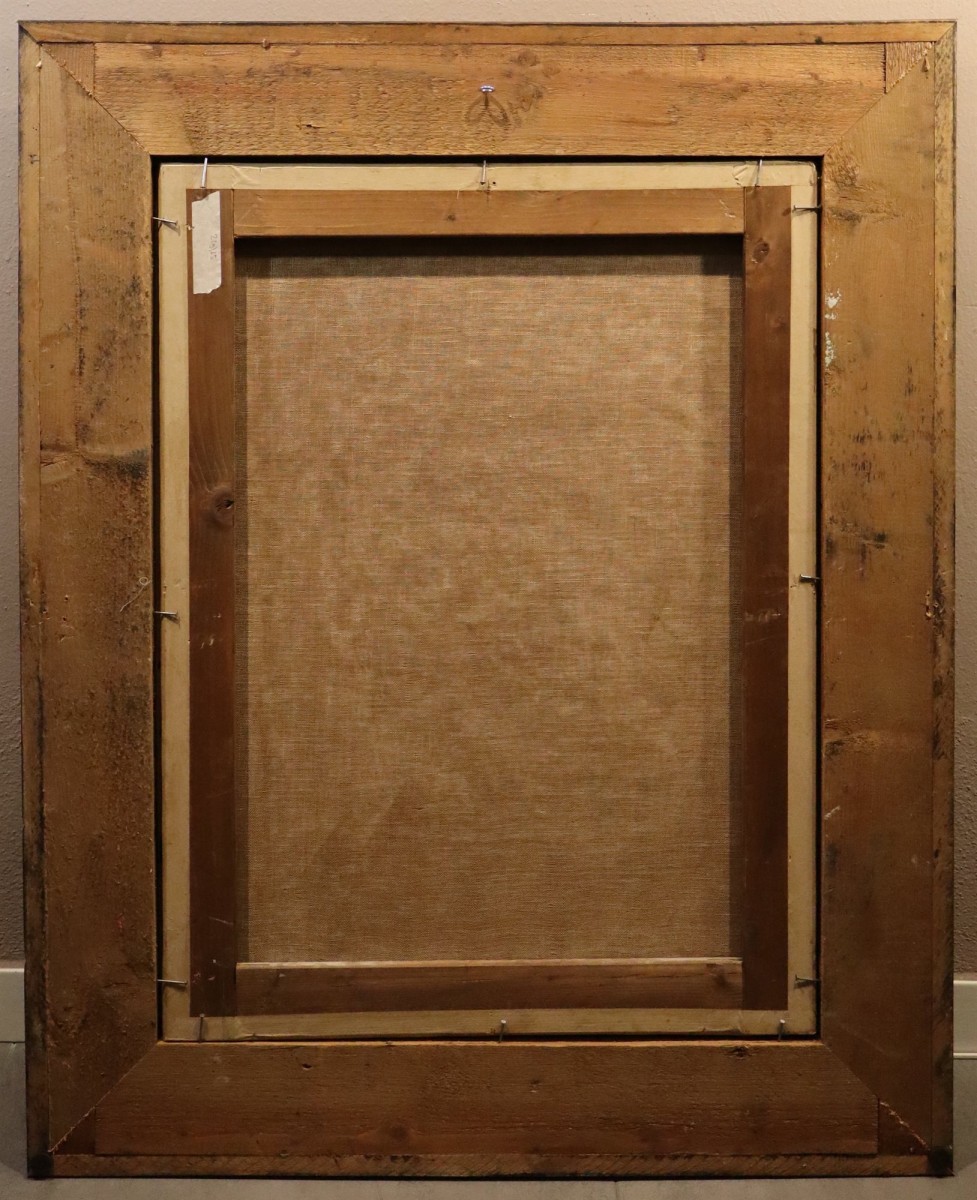
Oil on canvas (80 x 60 cm. - Framed 105 x 85 cm.)
Expertise: Prof. Alberto Cottino
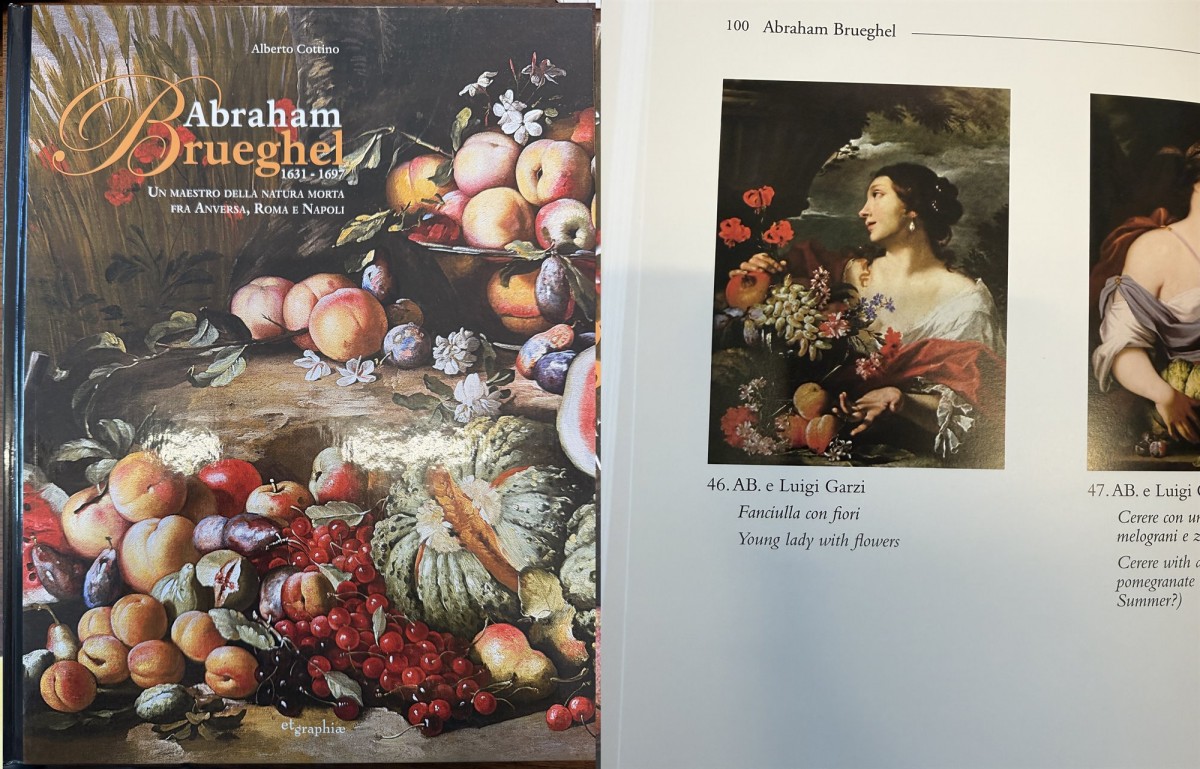
Bibliography: Alberto Cottino, Abraham Brueghel 1631-1697. A master of still life between Antwerp, Rome and Naples, Etgraphiae, Rome 2022.
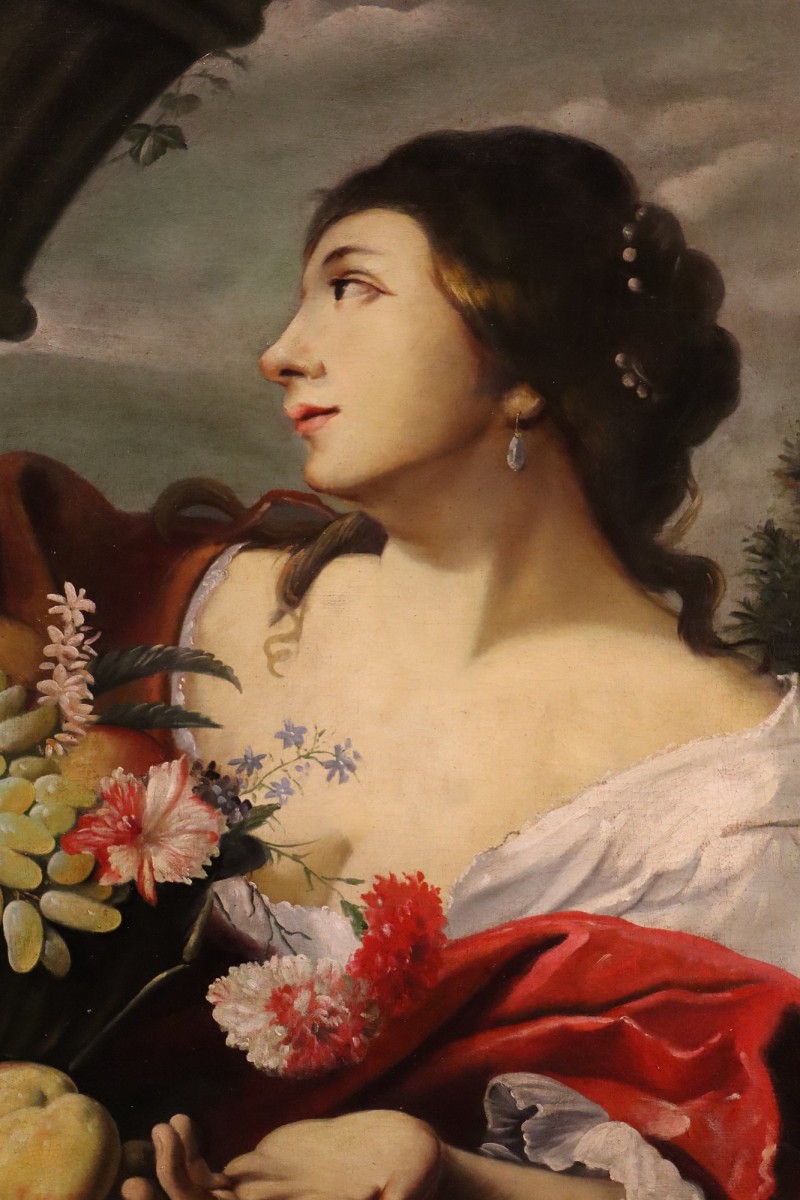
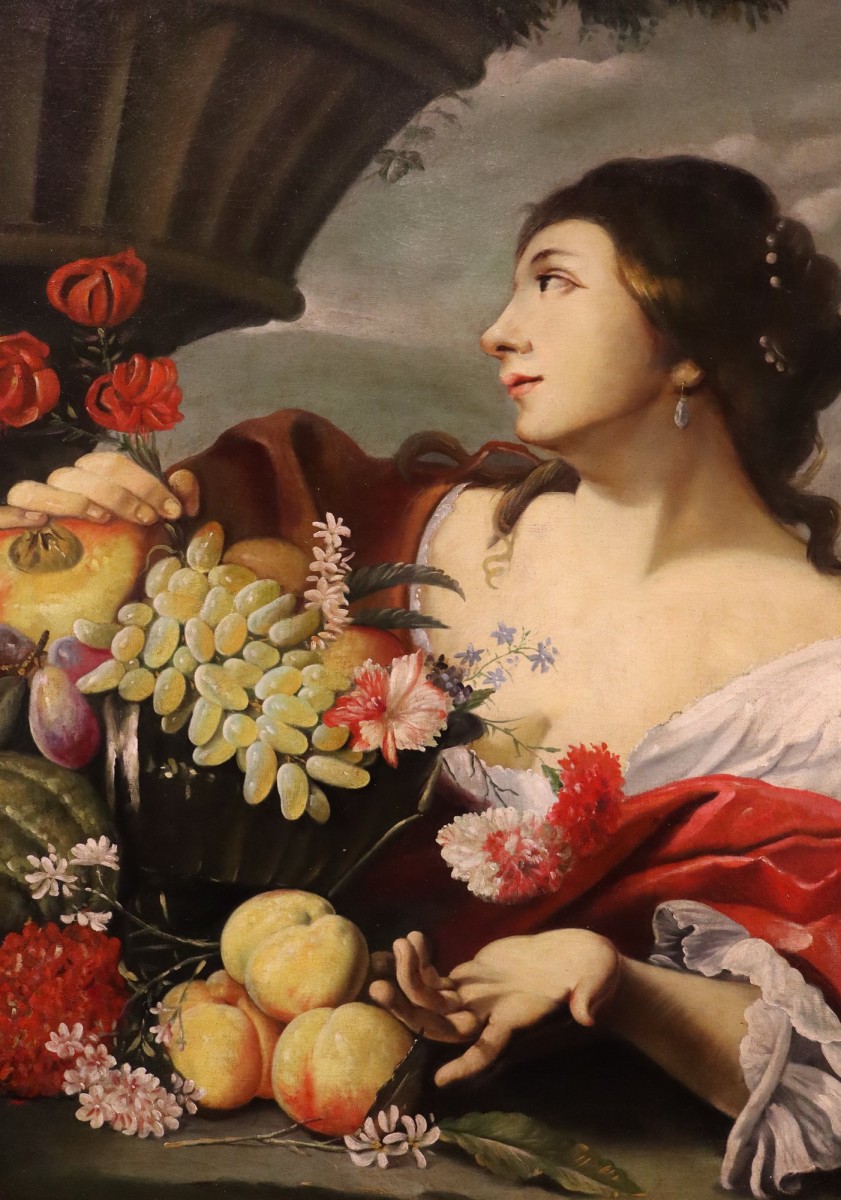
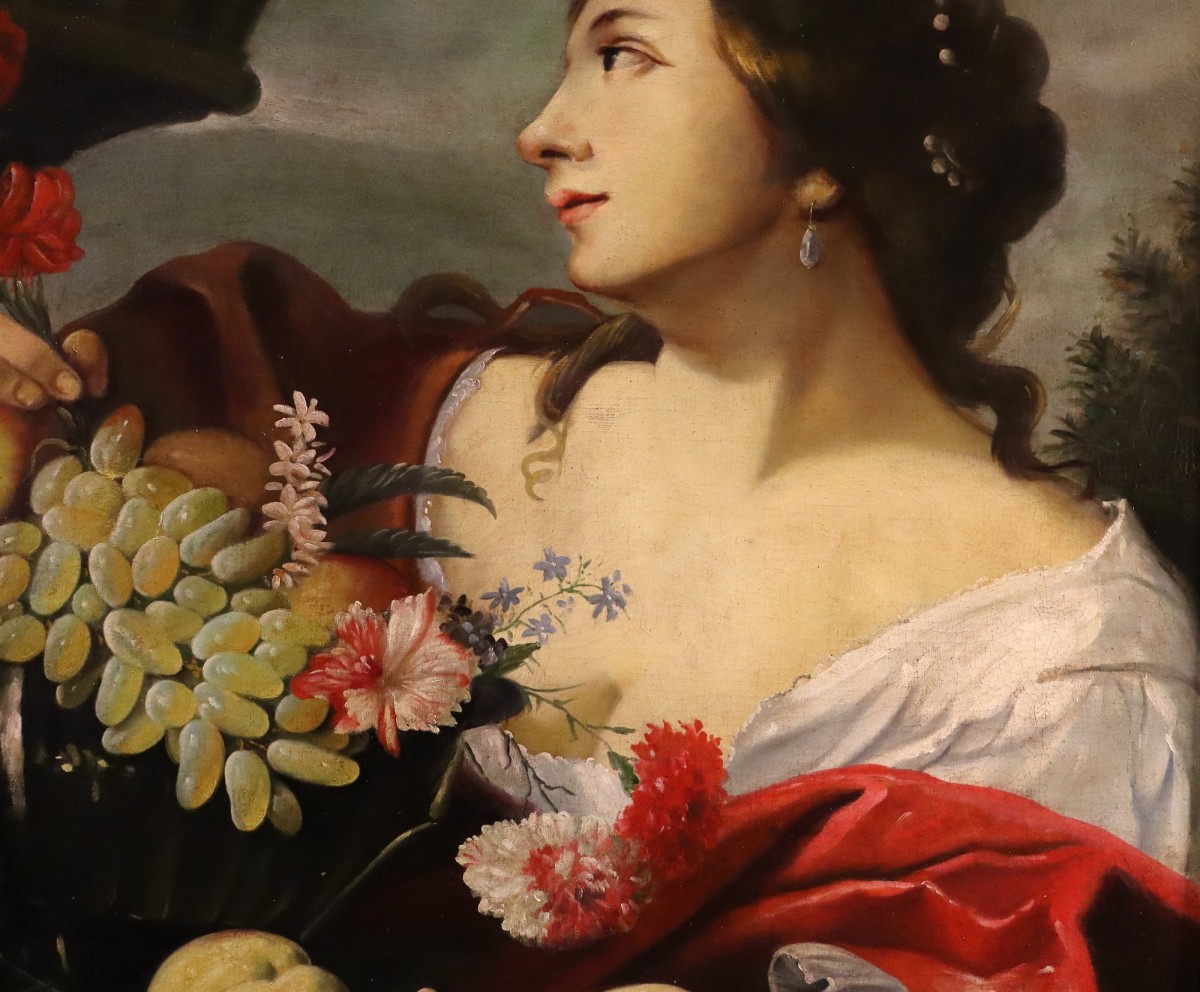
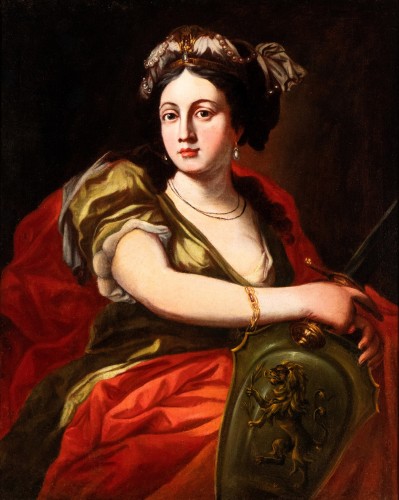
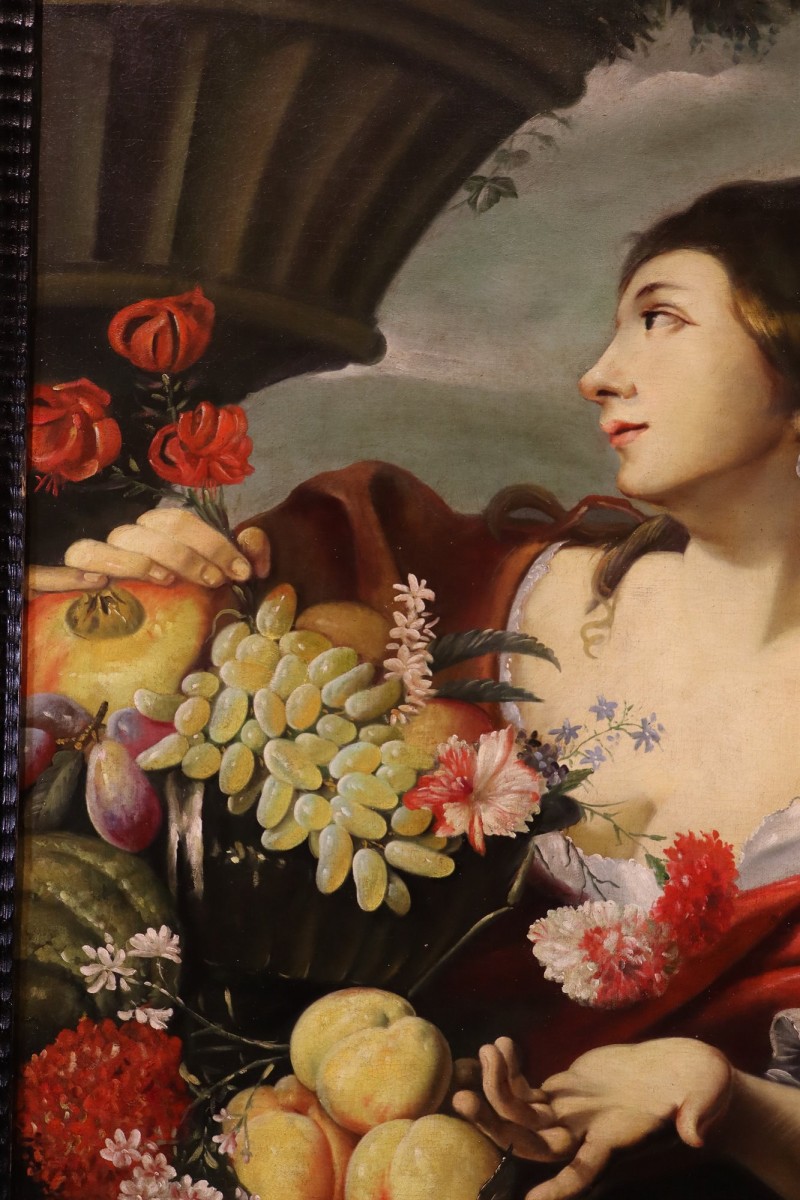
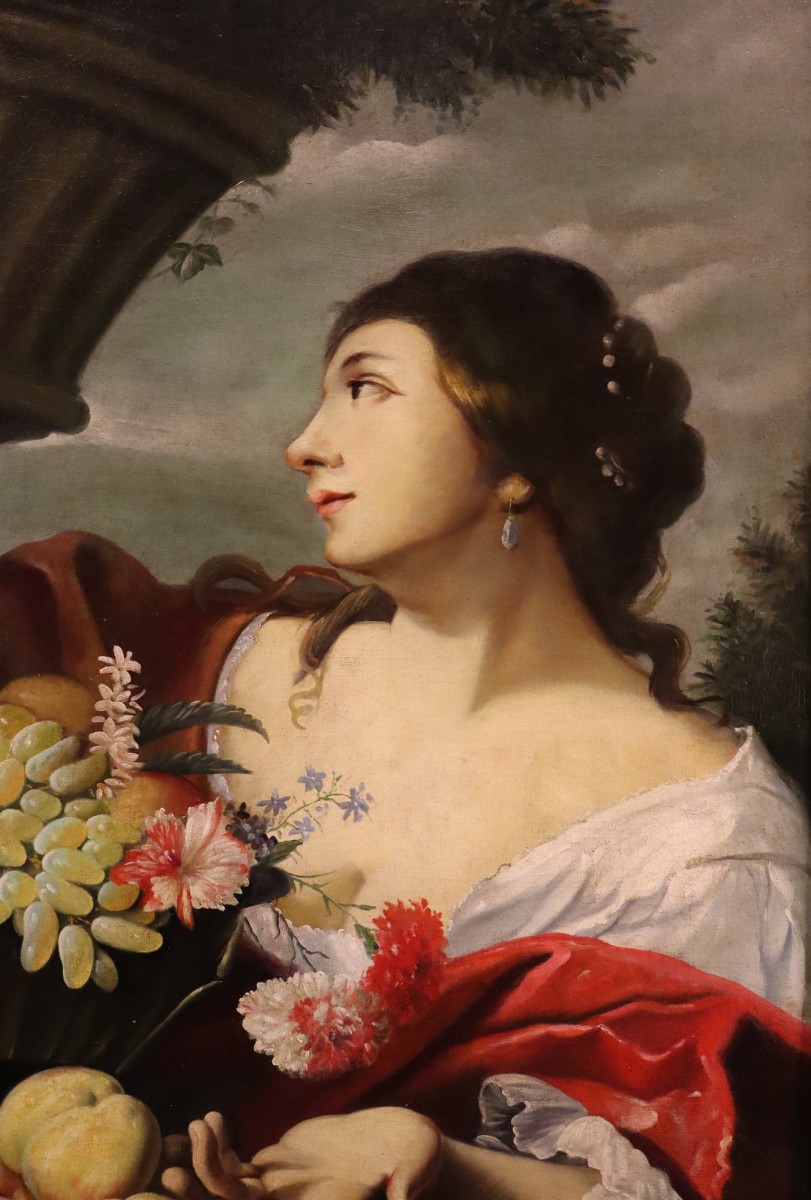
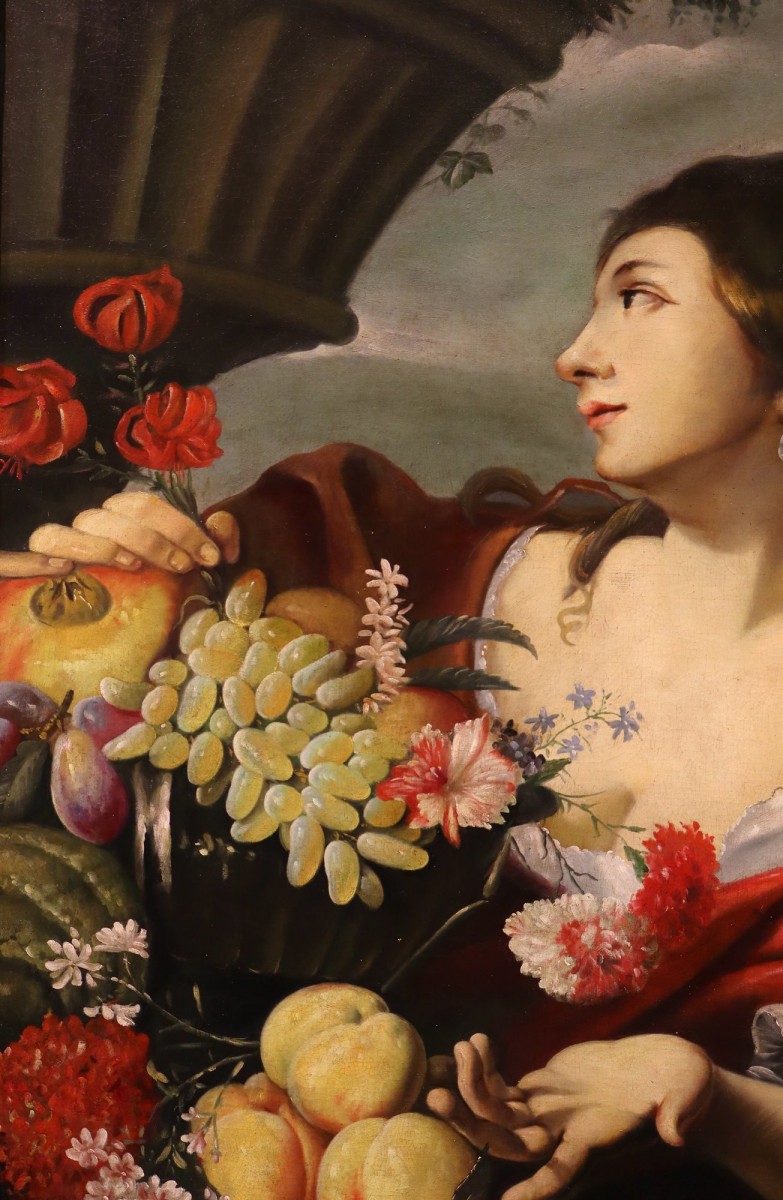
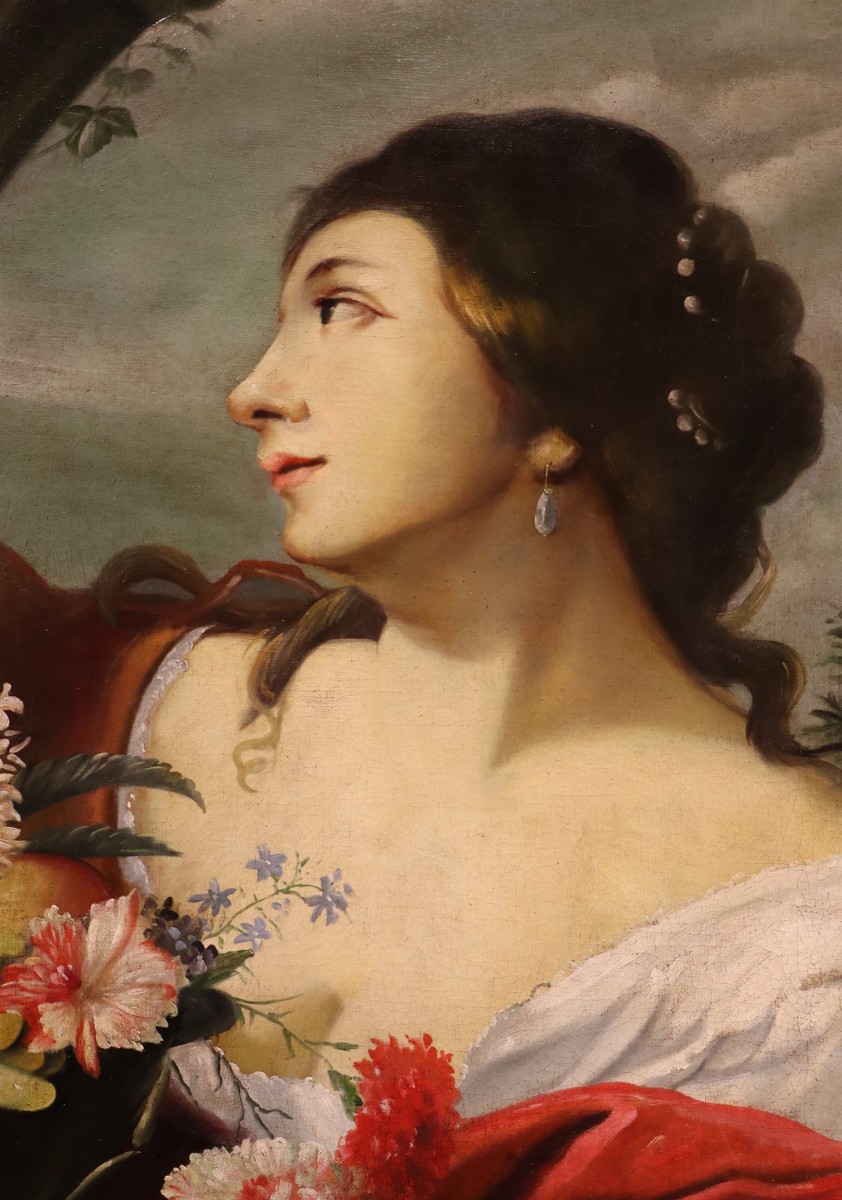
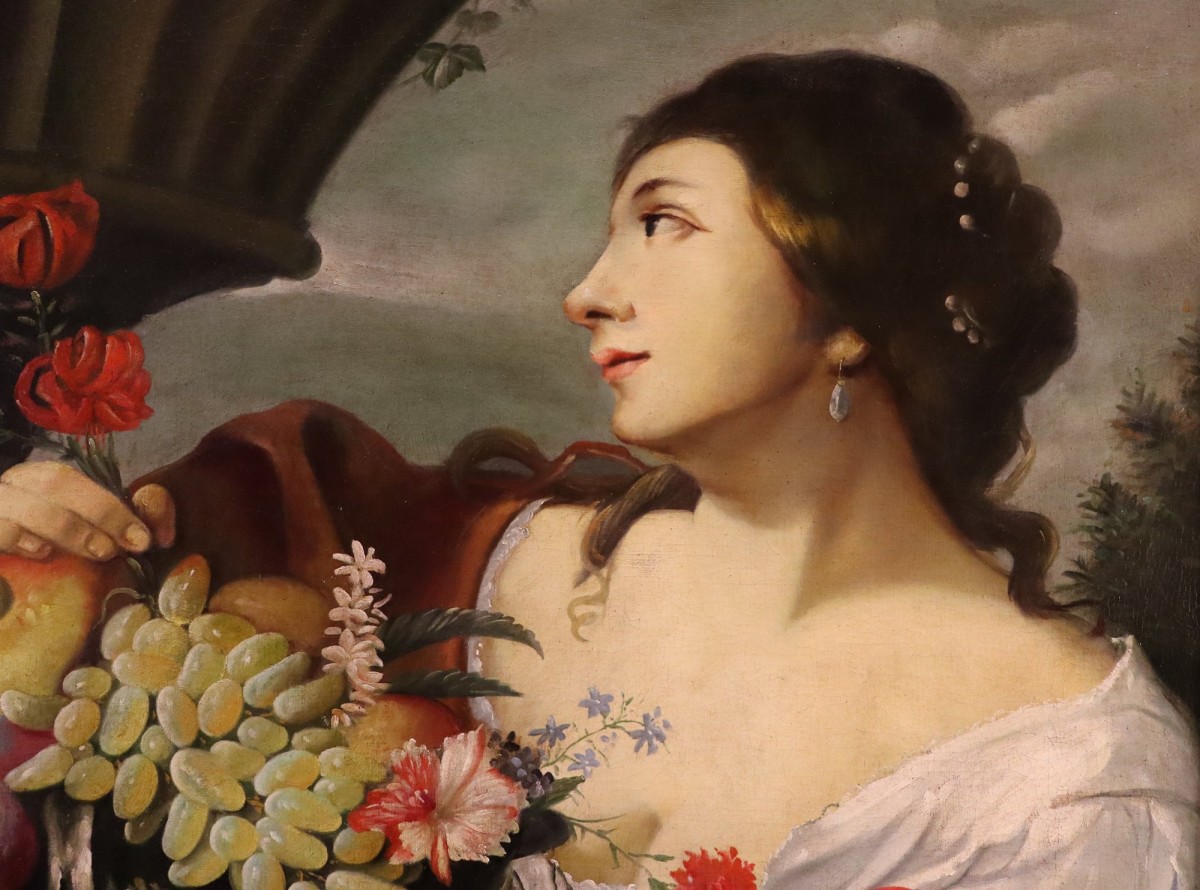
This painting, of remarkable quality and artistic merit, depicts an attractive young girl, portrayed in a graceful pose, dressed in an elegantly draped gown with a plunging neckline, her hair gathered with a string of pearls to emphasise her beauty.
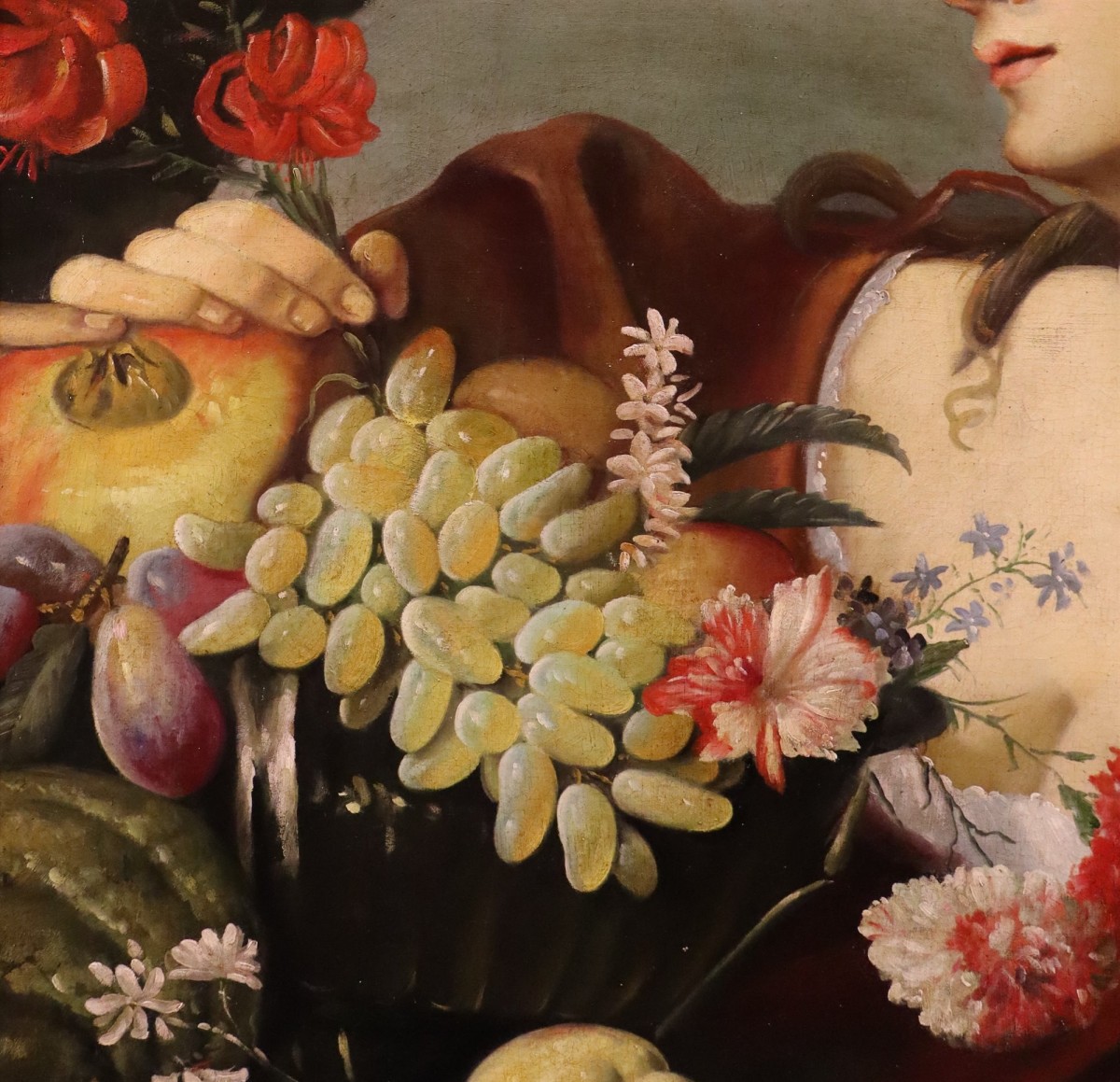
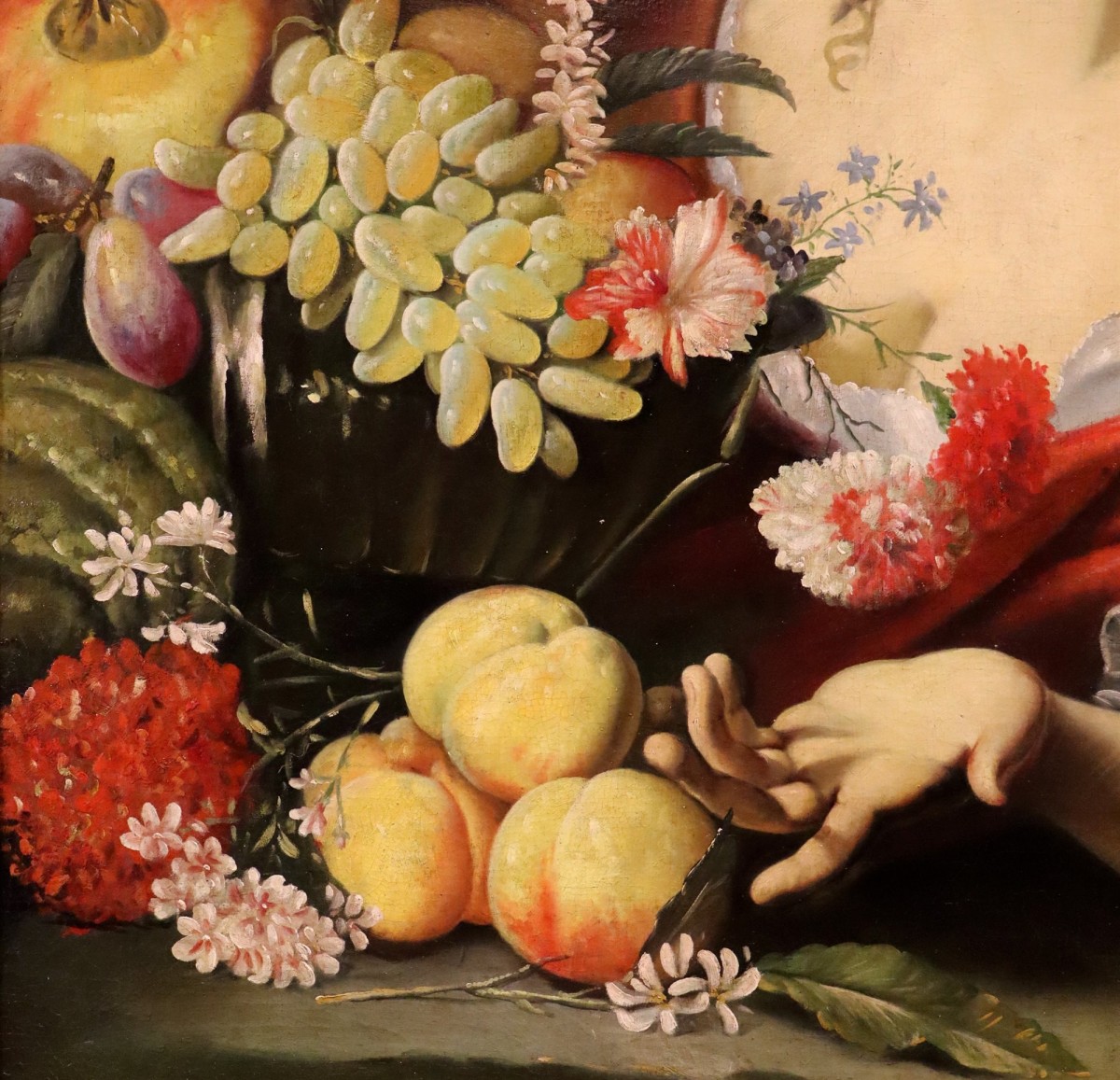
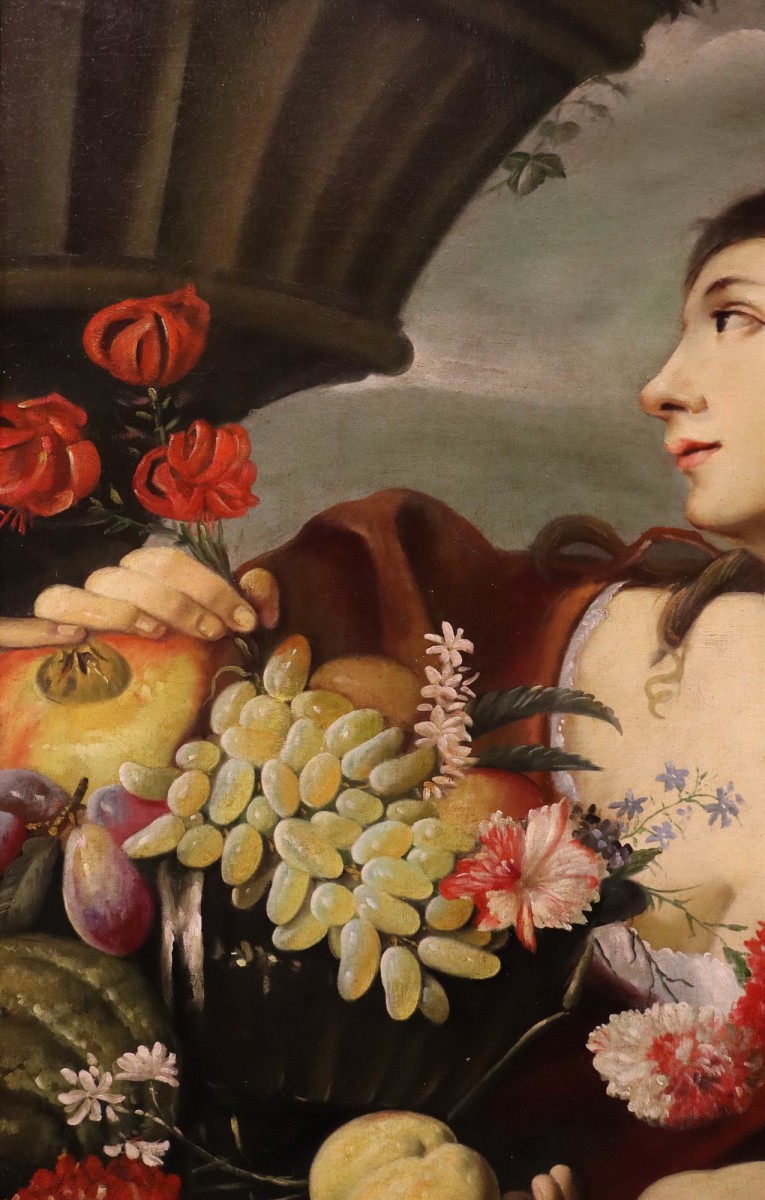
With one hand she is reaching for a flowering branch, while with the other she seems to invite the viewer to admire the opulence of the composition of flowers and fruit she is holding close.
From the mid-17th century onwards, the fashion for these decorative depictions of girls with mythological themes in settings adorned with flowers or fruit quickly spread throughout Italy, but especially in Rome.
Apart from their decorative character, these types of paintings presumably also had a symbolic meaning, for example in connection with flowers and fruit, as a metaphor for female beauty and youth.
Another possible meaning of the painting in question, given the woman's beauty and pose, could be an erotic allusion, which was not unusual even in a culture dominated by the restrictions of the Counter-Reformation.
It is a painting of immediate beauty, combining remarkable pictorial finesse with a scenic composition capable of satisfying even the most demanding eye.
The style of the work, with its soft, textured brushwork and brilliant colouring, can be traced back to the Roman milieu of the second half of the 17th century: as indicated by Prof. Alberto Cottino in his study dedicated to the work, the authorship is to be found in a skilled painter who came from the workshop of the great Flemish still life painter Abraham Brueghel (Antwerp 1631–1690 Naples), probably under his direct supervision.
The analysis of the stylistic and figurative characteristics, in particular the refined style, well calibrated to Baroque exuberance, as well as the setting with elements of classical ancestry, are typical features of Brueghel's creations.
In our case, as indicated by Cottino, the work would be a version (with minimal variations) of the well-known canvas with “Girl with Flowers and Fruit”, executed by Brueghel with the collaboration of the Pistoia painter Luigi Garzi, published in the monograph on Brueghel by the same scholar (Alberto Cottino, Abraham Brueghel 1631-1697.
A master of still life between Antwerp, Rome and Naples, Etgraphiae Roma 2022, p. 100, no. 46). The main differences between the two paintings can be found in the slight reduction in the size of the painting under consideration here (the published painting measures 98 x 75 cm) and in a slight discrepancy in the girl's physiognomy, which here has a slightly more elongated profile.
It was customary in 17th-century painters' workshops to repeat the subjects of their most successful paintings several times, and Brueghel was certainly no exception.
Our example echoes Brueghel's painting, retaining its elegance and freshness, as well as its fluidity of execution, so much so that Cottino has suggested a possible attribution to his brother and trusted collaborator, Jan Baptist Brueghel (Antwerp 1647 – Rome 1719), who assisted him in the numerous commissions that a highly successful workshop had to complete.
Among the works that we can mention, by way of comparison, see: the collaboration between Guglielmo Cortese and Abraham Brueghel, “Young Woman with a Cherub in a Garden with Fruit and Vegetables” (Private collection, Modena) (1), or the collaboration between Abraham Brueghel and Luigi Garzi, 'Allegory of Summer, Ceres with a still life of peaches, figs, pomegranates and pumpkin' (2). Furthermore, attributable solely to Abraham Brueghel, we can mention the “Bouquet of flowers held by a vestal virgin” (3). Source: Zeri Foundation (1) https://catalogo.fondazionezeri.unibo.it/entry/work/87097/ (2
Delevery information :
We take care of and organise the transport of the purchased works, both for Italy and abroad, through professional and insured carriers.
We take great care We personally take care of the packaging, to which we devote a great deal of care: each work is carefully packed, first with arti- cle material, then with a custom-made wooden box.
Should you have the desire to see this or other works in person, we would be happy to welcome you to our gallery in Riva del Garda, Viale Giuseppe Canella 18, we are always open by appointment only.