Offered by Franck Baptiste Paris
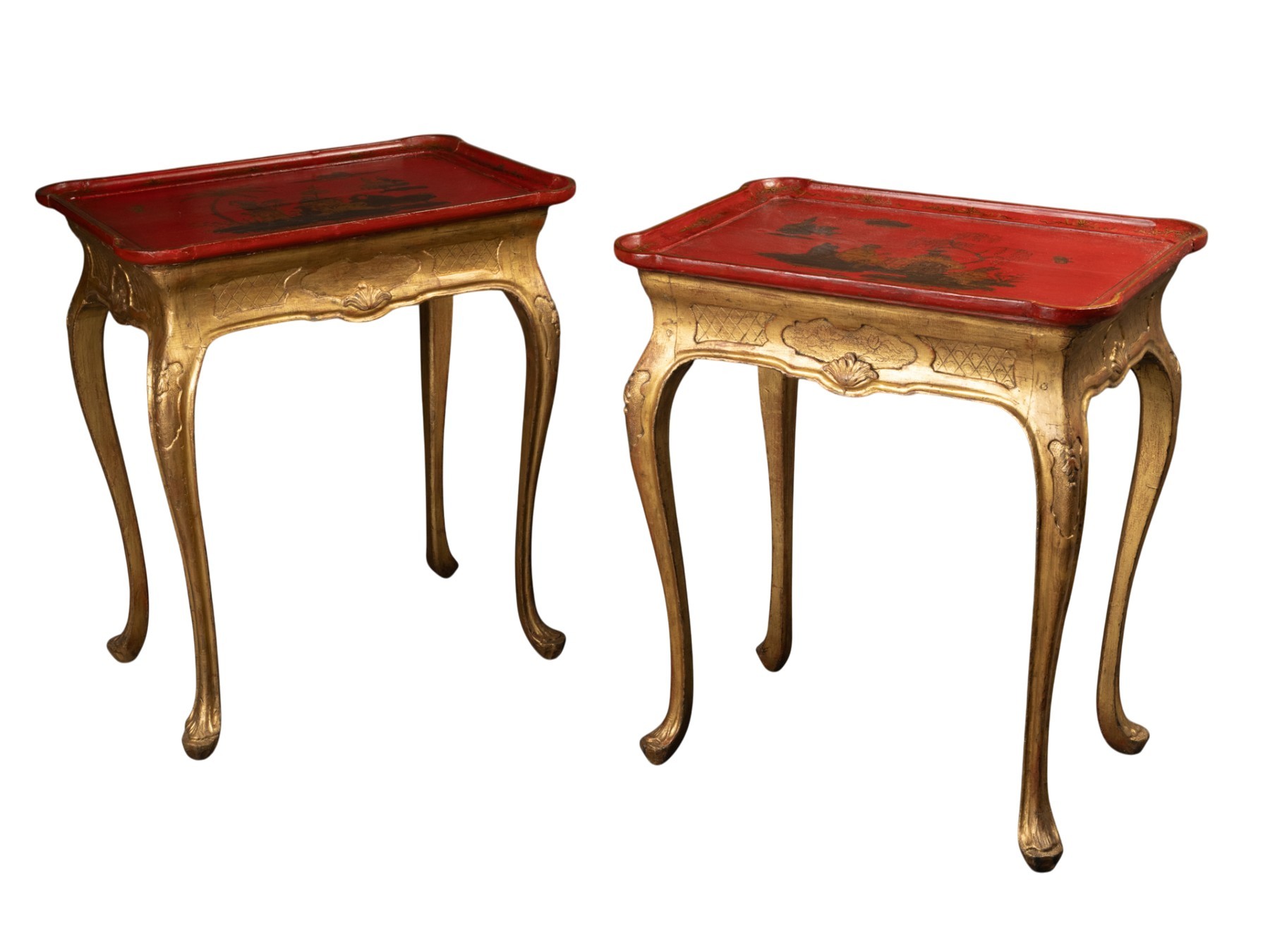
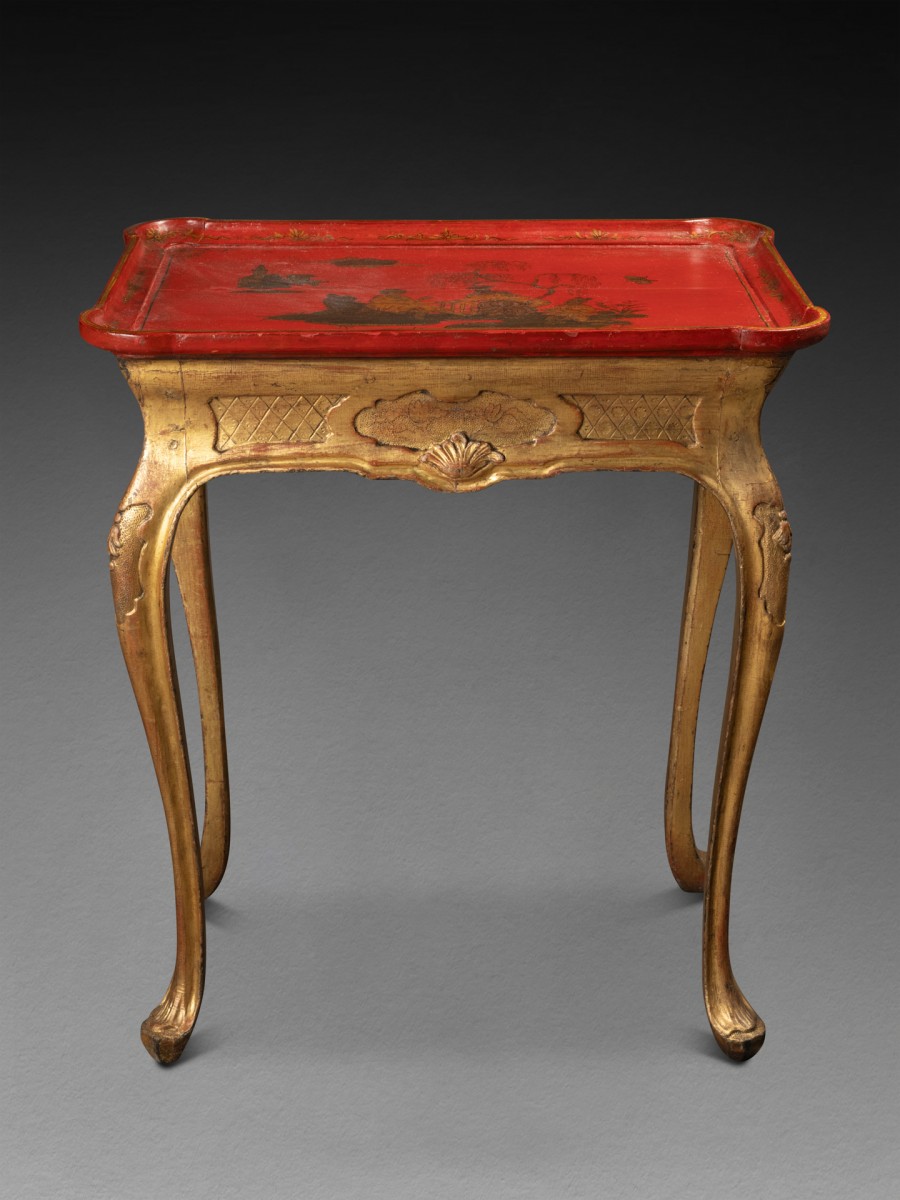
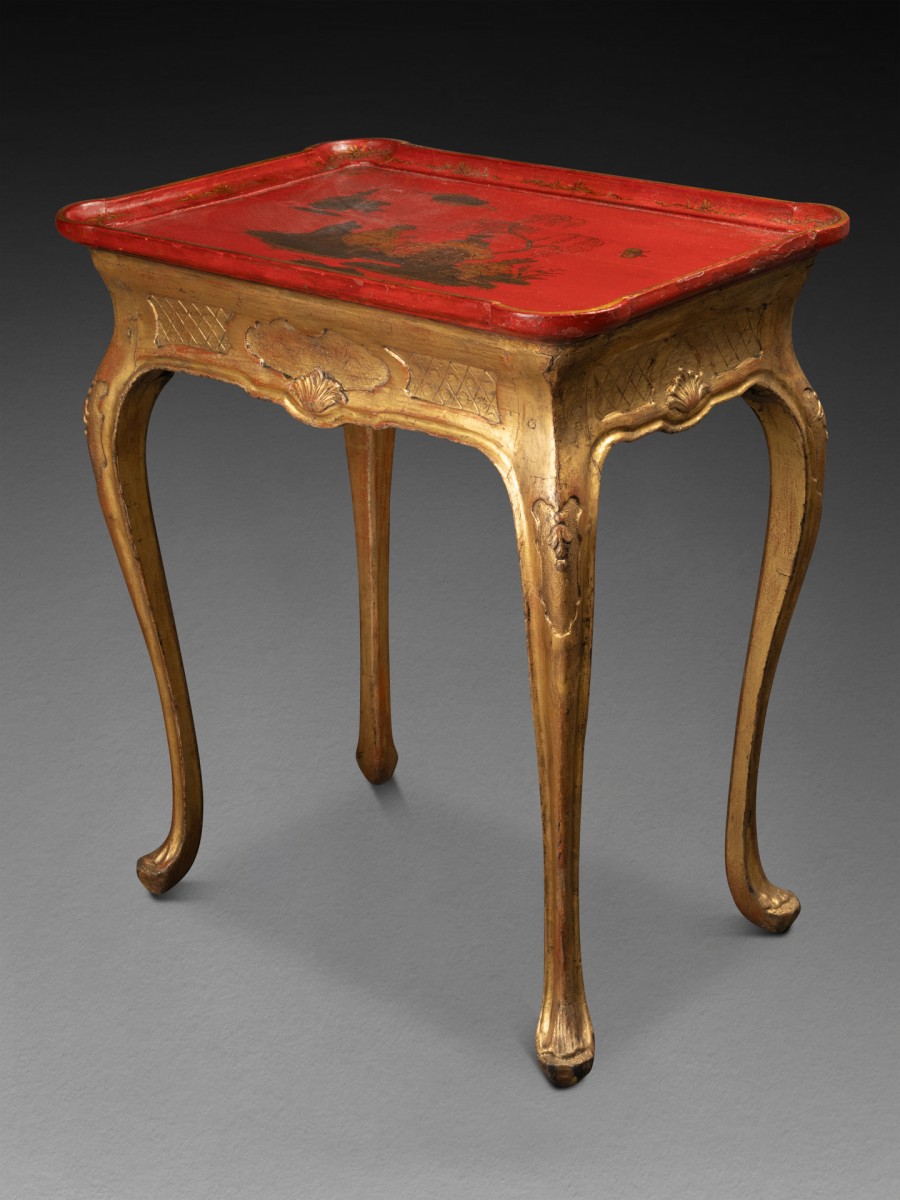

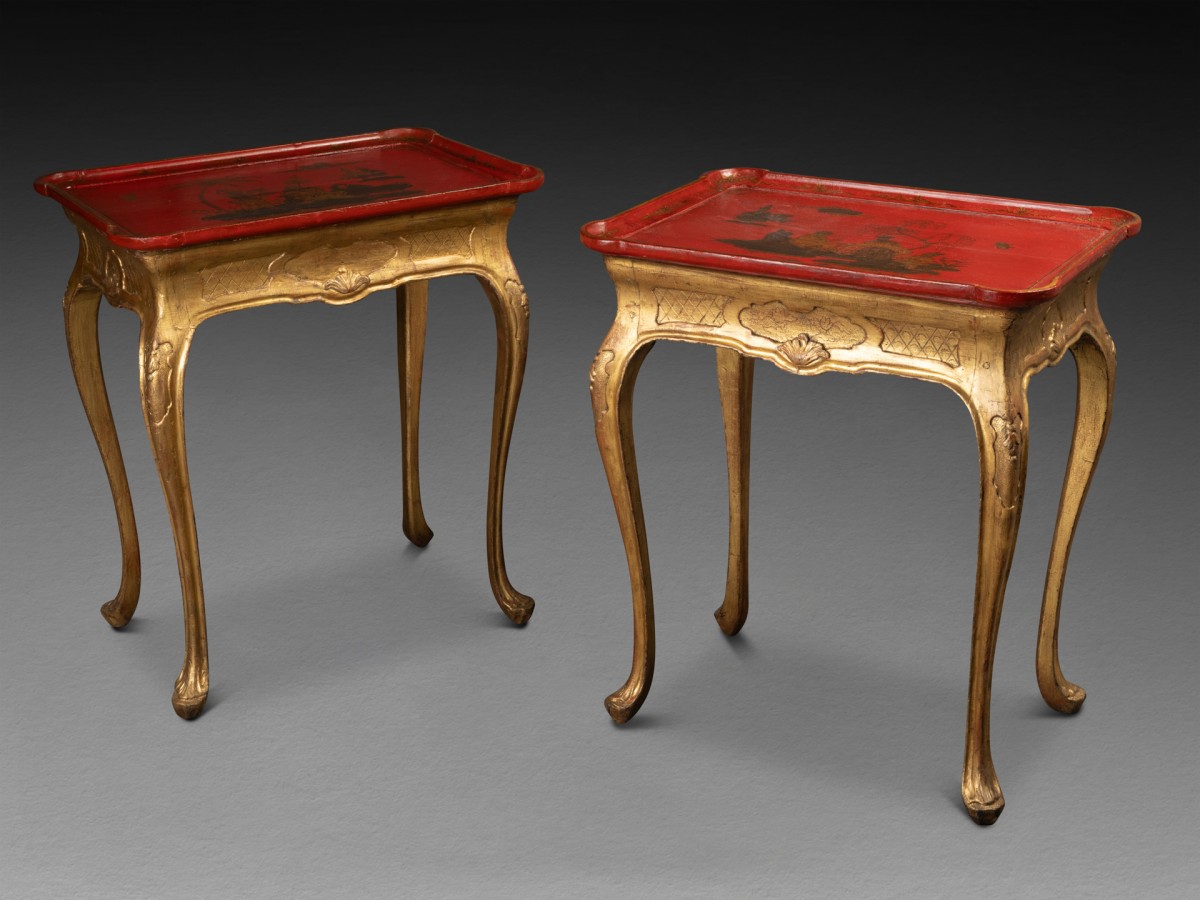
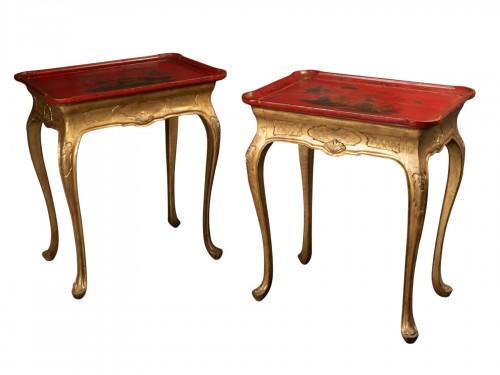
A rare pair of small, rectangular tea tables of the "end table" type.
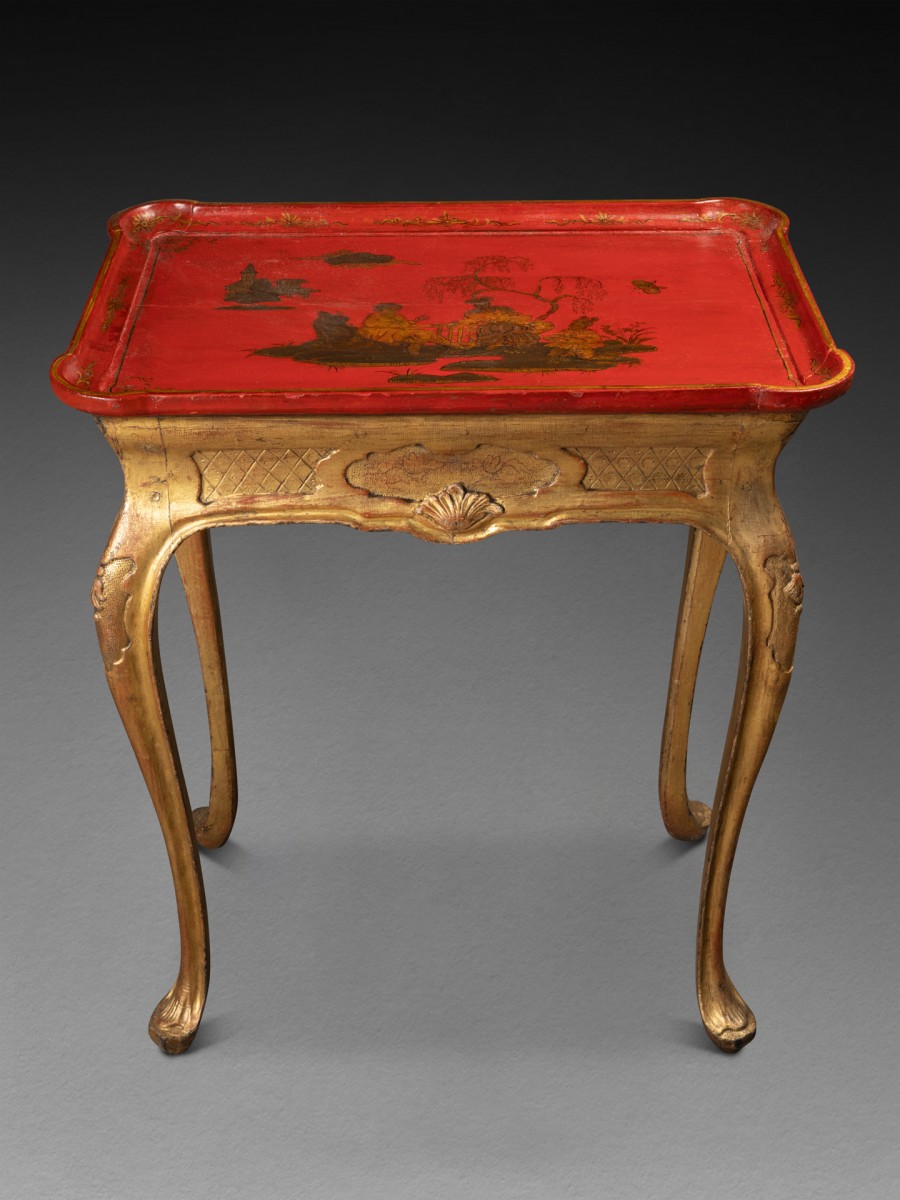
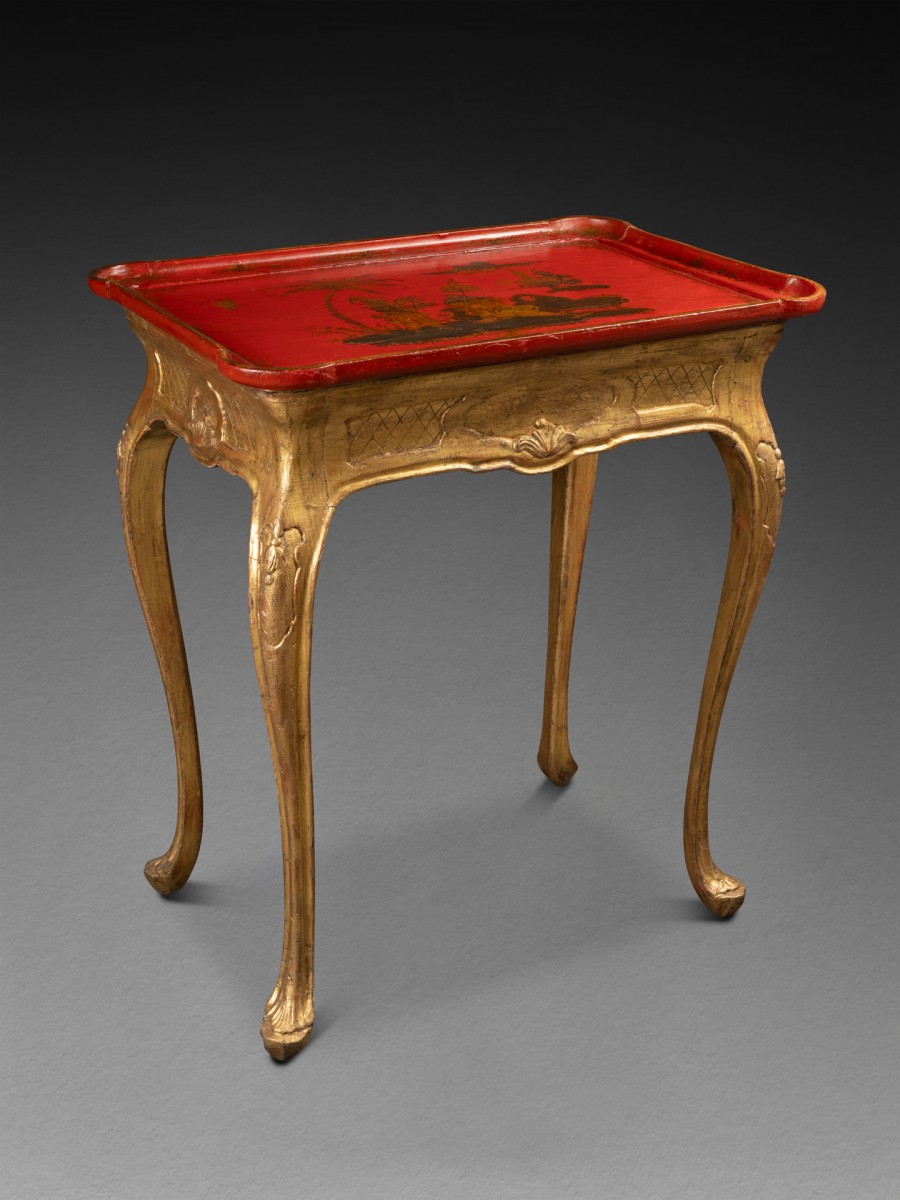
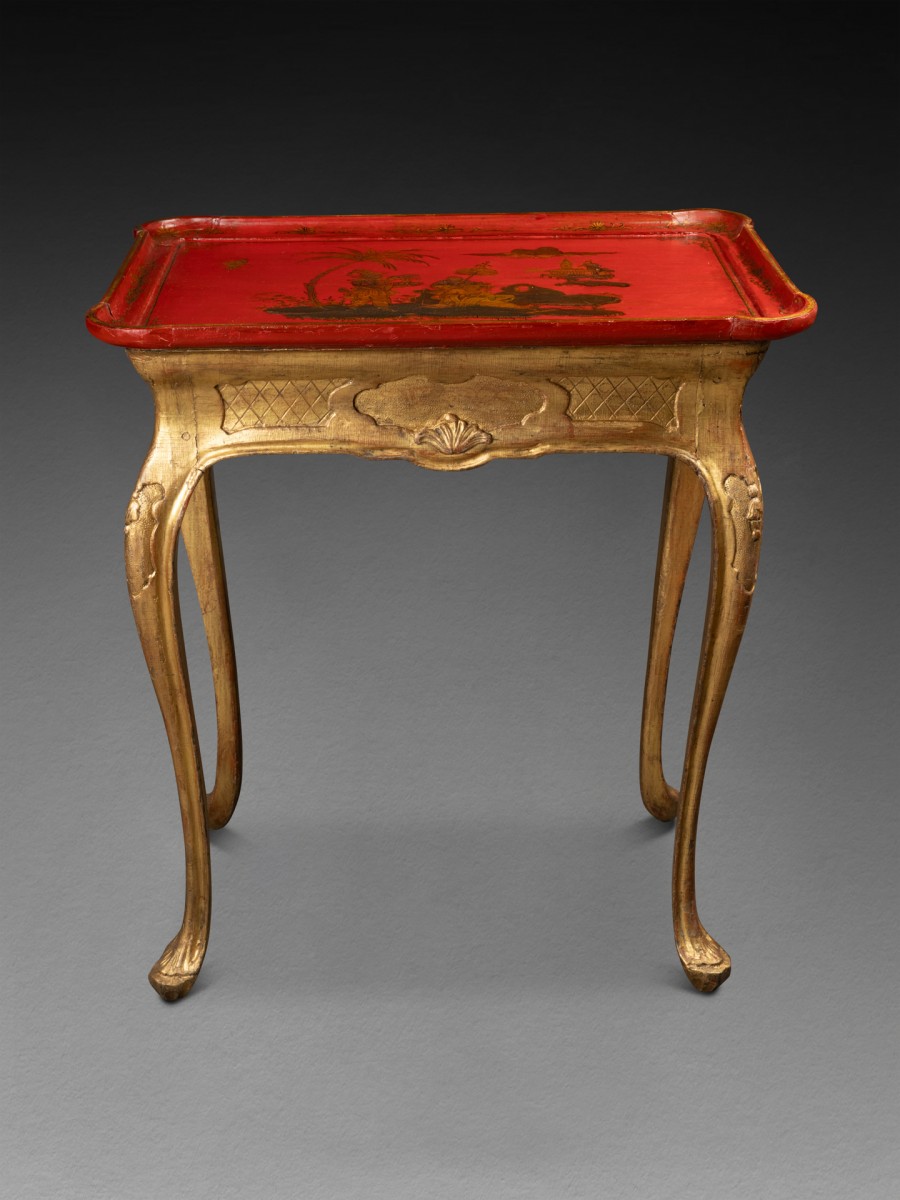
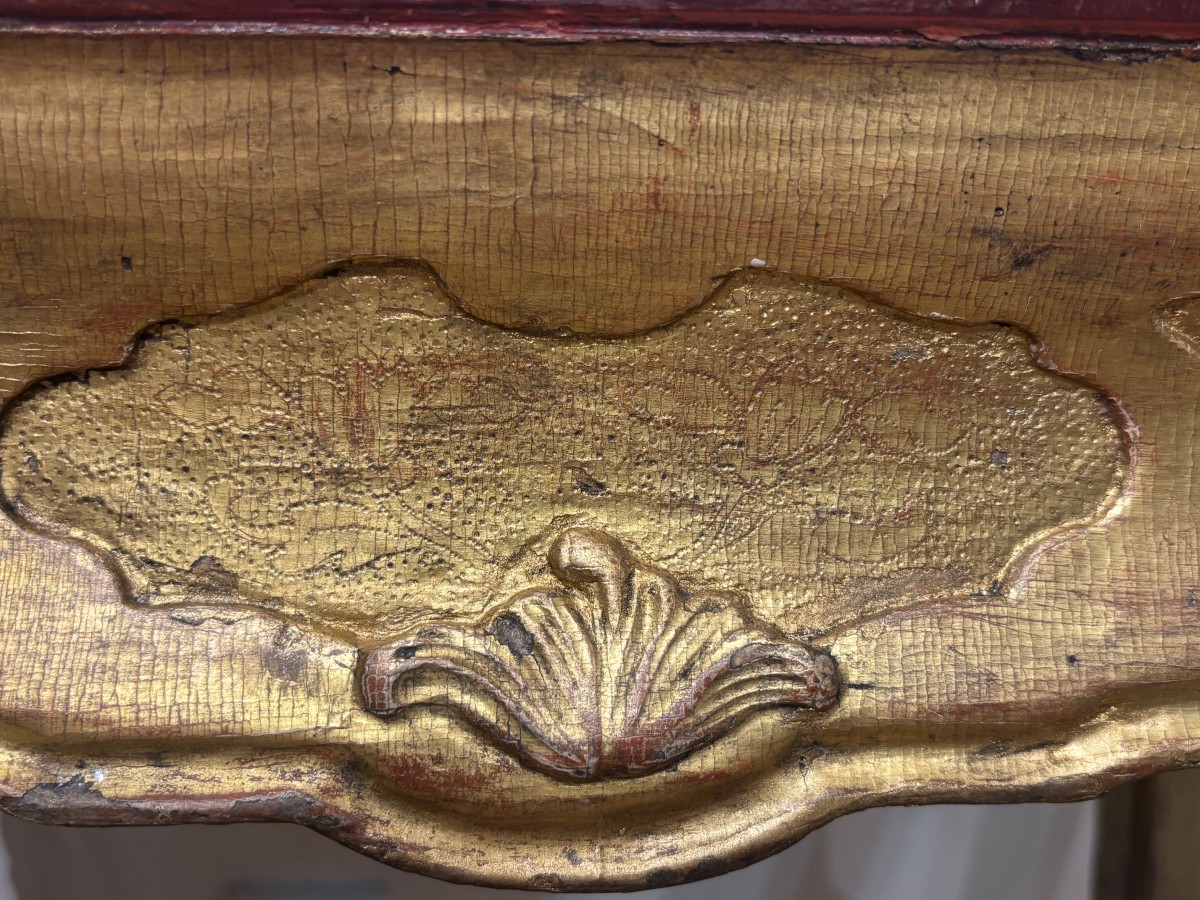
The giltwood base is finely engraved in the gesso.
It consists of four cabriole legs terminating in acanthus leaves and four finely shaped, concave stretchers.
The decoration comprises two types of reserves: engraved trelliswork and needle-painted vegetal motifs.
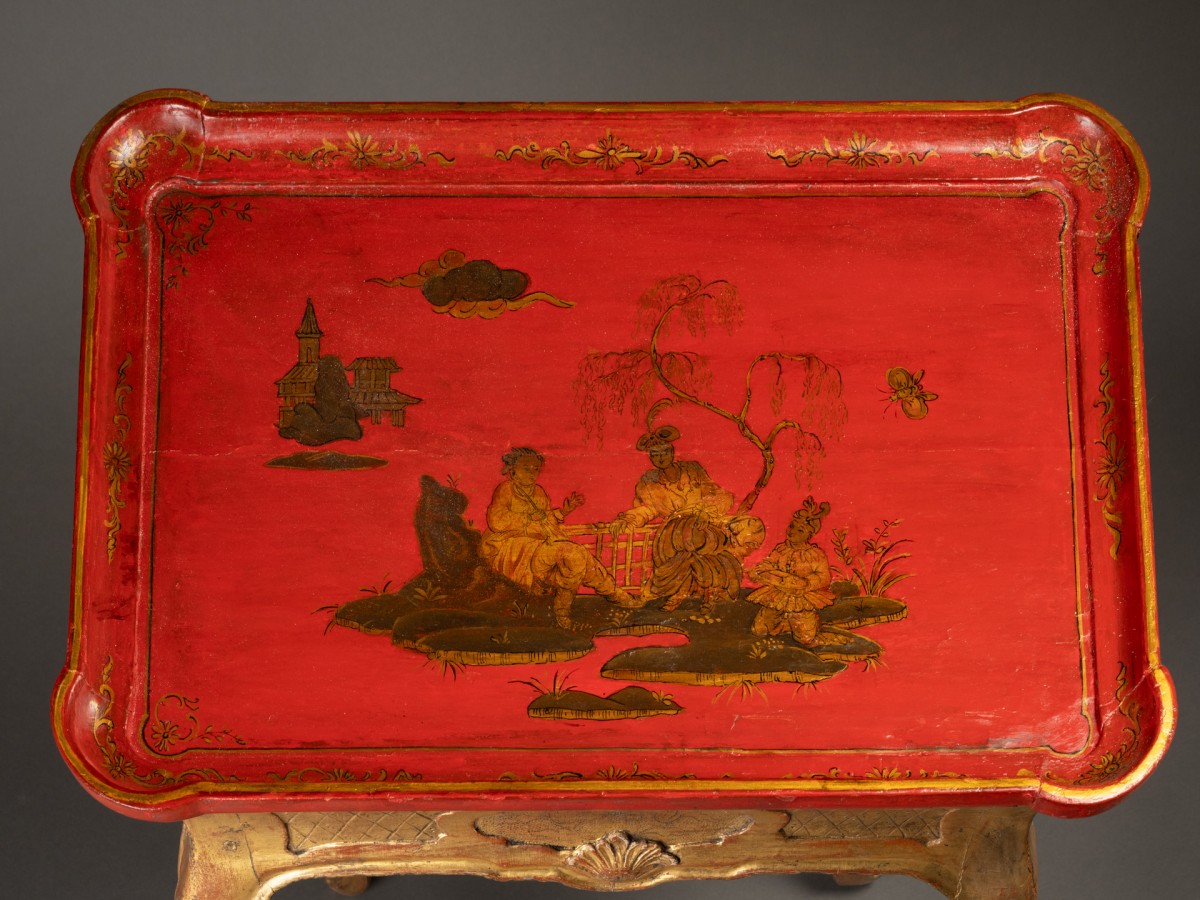
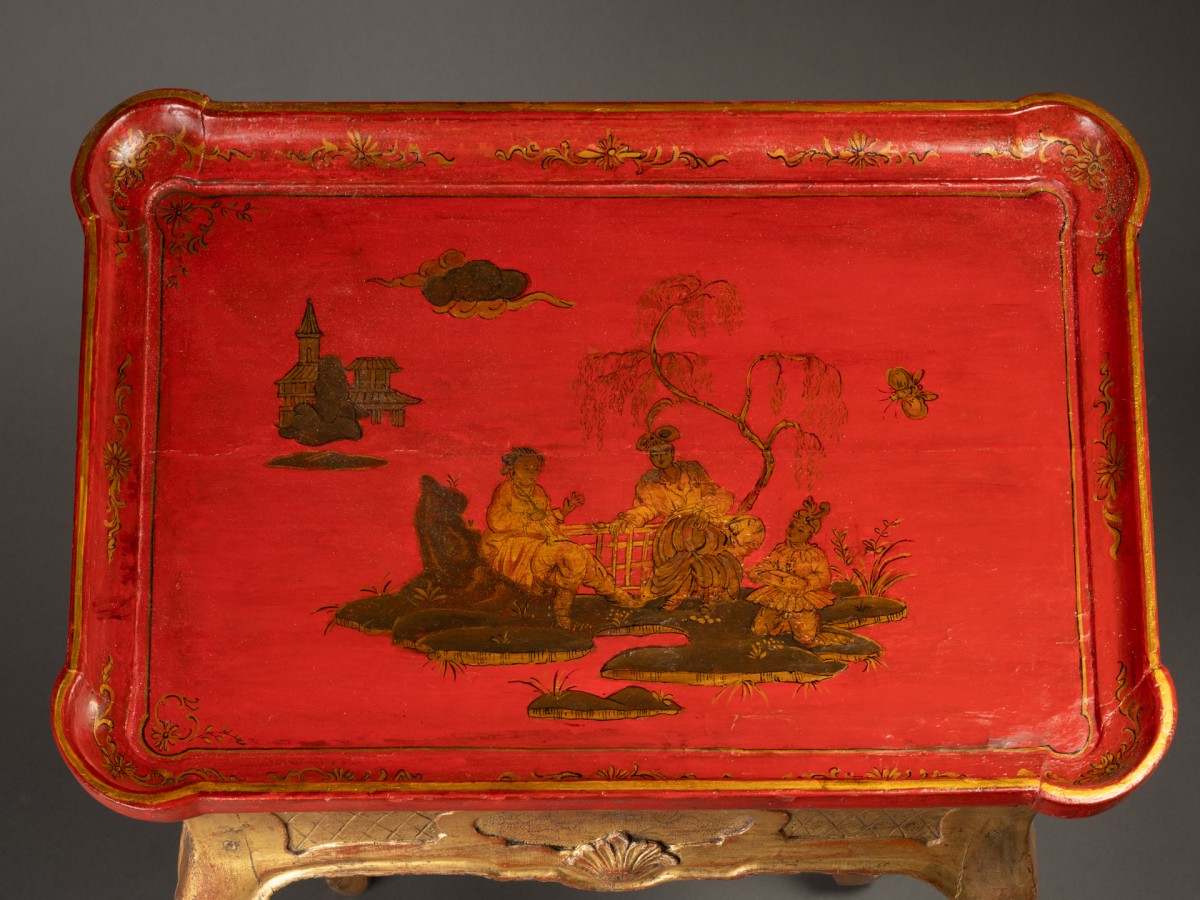
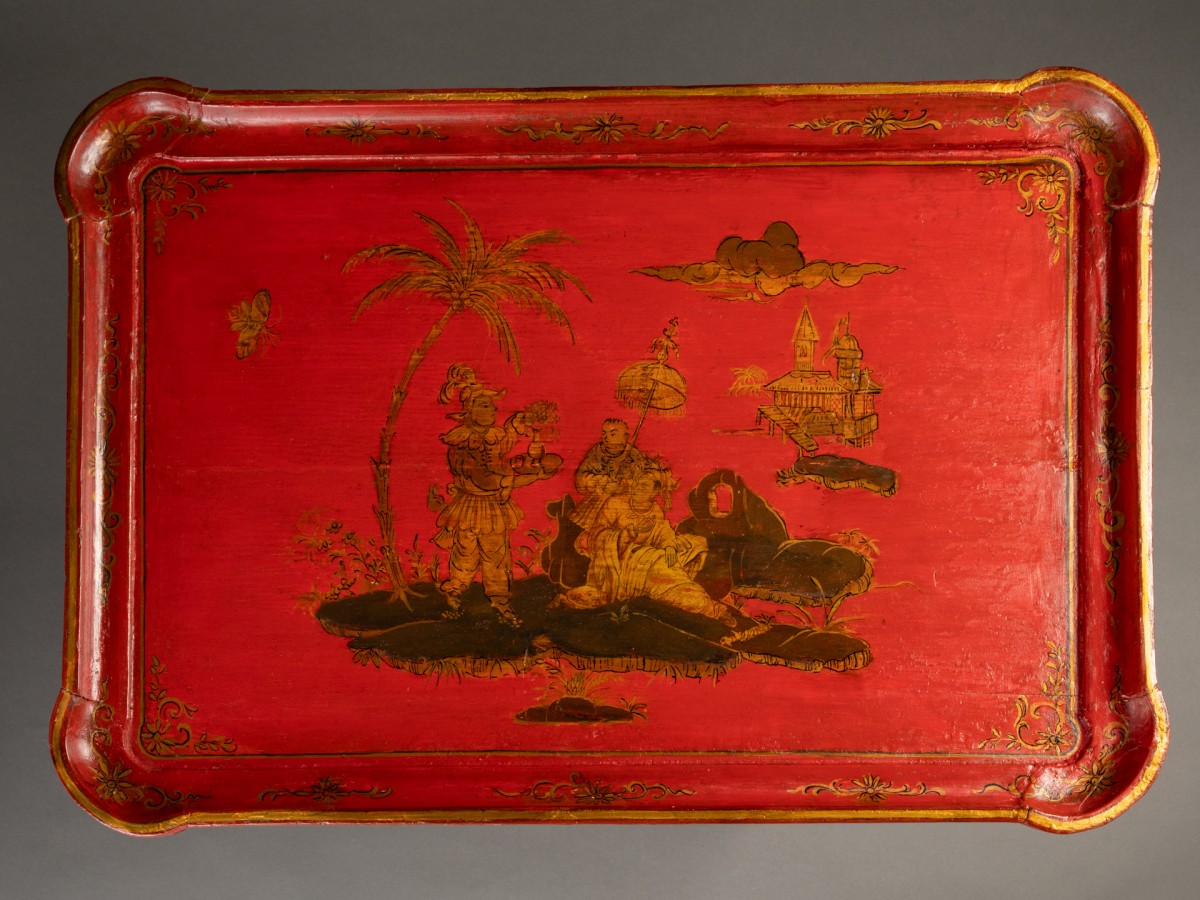
The vermilion red European lacquered trays feature gilt decoration with friezes of scrolling foliage around the edge and Chinese figures on mounds in the center.
The asymmetrical scenes are reversed on the two trays, creating a symmetrical arrangement when the two tables are displayed together.
Original gilding on a softwood core.
Very good condition; minor restorations to the lacquer and gilding consistent with age.
English work from the Queen Anne or George I period, circa 1710-1720, comparable to the work of the Crown cabinetmaker James Moore (1670-1726).
Dimensions:
Height: 68 cm; Width: 58.5 cm; Depth: 40 cm
Our opinion:
The tables we are presenting were placed on either side of the sofa and were used for "Tea Time."
Under the influence of Catherine of Braganza (1638-1705), tea enjoyed a popularity in England that has never waned.
It all really began when this Portuguese princess married King Charles II in 1662 and became Queen of England and Scotland.
Accustomed to drinking tea, she imported her favorite beverage to her new country in wooden crates marked "Transporter de Ervas Aromaticas" (Transporter of Aromatic Herbs).
Legend even has it that the initials of these three letters, "TEA," are the origin of the word "tea."
The tea ritual was immutable for the queen and quickly became fashionable in the most prestigious literary salons.
This beverage, four times more expensive than coffee, was reserved for a princely elite at the end of the 17th century, but it became more widely available at the beginning of the 18th century, notably thanks to Thomas Twining, who opened his first tea room in London in 1706.
From then on, "Tea Time" became an essential ritual throughout the kingdom.
This art of tea is intimately linked to the taste for the Orient that was spreading in Europe, firstly because the plant was imported exclusively from China at that time, but also because its use required precious Asian porcelain, the secrets of whose manufacture were still unknown in Europe.
It was therefore quite natural that tea was served on lacquered trays decorated with oriental motifs. Demand was so high that imported tabletops from Japan or China were no longer sufficient, prompting English varnishers to develop various formulas to imitate this expensive material.
The creation of a vermilion red background with a highly realistic Chinese design delighted Queen Anne, who commissioned numerous pieces (cabinets, desks, chests of drawers, etc.) decorated in this style, thus launching a whole new fashion.
The tabletops of our tables are characteristic of this style; they were mounted on gilded wooden bases crafted in the style of the royal cabinetmaker James Moore.
Moore is known for supplying numerous pieces of furniture to the royal family, but also, and especially, for his work with gesso, a primer which he engraved, stamped, or embossed before gilding.
Tables constituted the majority of his production, and many were delivered in pairs. Often they were made entirely of gilded wood with trays decorated with acanthus scrolls, but he also provided stands to display hardstone trays imported from Italy or lacquered trays, as is the case with our example.
Due to the fragility of the decoration and the preciousness of the trays, few examples have survived. The presence of a pair with the original engraved decoration and vermilion lacquer trays is quite exceptional.