Offered by Franck Baptiste Paris
REQUEST INFORMATION
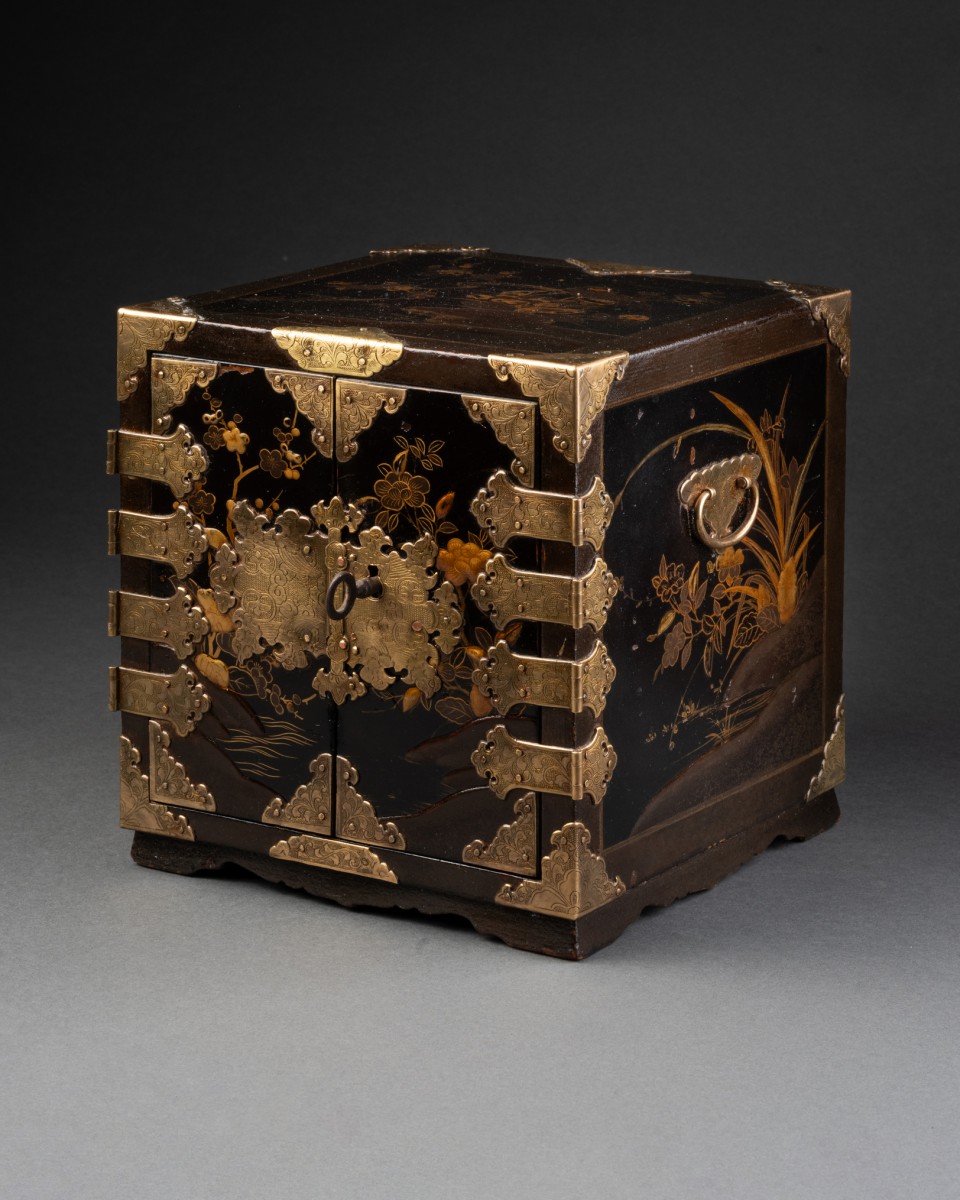
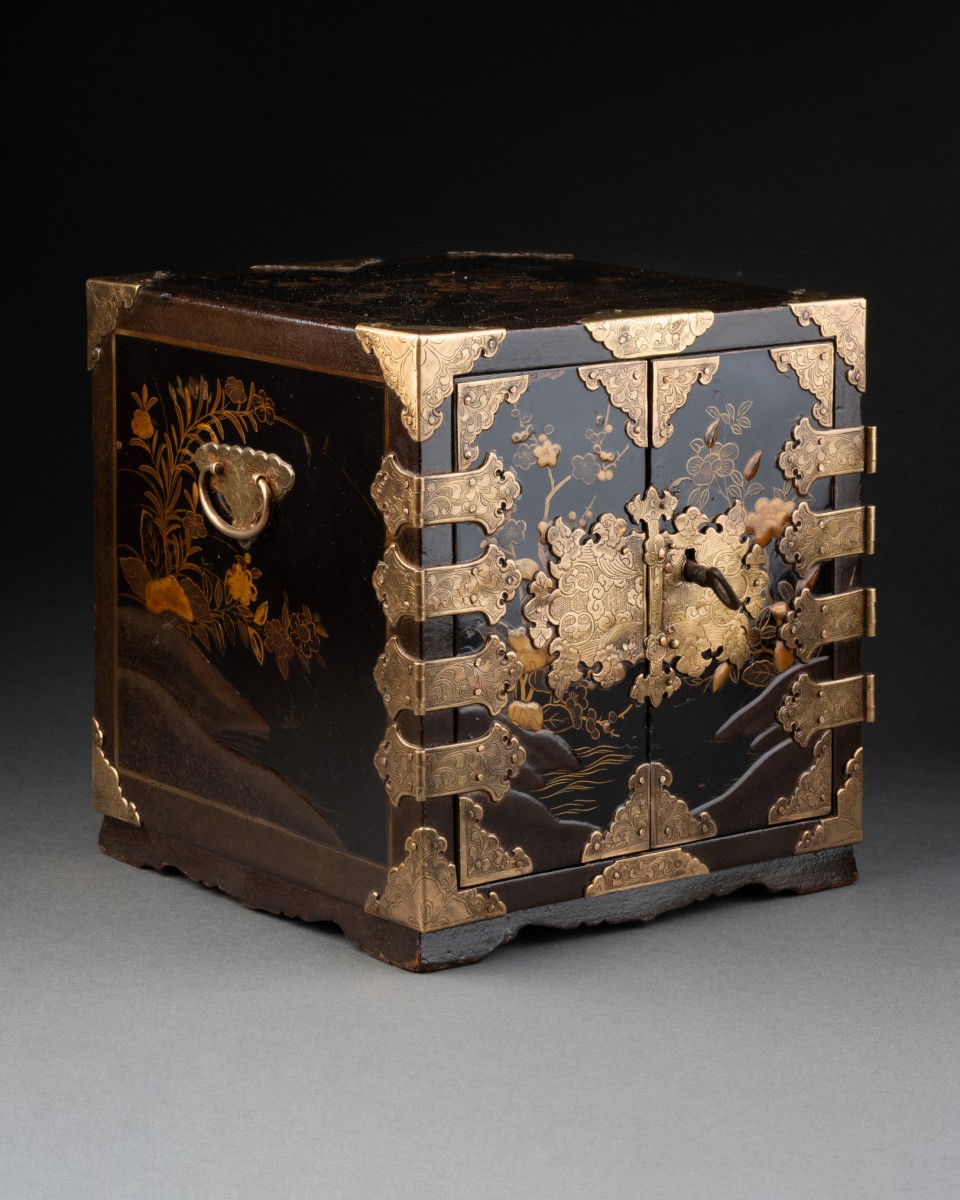
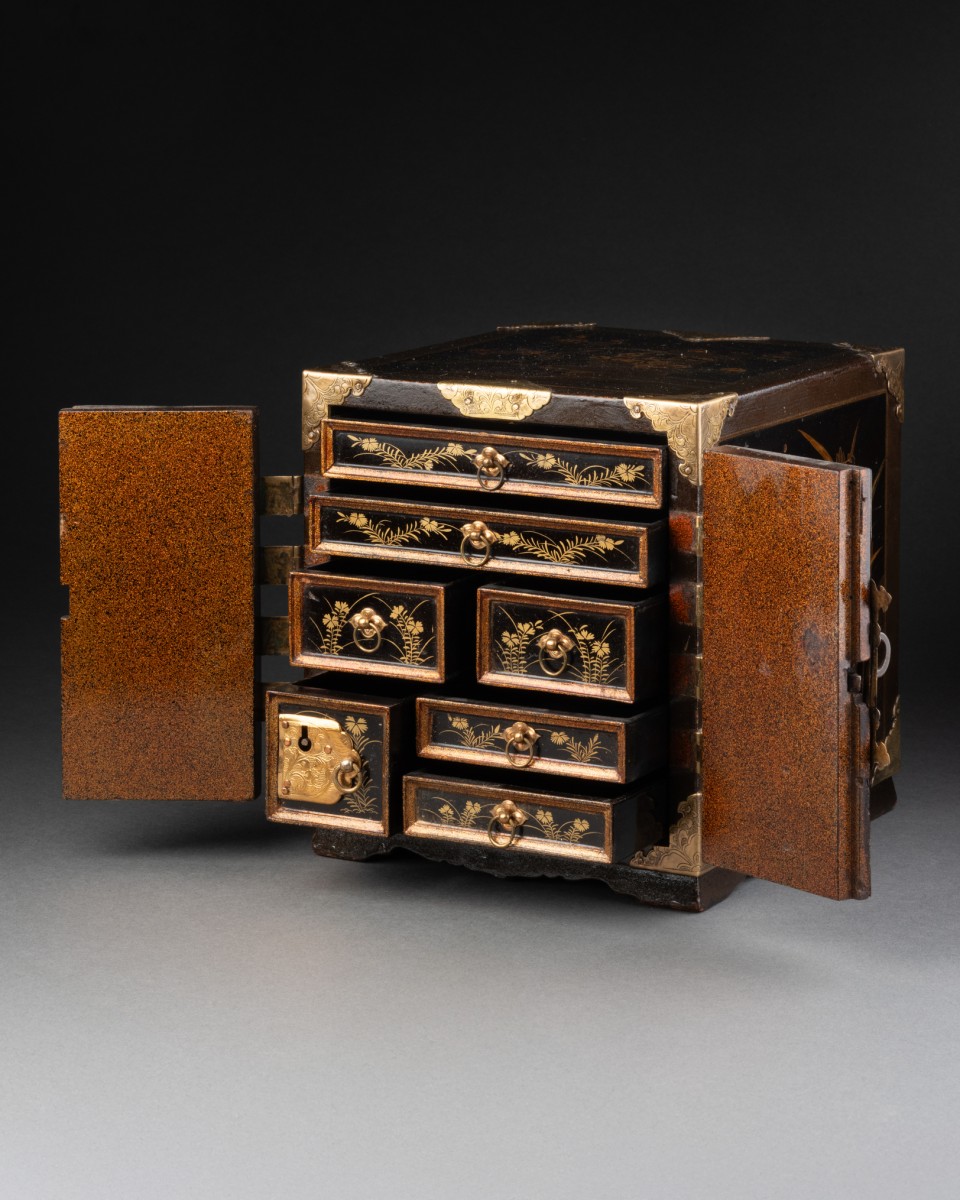

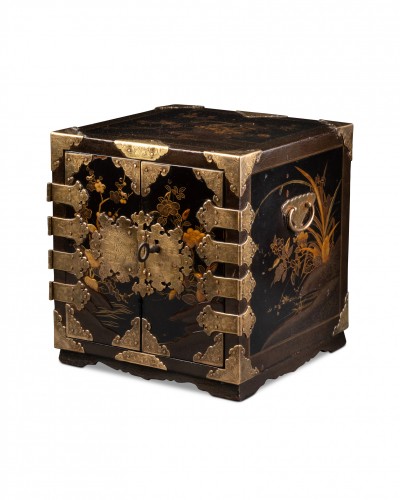
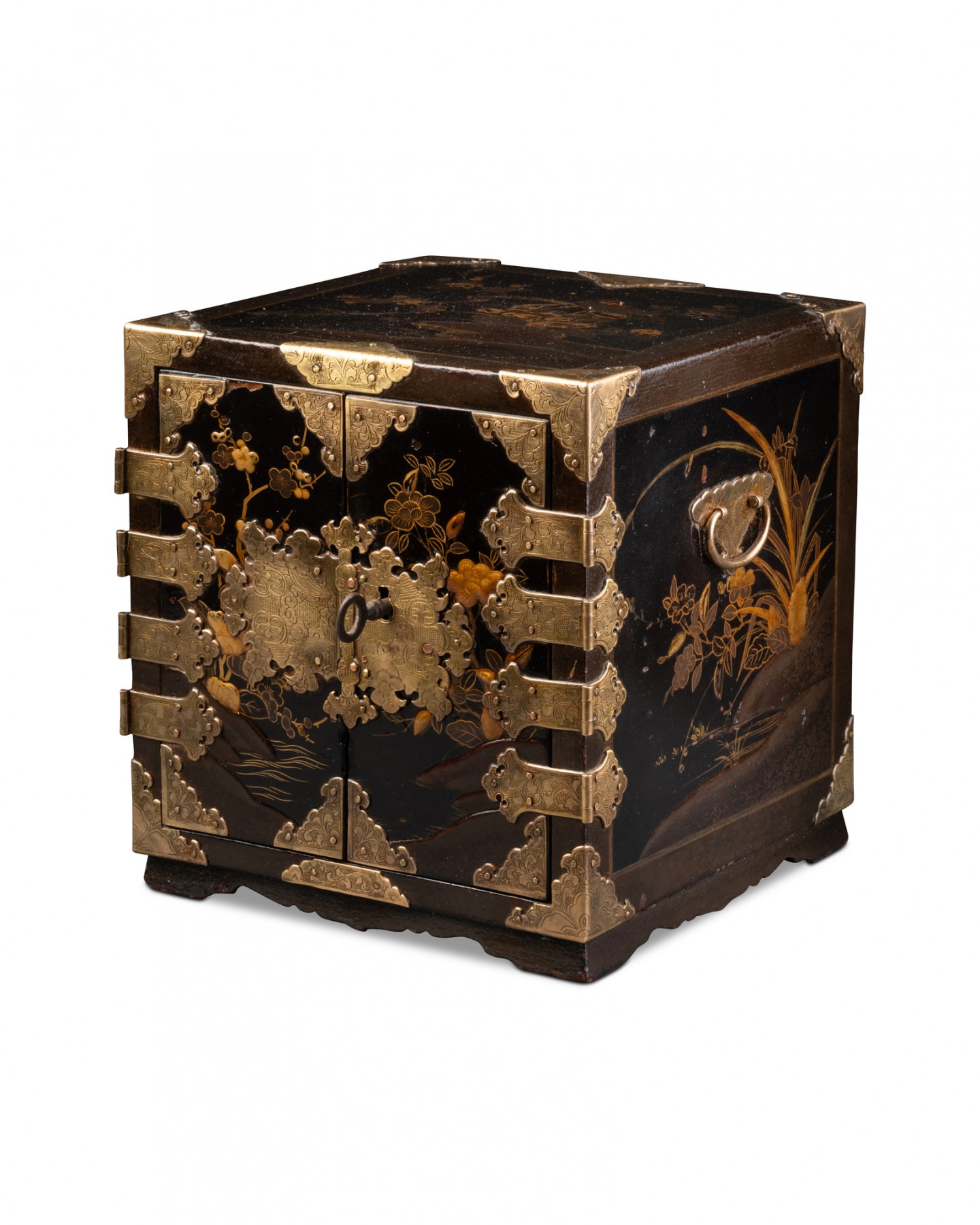
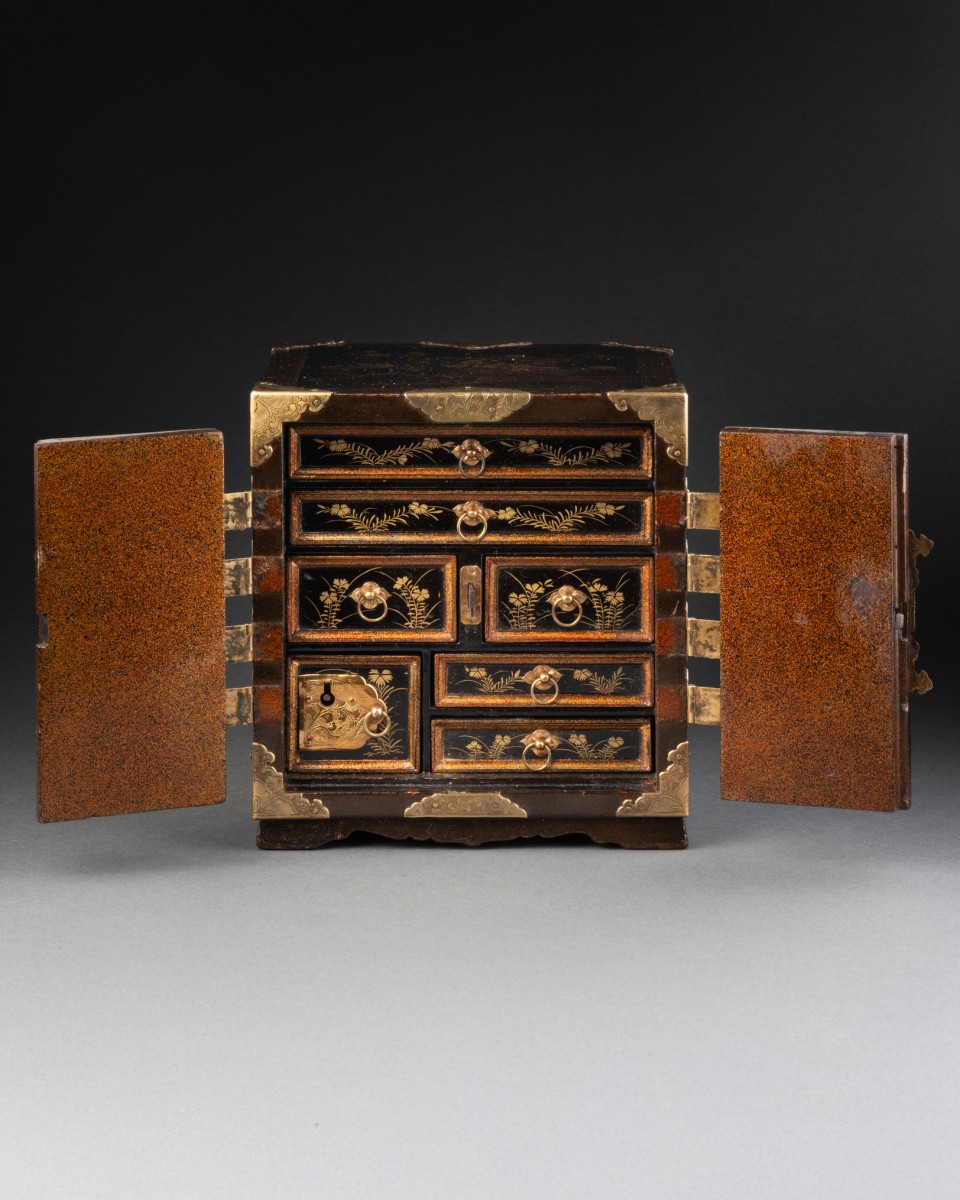
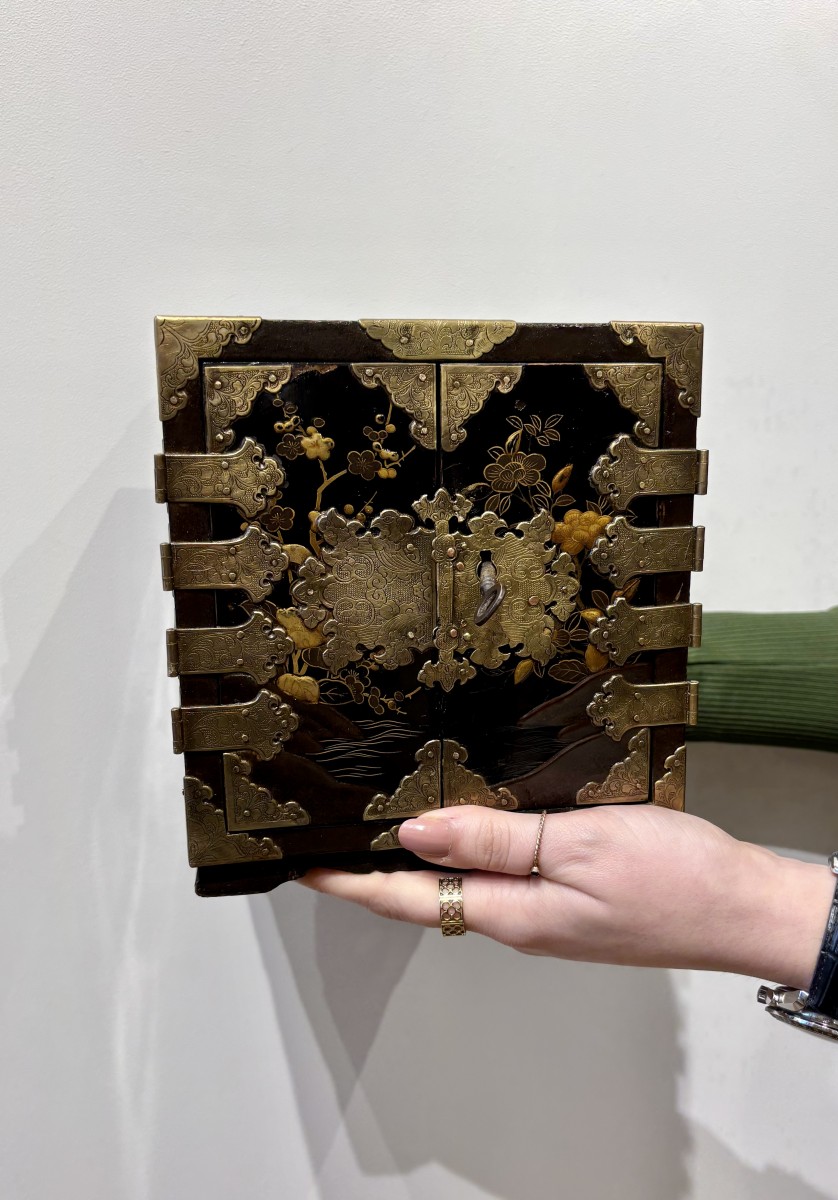
Rare small travel cabinet with Japanese lacquer decoration, opening with two leaves revealing seven drawers on five rows, one of which locks.
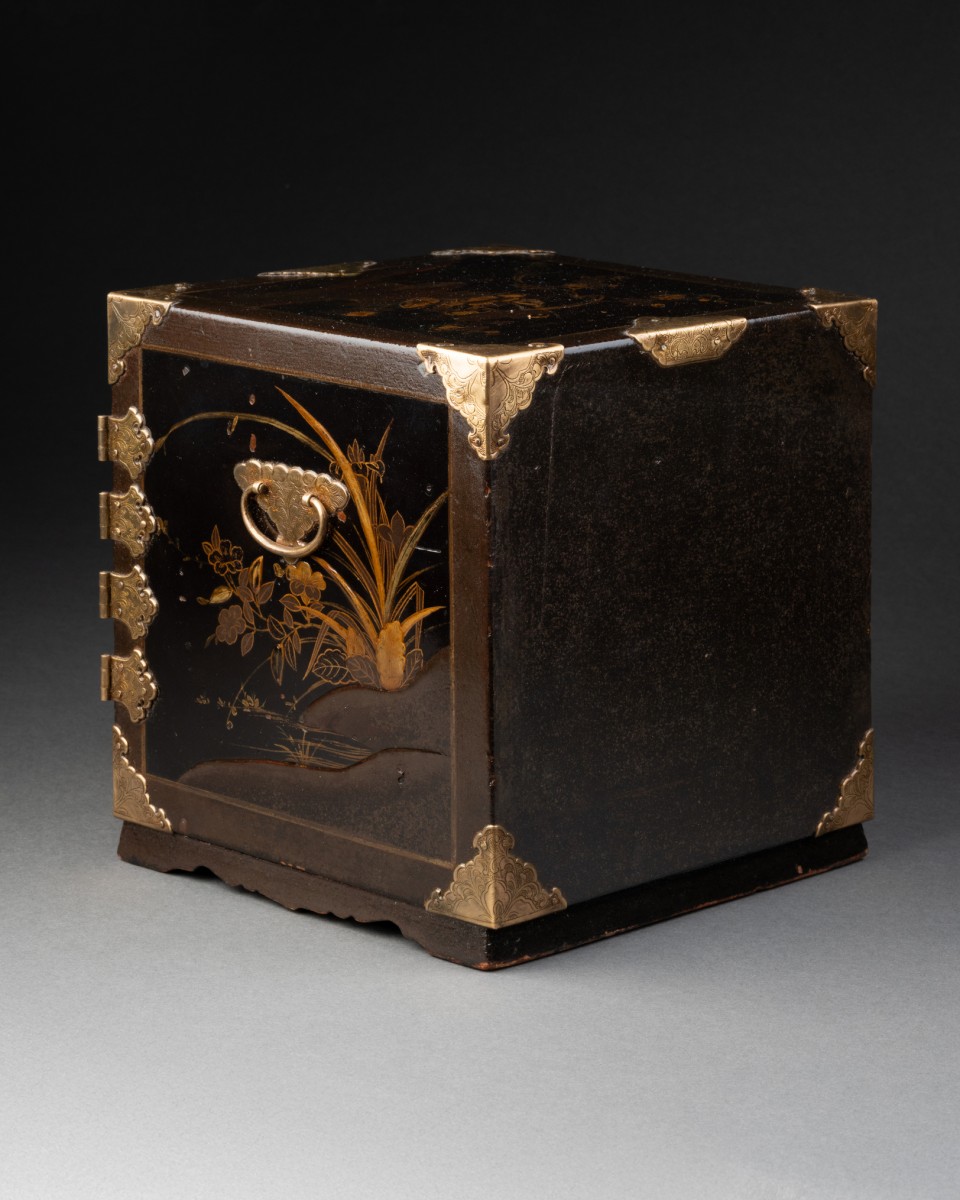
Black lacquered wood (urushi) with decorations sprinkled with gold and copper (maki-e) in high relief (takamaki-e).
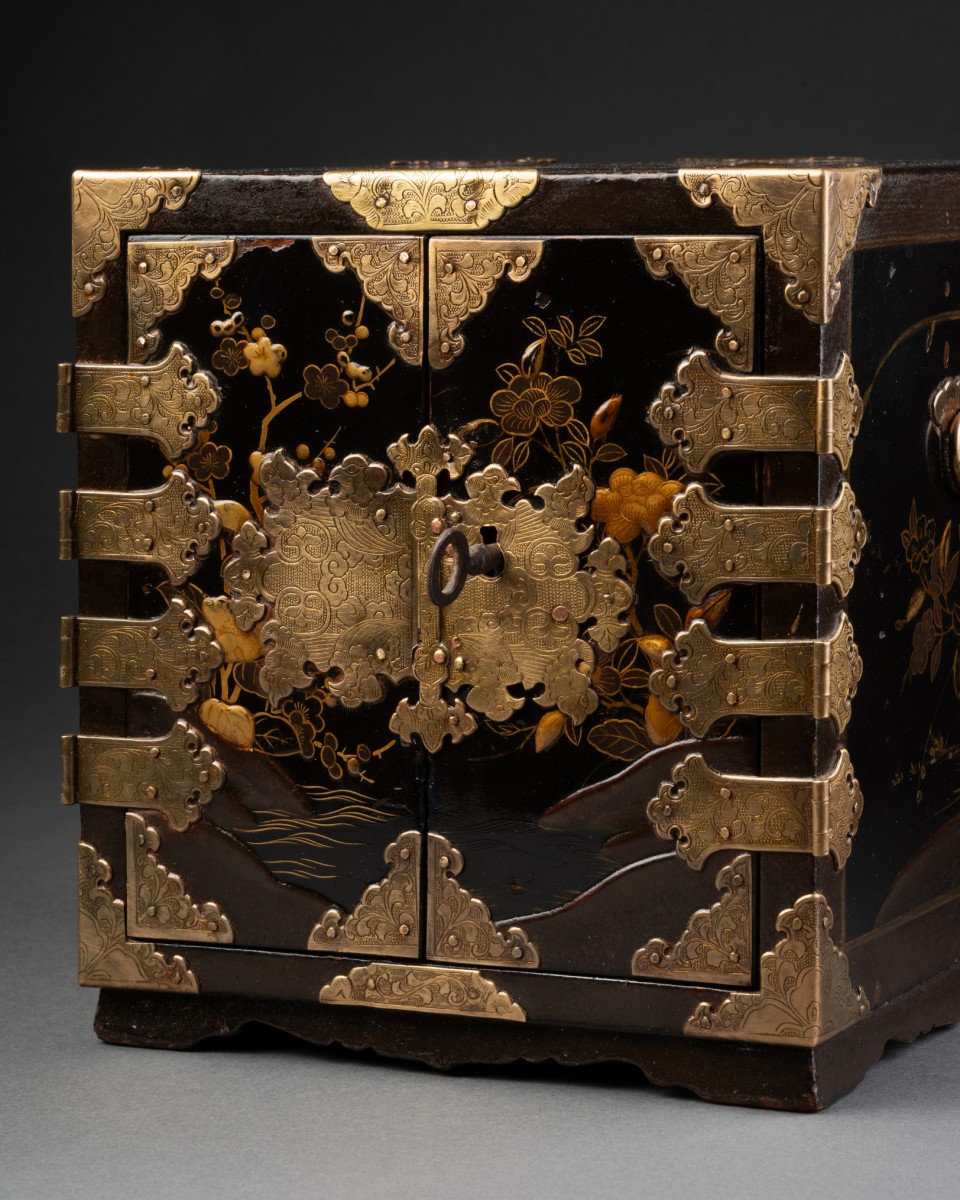
The fronts decorated with a lake landscape with two registers separated by a river with banks decorated with flowering bushes for each leaf, on one side volubilis and on the other chrysanthemums.
The face of the top and the side faces with lacustrine decoration of shrubs on mounds.
The borders and interiors of the doors in aventurine lacquer called "fond de poire" (nashiji), i.e. sprinkled with copper flakes.
The drawer frames are decorated with aventurine lacquer and the fronts are decorated with a flat gold background (hiramaki-e) of branches on a brown lacquer background.
Rich ornamentation in gilded bronze with mercury and finely engraved with floral decorations ... including side handles, hinges, spandrels and lock entrance with phoenix heads.
Very good condition. Japanese work of the Edo period (1603-1868) from the second half of the 17th century for export to Europe.
Dimensions :
Width : 16,5 cm ; Height : 18 cm ; Depth : 16,5 cm
Another nearby cabinet :
Rennes, Musée des beaux-arts, cabinet from the revolutionary seizure of the collection of Christophe-Paul de Robien (1698-1756) in 1794 (Inv. 1794.1.756.1).
Our view :
Rare and precious material under the old regime, Japanese lacquer is the most sought after of all lacquers, it is considered the most beautiful and the most resistant.
Strong, expensive and reserved for an elite, it was the object of covetousness of the European courts but its trade was slowed down by the closure and withdrawal of Japan which, after the ousting of the Portuguese in the 1630s, only tolerated a small and restricted trade with the Dutch East India Company.
Because of this factor and the time it takes to produce quality pieces, the Dutch company cannot keep up with the influx of orders, and imported pieces are the subject of considerable speculation at auctions in Amsterdam.
Our cabinet is a particularly rare piece because of the quality of its decoration, its state of preservation and its miniature format.