Offered by Conservatoire Sakura
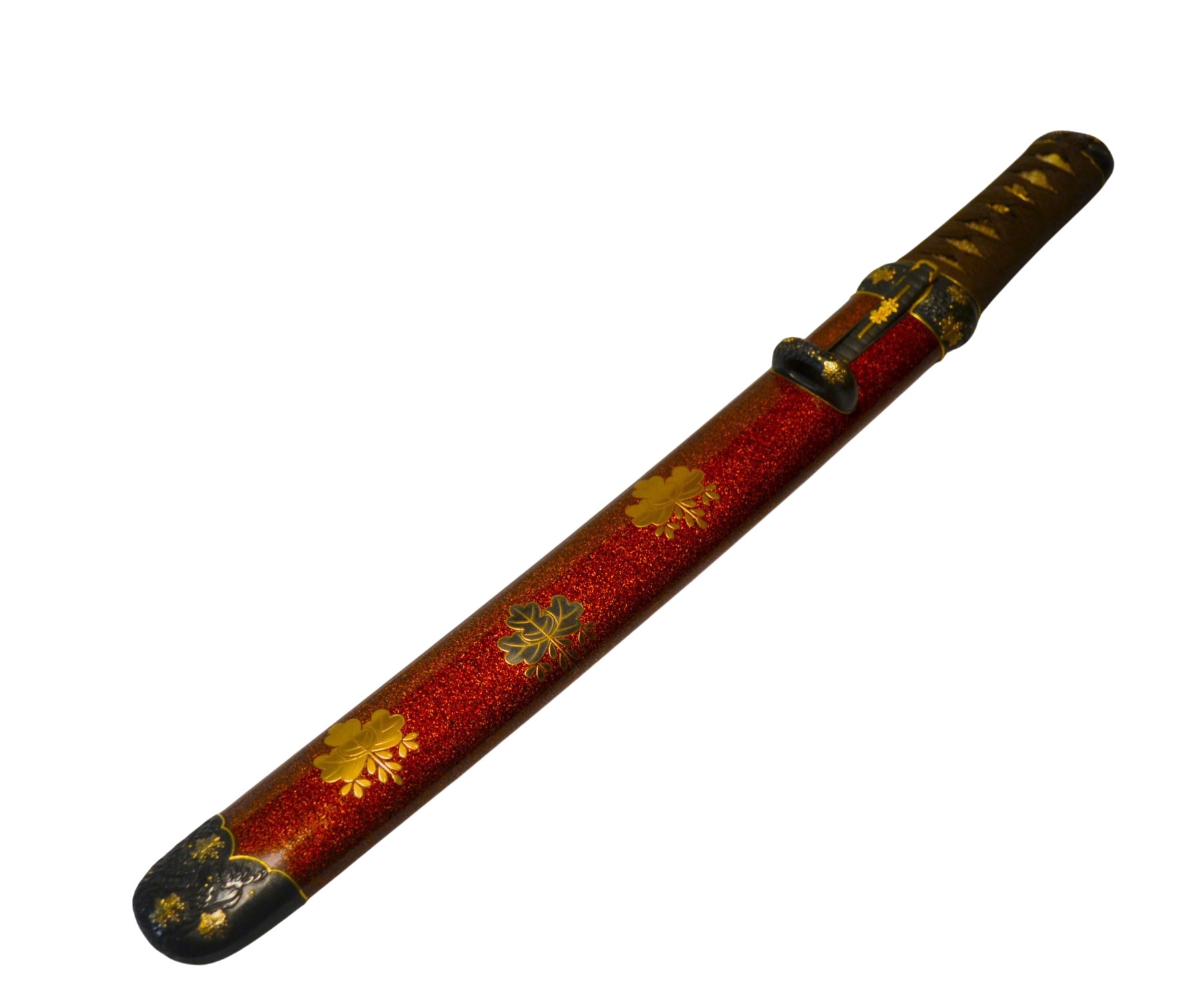
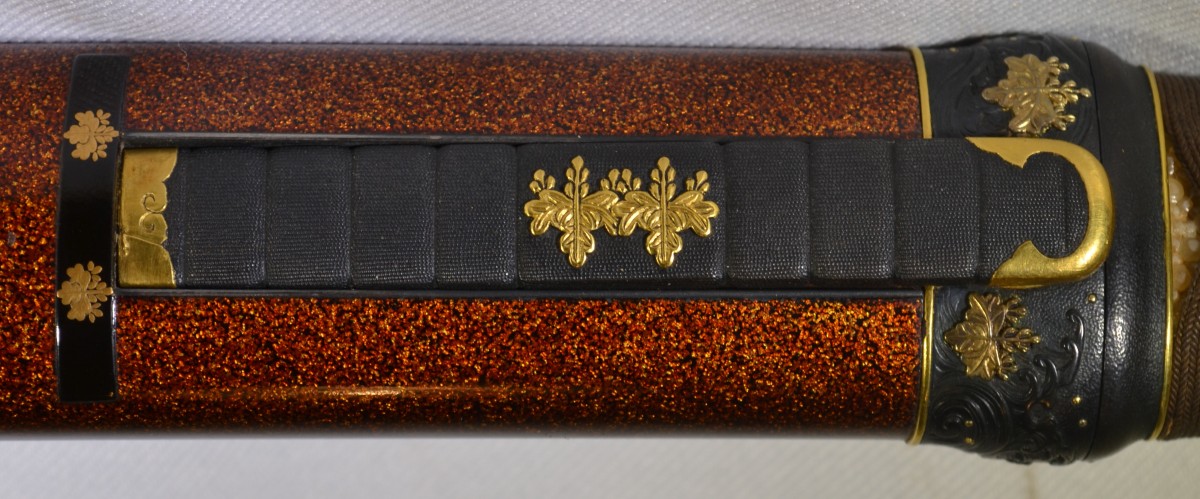
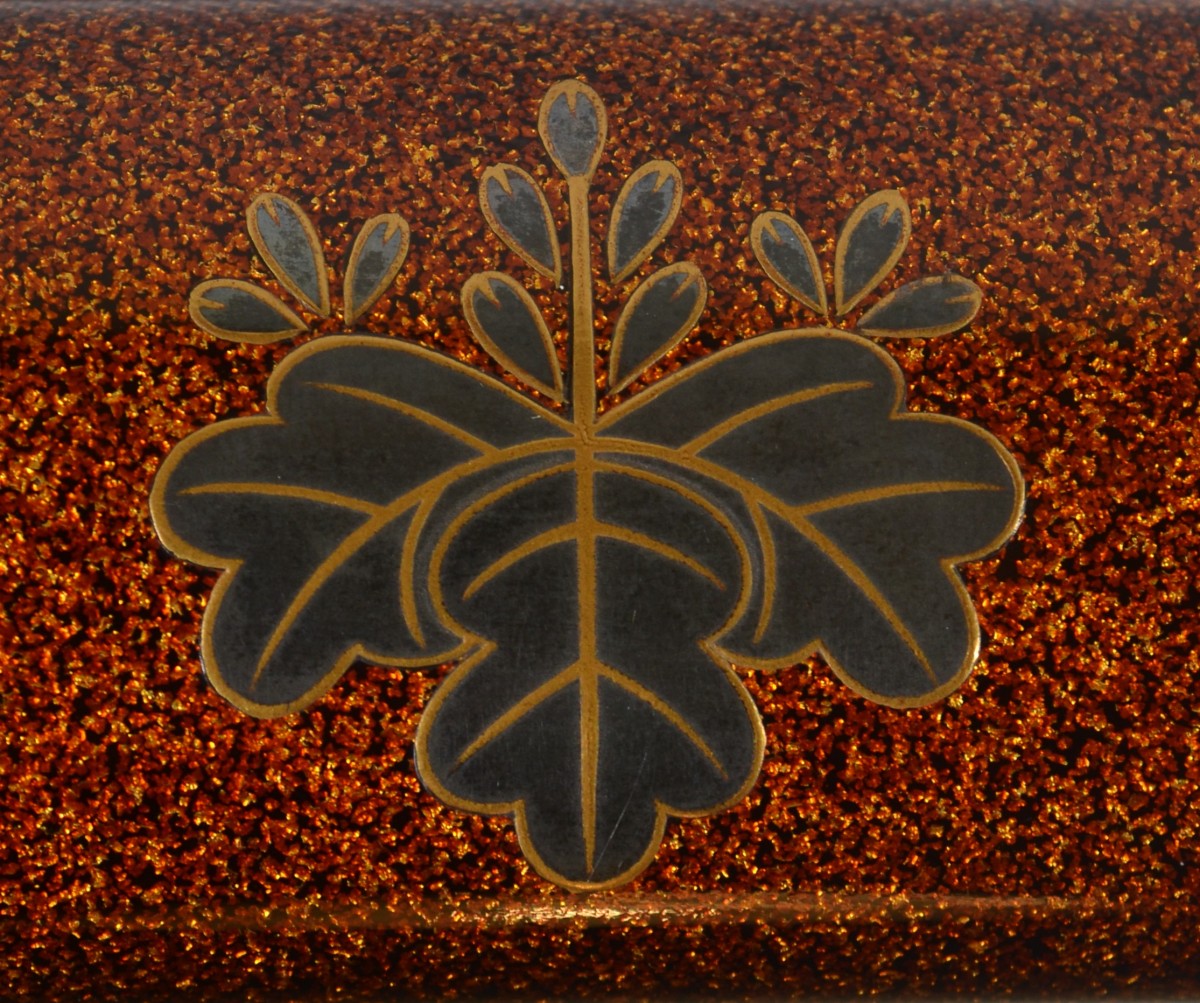
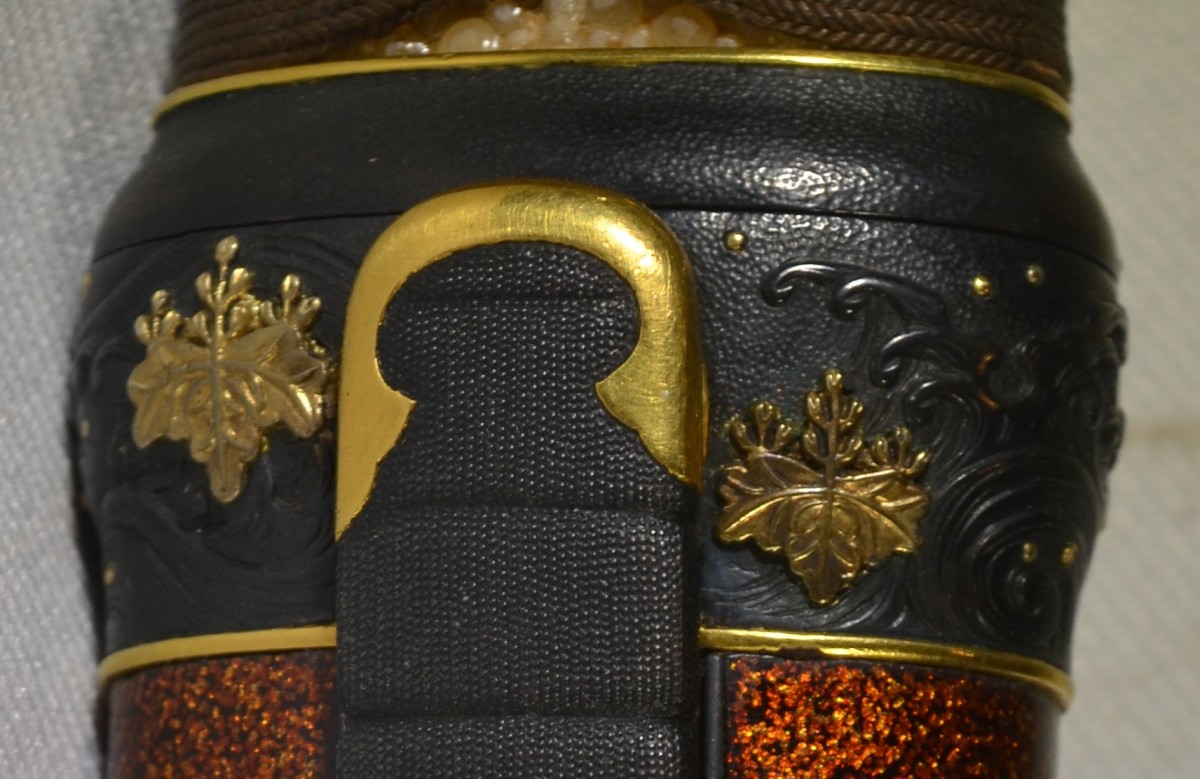
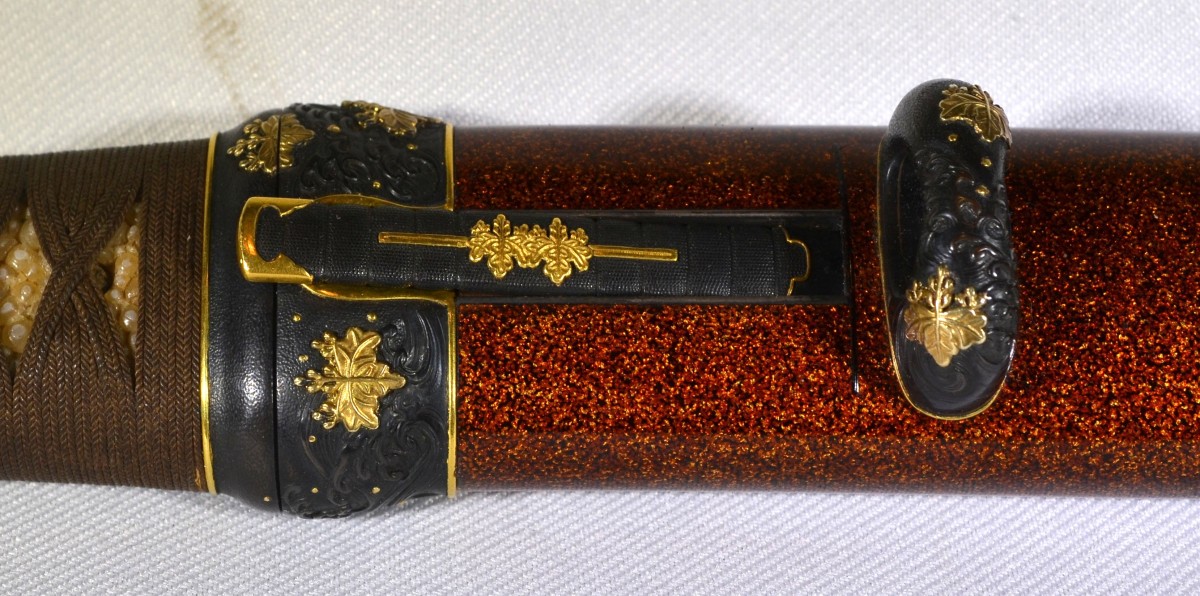

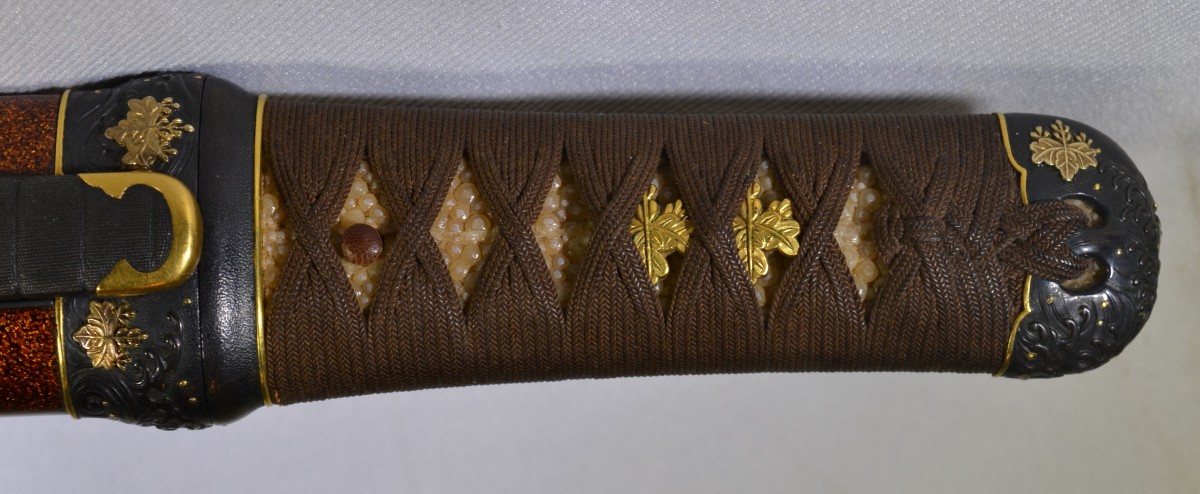
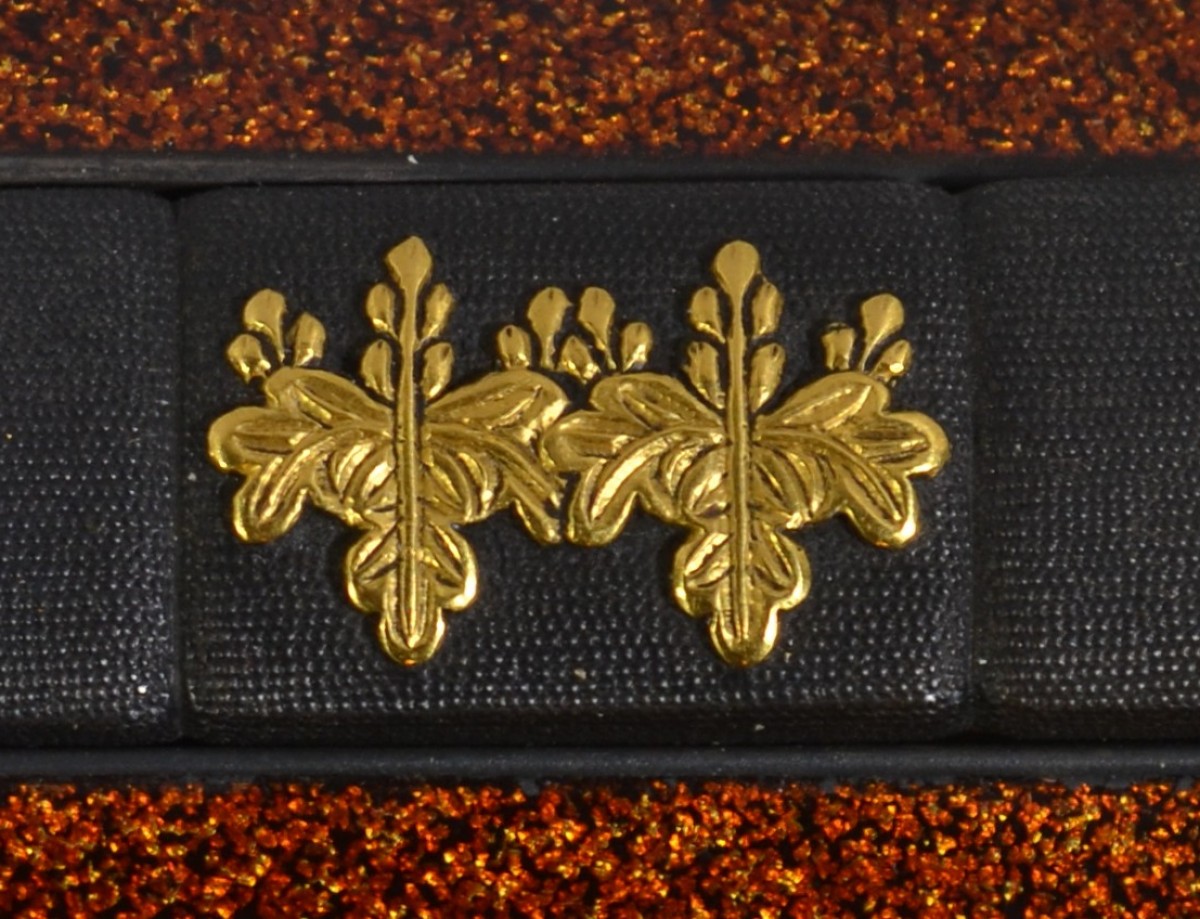
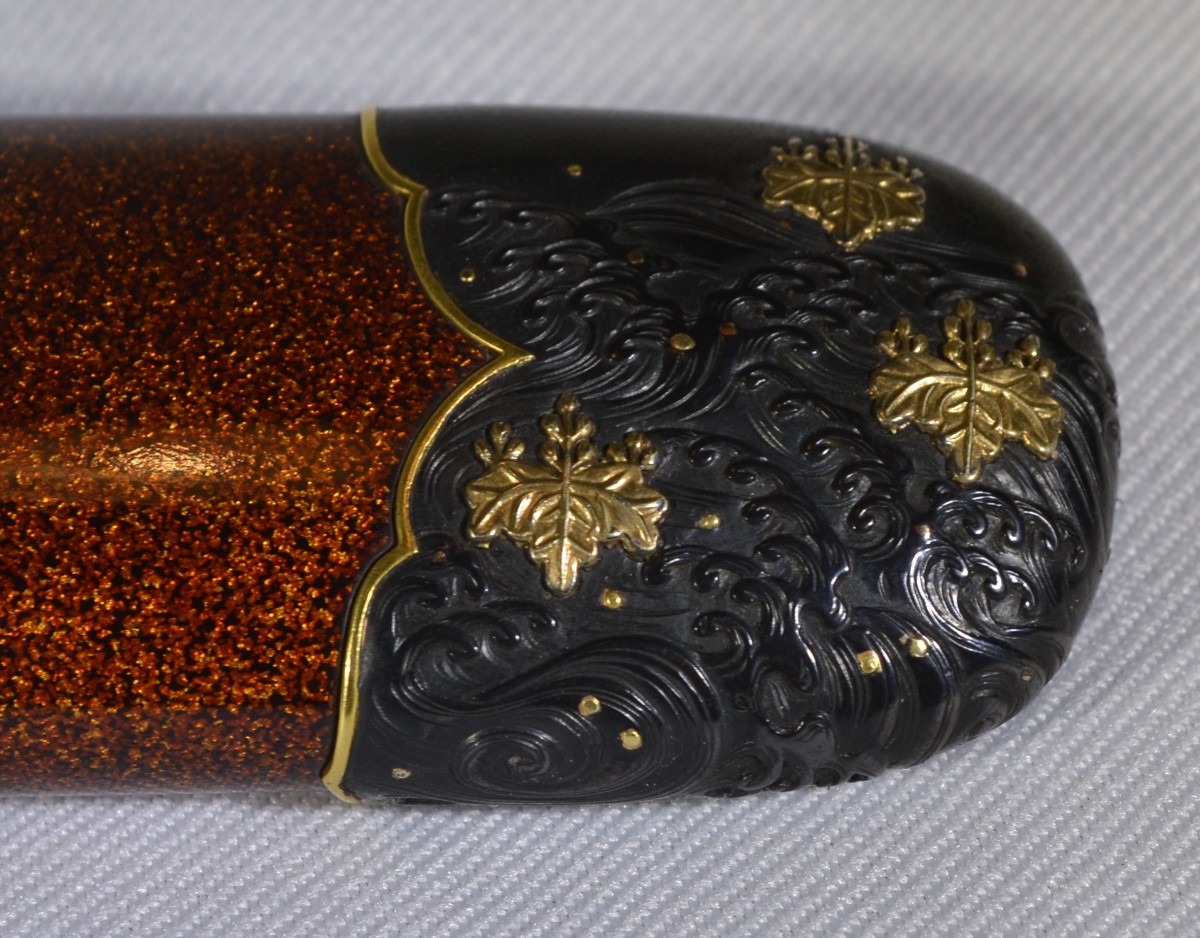
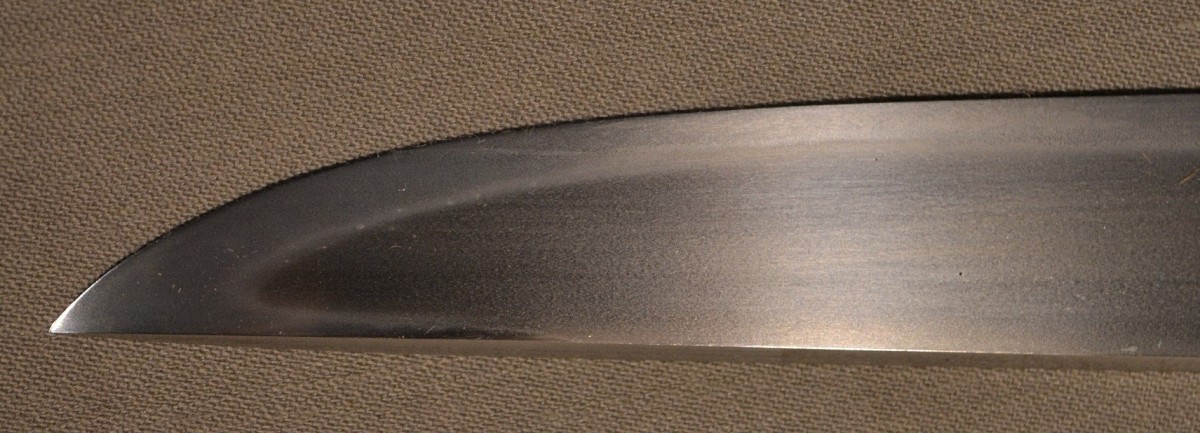
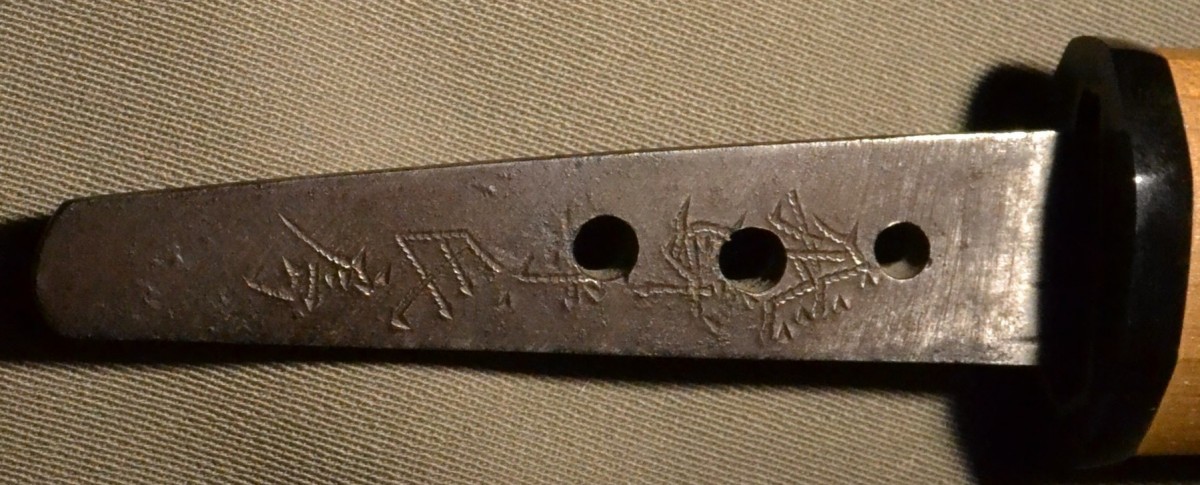
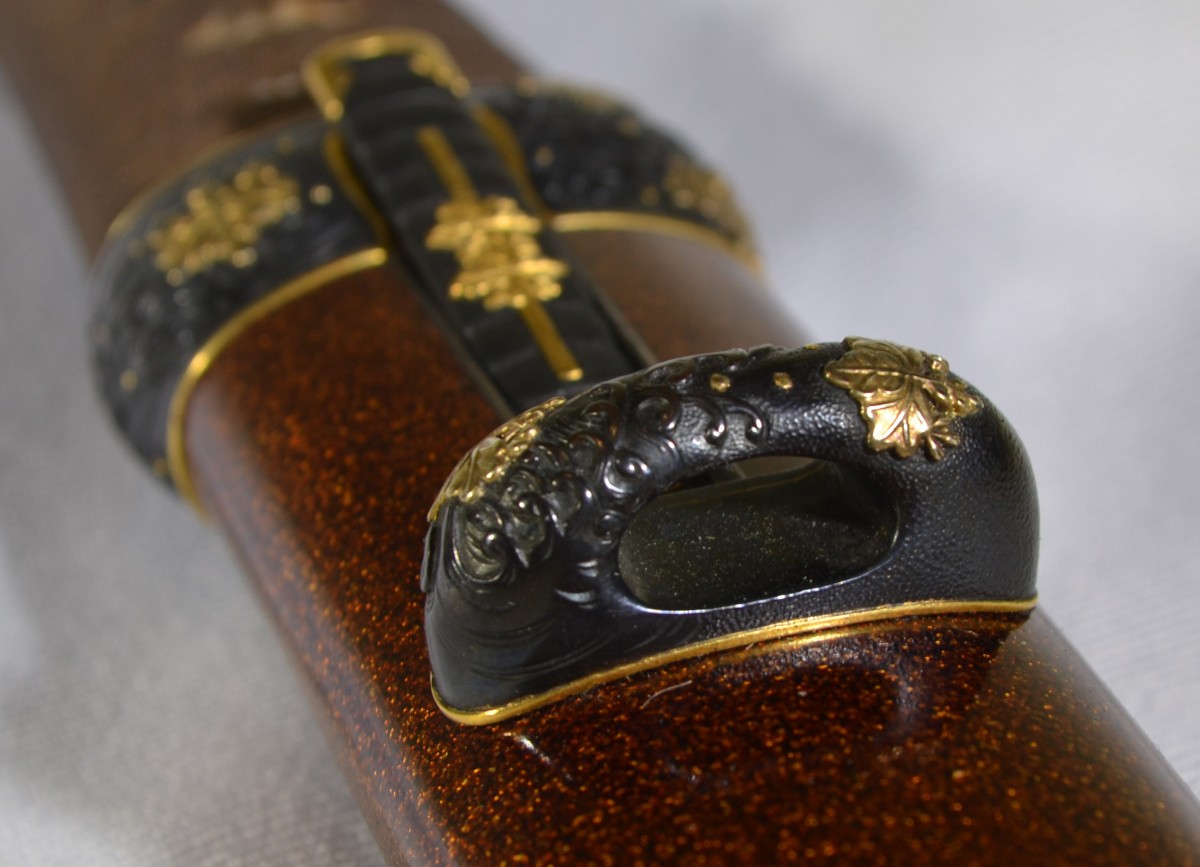
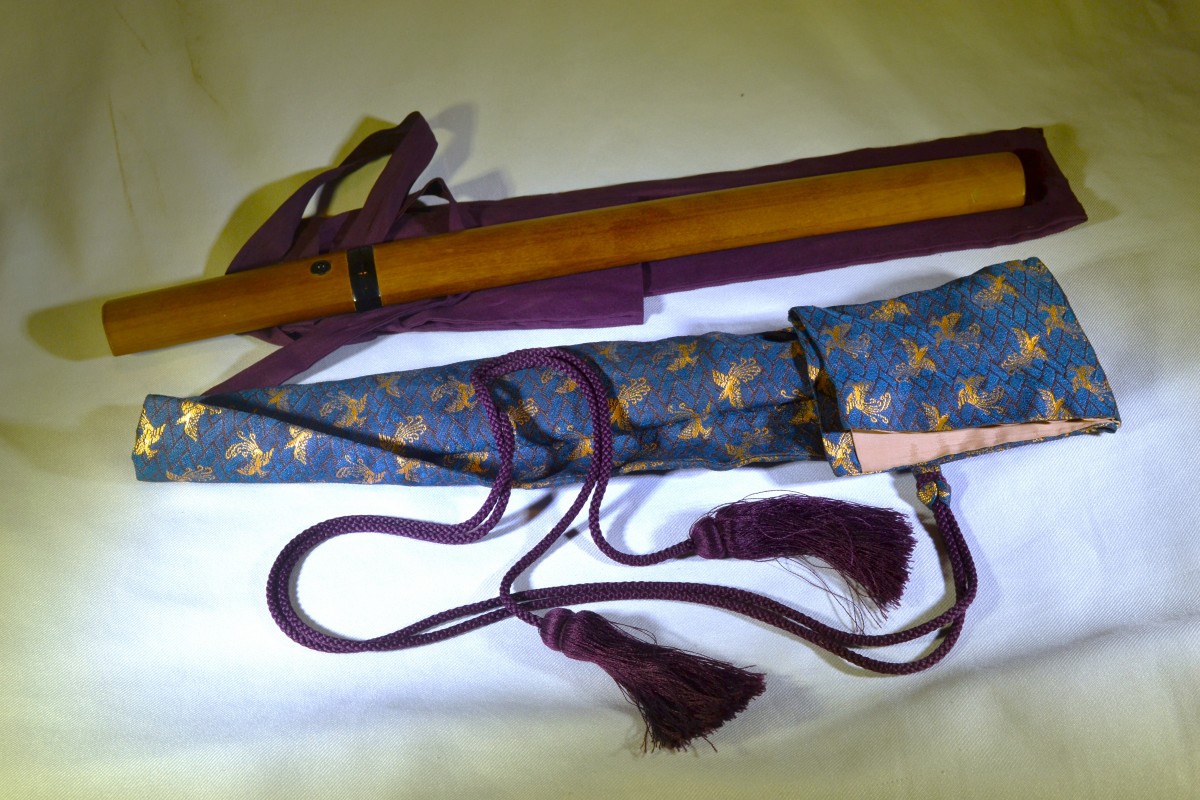
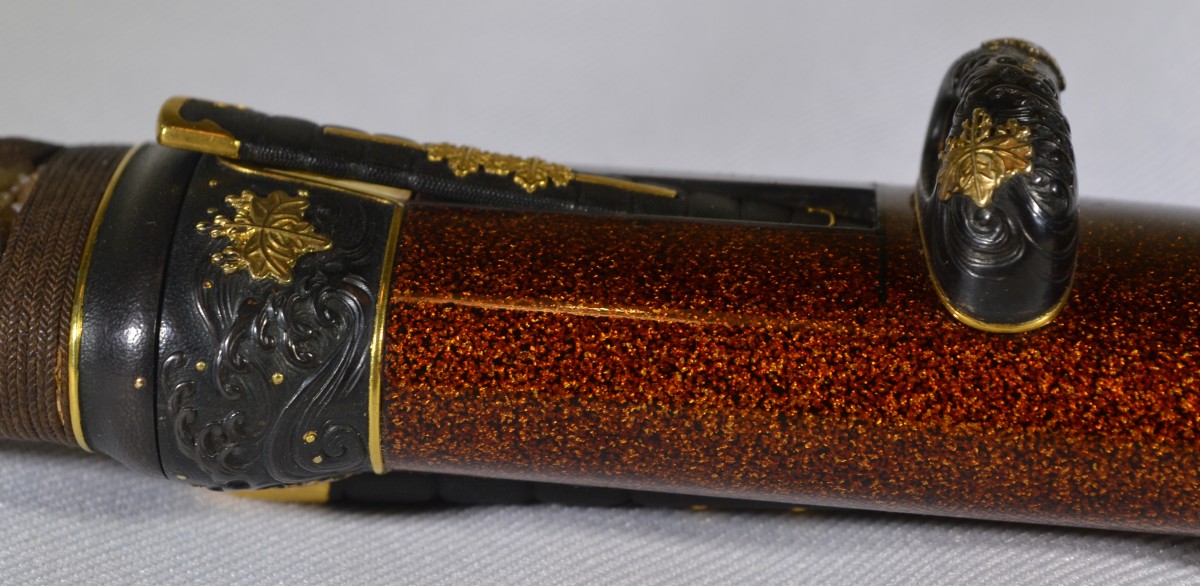
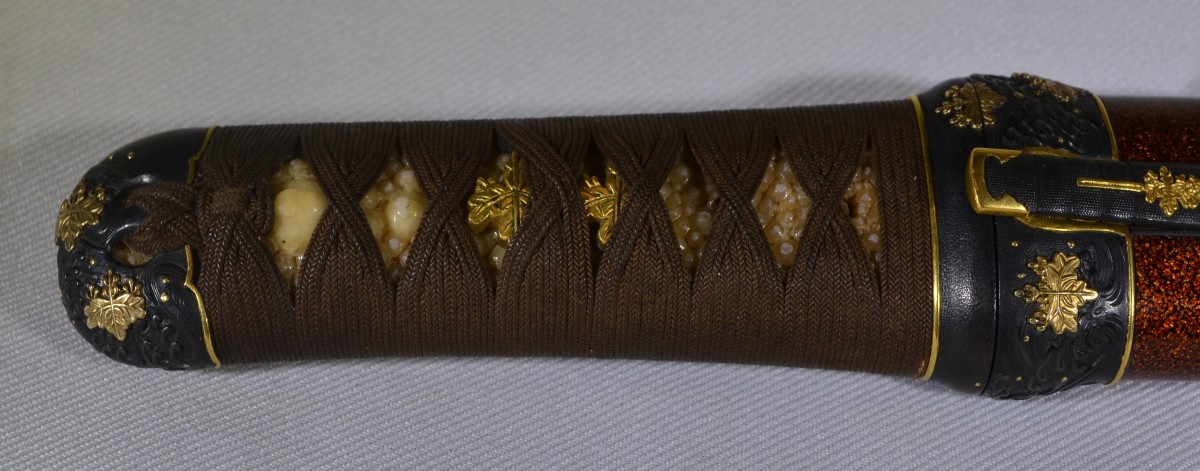
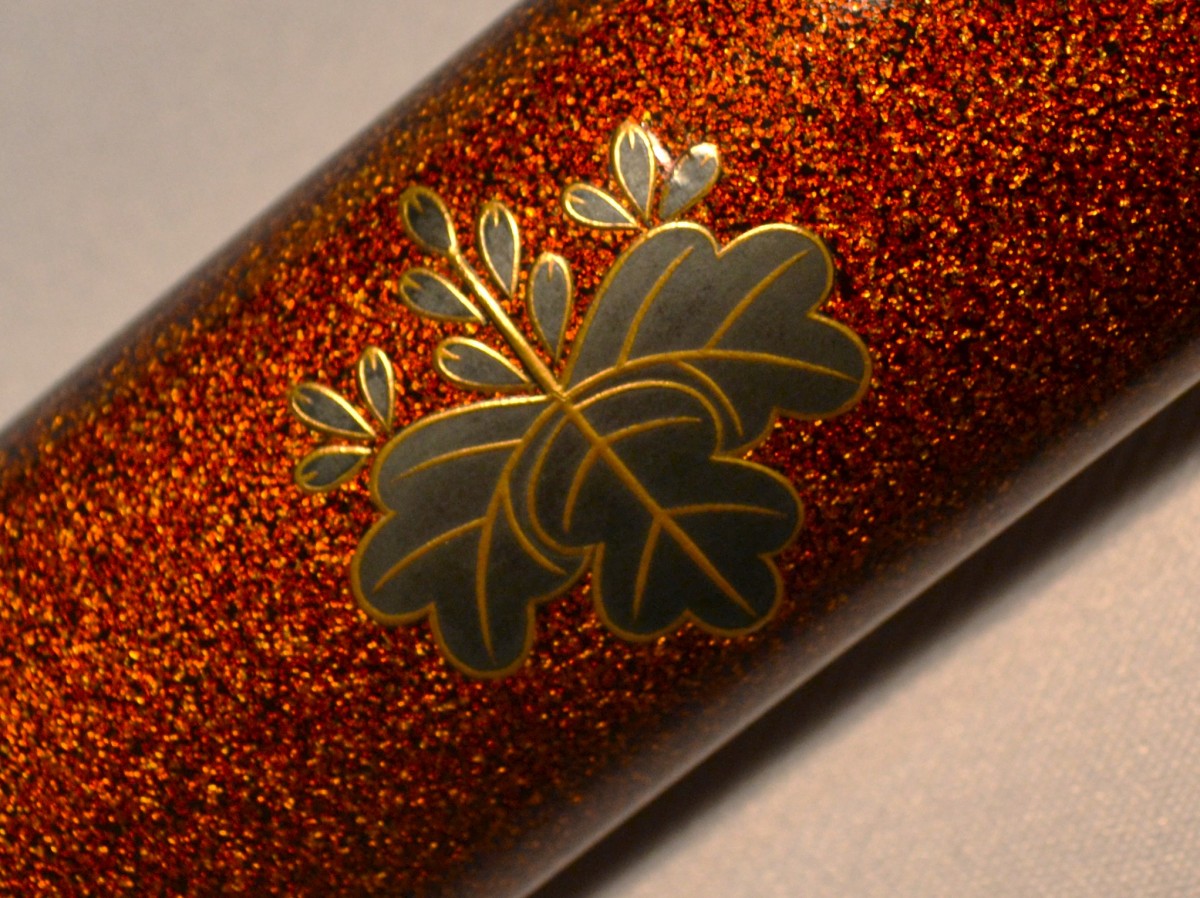
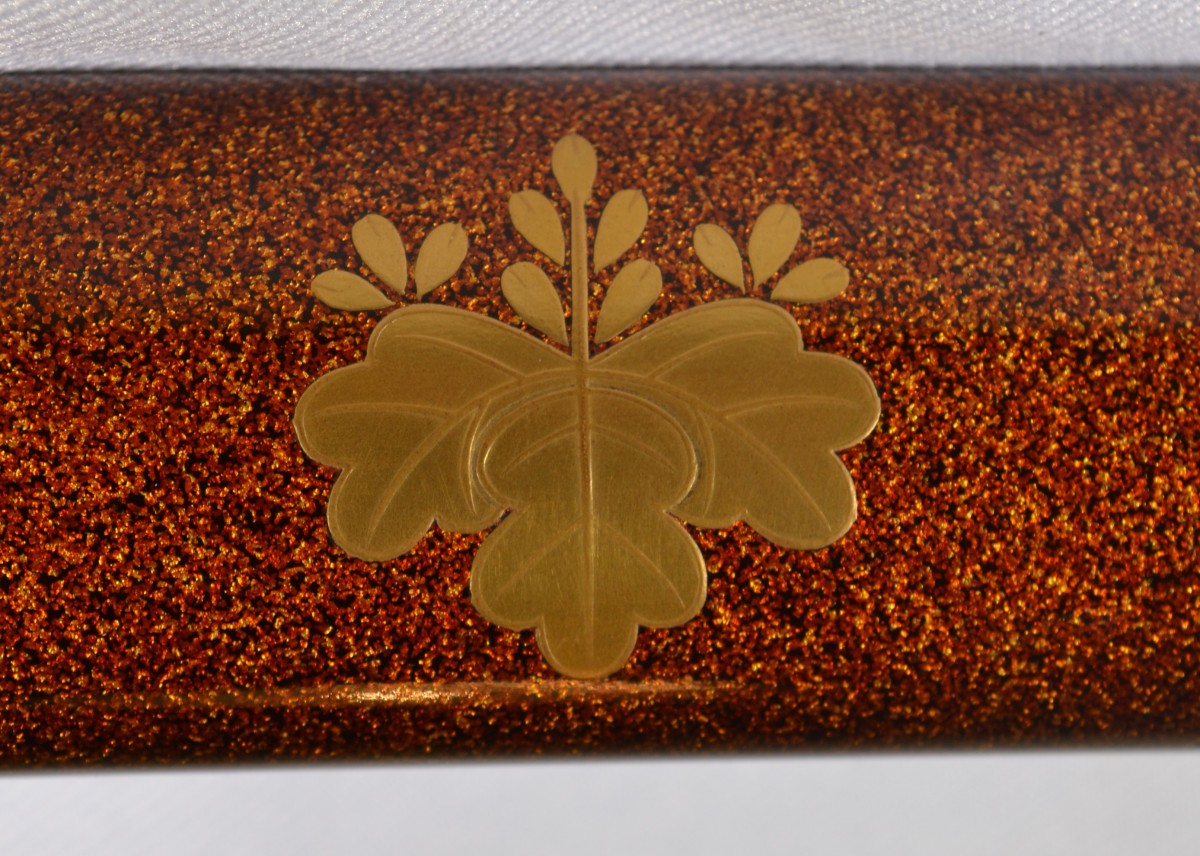
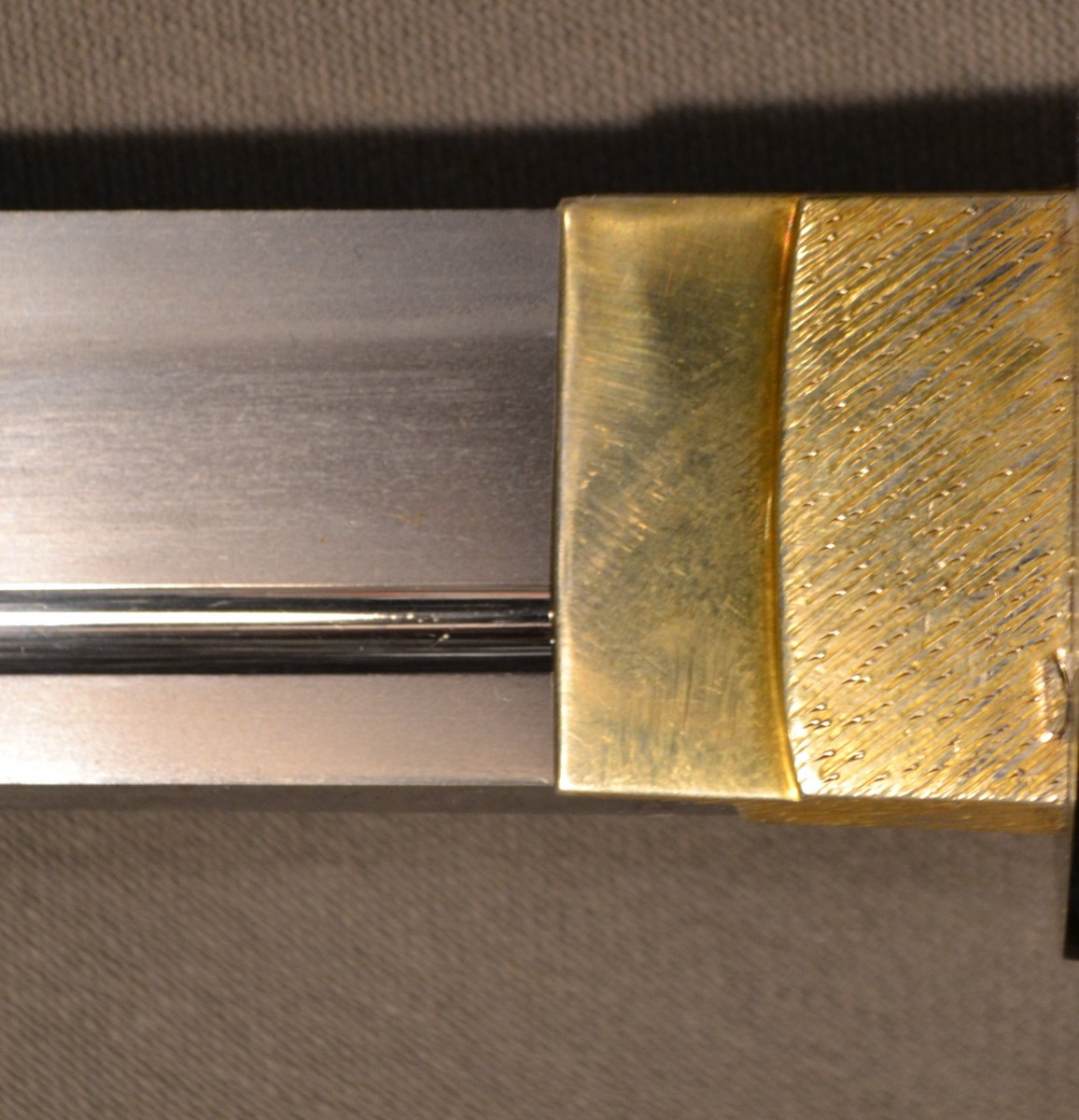
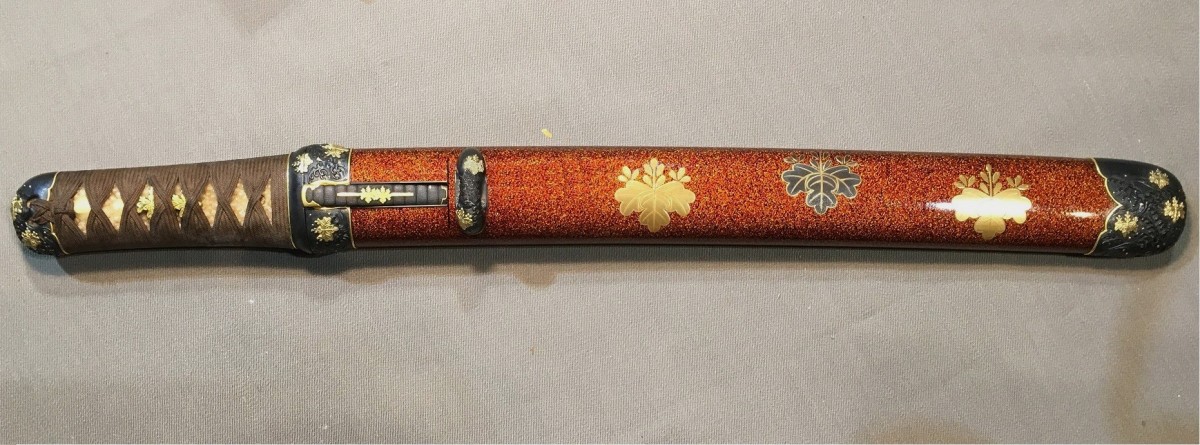
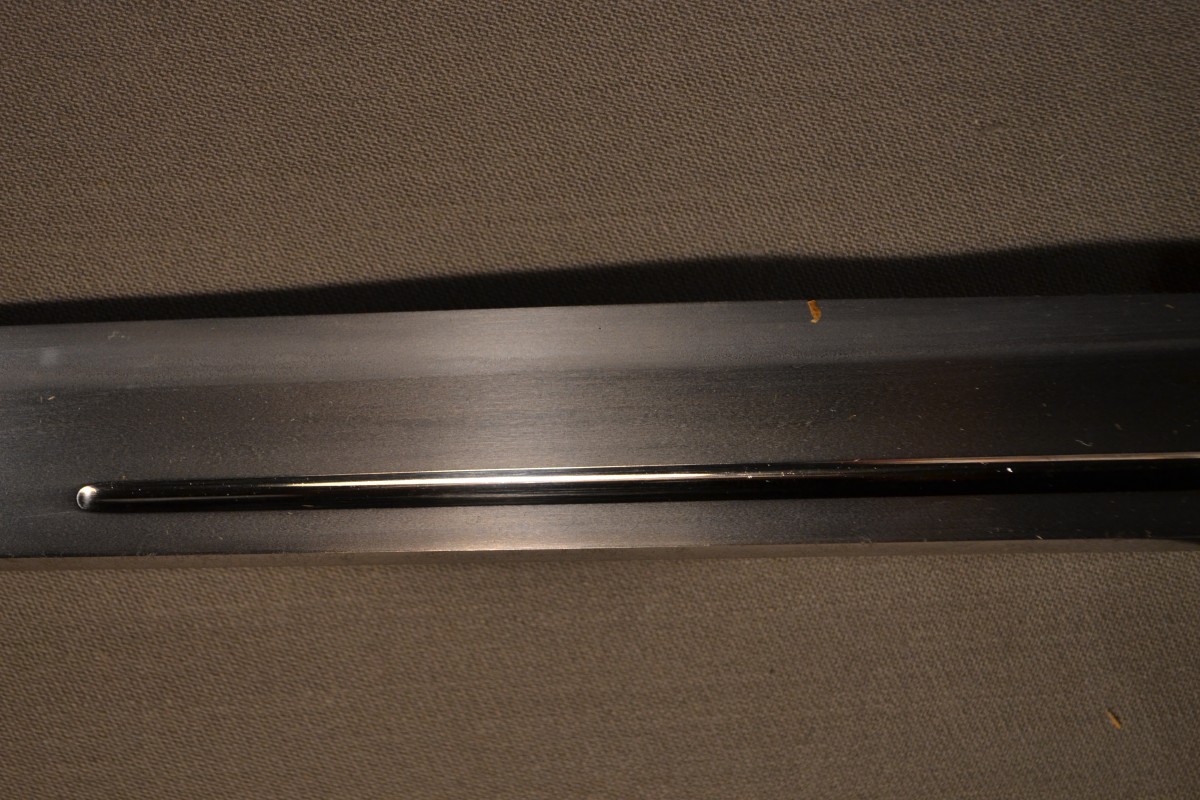
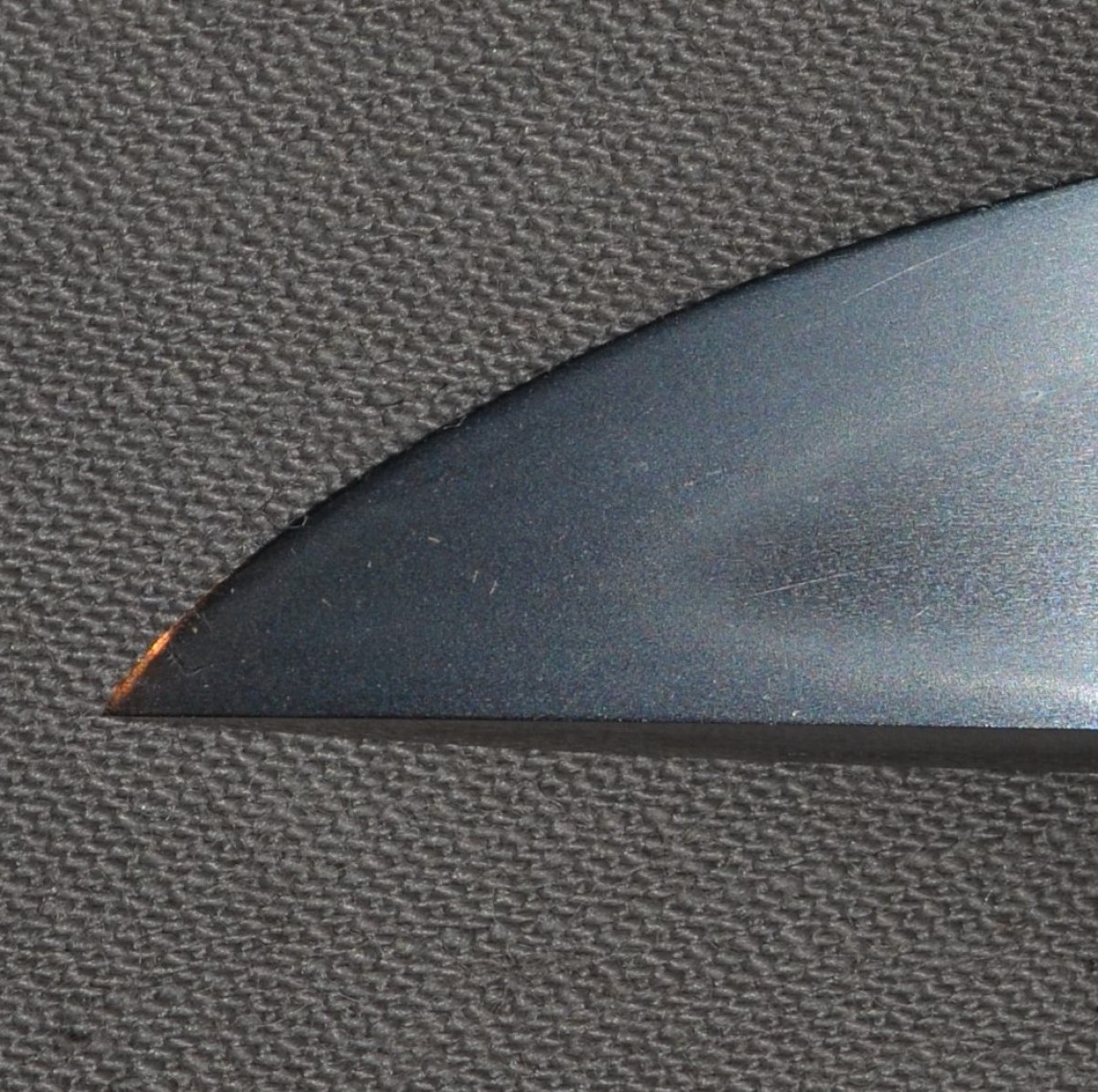
The blade is signed by Ujifusa, a renowned swordsmith active in the 17th century. It is in perfect condition, kept separately in a shirasaya (a type of wooden holster). The tang has numerous holes from repeated remounting. The scabbard is lacquered in dense nashiji of the finest orange. The hilt is made of shakudo inlaid with solid gold Kirimon, not simply gilded as is more common. The Kirimon is the emblem of the Imperial family of Japan; however, the Kirimon on this aikuchi have five petals on their central flower and three petals on the side flowers, indicating that this was not a weapon made for the Emperor himself, but for a member of his family. The emperor's personal Kirimon has 7 and 5 petals respectively, instead of 5 and 3. That said, other families used the Kirimon as an emblem, and this has been the case since the 11th century. However, the exceptional quality of our Aikuchi attests to a major work that a mere Daimyo could not have afforded or dared to commission. Furthermore, the fact that there is no signature on such a masterpiece, even though it is undoubtedly the work of one of the finest goldsmiths of his time, if not the finest, reflects the profound humility required when addressing an Emperor or a prince. Old Japanese texts specify that Aikuchi, lacking a guard and more easily concealed within the folds of a kimono, were used by ladies of the court. The elegance, preciousness, and delicacy of this decoration are indeed very feminine and not at all martial. The nanako is composed of thousands, tens of thousands, of beads. The Kozuka alone contains 12,000 of these. They are all perfectly aligned; there is not a single typographical error that would have been enough to ruin the work. Moreover, in an extreme feat, the artist chose a beading tool with a minuscule diameter, much smaller than those usually used for all Nanako backgrounds, thus preventing any plagiarism. A learned specialist would undoubtedly be able to identify its creator. The shagreen-covered handle is braided with silk. The menuki are likely gold, but we have not verified this.
Total length: 45 cm
Blade: 42 cm
Excellent condition. No repairs. A dent on the scabbard, without any loss of material (see photo).The blade is 17th century. The mounting is 18th-19th century.
Delevery information :
International deliveries in the best conditions. Careful packaging. I travel with important items as needed.