Offered by Matthew Holder

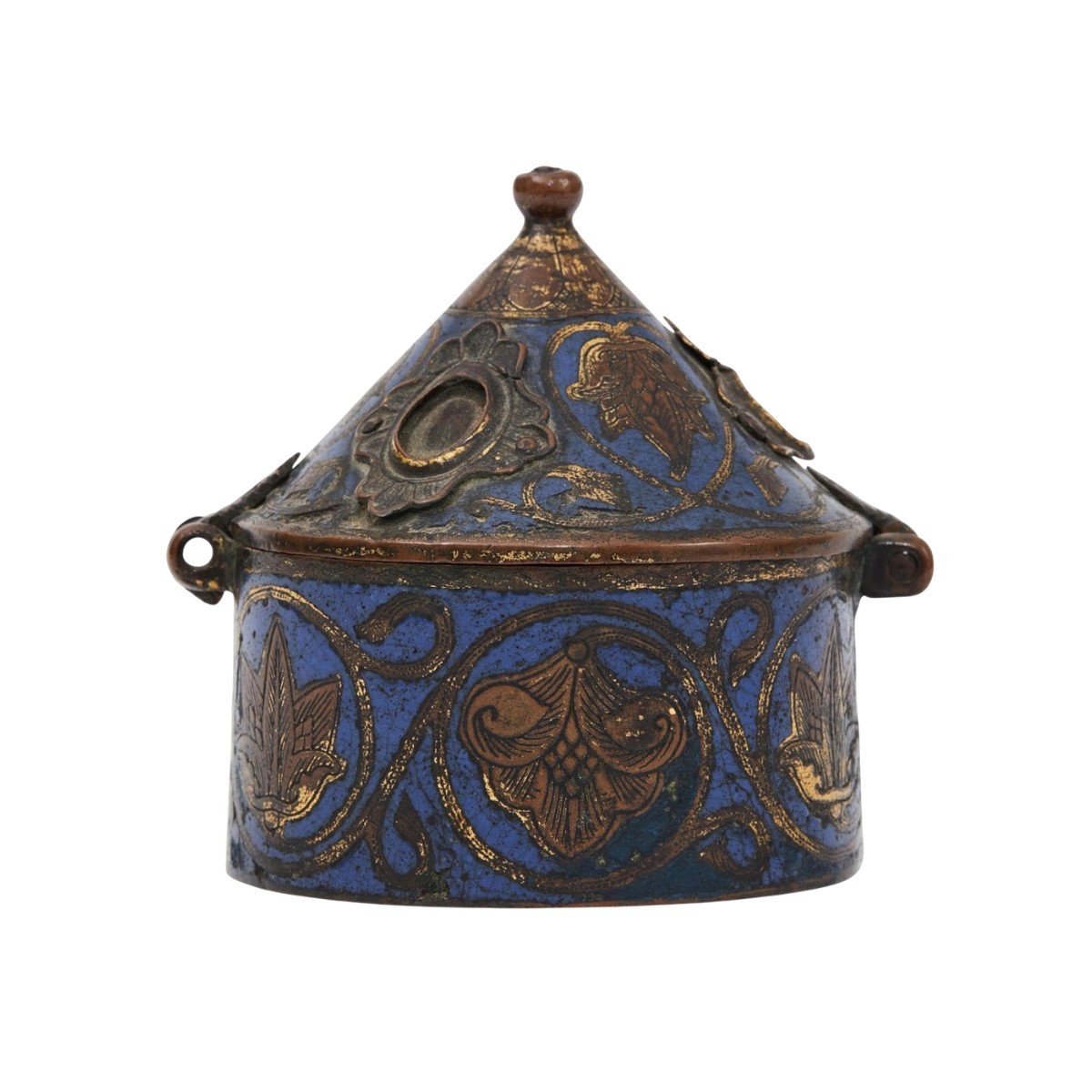
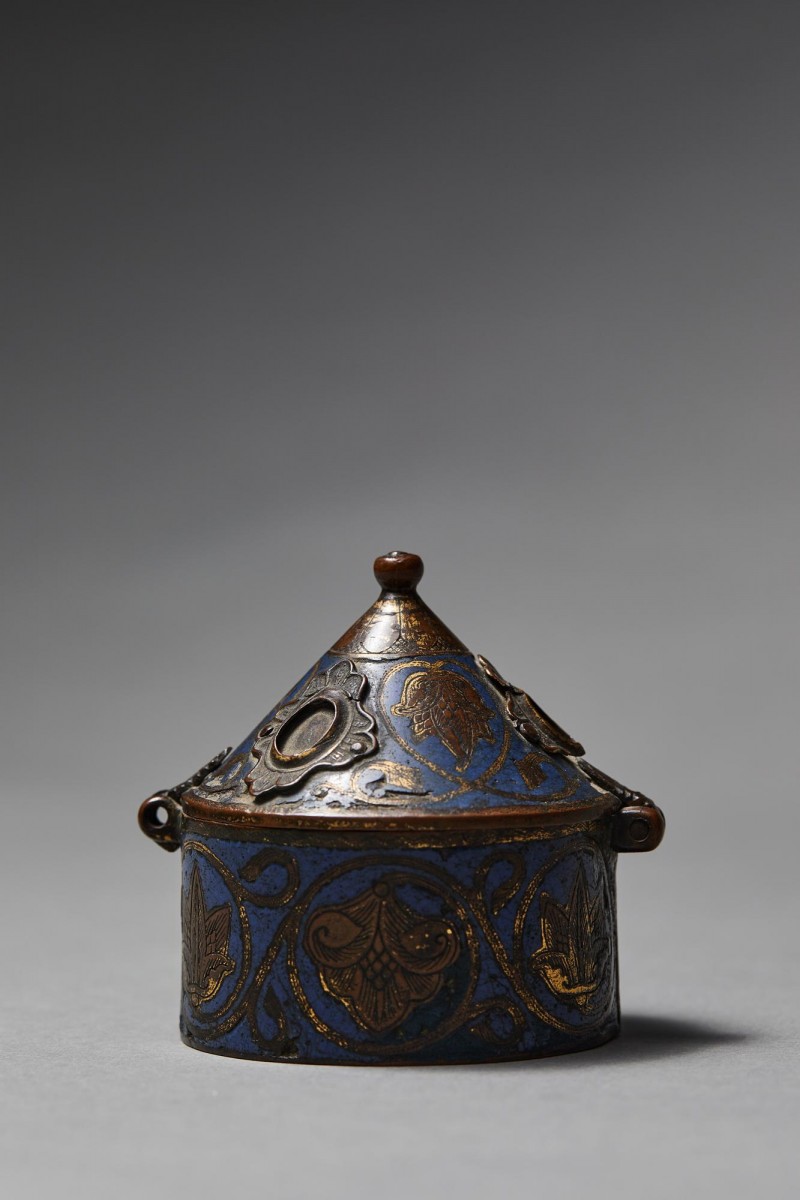
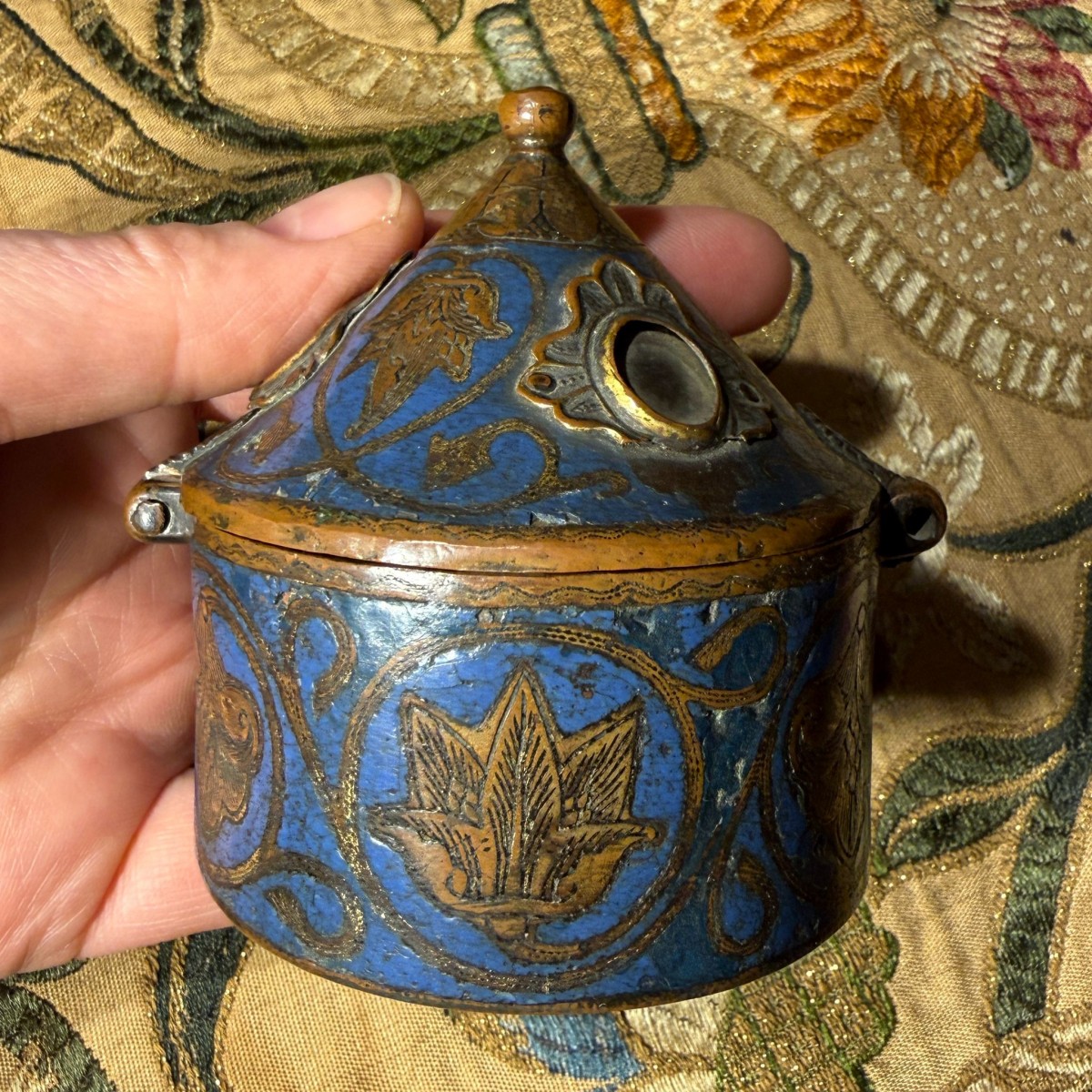
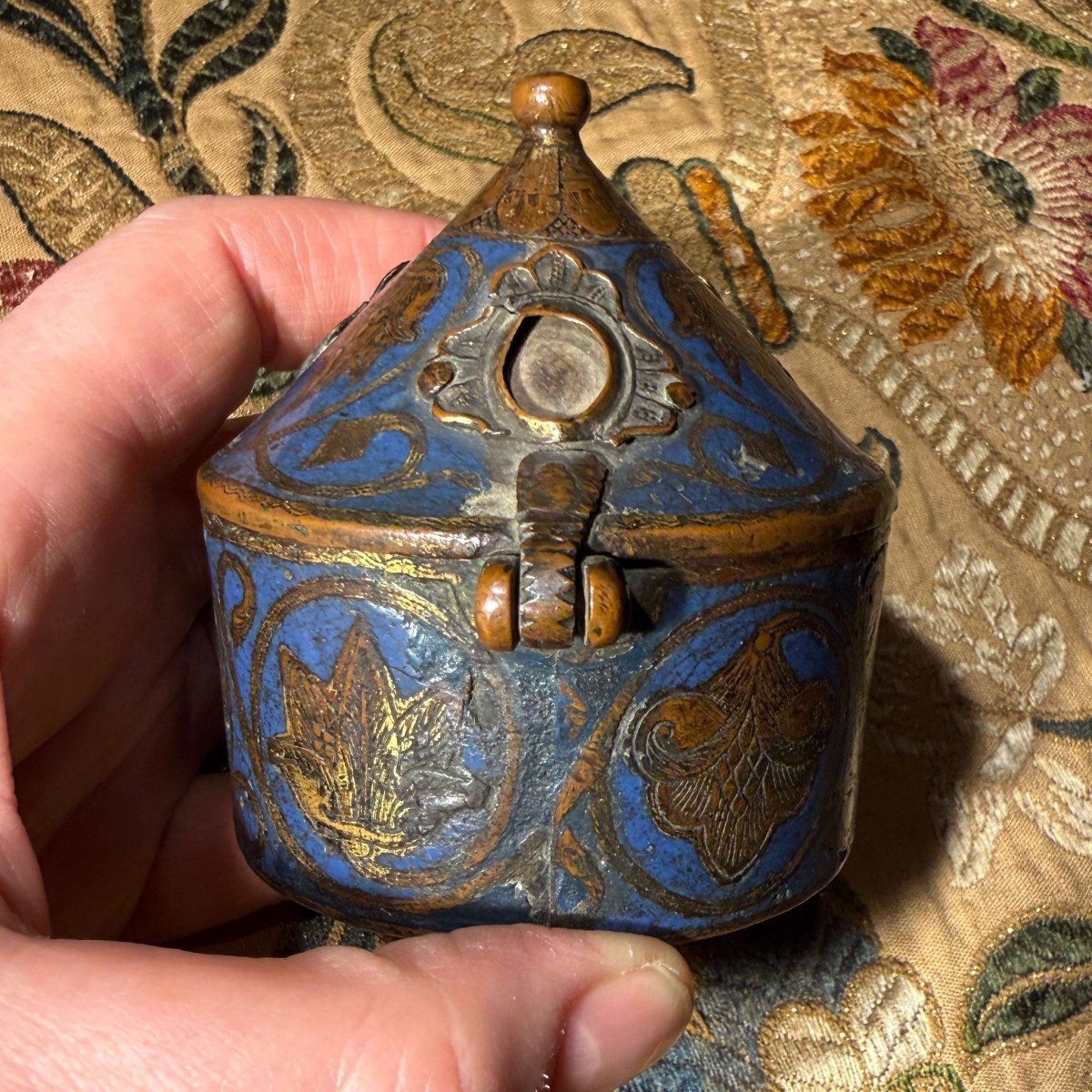
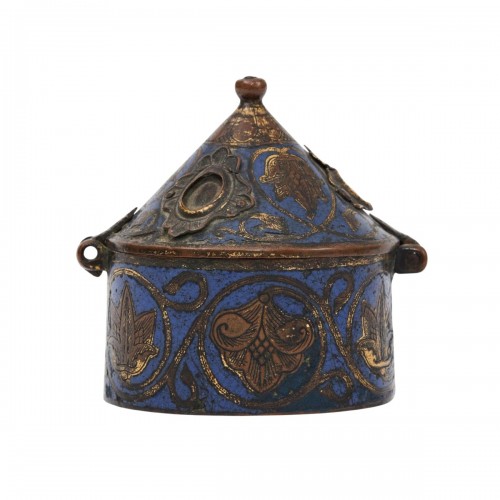
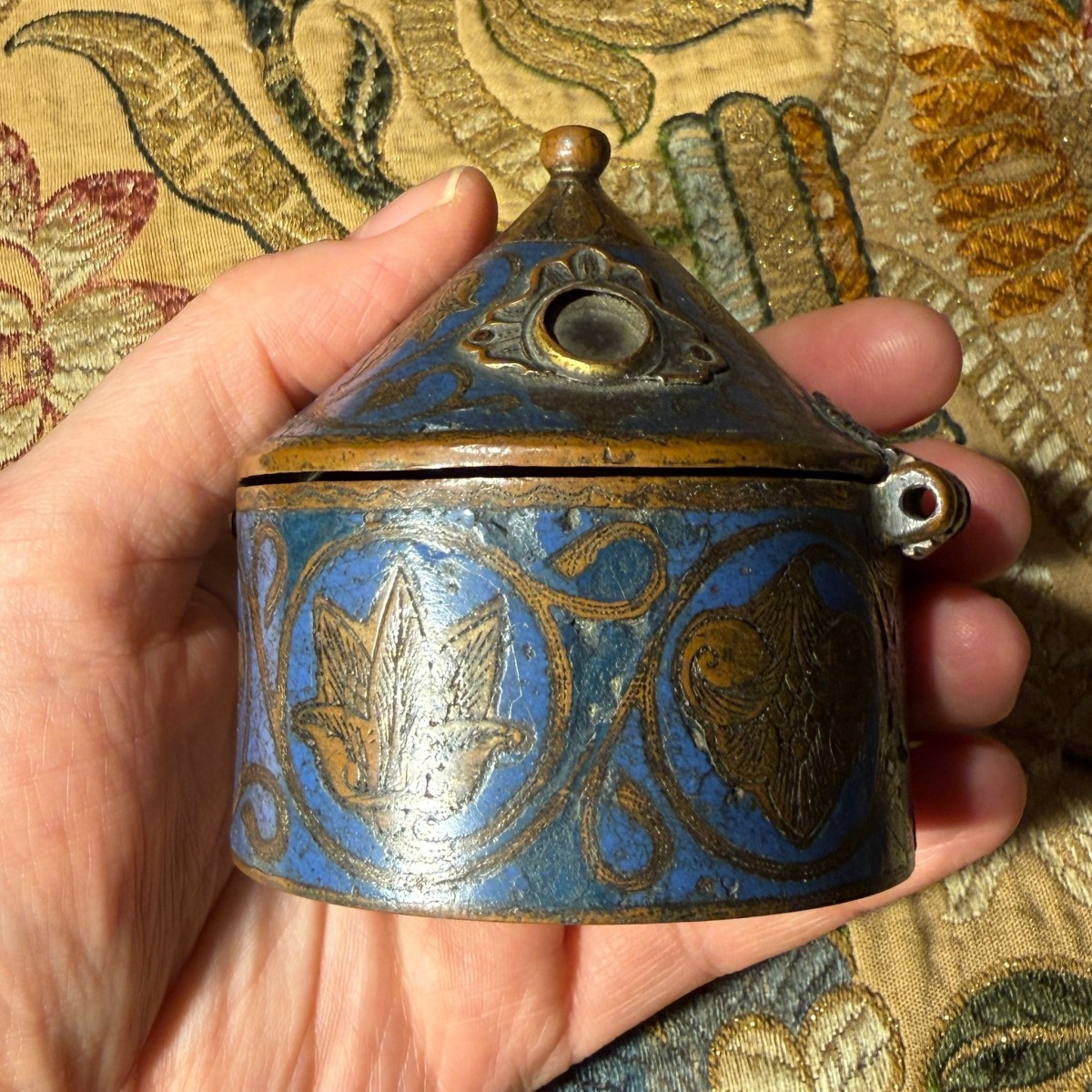
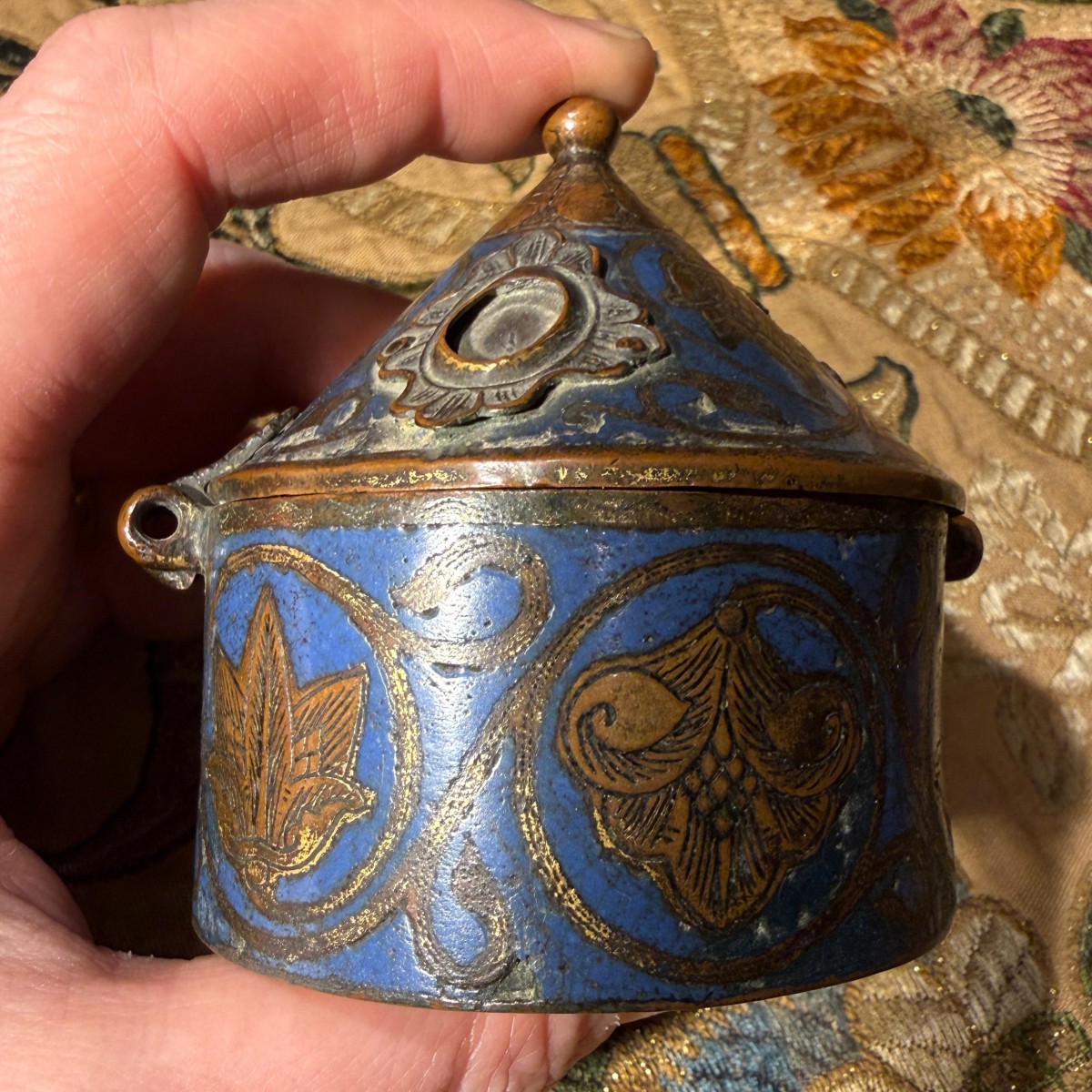
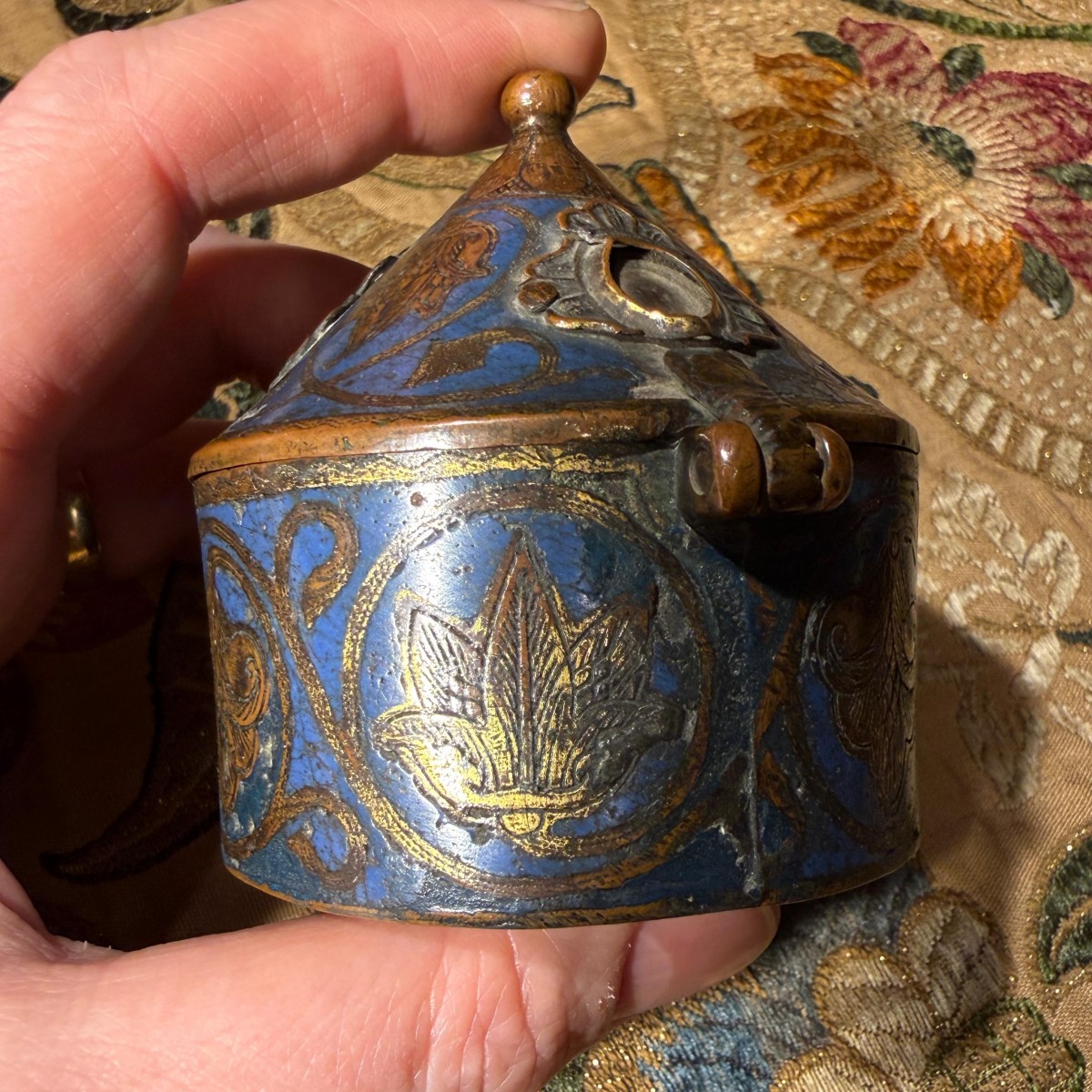
Gothic Limoges Champlevé Enamelled Copper-Gilt Pyx with Cabochon Mounts.
Limoges, France, Mid 13th century.
Materials and technique
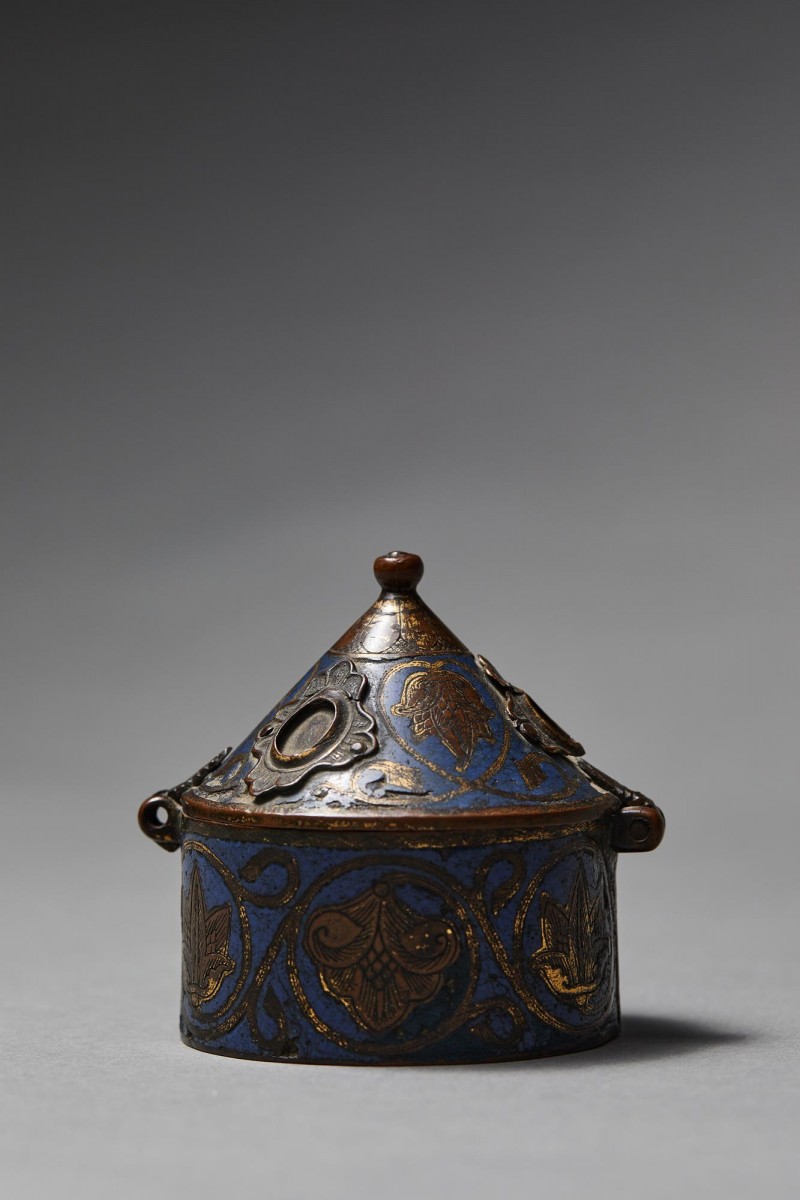
Copper, champlevé enamel and gilding; engraved and gilt copper; applied copper-gilt mounts with three oval cabochon settings (now vacant); hinged lid with knop finial.
Measurements:
7.9 × 7.4 × 6.8 cm.
Provenance:
Royall Tyler (1884–1953).
Thence by descent.
Description:
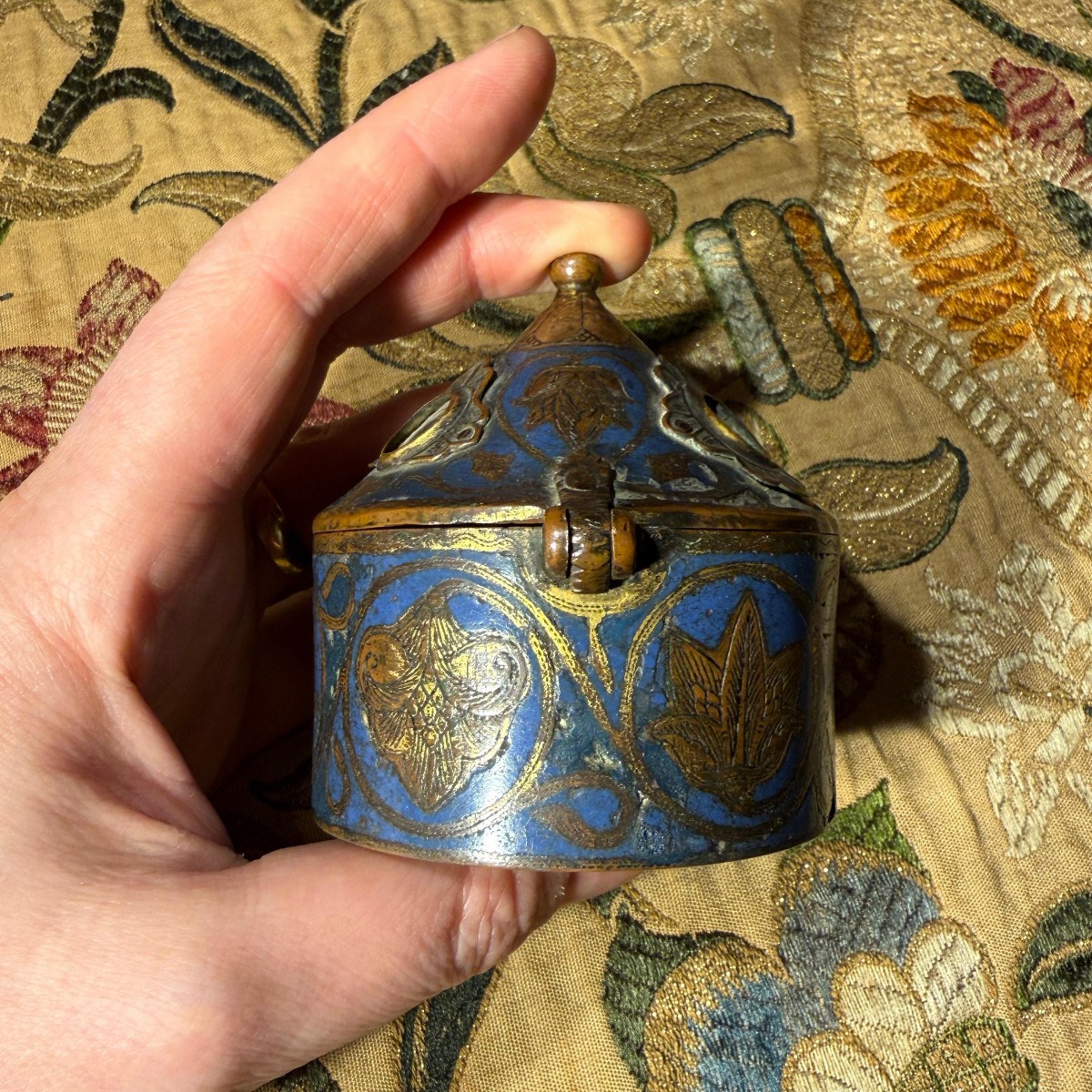
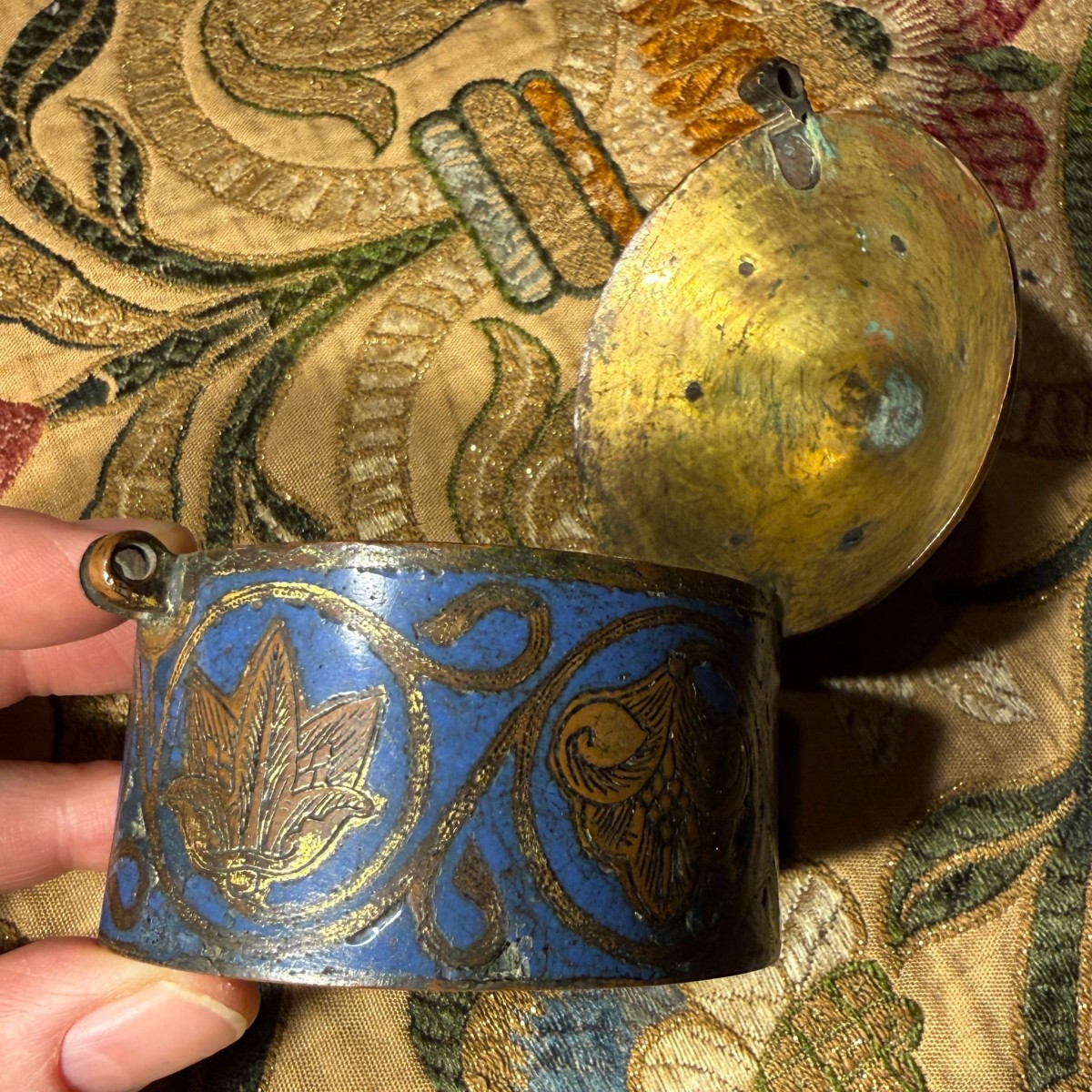
The pyx is of cylindrical form with a hinged conical cover, surmounted by a small knop finial. The exterior is decorated in deep cobalt-blue champlevé enamel, reserved with engraved scrolling foliate ornament arranged in circular medallions. These alternate between palmette-like and foliate motifs, linked by sinuous rinceaux that encircle the body in a continuous decorative band.
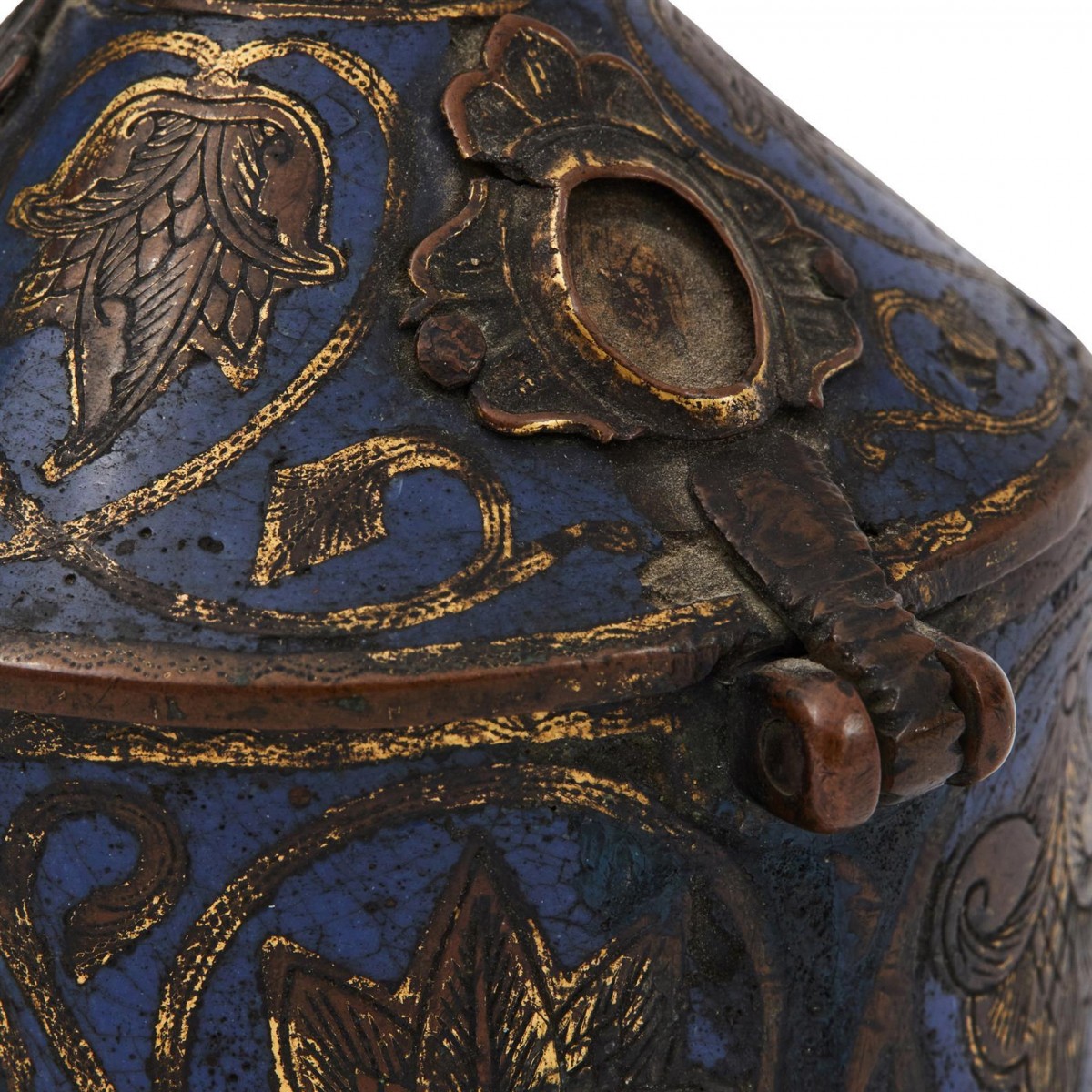
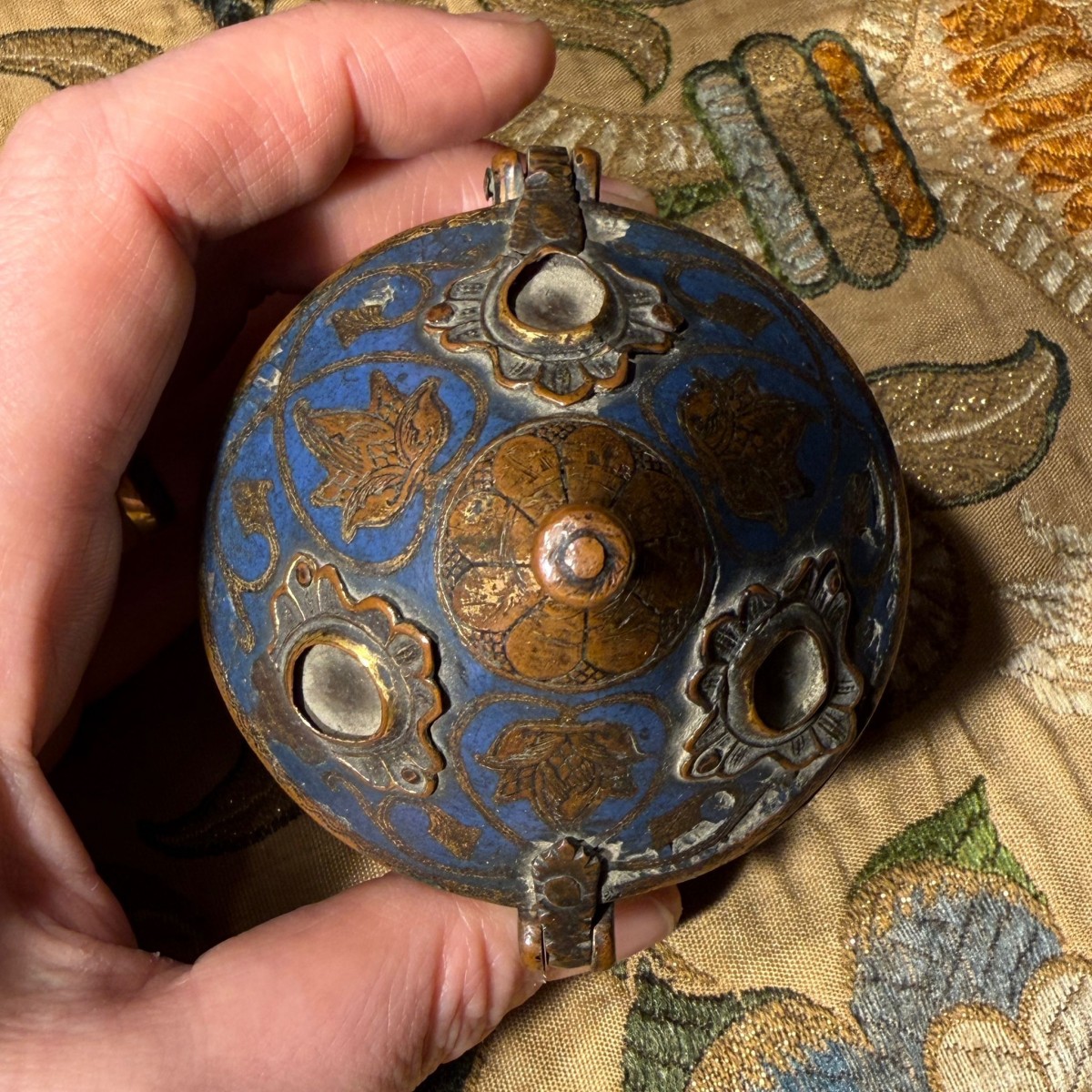
The lid is similarly enamelled and fitted with three applied copper-gilt mounts, each framing an oval setting originally intended to receive glass-paste or semi-precious cabochons, now lost. The upper surface of the cover is engraved with a radiating floral device around the knop.
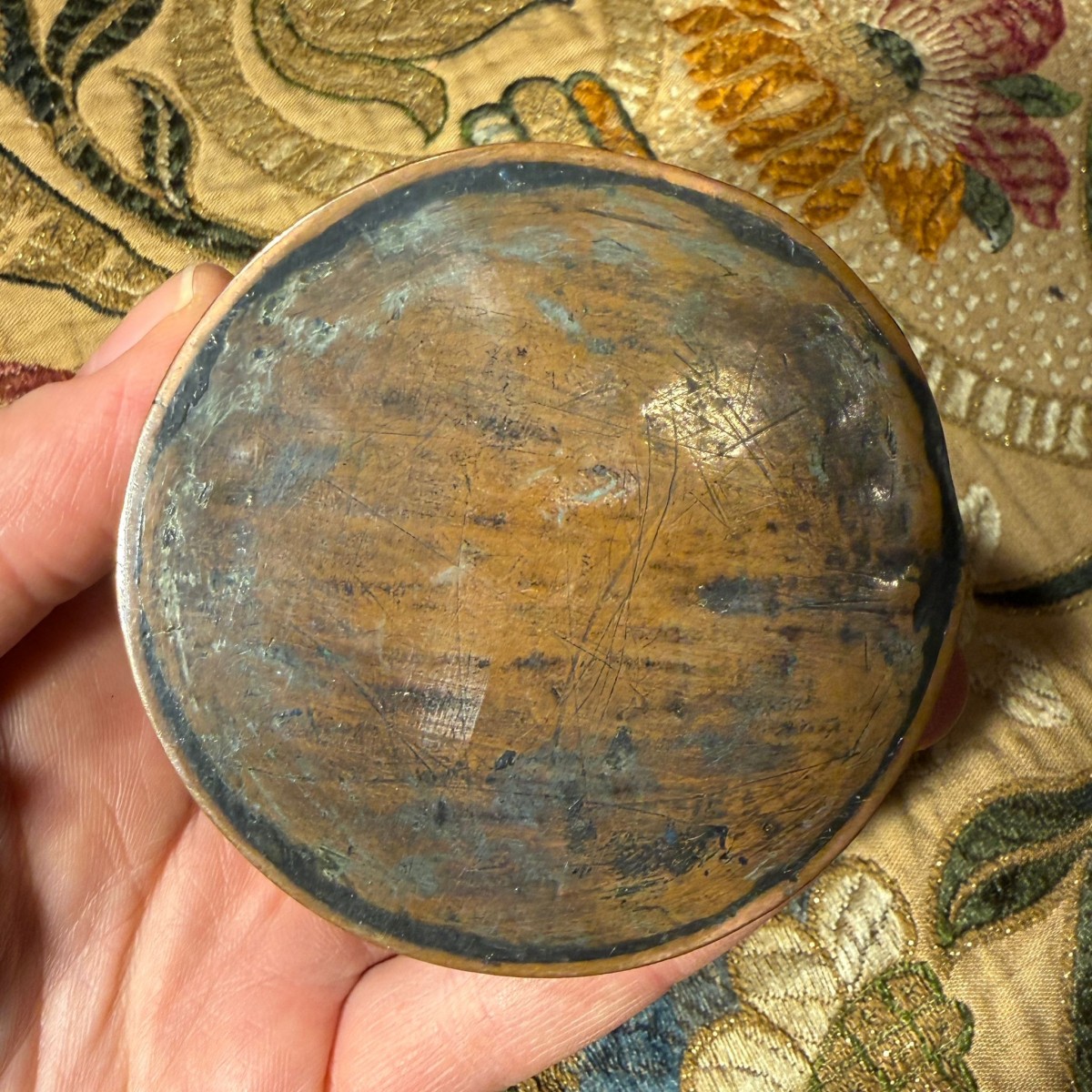
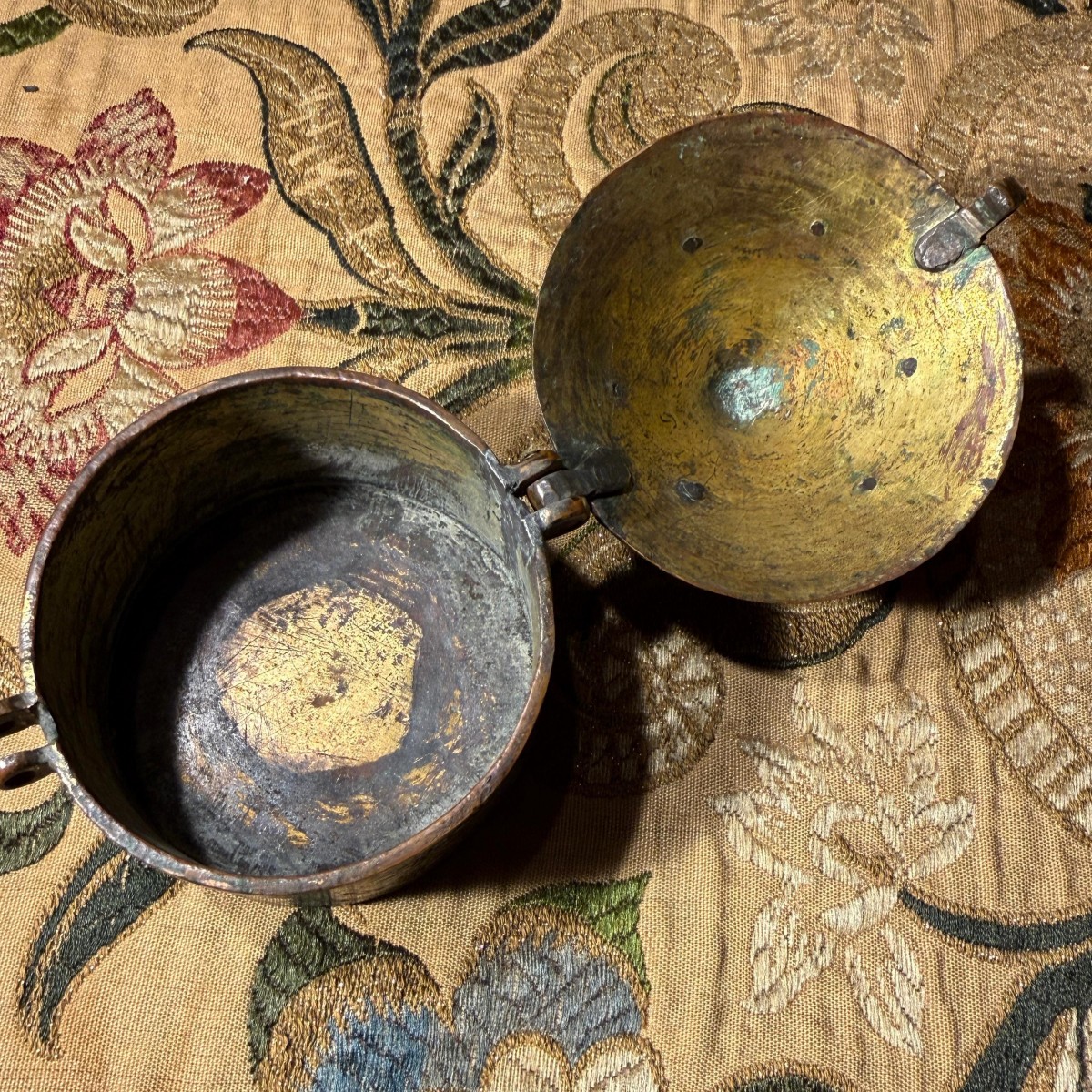
The interior of both lid and base retains extensive traces of original fire-gilding, now heavily worn through use, with abrasion and darkened oxidation consistent with repeated opening and handling. The exterior was also originally fully gilded, now largely worn, with surviving traces visible within engraved recesses and protected areas. The base shows concentrated wear at the centre, forming a circular area of exposed gilding where the host would have rested.
Function and context:
A pyx was a liturgical container designed to hold and transport the consecrated Eucharistic host. Limoges workshops produced pyxes in considerable numbers for ecclesiastical use throughout Western Europe, employing champlevé enamelling on copper, enriched with gilding and jewel-like mounts, to emphasise the sanctity of their contents.
The present example is distinguished by the use of applied cabochon decoration on the lid, a feature that appears only rarely within the surviving oeuvre of Limoges pyx production. This jewel-like embellishment, now largely lost, places the object among the more ambitious and luxurious models of the type.
The documented ownership by Royall Tyler, the distinguished historian of medieval and Byzantine art, lends additional scholarly interest and provides a clear modern collecting context.
Condition:
Overall very good and honest condition for its type and date.
Expected wear and losses, including scattered fritting to the enamel, abrasion to engraved and gilded surfaces, and surface oxidation. The original cross surmount to the finial is missing, and the three cabochon settings are now empty. The hinge to the lid and the latch mechanism are likely ancient replacements, while the suspension lugs on the body are original. Gilding is substantially worn, particularly to raised areas and the interior. The hinge remains secure and functional. No evidence of modern restoration.
Comparisons:
Musée du Louvre, Paris, Pyxide à décor de fleurons et cabochons, inv. cl010096797.
The Metropolitan Museum of Art, New York (The Cloisters), Pyx, Limoges, 13th century, acc. no. 32.100.280.
Musée du Louvre, Paris, Pyxide à décor de rinceaux, inv. cl010101684.
The Walters Art Museum, Baltimore, Pyx, Limoges, mid 13th century, acc. no. 44.252.
Delevery information :
Worldwide shipping is included in all prices.