Offered by Franck Baptiste Paris
REQUEST INFORMATION
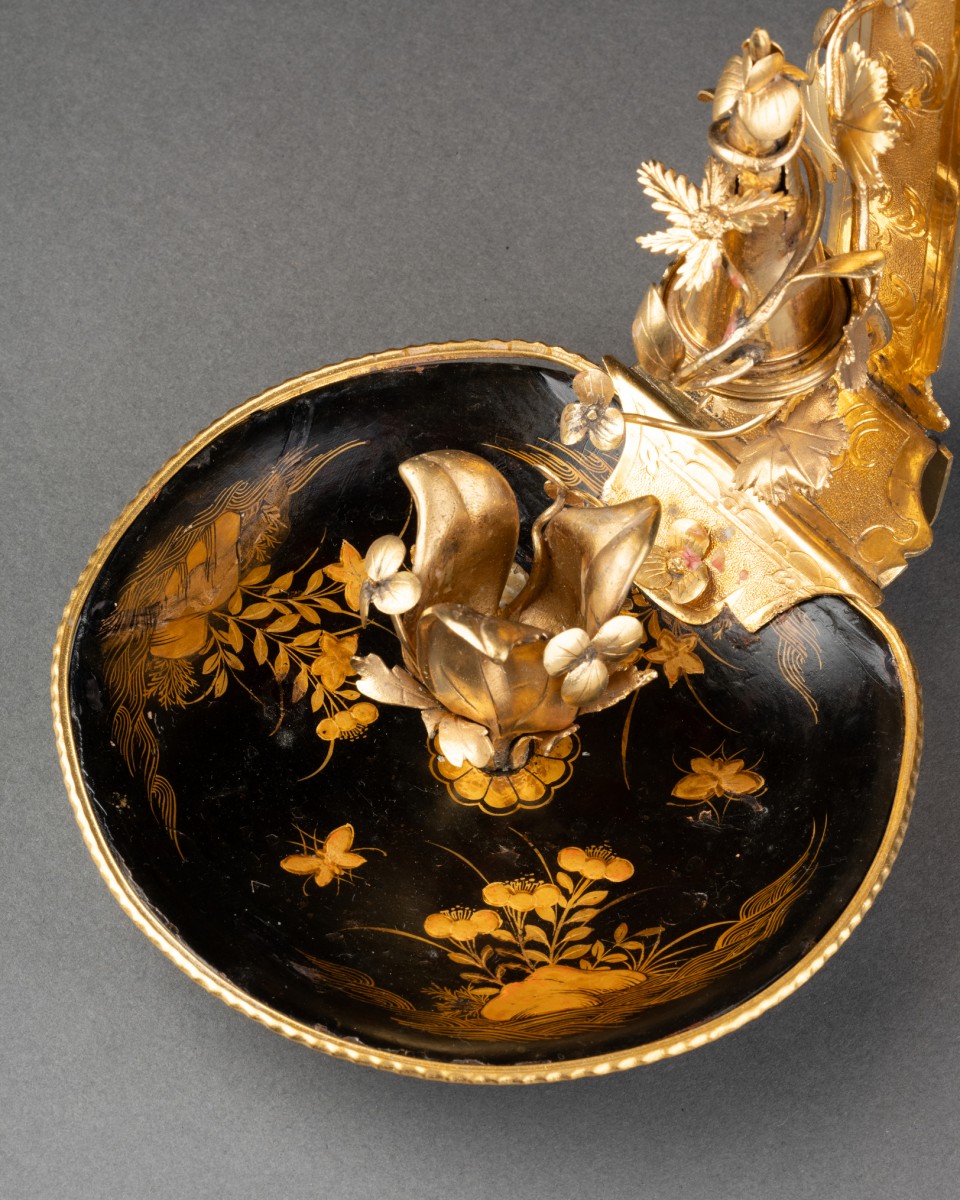
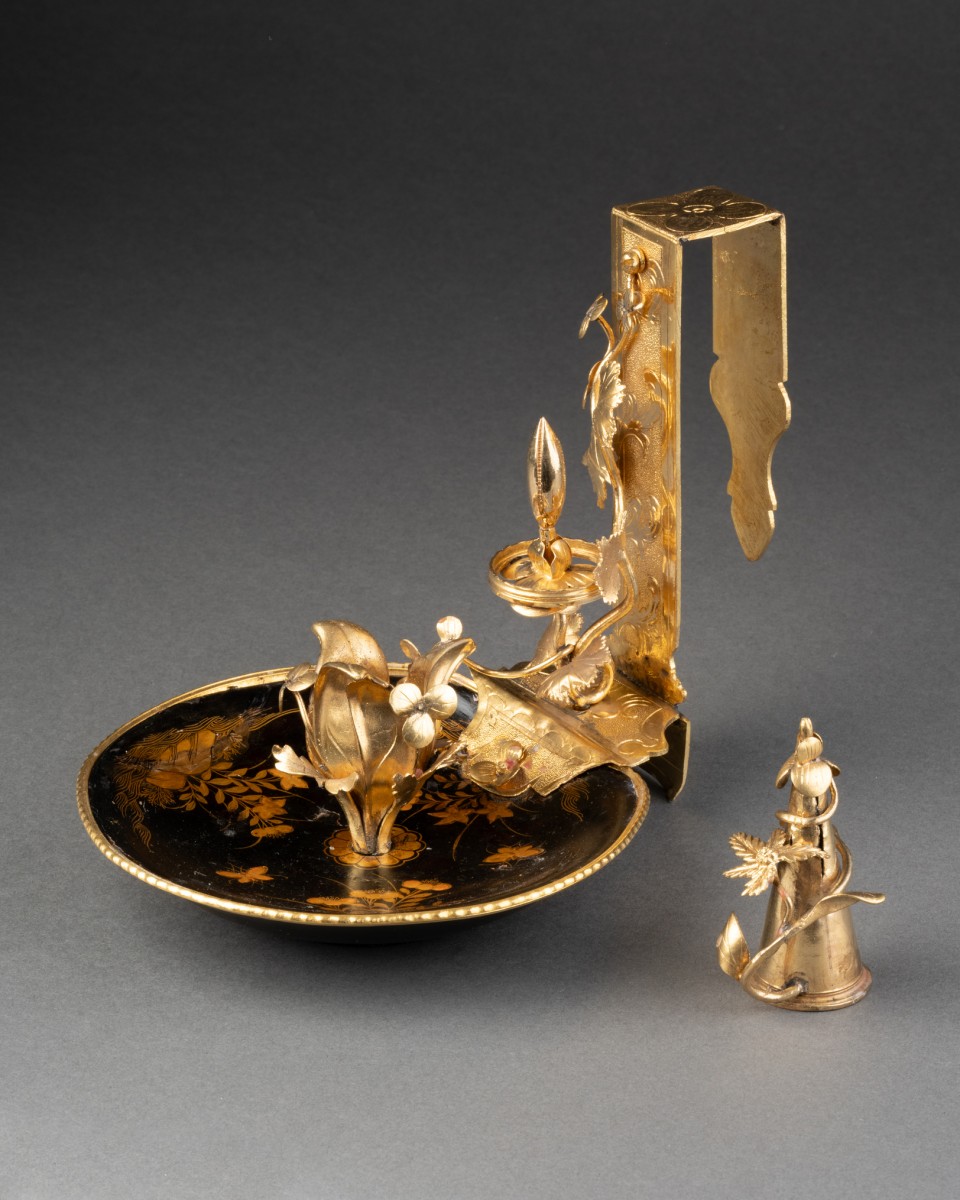
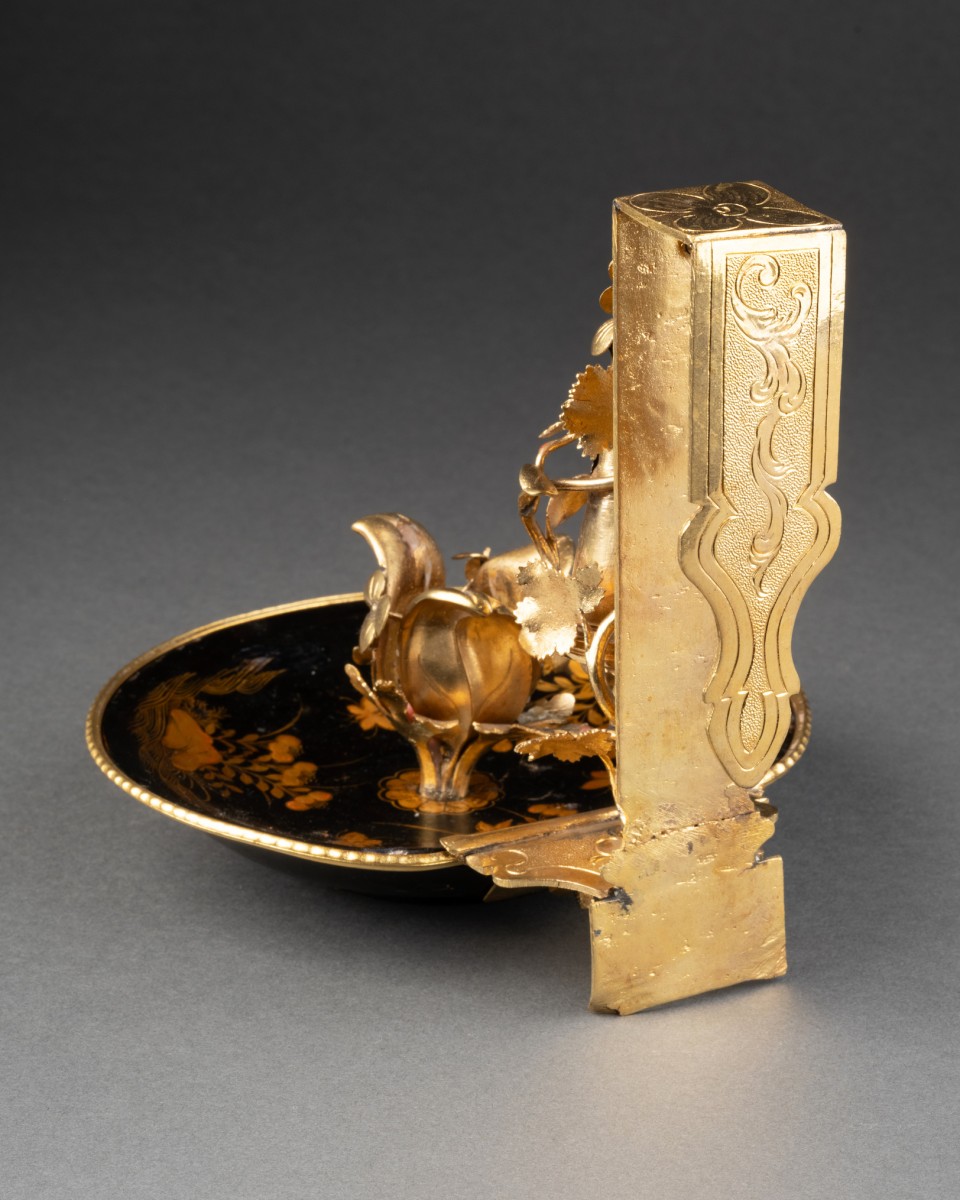

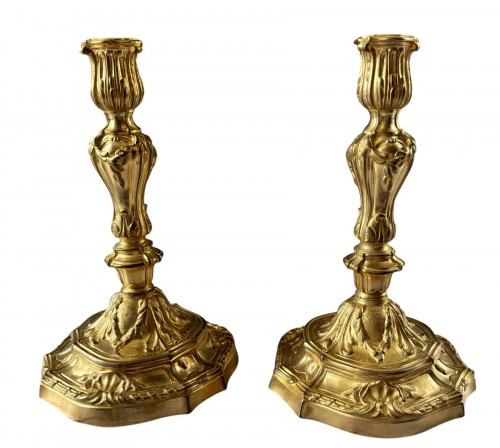
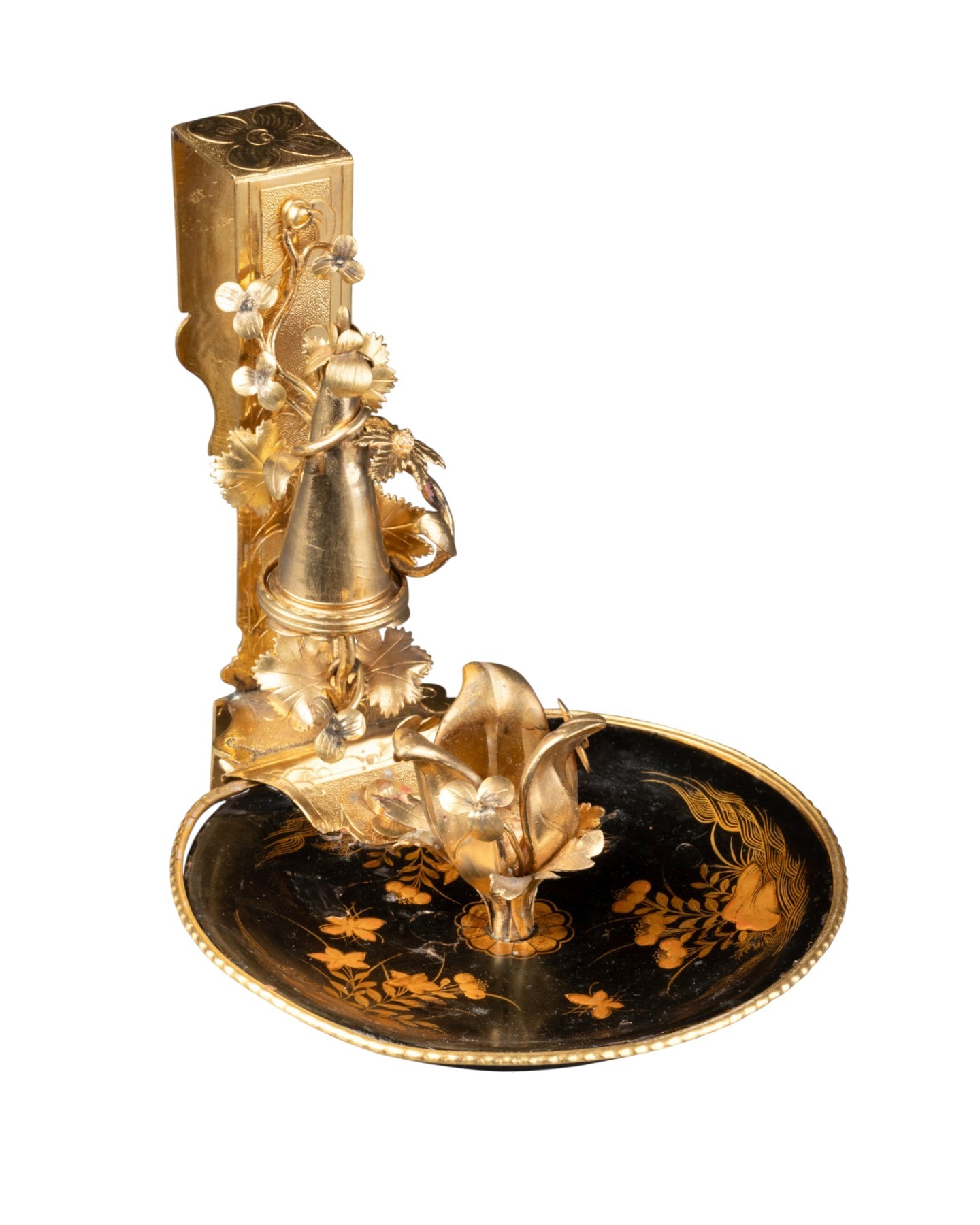
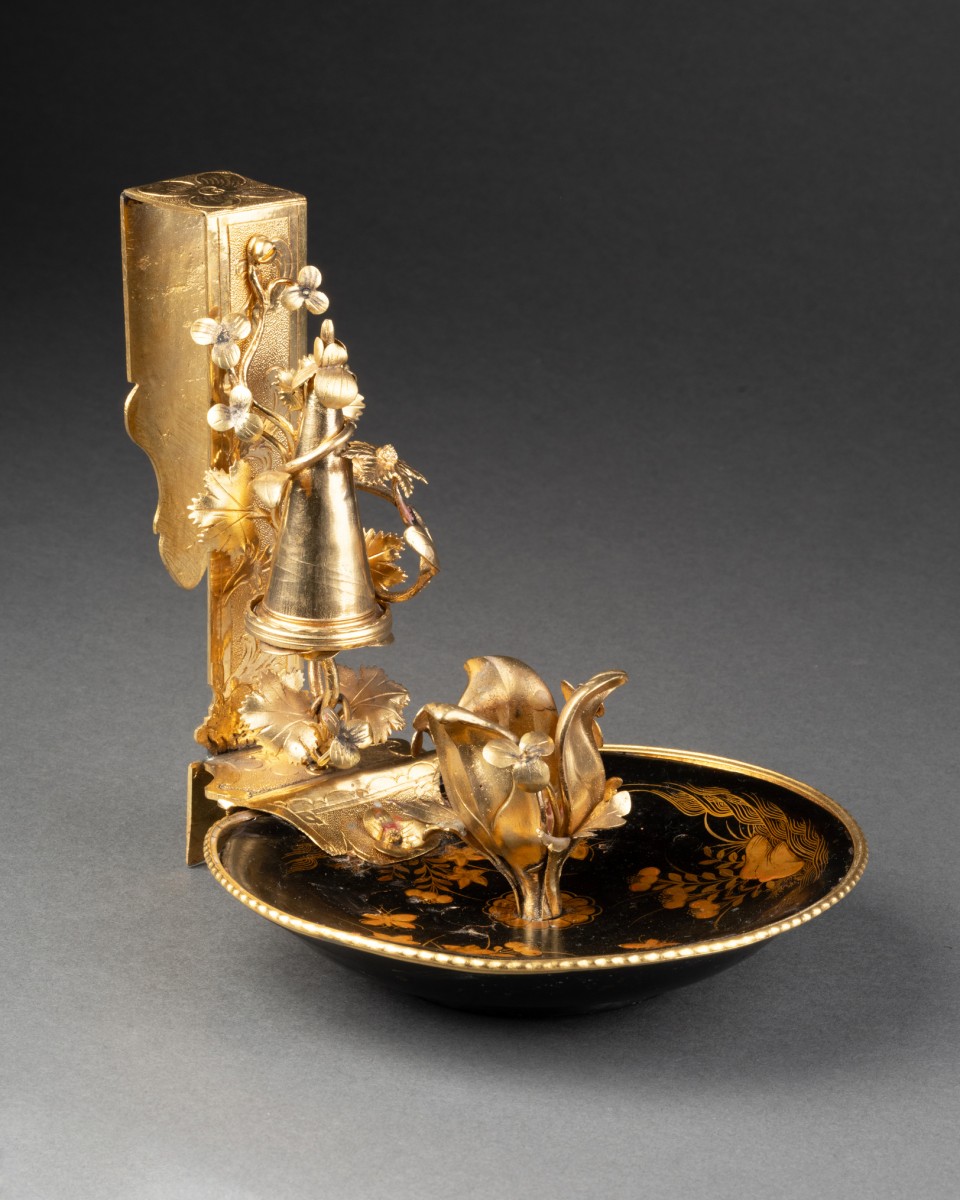
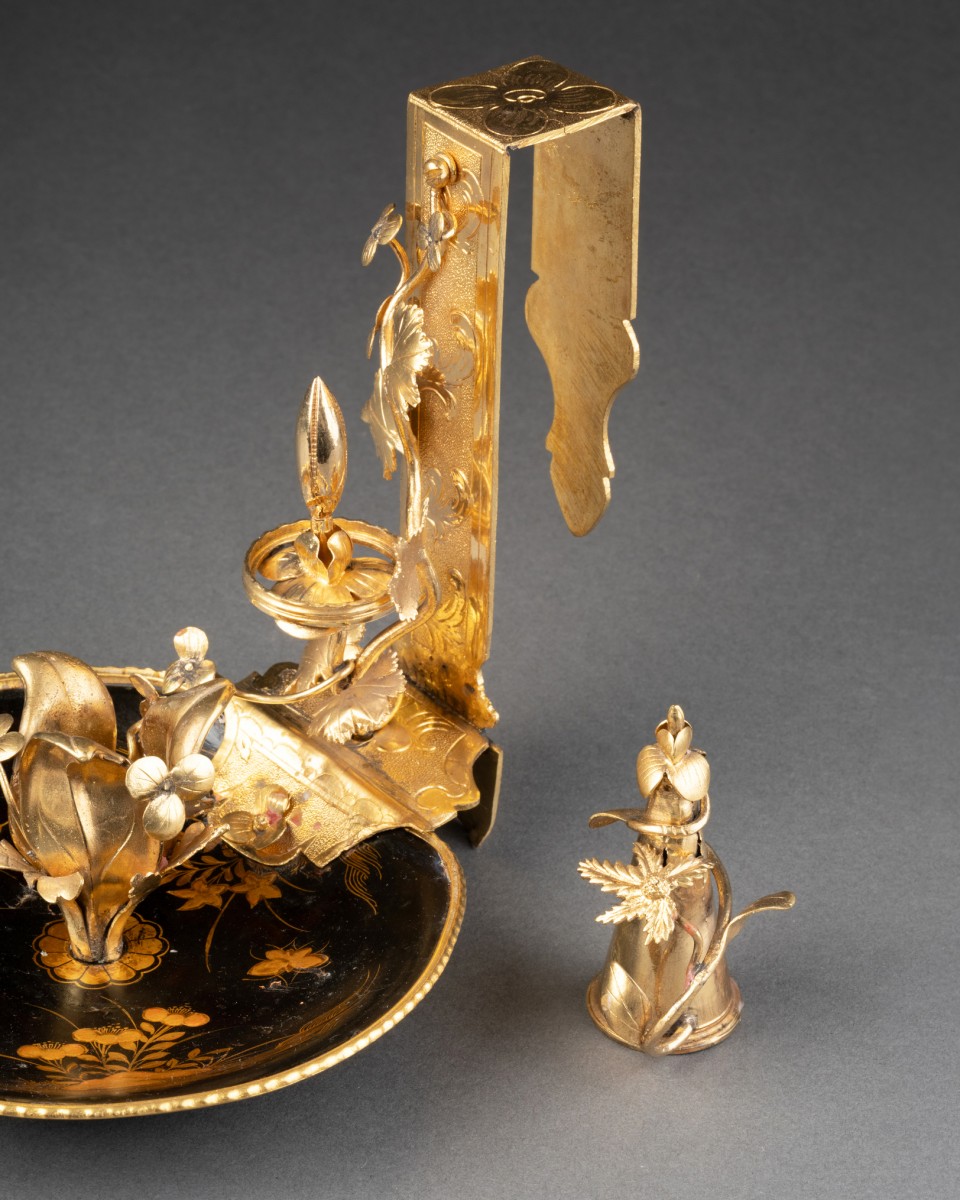
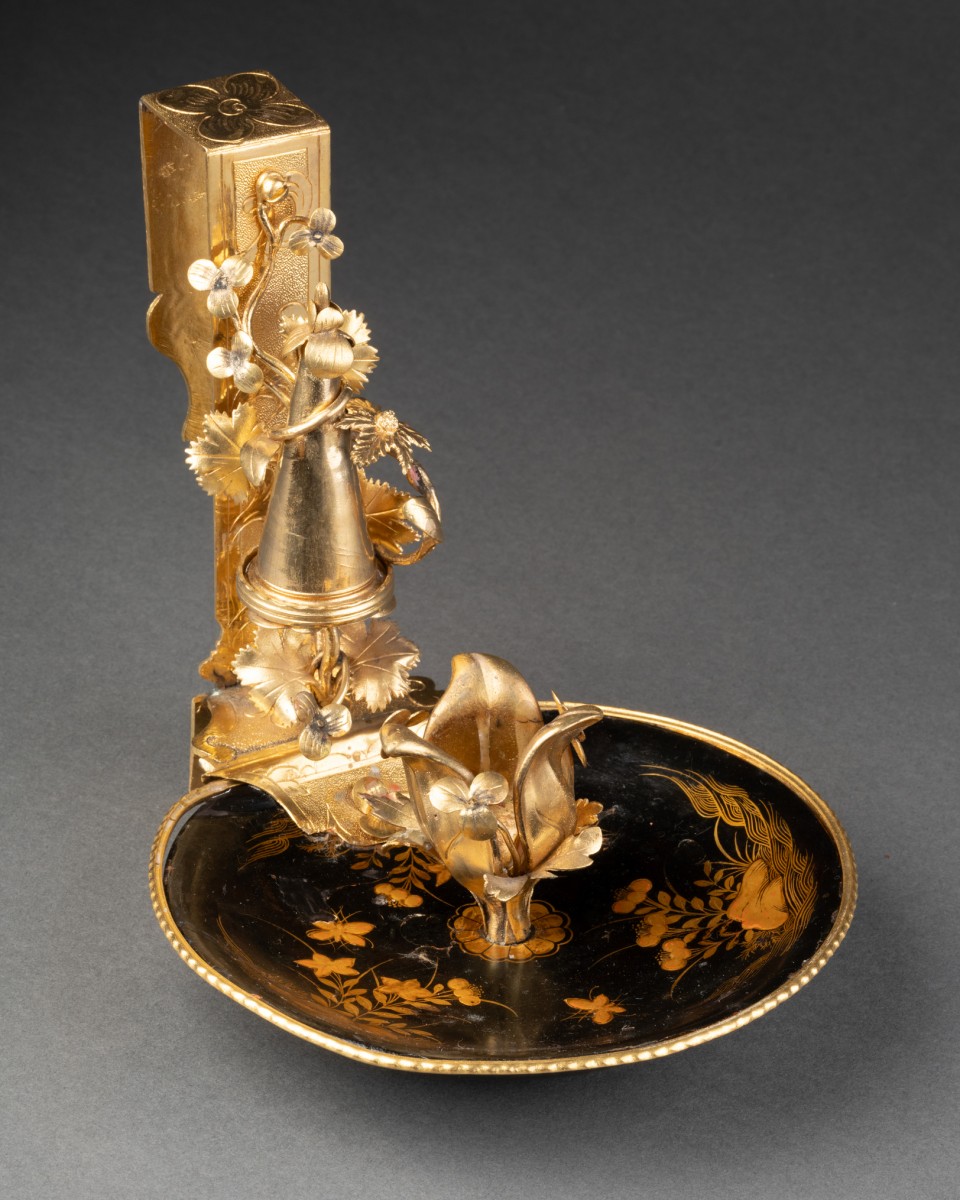
A rare black lacquer screen candlestick with a finely chased and mercury-gilded bronze rocaille mount.
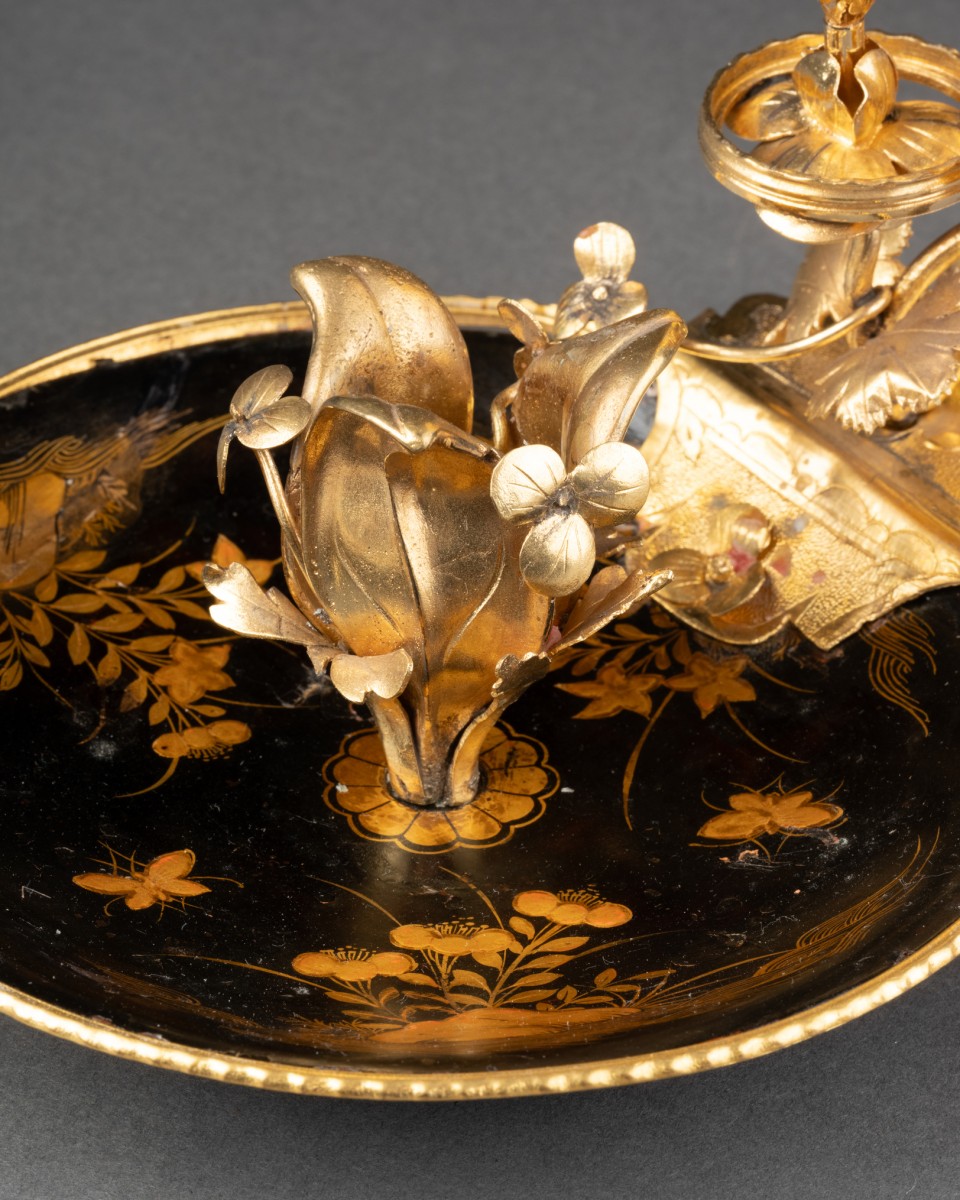
The black lacquer bowl is encircled by a bronze frieze.
Its base is delicately decorated with small shrubs on mounds using gold powder.
In the center of the bowl is a bronze drip pan simulating a newly opened flower.
On the side, the hanging system is finely engraved with a vegetal motif; it supports a small circular mound holding a conical snuffer from which branches emerge.
In very good condition; original mercury gilding.
Parisian work from the Louis XV period, circa 1750-1760, attributable to the merchant Lazare Duvaux.
Dimensions:
Height: 18 cm
Our opinion:
Called a bed or screen candlestick in 18th-century inventories, this type of light fixture allowed people to wash and dress by candlelight. The candle could be suspended from a chair or screen crossbar, or simply from the edge of a mirror or bed.
These pieces, made of rare and precious materials such as oriental lacquer or porcelain, were assembled by Parisian mercers and reserved for an elite of the nobility.
Unlike other guilds, mercers were "sellers of everything, makers of nothing," as Diderot so aptly explains in his encyclopedia.
They produced nothing but assembled various goods, some of which were imported from distant Asian lands such as China or Japan.
Their contribution to the decorative arts under the Ancien Régime was very important, as they were the ones who set fashion by offering original creations.
Among the five or six major mercers in Paris, the king's jeweler, Lazare Duvaux, specialized in this type of object, which combined oriental lacquerware (of which he was one of the largest suppliers) with gilt bronze mounts, sometimes adorned with porcelain flowers.
His journal mentions this type of piece, which he delivered in August 1749 to the Paris tax collector, Mr. Boulogne de Préninville, under number 308: "A bed candlestick with a lacquered base, trimmed in gilt bronze with ground gold, with a snuffer," or in December 1753 to Madame de la Bauve under number 1659: "A bed candlestick, lacquered base, the trim gilt with ground gold, decorated with flowers." The Marquise de Pompadour, one of Duvaux's most loyal clients, also owned an example, which is described in her post-mortem inventory in 1764:
under number 1362: "a bed candlestick, lacquered and trimmed in gilt bronze with ground gold, valued at 15 livres." The journal informs us that during the decade 1748-1758, Lazare Duvaux delivered only a handful of Folding screen candlesticks, always reserved for very important figures.
This type of candlestick was rare from the 18th century onwards, and very few have survived; they are perfectly representative of the "Pompadour style," which marked the pinnacle of decorative arts during the reign of Louis XV.