Offered by Antichità San Felice

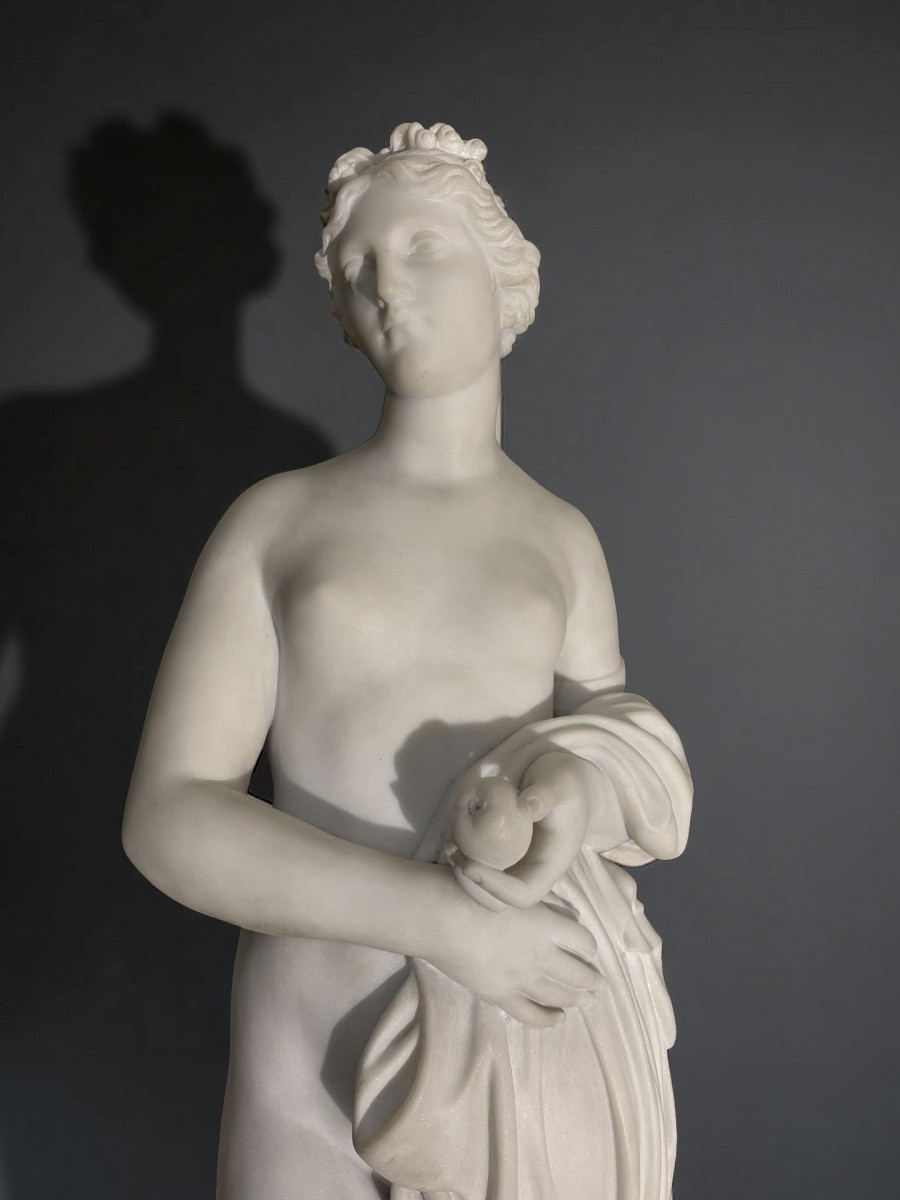

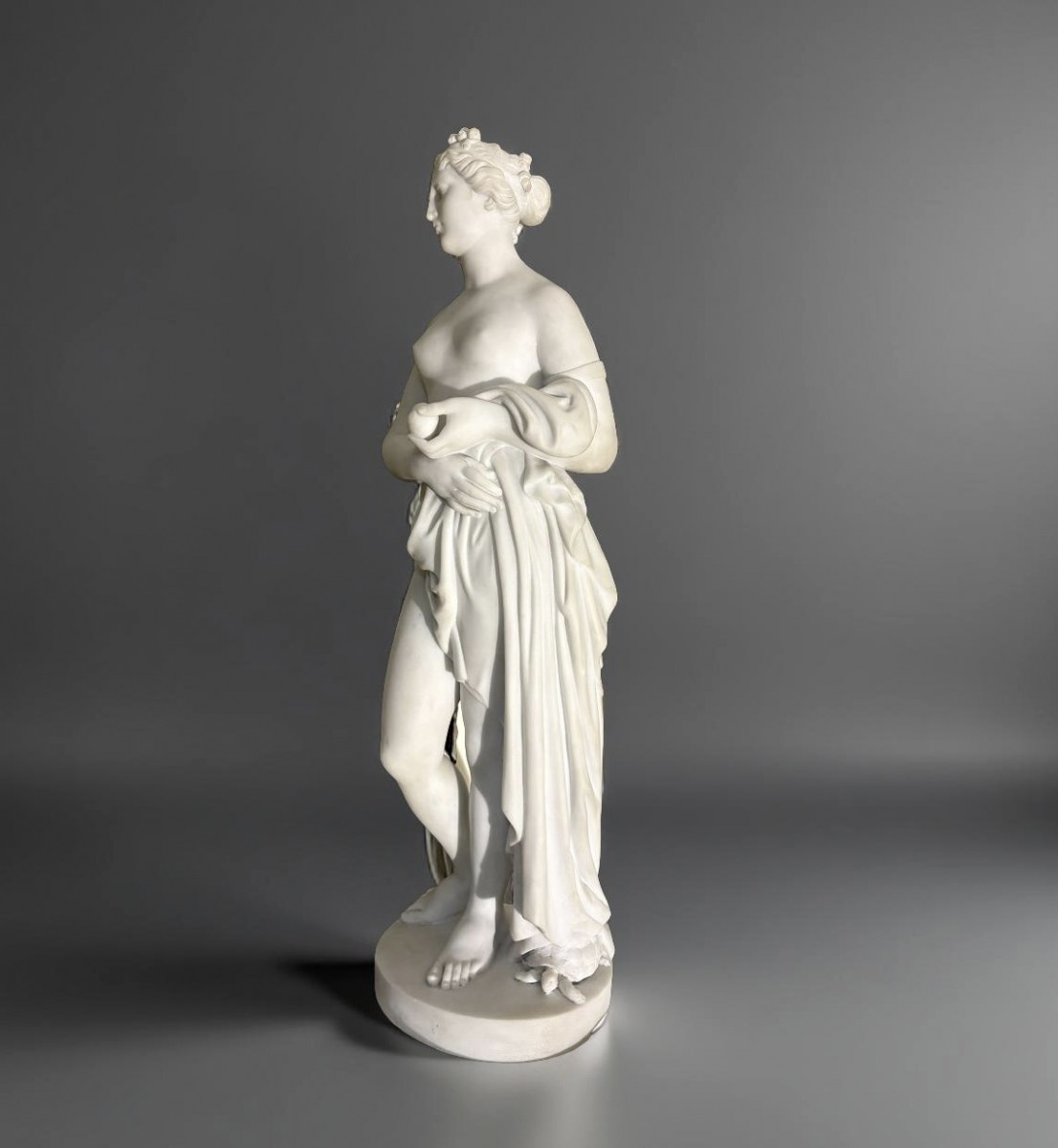


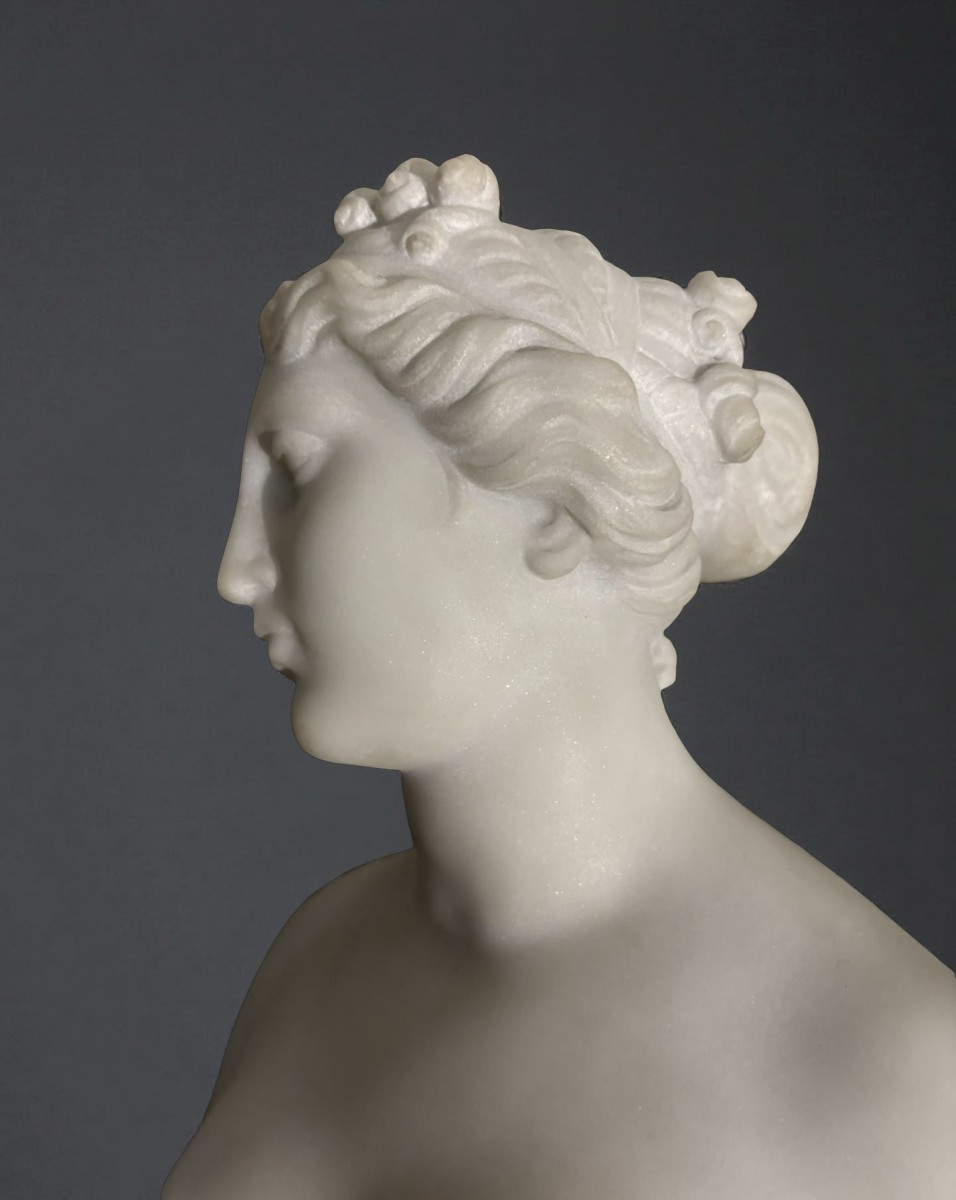
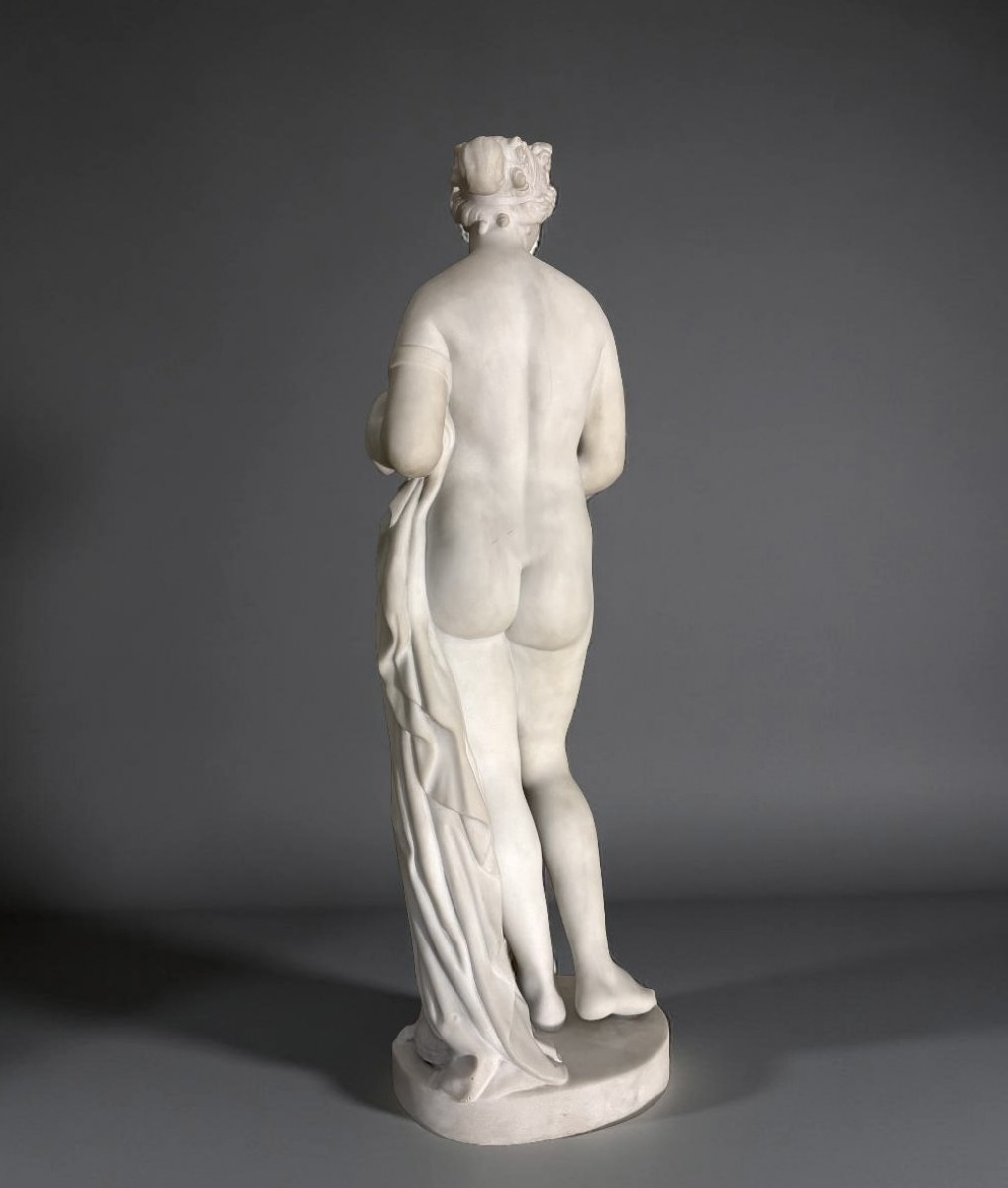
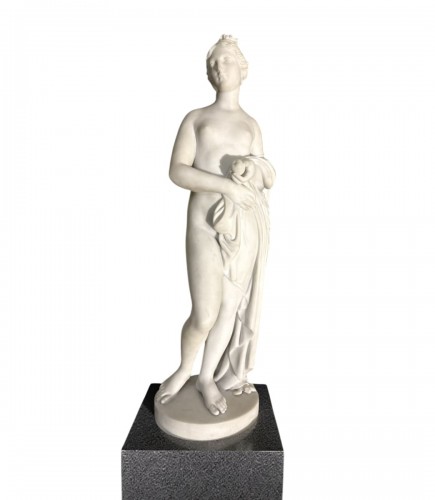
Large white marble sculpture of Venus, John Gibson's studio, Rome, circa 1850. Known as Venere Verticordia and Tinted Venus, its history is very interesting.
John Gibson (June 19, 1790 – January 27, 1866) was an important Welsh neoclassical sculptor who studied in Rome under Canova, opening his own studio there where he would work until his death. Born in Wales and raised in Liverpool, John Gibson had a spectacular career. After completing his apprenticeship at the age of 26, the ambitious Welshman arrived in London as an aspiring artist, exhibited a couple of times at the Royal Academy, and within two years realized the dream of every young contemporary sculptor to study in Rome. The next two years, spent with Canova, shaped his career and his sculptural ideology. Gibson also studied with Bertel Thorvaldsen and at the age of 31 opened his own studio on Via della Fontanella, near Piazza del Popolo. John Gibson's studio was one of the largest in Rome during the artist's lifetime; it was a key stop on the tour of Roman sculptors' workshops, as described in Hawks Le Grice's famous manual of the 1840s. He employed specialized modelers, carvers, and moldmakers and had several aspiring students, such as Harriet Hosmer, William Theed, and Benjamin Spence. Around 1839, Joseph Neeld, heir to the wealthy silversmith Philip Rundell, commissioned Gibson to create a Standing Venus for his renowned collection of contemporary British sculpture, housed at Grittleton Hall in Wiltshire; Gibson first exhibited the work at the Royal Academy in 1839 under the title Venus Verticordia, meaning "she who changes hearts." In ancient Rome, the Venus Verticordia was believed to have the power to change the hearts of women and girls from lust to chastity.
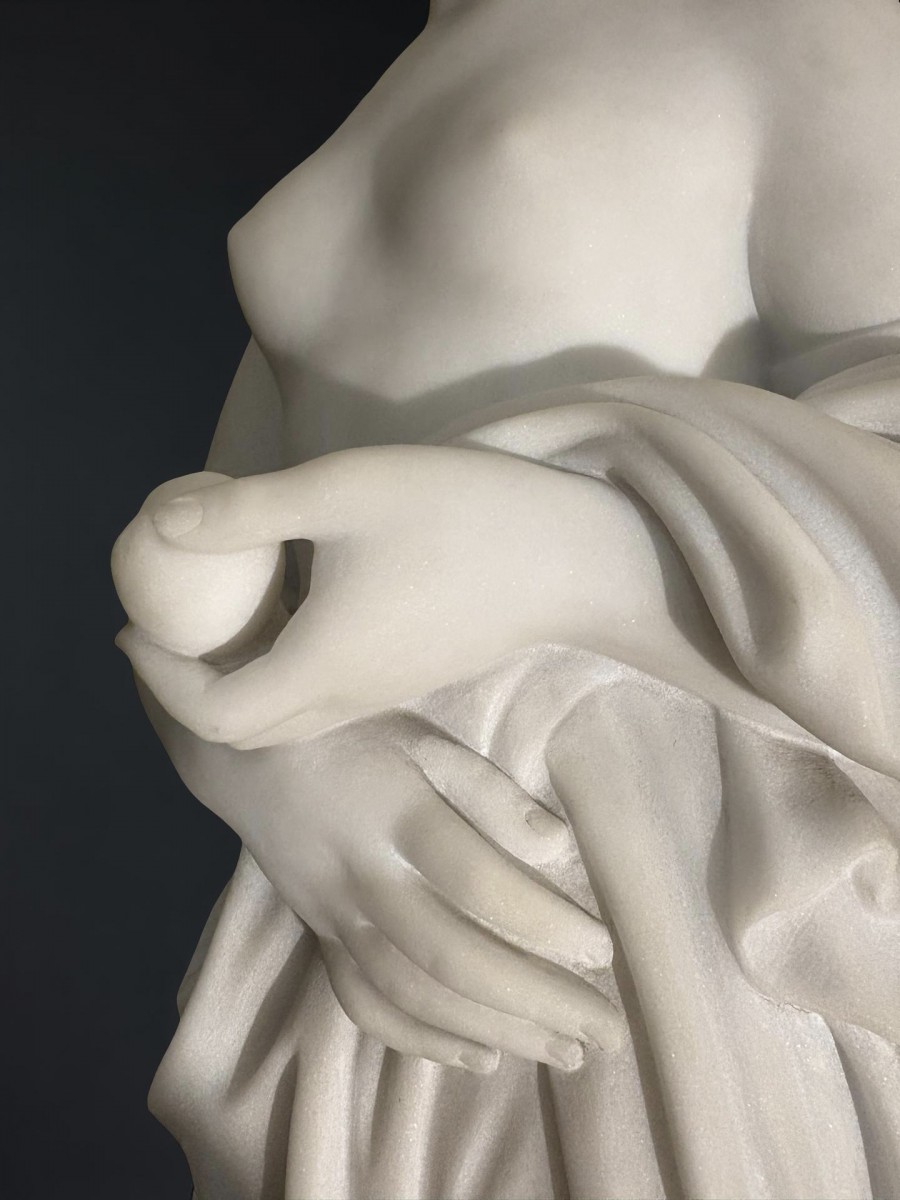
Gibson's Venus is not a stereotypical copy of the ancient: a keen observer, he loved watching people on the streets, capturing their gestures and then translating them into his creations. He carried a small notebook filled with preparatory drawings and notes. Of his Venus, he said: "... I had often observed that women, when holding a fan or any light object, generally rest their hands in front of them. So, I made my Venus stand, holding a golden apple calmly in her left hand." At her feet, in the best tradition of Renaissance sculpture, he places a tortoise, a symbol of fertility, love, longevity, and protection. The Venus Verticordia was so popular with Gibson's clients that he decided to create a colored model in the Greek style, which he presented at the 1862 World's Fair. The colored model caused a sensation and scandal at the Exposition and from then on was universally known as the Tinted Venus. The fame of the Tinted Venus led to further commissions for various versions of the model in various sizes, most of which were uncolored. Many of them, particularly the larger models (from 118 to 167 cm), bear the artist's signature, but smaller, unsigned versions also exist, such as the 74 cm model held at the Art Gallery of New South Wales in Sydney.
We can confidently say that our model, in pure Carrara statuary marble, is certainly one of the unsigned versions to have left the artist's studio: of excellent quality and in excellent condition, it was part of the collection of a well-known Roman family. As Gibson himself described her: "The expression I have tried to give to my Venus is that of purity and sweetness, with an air of undiminished dignity and grace, and of spiritual elevation of character." These are preeminently Victorian values ??worthy of Victorian sculpture par excellence.
Dimensions
H 84 cm
Base 26 x 24 cm
Delevery information :
Antichità San Felice takes care of organizing the packaging, home delivery and all the administrative formalities related to the shipment.
Antichità San Felice works with several service providers selected for their professionalism, in order to ensure delivery of works of art in the best conditions.
For the packaging of the goods, we involve craftsmen who were responsible for the construction of custom-made wooden crates.
For transport, depending on the case, we involve the most suitable service provider.
All shipments from Antichità San Felice are covered by value insurance. It is important to note that the Customer must indicate on the dispatch note any reservations upon receipt of the object, in order to be able to bring the insurance into play.
Payments accepted:
bank transfer
online bank card
paypal (+3.4% Europe +5% rest of the world)