Offered by Galerie Thierry Matranga
REQUEST INFORMATION
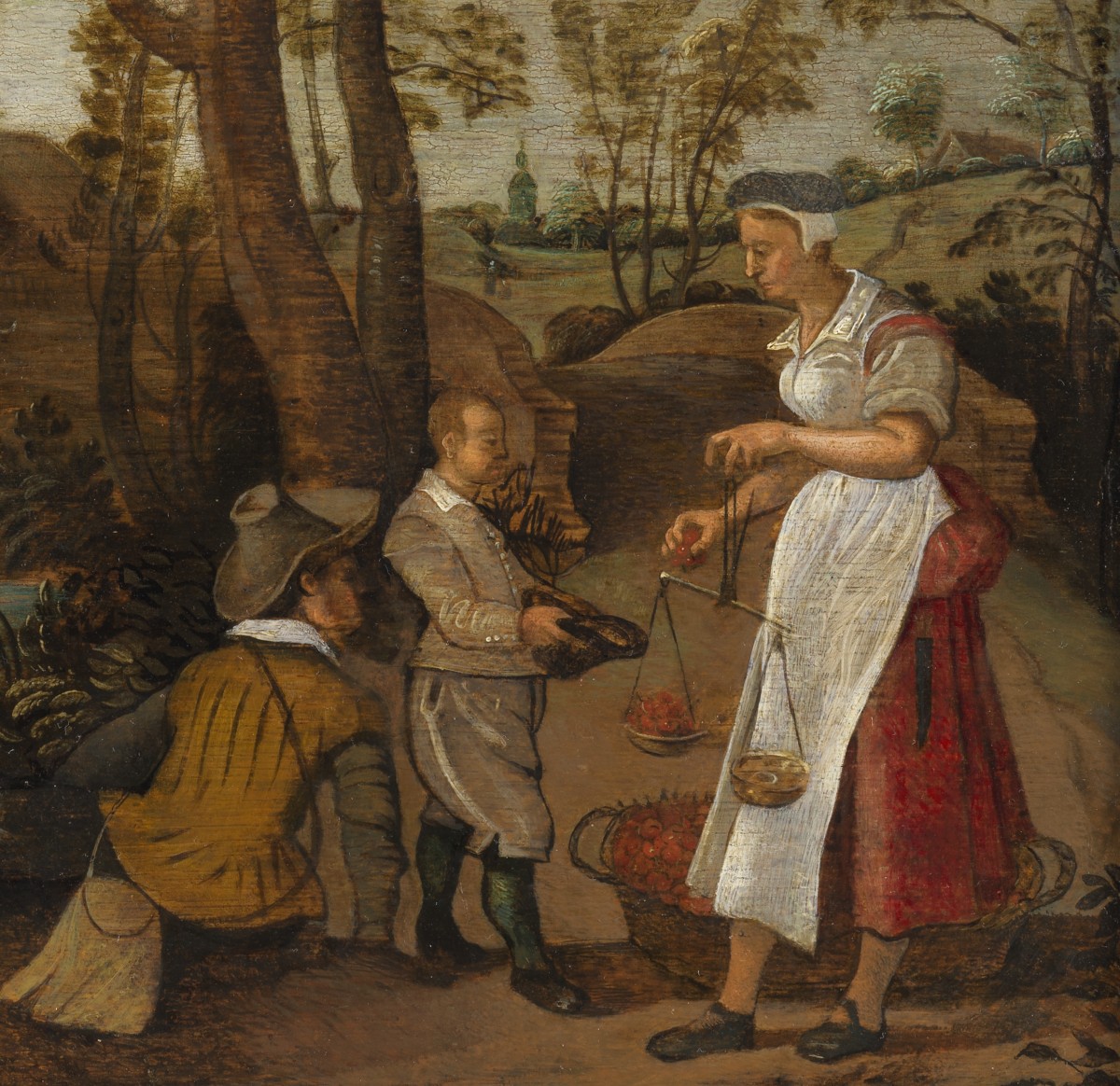

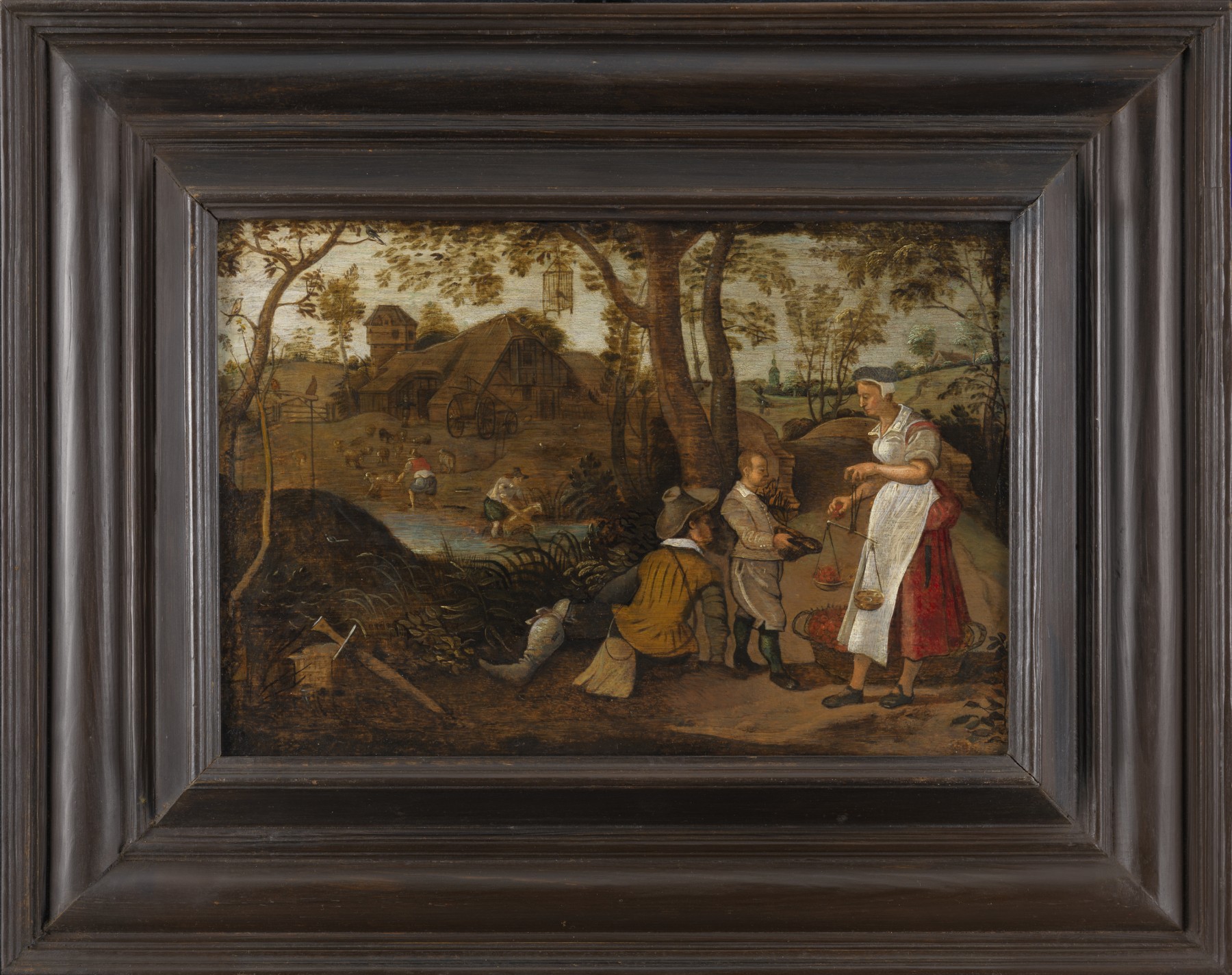
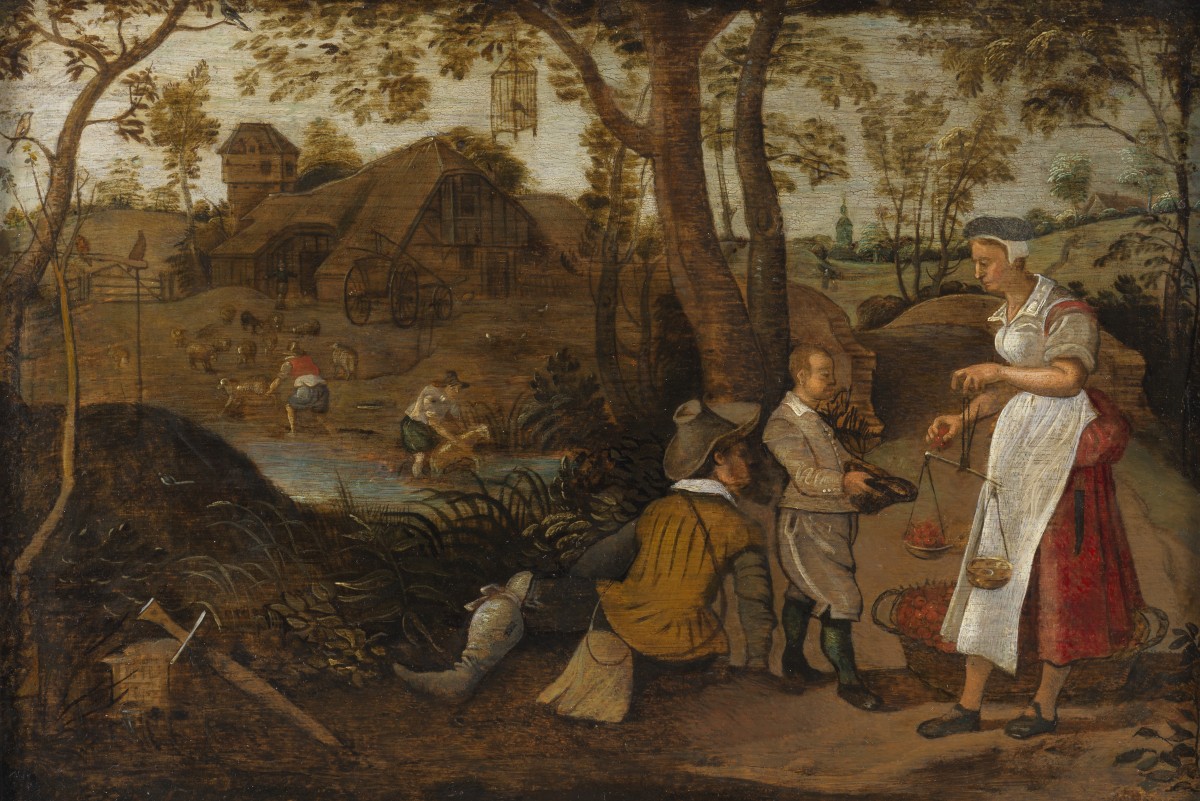
Oil on panel. Flemish School, 17th century, follower of Sebastiaen Vrancx (1573–1647).
Although this village scene appears to be merely a celebration of rural life, it reveals itself to be a subtle allegory of summer, typical of 17th-century Flemish painting where everyday life serves as a vehicle for deeper meanings.
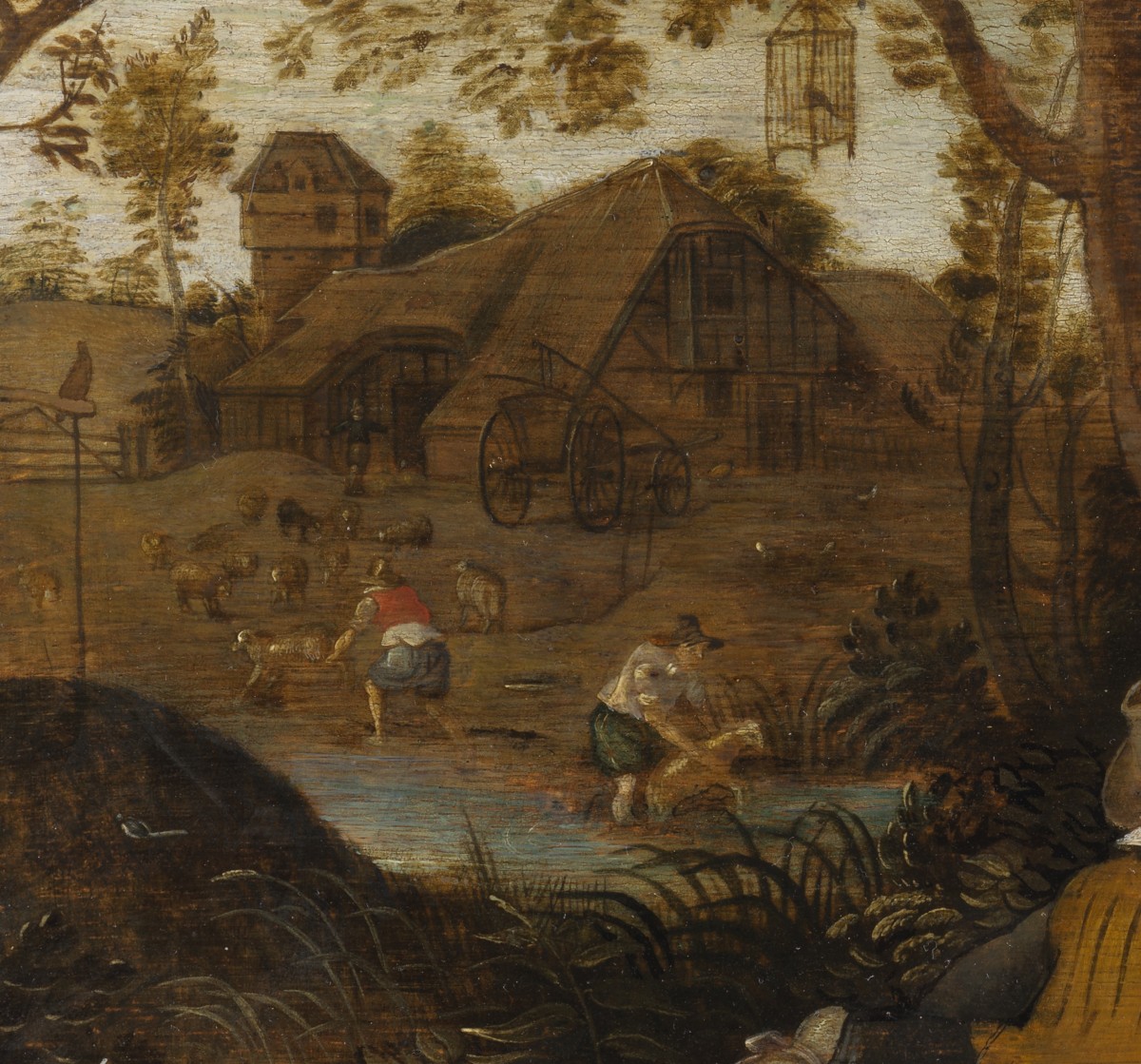
In the foreground, a woman in a red dress and white apron weighs cherries, while a boy waits for her to fill his hat with the delicious fruit. In classical painting, the cherry is an evocation of summer and its brevity. In the middle ground, separated from the foreground by a stream, shepherds are rounding up sheep for shearing. Shearing is a rustic activity practiced during the summer months. Finally, in the background, a barn, a granary, and a church steeple punctuate the horizon of the rolling countryside. Thus, red berries and shorn sheep evoke the warmer months.
At a time when art reflected the everyday world, our dense and lively composition illustrates the ability of Flemish Golden Age painting to combine realism and allegory in a subtle harmony between nature and culture. The warm palette, dominated by ochres, reds, and browns, recalls the world of Sebastiaen Vrancx, particularly his scenes of fairs and markets. However, the drier brushwork and less individualized faces suggest a workshop piece or the work of a follower.
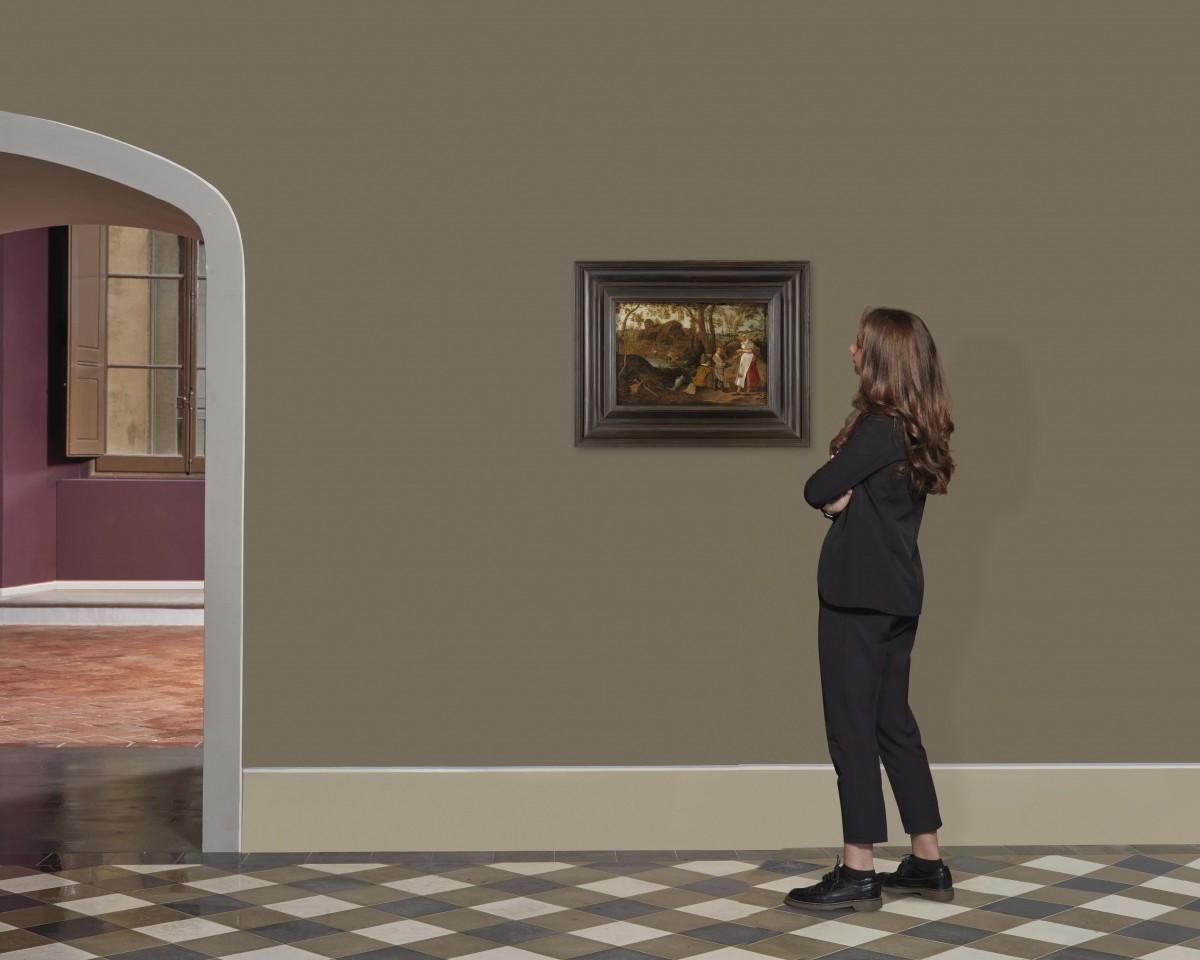
Our painting is elegantly set in a frame with a reversed profile of blackened wood.
Dimensions: 27 x 39 cm – 48 x 60 cm with frame.
Sebastian Vrancx (Antwerp 1573 – Antwerp 1647) was a true pioneer: he was certainly the first painter from the Southern Netherlands to distinguish himself in depictions of battle scenes, pillaging, and brawls. But he painted a wide variety of subjects, such as scenes of social life, biblical and historical episodes, and representations of the seasons. Our painting is a perfect example. In 1612, he was elected dean of the Antwerp Guild of Saint Luke, succeeding Joos de Momper. He taught painting to Pieter Snayers and strongly influenced the work of Pieter Meulener and Adam Frans Van der Meulen.