Offered by Acropole Antiquités
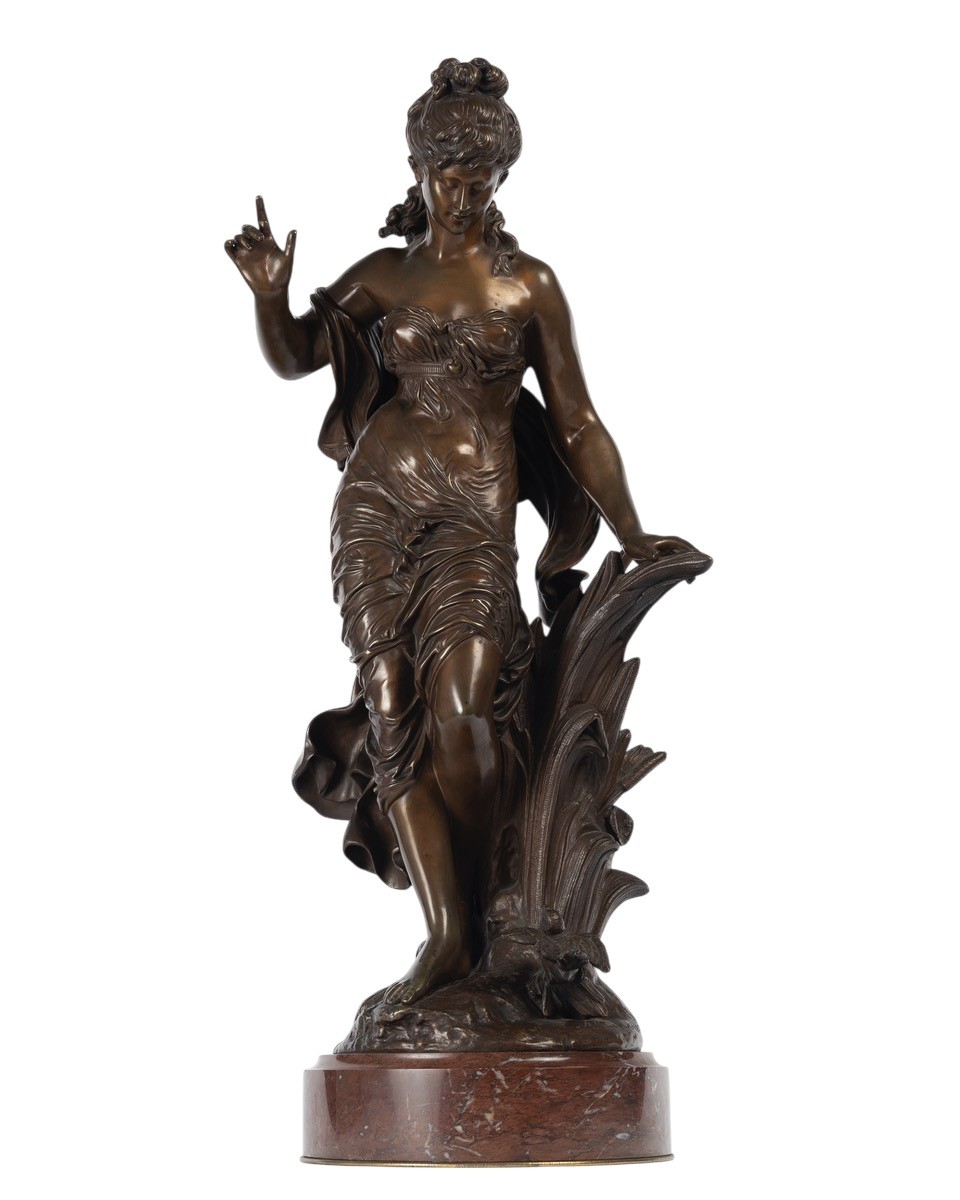
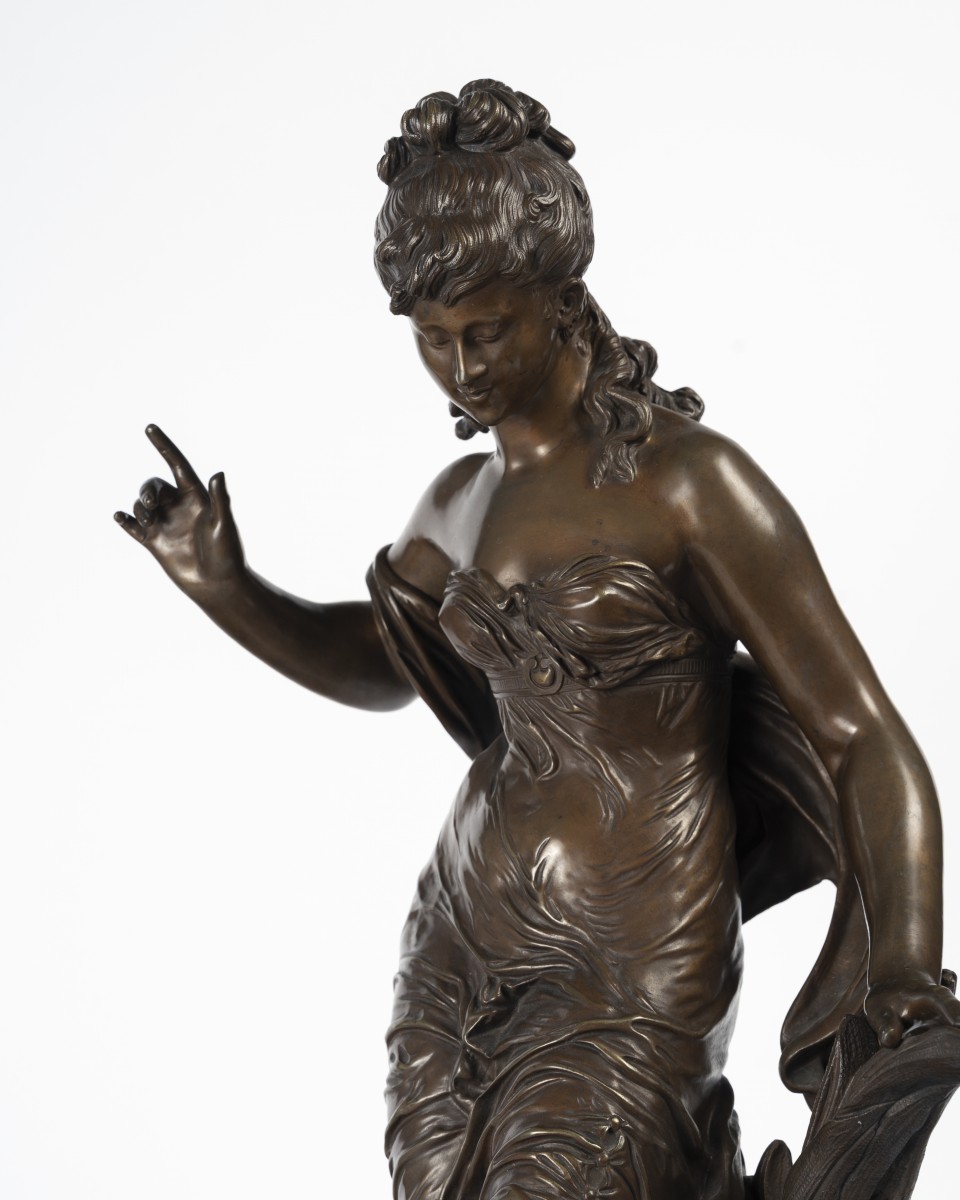
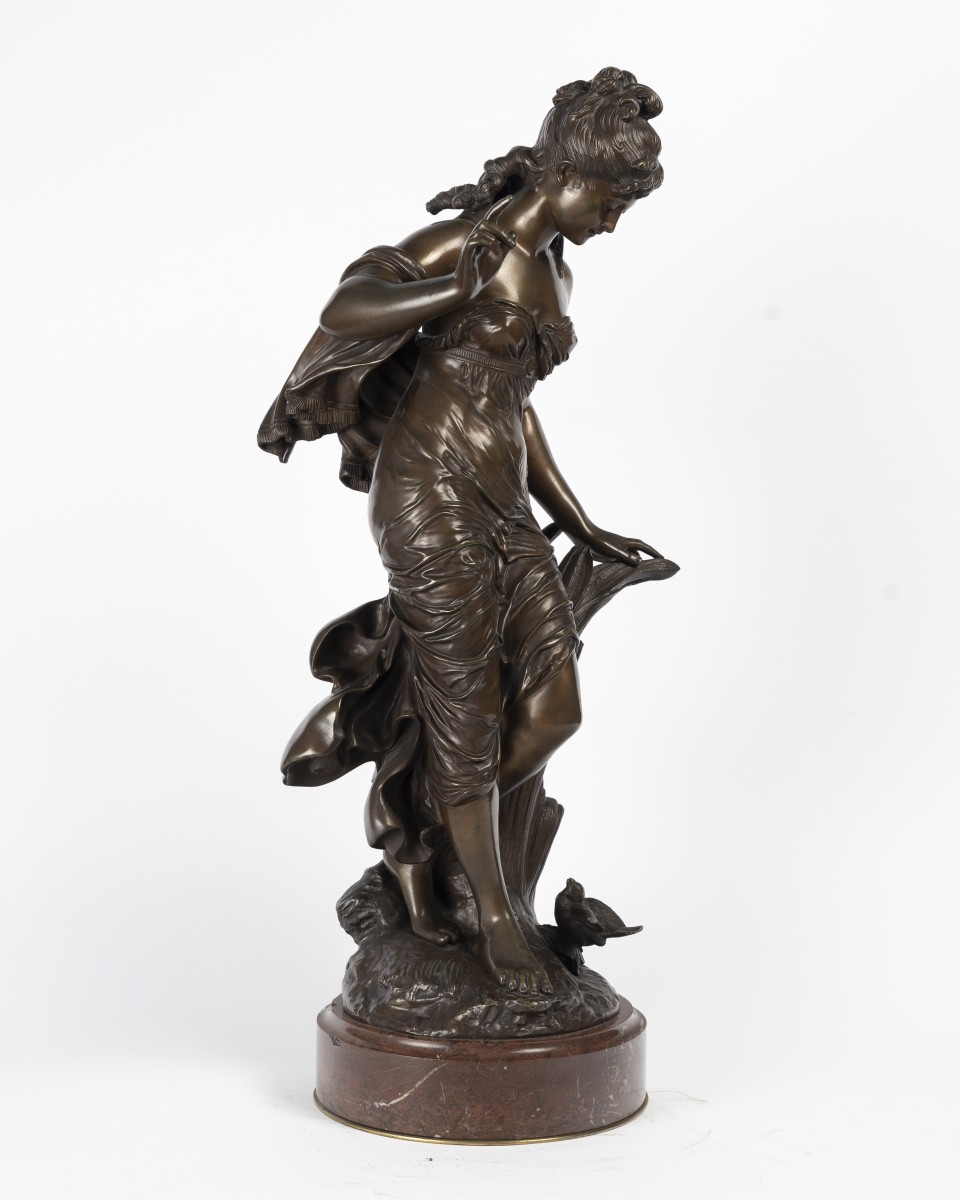
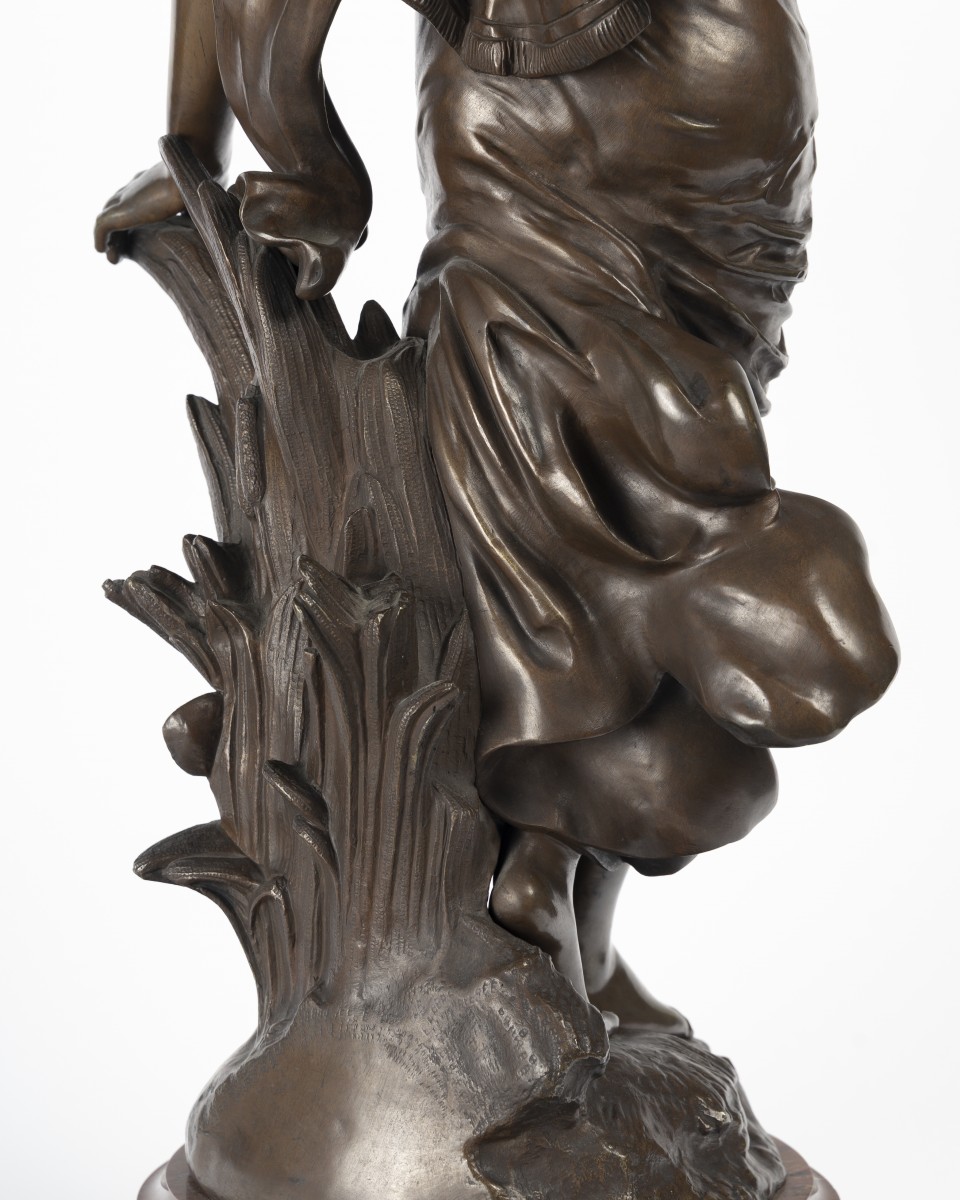
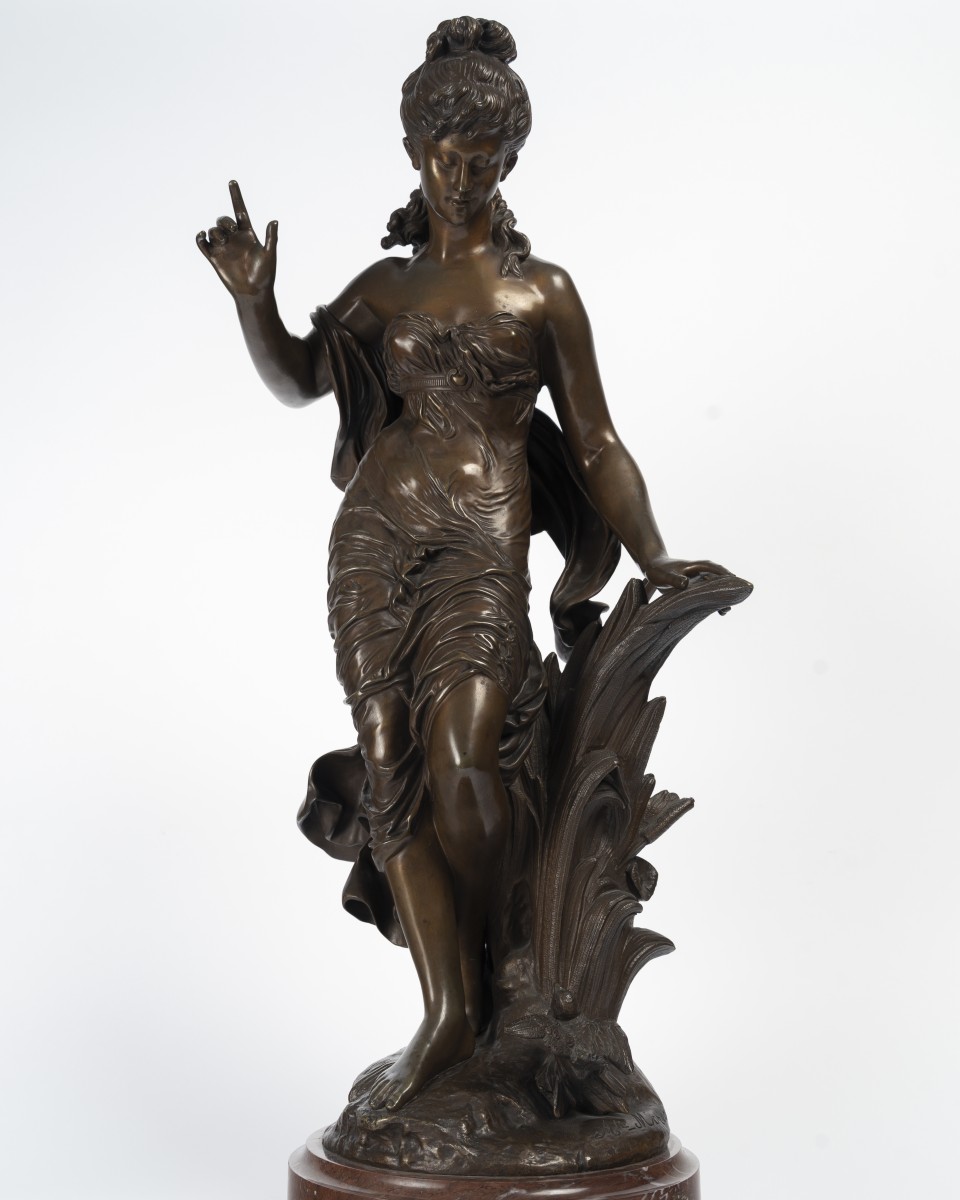

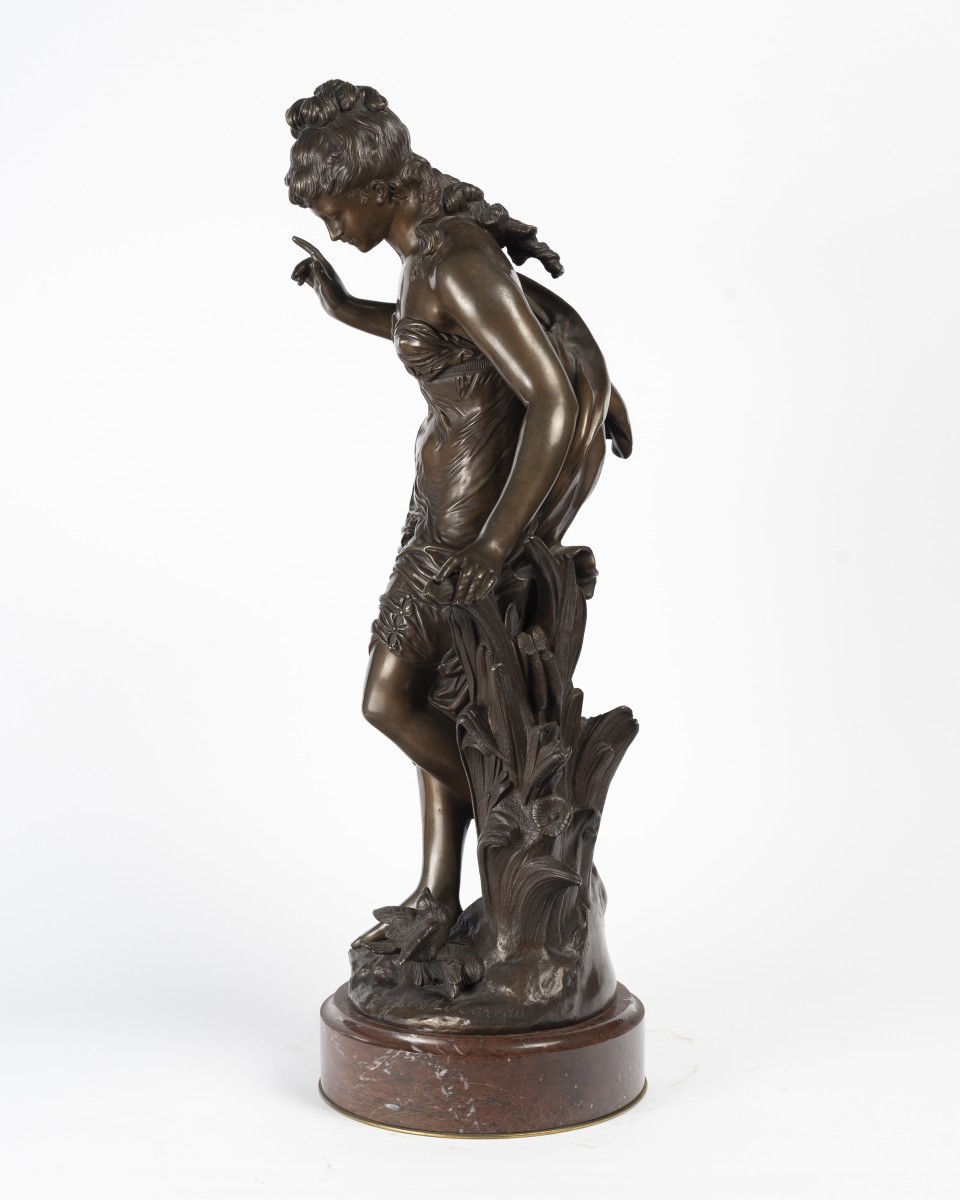
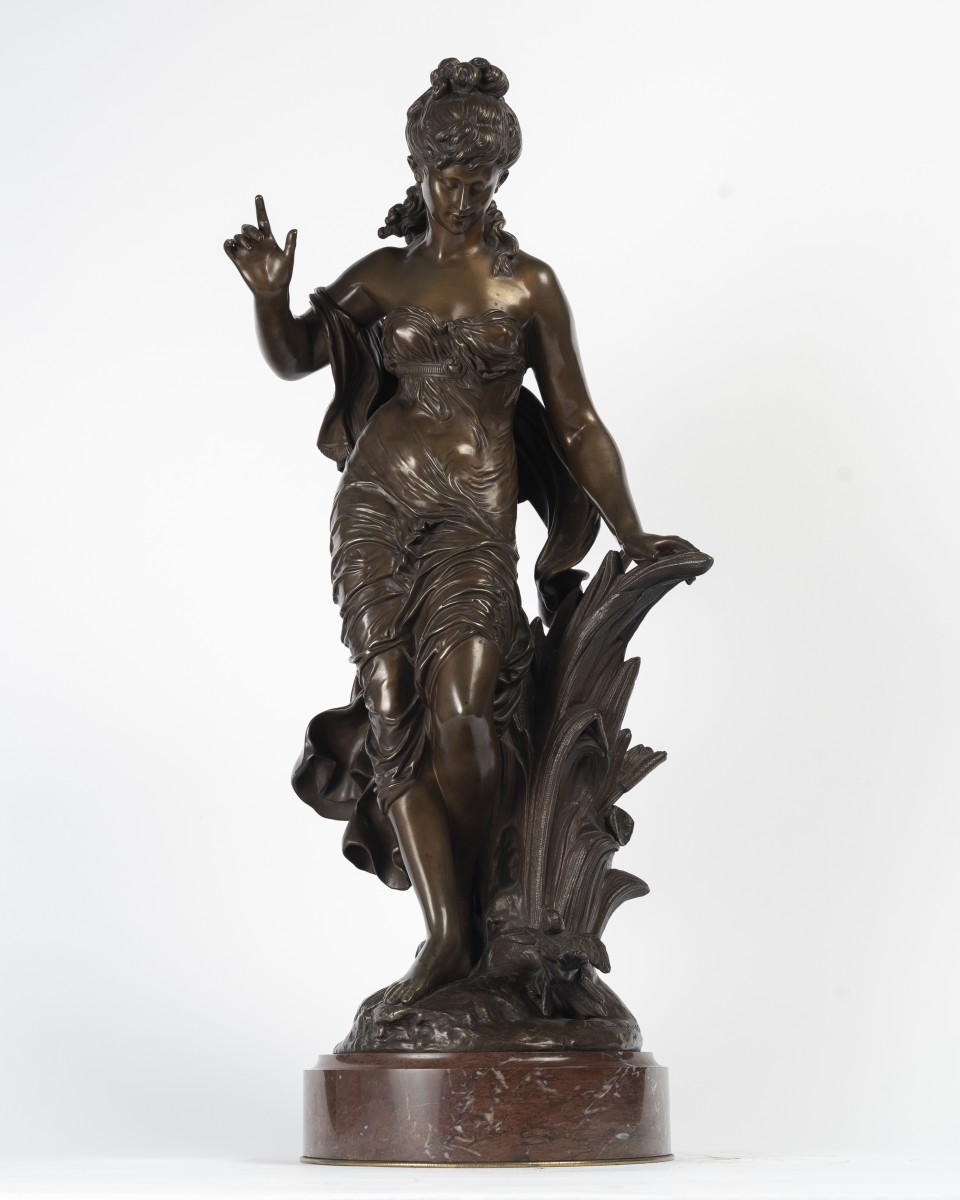
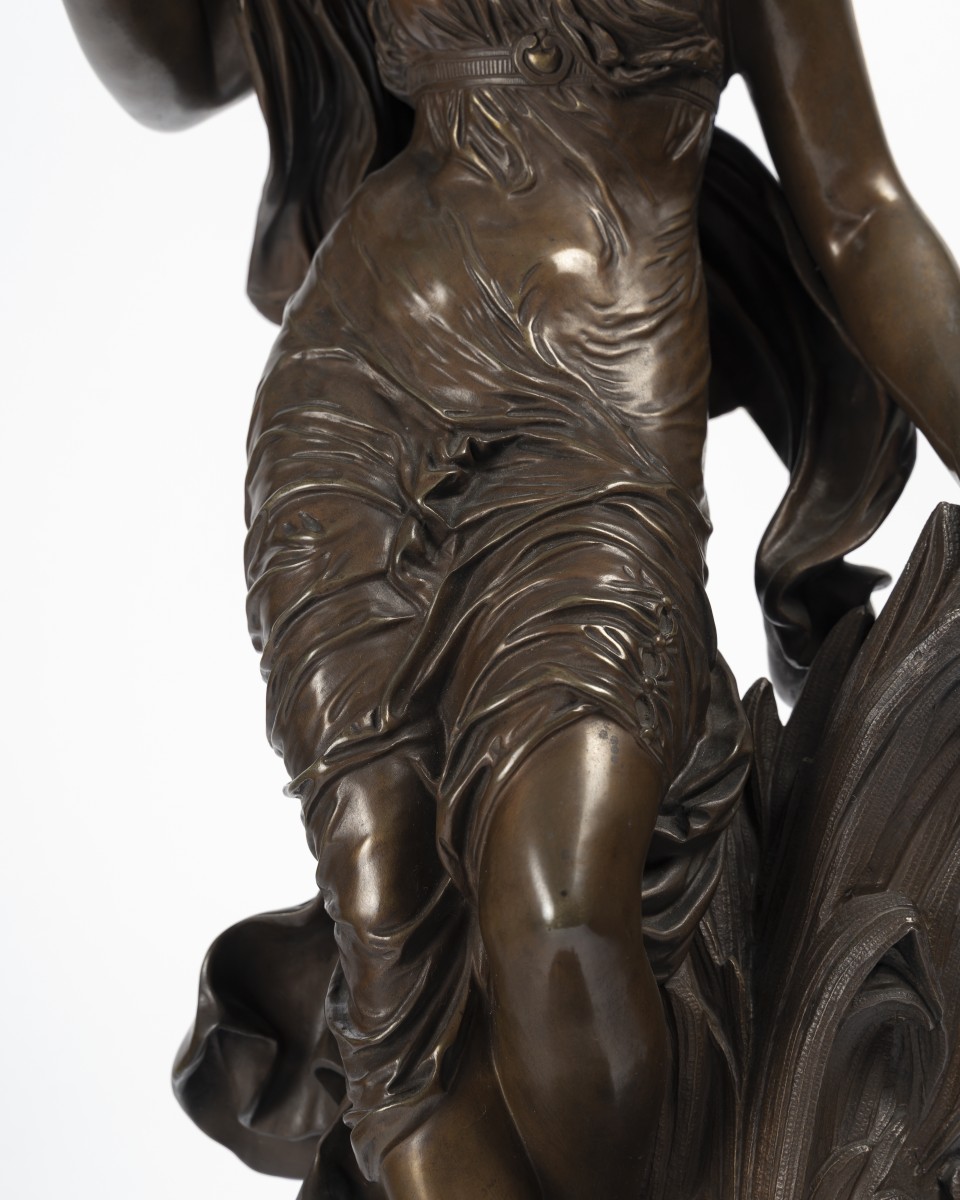
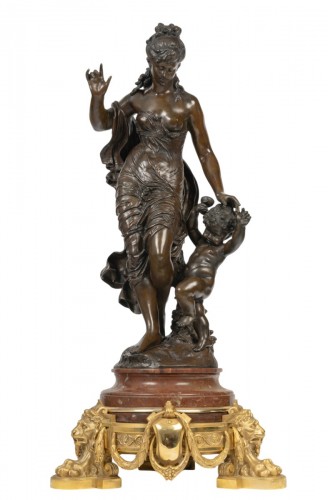
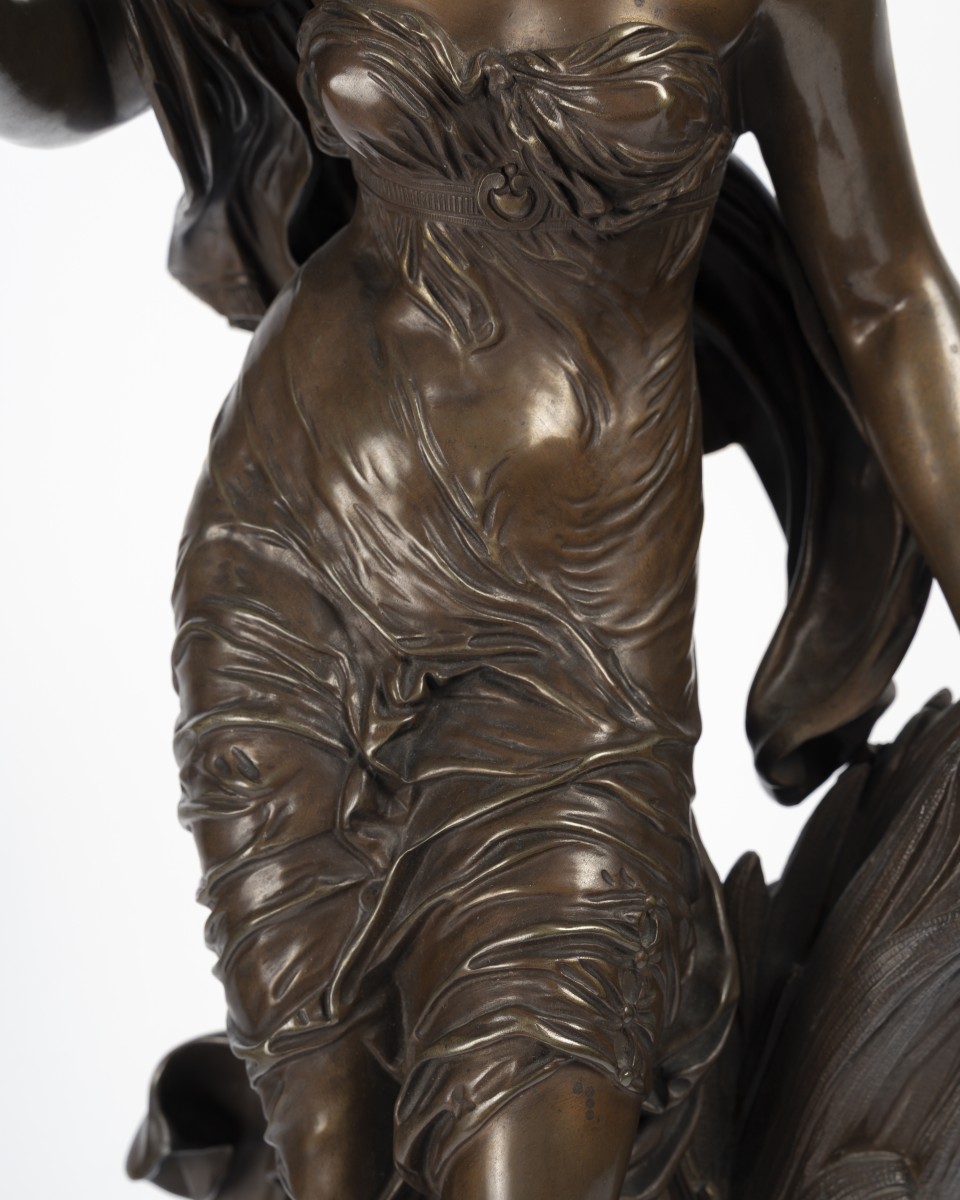
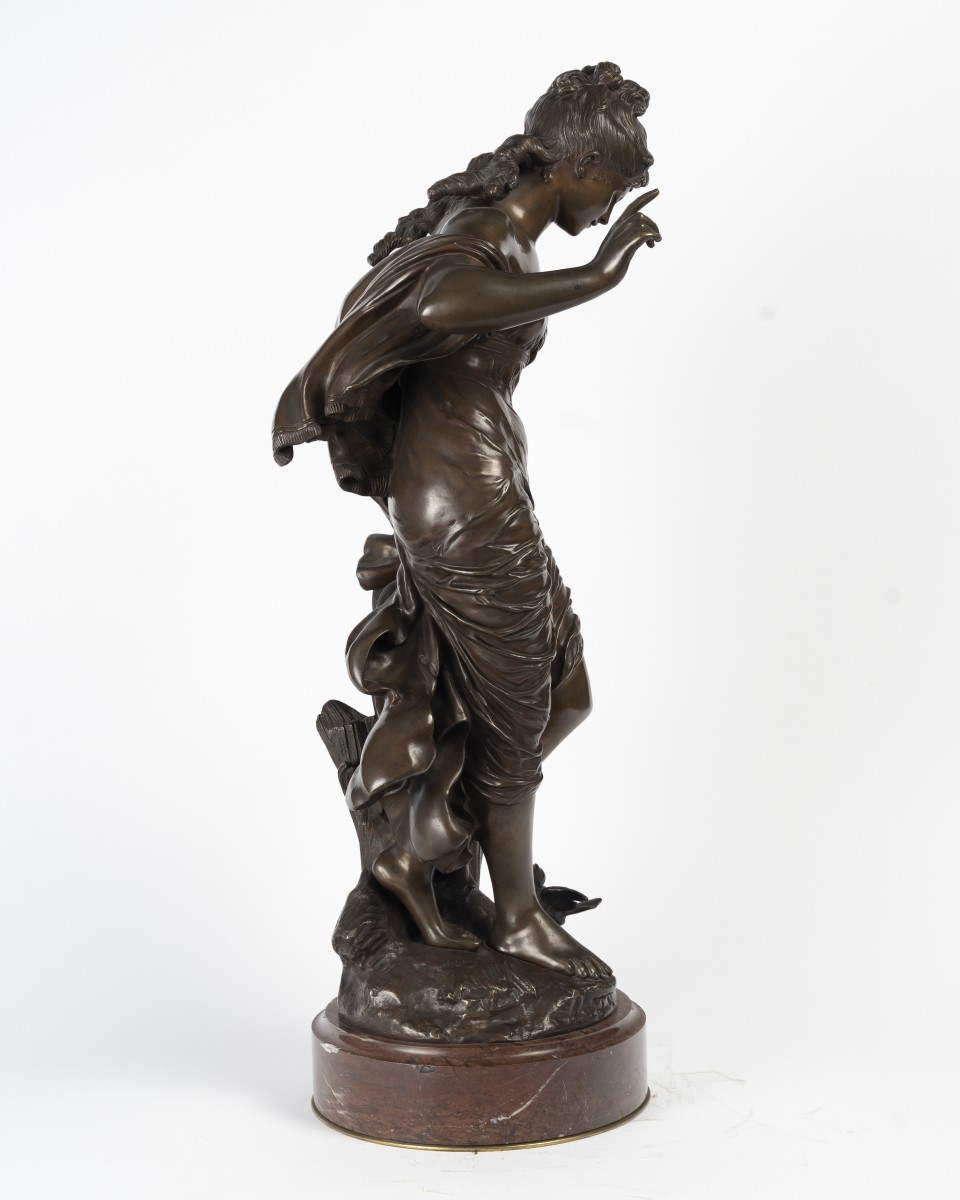
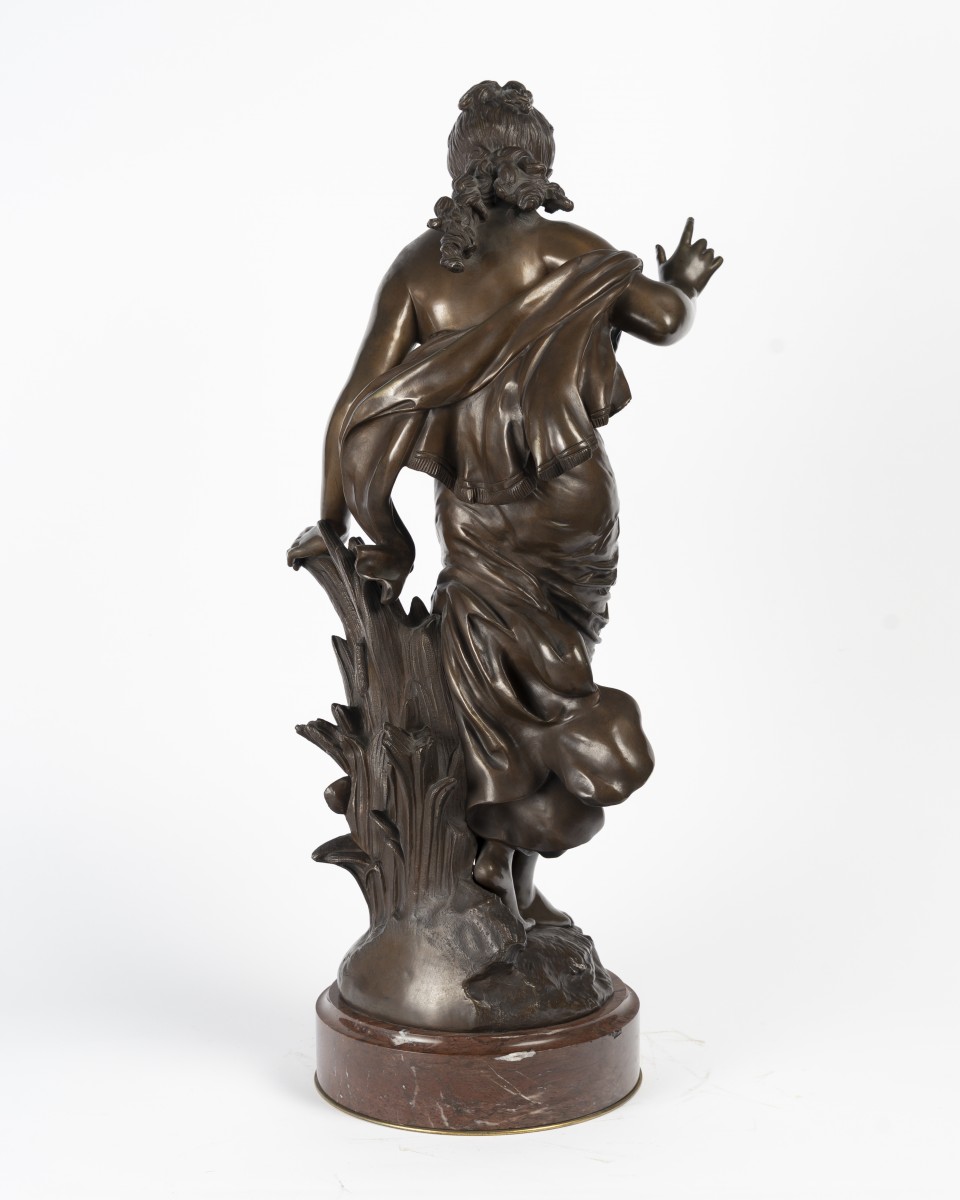
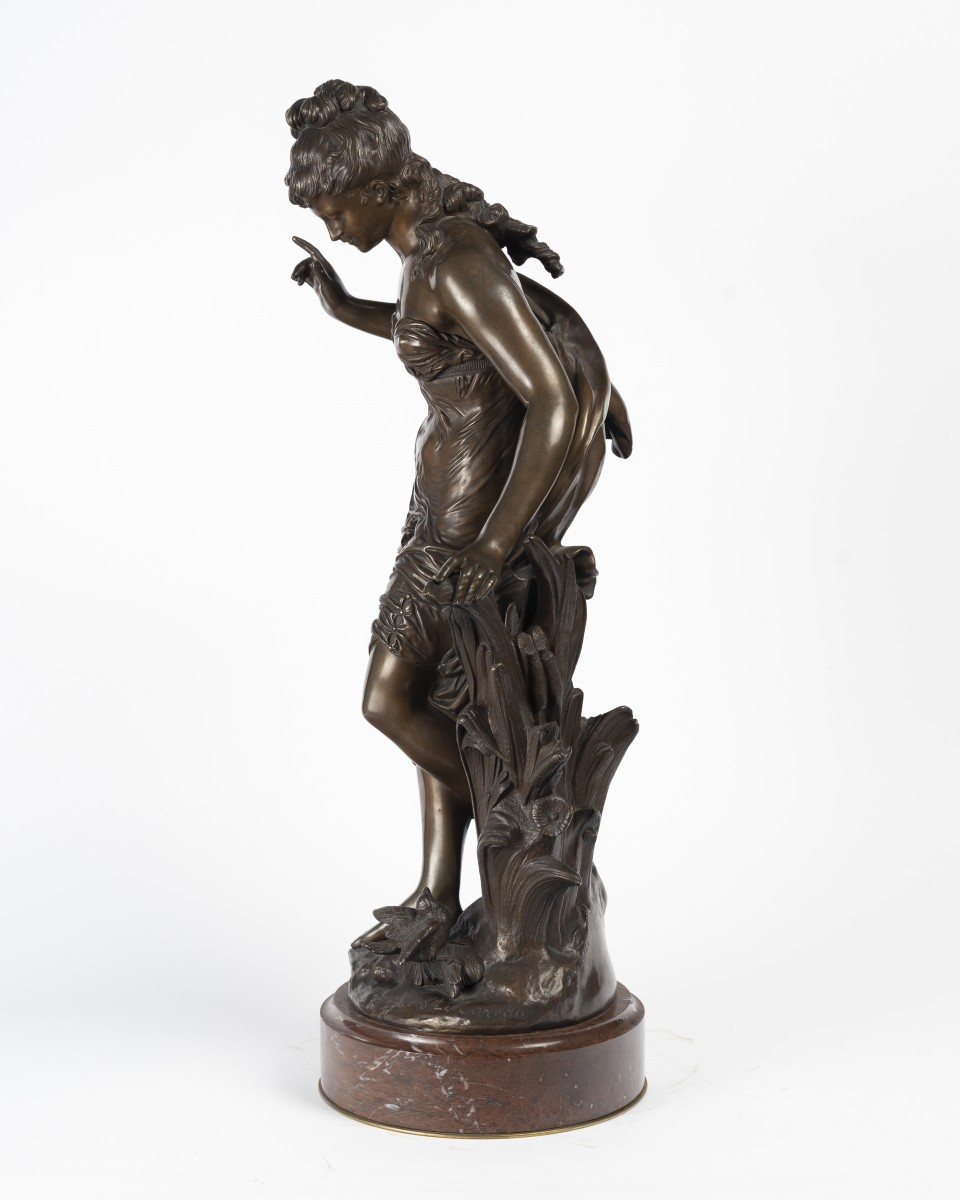
A beautiful late 19th-century sculpture of a woman with a bird by Louis Auguste Moreau.
It rests on a red marble base.
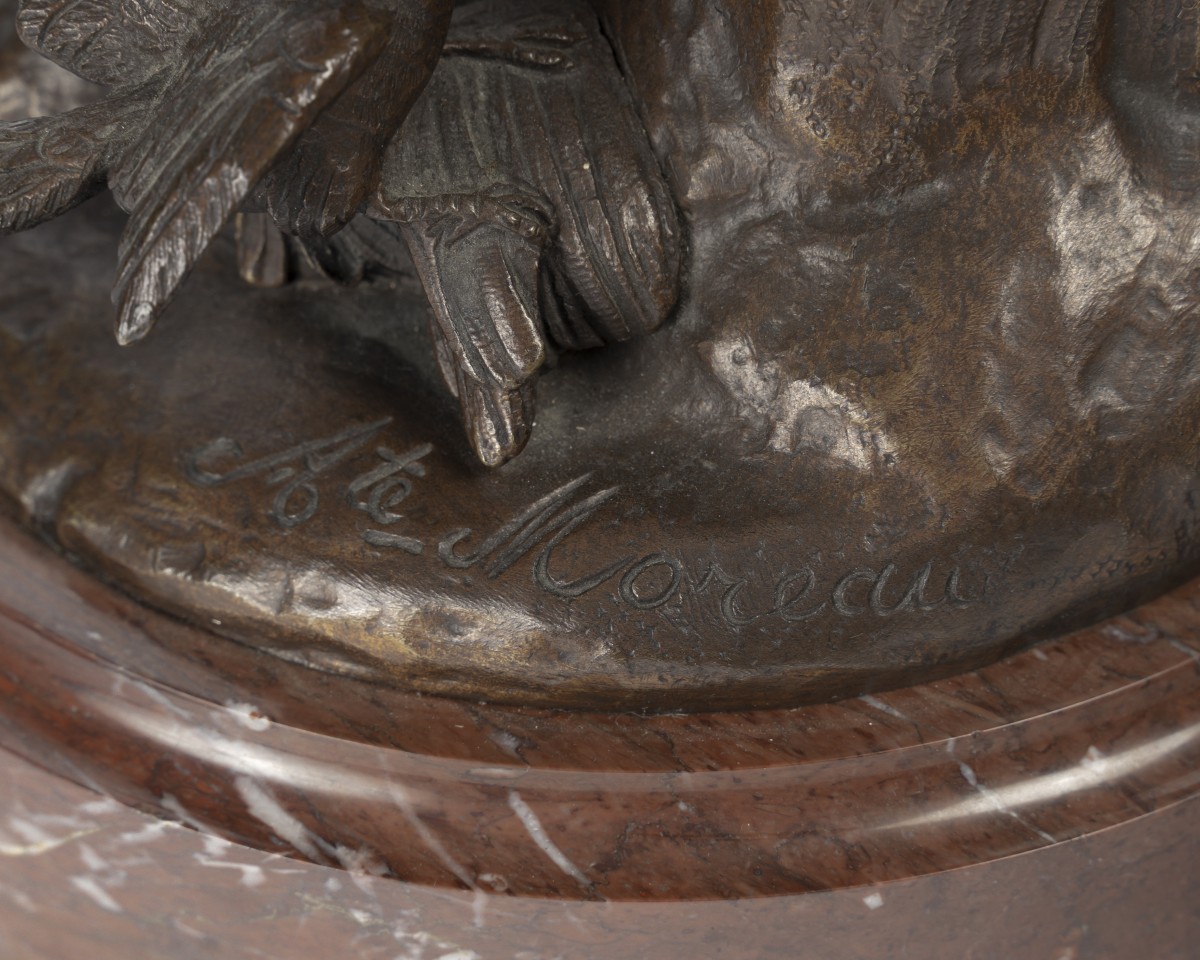
Signed on the base, Auguste Moreau.
French work.
Circa 1890.
Dimensions:
Height with base: 69 cm.
Width: 34 cm.
Depth: 28 cm.
Biography
Auguste-Louis Mathurin Moreau was a French sculptor born on 22 February 1834 in Dijon and died on 11 November 1917 in Malesherbes. He belonged to a family of artists that was particularly active in the 19th century and was part of what is known as the Moreau dynasty, one of the most important families of sculptors of that period.
He was the son of the sculptor and painter Jean-Baptiste-Louis-Joseph Moreau. He grew up in an environment entirely devoted to artistic practice. His father’s workshop was his first place of training, where he learned drawing, modelling and the handling of form at an early age, following a traditional method of transmission based on observation and repetition. This artisanal and artistic education had a lasting influence on his approach to sculpture.
From a very young age, Auguste-Louis Mathurin Moreau devoted himself to sculpture and completed his training through academic study. Like many artists of his generation, he moved to Paris to refine his skills and to enter the official artistic circles. He adopted the visual language of 19th-century academic sculpture, inherited from Neoclassicism and adapted to the tastes of the Second Empire and later the Third Republic.
He began exhibiting at the Salon des artistes français in 1861. He presented his works there regularly for more than fifty years, until 1913. Unlike some members of his family, he neither sought major monumental commissions nor official distinctions. His career was marked by steady production rather than spectacular success.
His work consists mainly of decorative sculpture, primarily in bronze, but also in plaster and terracotta. He explored subjects that were highly appreciated in the 19th century: genre scenes, female figures, allegories, children, putti and pastoral themes. His style is characterised by clear compositions, elegant poses and careful attention to detail and finish.
Auguste-Louis Mathurin Moreau fully embraced the tradition of edition sculpture. Many of his works were cast in multiple examples and distributed to a bourgeois clientele, which contributed to the wide circulation of his work, but also to later confusion regarding his identity, as his name was often shortened to “Auguste Moreau”.
He worked in the shadow of his brothers, notably Mathurin Moreau and Hippolyte Moreau, who enjoyed greater fame and received official commissions. This family proximity partly explains why his work, although abundant, was long less studied and sometimes imprecisely attributed.
Nevertheless, his sculptures entered several French public collections, particularly in regional museums, and continue to appear regularly on the art market today. They are appreciated for their quality of execution and for their representative character within late 19th-century French decorative sculpture.
Auguste-Louis Mathurin Moreau ended his life far from the bustle of Paris. He died in Malesherbes on 11 November 1917, during the First World War. His death marked the end of a long and discreet career, firmly rooted in the French academic tradition.
Delevery information :
Our pieces are sold with a certificate of authenticity.
Our collaboration with specialized art carriers ensures secure deliveries worldwide.
Don't hesitate to ask us for a quote.