Offered by Cristina Ortega & Michel Dermigny
REQUEST INFORMATION
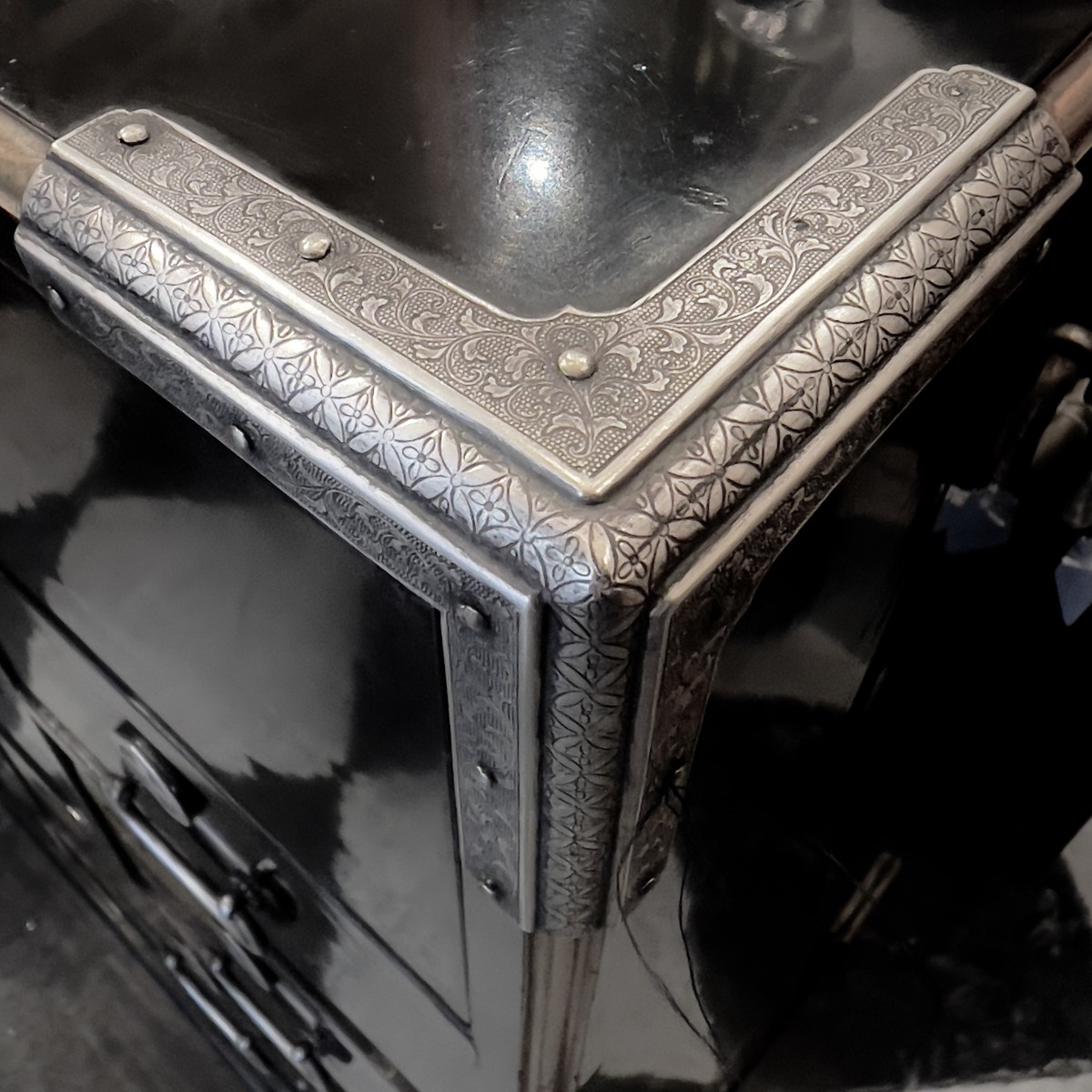

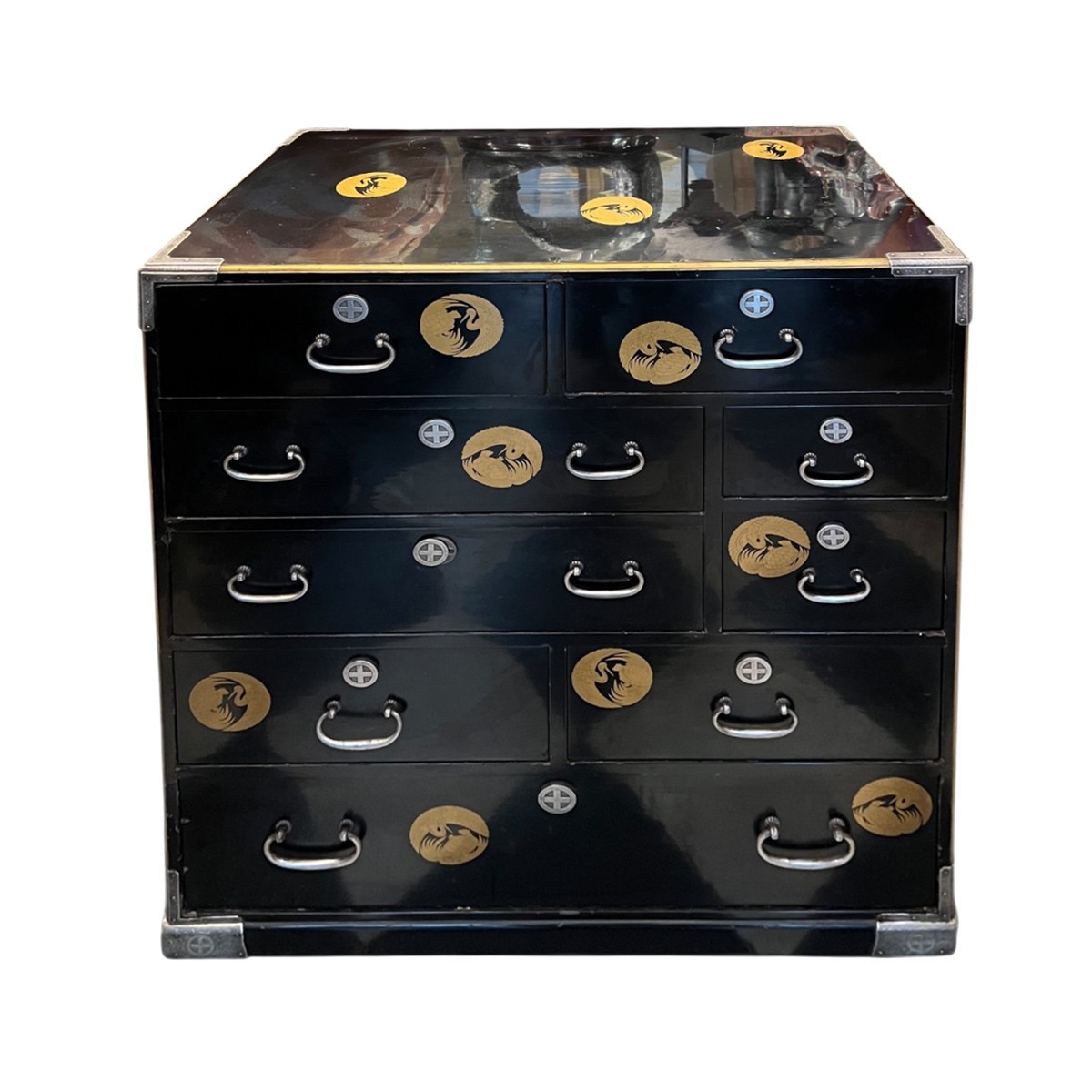
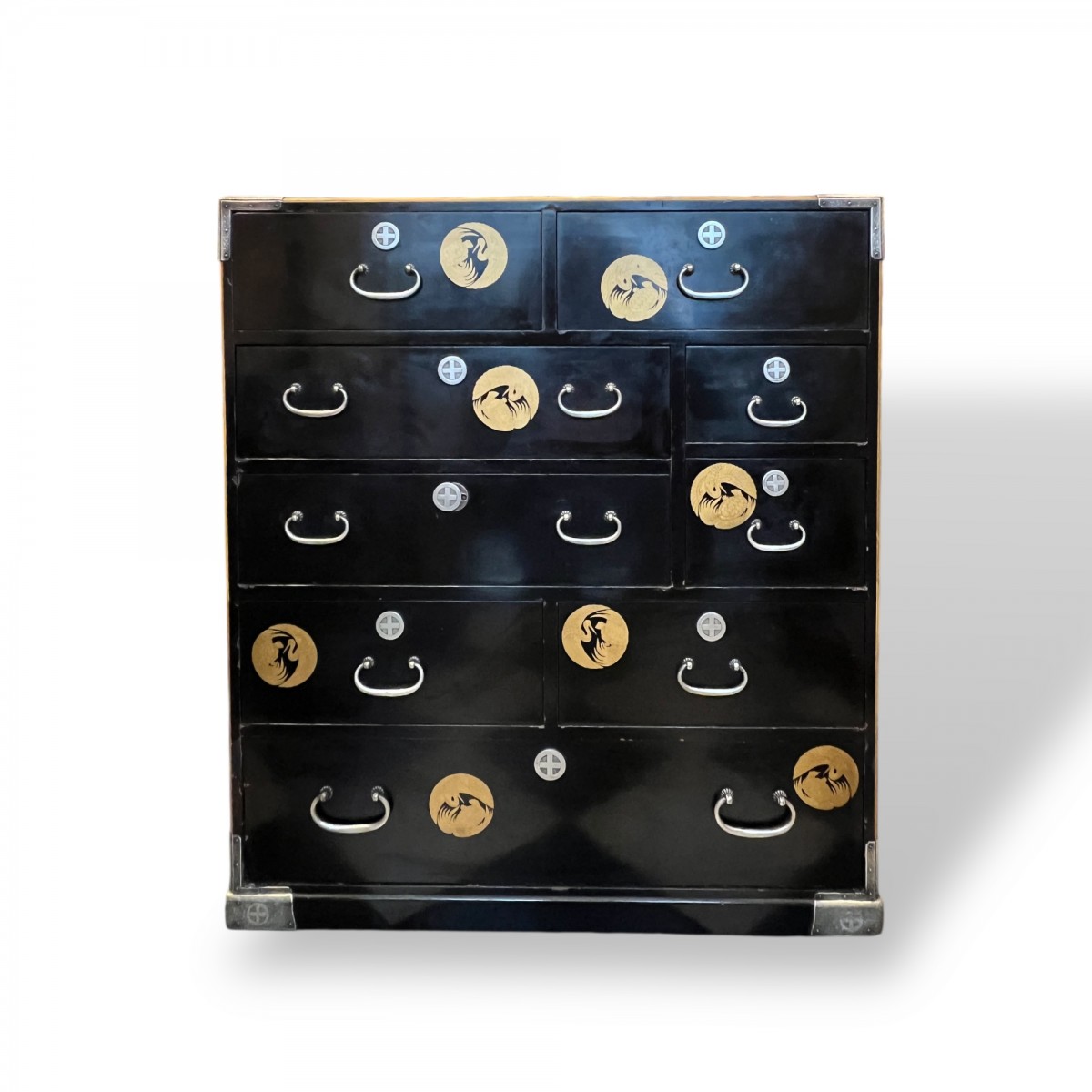
Japanese chest of drawers, tansu, in black and gold lacquer, with silver mounts engraved in the mon Shimazu style (late Edo – early Meiji period, circa 1860–1880)
This high-quality Japanese chest of drawers, made in Japan during the late Edo and early Meiji periods (circa 1860–1880), is distinguished by its exceptional craftsmanship and meticulous attention to detail. Entirely covered in urushi lacquer, it features a deep, glossy black lacquer not only on the visible surfaces but also on the back and interior, extending even into the drawers. This comprehensive finish, reserved for high-quality pieces, testifies to the lengthy and demanding workshop process characteristic of ceremonial Japanese furniture.
The fittings, handles, and protectors are made of silver (tested), entirely hand-engraved. The spandrels, lock covers, and reinforcing pieces, including those at the feet and back, are crafted with goldsmith-like precision. The lock covers bear the mon (heraldic emblem) of the Shimazu clan, the maru ni j?monji (a right cross inscribed within a circle), repeated as a sign of authority and belonging. The rhythm of the keyhole escutcheons, partially concealed and integrated into the decoration, adds a functional sophistication uncommon in antique Japanese furniture.
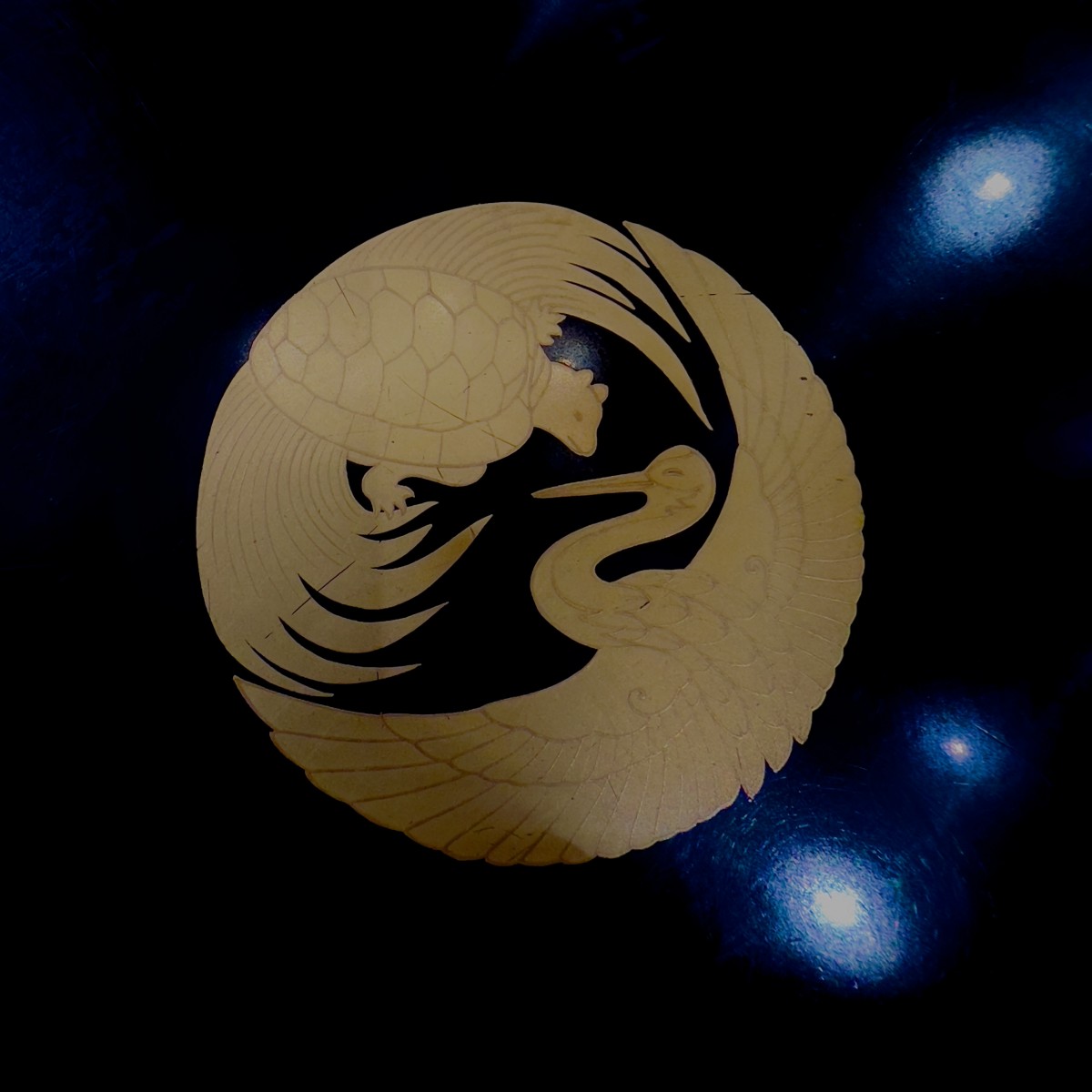
The silverwork is complemented by exquisite lacquer decoration: against the black background stand stylized circular motifs depicting a Minogam tortoise and a crane in flight. In Japanese iconography, the Minogam tortoise and the crane form a major symbolic pair, associated with longevity, prosperity, good fortune, and the continuity of lineage. On a piece bearing the mon of a grand house, this decorative program acts as a visual language of prestige, protection, and the desire for longevity.
The historical context reinforces the interpretation of this object: the Shimazu clan, lords of Satsuma (Kagoshima), is among the most powerful lineages in Japan. At the turn of the 1860s and 1880s, a period of transition between the Edo and Meiji eras, elite commissions combined exceptional mastery of traditional techniques—in this case, urushi lacquer and engraving on precious metals—with a strong assertion of identity through heraldry. This piece of furniture powerfully illustrates this transitional aesthetic, where craftsmanship reached a pinnacle of refinement.
Features
Type: Japanese chest of drawers, ceremonial furniture
Materials: Urushi lacquer (black lacquer, gold lacquer), engraved silver fittings and handles
Decoration: Mon Shimazu (maru ni j?monji), Minogamous tortoise and crane (symbols of longevity and good fortune)
Period: Late Edo – Early Meiji (circa 1860–1880)
Dimensions: H. 76 cm – W. 66.5 cm – D. 37.5 cm
Delevery information :
A special care is given to packing. Bigest pieces are crated.
All our shippings are insured with tracking.
As we do a lot of shippings, we do have very special rates. Please inquire!