Offered by Galerie Thierry Matranga
REQUEST INFORMATION
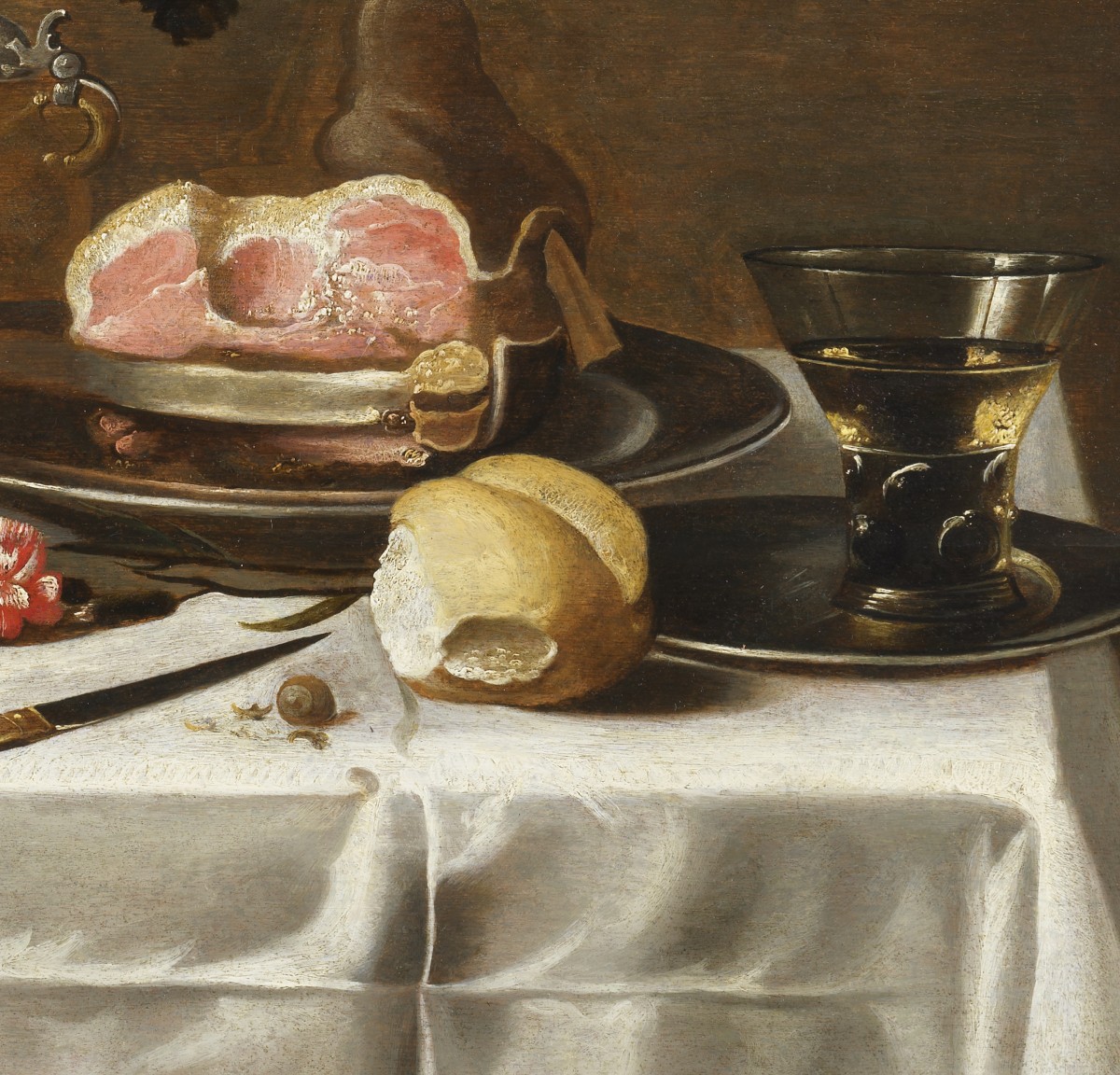
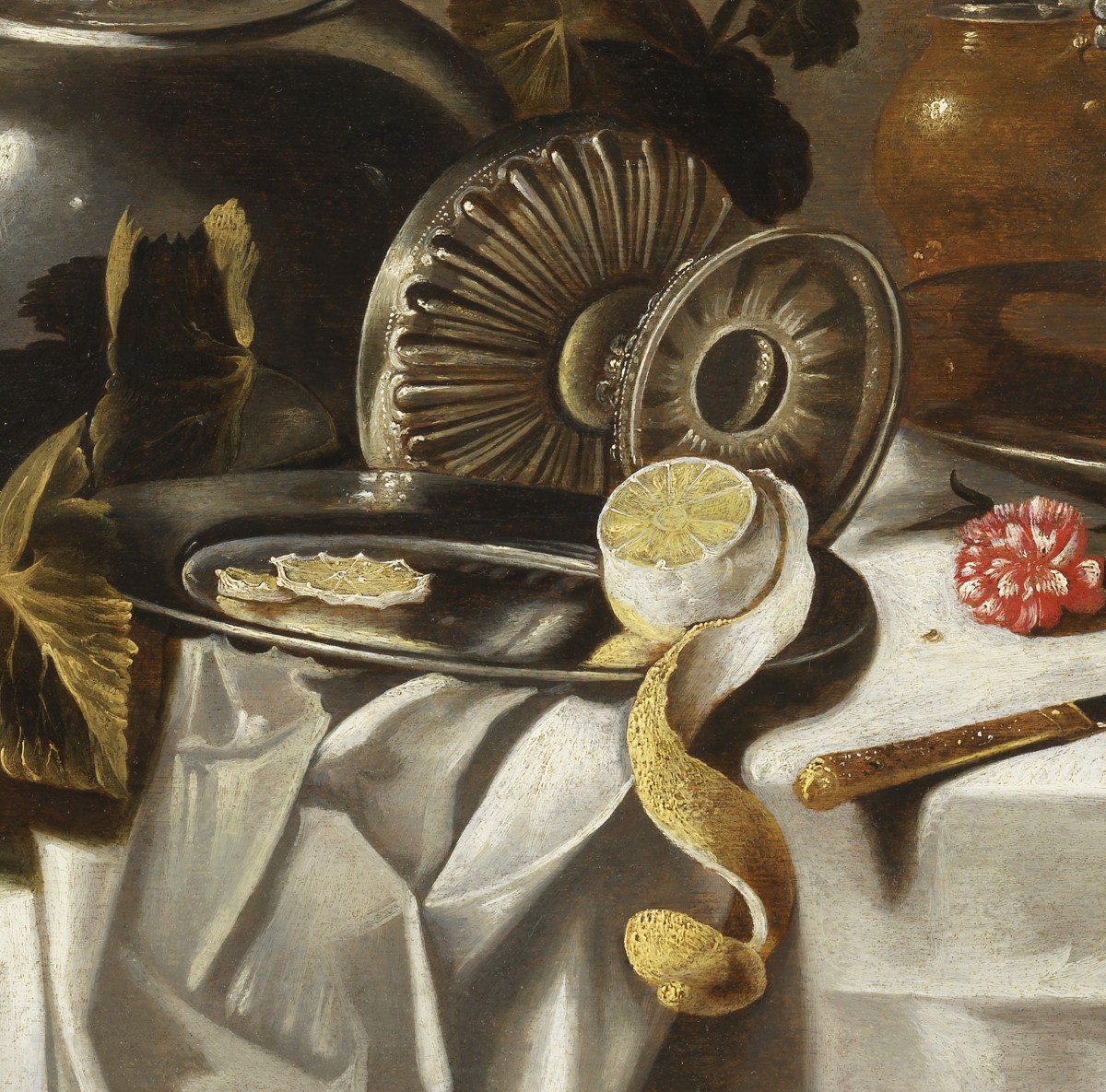

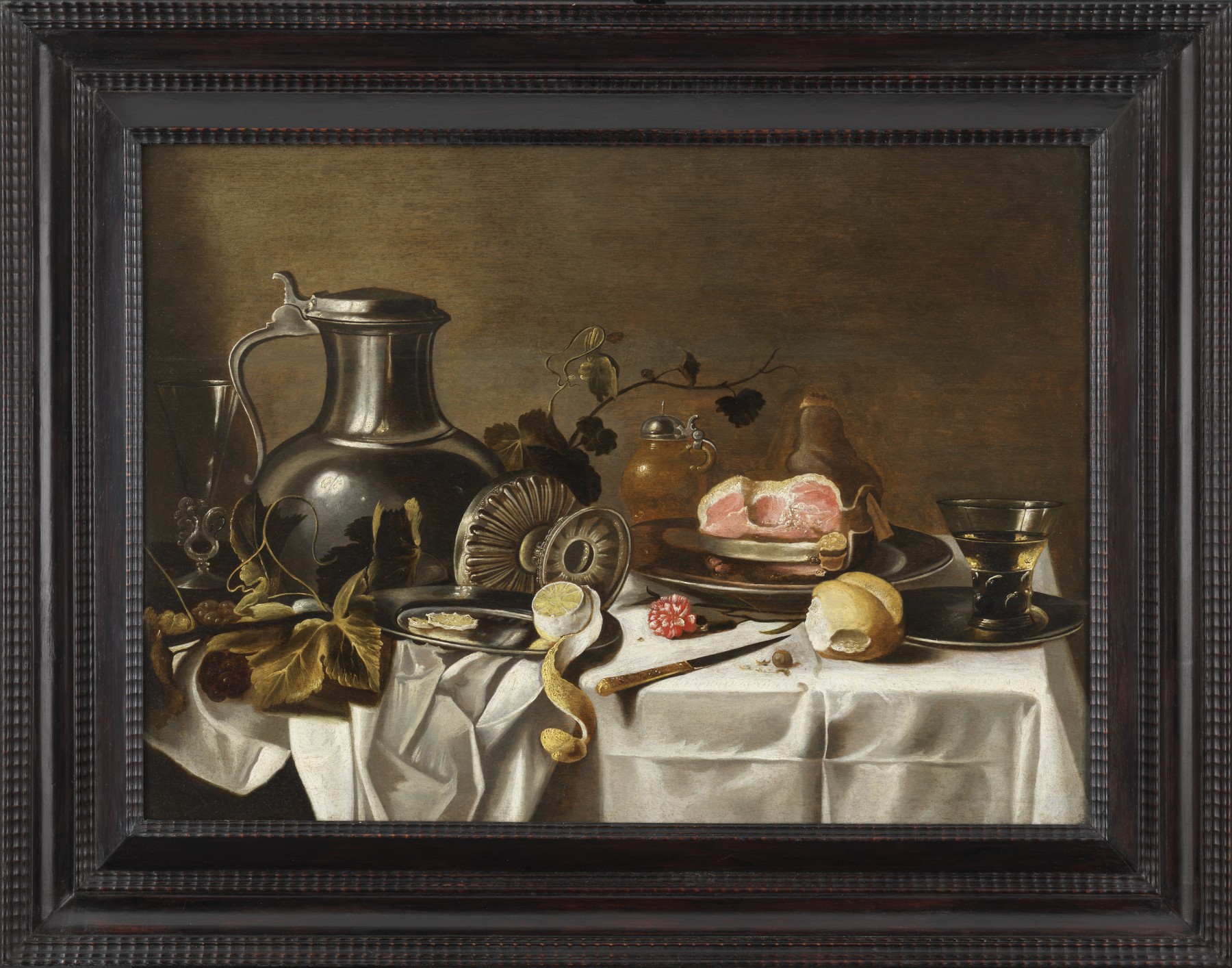
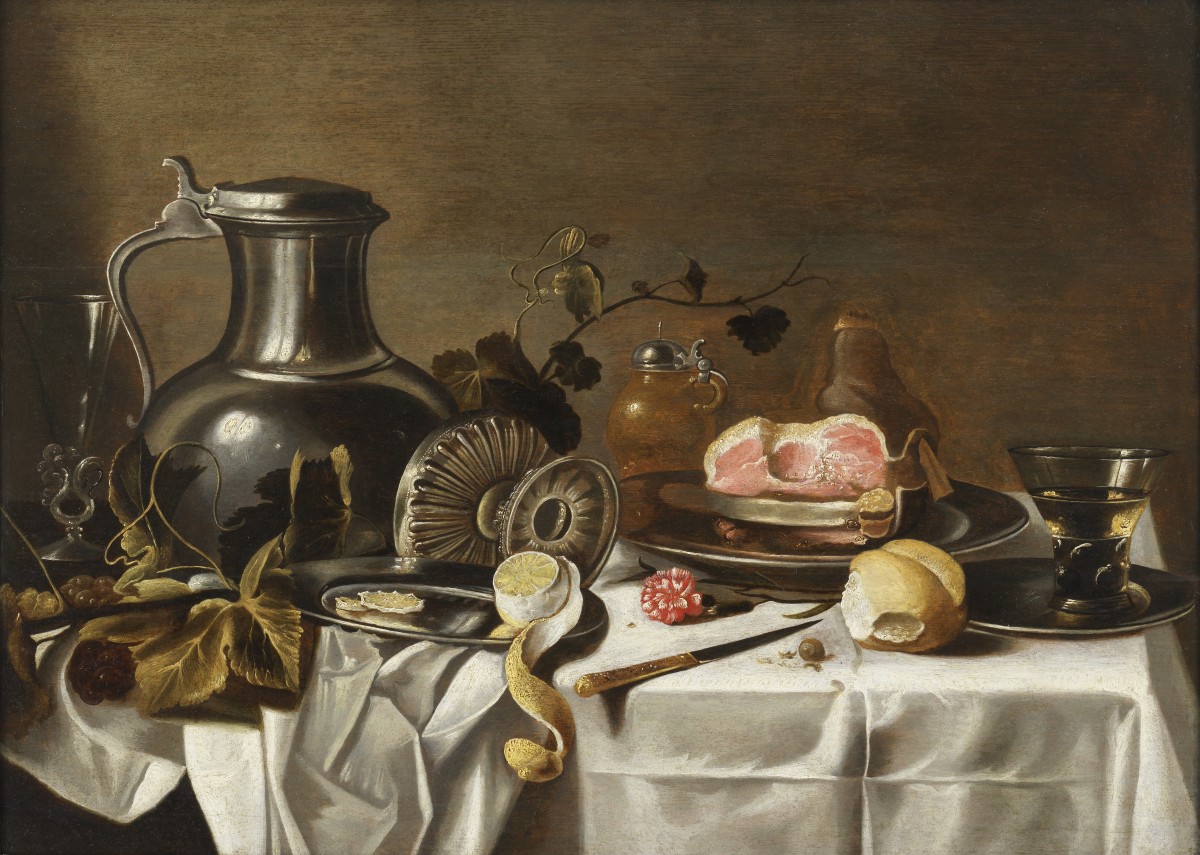
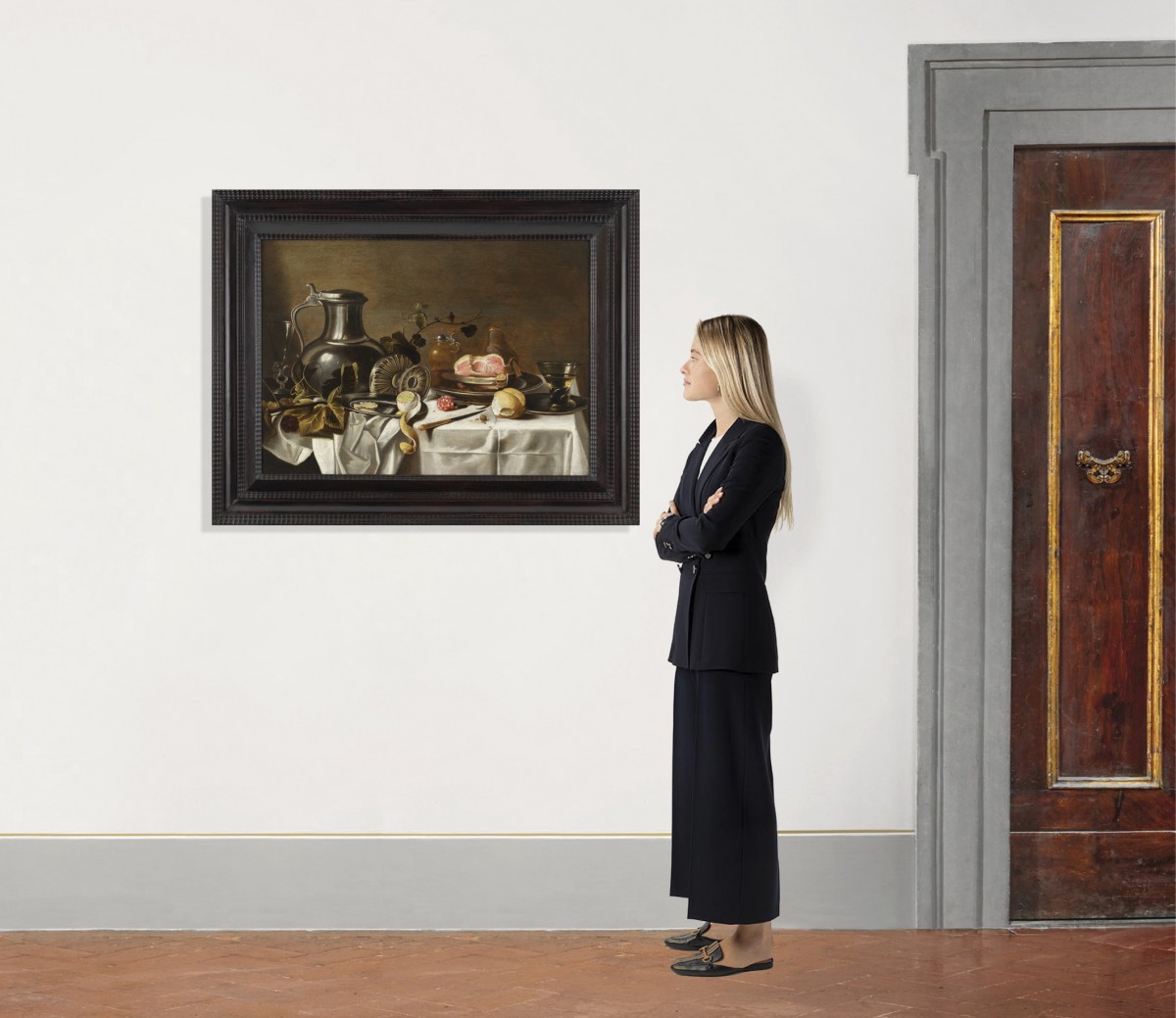
Oil on reinforced panel. Dutch School, mid-17th century, workshop of Pieter Claesz (1596/98 – 1661).
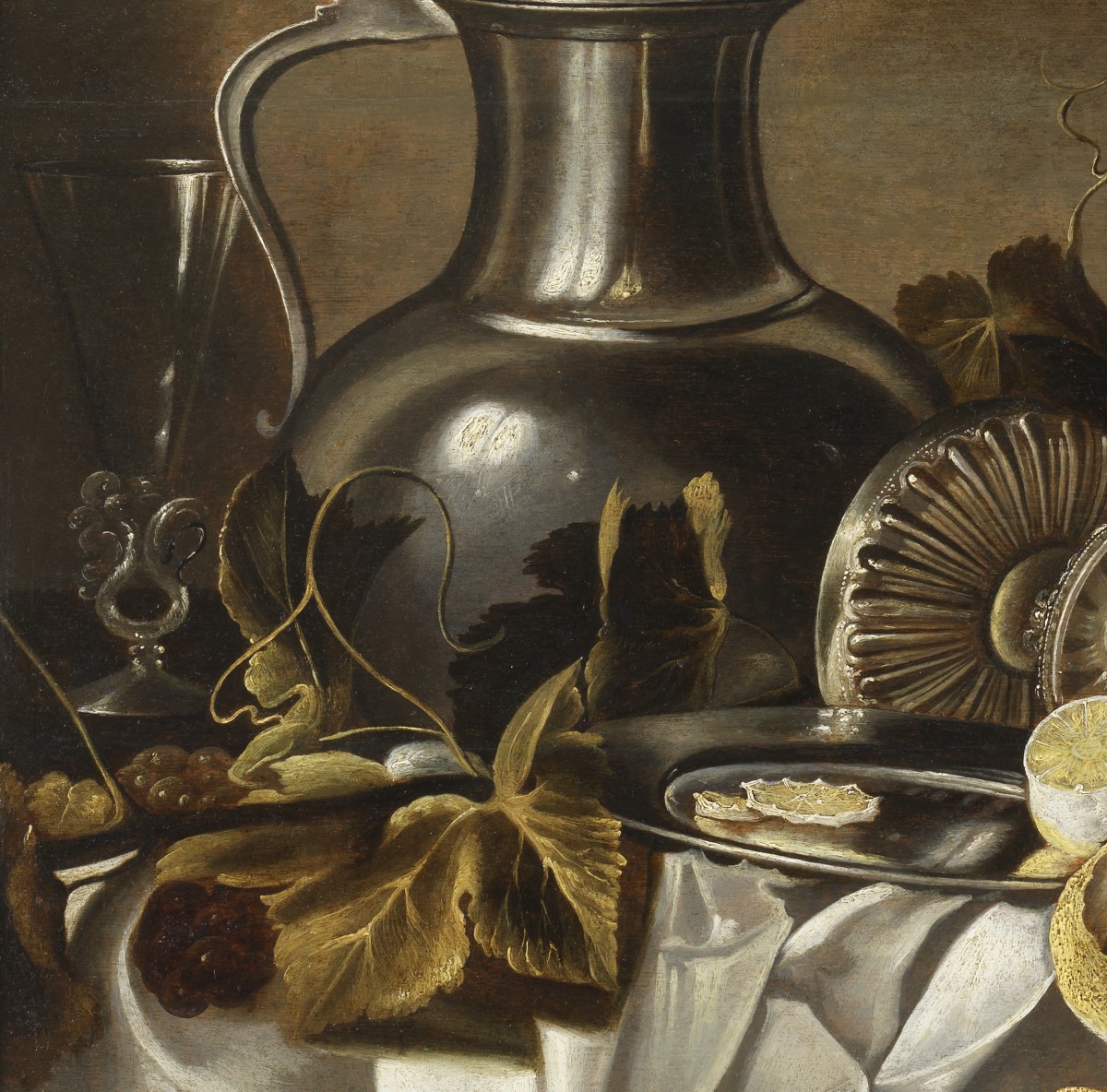
Our composition belongs to a genre brought to its zenith by Pieter Claesz: the still life with a tendency towards monochrome. In an apparent disorder where food and silverware are placed haphazardly on a tabletop, the painter invites the viewer to feast, the profusion of objects evoking abundance. Faithful to Claesz's style, our painting possesses a great harmony that finds its balance through skillfully measured contrasts of light and shadow. Like a goldsmith, he chisels an inverted silver cup, and like a pewterer, he displays tableware that plays with the light. Our work, whose color palette is concentrated in shades of brown, ochre, and gray, is far removed from the opulent and extroverted art of Flanders; it invites introspection. Here, a cup is overturned; there, a knife and a pewter dish are precariously balanced. Ready to fall, they remind us of the fragility of life.
The flourishing of still life, as a genre in its own right, is closely linked to the history of the Low Countries. In contrast to Catholic Flanders under Spanish rule, the Calvinist Northern Provinces achieved considerable economic prosperity thanks to their autonomy and their merchants. Haarlem is a prime example of a refuge where people from Flanders and Antwerp, seeking freedom, settled. The city is not only home to Frans Hals but also the center of Mannerist painting in Holland, boasting several masters specializing in still life, among whom Pieter Claesz and Willem Claesz Heda are leading figures.
As is customary for Dutch Golden Age paintings, our still life is presented in a substantial, reverse-profile frame of ebonized wood.
Dimensions: 64 x 88 cm panel – 90 x 114 cm with frame.
Related work: The arrangement of objects in space, the format, and the color palette are reminiscent of the painting held in a private collection and exhibited in Zurich in 2004: Entablature with a wide-bellied pitcher, an overturned silver goblet, a roemer, a fluted glass, and a roast capon, dated 1647.
Biography: Pieter Claesz (Berchem 1596/98 – Haarlem 1661) settled in Haarlem before 1617, where he worked until his death. Along with Willem Claesz Heda, he was a leading figure of the Haarlem school of still-life painting, characterized by its monochrome style. His early works, executed between 1621 and 1630 (Still Life, 1624, Rijksmuseum; Vanitas, 1624, Dresden Gemälde Galerie; or Still Life with Musical Instruments, 1625, Musée du Louvre), show a certain affinity with the art of Floris van Dyck or Nicolaes Gillis, with a slightly elevated viewpoint and fairly strong colors. His truly "monochrome" period spans about ten years, from 1630 to 1640. One of the best examples is his Still Life of Breakfast, painted in 1636 (Museum Boijmans Van Beuningen, Rotterdam), more focused and coherent, where the objects are more closely linked and the overall muted tone is organized around a range of gray-browns. Through the refinement and intimacy of his compositions, Pieter Claesz paved the way for a new conception of still life. Pieter Claesz is the father of the landscape painter Nicolaes Pietersz Berchem.
Bibliography:
- BRUNNER-BULST, Martina, Pieter Claesz, 2004, Luca;
- BIESBOER, Pieter, BRUNNER-BULST, Martina, GREGORY, Henry D., KLEMM, Christian, Pieter Claesz: Master of Haarlem Still Life, 2004, Belser;
- MEIJER, Fred G., The Ashmolean Museum, Oxford. Catalogue of the Collection of Paintings, The Collection of Dutch and Flemish Still Life Paintings, edited by Daisy Linda Ward, 2003, Zwolle;
- GRIMM, Claus, Flemish, Dutch, and German Still Lifes, 1988, Herscher;
- GREINDL, Edith, Flemish Still Life Painters of the 17th Century, 1983, Michel Lefebvre Editions d'Art