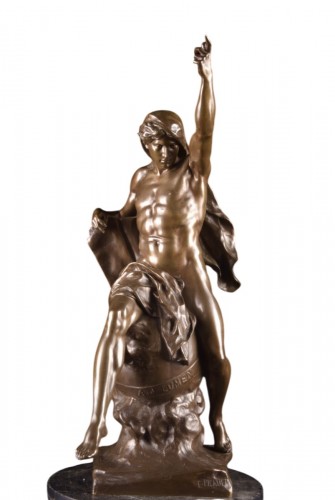
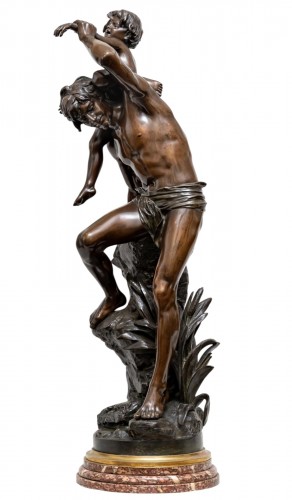
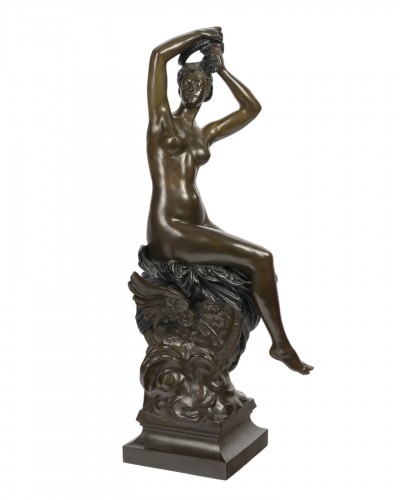
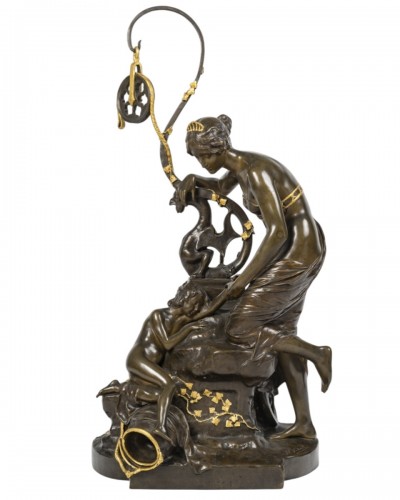
Offered by Acropole Antiquités
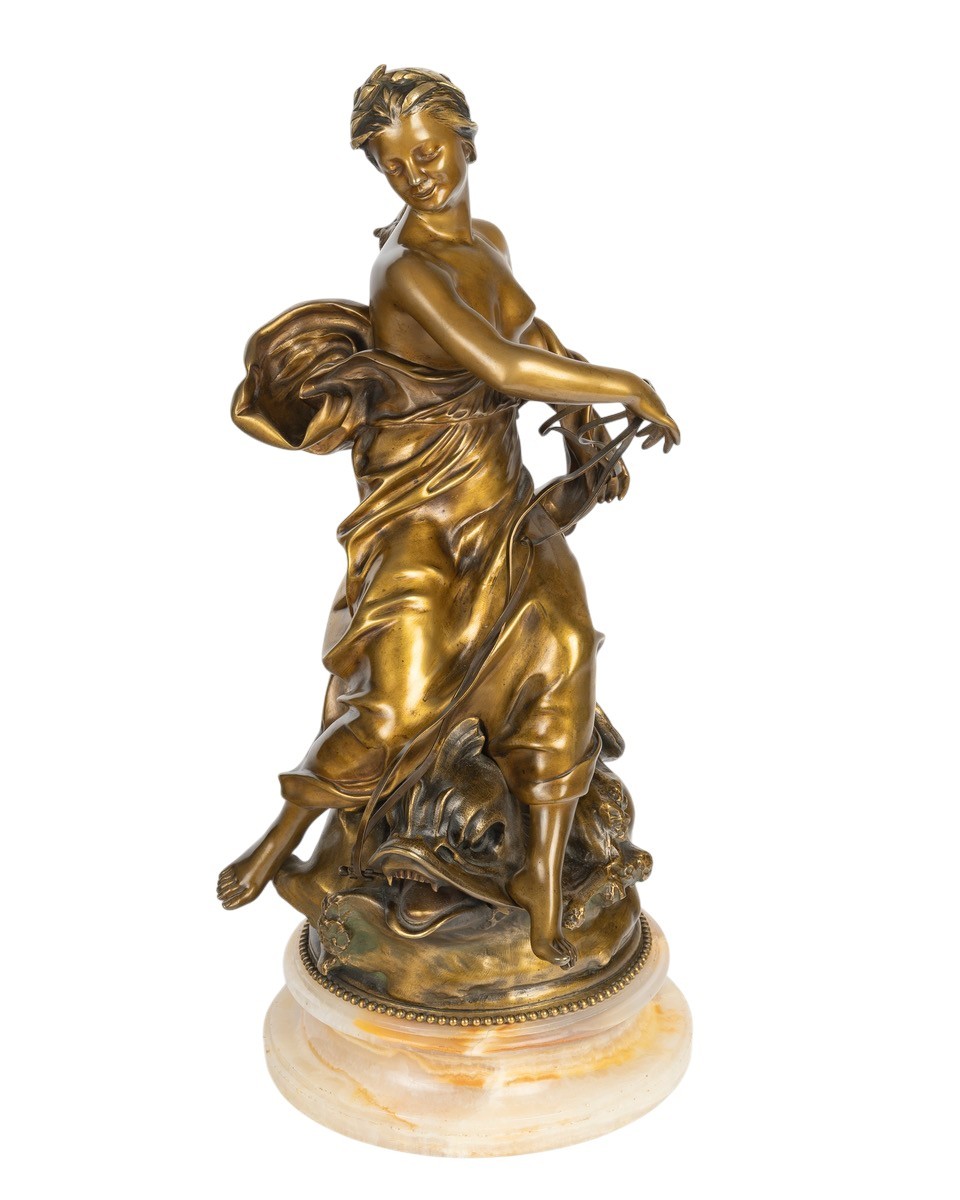
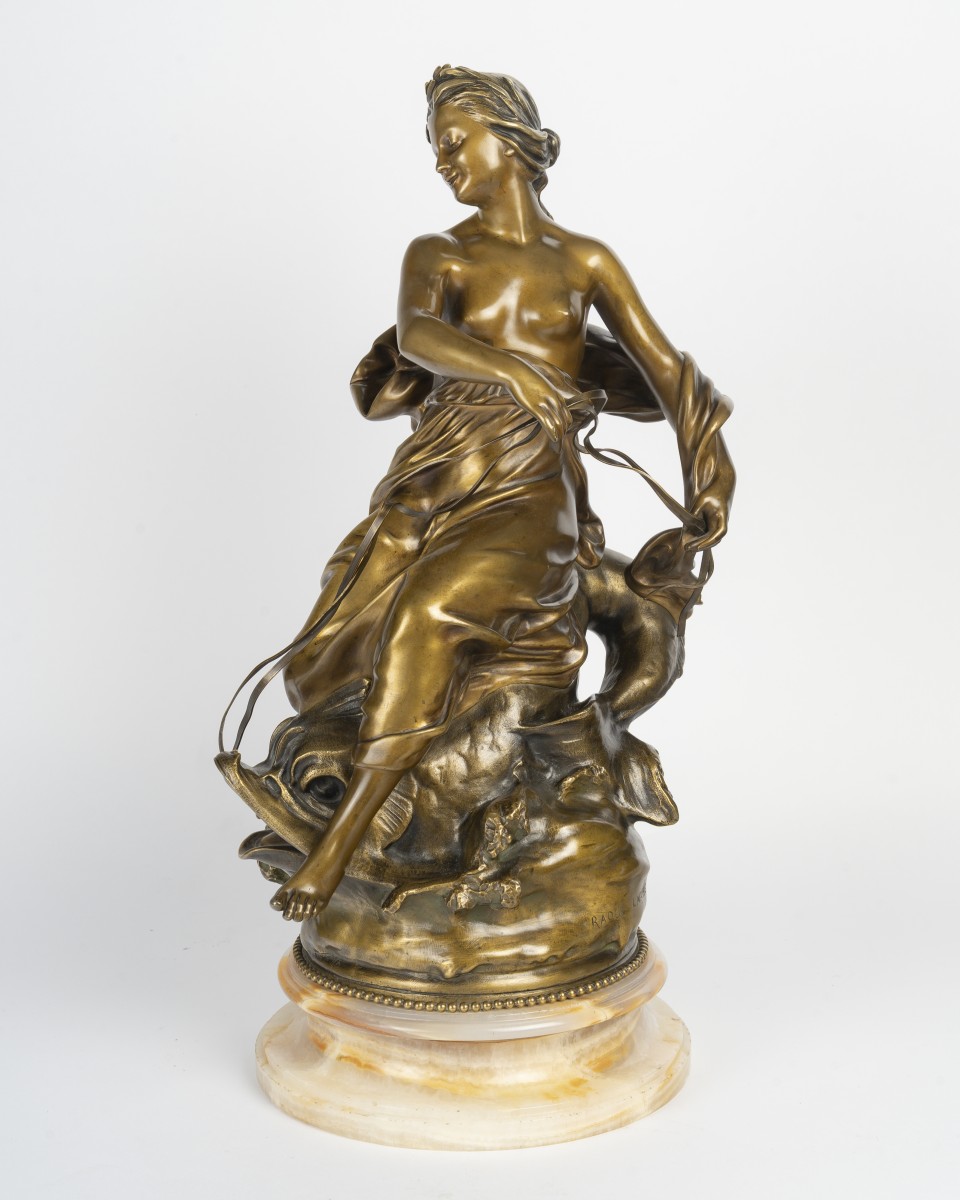
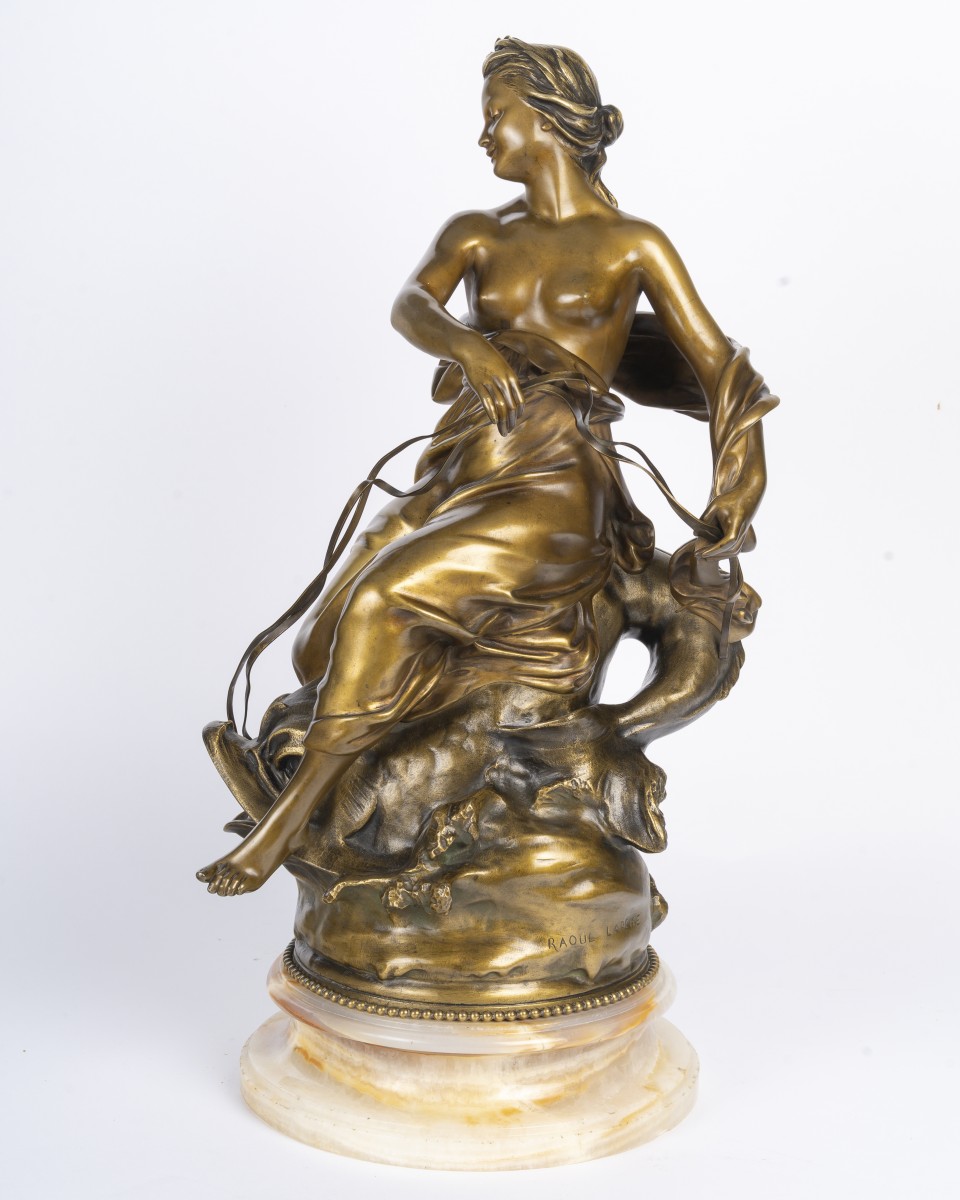
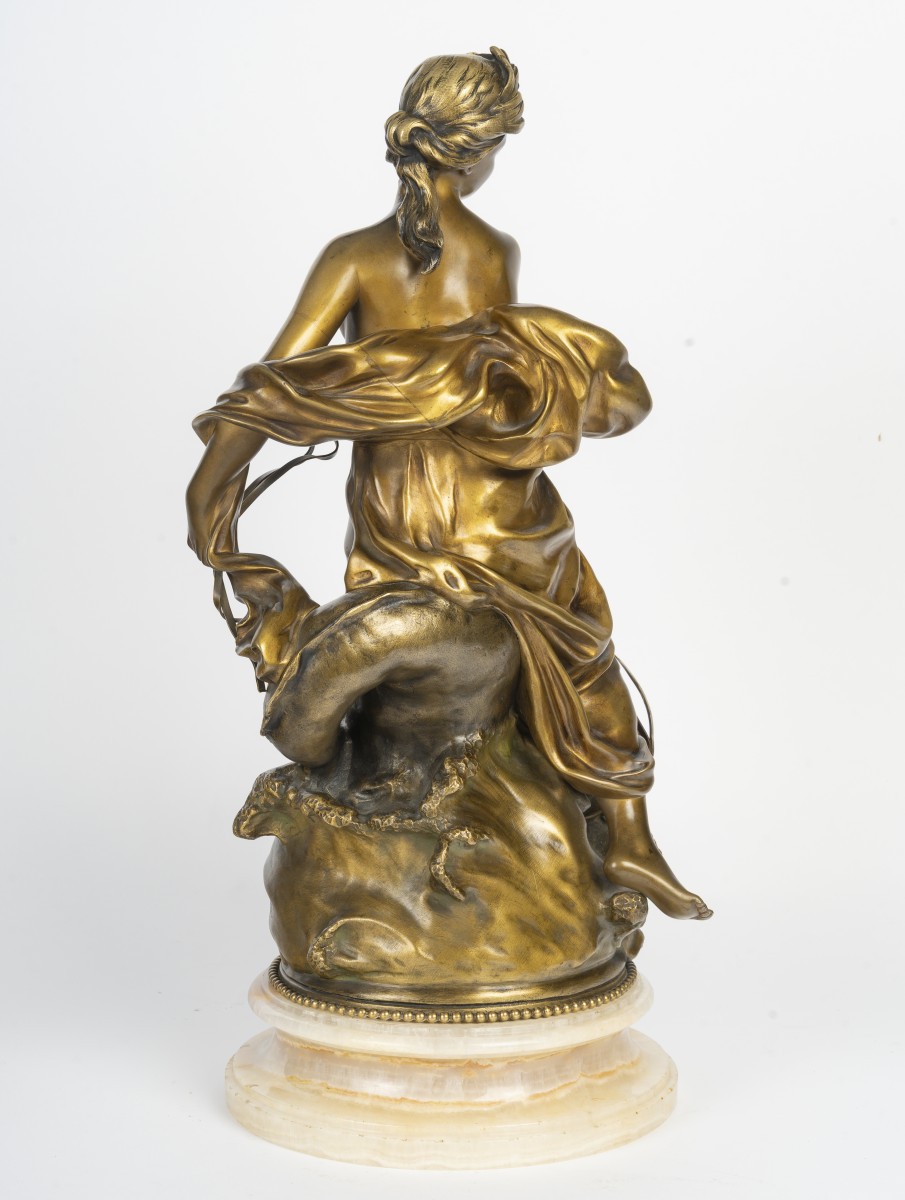
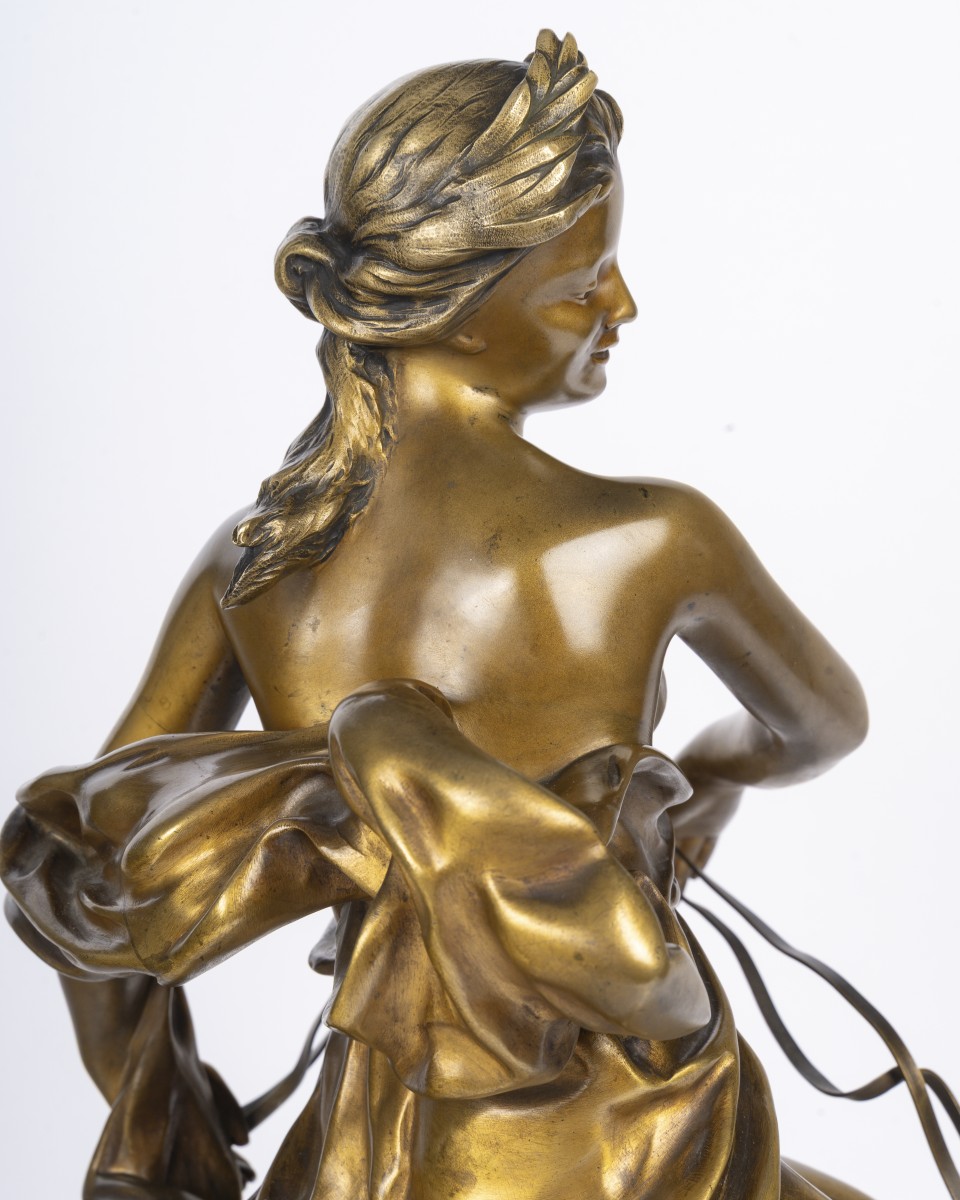

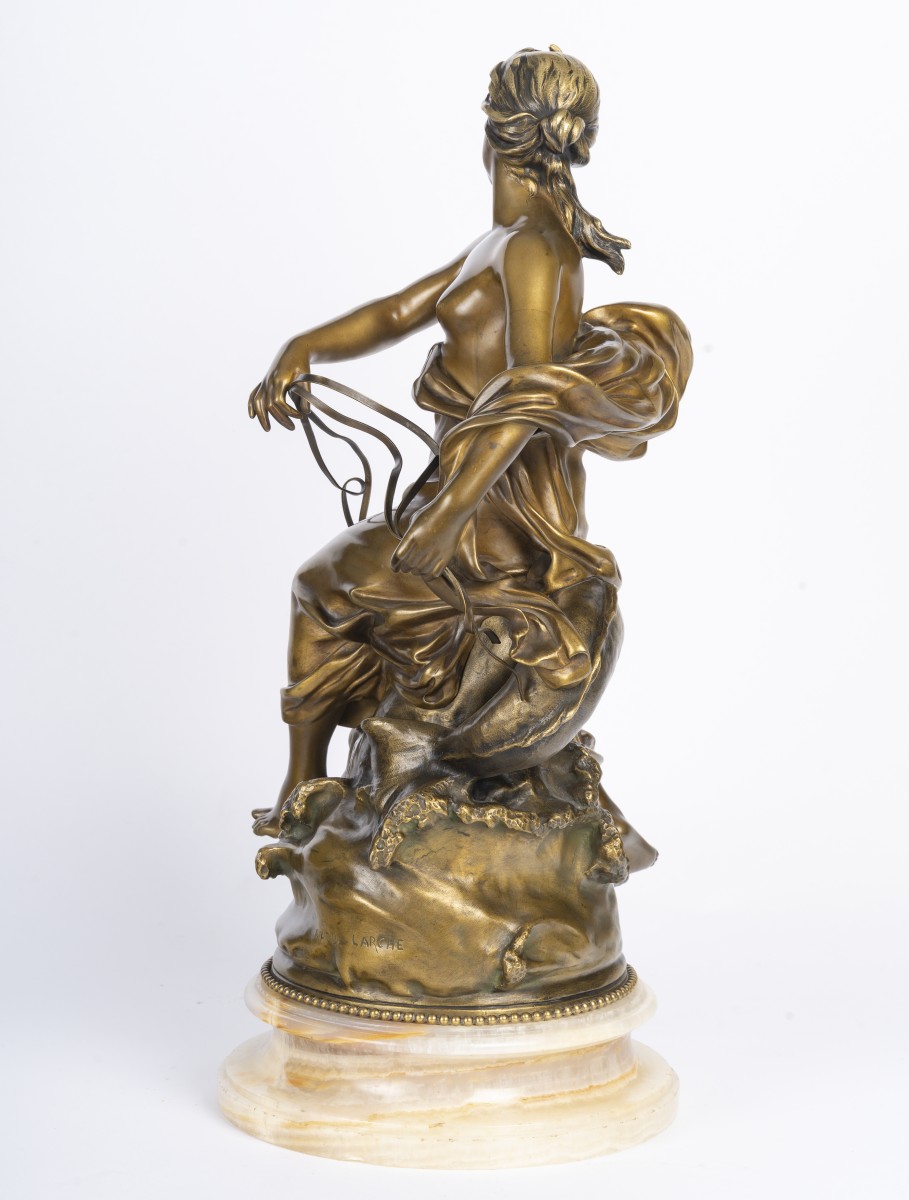
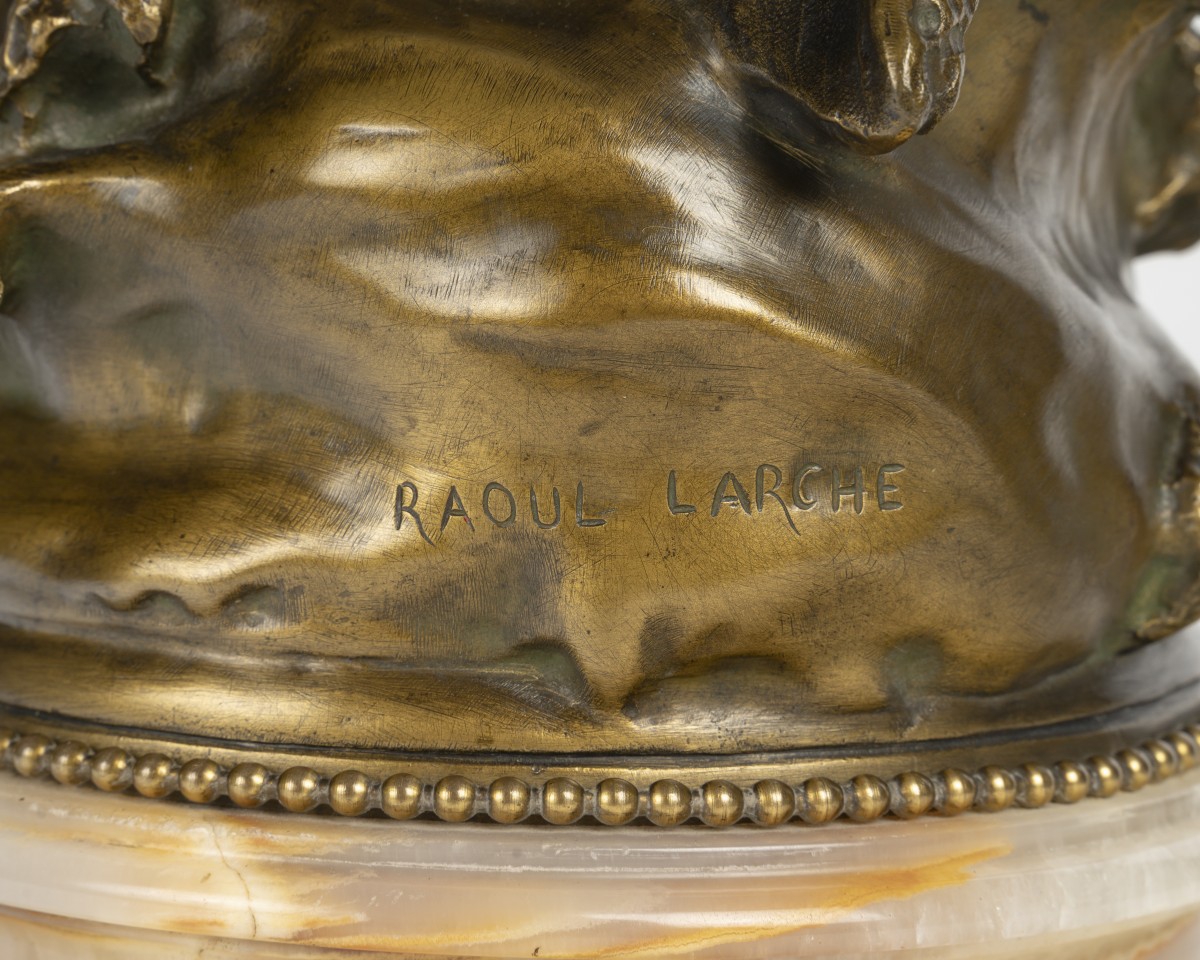
Gilt bronze, signed “RAOUL LARCHE” lower right.
Cast during the artist's lifetime.
Onyx base from North Africa.
Circa 1900.
Dimensions:
Height with base 51 cm,
Height without base 44 cm,
Diameter of base 24 cm.
Description:
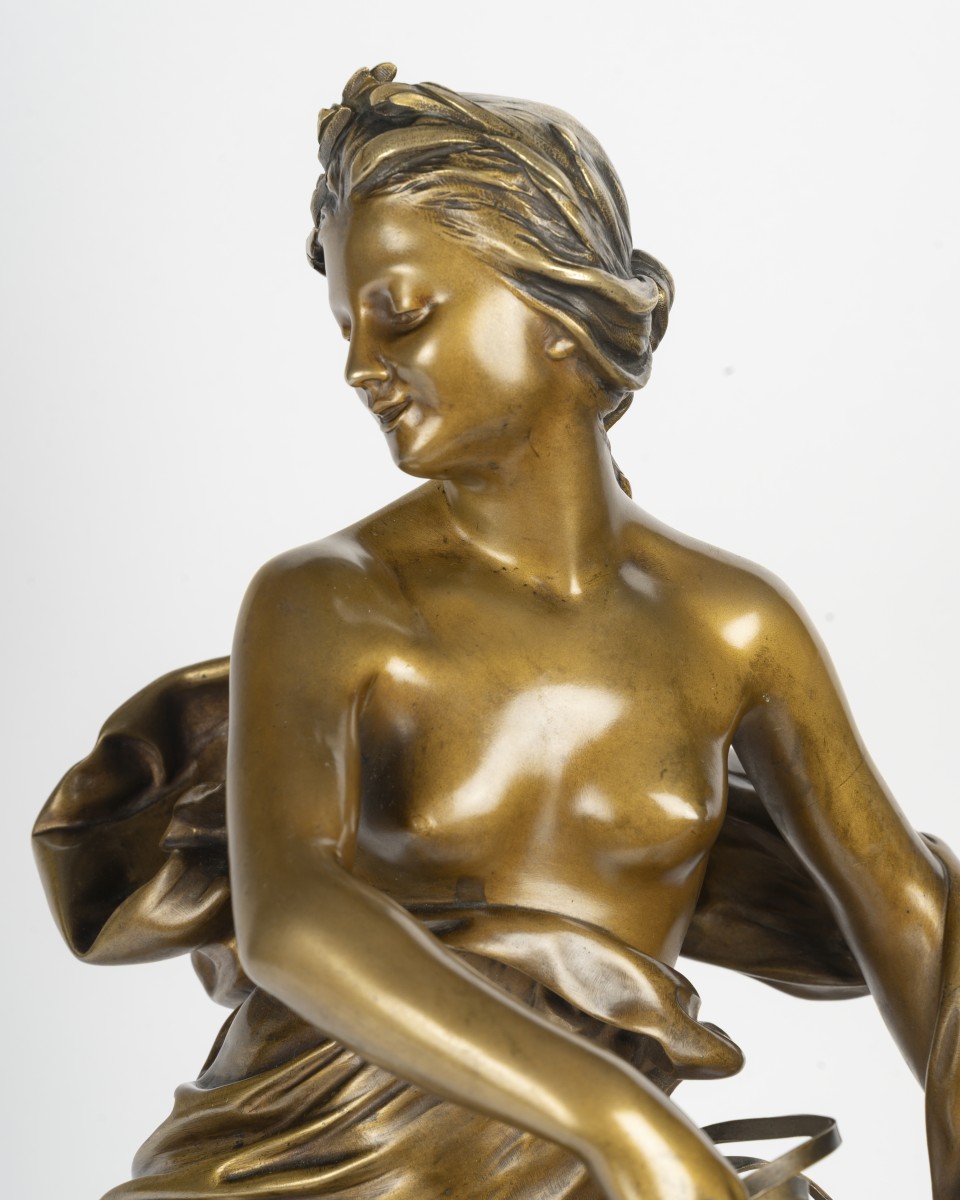
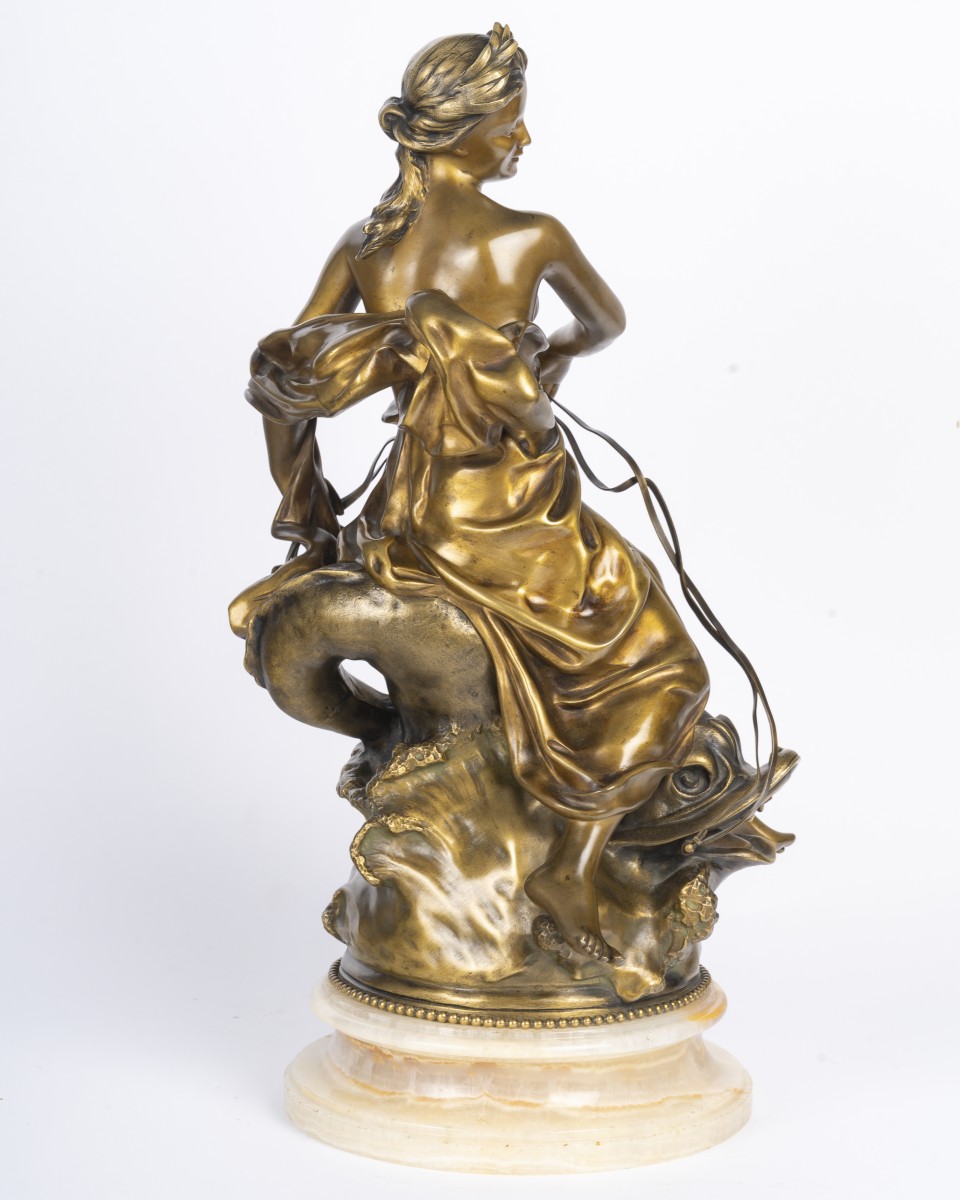
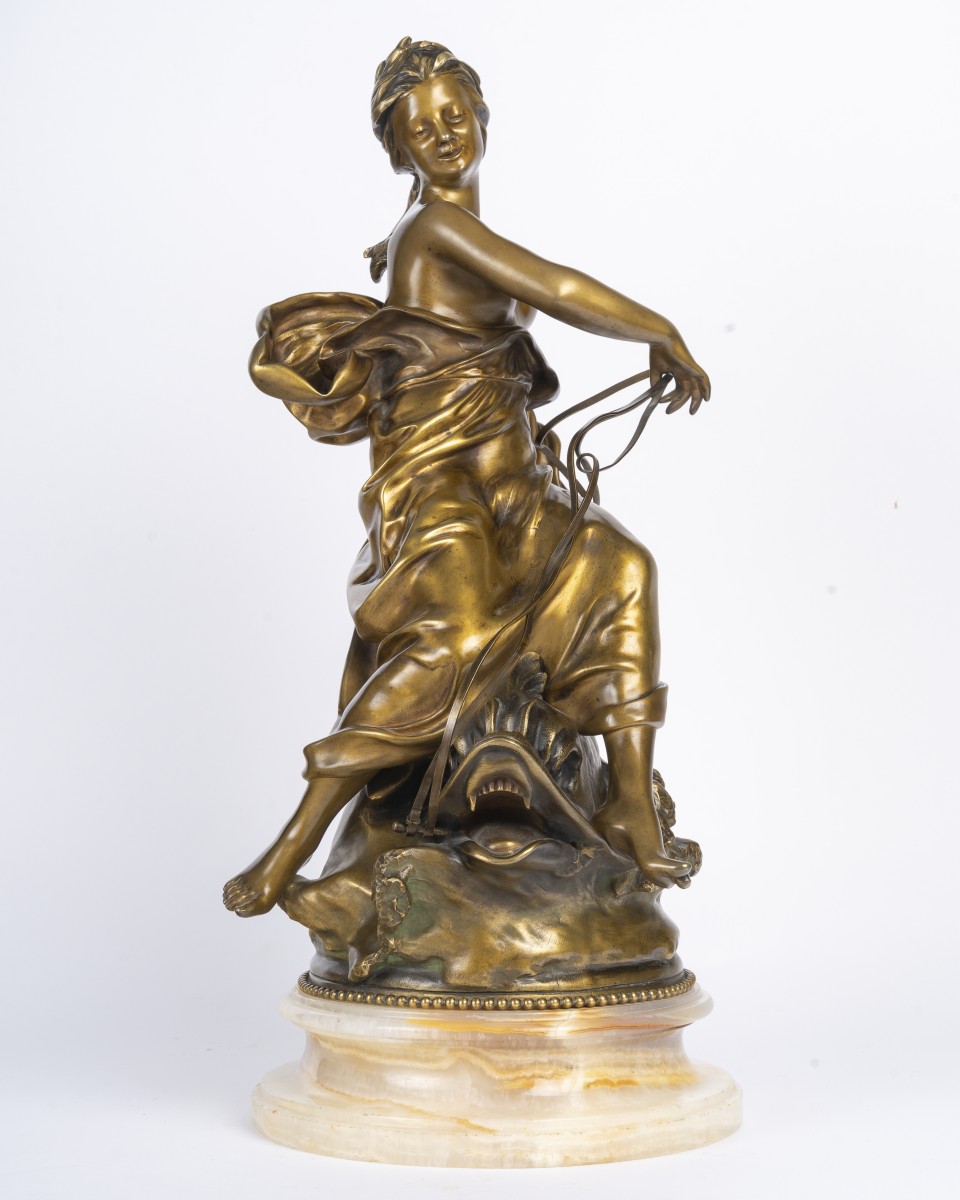
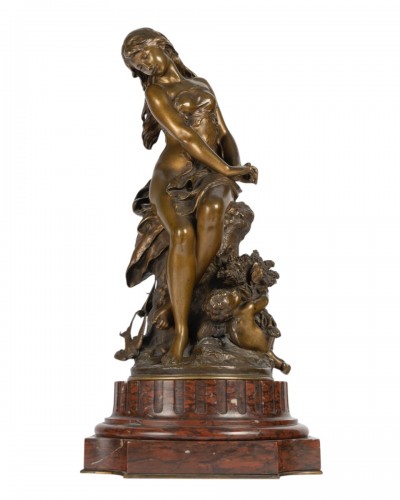
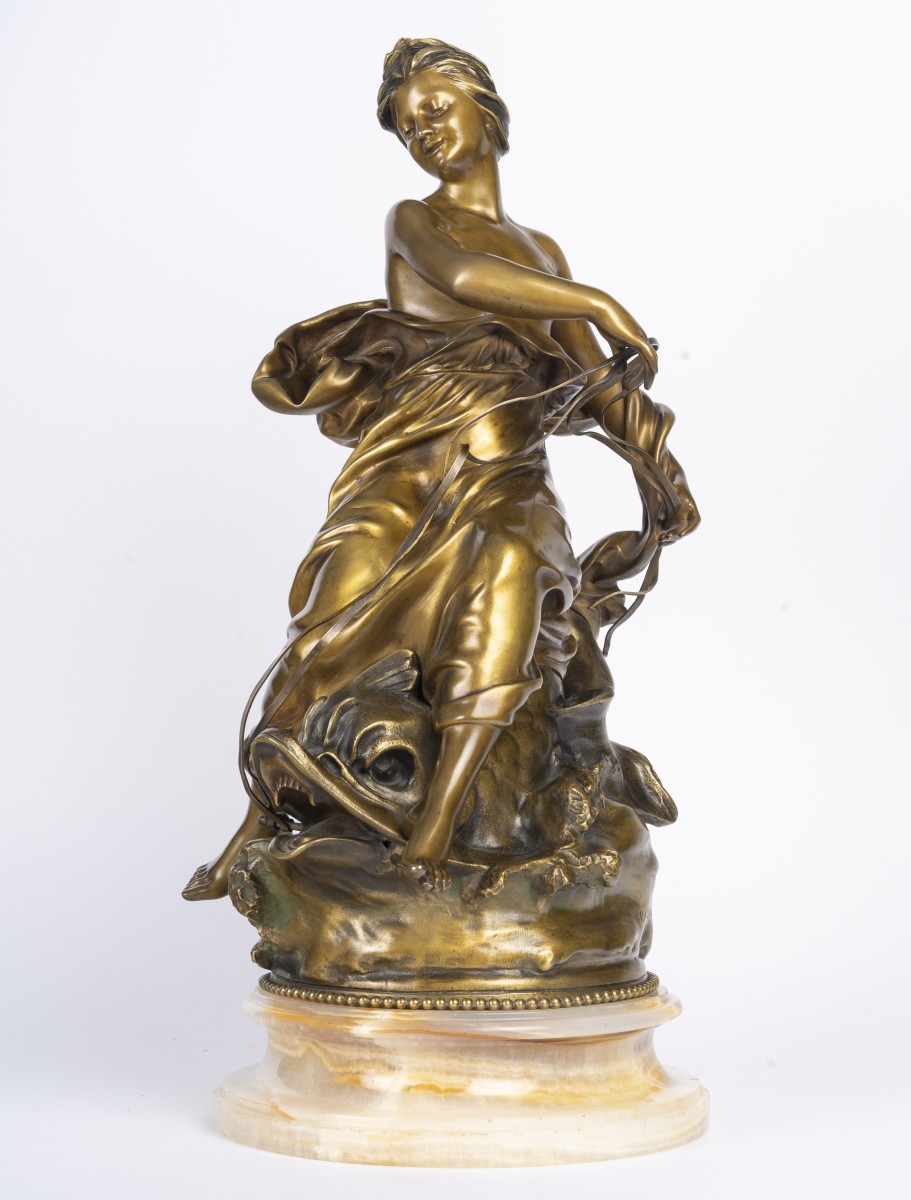
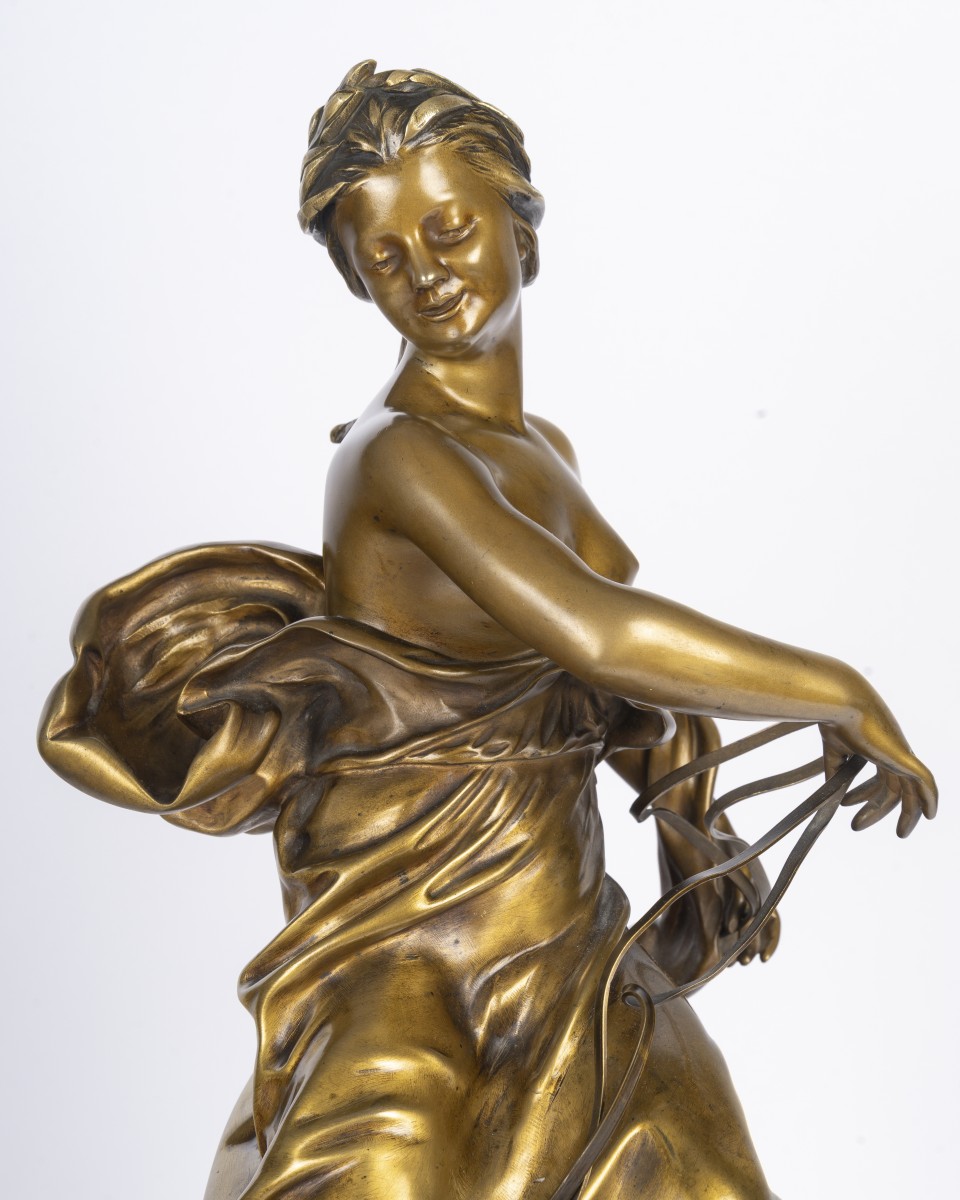
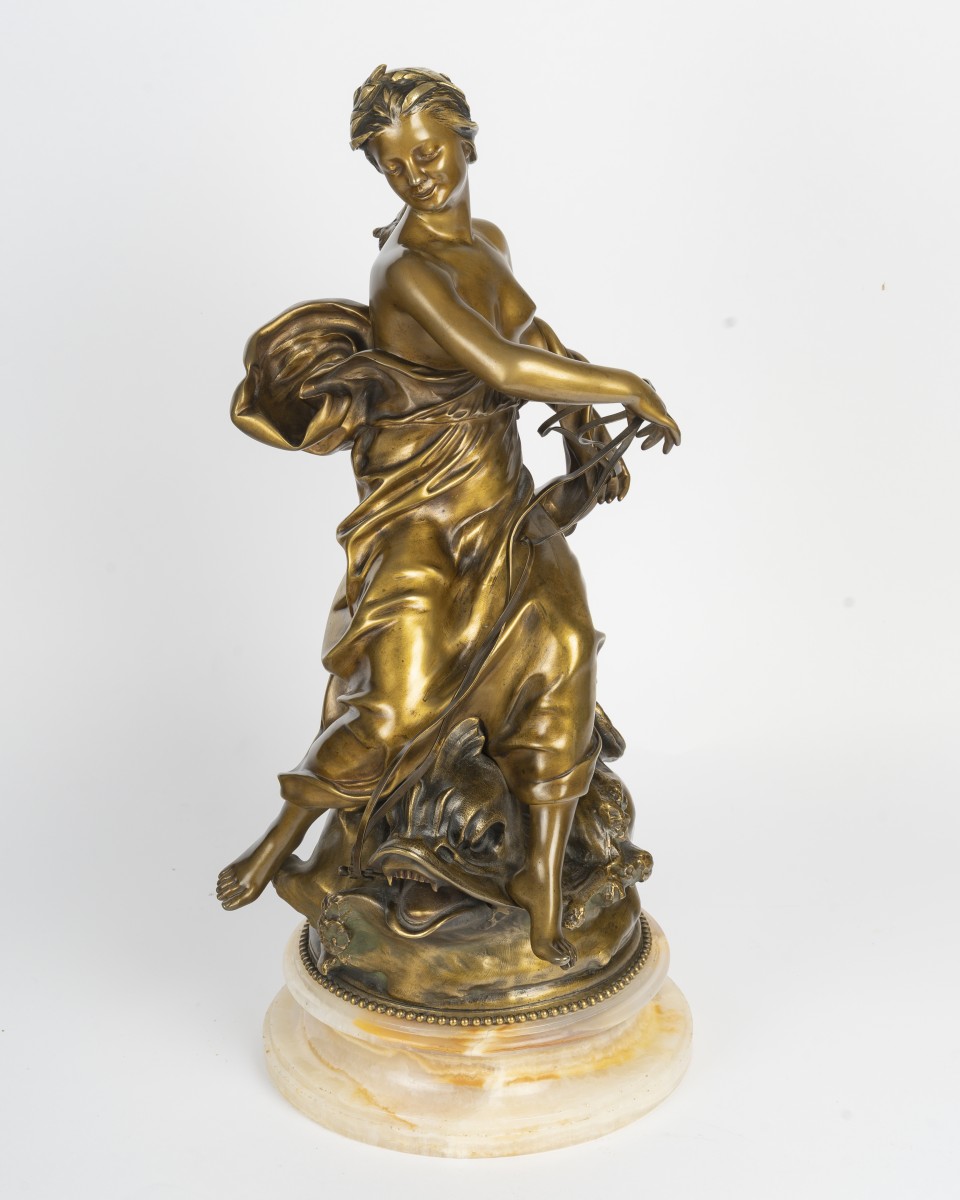
Gilt bronze sculpture by Raoul Larche depicting a nereid guiding a dolphin, a composition full of movement and refinement. Larche, a great sculptor of the late 19th and early 20th centuries, offers here a mythological scene animated by great fluidity. The nereid is depicted in a whirling gesture, her torso slightly rotated, the drapery flowing around her as if carried by the sea breeze. Her delicate and dreamy face, very characteristic of the artist, brings a poetic softness to the whole.
The dolphin emerges from the stylized waves in an energetic surge, contrasting with the feminine grace and reinforcing the effect of upward movement. The curved lines, spiraling dynamics, and exquisite chiseling recall the influence of Art Nouveau in Larche's work, without ever sacrificing anatomical precision or expressive vivacity.
The gilding of the bronze beautifully captures the light, making the reliefs of the drapery and waves shimmer. The sculpture rests on an elegant onyx base, which enhances the whole and underscores its decorative character.
This piece is a superb example of Raoul Larche's talent, combining technical virtuosity, mythological poetry, and a striking decorative presence. An ideal work for lovers of Belle Époque sculpture, sought after for its refinement and visual power.
Biography Raoul Larche (1860-1912)
French sculptor of the late 19th and early 20th centuries, known for his elegant, expressive style akin to Art Nouveau. Born in Saint-André-de-Cubzac in 1860, he showed an early talent for sculpture and entered the École des Beaux-Arts in Paris, where he studied under renowned masters such as François Jouffroy and Alexandre Falguière. He regularly exhibited at the Salon des Artistes Français, where he received several awards that helped establish his reputation. Larche was particularly interested in the female figure, which he depicted with a sense of movement, grace, and fluidity that became his signature. Although he did not officially belong to the Art Nouveau movement, his curved lines, light draperies, and dynamic compositions strongly resemble it. He also created furniture, decorative objects, and limited-edition bronzes for a refined clientele of the Belle Époque. Among his most famous works are his interpretations of Loïe Fuller, the celebrated American dancer, whose light and movement he captured in bronzes that have become iconic. His work also includes numerous mythological, allegorical, and symbolist figures, in which he blends anatomical realism with poetic imagination. Raoul Larche died prematurely in 1912 at the age of 52, leaving behind a body of work remarkable for its virtuosity and sense of movement. Today, his sculptures are sought after for the quality of their chiseling, their decorative power, and their expression of the Belle Époque aesthetic.
Delevery information :
Our pieces are sold with a certificate of authenticity.
We work with specialized art transport companies to arrange deliveries worldwide. Quotes are available on request. Please note that the responsibility for transport during transit rests exclusively with the carrier.