Offered by Sérignan Antiquités
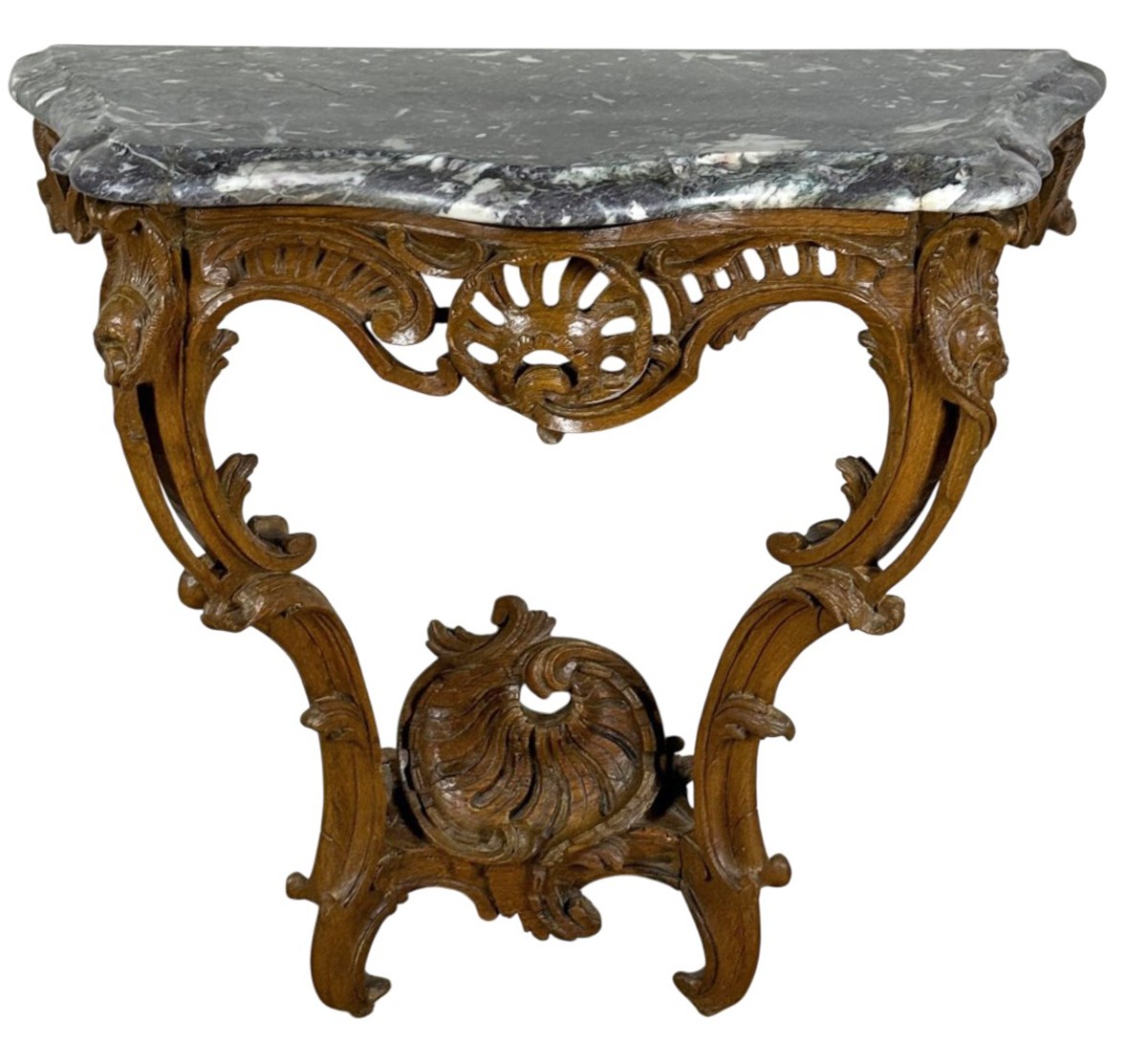
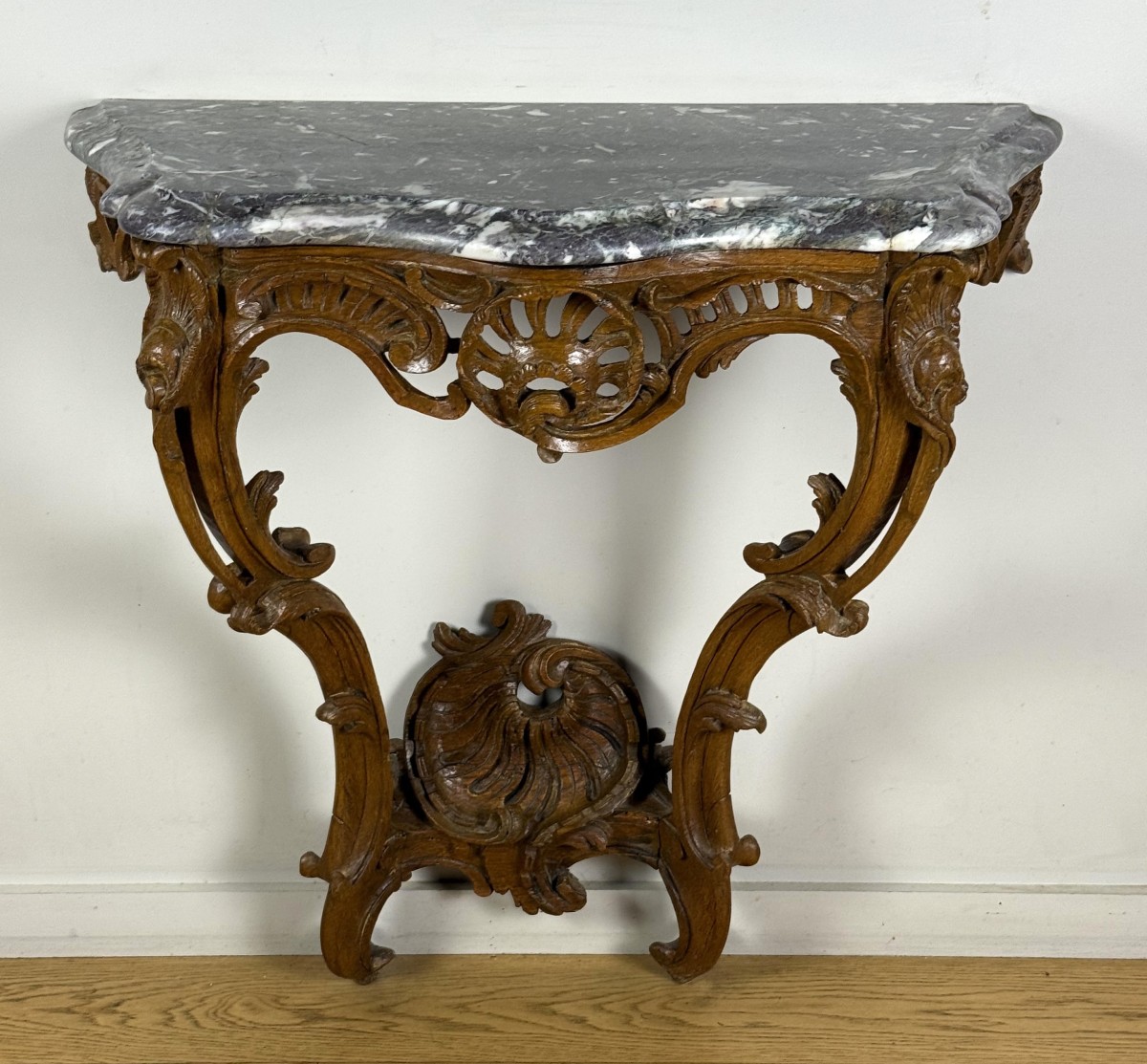
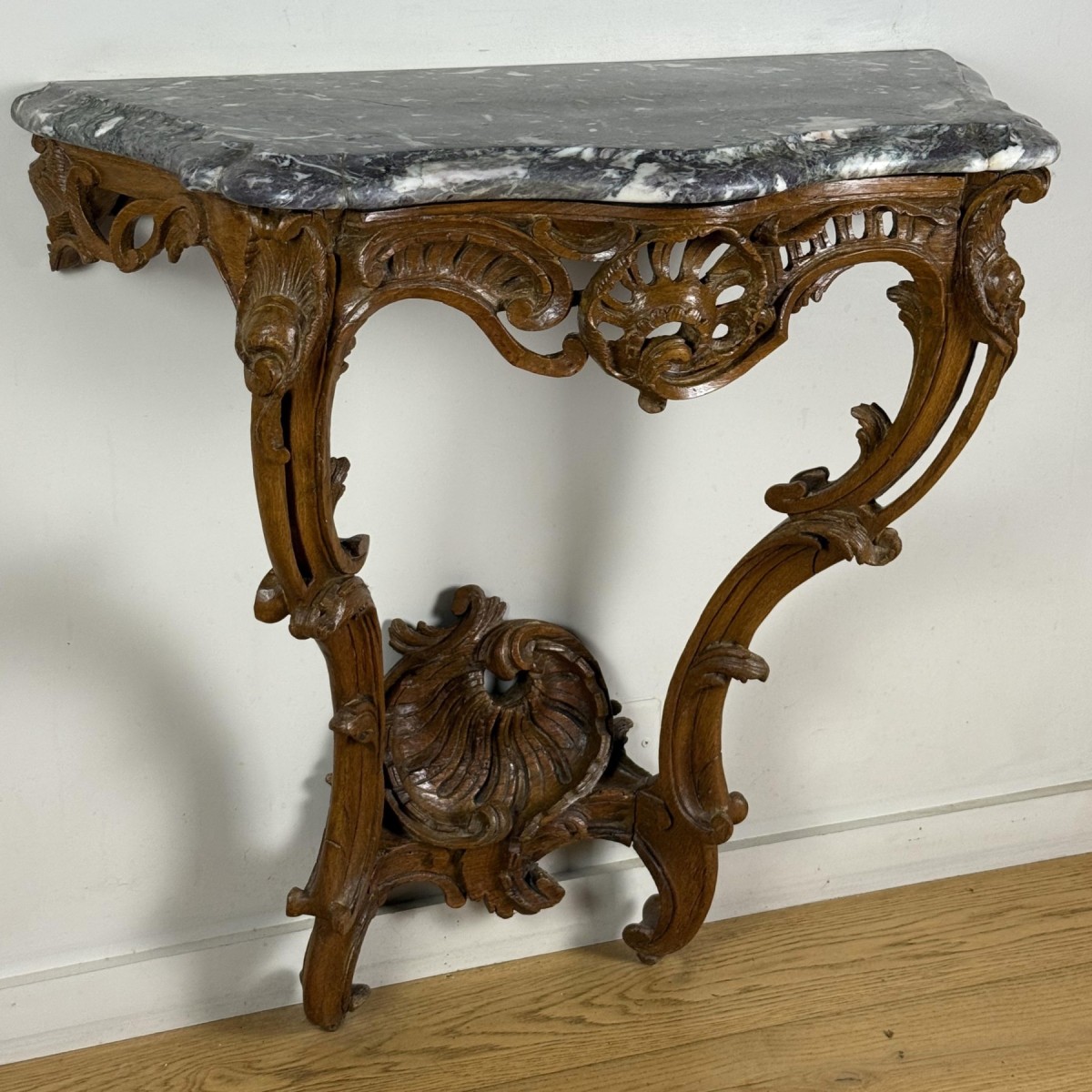
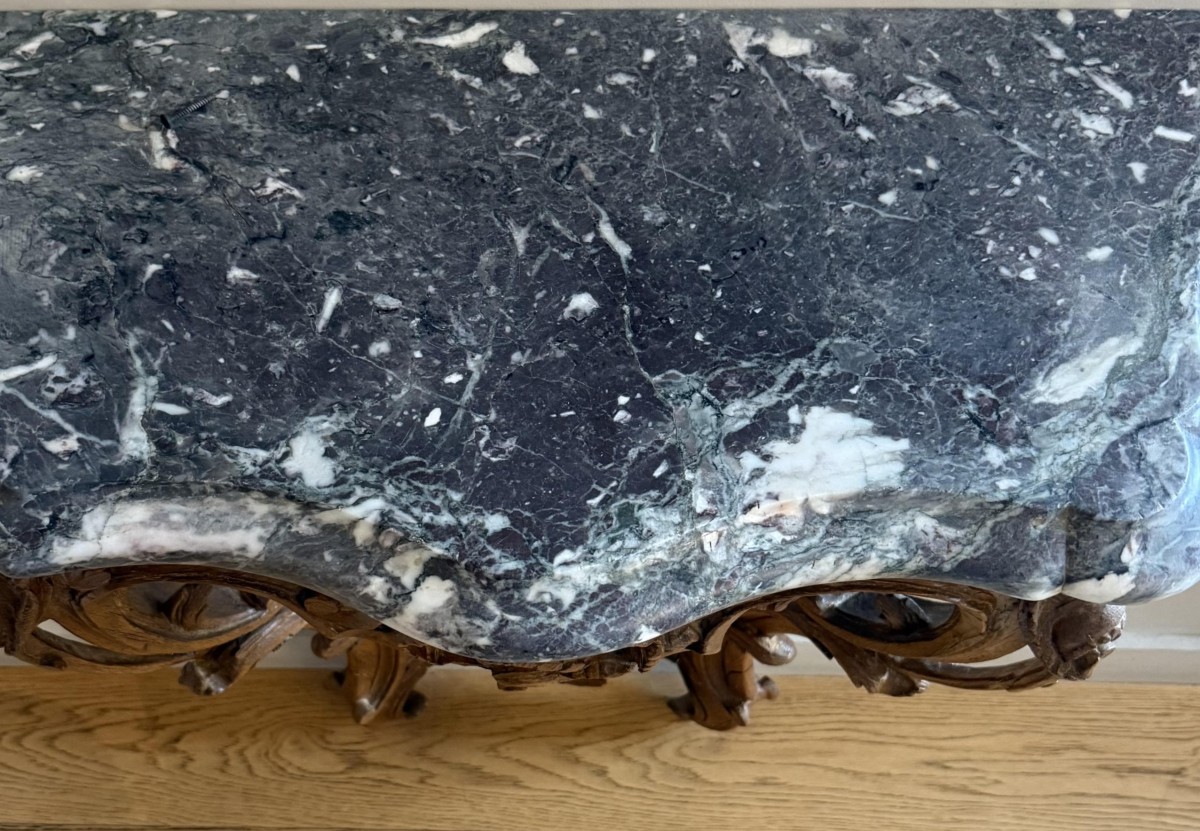
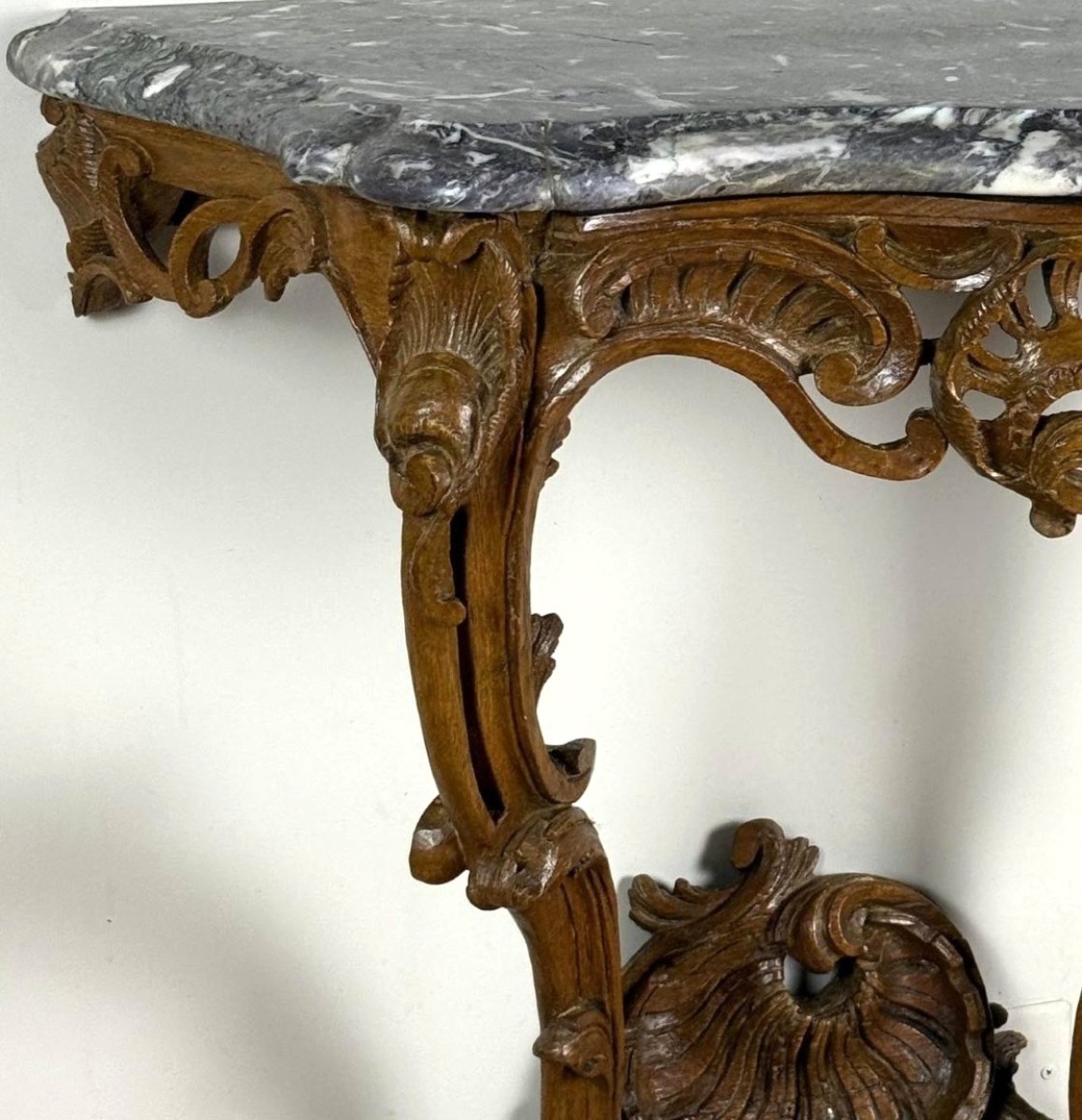

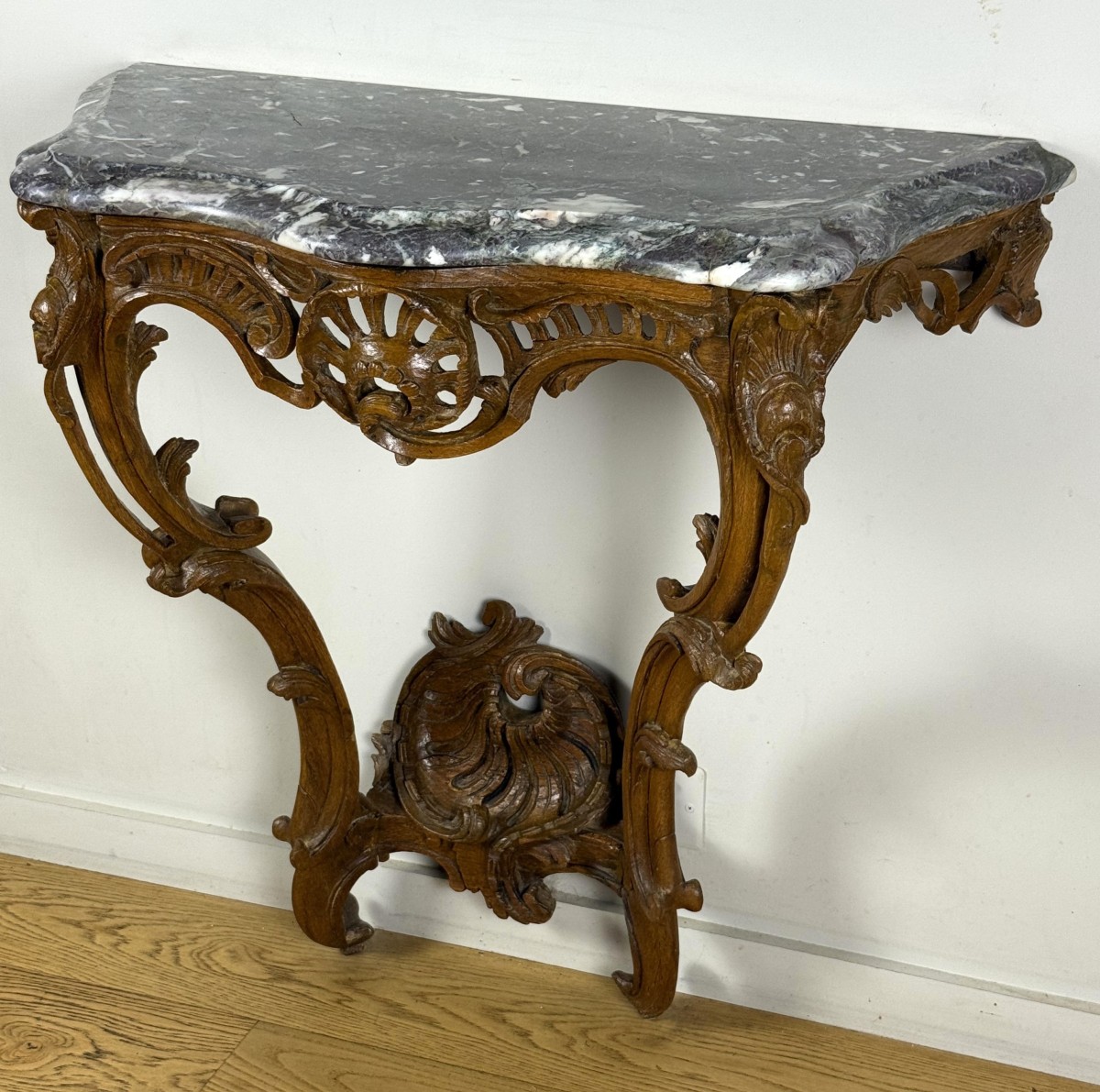
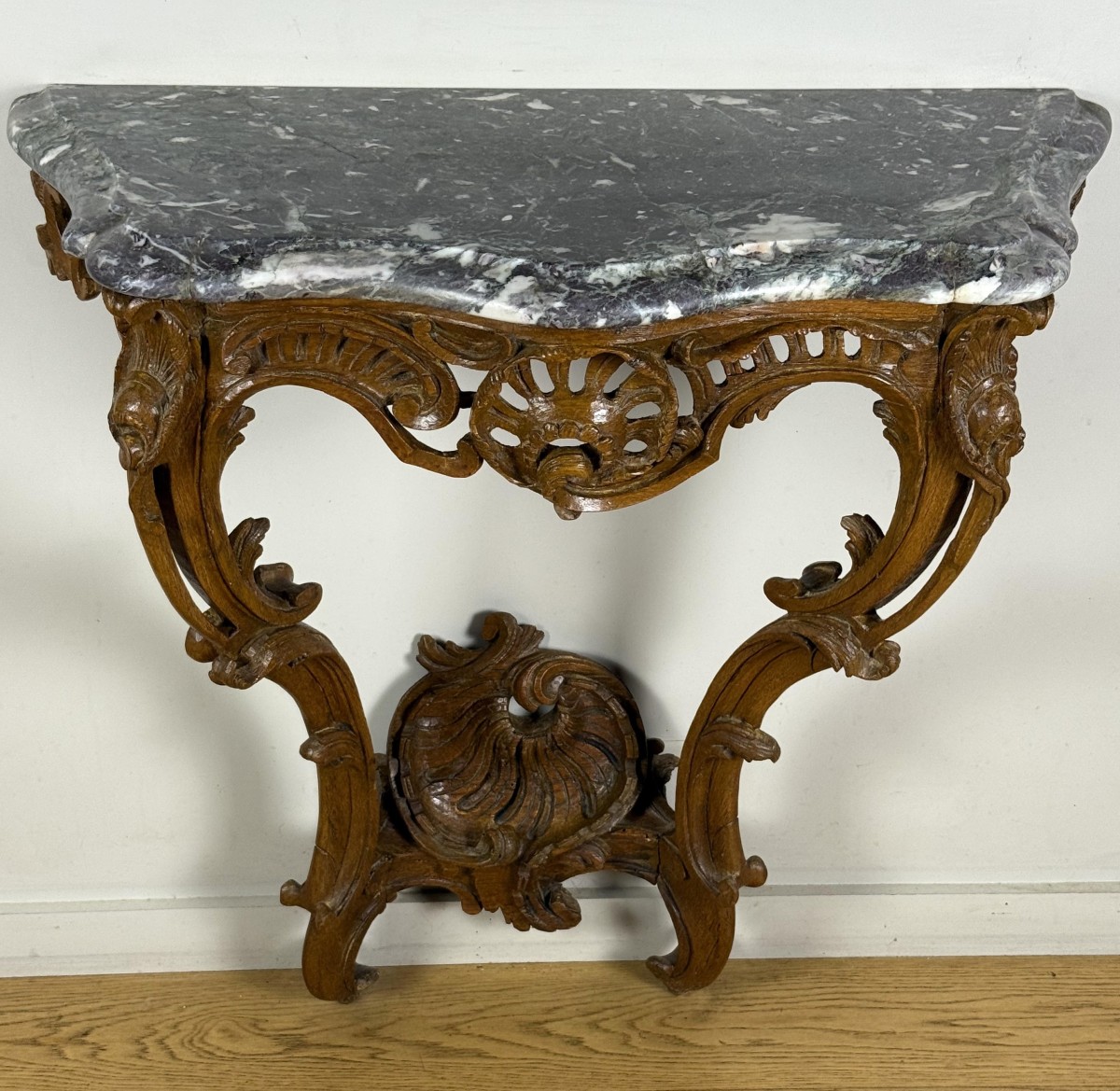
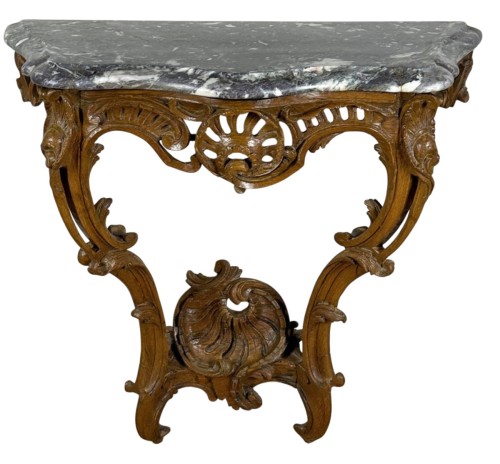
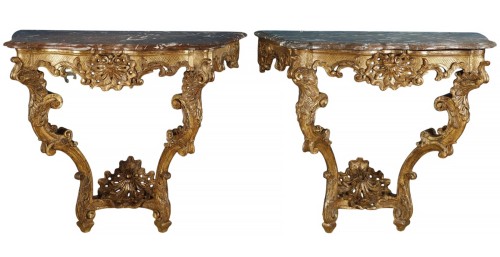
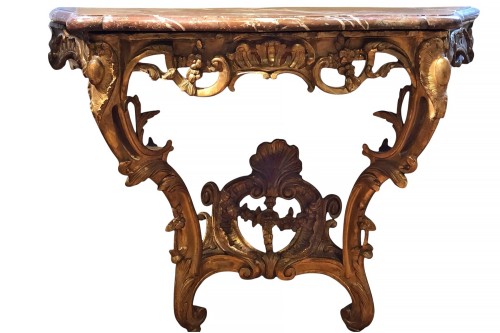
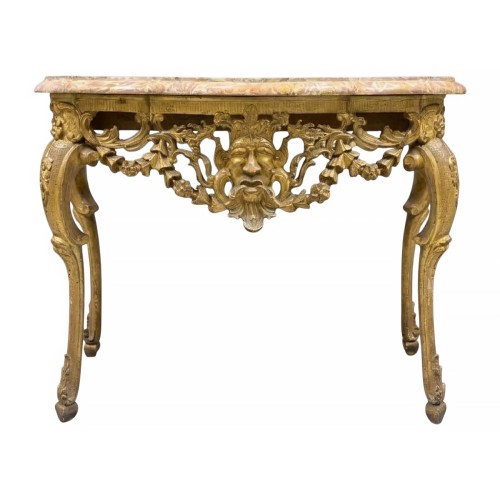
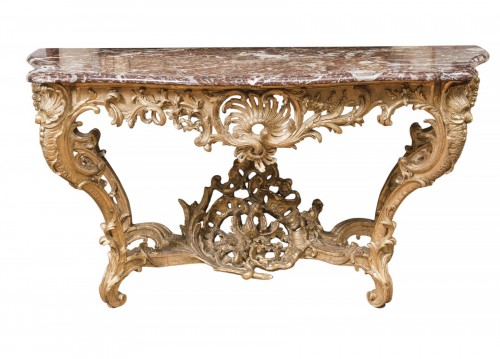
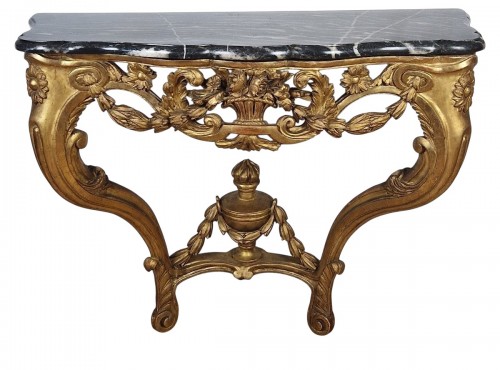
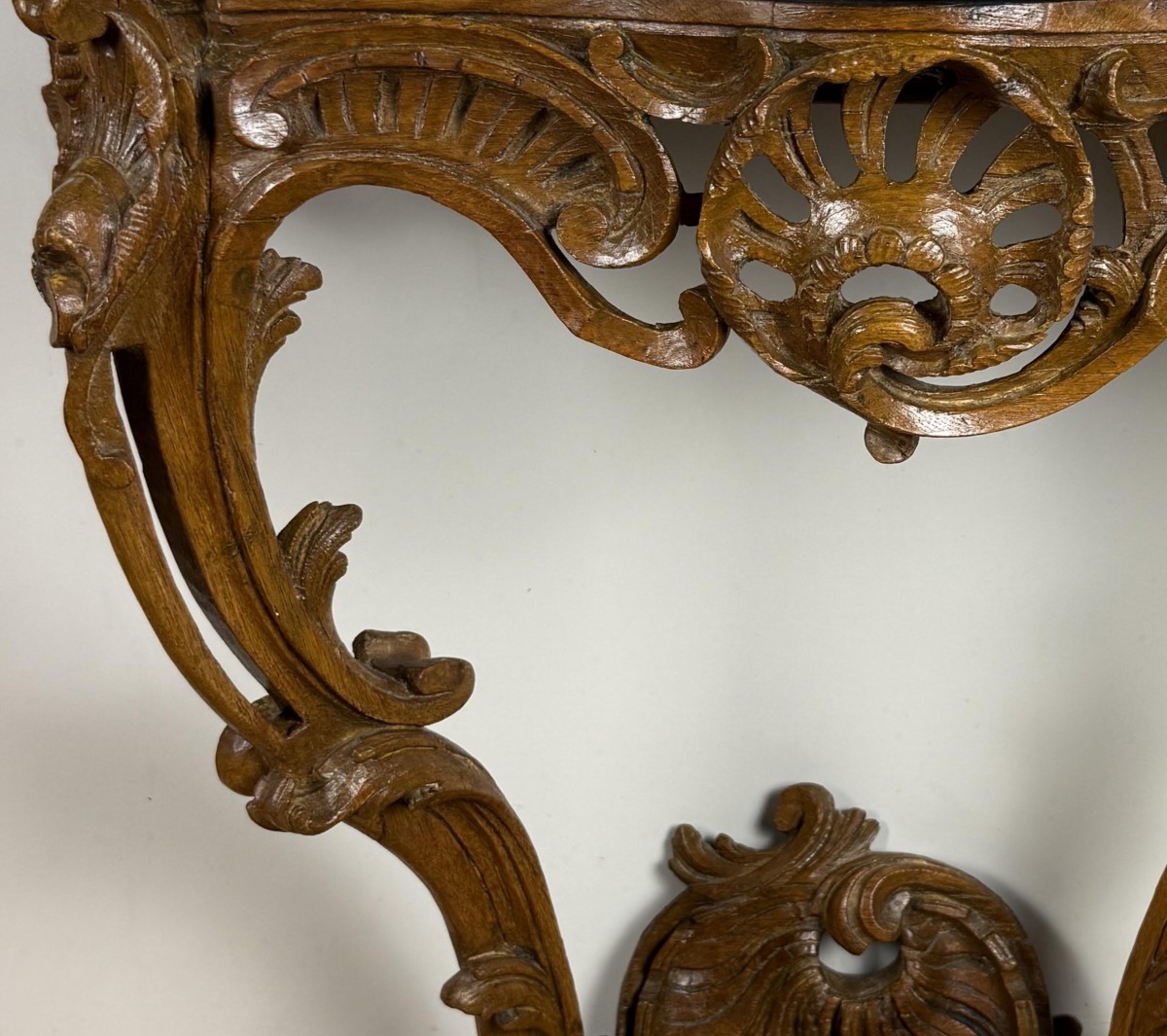
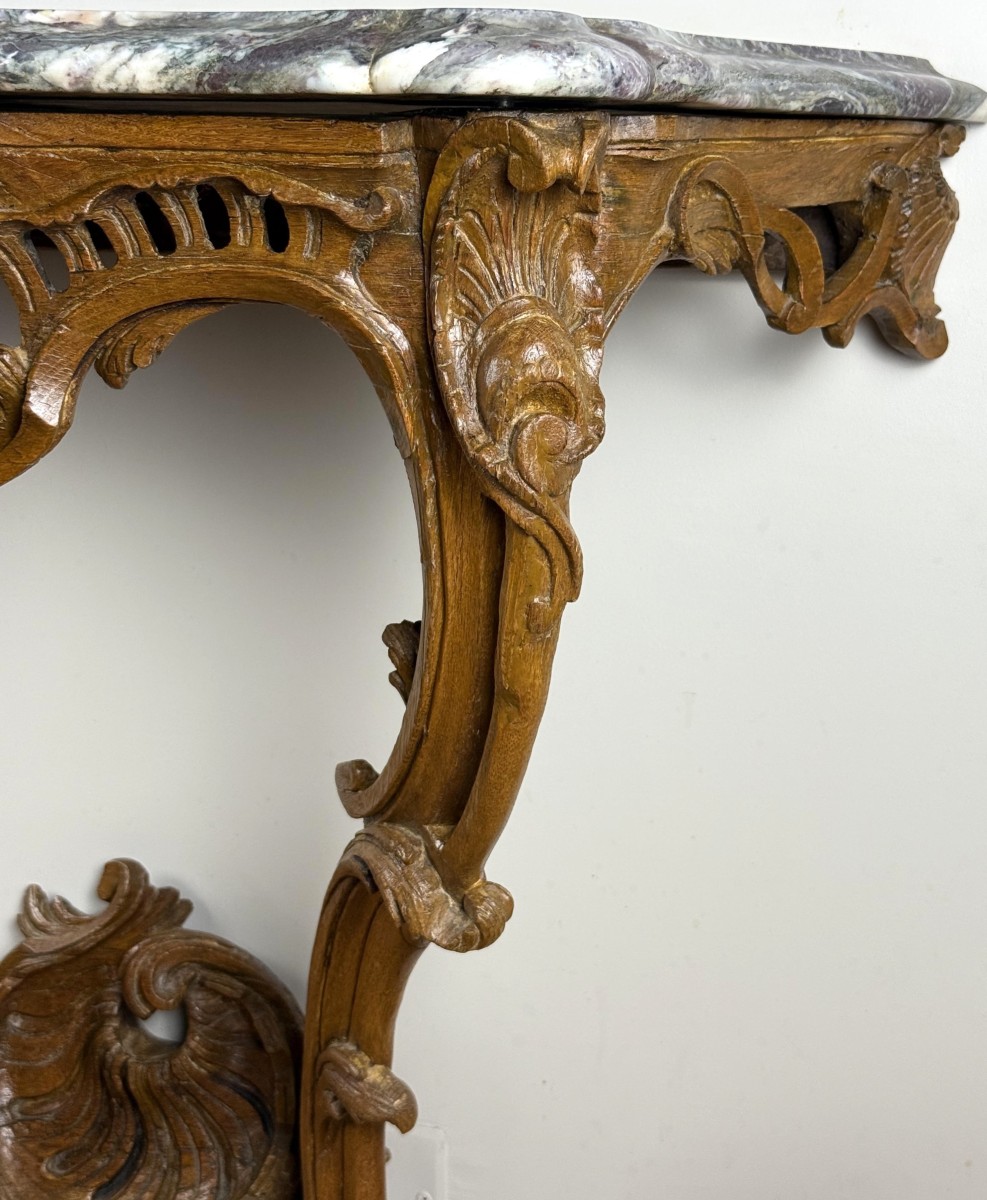
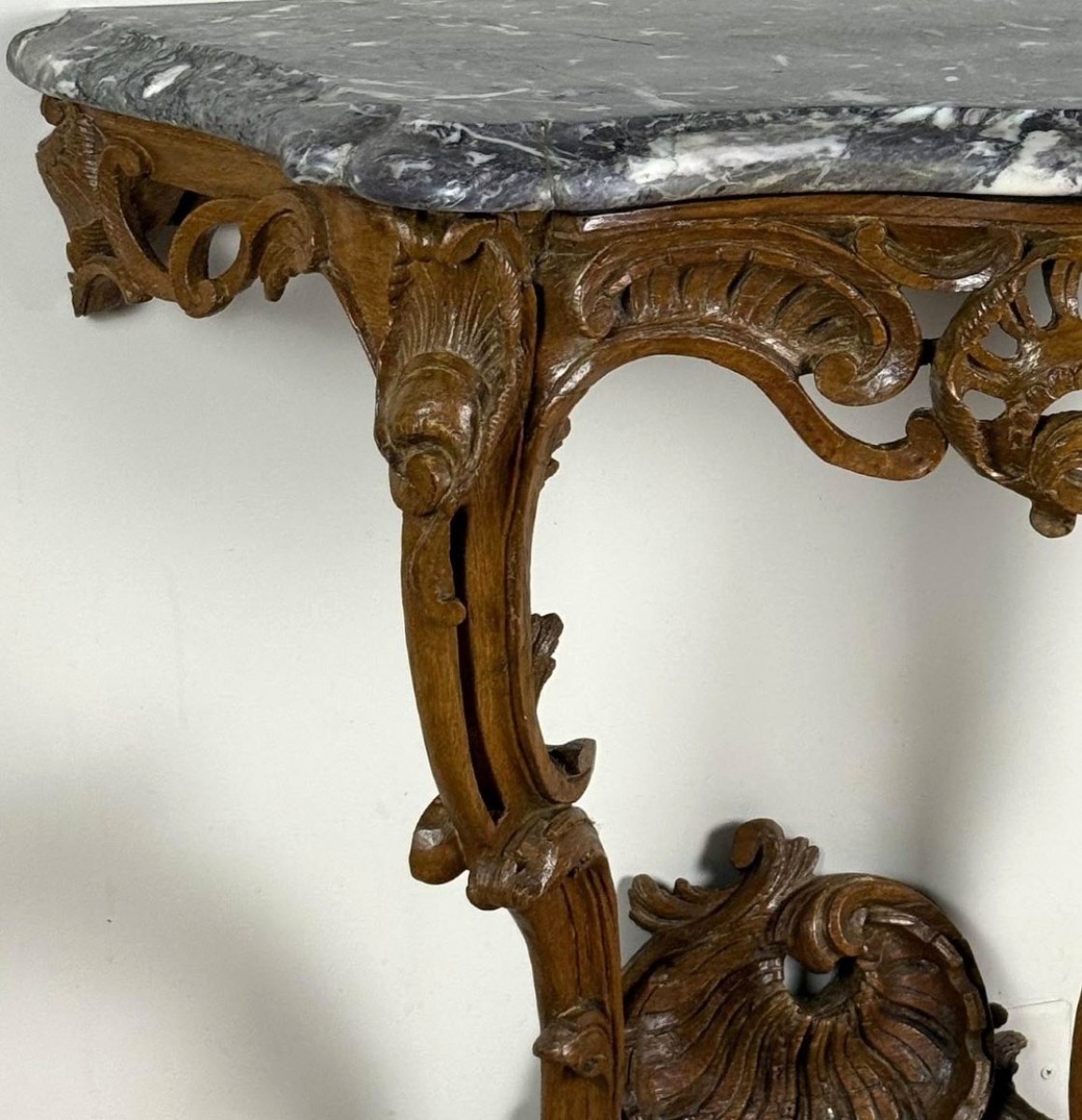
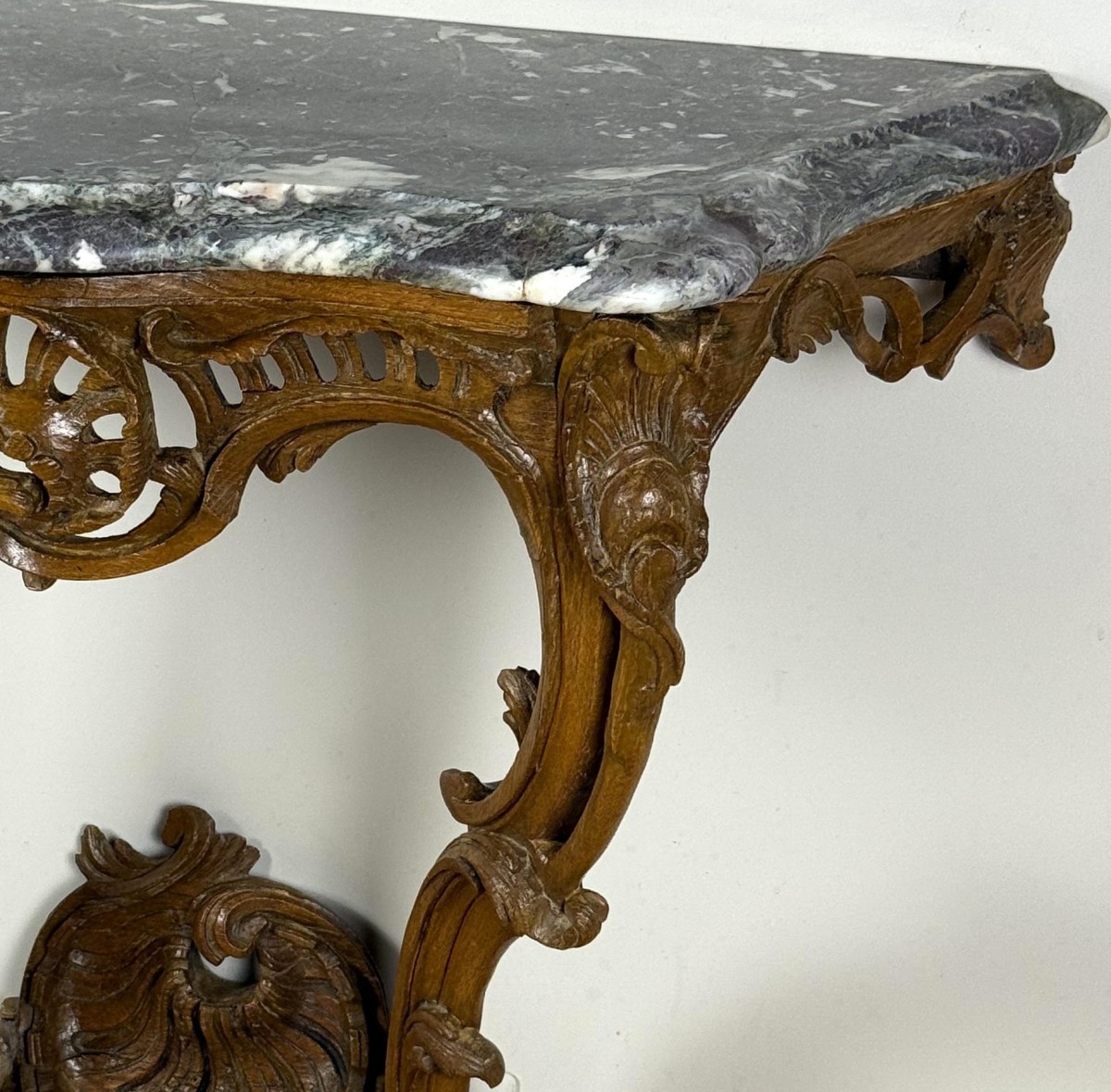
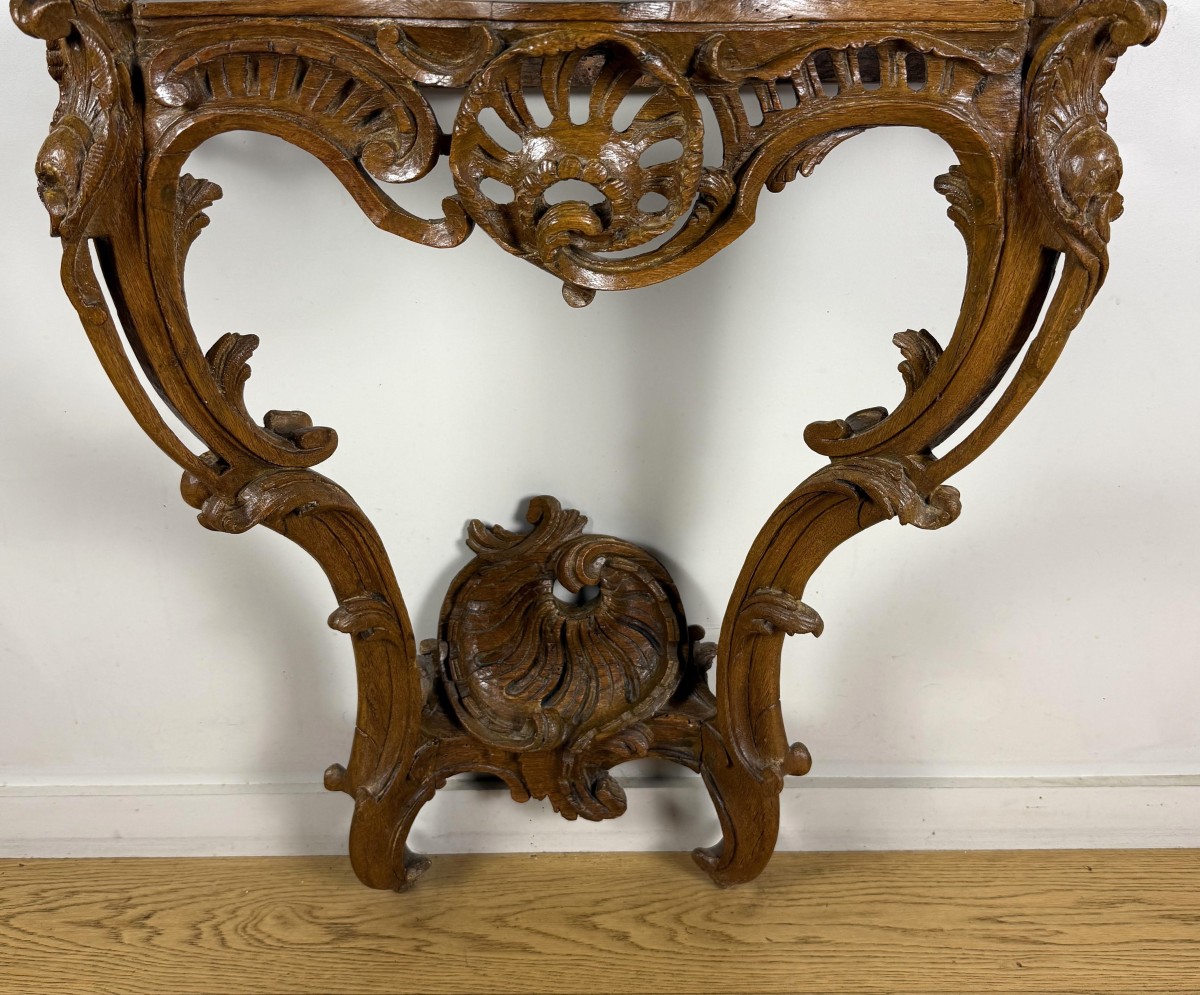
An elegant console table made of carved and molded oak wood with a natural wax finish, topped with a black-gray Sablé marble entablature.
Featuring a curved, multi-lobed shape, this console dates from the so-called “rocaille” period of the Louis XV era, circa 1745–1755.
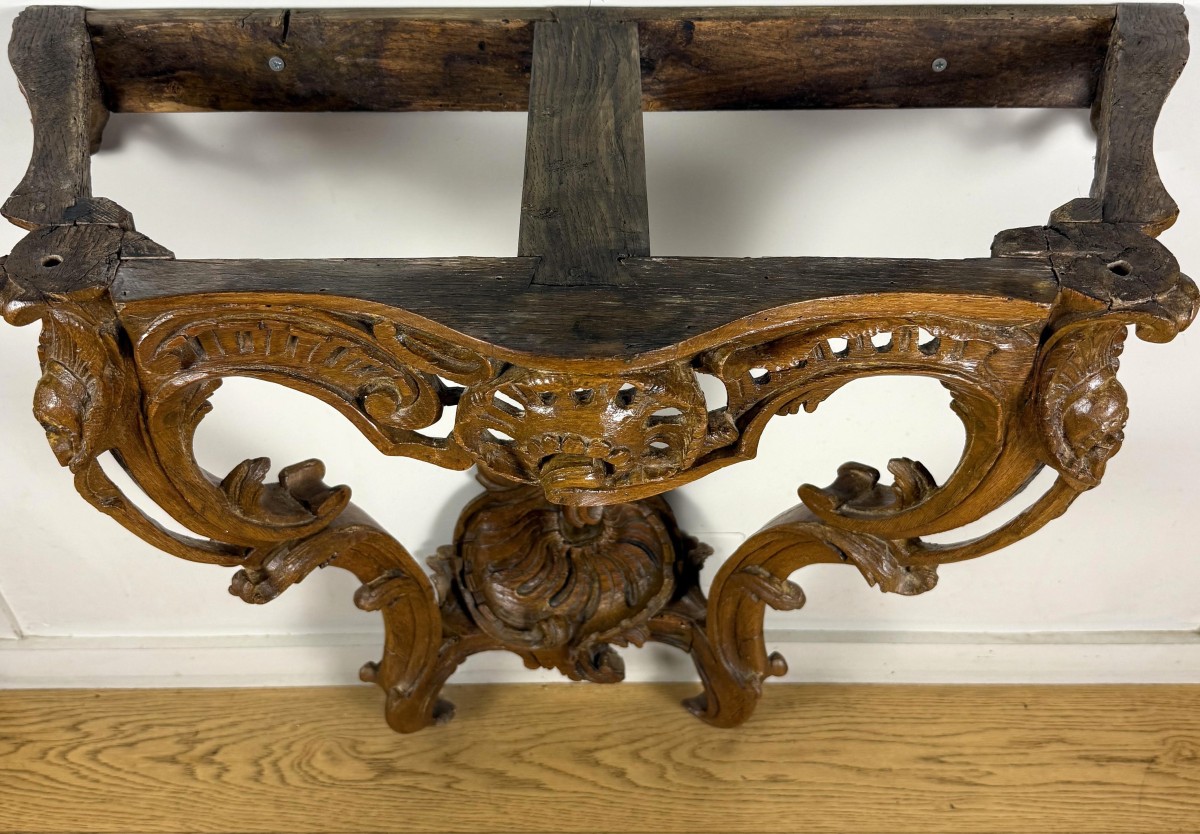
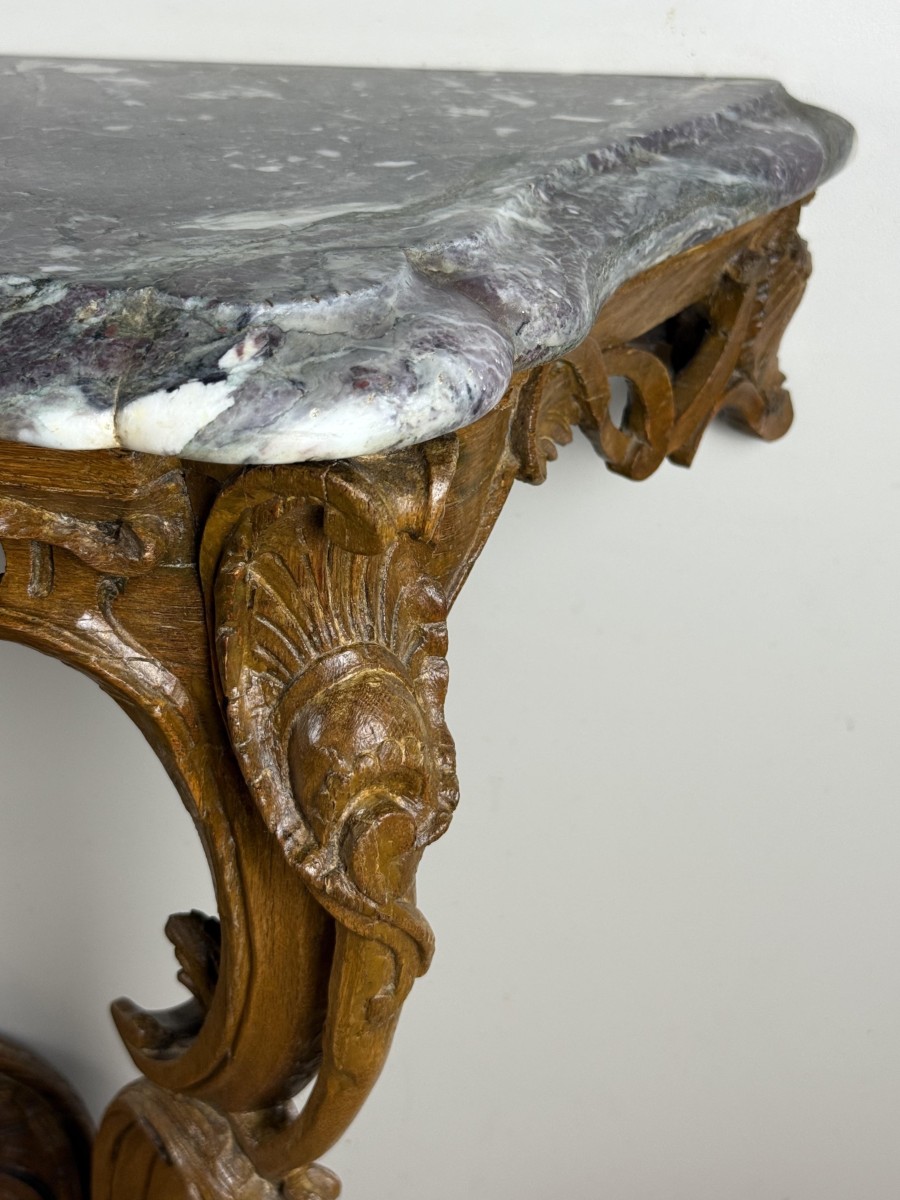
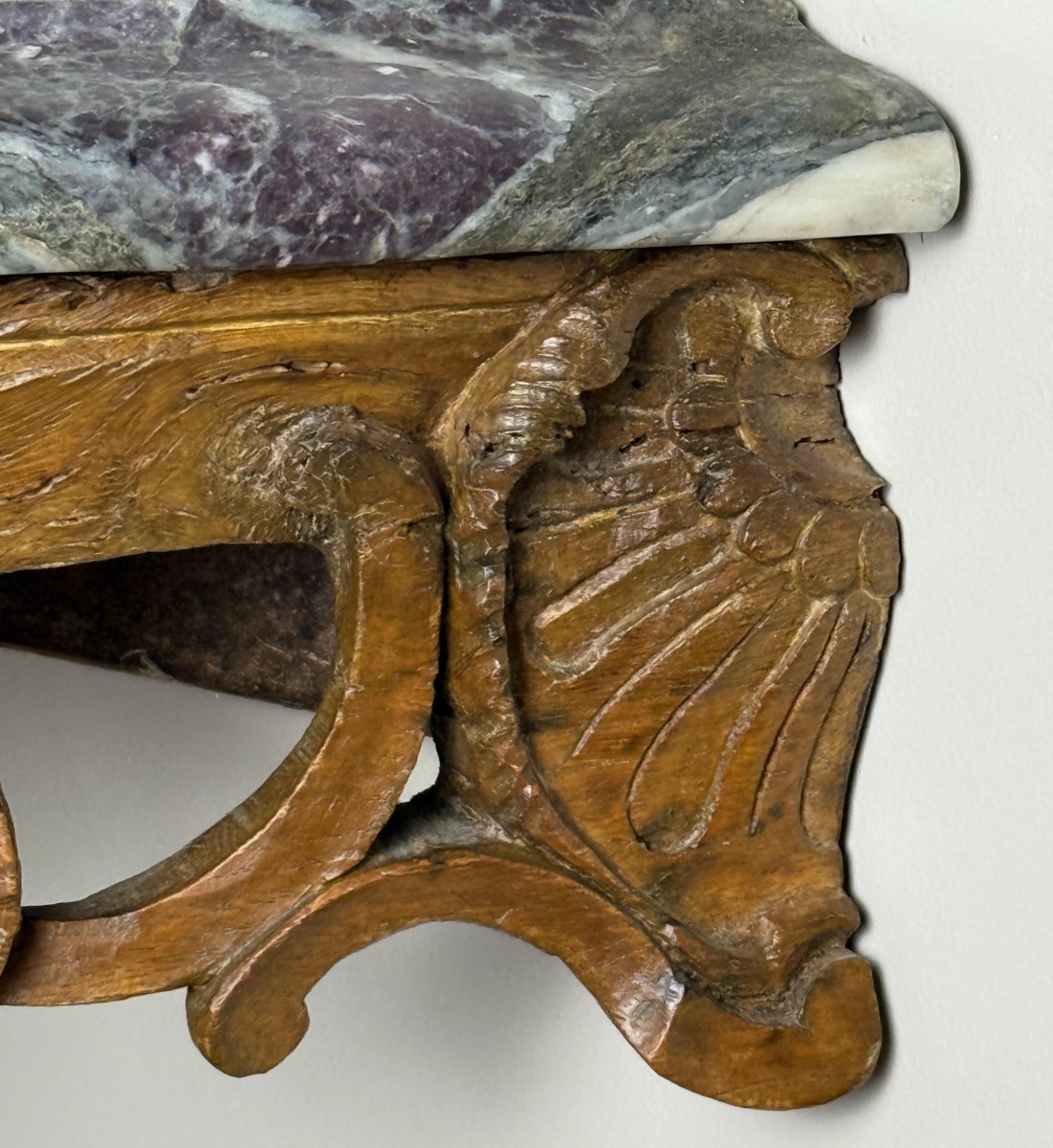
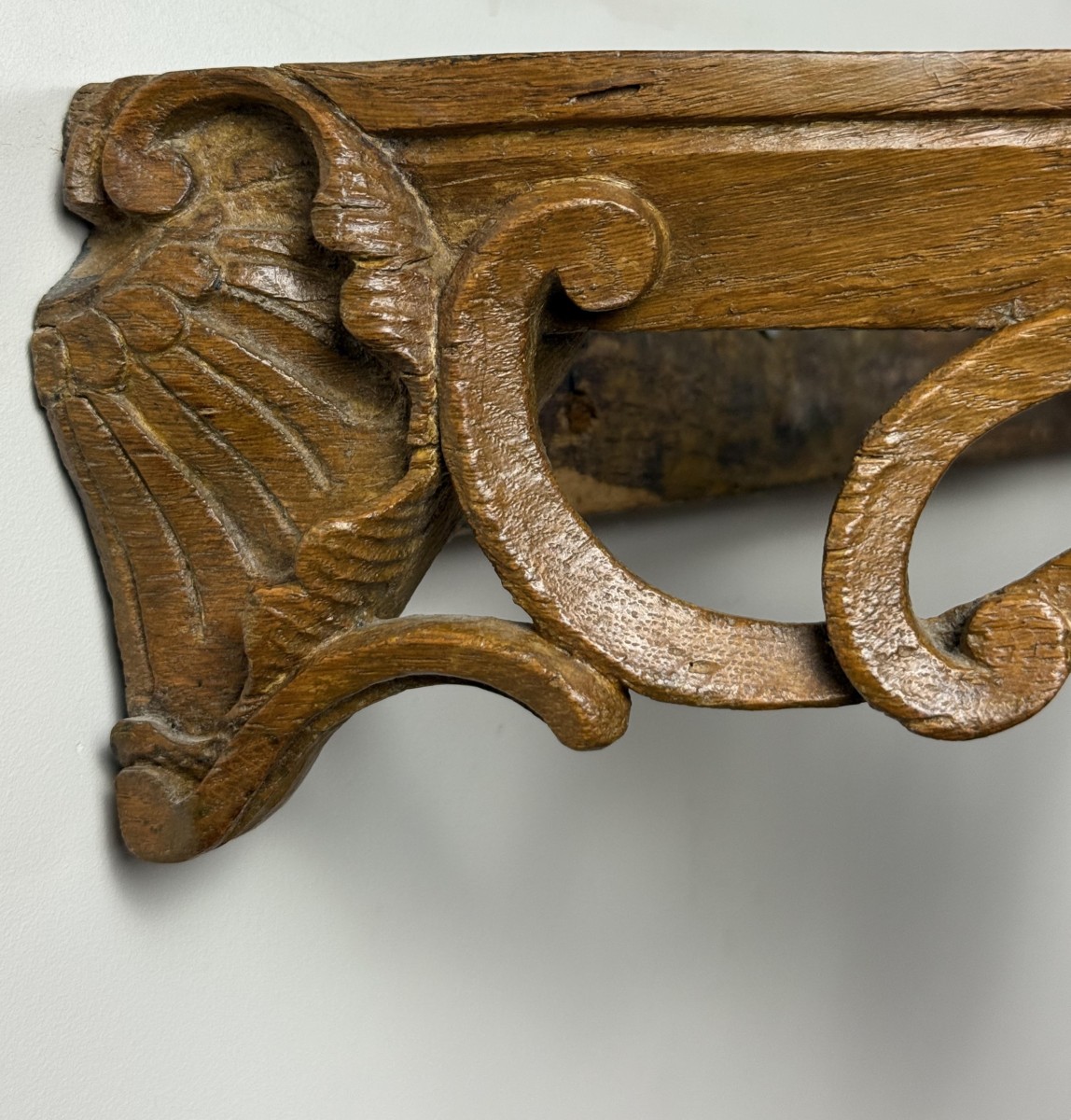
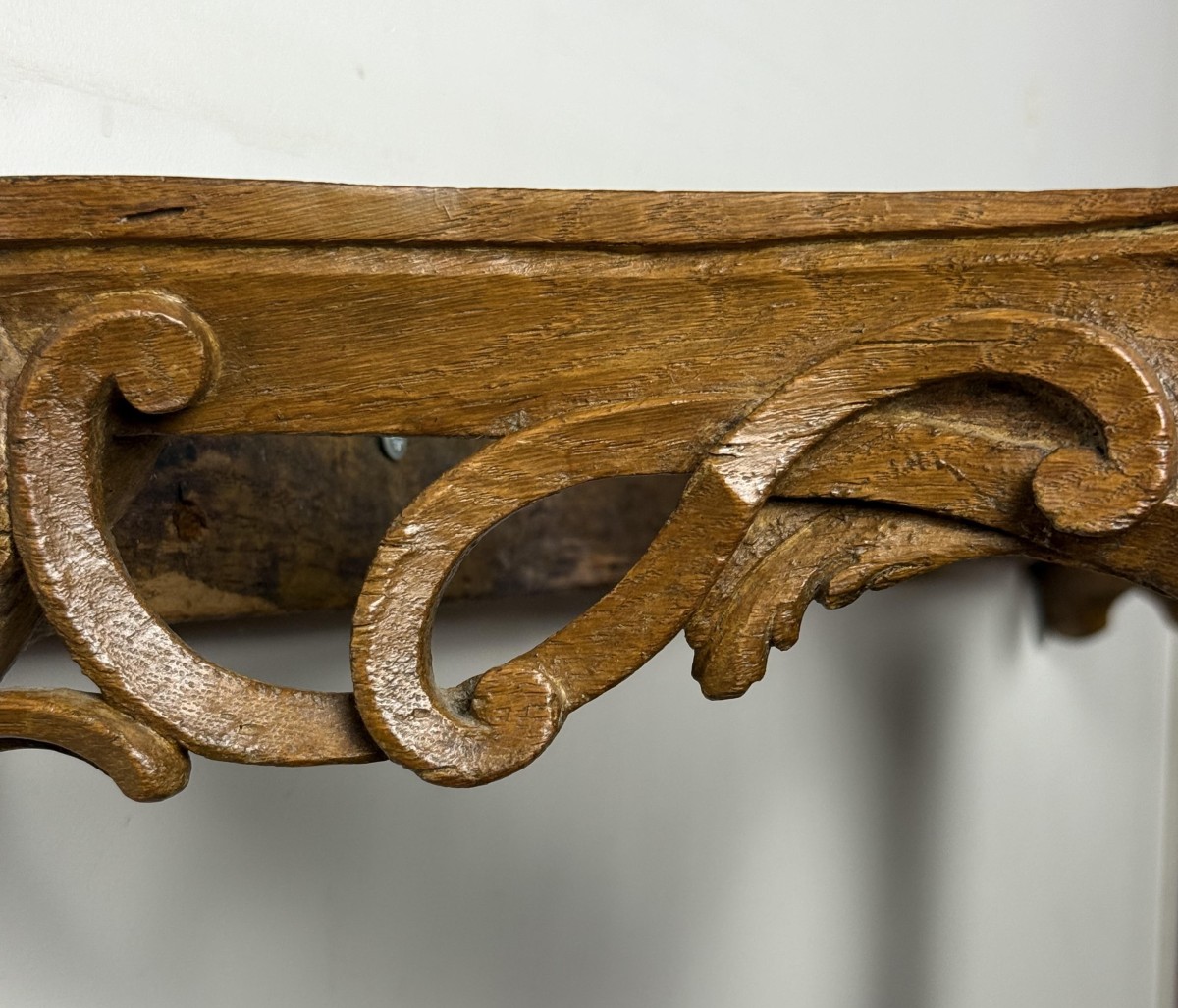
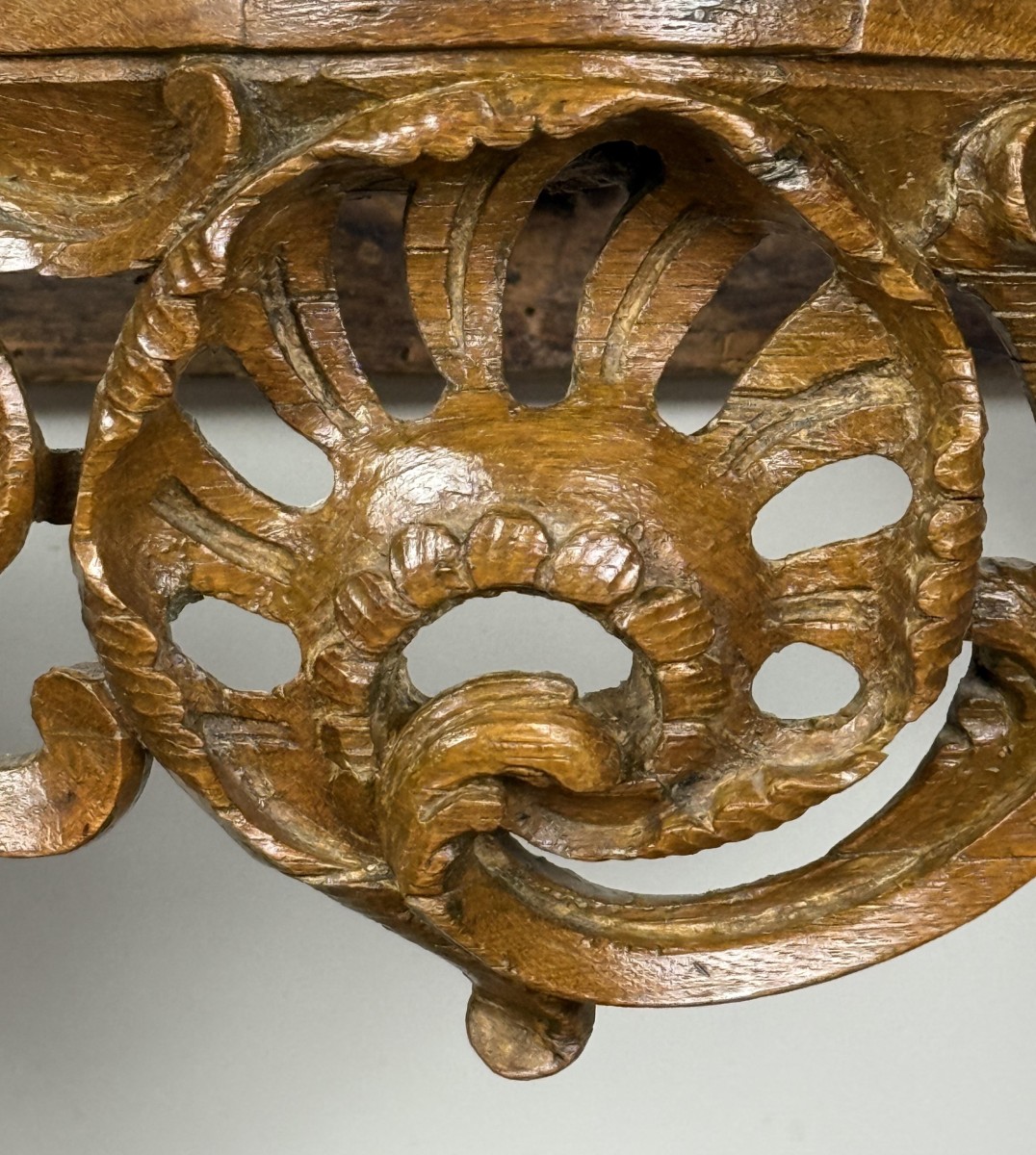
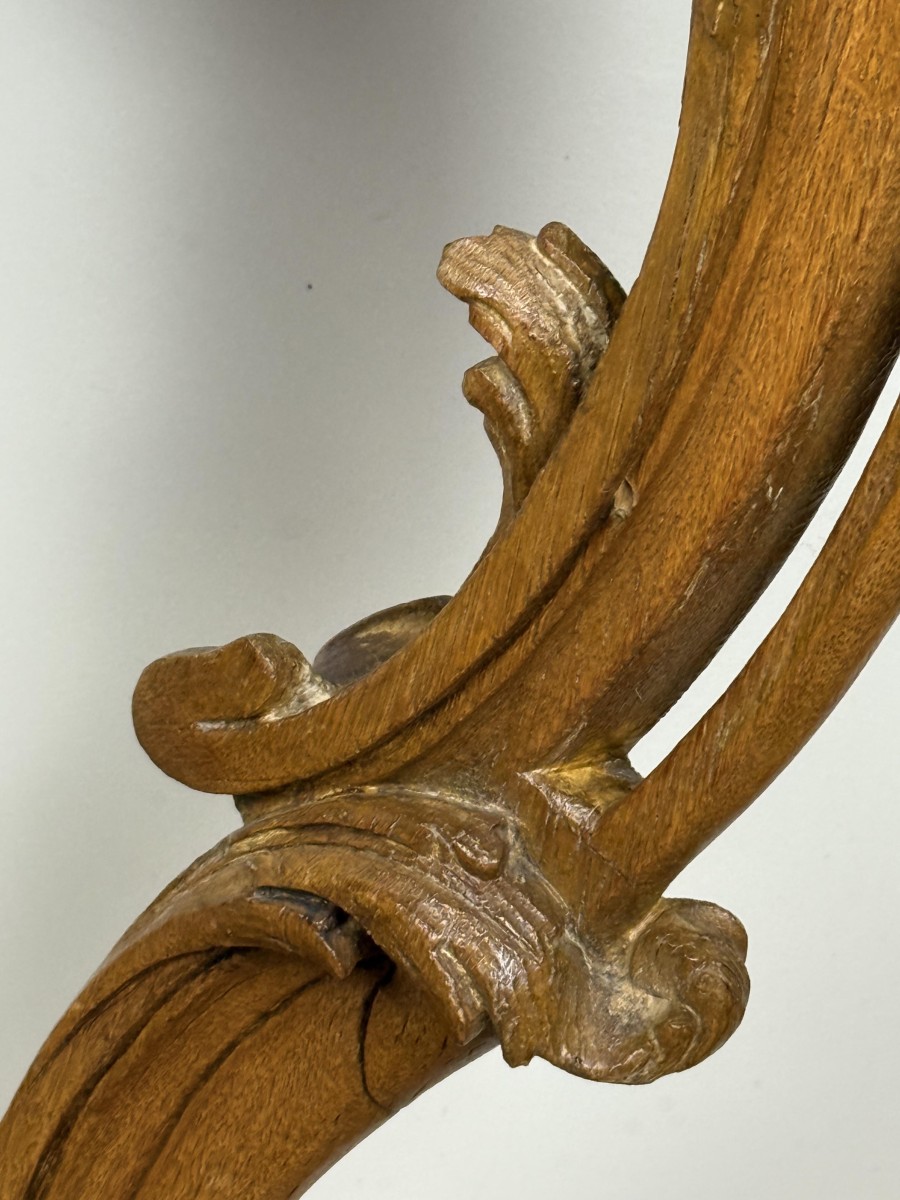
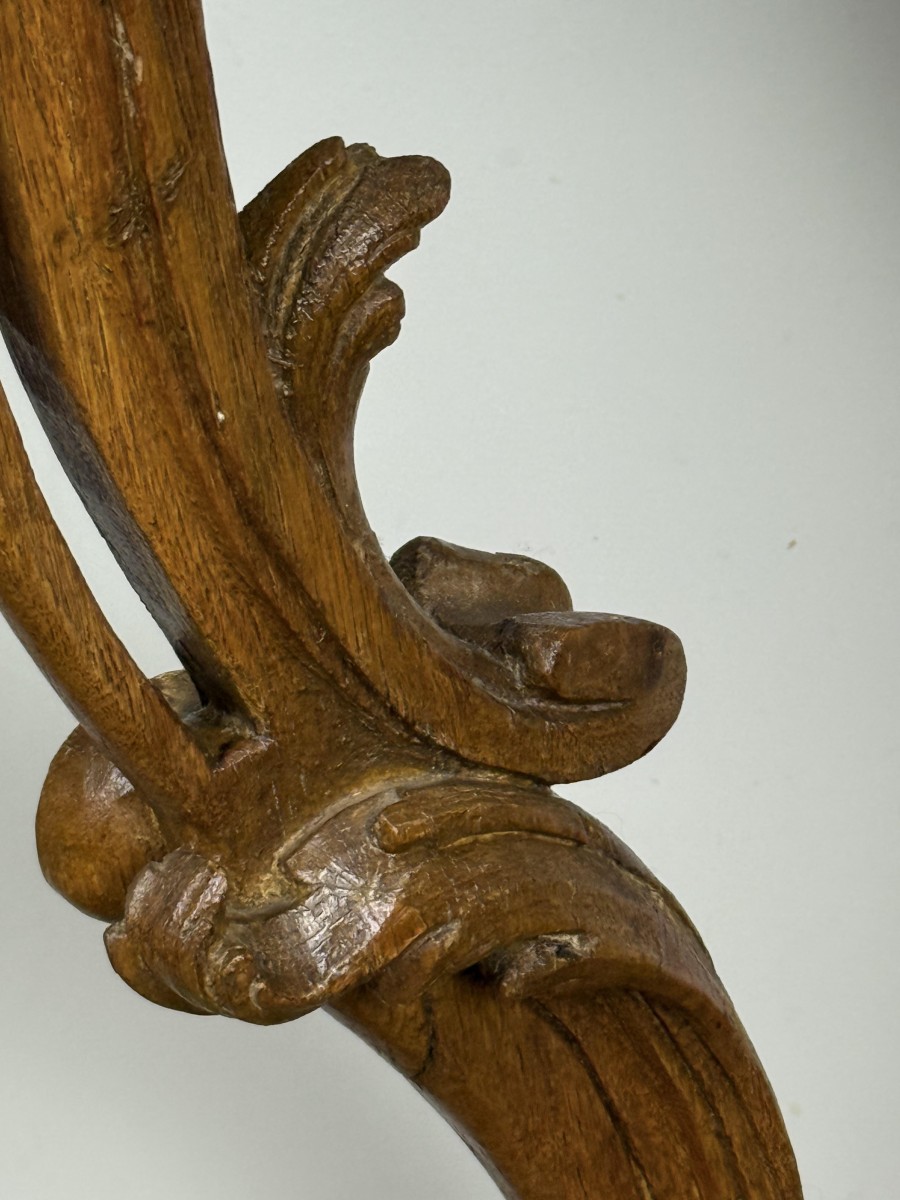
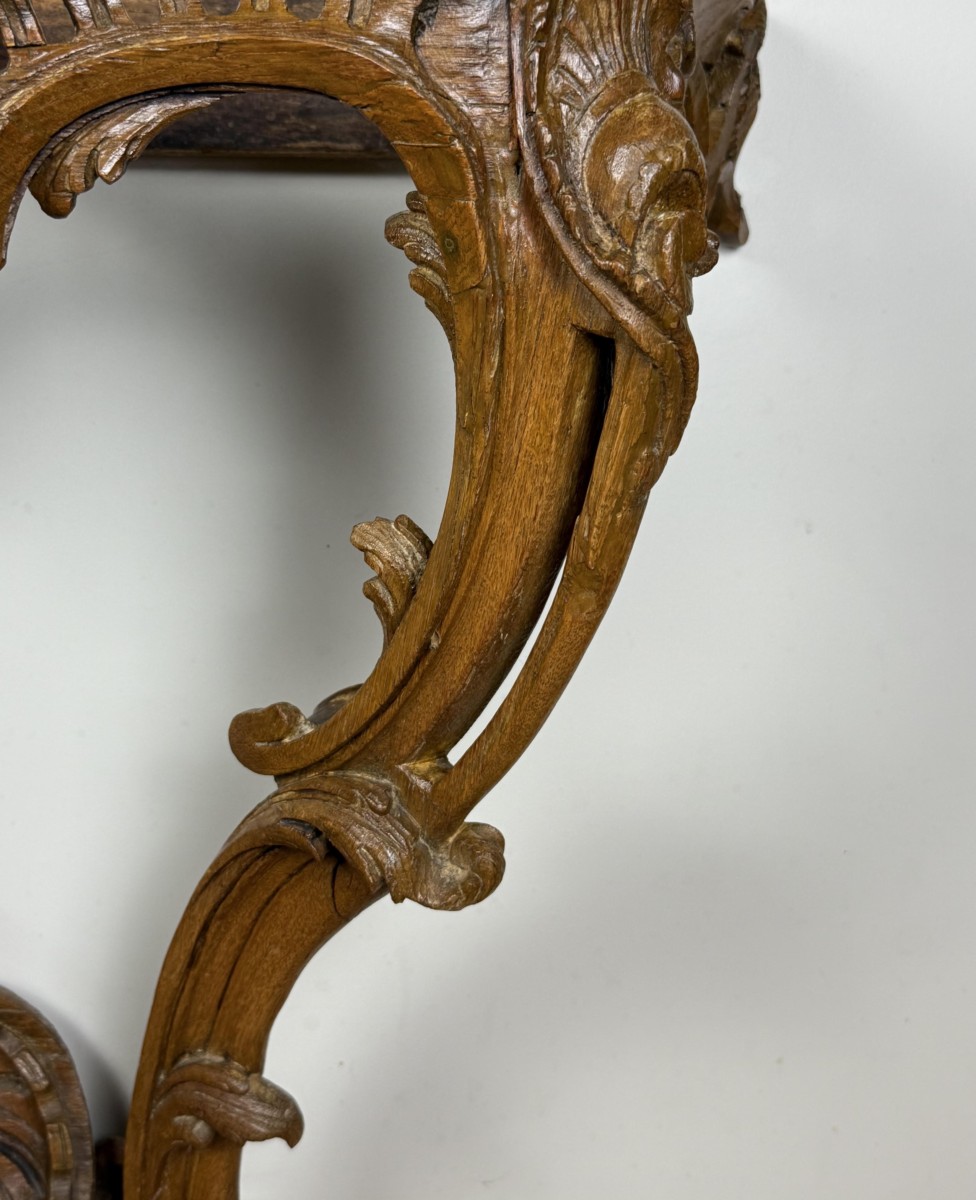
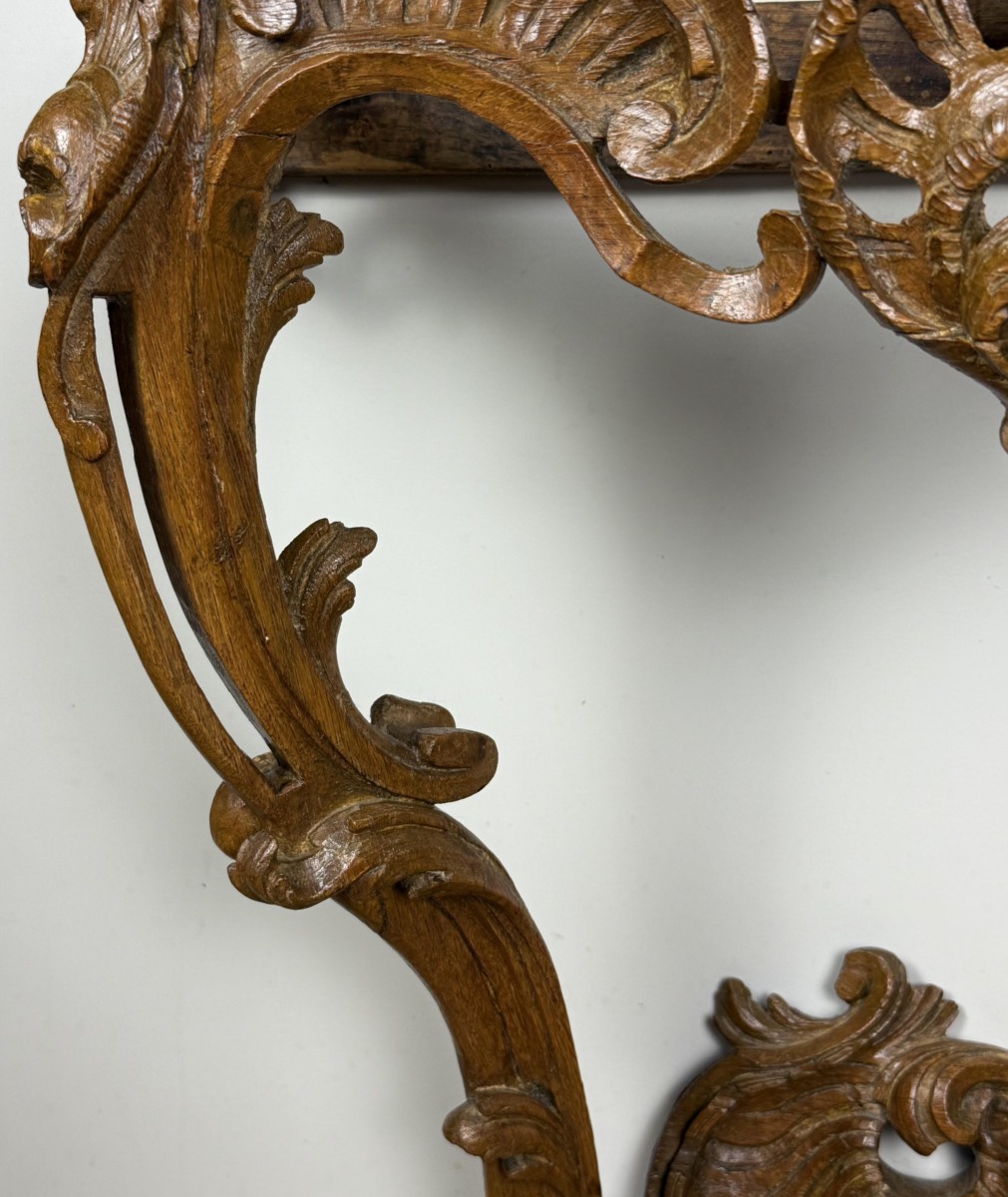
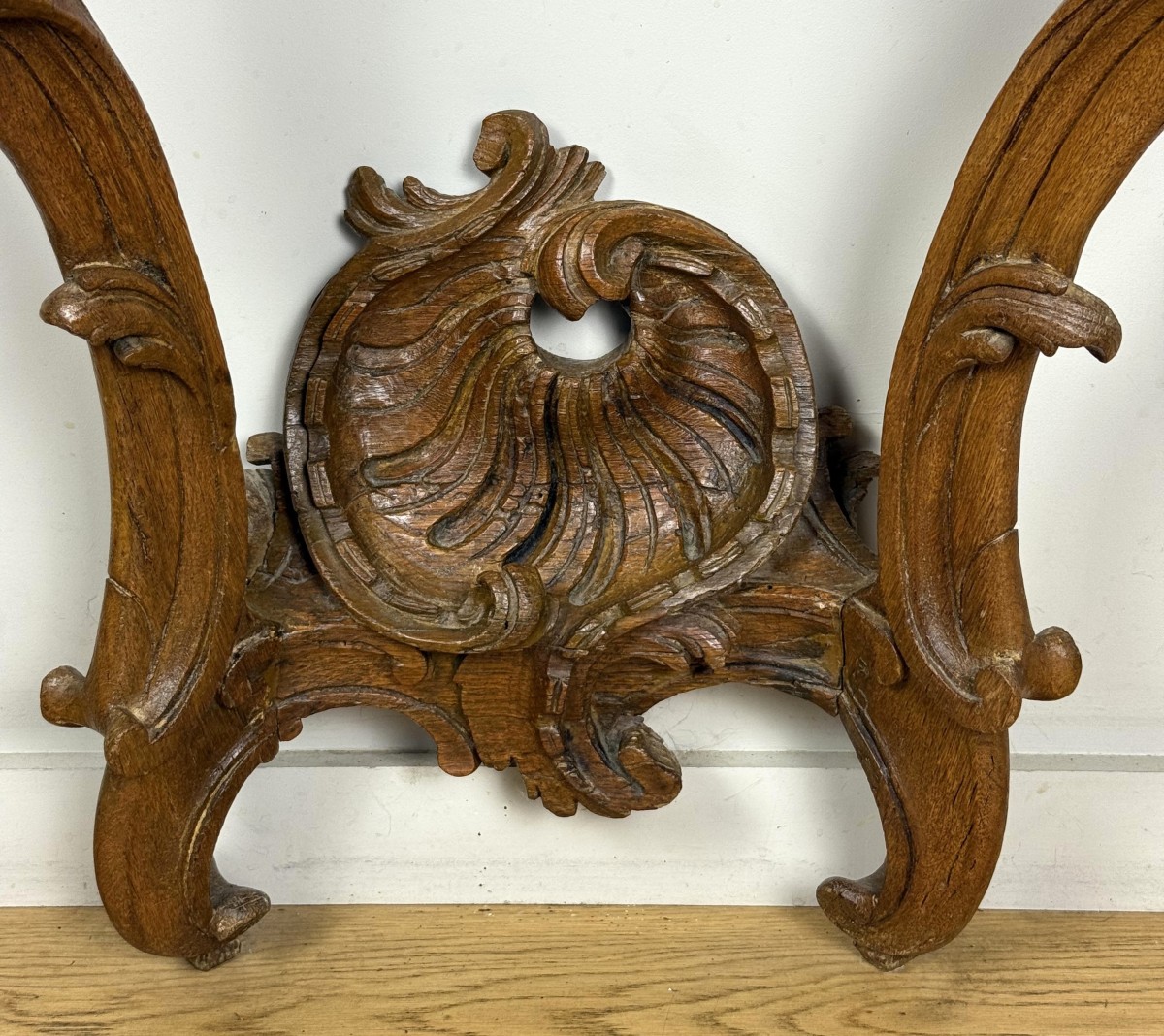
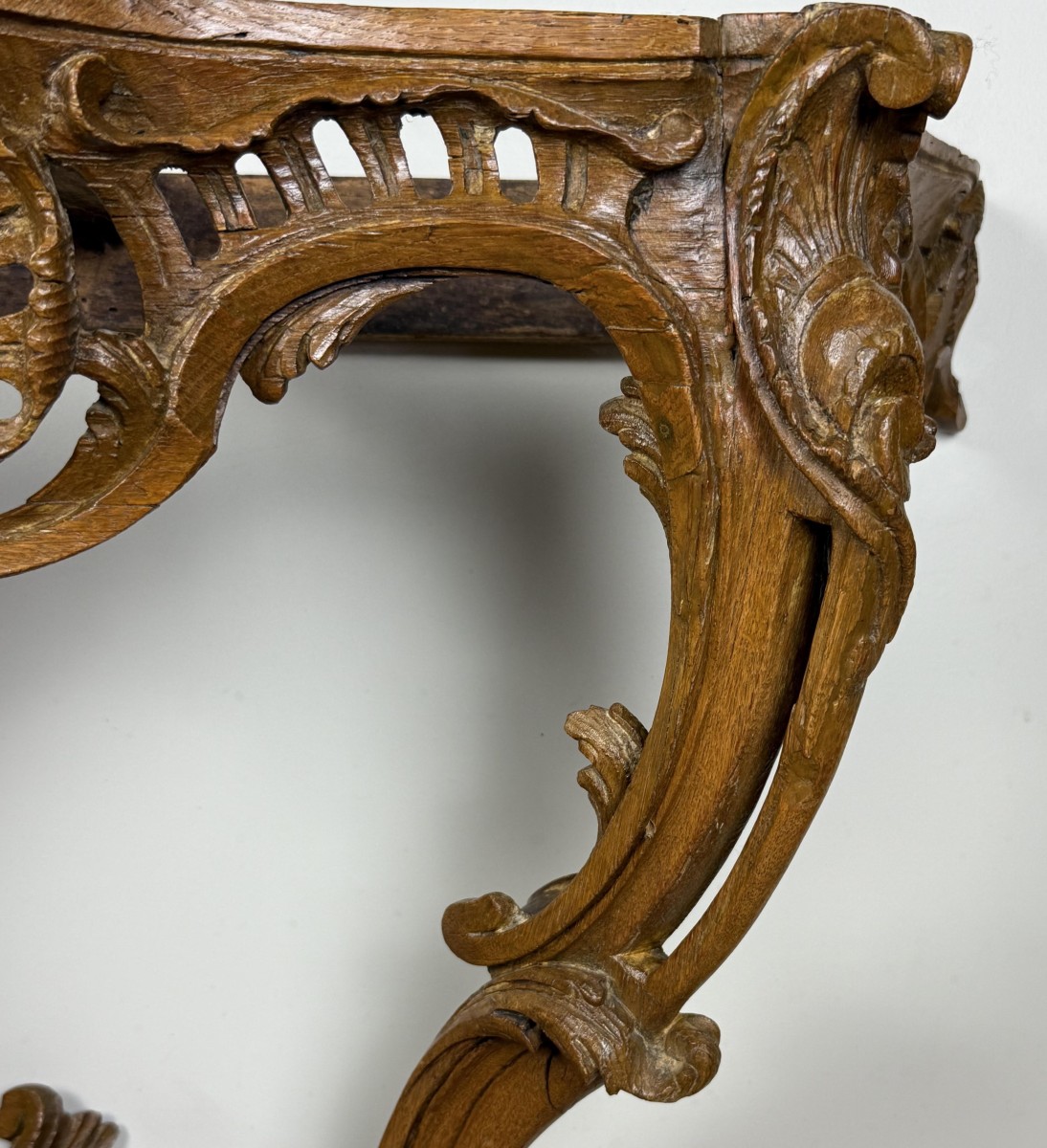
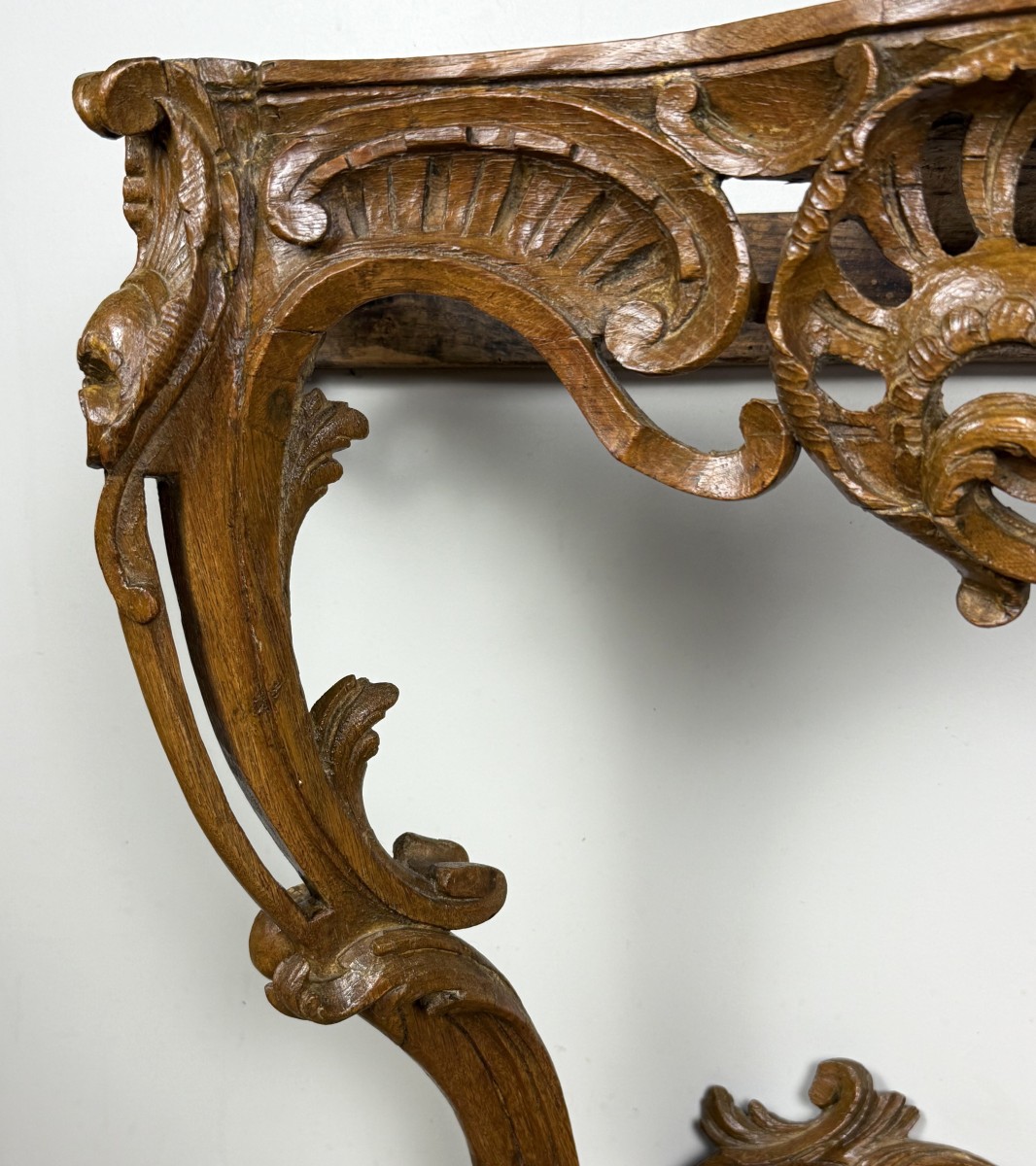
The body consists of three curved sides carved with fine, deep asymmetrical rocaille motifs and jagged shell patterns executed in openwork; it rests on a base comprising two legs with double inverted curves accented by interior scrollwork. The entire piece is held together by a recessed crossbar carved to match the motifs on the body. To enhance the quality of the carvings, the most prominent elements were carved individually and then mortised and doweled onto the piece (as shown in the photographs).
Dimensions: Height 80.5 cm, width 80.2 cm, depth 37.2 cm.
Sablé marble, also known as Solesmes marble, is a French marble with a gray-black background, crisscrossed by natural white veins of calcite. This marble was primarily used in religious architecture and major royal construction projects. Its color, ranging from gray to black, and its ability to take on a beautiful polish made it the material of choice for prestigious projects, notably the Church of Notre Dame du Val-de-Grâce in Paris and the Palace of Versailles. On April 1, 1645, Anne of Austria and Louis XIV (aged 7) laid the cornerstone of the church at the Val-de-Grâce Abbey, which had been founded 20 years earlier. The Queen Mother thus fulfilled a promise she had made earlier, to thank God for having given her a son. It was extensively carved to create altars, holy water fonts, and baptismal fonts, not to mention communion tables and other floor tiles. In the case of royal buildings—particularly at Versailles—it was used for the original paving of the Marble Courtyard at the Palace of Versailles. This paving came from the Château de Vaux-le-Vicomte, whose materials were salvaged after Nicolas Fouquet fell from grace. Unfortunately, the current paving is not an exact replica of the original. Louis-Philippe, King of the French, commissioned work to transform the palace into a museum, which notably involved altering the level of the courtyard. In the last century, in the early 1990s, the paving was replaced with marble from Belgium: Petit-granit de Soignies and Noir de Tournai. This identification is documented in a study devoted to the marbles from Flanders and Hainaut used at Versailles.
Delevery information :
General conditions of sale and delivery: The price indicated on the ad includes the delivery throughout the metropolitan France. For Germany, Belgium, Italy or Spain contact us for a quote. For the United States, Europe outside the EU or the rest of the world contact us for a quote but the import taxes applicable in each country remain at your expense. The packing and the follow-up of the transport are insured by ourselves or by professional carriers specialized in works of art.