Offered by Spectandum
REQUEST INFORMATION
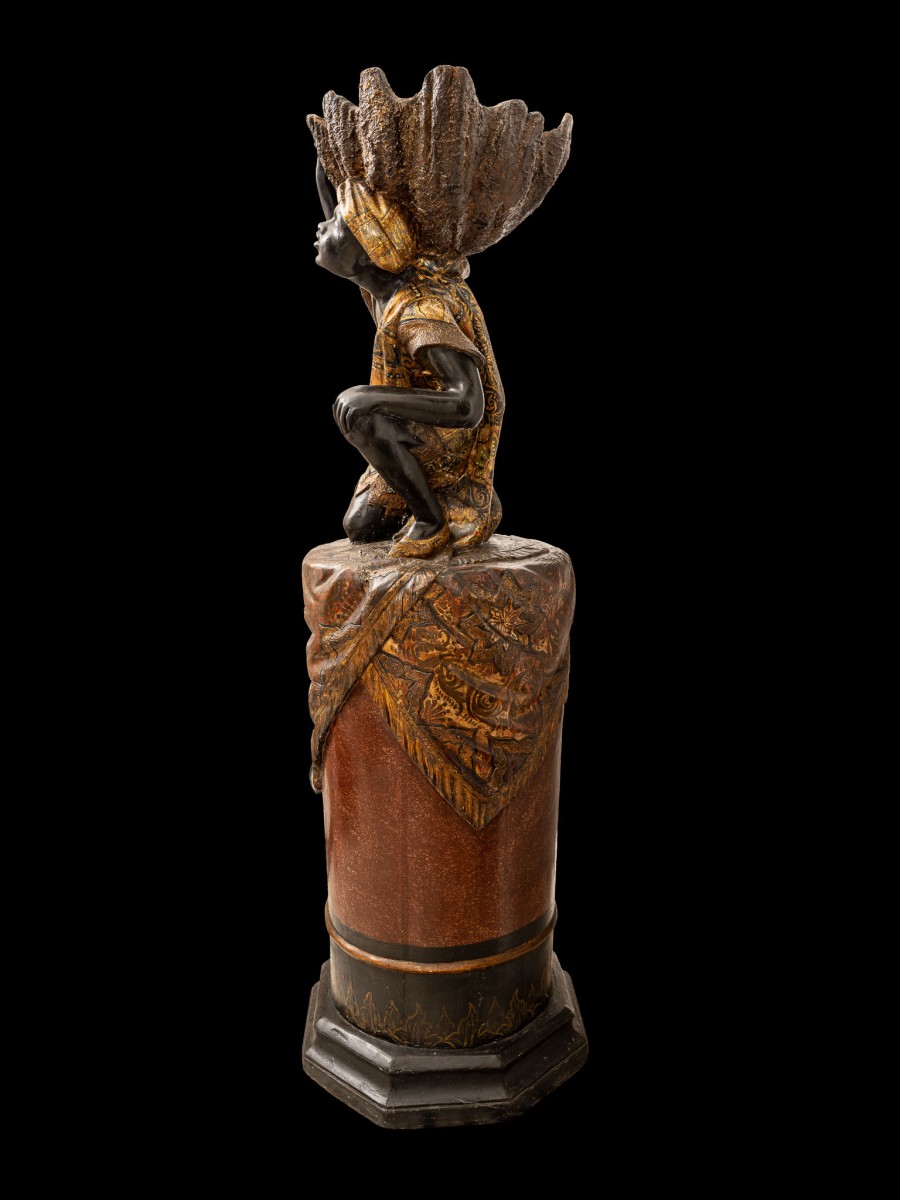
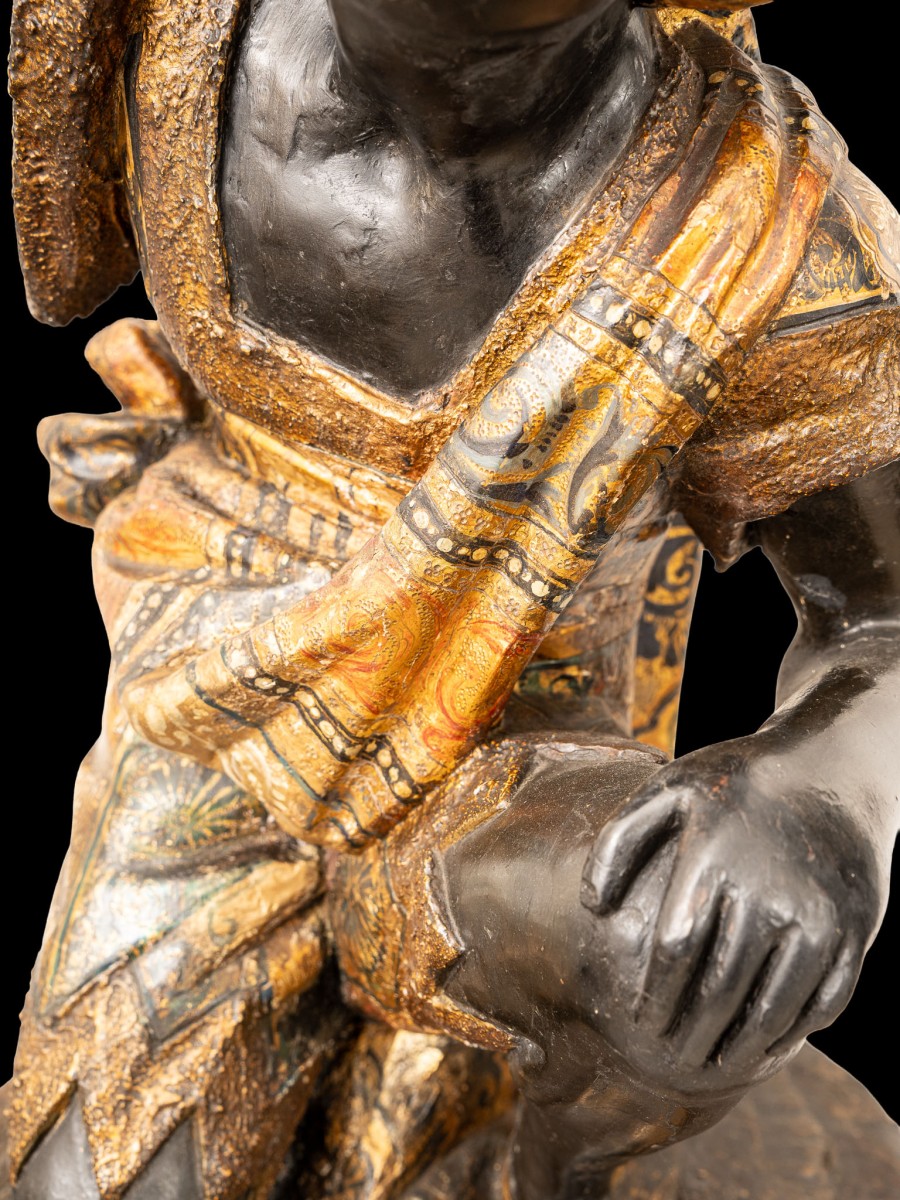

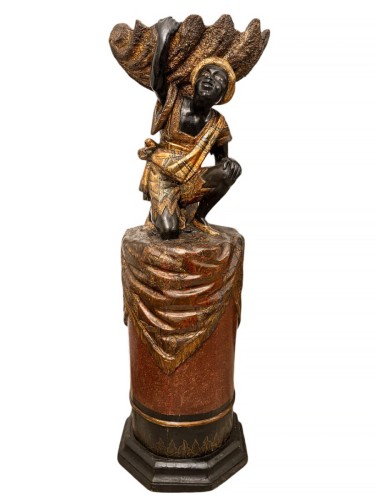
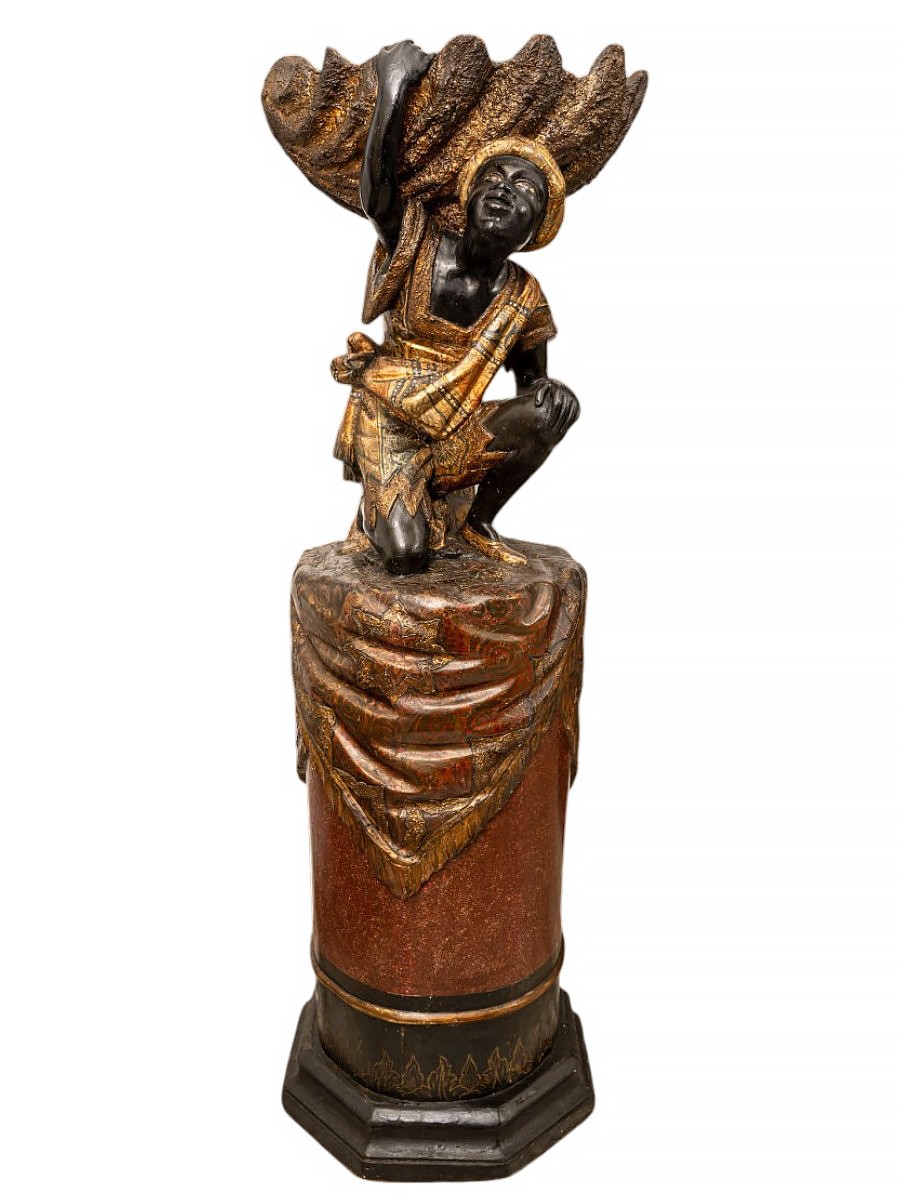
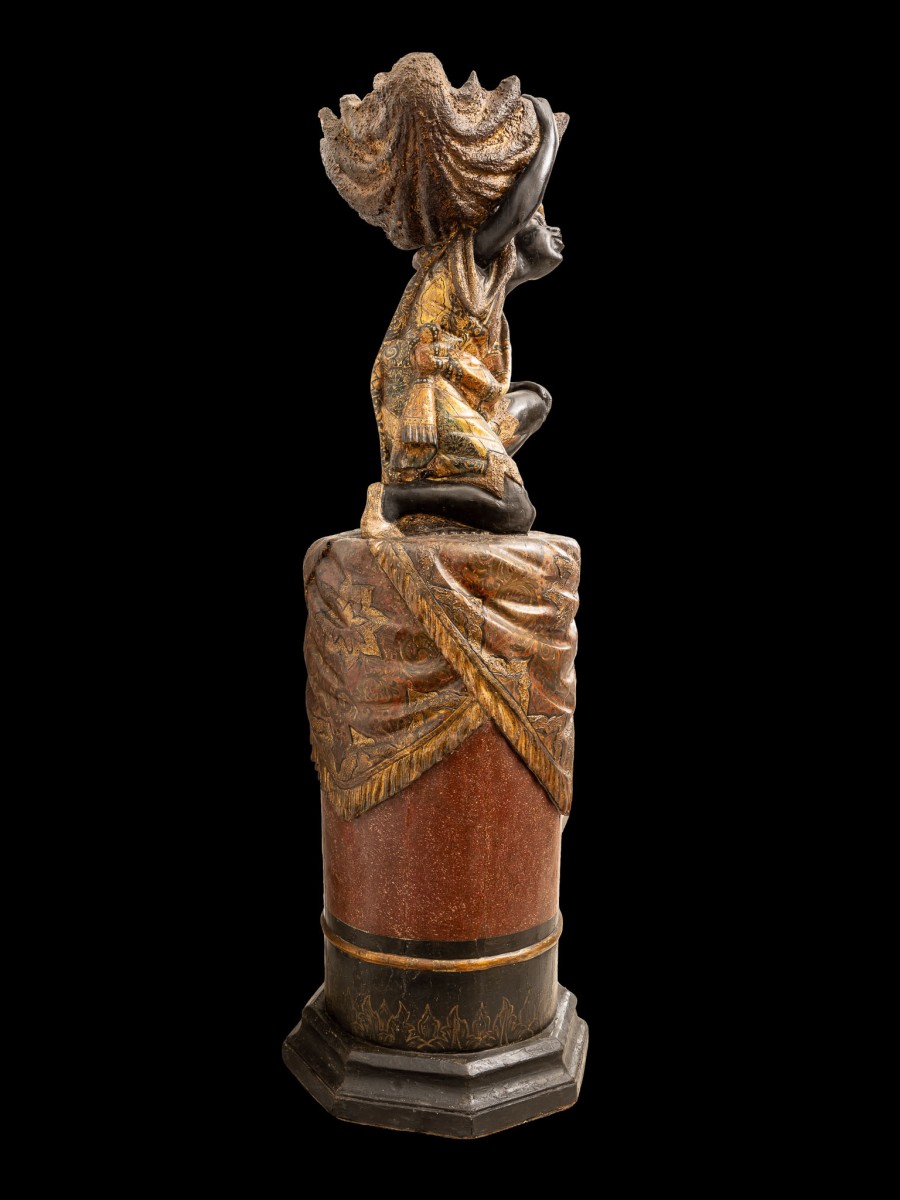
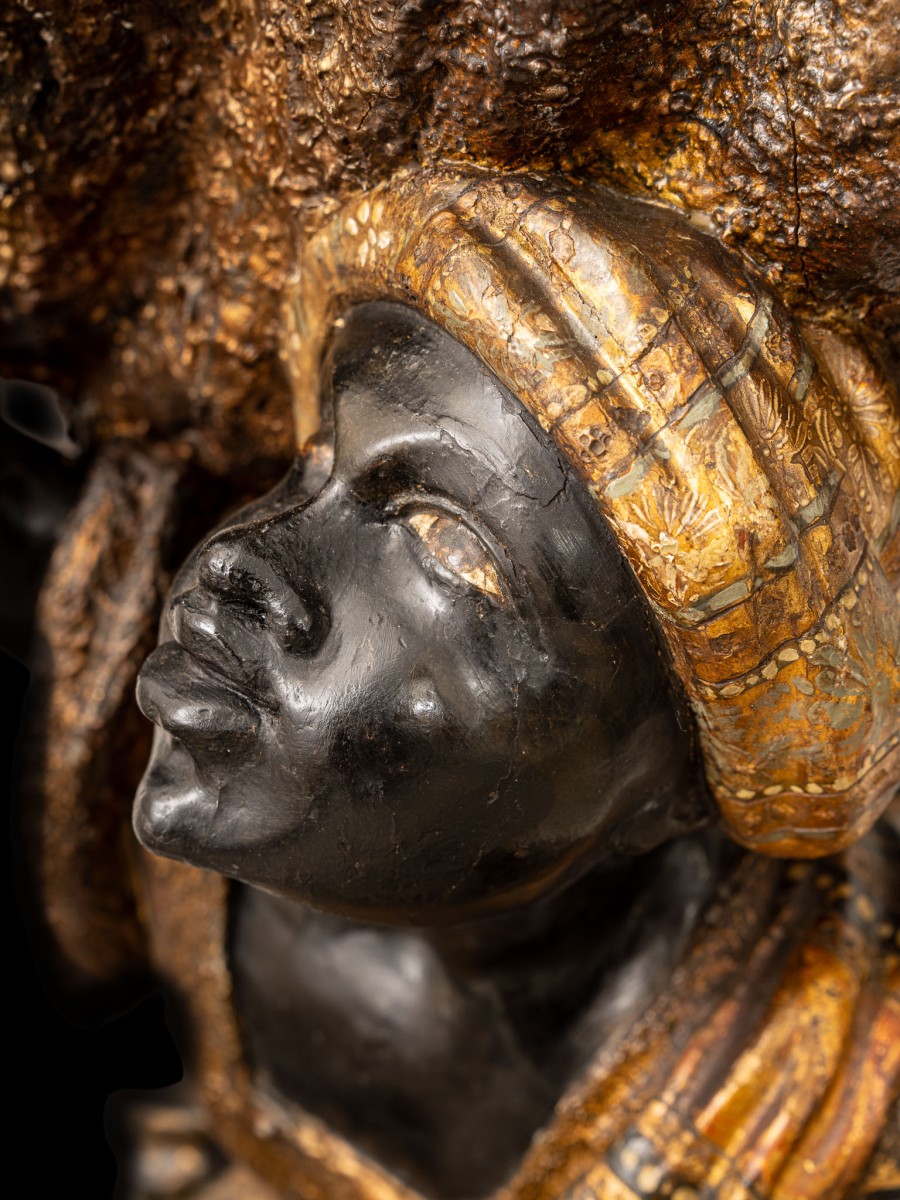
A kneeling Maure figure in richly decorated dress supports a large scallop-shell-shaped basin above his head. The figure is set on a cylindrical pedestal ornamented with carved drapery and raised on a stepped base. The carved wood retains areas of polychrome decoration and gilding. The shell-form basin and freestanding pedestal suggest that the piece was intended as a jardinière or decorative planter. An original carved wooden sculpture depicting a Venetian Blackamoor (Moretto), dressed in a cobalt-blue livery, a white-striped turban and a feathered skirt tied around the waist, standing on a rock-shaped base. An emblematic figure of the Venetian sculptural tradition, he is represented standing, holding a floral cornucopia in his hands. This is an original work dating from the early 18th century, rather than one of the later copies which, although attractive, were produced in subsequent periods. Remarkably well preserved and retaining much of its original decoration, the sculpture shows some areas of later repainting. Entirely carved from wood, the figure features a black lacquered finish, enriched with gilded details and polychrome decoration. In its sculptural style, the work recalls examples produced in Florence, particularly those associated with Jacopo Maria Foggini, whose work in this tradition is documented from the second half of the 17th century onwards. Characteristic of Venetian decorative arts and furnishings of the 17th and 18th centuries, such figures also became popular in other regions of Italy. Examples were produced in Florence by sculptors including Jacopo Maria Foggini and Baldassarre Permoser. Certain stylistic features, particularly the treatment of the base and the sculptural details, retain affinities with Foggini's work, supporting a date in the first half of the 18th century. The tradition of depicting Moorish figures in European decorative arts has its roots in the Middle Ages, particularly in goldsmithing. During the 18th century, at the height of Venice's prosperity as a powerful maritime republic, this imagery extended into numerous artistic disciplines, notably sculpture, furniture and the decorative arts. Symbolizing the wealth, prestige and maritime supremacy of the Serenissima, the figure of the Moor became a prominent decorative element in the grand reception rooms and sumptuous interiors of Venetian palaces. Such sculptures were expressions of luxury and status, reflecting the cosmopolitan character and commercial influence of the Venetian Republic throughout the Mediterranean.