Offered by Desmet Galerie
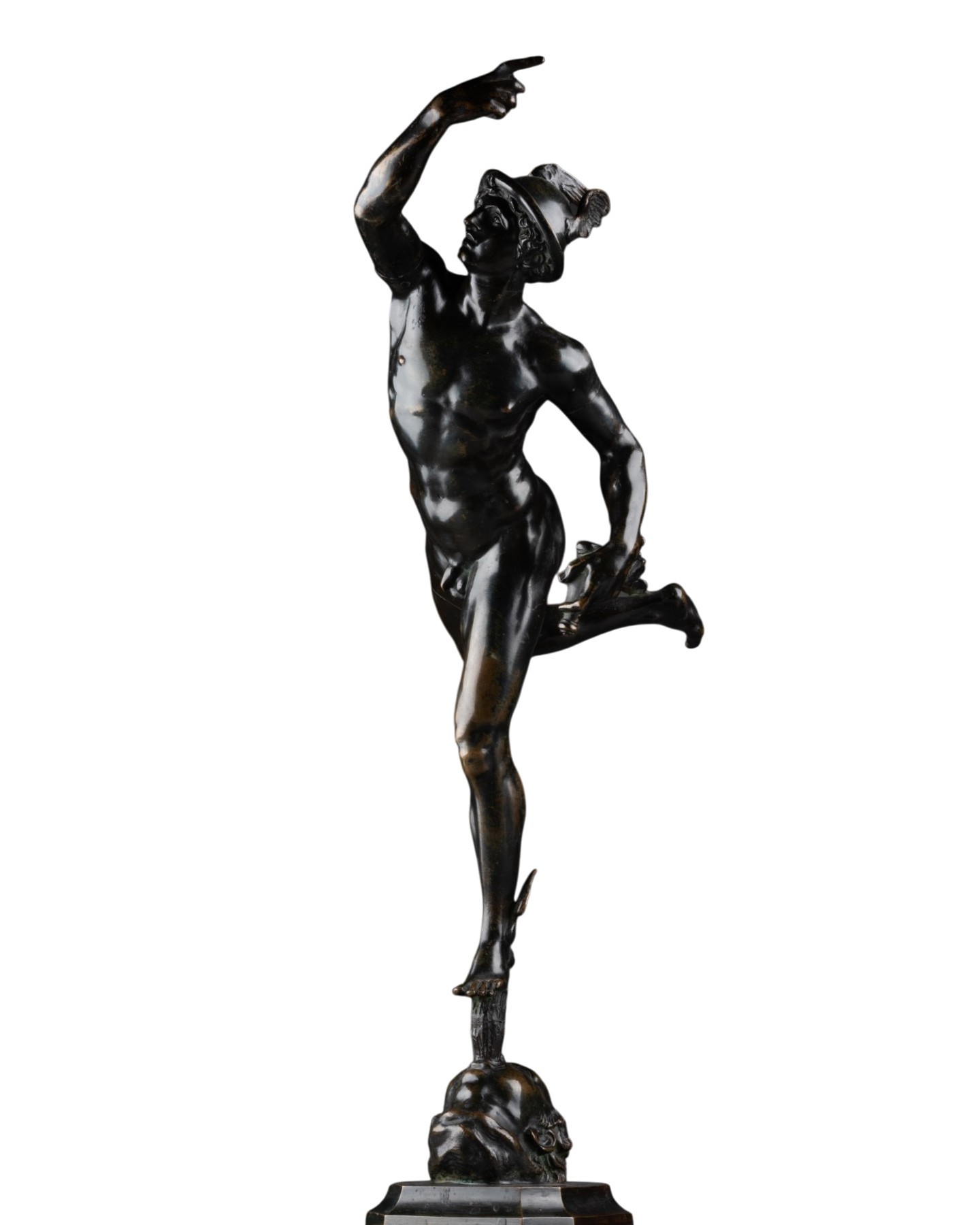
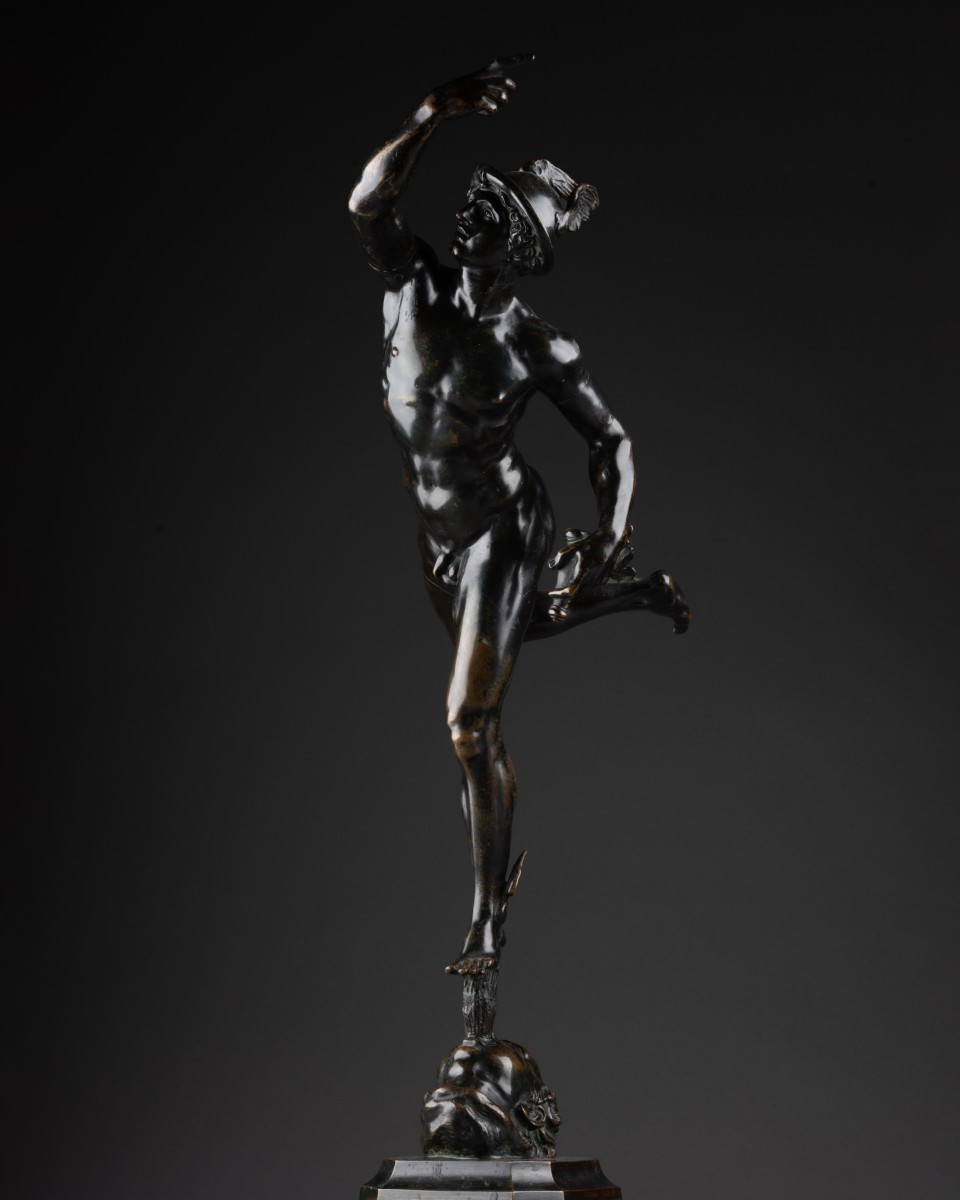
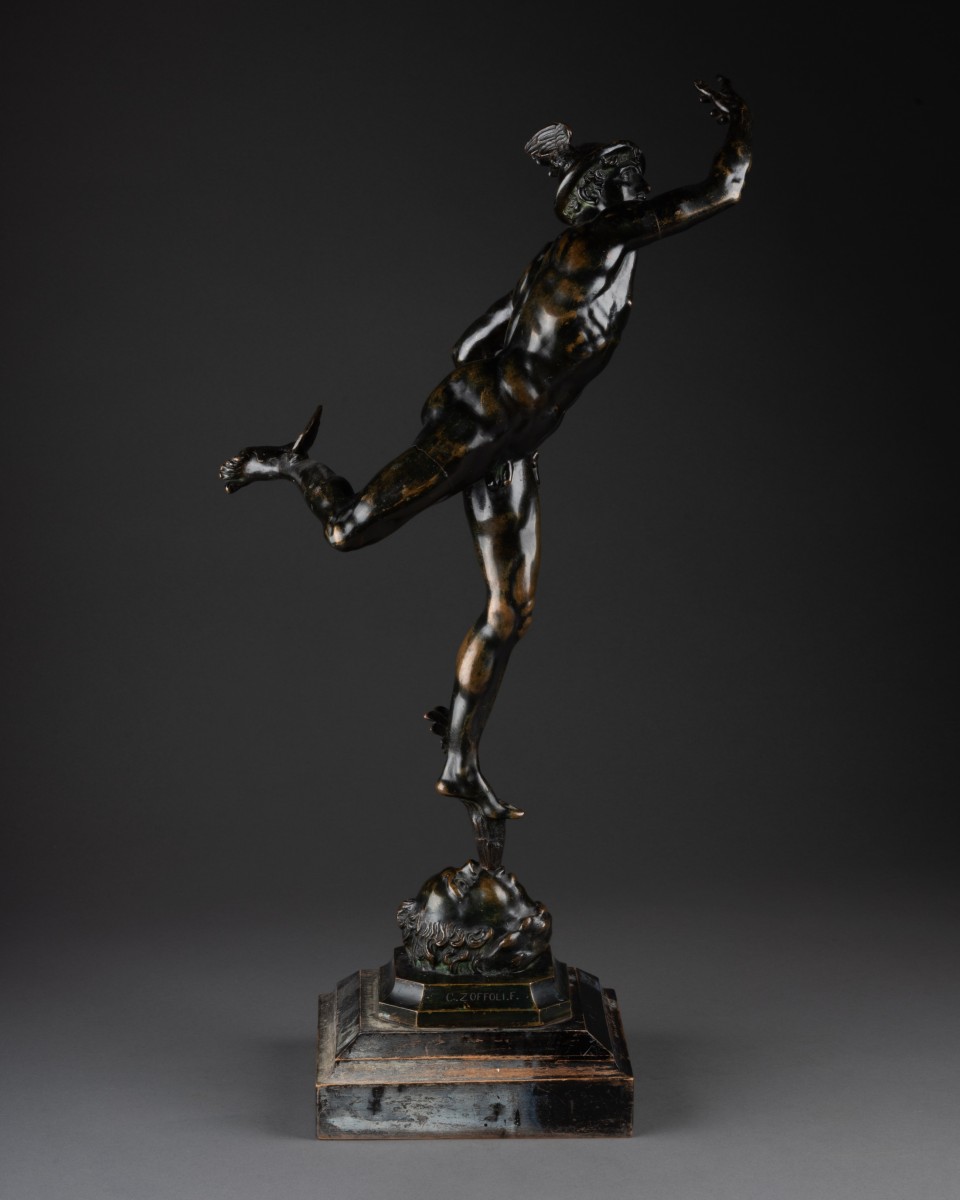

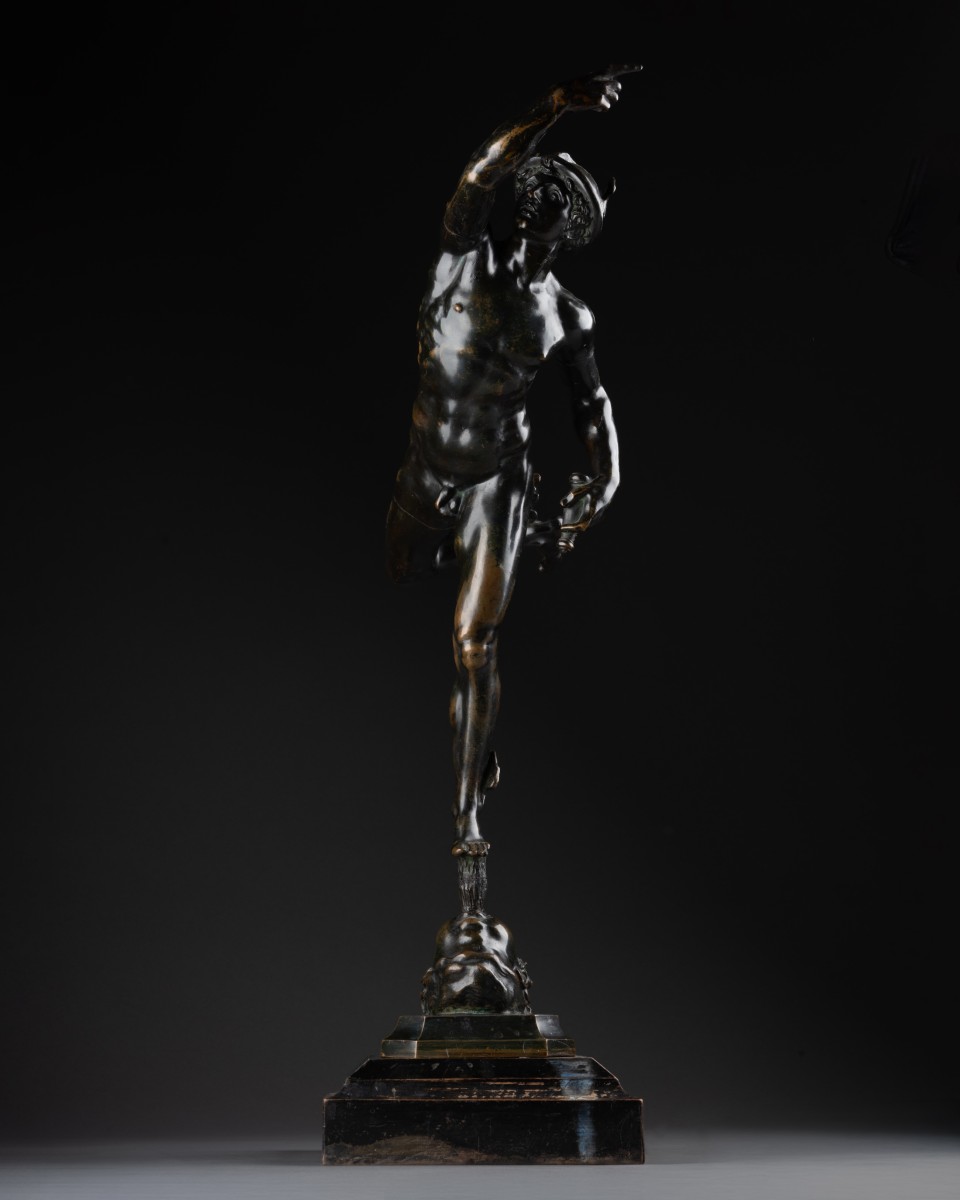
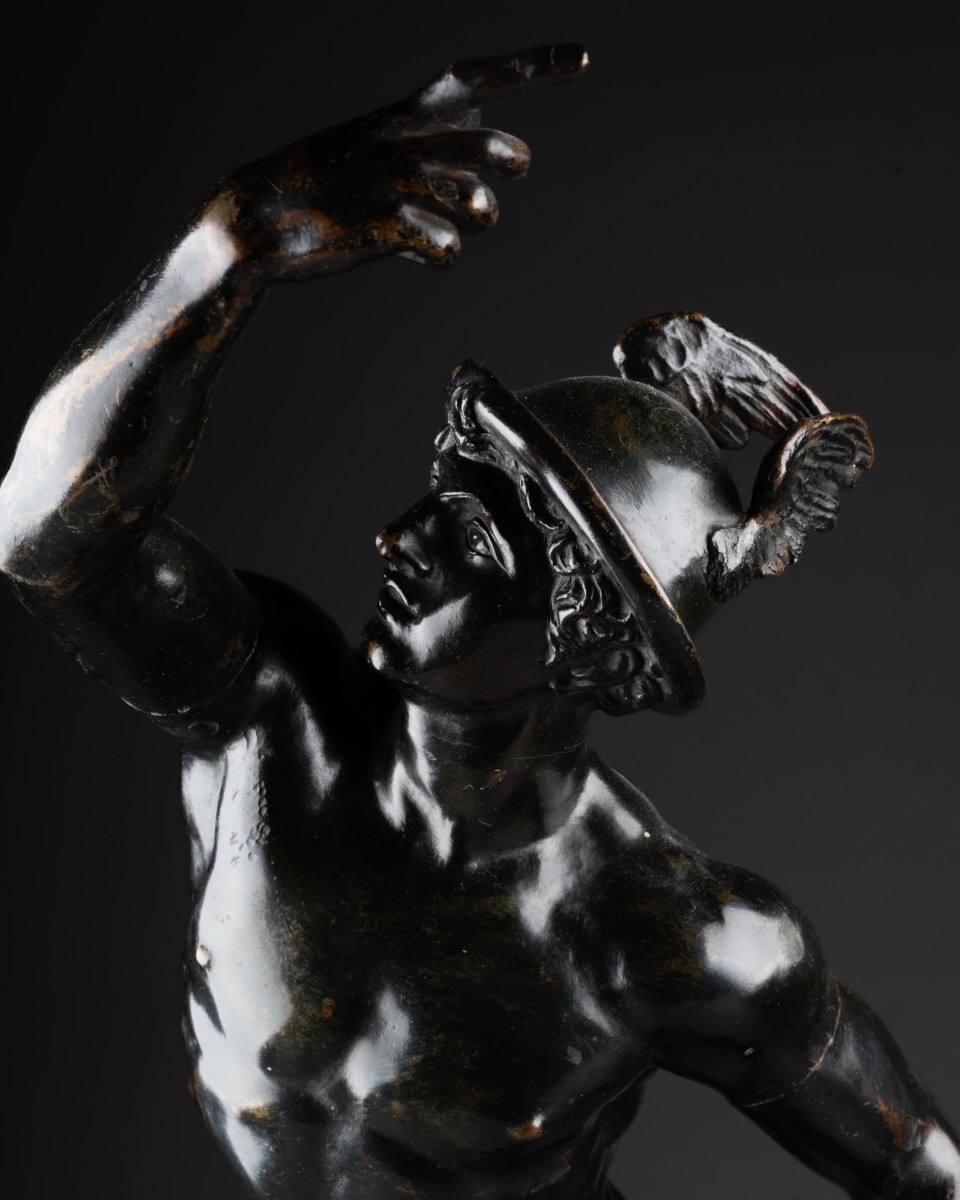
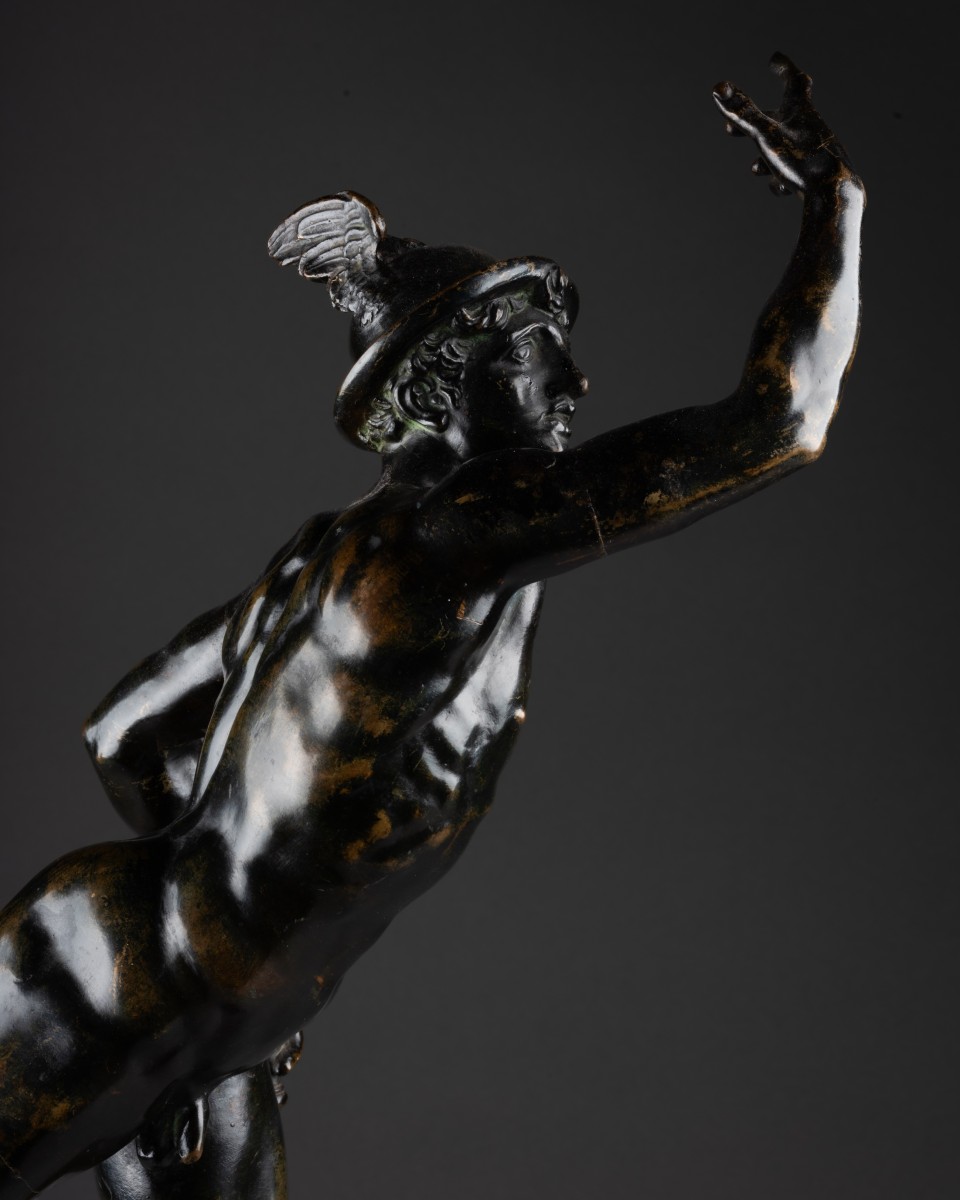
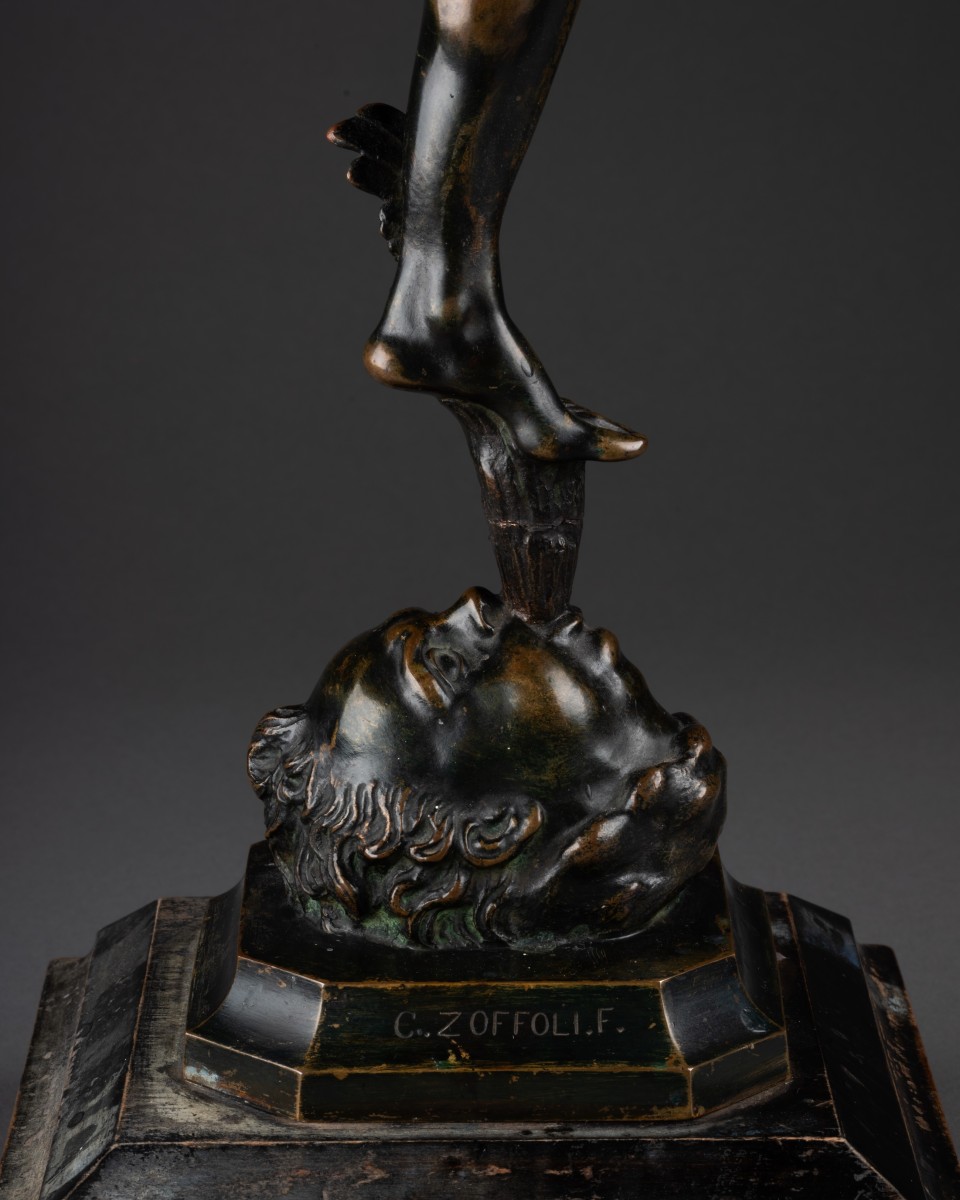
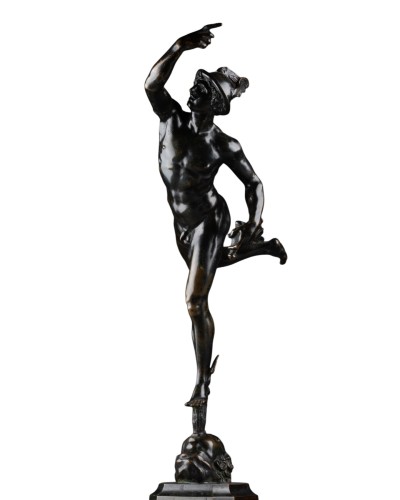
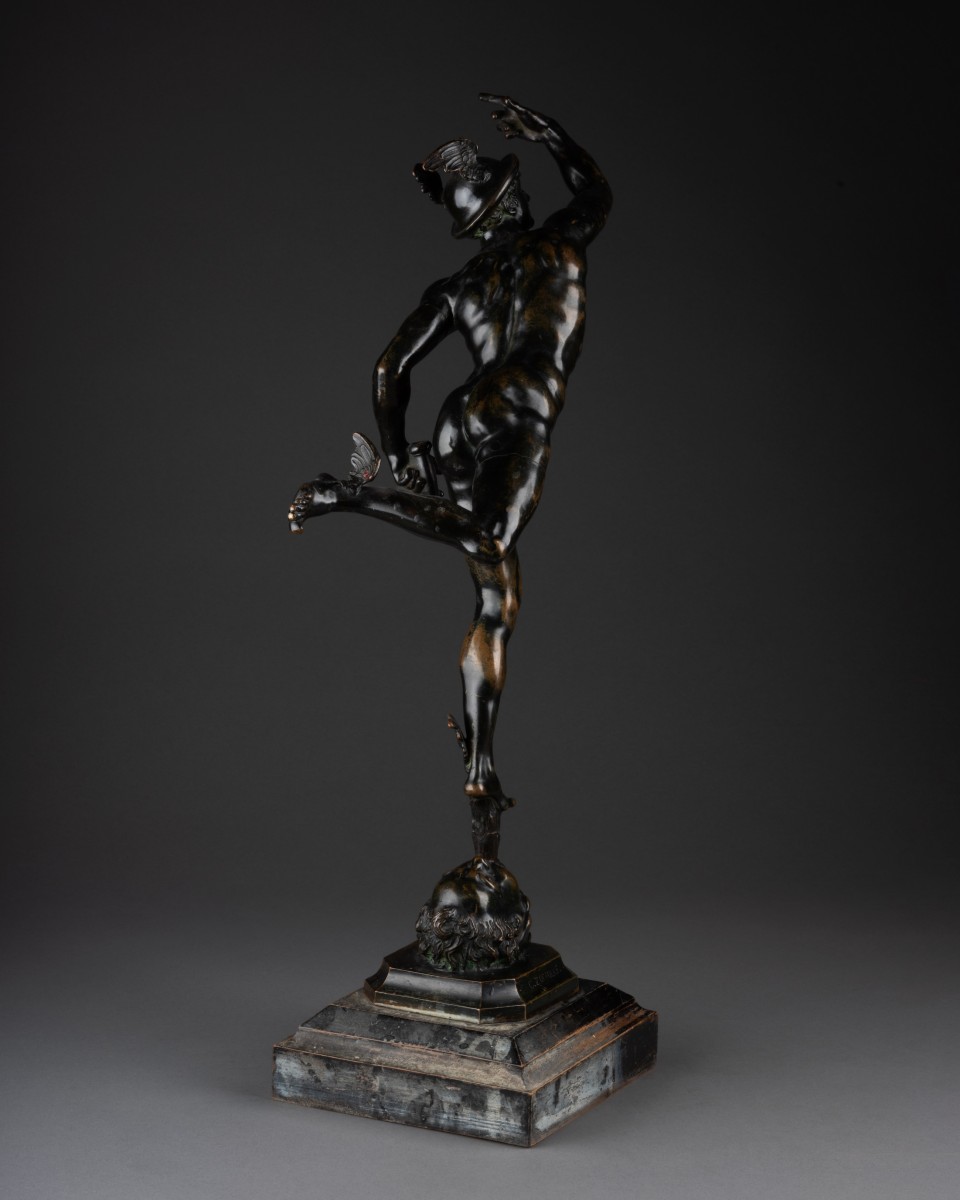
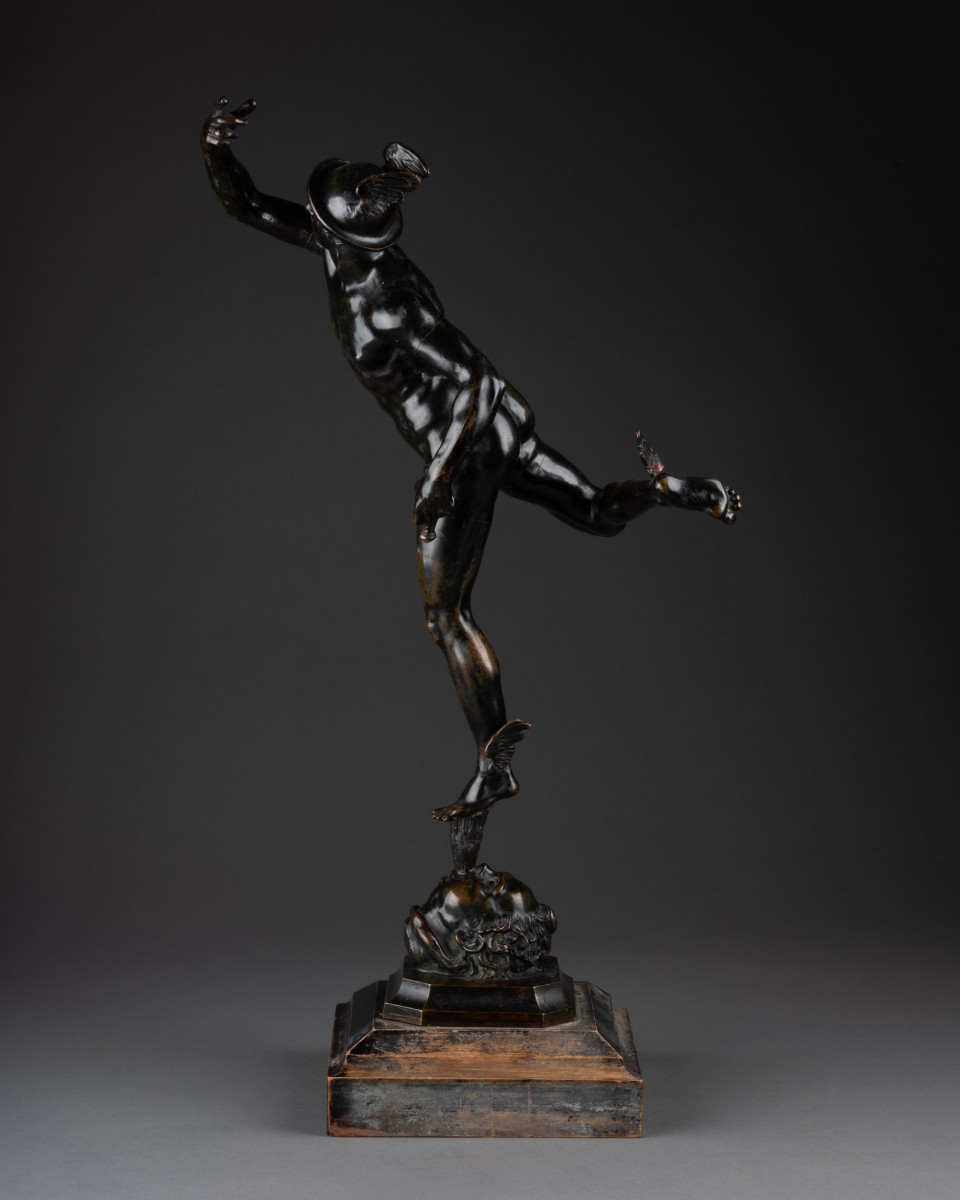
This bronze statuette represents a completely naked Mercury, the messenger of the gods, in flight, gliding on the breath of Zephyrus. Mercury’s right arm is raised vertically, the index finger pointing upward, and in his lowered left hand he is holding the handle of the caduceus. Each ankle is winged on the outside and on his head is the winged petasus.
The model was created by Giambologna, who by c. 1570 had become the most influential sculptor in Europe. He most probably got his inspiration for this composition from literary sources such as the Odyssey (V, 45-46) and the Aeneid (fourth book) as well as the Annunciations by Leonardo da Vinci and Garofalo. It may also have been inspired by the reverse of a medal of Maximilian II by Leone Leoni, which displays a flying Mercury. The large-scale version on which this bronze was based, was completed in May 1580 and delivered to Cardinal Ferdinando de' Medici in Rome in June 1580. There it was part of the fountain in front of the loggia of the Villa Medici until 1780 when it returned to Florence and eventually displayed in the Bargello.
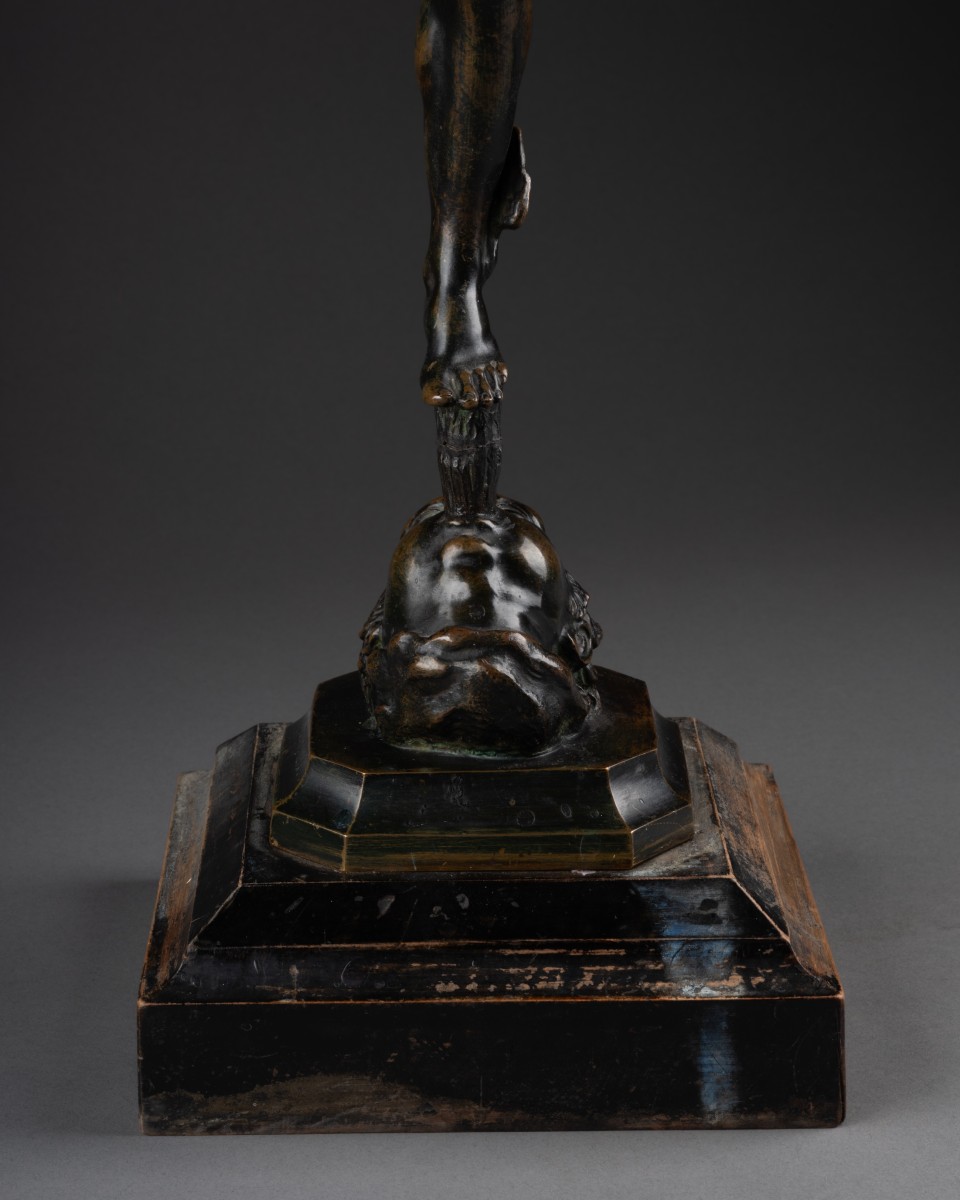
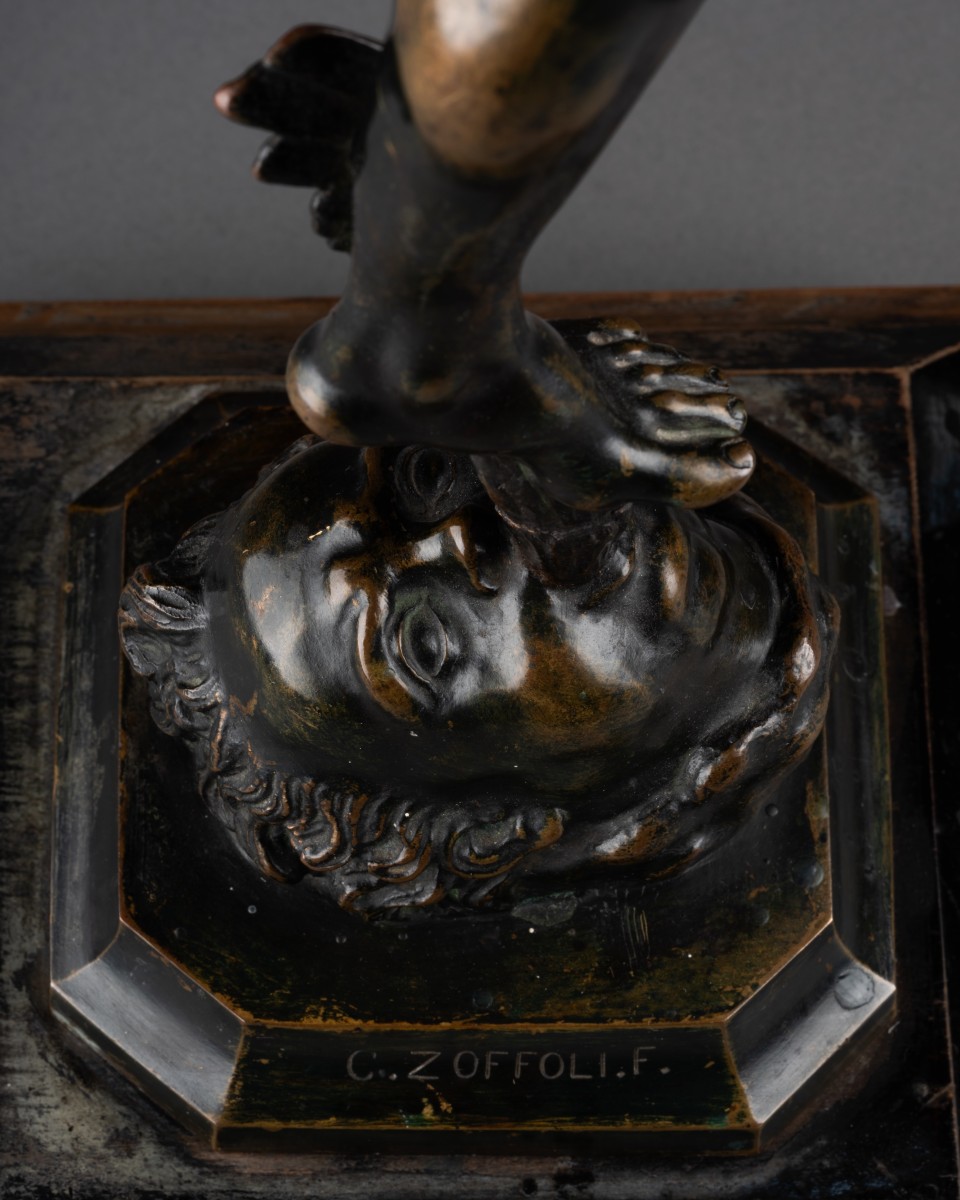
High-quality small replicas of this and other famous statues and busts from antiquity were produced in bronze, terracotta and porcelain, in Rome and elsewhere. In Rome during the second half of the eighteenth century, the largest and most popular active foundry was that of Giacomo and Giovanni Zoffoli, who produced this bronze, as attested by the signature on the base.
The 1795 inventory of all bronzes produced by Giovanni and Giacomo Zoffoliincludes as no. 19: Mercurio Volante di Villa Medici (cost) 20 Roman zecchins. The then current rate of exchange in London was 10 shillings, 6 pence to the Roman sequin. Generally, several of these bronze reductions were acquired by foreign travelers on the Grand Tour.
Delevery information :
We can arrange shipping.