Offered by Desmet Galerie

Lorenzo Bartolini (1777-1850) and workshop
Florence, circa 1815-1830
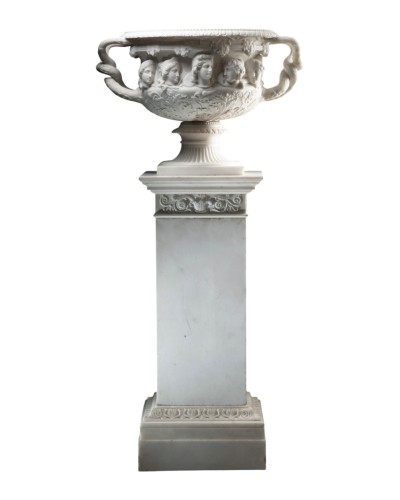
Vase: H 51,8 x W 77 x D 58 cm
Base: H 102,5 x W 55 x D 46 cm
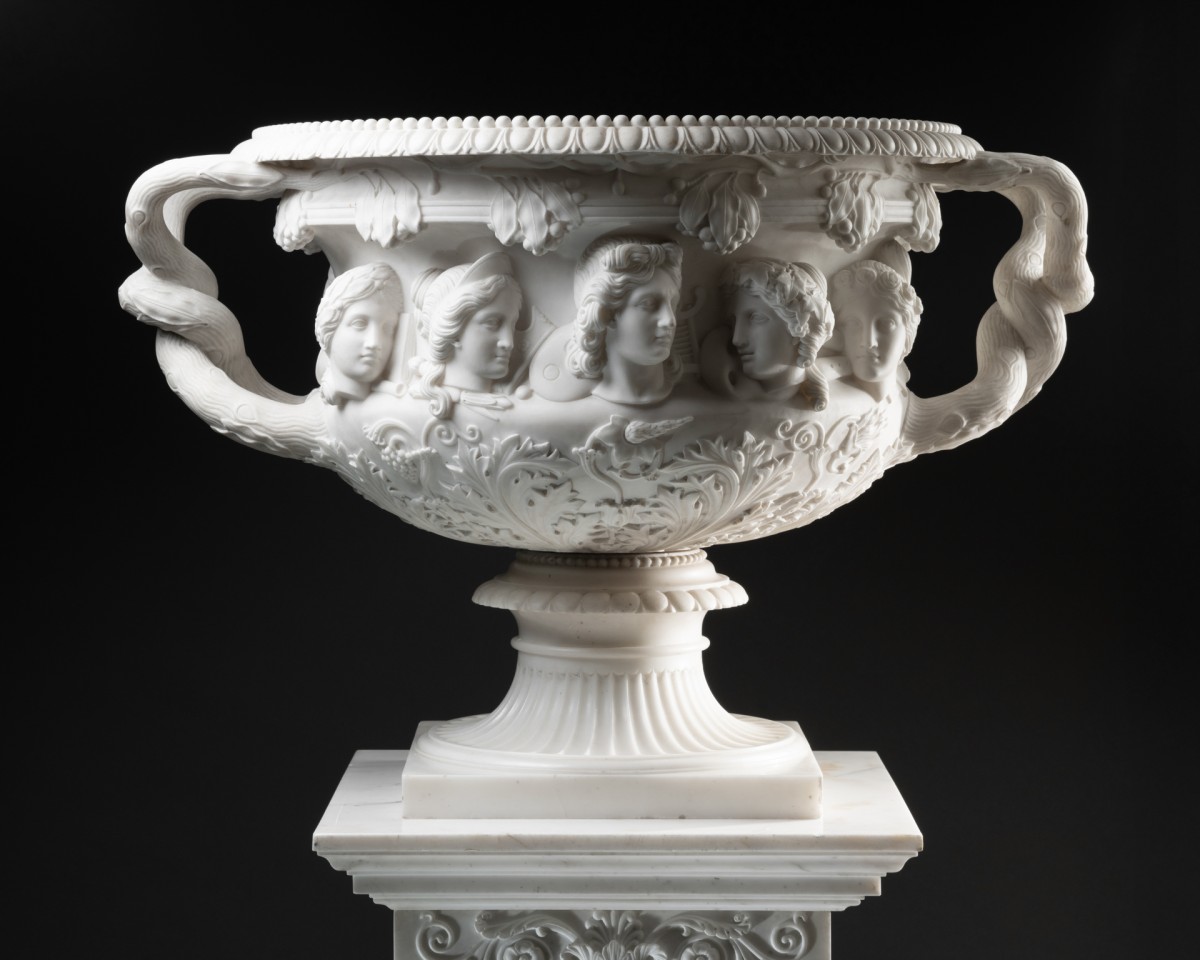
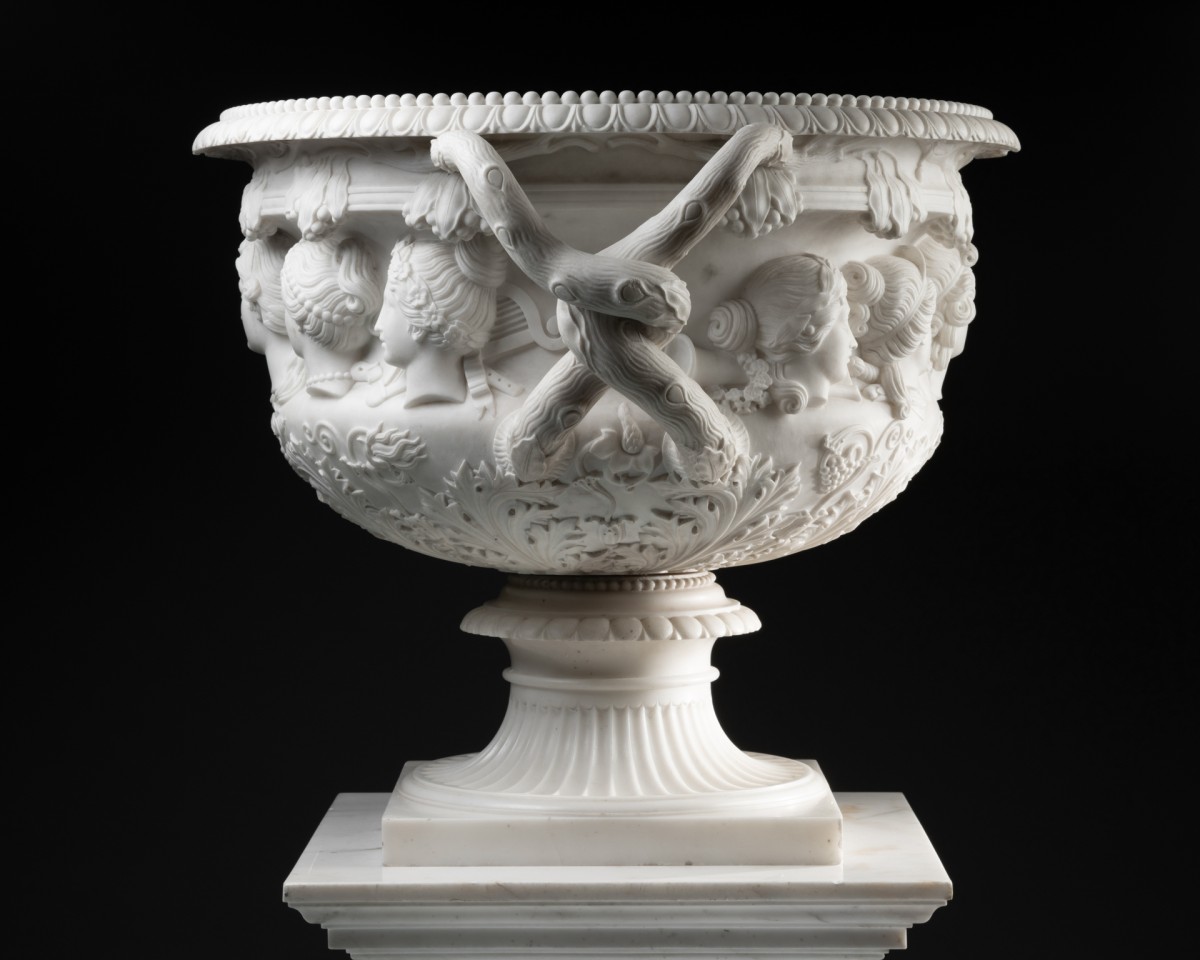
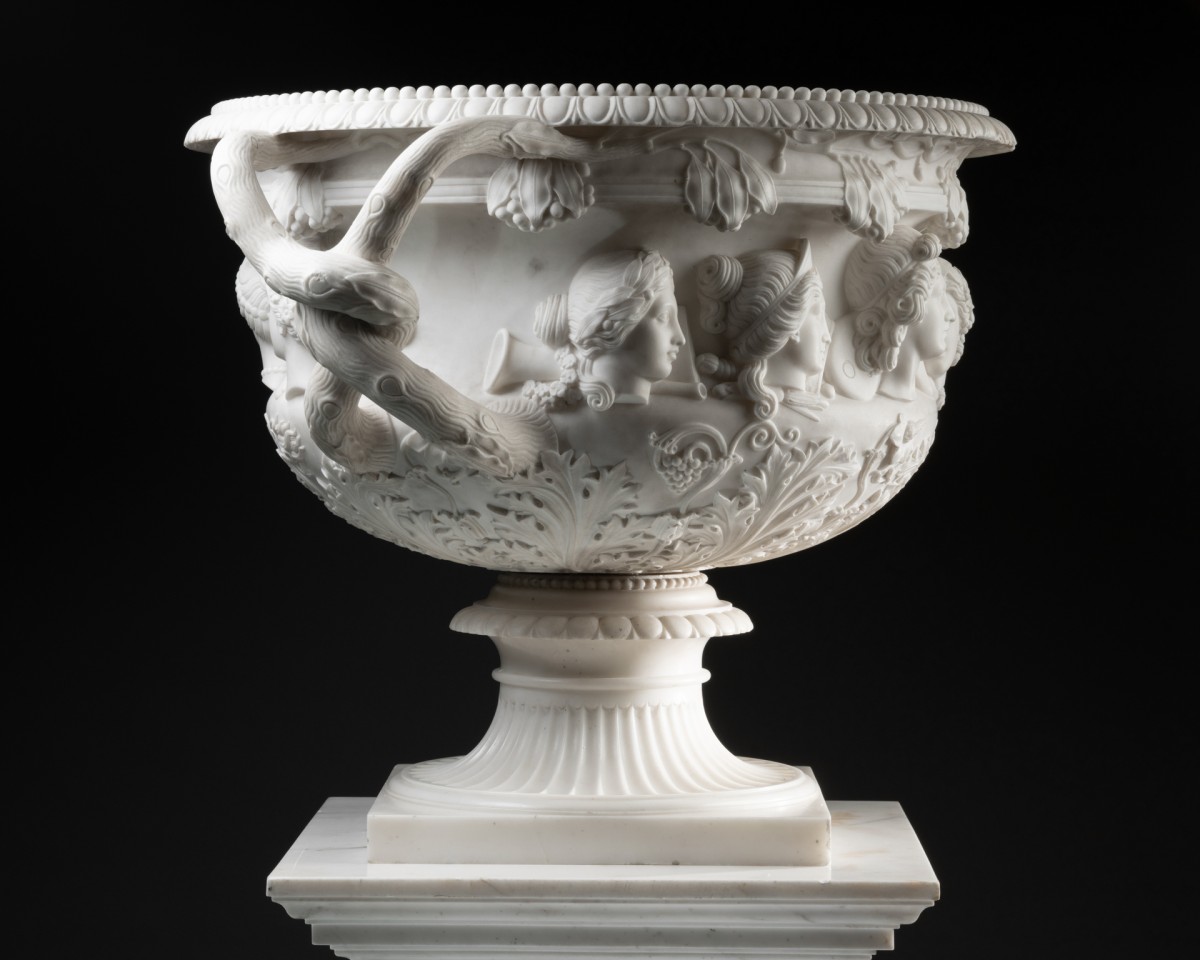
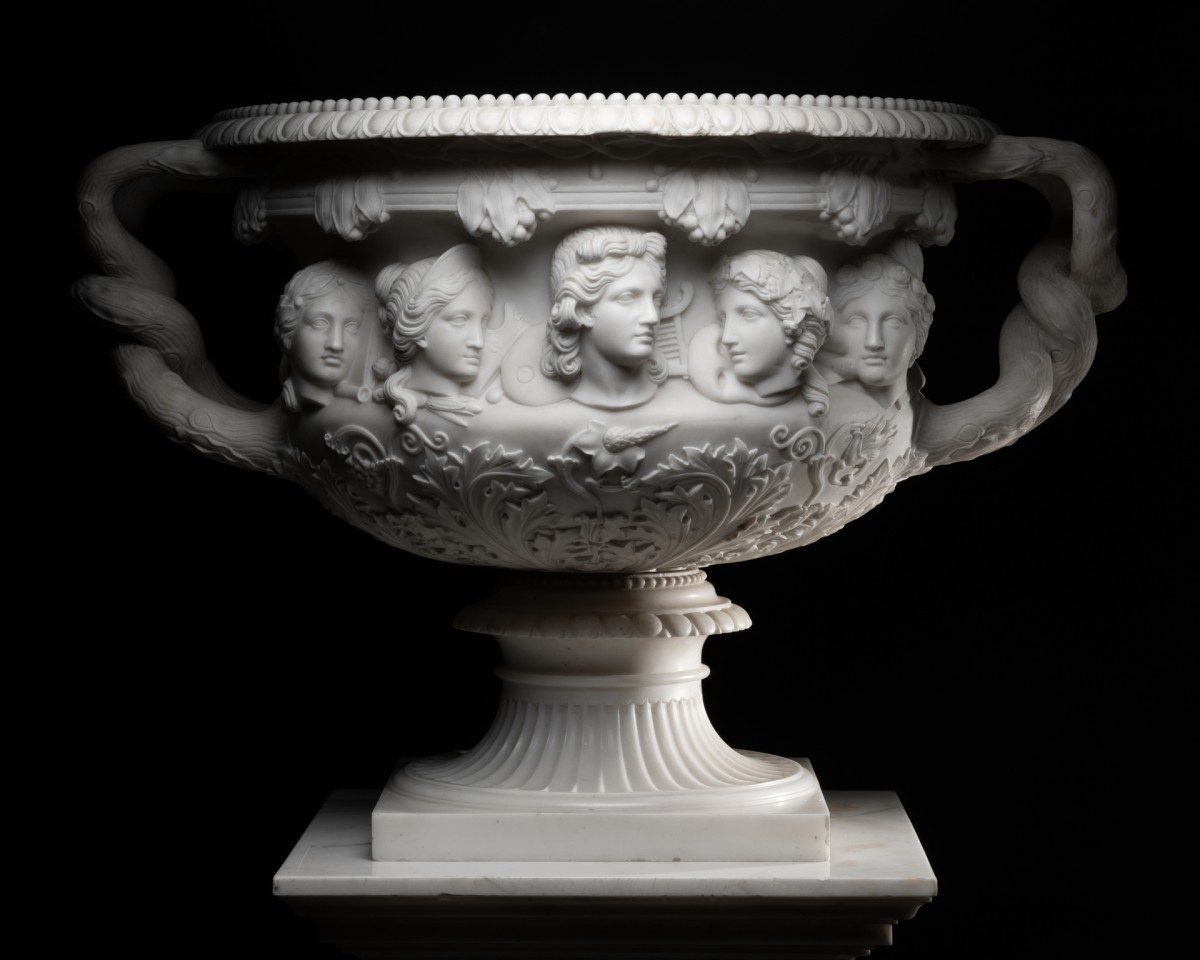
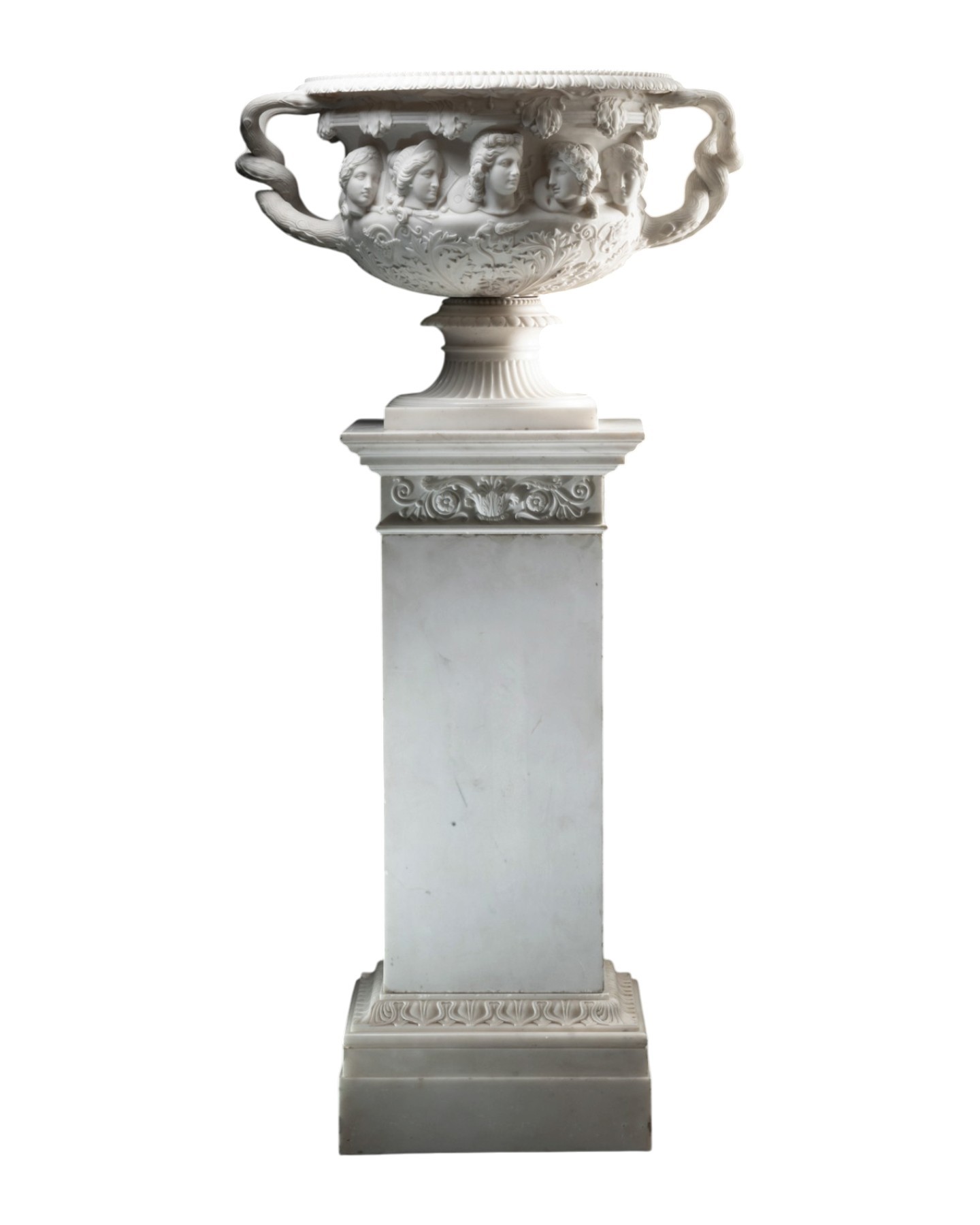
This impressive vase, carved in white statuary marble and raised on its original tall pedestal, reflects the enthusiasm for antiquity that flourished across Europe in the late eighteenth and early nineteenth centuries. It offers a monumental reinterpretation of the celebrated Warwick Vase, the large Roman vessel discovered in fragments at Hadrian’s Villa near Tivoli in the 1760s. Rather than simply reproducing its ancient model, the sculptor transforms its decoration into a harmonious programme devoted to Apollo and the Muses. The quality of the carving, the sophistication of the imagery, and affinities with works associated with Lorenzo Bartolini (1777–1850) and his workshop place it within the tradition of early nineteenth-century Florentine Neoclassicism.
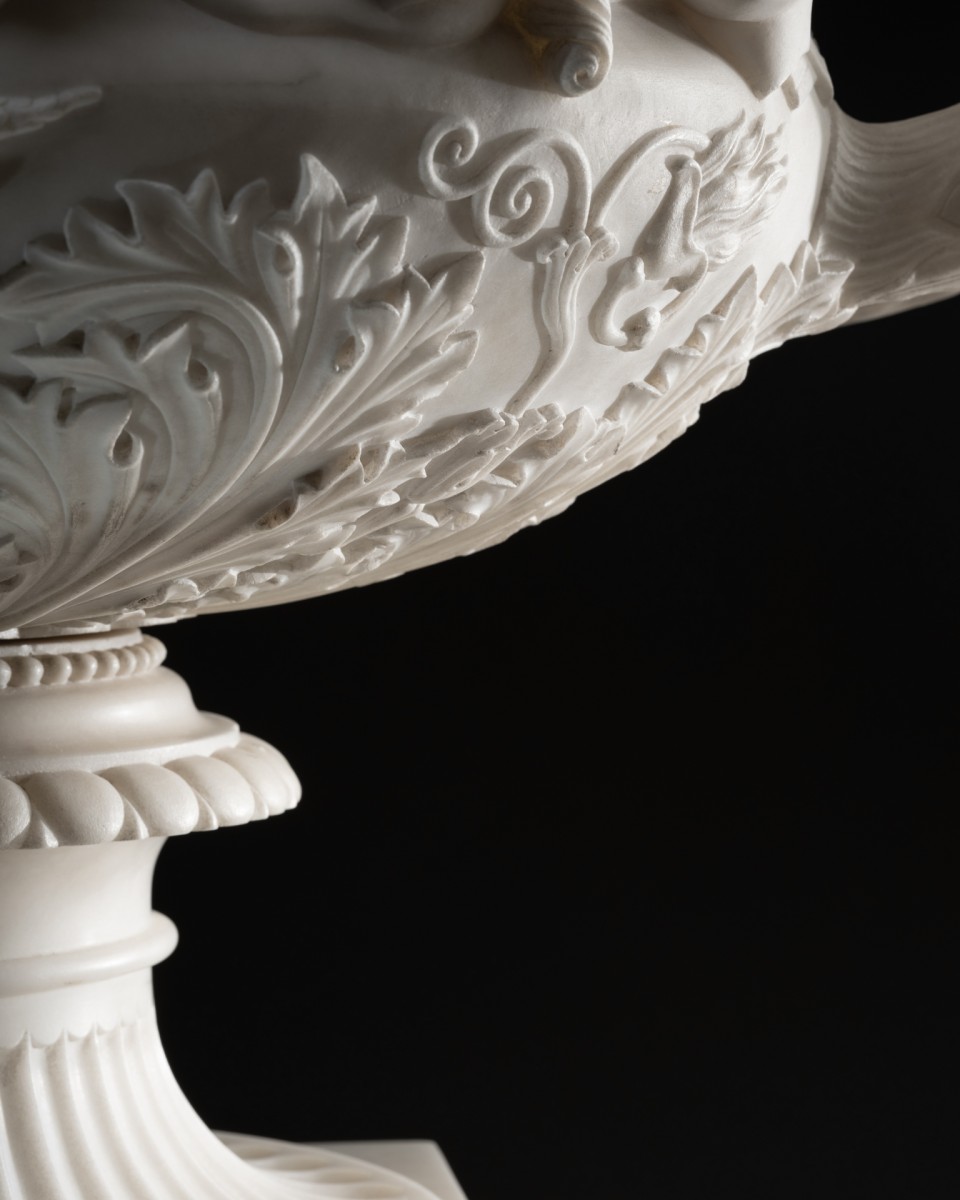
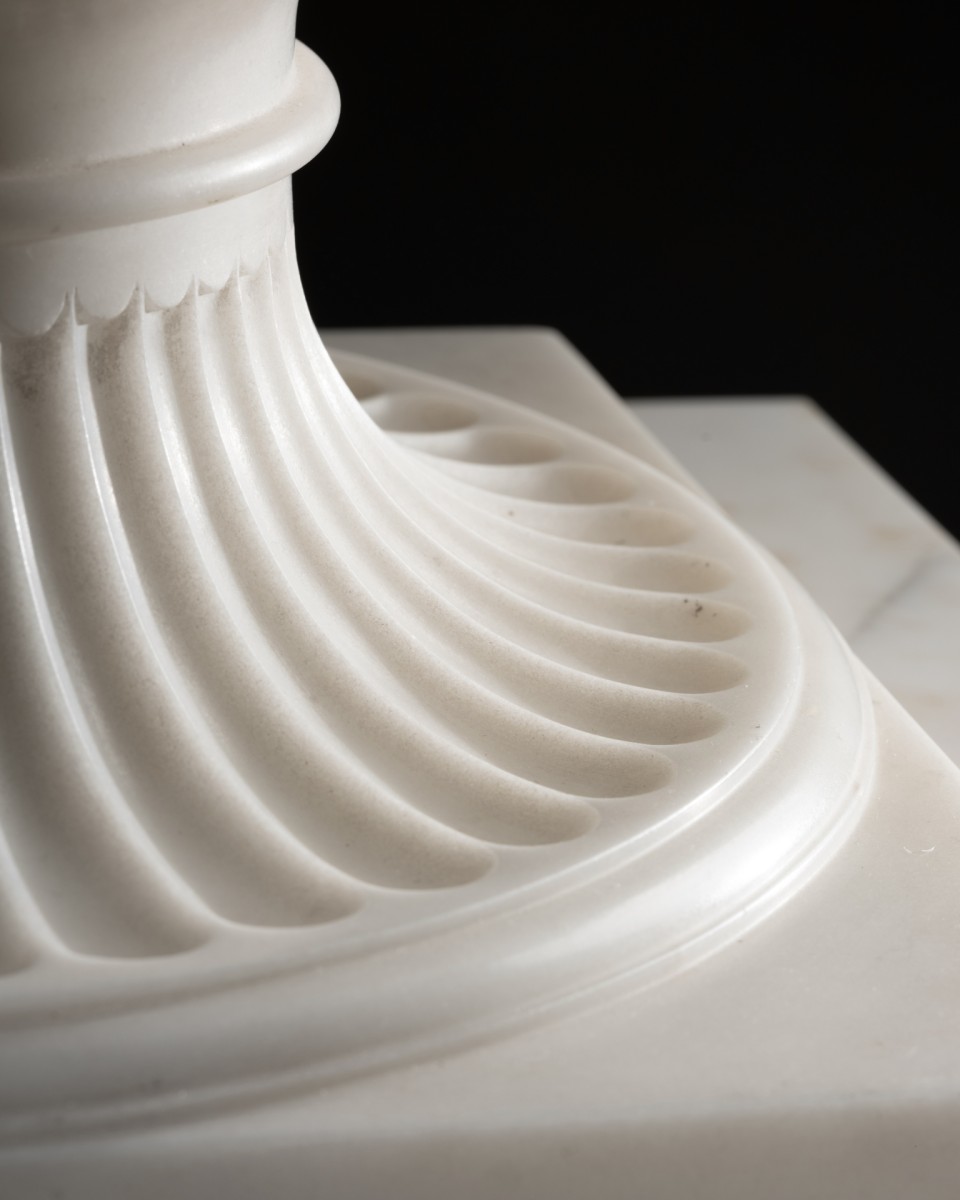
The silhouette recalls the ancient prototype: a broad, swelling body rises above a ring of acanthus leaves, beneath a substantial ornamental rim. Here, however, the design achieves a distinctive lightness and fluidity. The foot combines a flared, gadrooned collar with a smooth torus moulding, resting on a square plinth. The pedestal extends this balance between architectural discipline and sculptural delicacy. Its mouldings include a Lesbian kymation, an ancient Greek ornament alternating heart-shaped leaves and curling volutes. The precision of the carving and the suppleness of its rhythm invite comparison with pedestals associated with Bartolini’s workshop, particularly those accompanying the Forbes of Pitsligo vases.
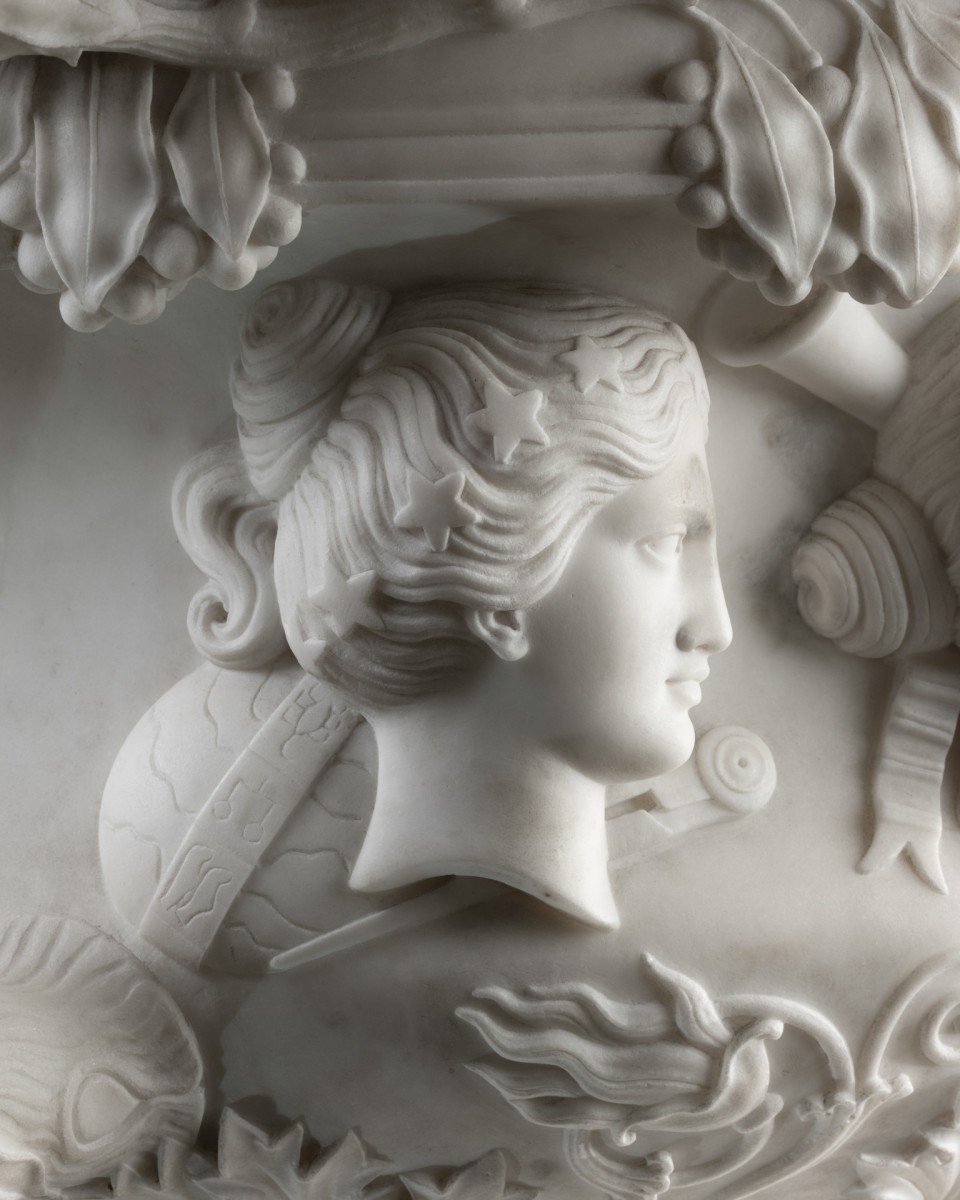
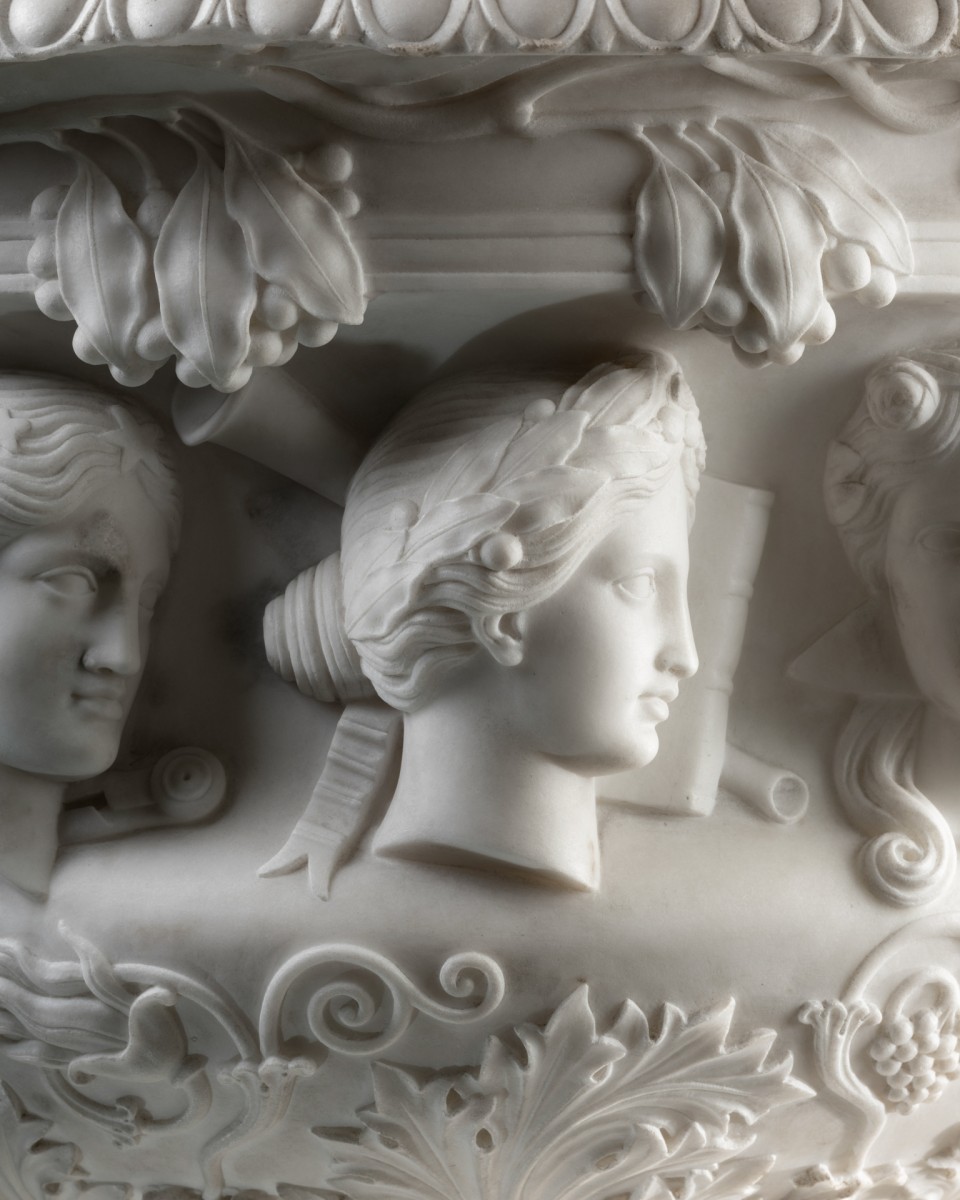
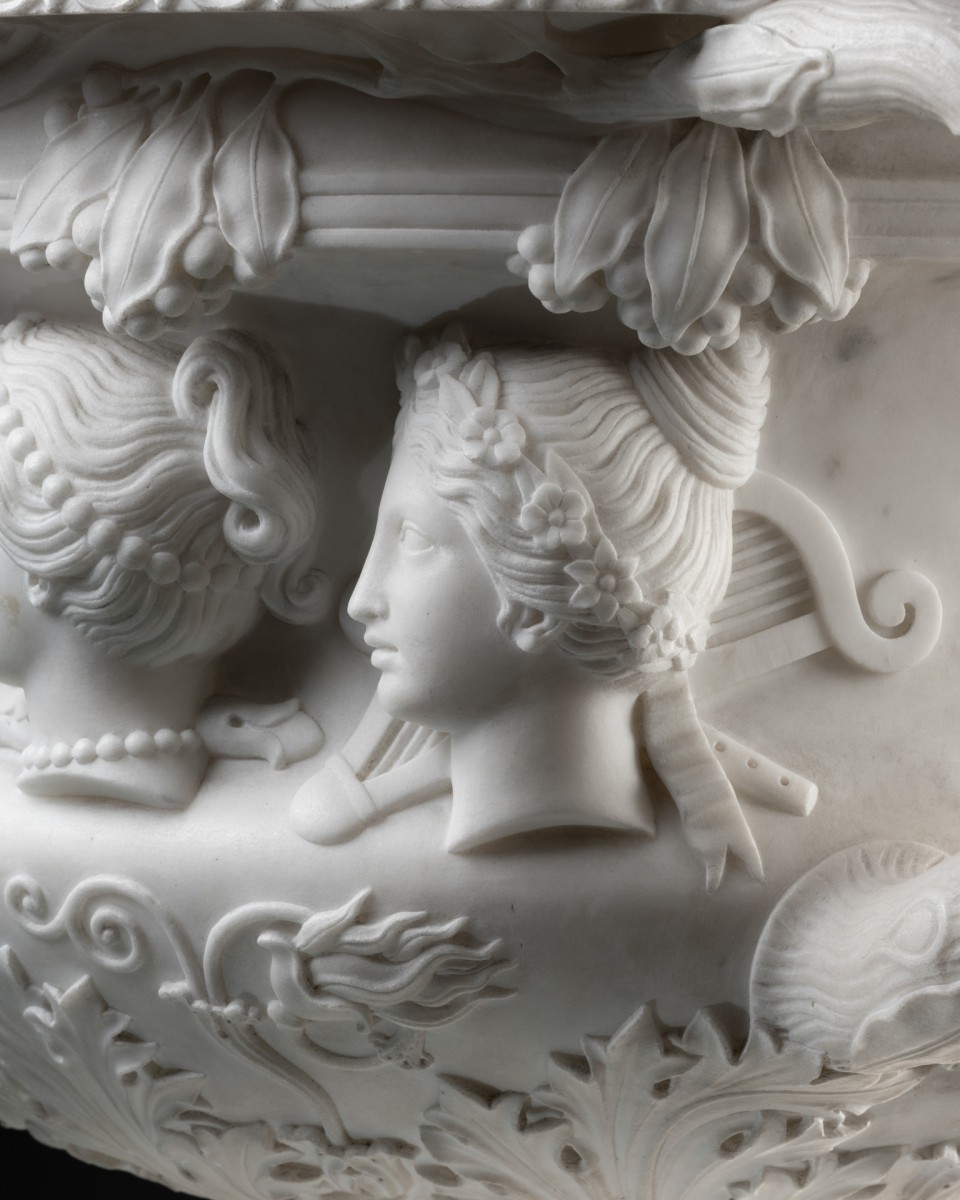
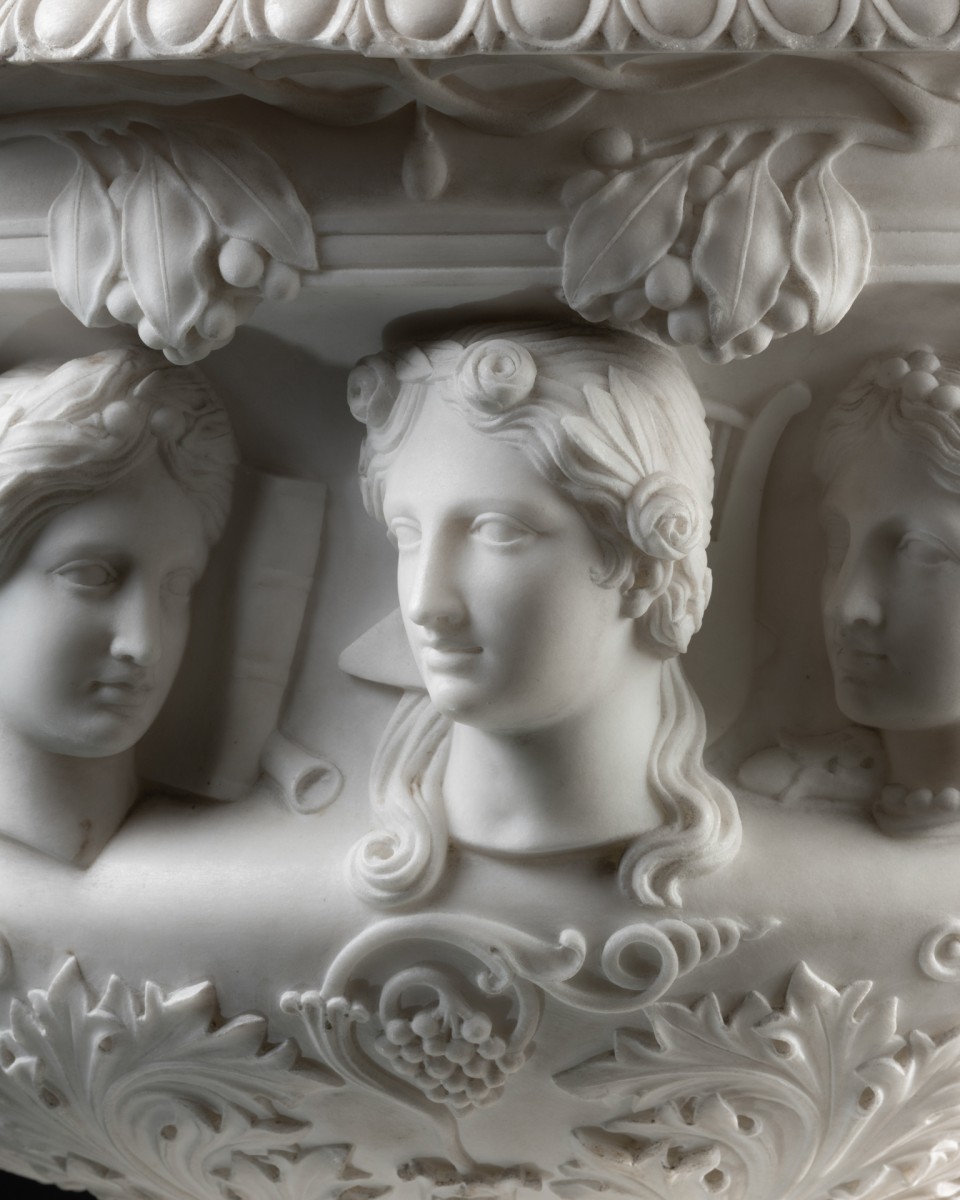
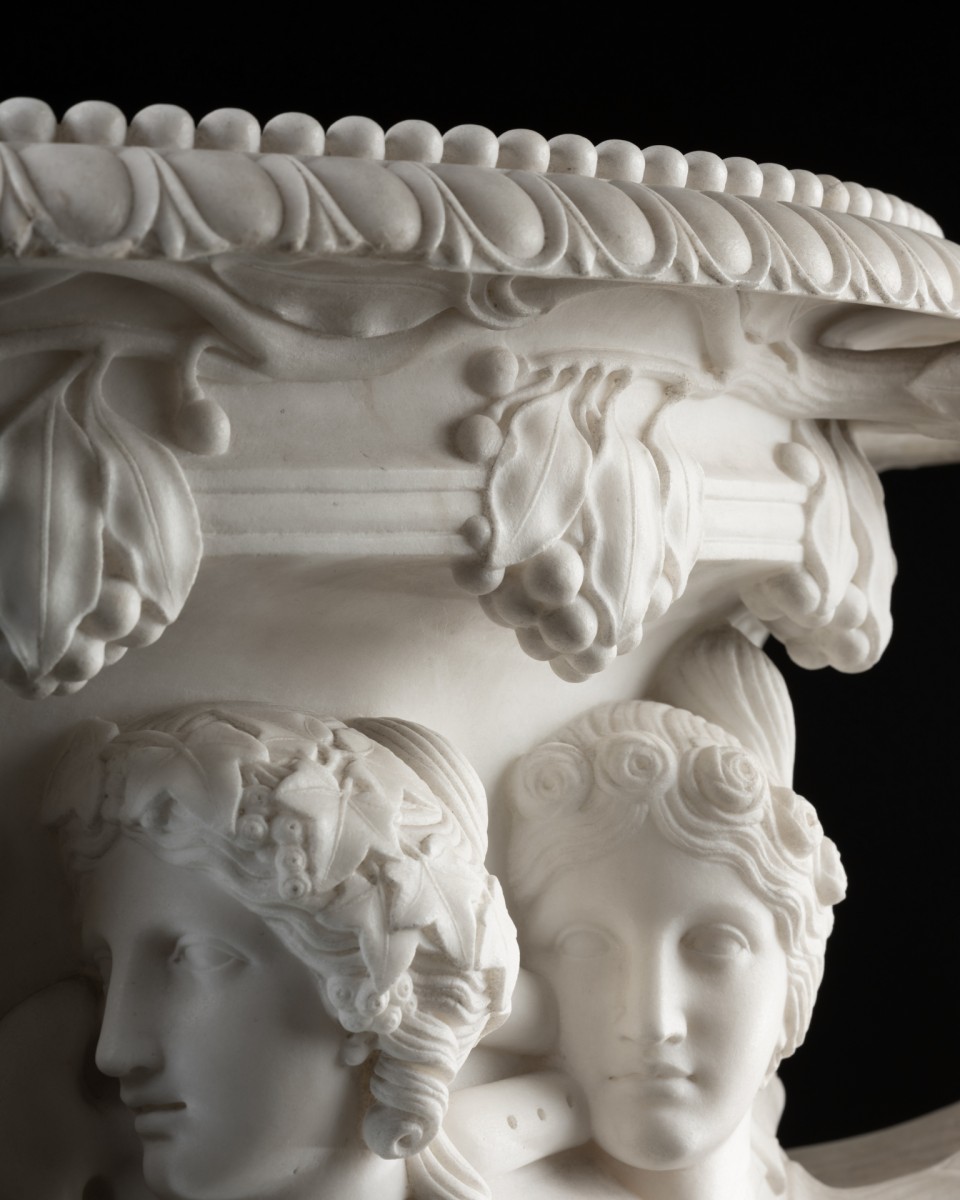
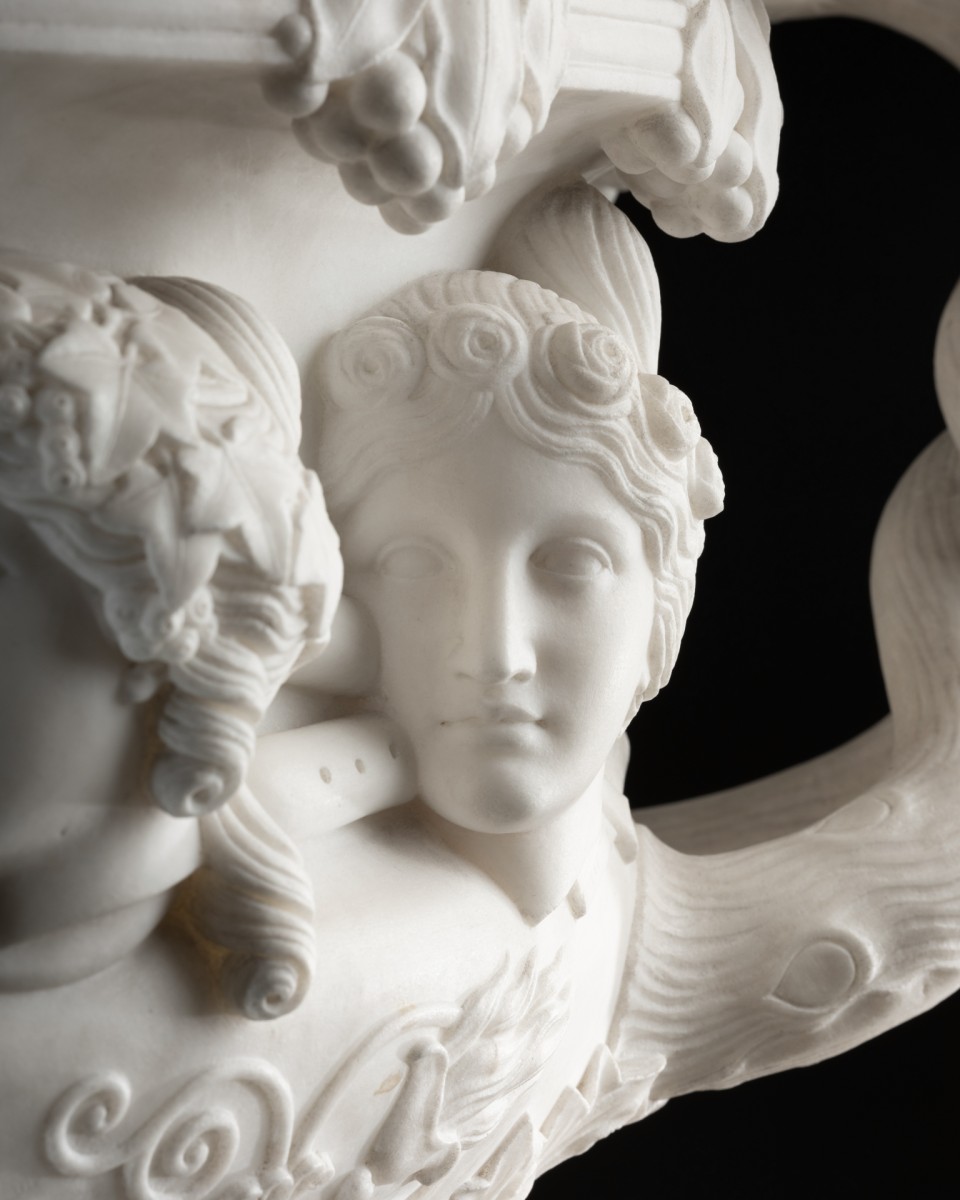
The principal sculptural feature is the frieze of heads encircling the body. Whereas the Warwick Vase displays bearded Sileni and mask-like faces evoking Bacchic revelry, this example presents a serene procession of youthful male and female figures accompanied by artistic attributes. This transformation of Dionysiac imagery into a celebration of Apollo and the Muses also appears in the Pitsligo vases. Here, the heads follow a carefully balanced rhythm: some wear laurel or floral wreaths, others simple bands or necklaces, while one has stars in her hair. Lyres, flutes, scrolls, torches, and musical tablets enrich this evocation of the arts and learning.
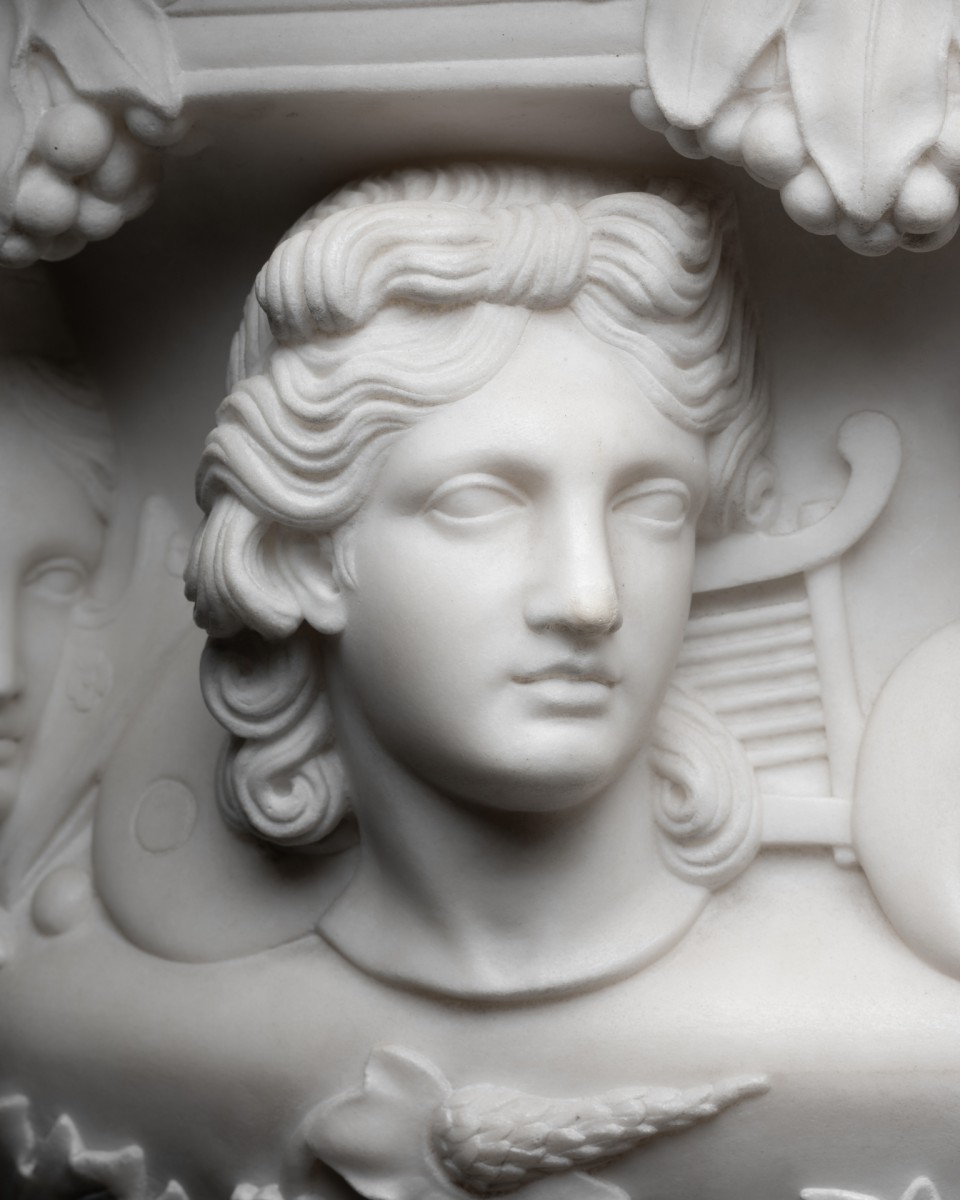
The principal male head almost certainly represents Apollo Musagetes, patron and leader of the Muses. His idealised youth, flowing hair, and the lyre behind his shoulder support this identification. Smooth cheeks, a straight nose, delicately articulated eyelids, and softly modelled locks recall ideal heads from Bartolini’s circle. His tranquil expression suggests divine contemplation rather than narrative action.
Several female figures surrounding him can be identified with varying degrees of confidence. Stars in the hair and a globe marked with celestial symbols indicate Urania, Muse of Astronomy. A figure crowned with ivy and accompanied by a lyre suggests Erato, Muse of lyric and love poetry. A scroll points to Clio, Muse of History, while a tablet bearing musical notation evokes Euterpe. Other attributes permit more than one interpretation, reflecting the sculptor’s freedom in adapting ancient conventions. Together, the figures celebrate the arts as complementary expressions of a harmonious order.
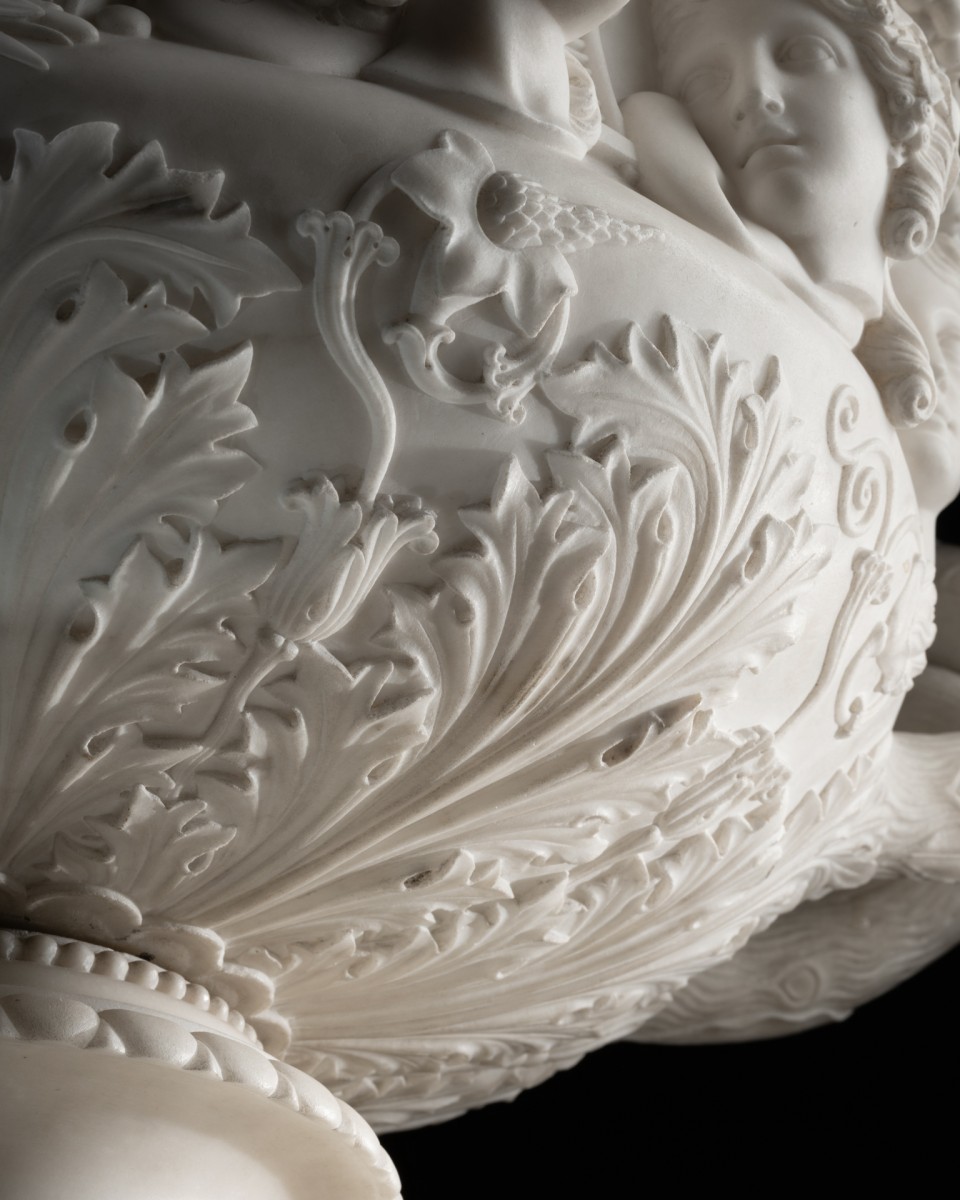
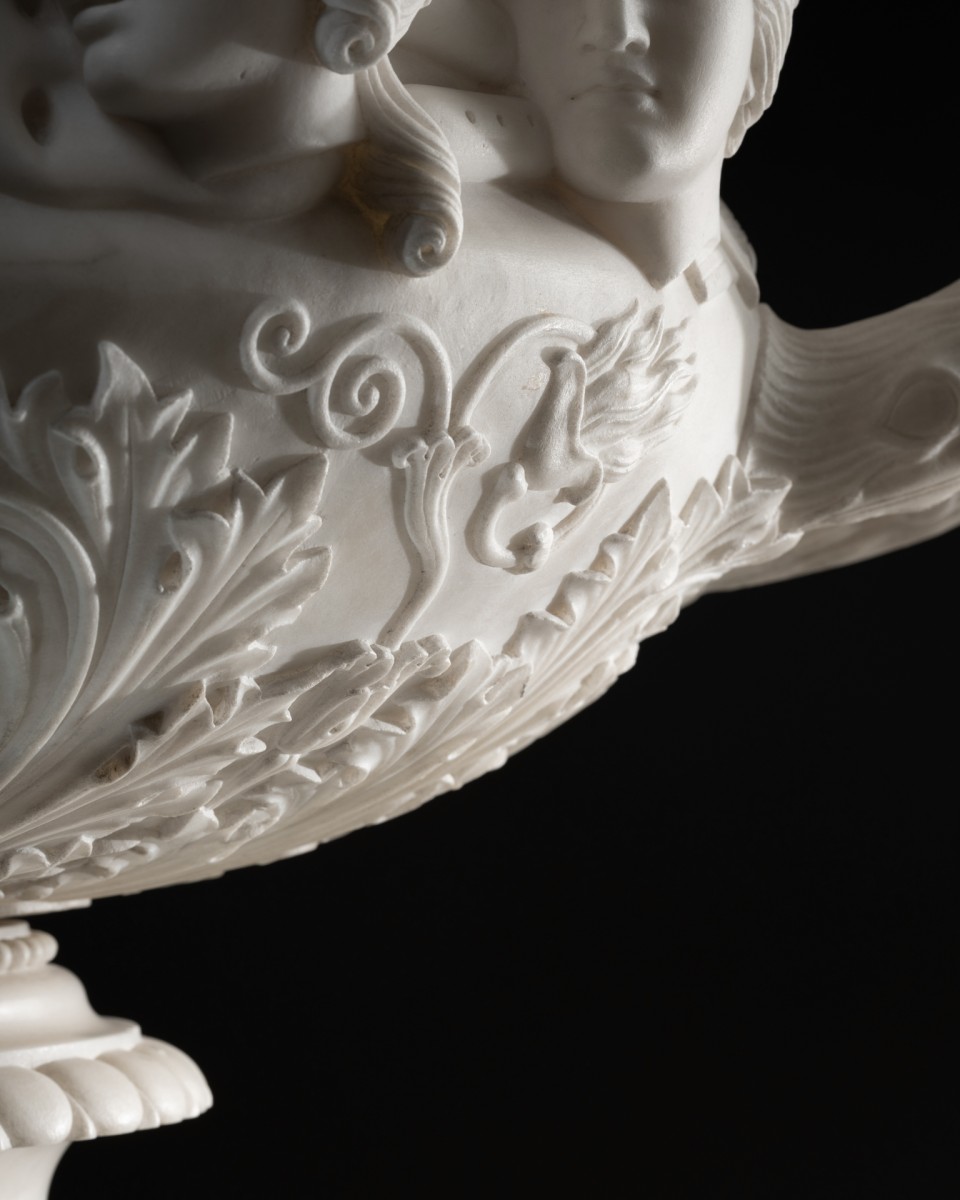
Below the heads, a rich vegetal register combines grapes, acanthus leaves, and scrolling tendrils, punctuated by small flames that may allude to inspiration. Traditionally associated with abundance, these motifs acquire an intellectual and poetic resonance within the composition. The deeply undercut leaves have sharply defined veins and finely curled tips. Their virtuosity recalls the ornament of the Pitsligo vases and the work of specialist carvers employed in Florentine studios.
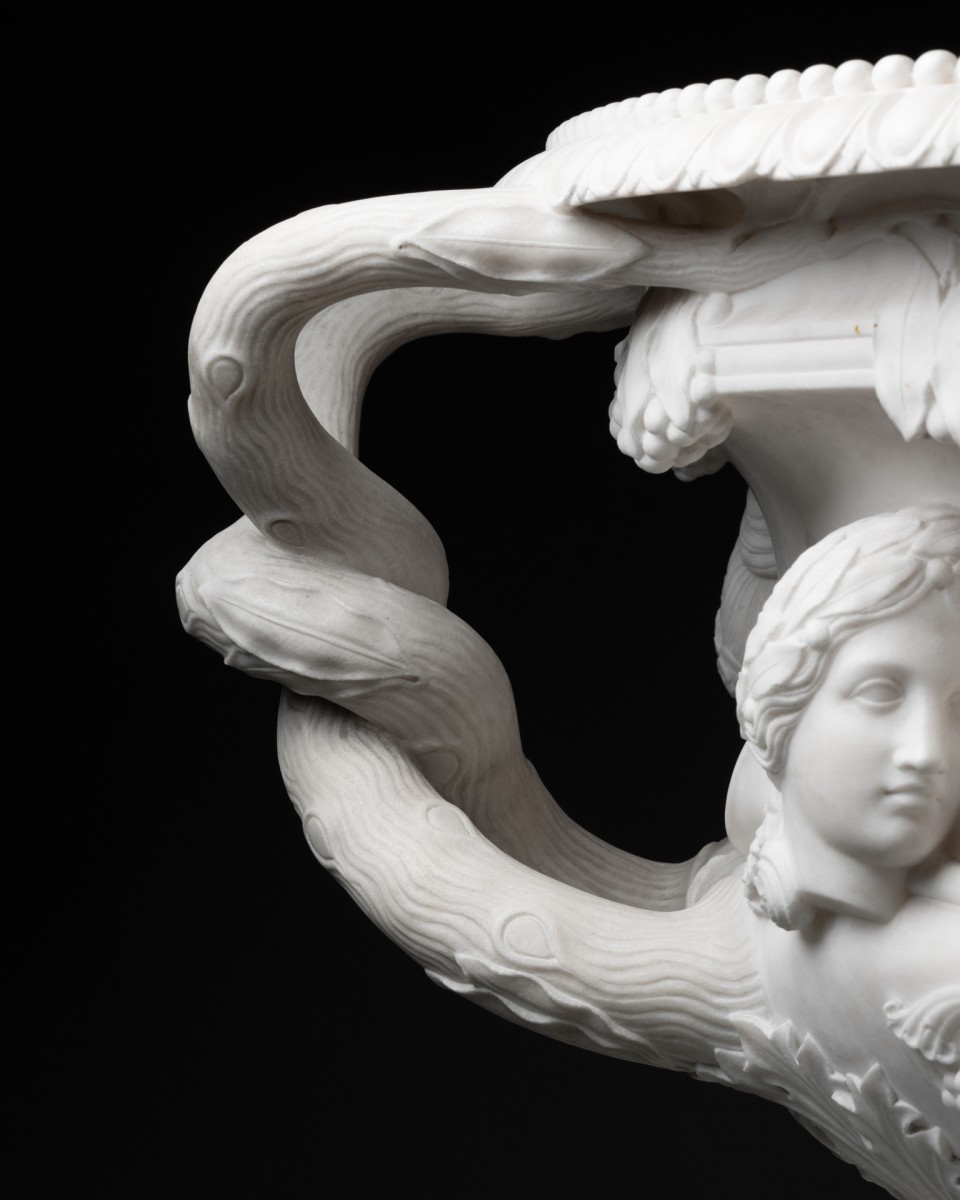
The handles are particularly inventive. Conceived as knotted, twisting branches, they encircle the upper body before returning to the rim. Their surfaces reproduce the grain and irregularities of wood, suggesting living material transformed into marble. Deeply carved passages between the overlapping branches combine technical sophistication with elegance. The egg-and-dart borders, palmettes, and pedestal mouldings reveal an equally assured command of classical architectural ornament.
The vase belongs to the tradition of reinterpretation encouraged by Giovanni Battista Piranesi’s engravings of the Warwick Vase. Florentine sculptors adapted the theatrical force of the ancient model to the more measured sensibilities of the late Enlightenment and early Romantic period. The substitution of the Muses for a Bacchic procession exemplifies this change: antiquity becomes a vehicle for ideas about beauty, knowledge, and artistic harmony. Paul Storr’s silver-gilt versions and the bronze example acquired by George IV demonstrate the model’s wider European appeal.
The affinities with the Forbes of Pitsligo vases extend from facial proportions and the treatment of hair to the acanthus, palmettes, and organisation of the decoration. These correspondences support an attribution to Bartolini’s workshop, although they do not establish an individual hand with certainty. The assurance of the composition and refinement of detail may suggest a leading modeller working for an international clientele during the late 1810s or 1820s.
In scale and ambition, the vase reflects the taste of European collectors and Grand Tour travellers for monumental reinterpretations of antiquity. The softness of the modelling and the contemplative individuality of the faces temper its Neoclassical discipline. More than a decorative object, it offers a poetic celebration of the unity of the arts and exemplifies the creative vitality of Florentine workshops, where ancient forms became the foundations of new artistic expression.
Delevery information :
We can arrange shipping.