Offered by Galerie Francesco De Rosa
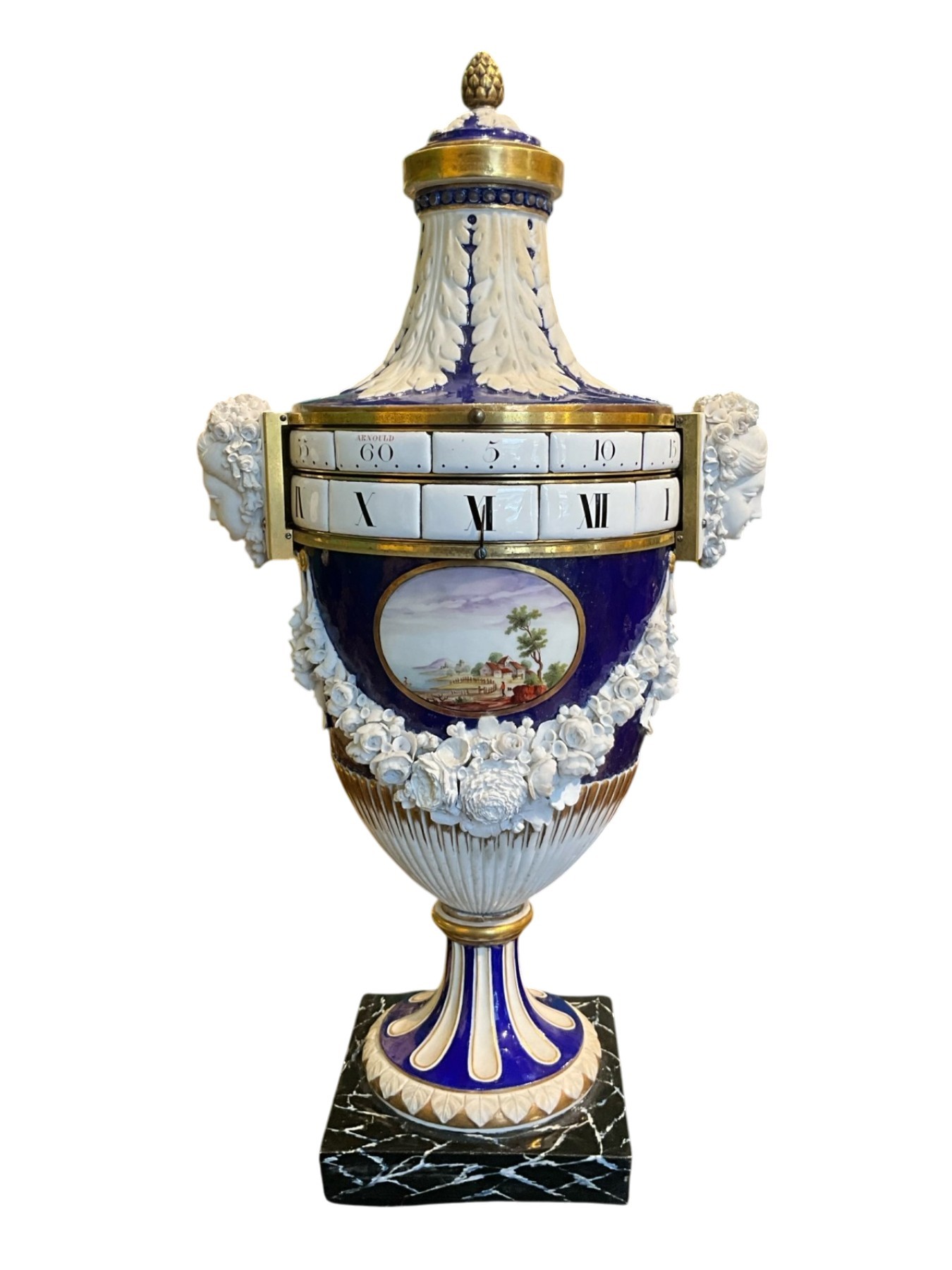
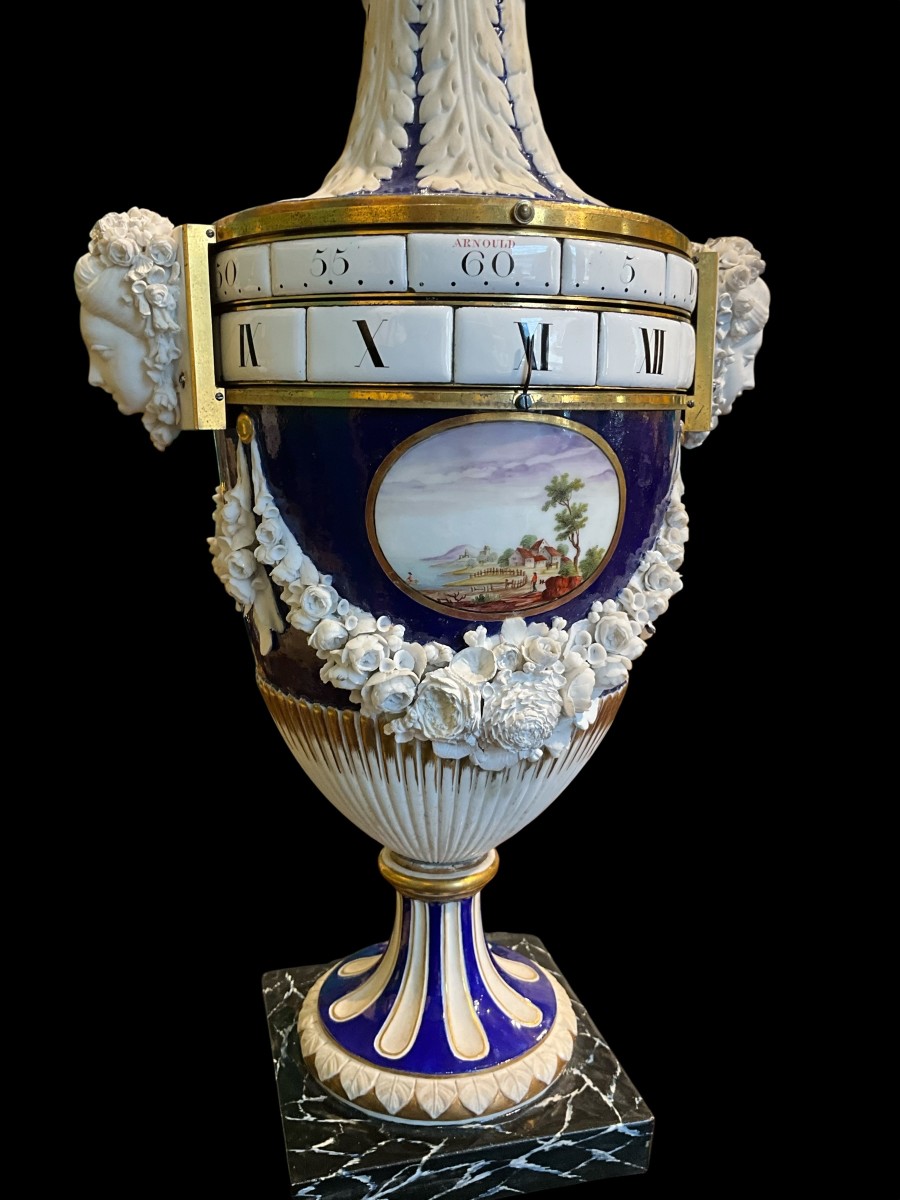
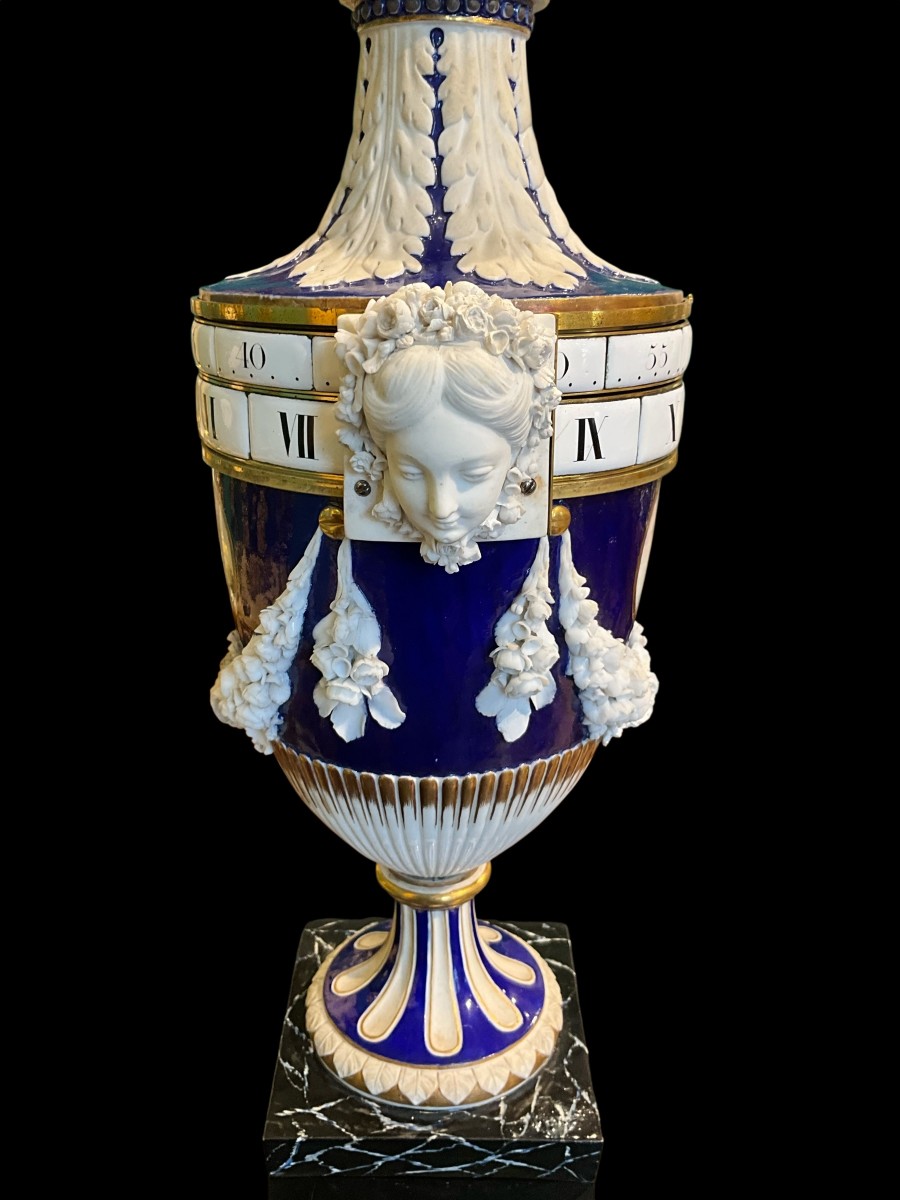
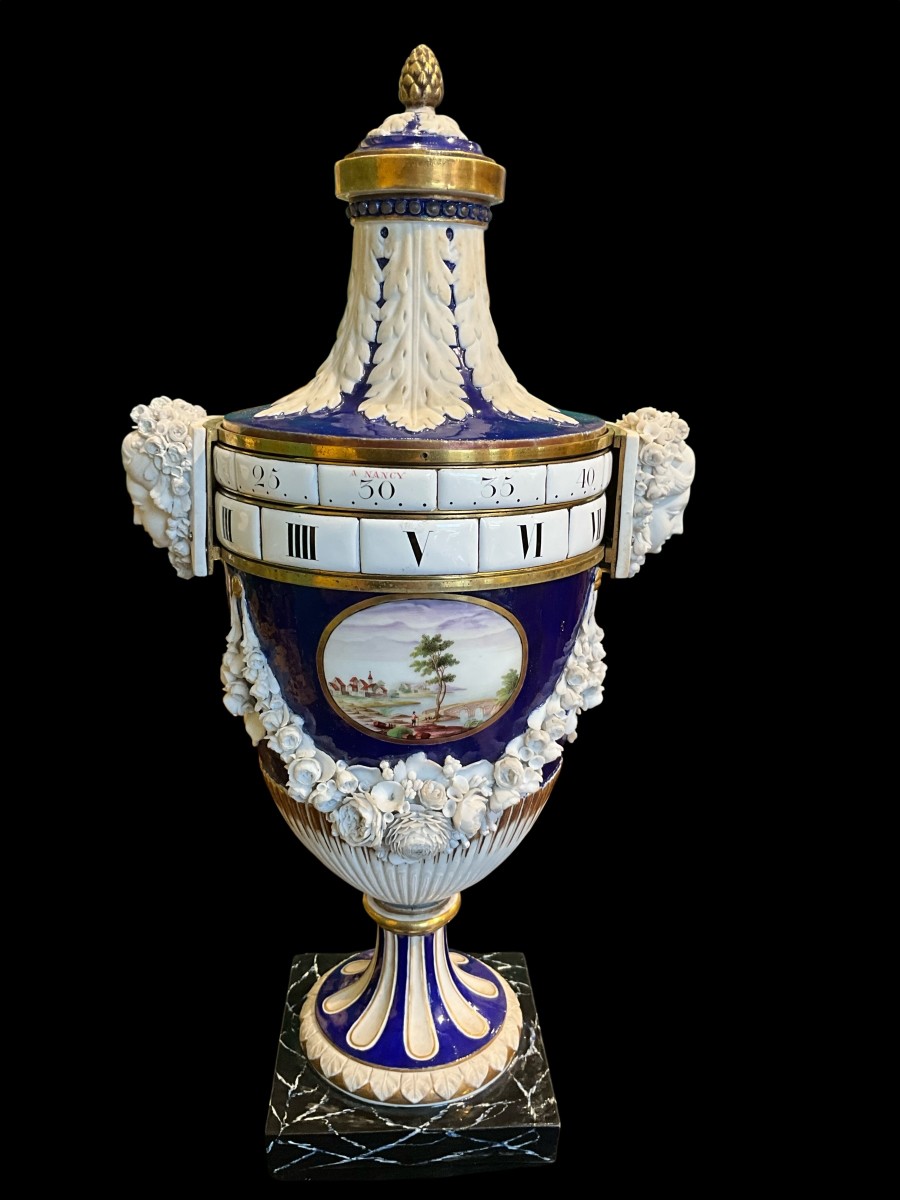

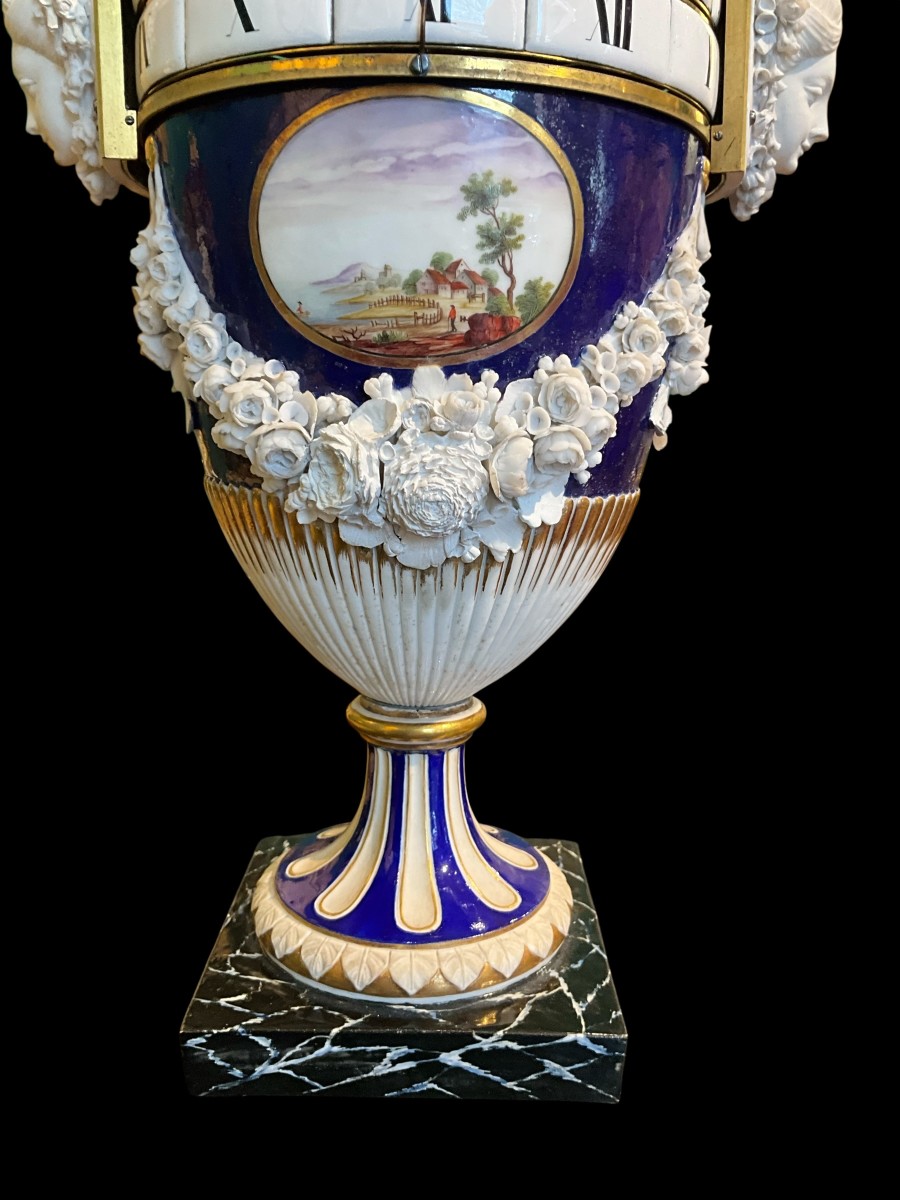
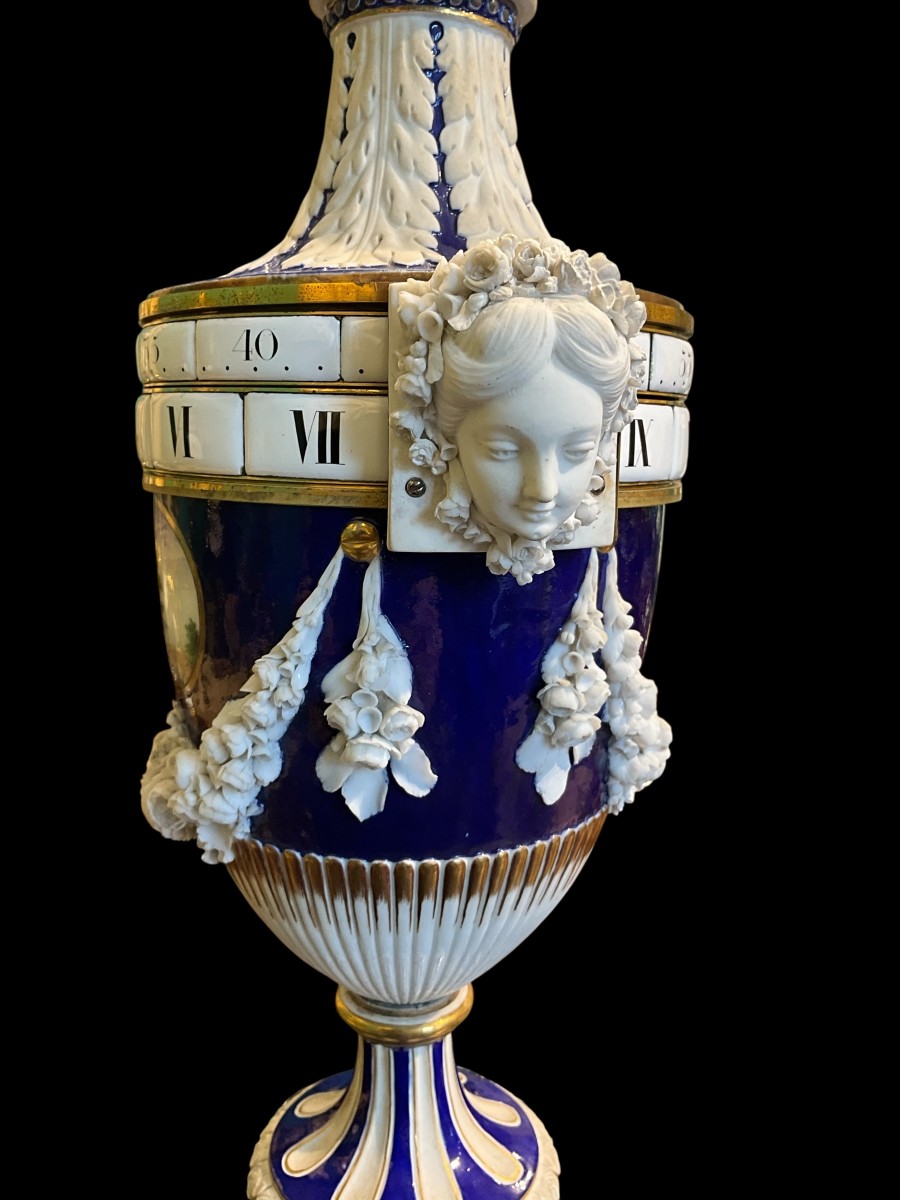
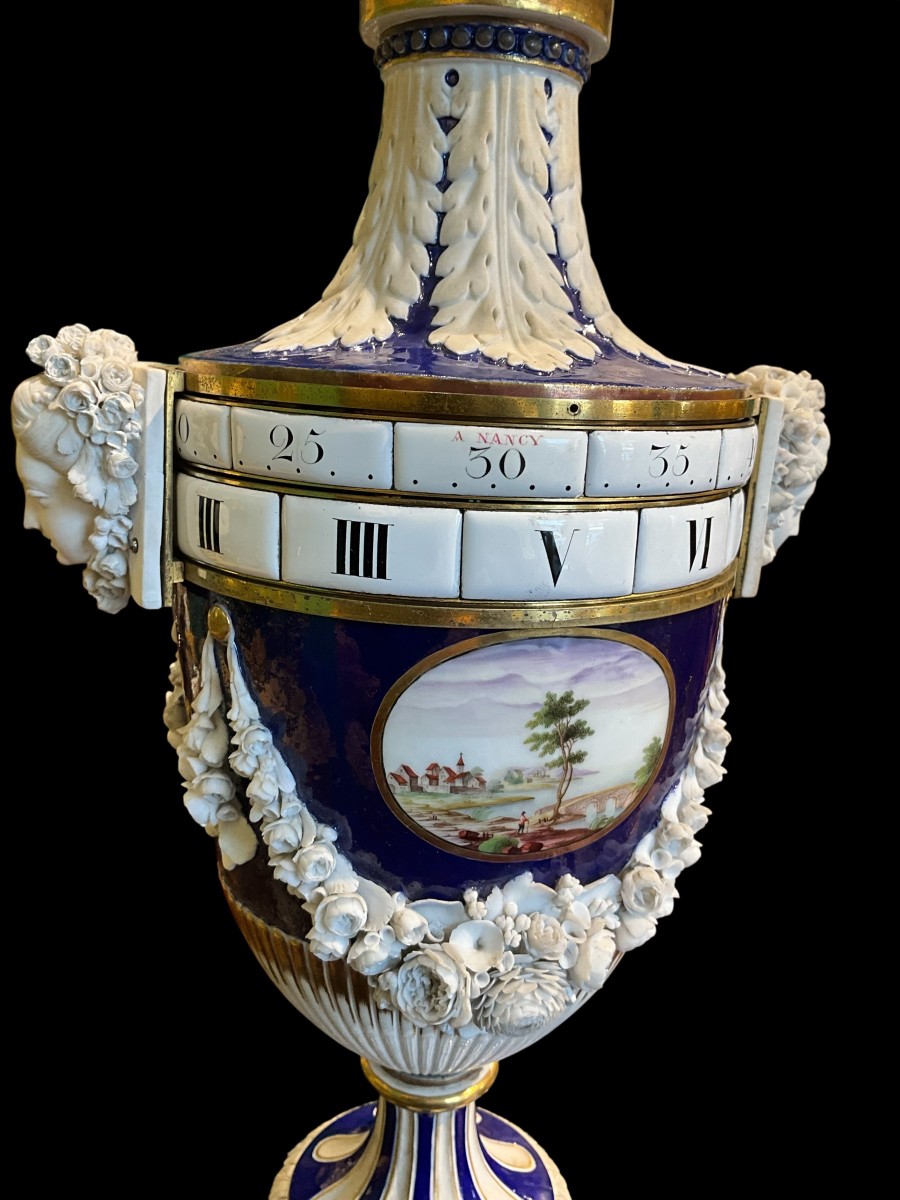
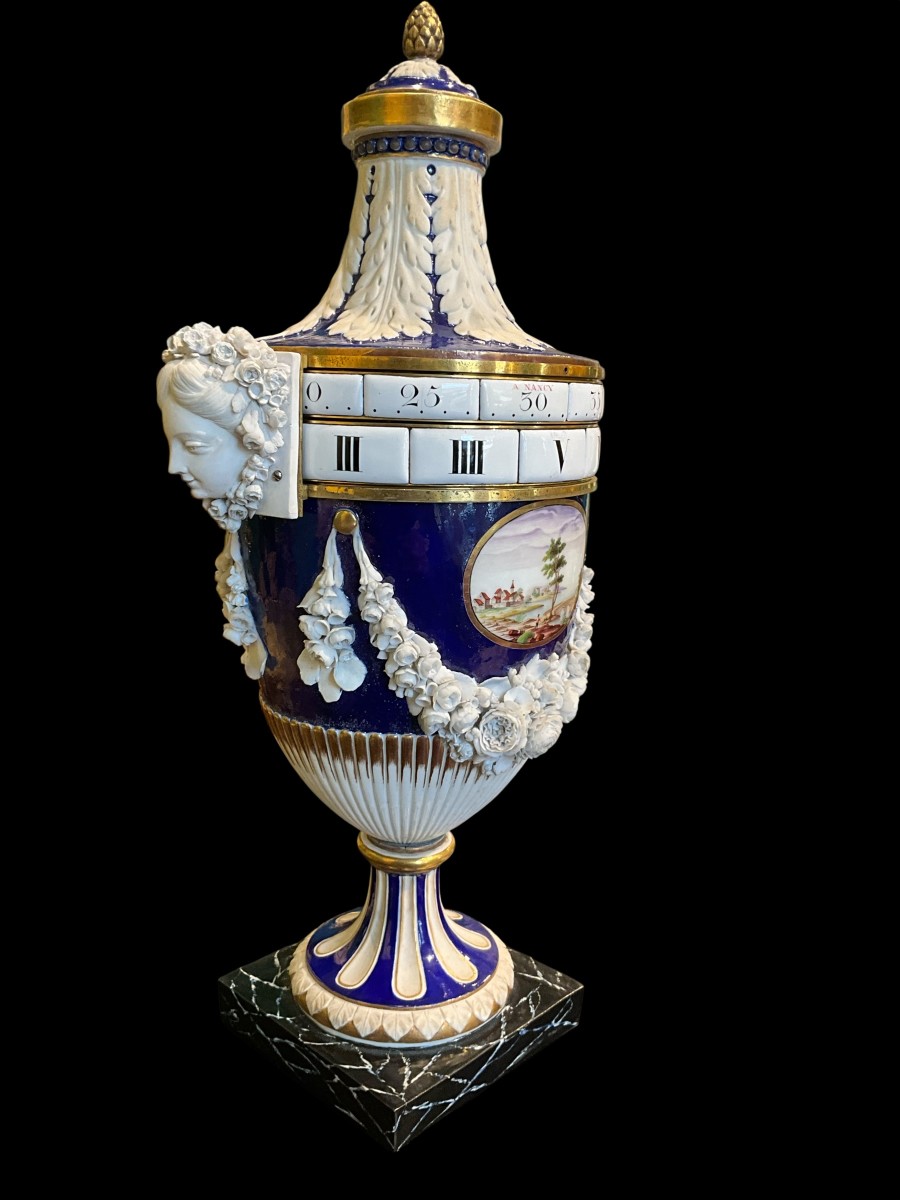
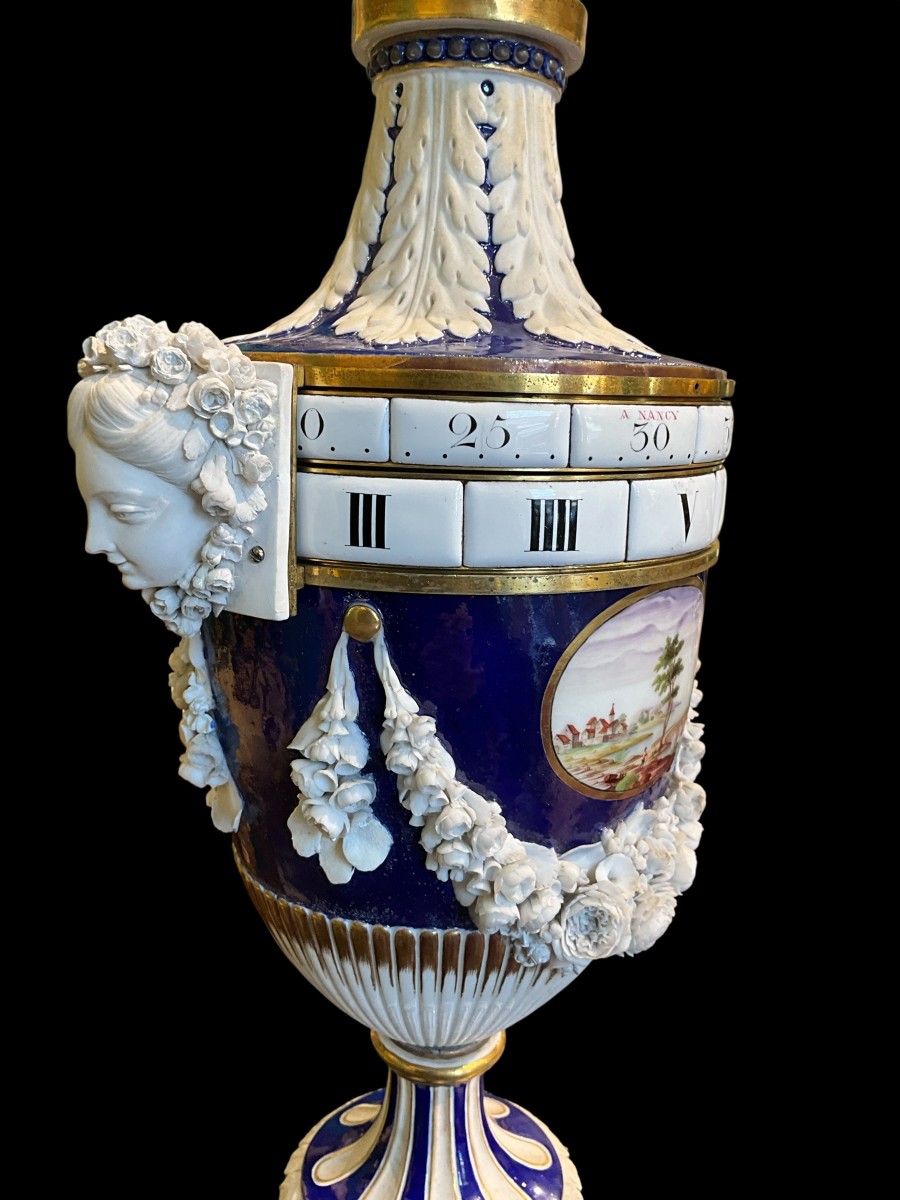
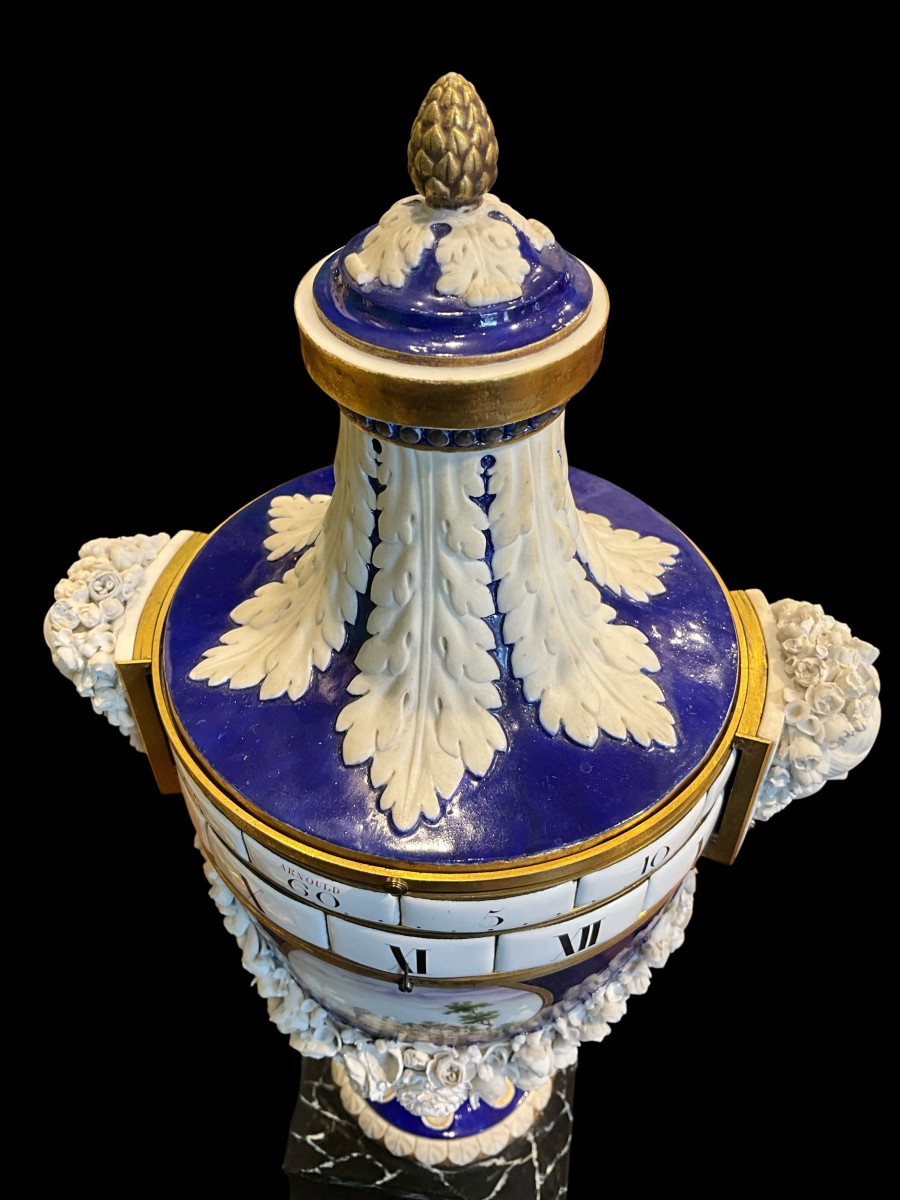
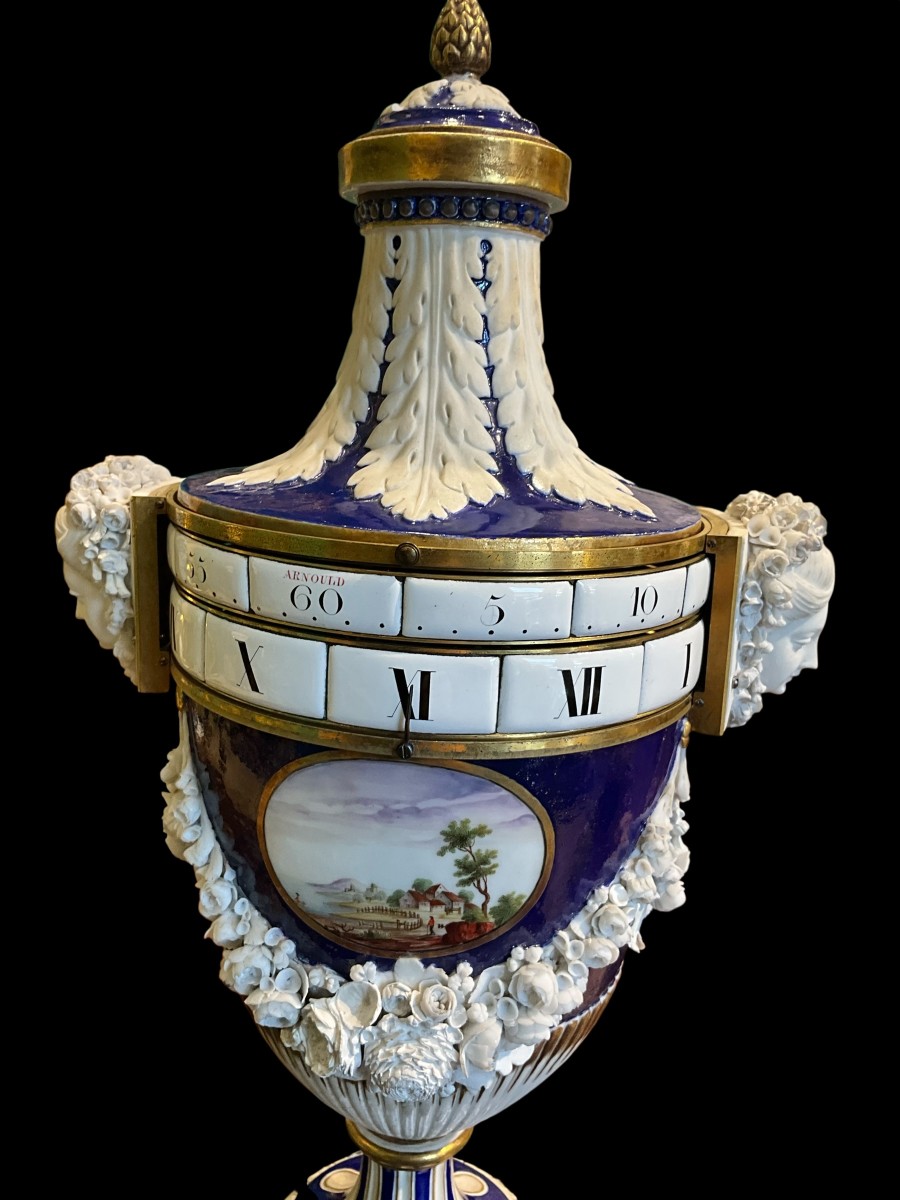
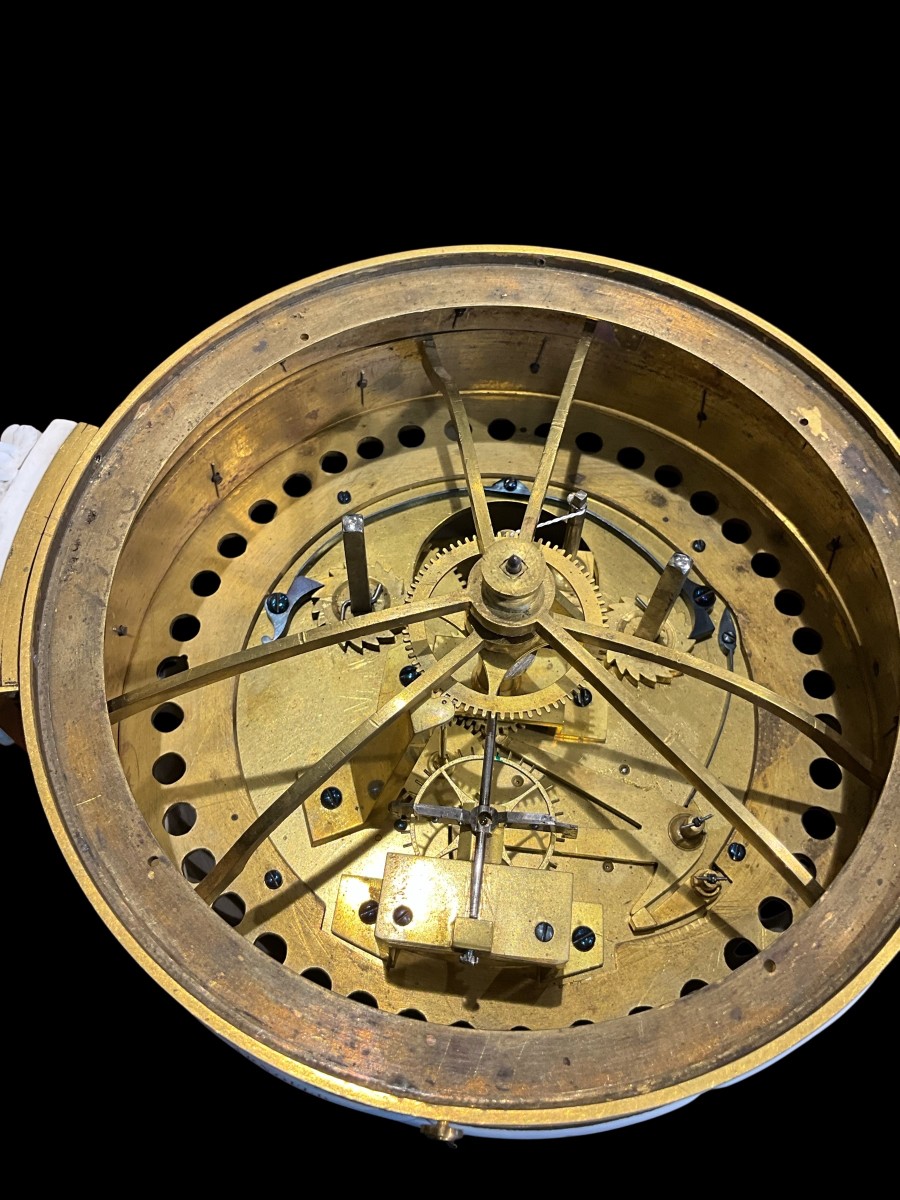
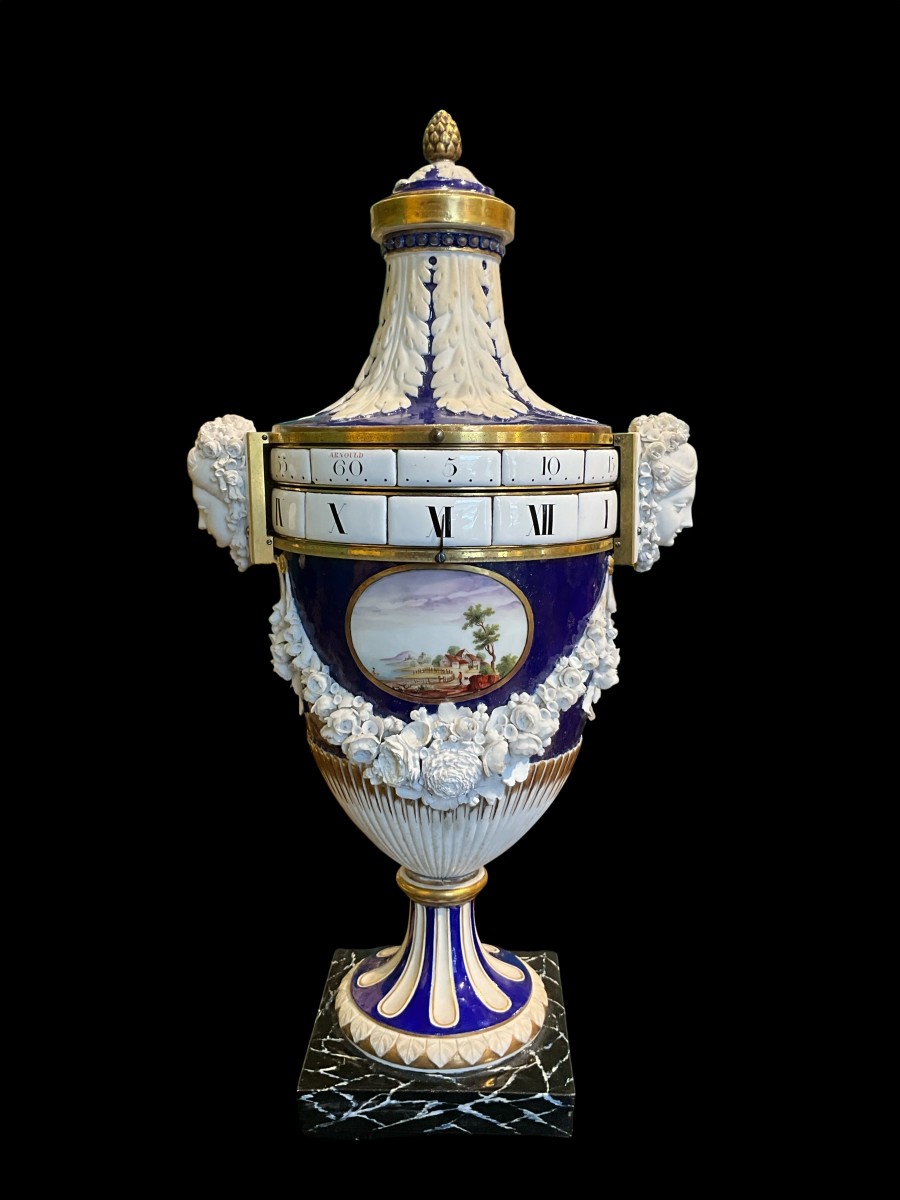
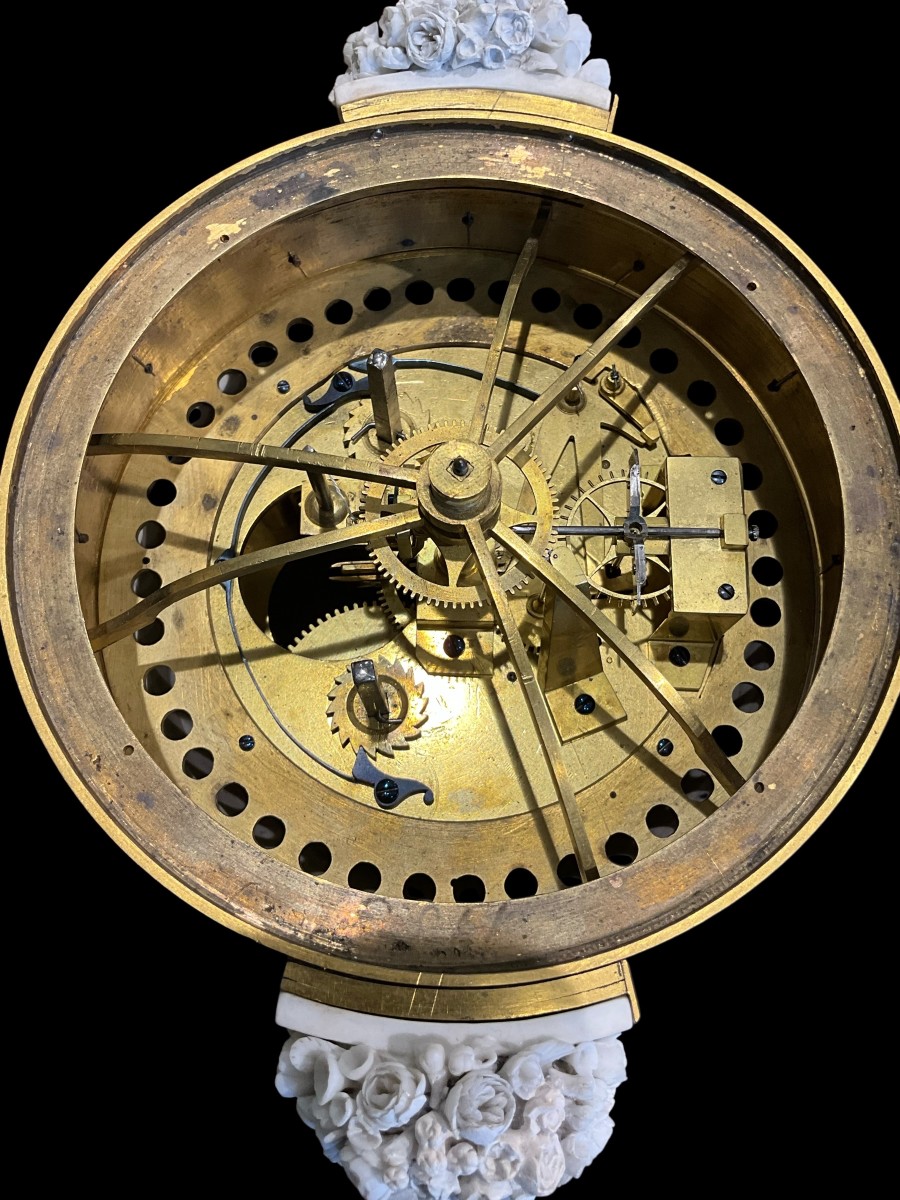
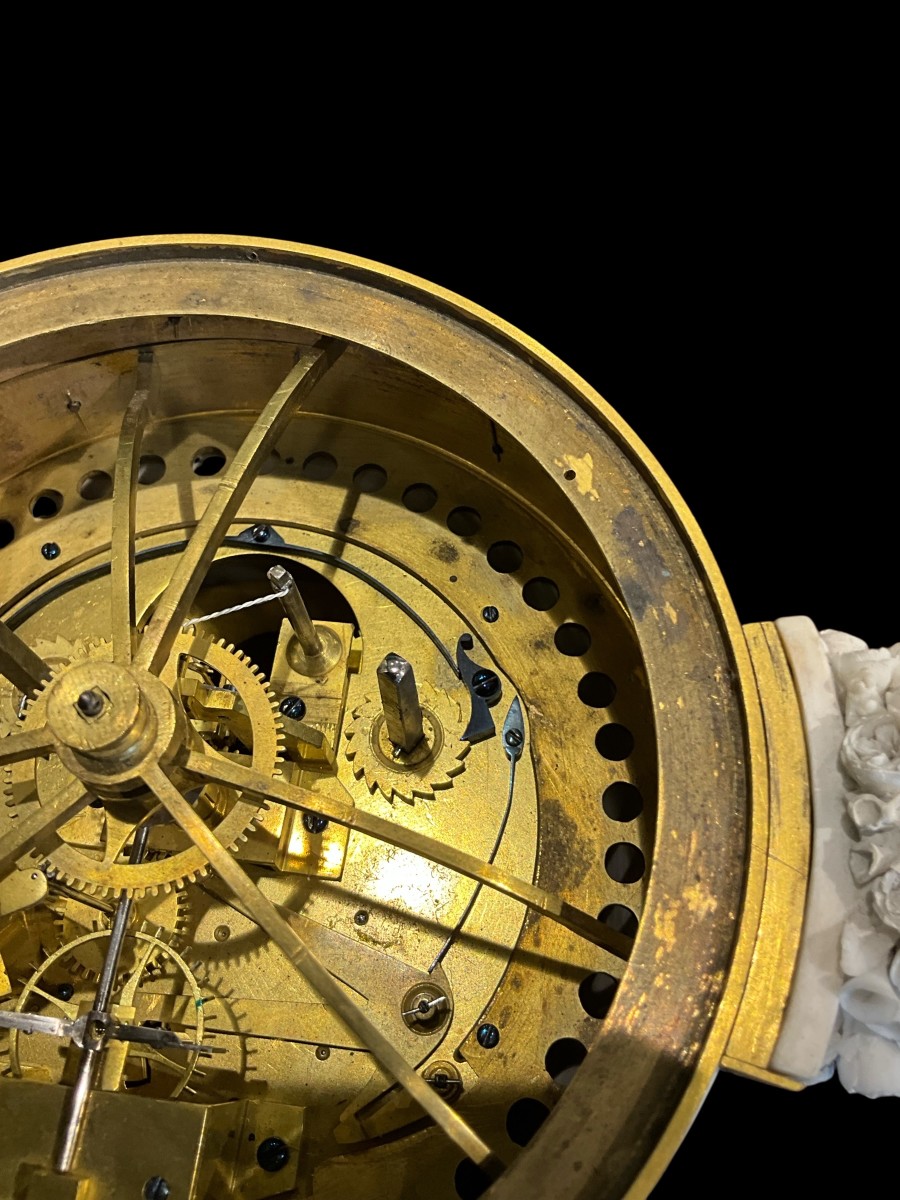
An exceptional mantel clock with a "rotating dial" (*cercle tournant*) movement, this vase-shaped timepiece features two overlapping rotating rings: one displaying the hours in Roman numerals, and the other showing the minutes—in five-minute intervals—in Arabic numerals, all indicated by a blued-steel pointer. The watchmaker’s signature, "ARNOULD a NANCY," is inscribed on the rings. The mechanism is housed within a magnificent baluster-shaped vase of polychrome hard-paste porcelain, designed in the style of an antique urn and set against a blue ground. On either side, an oval medallion depicts a lakeside landscape in the manner of Claude Gelée, known as Le Lorrain. The handles are modeled as female heads in *biscuit* porcelain, adorned with floral wreaths, while garlands of leaves drape across the body of the vase.
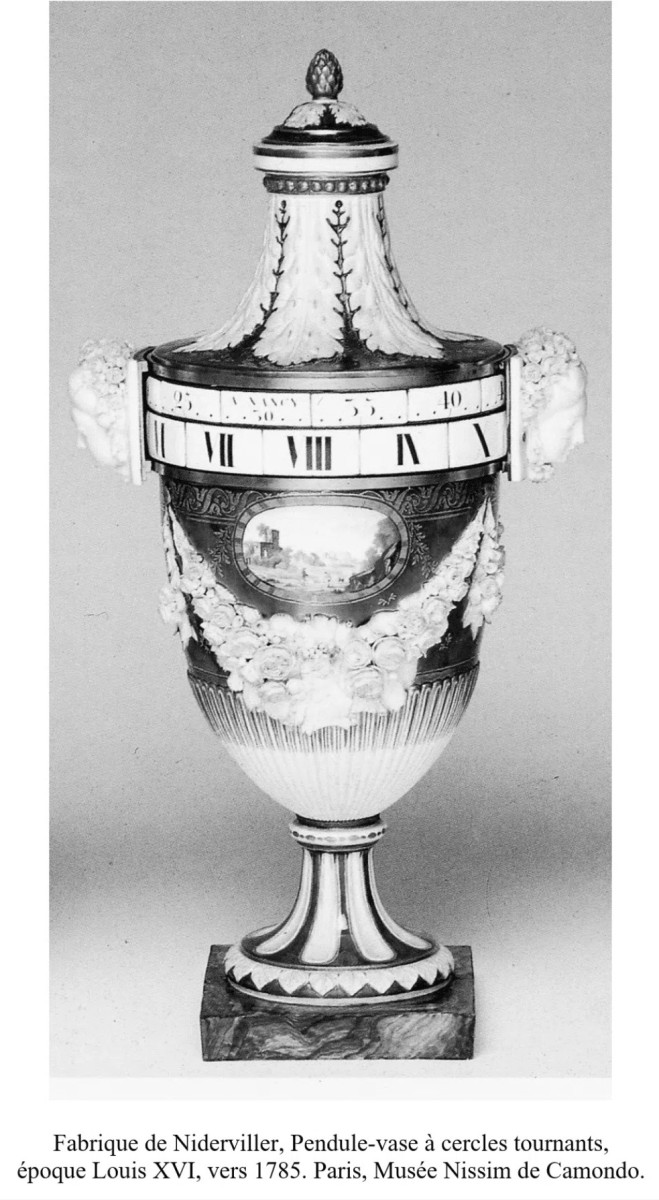
The origins of the Niderviller manufactory trace back to a faience factory founded in 1735. On September 4, 1748, Jean-Louis Beyerlé—then director of the Strasbourg mint—acquired the manufactory and rapidly expanded its production, recruiting, among others, François-Antoine Anstett, who had trained at the Meissen manufactory. Just over two decades later, Jean-Louis Beyerlé—who was in violation of the royal privilege for the production of hard-paste porcelain, a right reserved exclusively for the Royal Manufactory at Sèvres—sold the factory to Adam-Philippe, Count de Custine. The latter diversified production by acquiring a large number of molds from Paul-Louis Cyfflé and bringing in the promising sculptor Charles-Gabriel Sauvage, known as Lemire (1741–1827). With the onset of the revolutionary upheavals, the Count de Custine was condemned. The Niderviller factory was confiscated and became national property. A clock similar to the one we are offering can be found at the Musée Nissim de Camondo in Paris.
Origin: France. Period: Louis XVI. Dimensions: HxW 38x20 cm. Base: 10.5x10.5 cm.