Offered by Poisson et Associés
REQUEST INFORMATION

Paintings, sculptures and art objects from the 15th to the 17th century
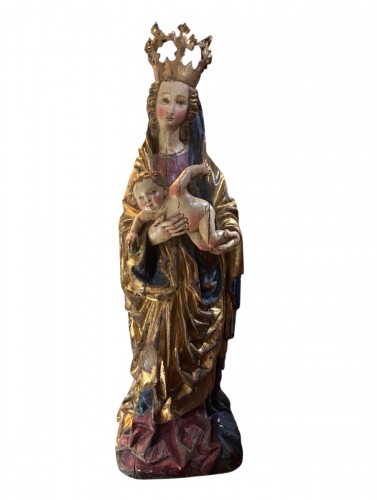
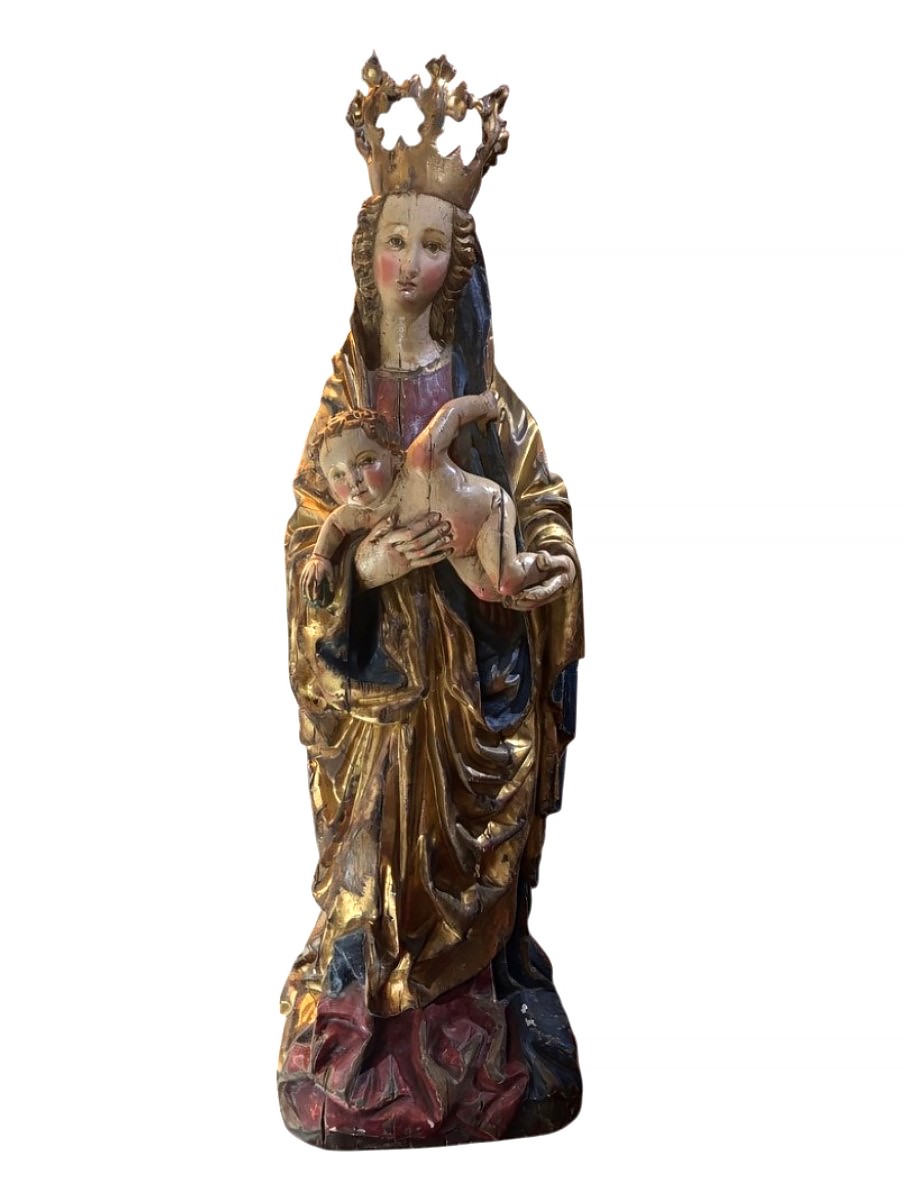
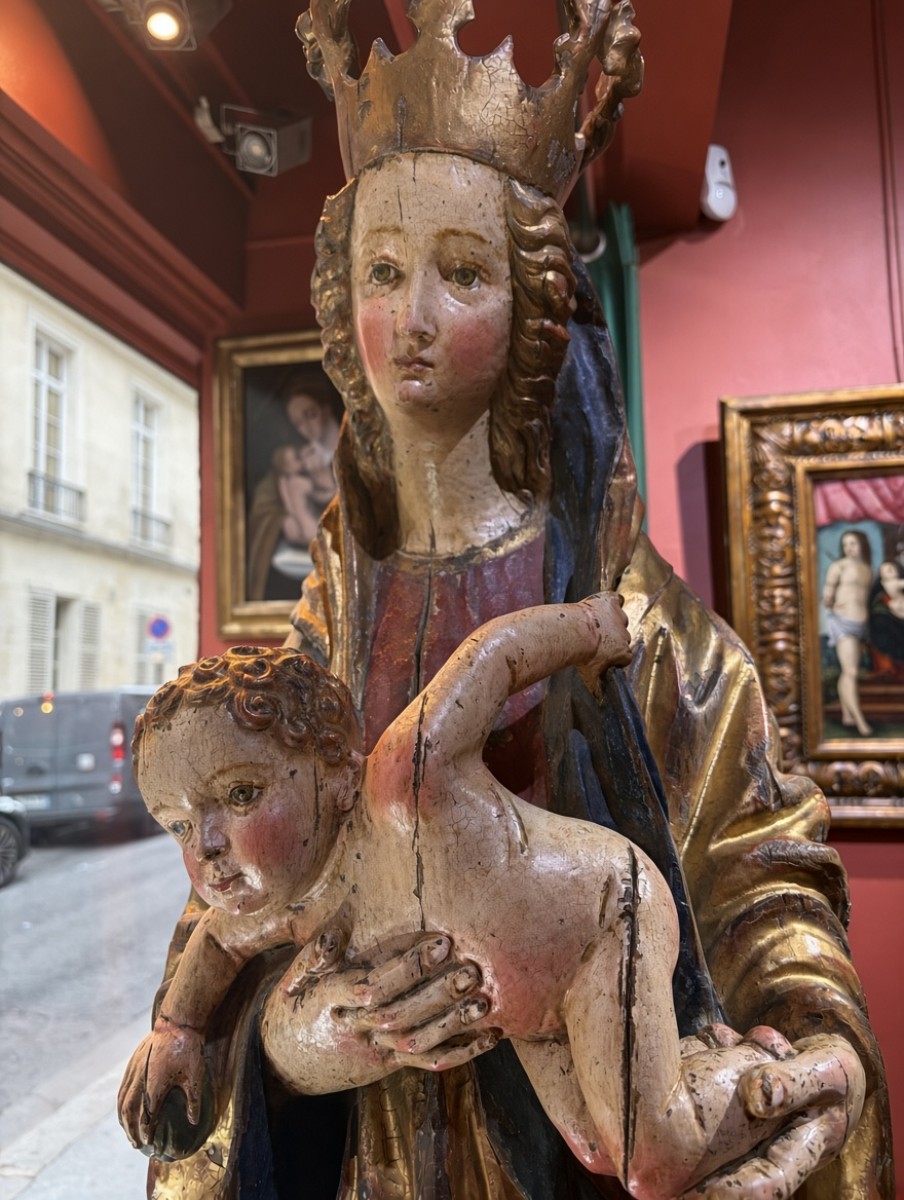
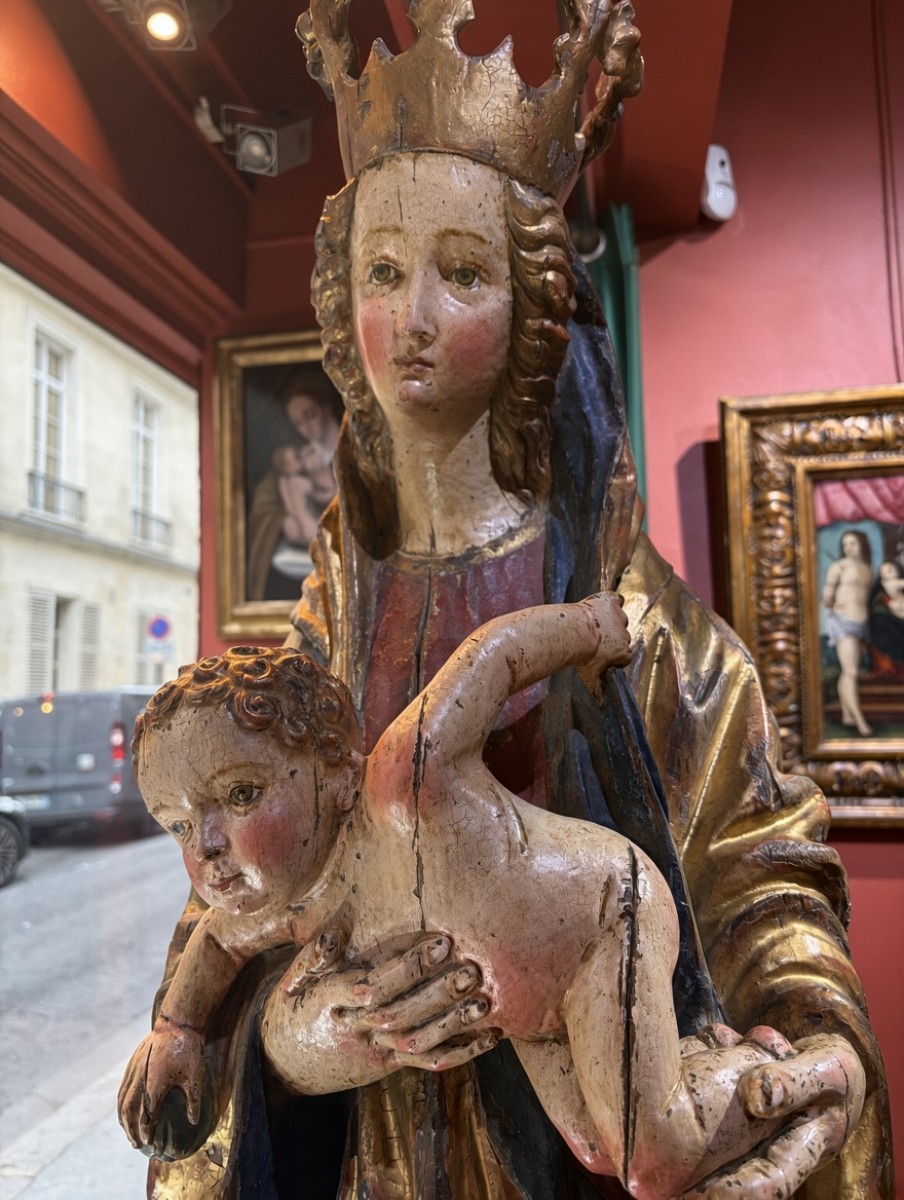
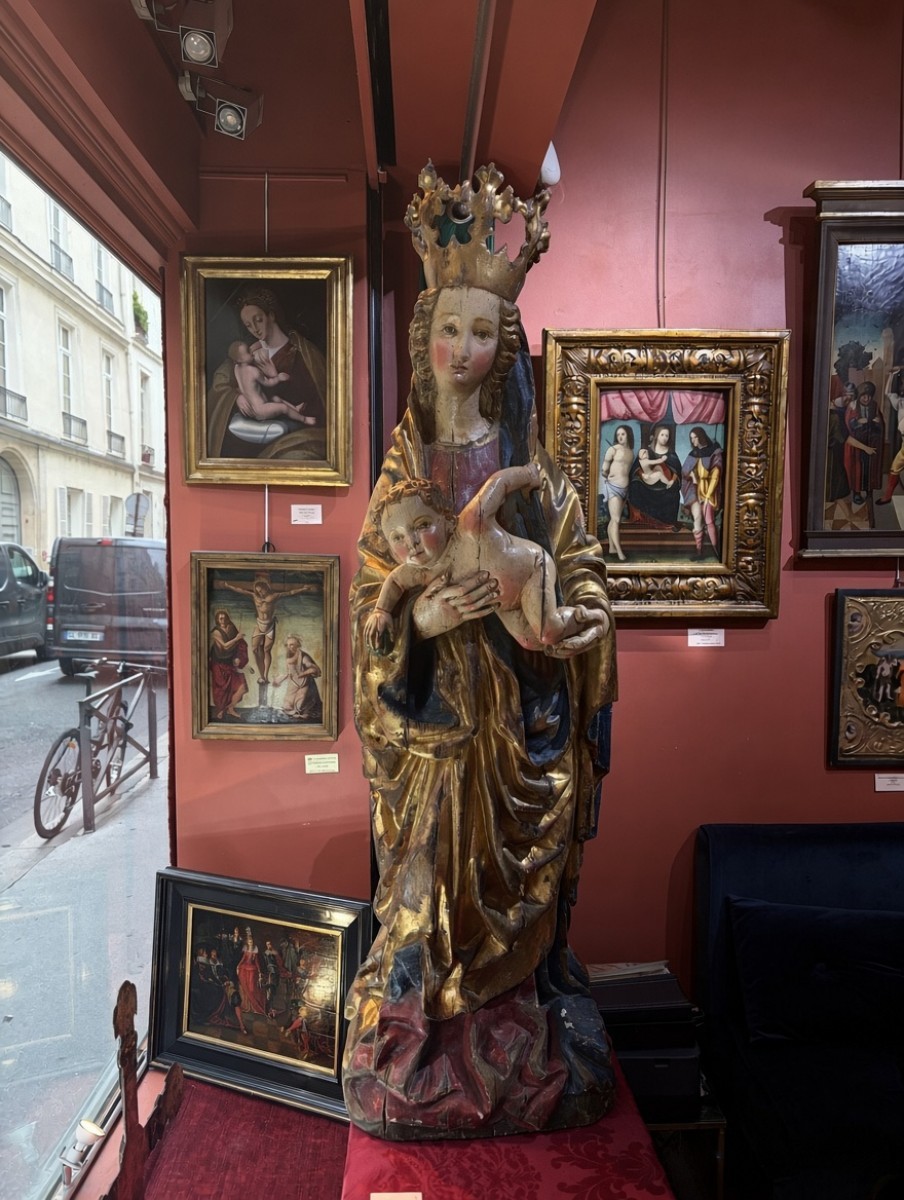
The Virgin stands with a gentle sway of the hips. She wears a tall, openwork crown with fleurons. Her oval face, with its high forehead, is framed by long, curling gilt locks falling over her shoulders. Her features are delicate: almond-shaped eyes, a straight nose, a small mouth and rose-tinted cheeks. Together they convey the serene, contemplative sweetness typical of Late Gothic Madonnas.
She wears a red gown with a round neckline and a voluminous gilt mantle lined in azure blue, one fold of which is drawn over her head as a veil. The drapery, with its deep, angular folds, wraps around the front of the figure and ends in a broad sweep of fabric over the base. This treatment is characteristic of South German sculpture of the last quarter of the 15th century.
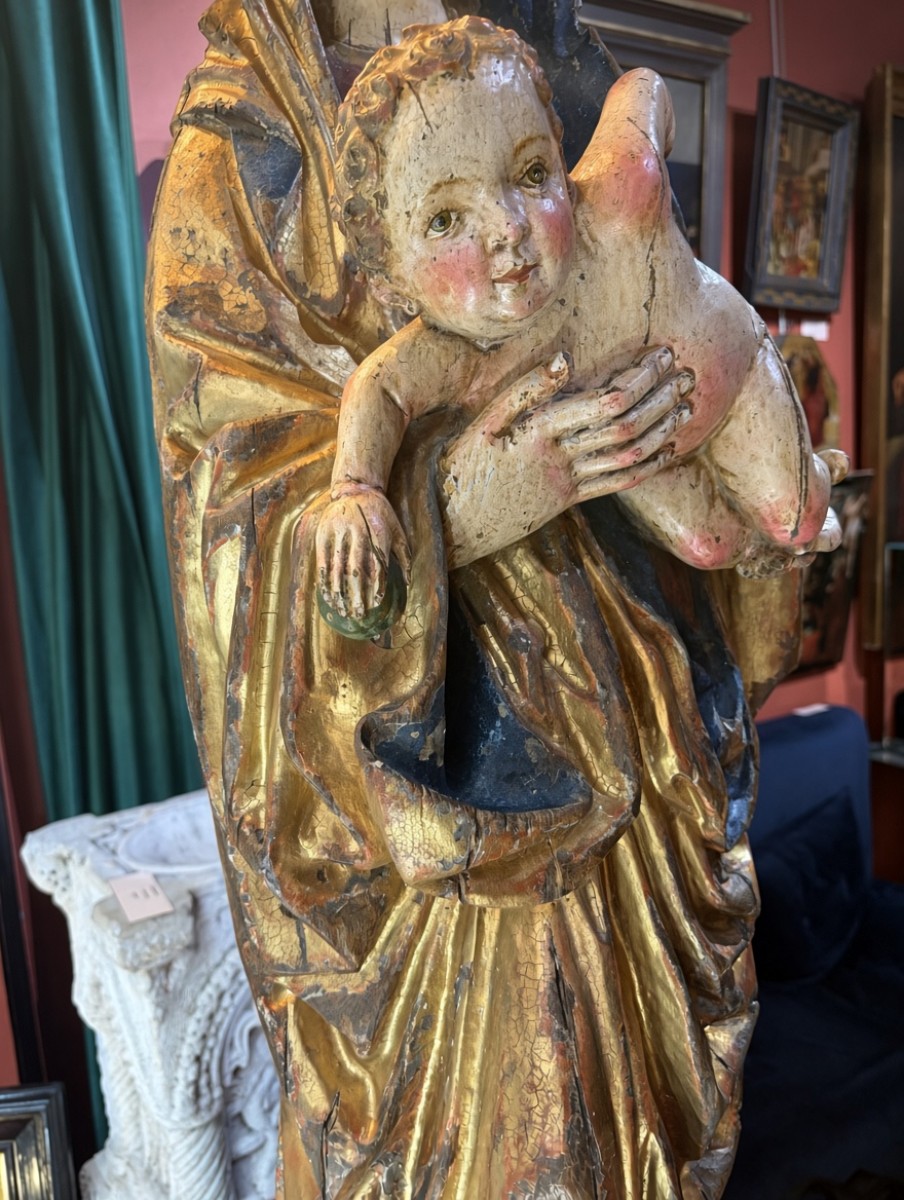
The Virgin presents the nude Christ Child, held horizontally against her breast. His head is covered with tight curls. With one hand he grasps his mother’s veil, and with the other he holds the orb, symbol of his sovereignty over the world. This lively composition, combining maternal tenderness with an affirmation of Christ’s kingship, is frequently found in Swabian and Franconian workshops of the late Middle Ages.
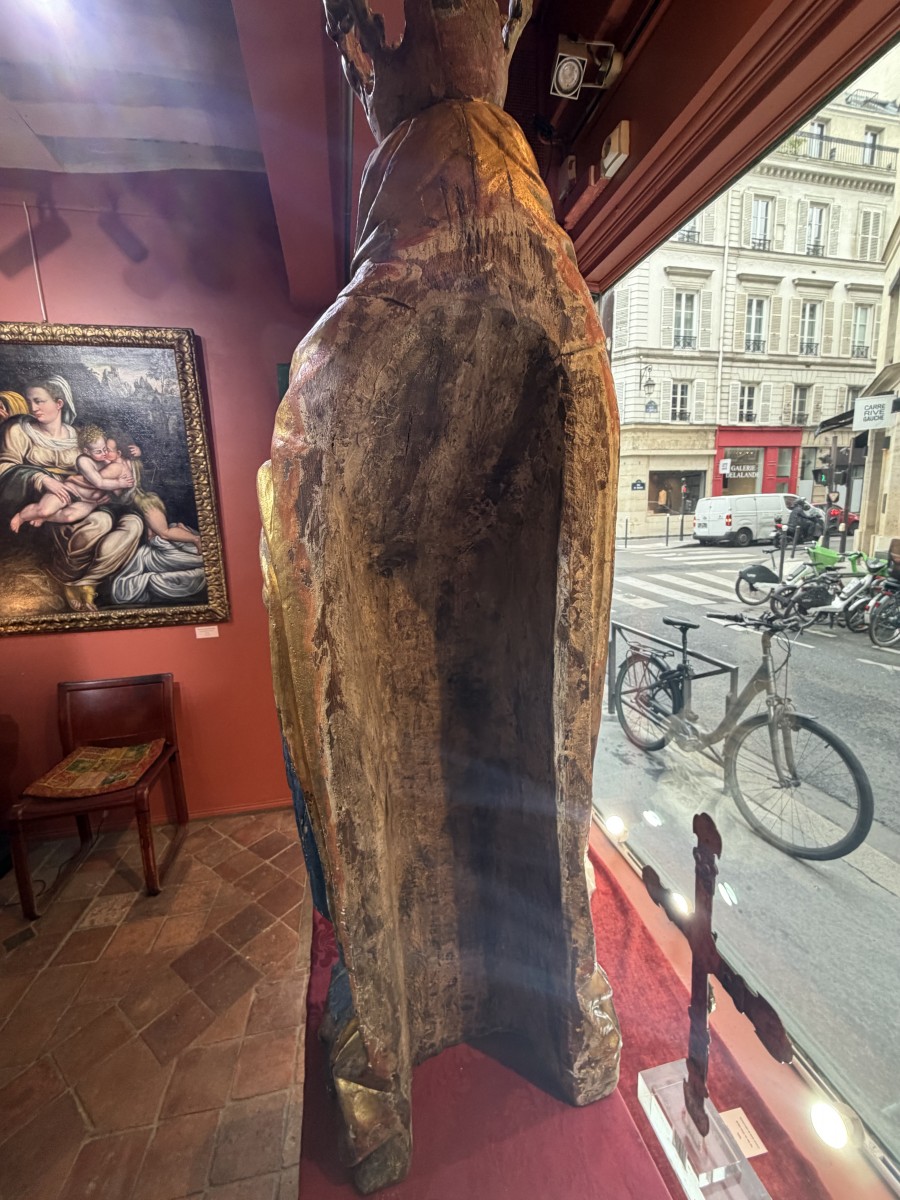
The back is hollowed out, which shows that the work was meant to be seen from the front, in a niche or as part of an altarpiece. Sculptors in this region most often worked in limewood, so the use of oak is rarer and makes this Virgin a distinctive piece.