Offered by Galerie Paris Manaus
REQUEST INFORMATION

Decorative Arts of the 20th century
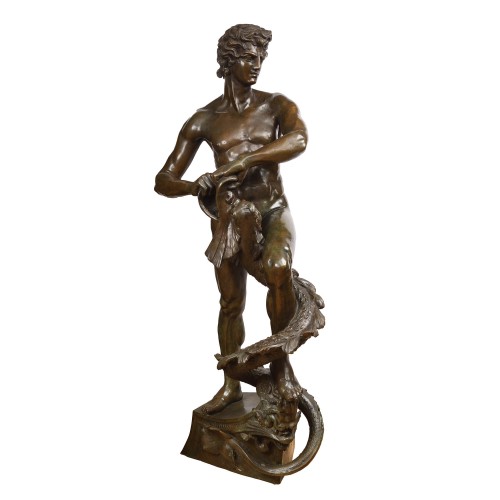
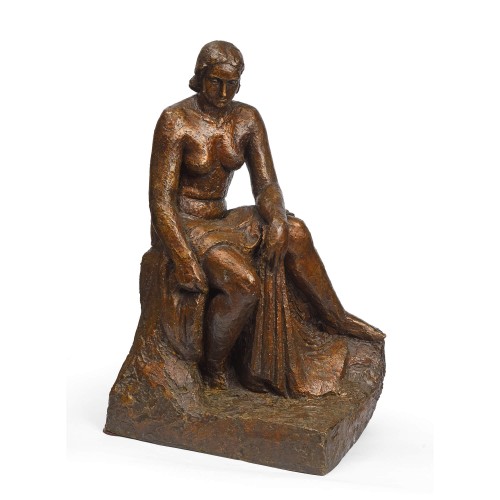
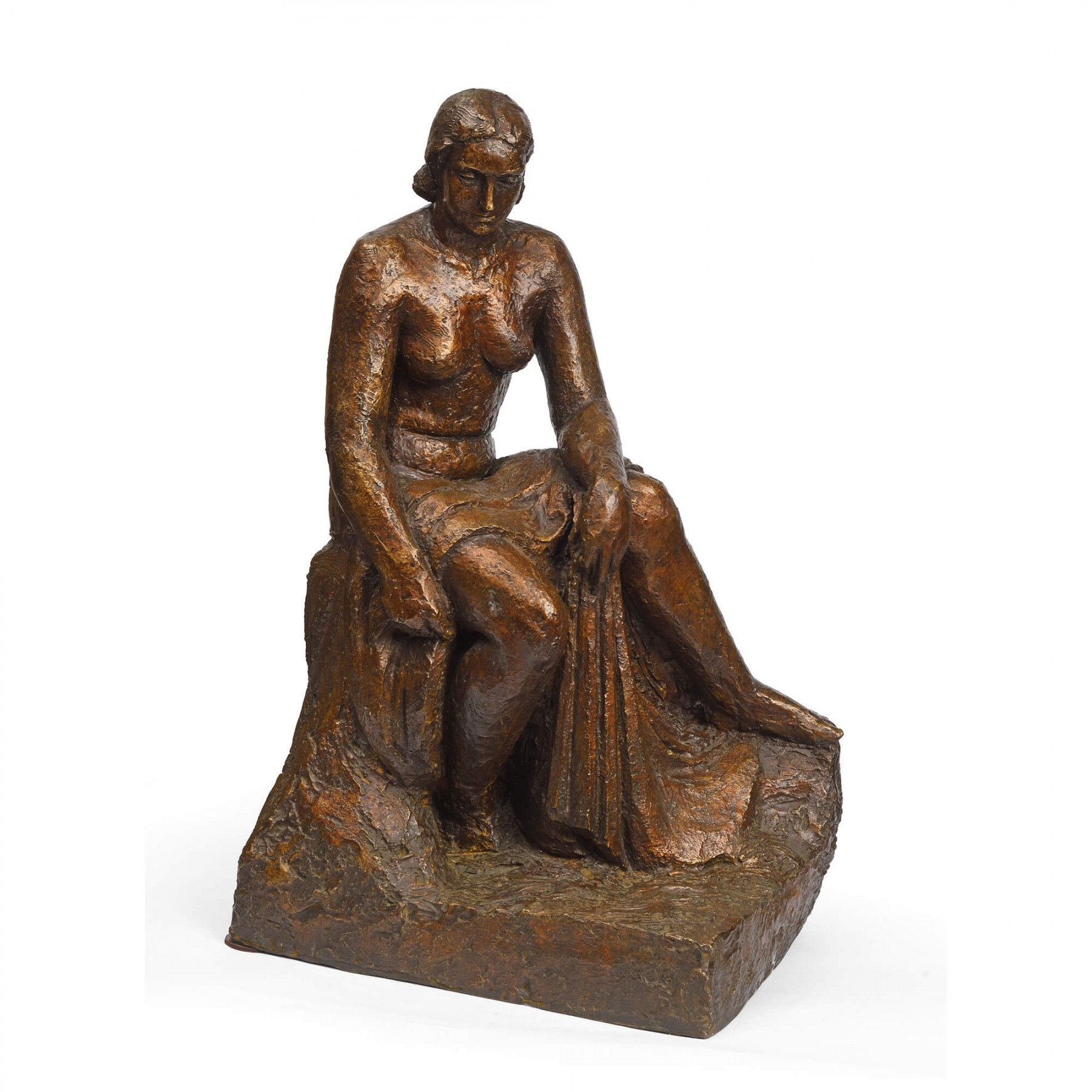
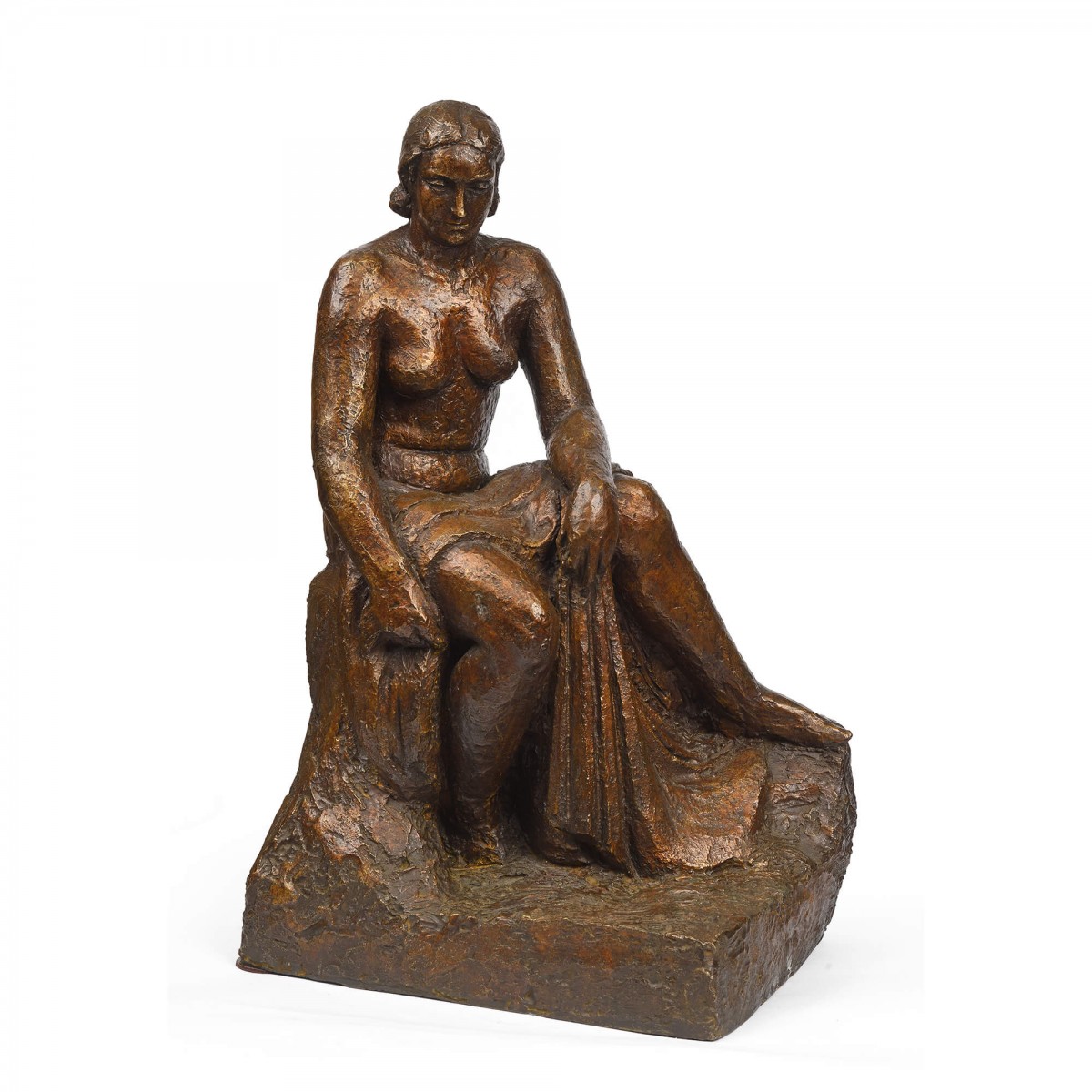
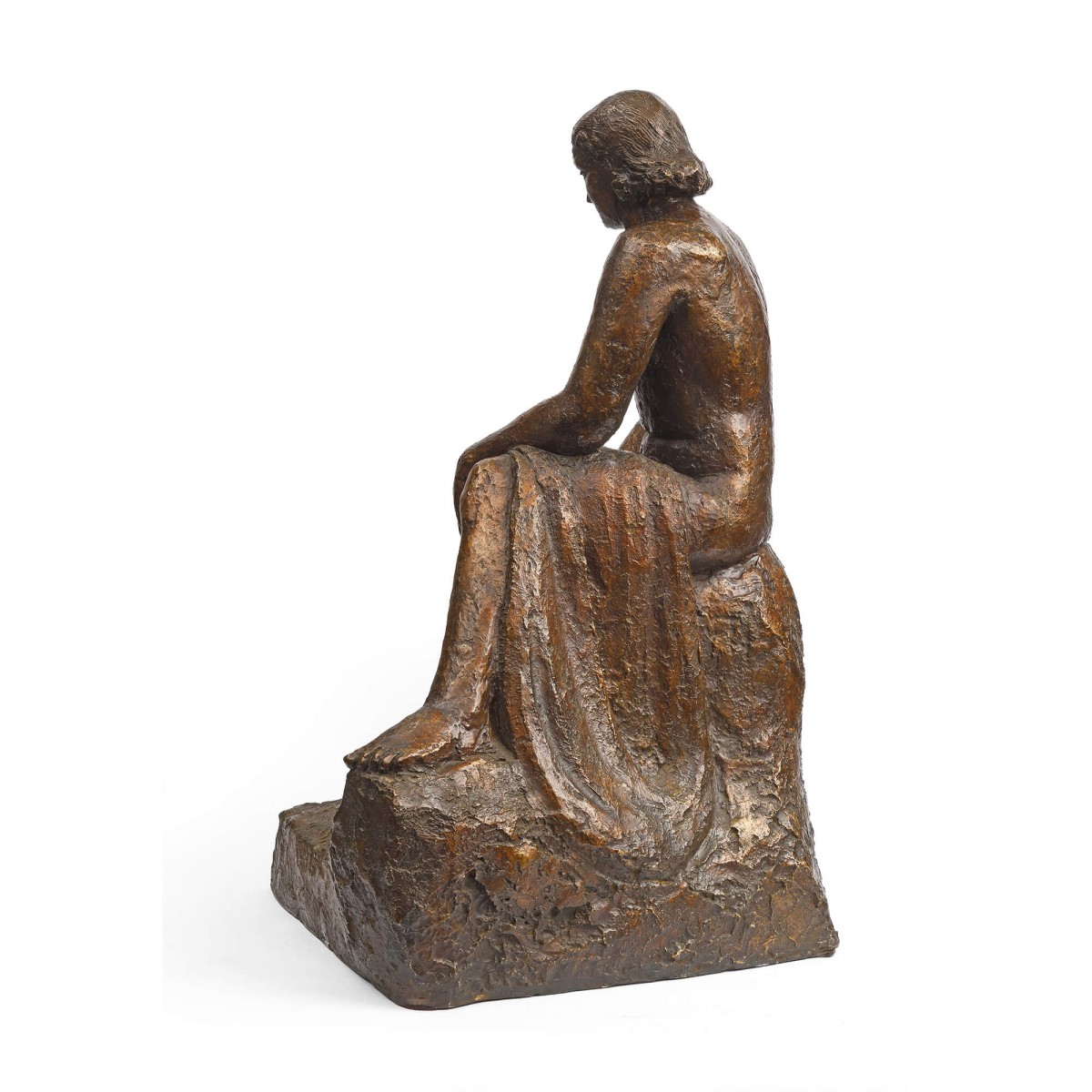
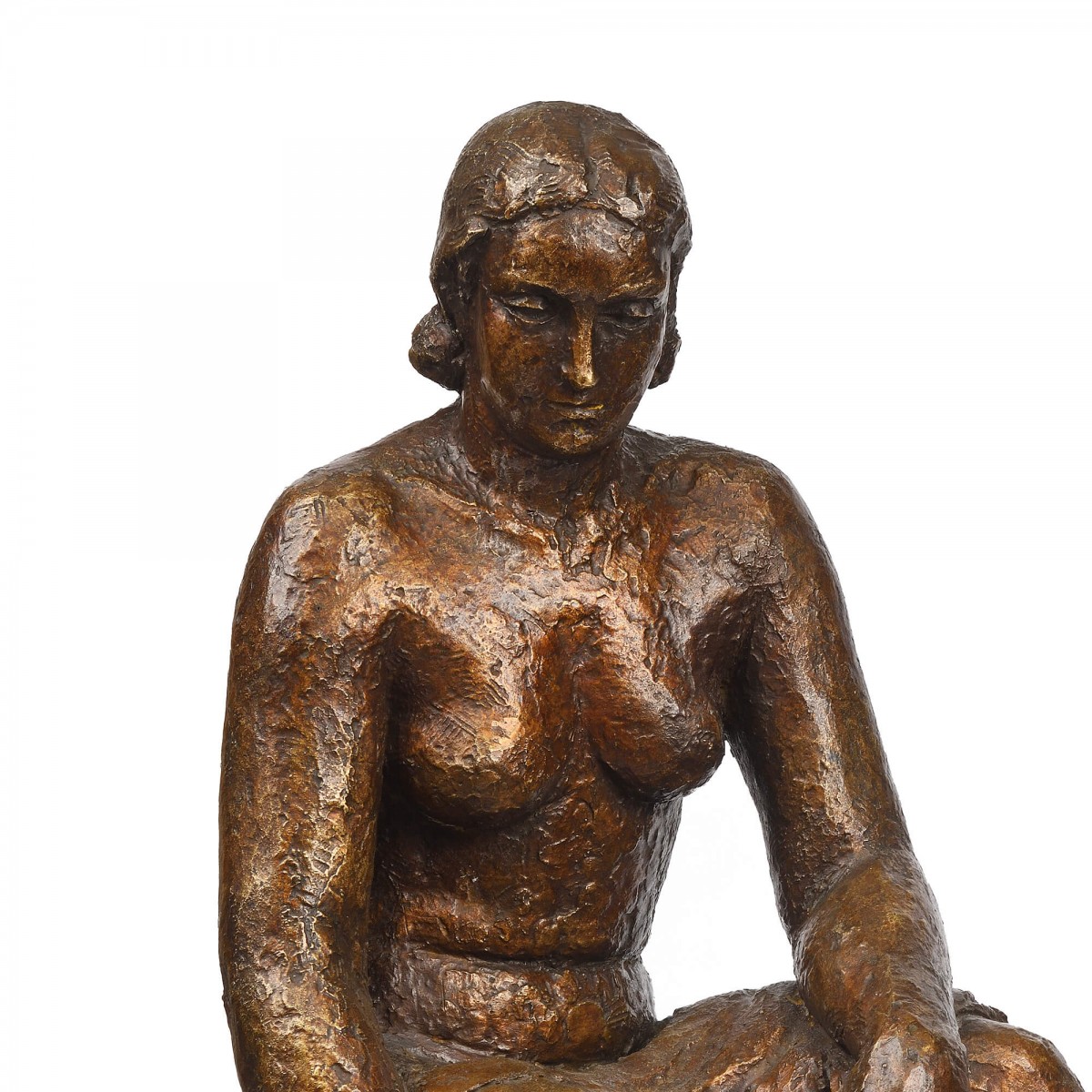
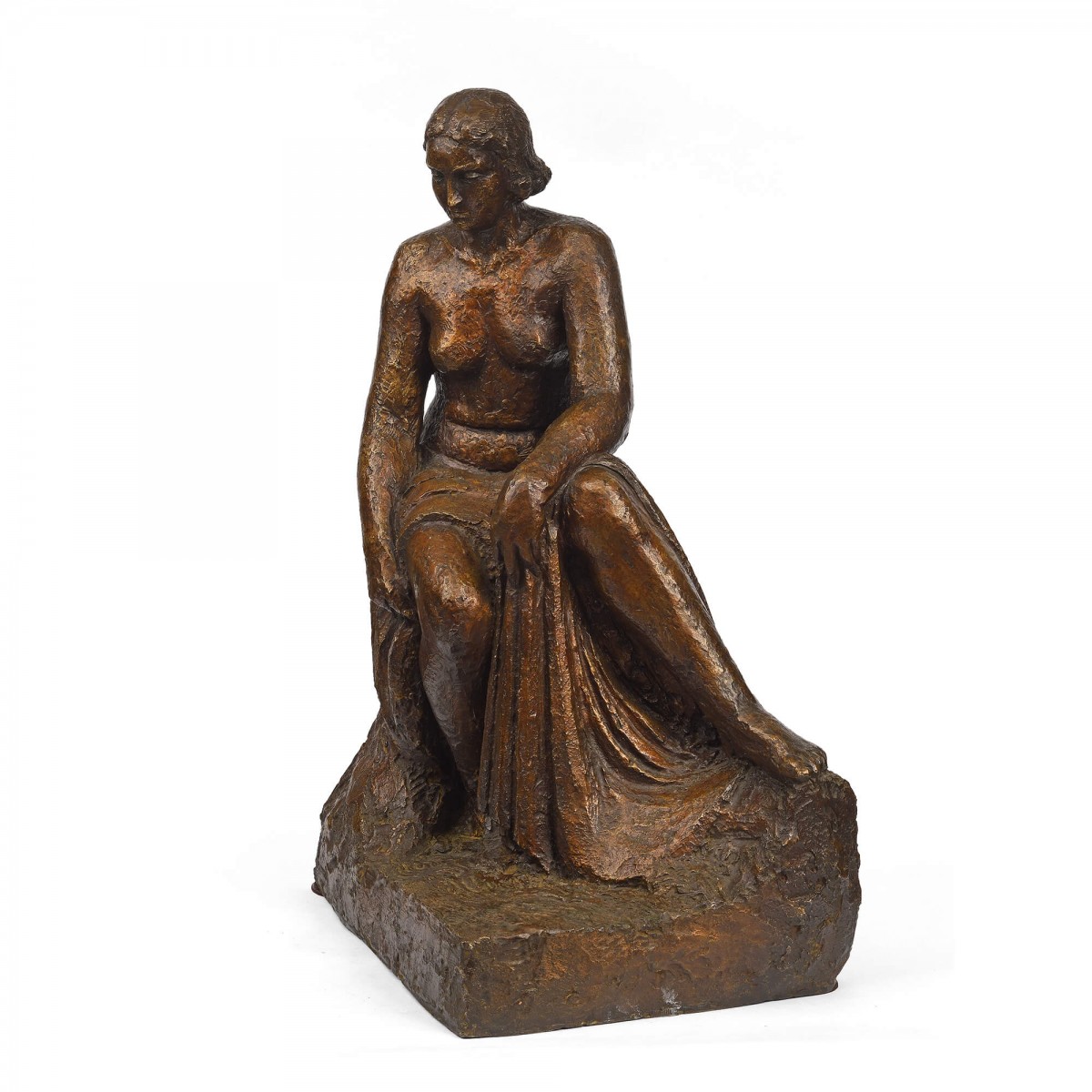
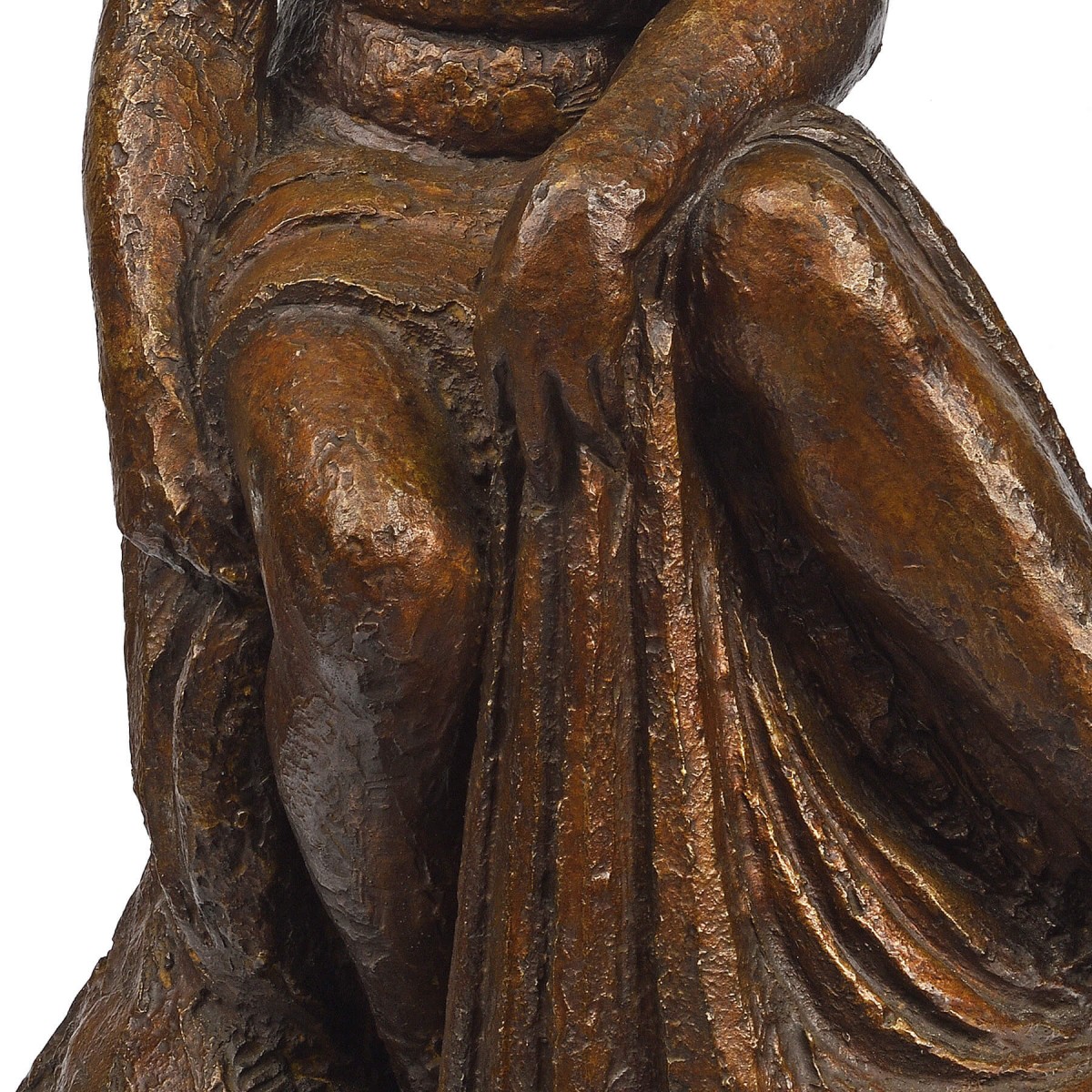
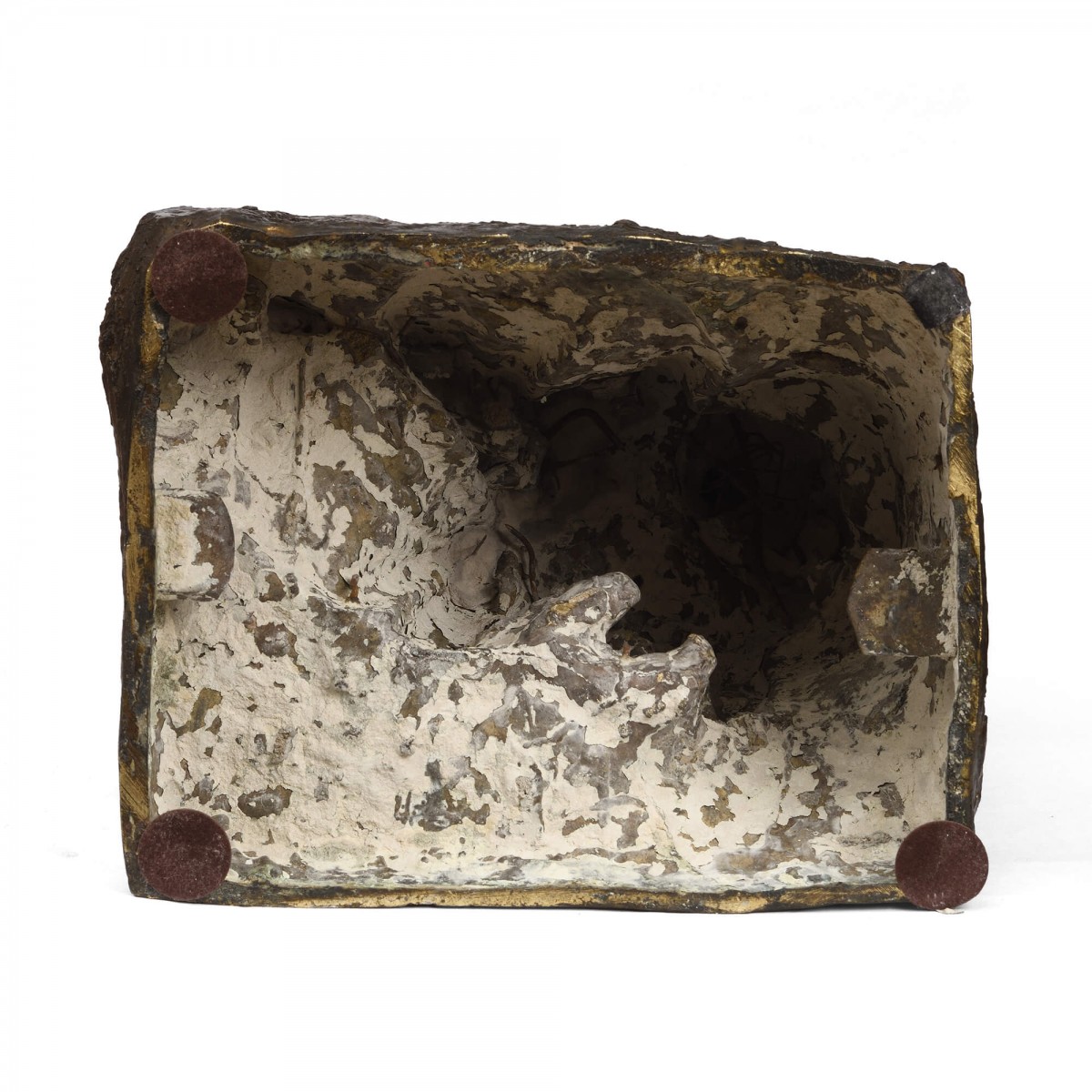
Bronze cast with a nuanced brown patina and golden-brown undertones.
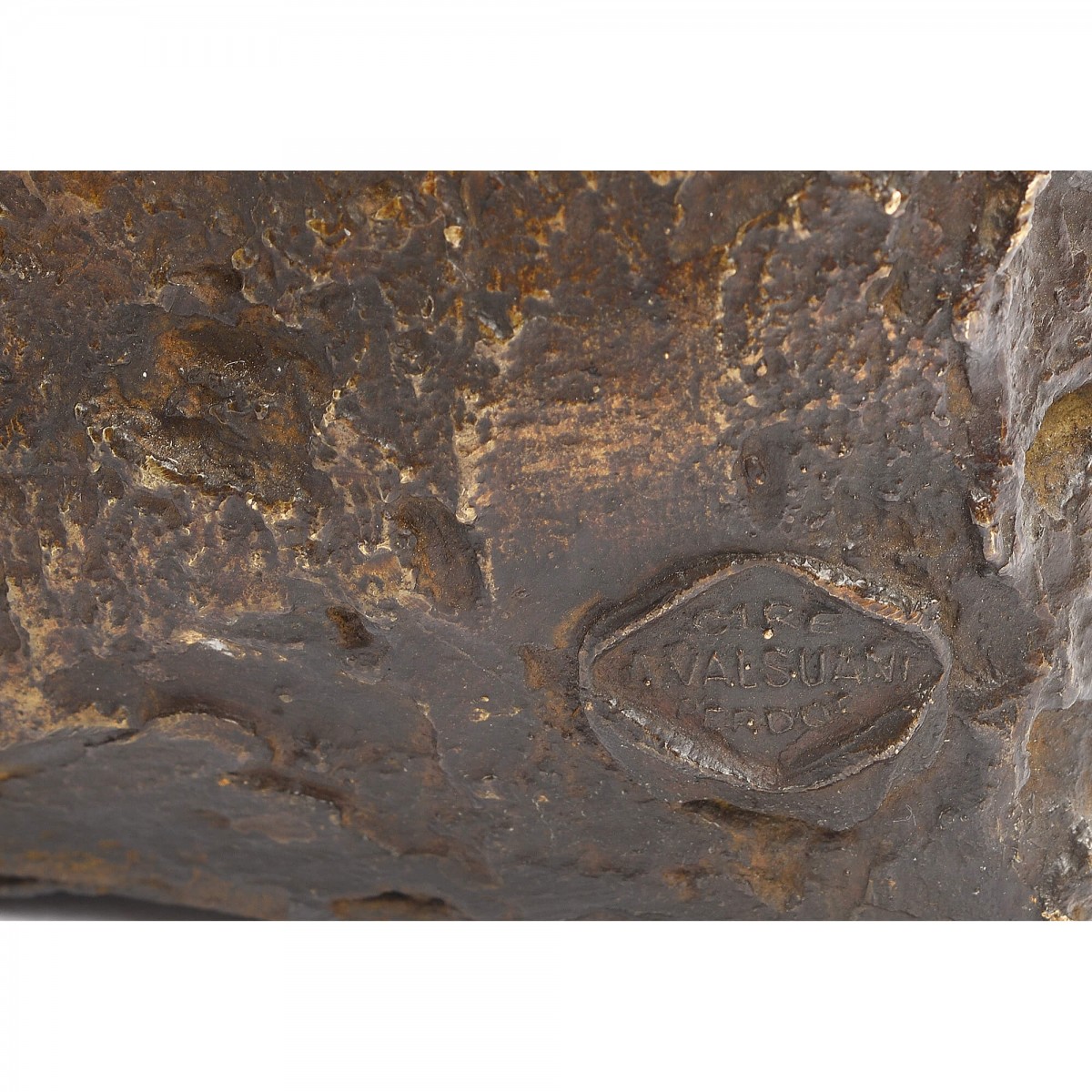
Lost-wax cast by Attilio Valsuani.
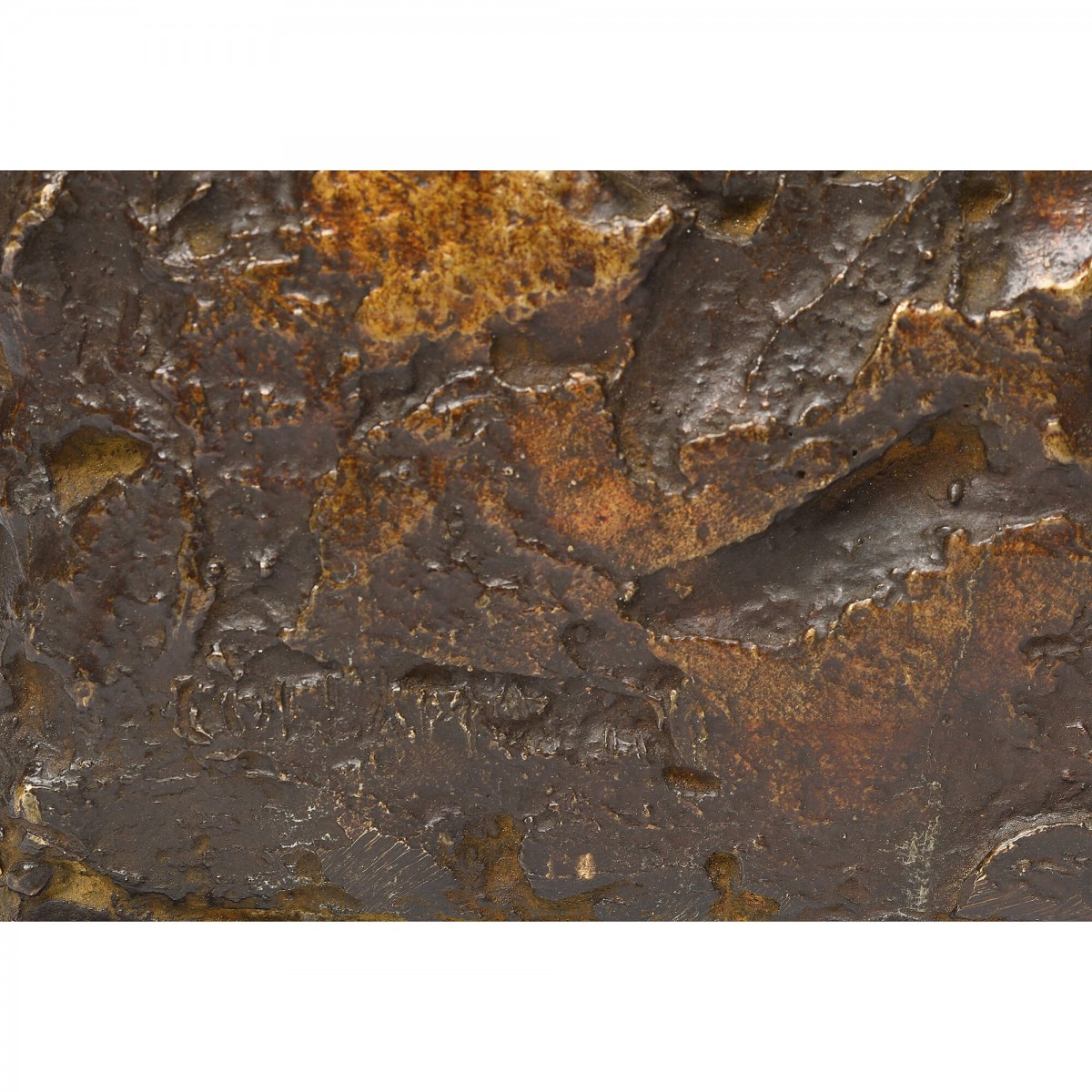
Signed in the wax “COLLAMARINI” on the plinth to the right.
Bears the foundry stamp “A. Valsuani cire perdue” on the rear right.
Circa 1945–1950.
Dimensions: Height: 66 cm Width: 30 cm Depth: 41 cm
Biography:
French sculptor and medallist
René Collamarini was born in Paris on January 5, 1904, to an Italian father, and died in Saint-Mandé on June 18, 1983.
After leaving school at the age of fifteen to work in a factory and later for a textile company, he attended evening classes in drawing and modeling. In 1921, he entered the École nationale supérieure des beaux-arts in Paris, joining the studio of the sculptor Jean Boucher, where he remained for seven years.
At the same time, he worked as an assistant to a professional sculptor and learned stone carving. He developed an early preference for direct carving, a method involving sculpting directly into the material without using an intermediate model. He considered it the very essence of sculpture, as it required the artist to begin with a block and gradually release the forms within it.
In 1930, he was awarded the Blumenthal Prize, alongside sculptors including Robert Couturier and Maurice Georges Poncelet. He exhibited at the Salon des Tuileries from 1929, then at the Salon des Indépendants in 1933, where he successfully presented the plaster model of his statue of the poet François Villon.
In 1931, he moved into the “Les Fusains” studios at the foot of Montmartre, where he became a neighbor of the painter Pierre Bonnard. He remained there until the end of his life. In 1933, he met the actress Mona Dol, who became his partner.
In 1937, René Collamarini contributed to the decorative program of the International Exhibition of Arts and Techniques in Modern Life in Paris. He notably created the bas-reliefs Ceramics and Glass, intended for the façade of the Palais de Chaillot, as well as the statue Autumn.
During the Second World War, when major commissions became scarce, he accepted a commission from Gaston Baty, director of the Théâtre Montparnasse, for whom he carved wooden puppet heads. In 2013, thirty-seven of these puppets were acquired by the Bibliothèque nationale de France.
After the Liberation, he participated in the reconstruction of Amiens and Abbeville. Working in collaboration with architects, he created monumental sculptures intended particularly for schools and hospitals. His work reflected a desire to integrate sculpture into modern architecture. Over the course of his career, his style evolved toward increasingly bold stylization, sometimes approaching abstraction.
Alongside his sculptural work, he produced numerous portraits, particularly of actors and painters within his circle. He also created a table centerpiece for the Sèvres Manufactory and several medals for the Monnaie de Paris.
A regular participant in the major artistic Salons of his time, he exhibited frequently at the Salon des Artistes Indépendants, the Salon d'Automne, and the Salon des Tuileries, as well as at the Salon des Peintres Témoins de leur Temps during the 1950s.
From 1959 to 1974, René Collamarini taught direct carving at the École nationale supérieure des beaux-arts in Paris. His teaching, characterized by considerable pedagogical freedom, humanity, and generosity, earned him the respect and affection of his students.
An artist deeply attached to materials, the exploration of volumes, and the dialogue between sculpture and architecture, René Collamarini left a diverse body of work ranging from portraiture to monumental sculpture.
The Fondation de Coubertin today holds the largest collection of his sculptures.