Offered by Ars Antiqua
REQUEST INFORMATION

Old Masters paintings, furniture, sculptures and modern art
Monogrammist WF – Workshop of David Le Marchand (Dieppe, 1674 – London, 1726)
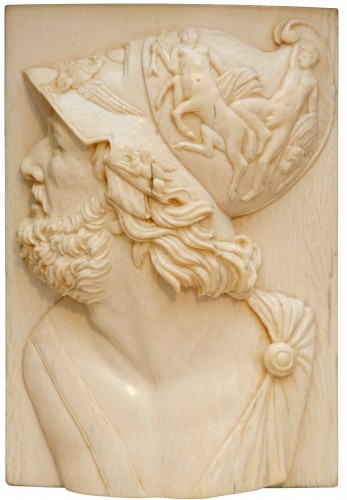
Relief with Bust of Ajax
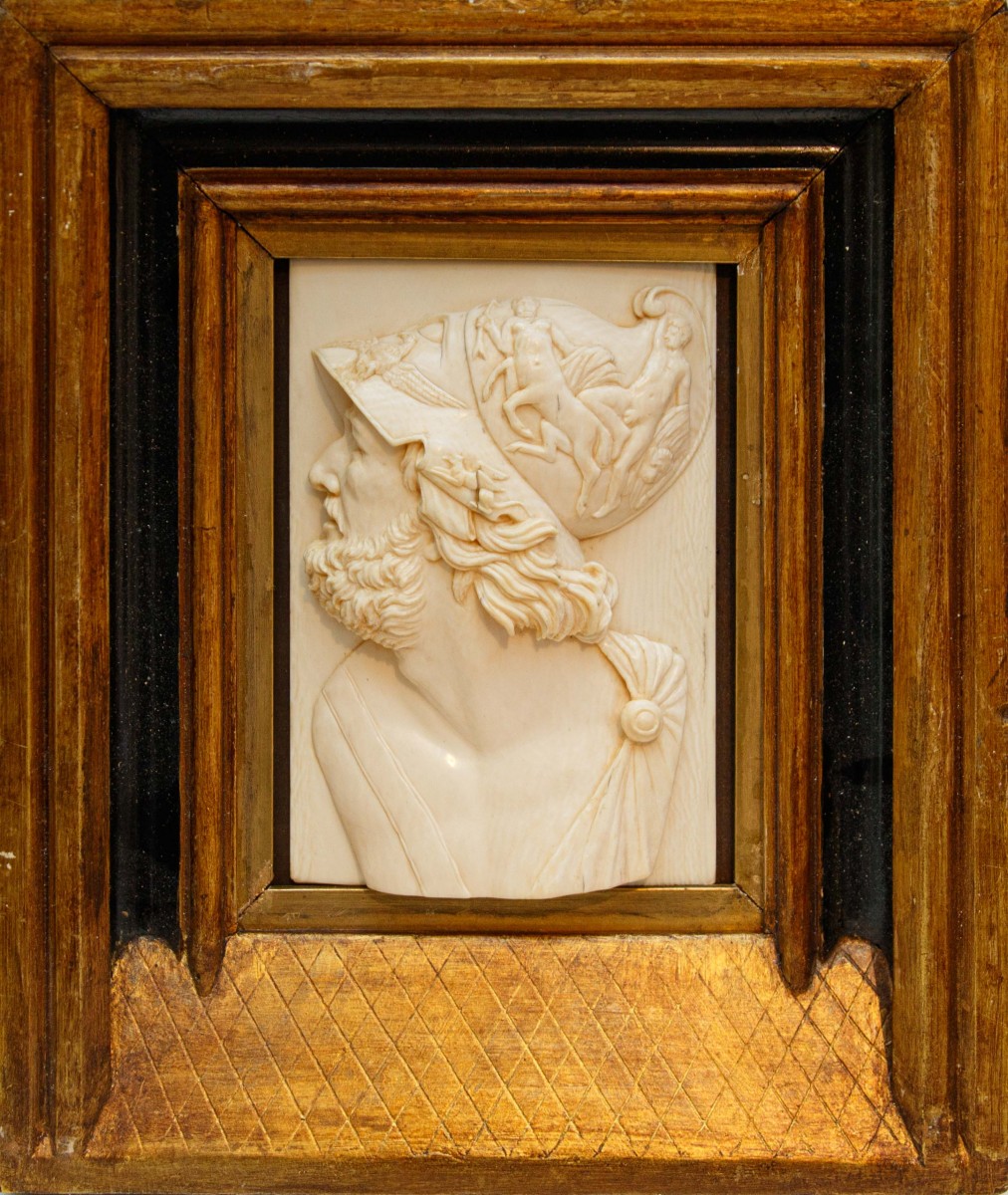
Ivory, 15 x 10 cm – Monogrammed at the bottom WF
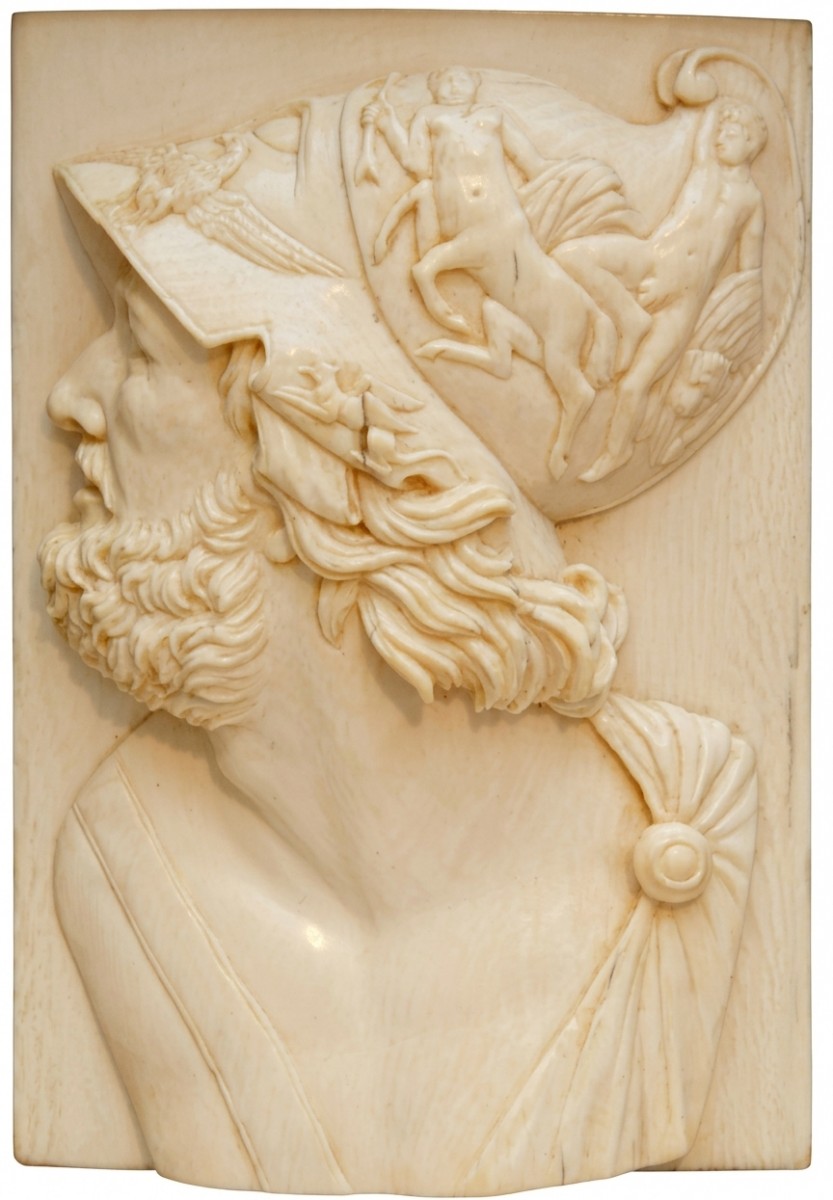
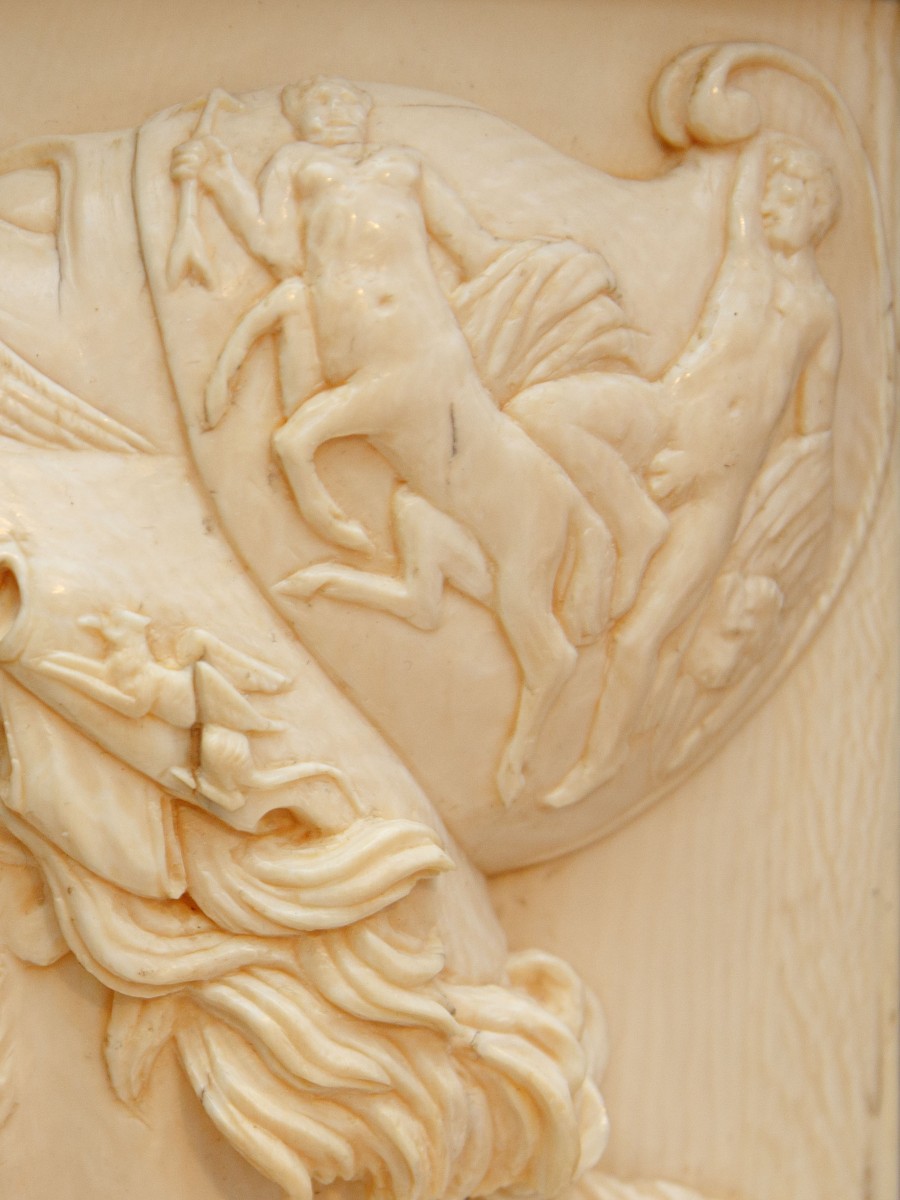
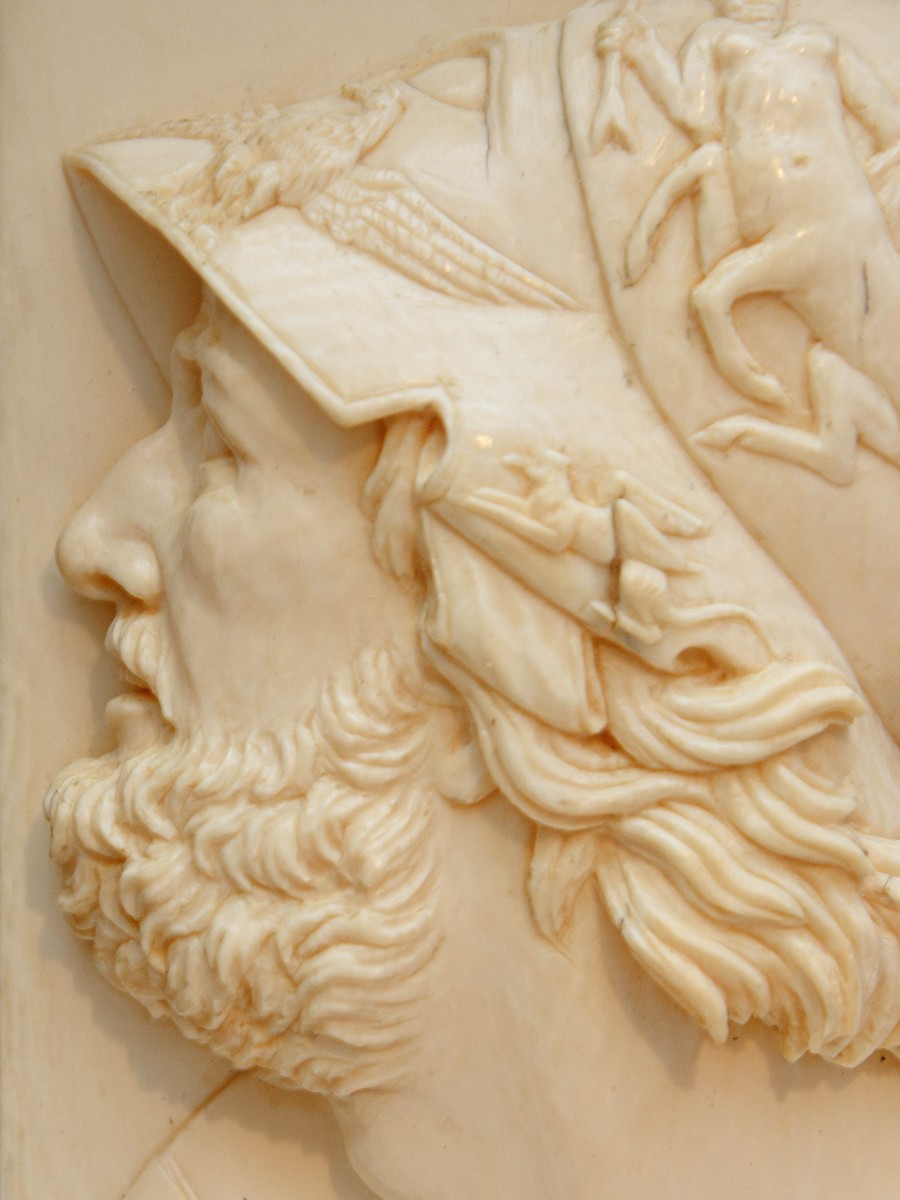
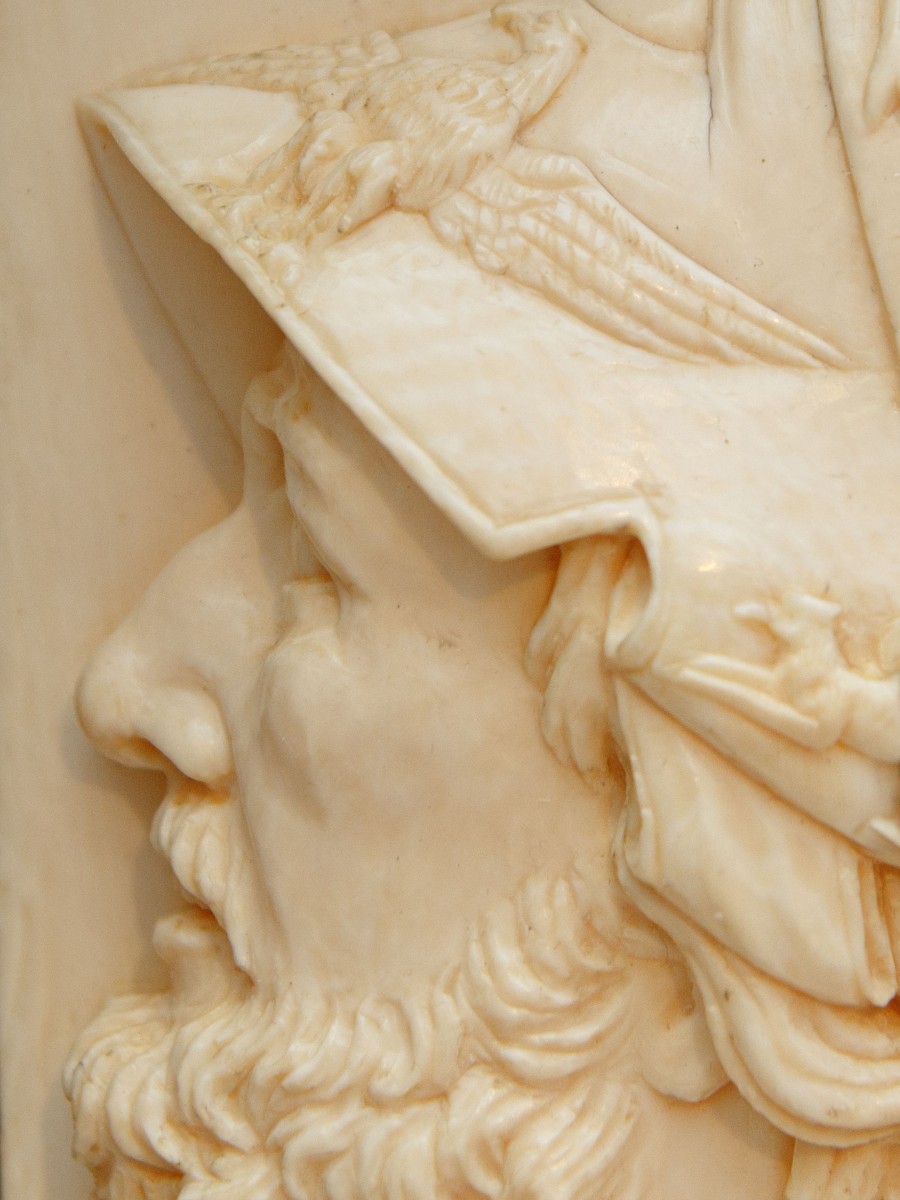
The artifact examined here is a high ivory relief depicting the profile bust of Ajax, the Greek hero descended from Aeacus and son of Telamon, who was Hercules's companion in numerous exploits against monsters and Centaurs. The figure, featuring a powerful profile and a flowing beard, wears a richly decorated helmet: an eagle with outstretched wings is emblazoned across the forehead, while the upper section of the headpiece unfolds into a dynamic scene depicting a centaur wrestling with Hercules—an intertwining of bodies that attests to the carver's skill in handling different planes of depth within a reduced space. This iconography is far from casual: in the classicizing depictions of the early modern period, from the Renaissance through Neoclassicism, helmets adorned with scenes of centauromachy served a symbolic function tied to the idea of areté—military valor and brute force subjugated to heroic virtue—an attribute uniquely suited to Ajax, second only to Achilles in strength among the Greeks arrayed at Troy.
The work belongs to the vibrant context of small ivory relief production that characterized the artistic environment surrounding David Le Marchand in the first half of the 18th century. Son of the painter Guillaume Le Marchand, David received a solid artistic training and specialized in ivory carving, a discipline in which he attained remarkable technical refinement. Like many Huguenots, he was forced to flee his native France and the port town of Dieppe following the Revocation of the Edict of Nantes in 1685, which ended tolerance for the Protestant faith. His presence in Great Britain is documented from 1696 in Edinburgh, where he received permission to open a workshop and worked for both loyalist and Jacobite Scottish nobility. Moving to London in 1705, he expanded his clientele substantially to include the Royal Family, the court, Whig intellectuals, and fellow Huguenot businessmen. Among his patrons were figures of the highest standing, including Thomas Guy, Isaac Newton, Samuel Pepys, Christopher Wren, as well as monarchs Anne and George I of Great Britain.
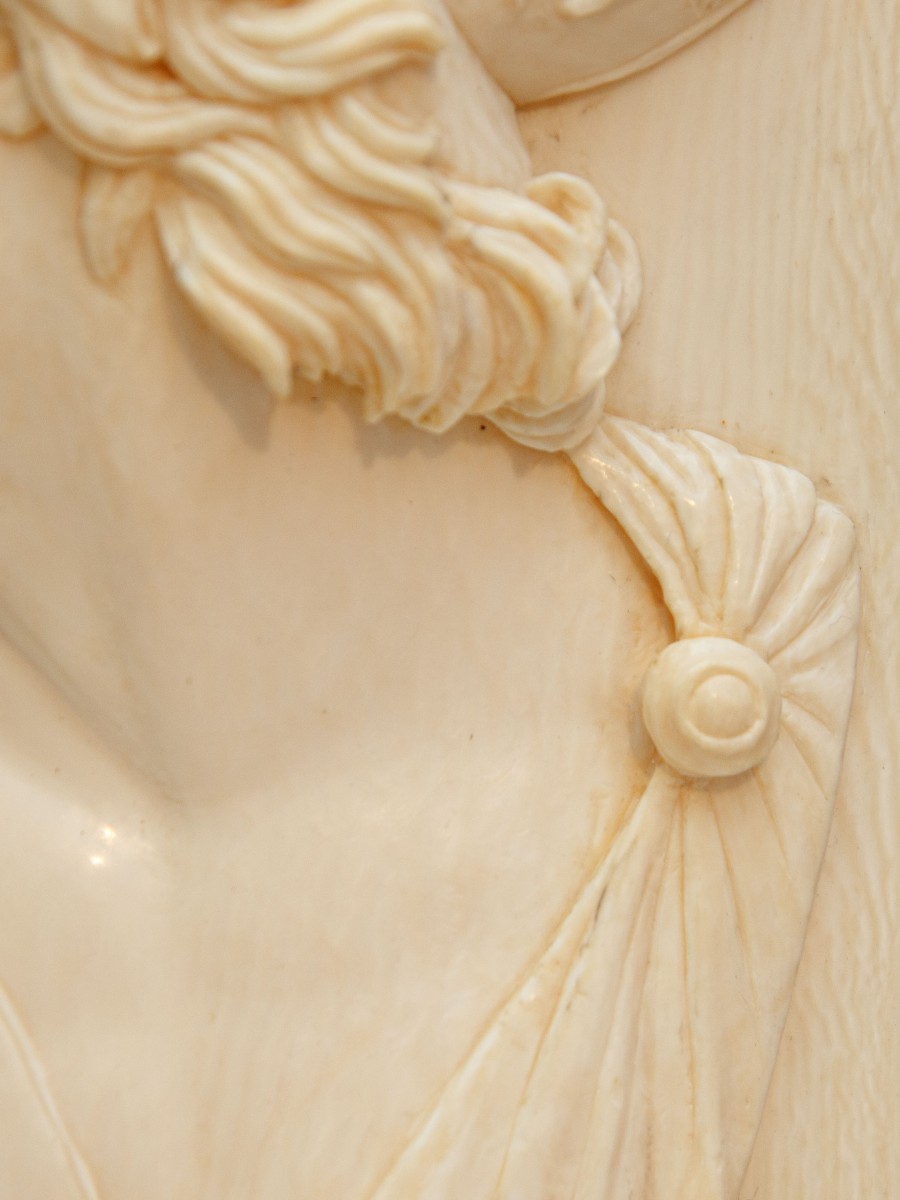
Owing to the presence of the WF monogram at the lower edge, the present relief is attributed to a collaborator within the workshop, conventionally identified as the Monogrammist WF—an artist who worked in close contact with Le Marchand, assimilating his style and compositional solutions. It is well known that certain works by the French master served as repertoire models for artists working within his sphere, who replicated his iconographic schemes, light play, and sculptural treatment of drapery. Among the museum works that best document Le Marchand's style are Nymph and Satyr and Venus and Cupid, both held at the Victoria & Albert Museum in London, as well as the famous Bust of Isaac Newton and the relief depicting King Louis XIV on a Pedestal, both housed in the British Museum.
Regarding the iconographic source of the bust of Ajax, it is highly probable that the unknown carver drew inspiration from a 17th-century marble sculpture executed in Rome, now preserved in a private collection, which features an identical compositional layout with the helmet crowned by a centauromachy scene. This derivation confirms the circulation of large-scale sculptural models that, through preparatory drawings or casts, were reinterpreted on a miniature scale by ivory carvers active between France and England, thereby helping to disseminate a fully Roman and Baroque iconographic repertoire across Northern Europe.
FRANÇAIS
Monogrammiste WF – Atelier de David Le Marchand (Dieppe, 1674 – Londres, 1726)
Relief avec buste d'Ajax
Ivoire, 15 x 10 cm – Monogrammé en bas WF
La pièce examinée ici est un haut-relief en ivoire figurant le buste de profil d'Ajax, héros grec descendant d'Éaque et fils de Télamon, compagnon d'Hercule dans de nombreuses entreprises contre les monstres et les Centaures. La figure, au profil puissant et à la barbe fournies, porte un casque richement décoré : sur le devant figure un aigle aux ailes déployées, tandis que la partie supérieure de la coiffe se développe en une scène dynamique mettant en scène un centaure en lutte avec Hercule, dans un entrelacement de corps qui témoigne de l'habileté du sculpteur à maîtriser différents plans de profondeur dans un espace réduit. Cette iconographie n'est pas fortuite : dans les représentations classicisantes de l'époque moderne, du Renaissance au Néoclassicisme, les casques ornés de scènes de centauromachie assumaient une fonction symbolique liée à l'idée d'àretê—la valeur militaire et la force brute soumises à la vertu héroïque—un attribut particulièrement seyant pour Ajax, second seulement à Achille par sa puissance parmi les Grecs engagés à Troie.
L'œuvre s'inscrit dans le contexte florissant de la production de petits reliefs en ivoire qui caractérisa le milieu artistique gravitant autour de David Le Marchand dans la première moitié du XVIIIe siècle. Fils du peintre Guillaume Le Marchand, David reçut une solide formation artistique et se spécialisa dans la sculpture sur ivoire, discipline où il atteignit un remarquable raffinement technique. Comme de nombreux huguenots, il fut contraint de quitter sa France natale et le port de Dieppe après la révocation de l'Édit de Nantes en 1685, qui mit fin à la tolérance envers le culte protestant. Sa présence en Grande-Bretagne est documentée à partir de 1696 à Édimbourg, où il obtint l'autorisation d'ouvrir un atelier et travailla pour l'aristocratie écossaise, tant loyaliste que jacobite. Installé ensuite à Londres en 1705, il élargit considérablement sa clientèle, qui s'étendait de la famille royale et de la cour aux intellectuels whigs jusqu'aux hommes d'affaires d'origine huguenote. Parmi ses commanditaires figuraient des personnalités de tout premier plan telles que Thomas Guy, Isaac Newton, Samuel Pepys, Christopher Wren, ainsi que les souverains Anne Ière et George Ier de Grande-Bretagne.
En raison de la présence du monogramme WF dans la partie inférieure, le présent relief est attribué à un collaborateur de l'atelier, identifié conventionnellement comme le Monogrammiste WF, figure qui opéra en contact étroit avec Le Marchand dont il assimila le style et les solutions de composition. Il est en effet établi que certaines œuvres du maître français servaient de véritables modèles de répertoire aux artistes de son entourage, lesquels en répliquaient les schémas iconographiques, les jeux de lumière et le rendu plastique des drapés. Parmi les pièces muséales qui documentent le mieux le style de Le Marchand, on peut citer Nymphe et Satyre et Vénus et Cupidon, toutes deux conservées au Victoria & Albert Museum de Londres, ainsi que le célèbre Buste d'Isaac Newton et le relief représentant le Roi Louis XIV sur un piédestal, tous deux gardés au British Museum.
Quant à la source iconographique du buste d'Ajax, il est très vraisemblable que le sculpteur anonyme se soit inspiré d'une sculpture en marbre réalisée à Rome au cours du XVIIe siècle, aujourd'hui conservée dans une collection privée, qui présente une structure de composition analogue avec le casque surmonté de la scène de centauromachie. Cette filiation confirme la circulation de modèles sculpturaux de grand format qui, à travers des dessins préparatoires ou des moulages, étaient réinterprétés à réduite échelle par les ivoiriers actifs entre la France et l'Angleterre, contribuant ainsi à diffuser en Europe du Nord un répertoire iconographique d'empreinte pleinement romaine et baroque.
Delevery information :
Les frais d'expédition seront calculés au moment de la commande en fonction de la destination, des dimensions et du poids du tableau, ainsi que de l'assurance couvrant la valeur totale de l'œuvre.
For paintings purchased from abroad: following payment, the application process to obtain the export license (ALC - Attestato di Libera Circolazione) will be initiated. All antiques shipped abroad from Italy require this document, which is issued by the Ministry of Cultural Heritage. The procedure may take 3 to 5 weeks from the date of request; therefore, the painting will be shipped as soon as the document is obtained