Offered by Tobogan Antiques
REQUEST INFORMATION
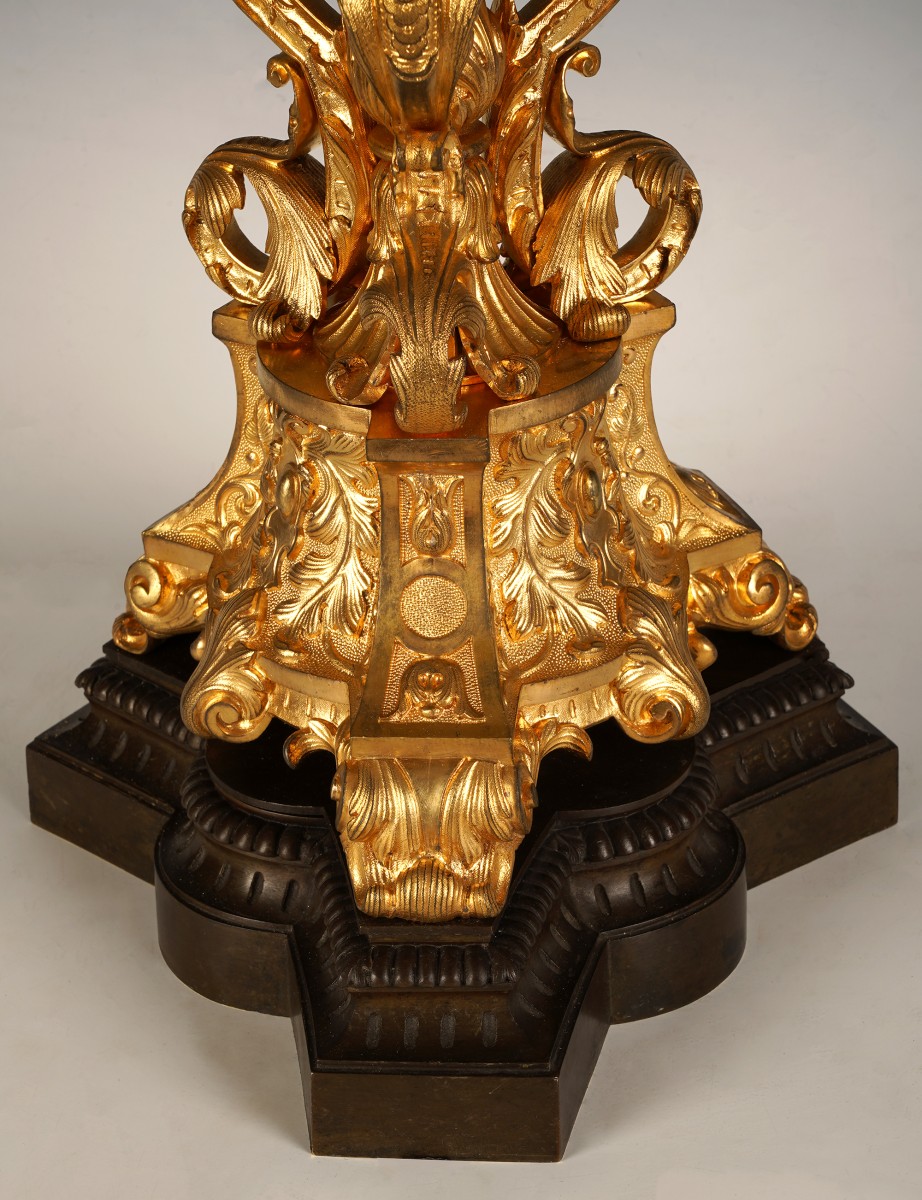
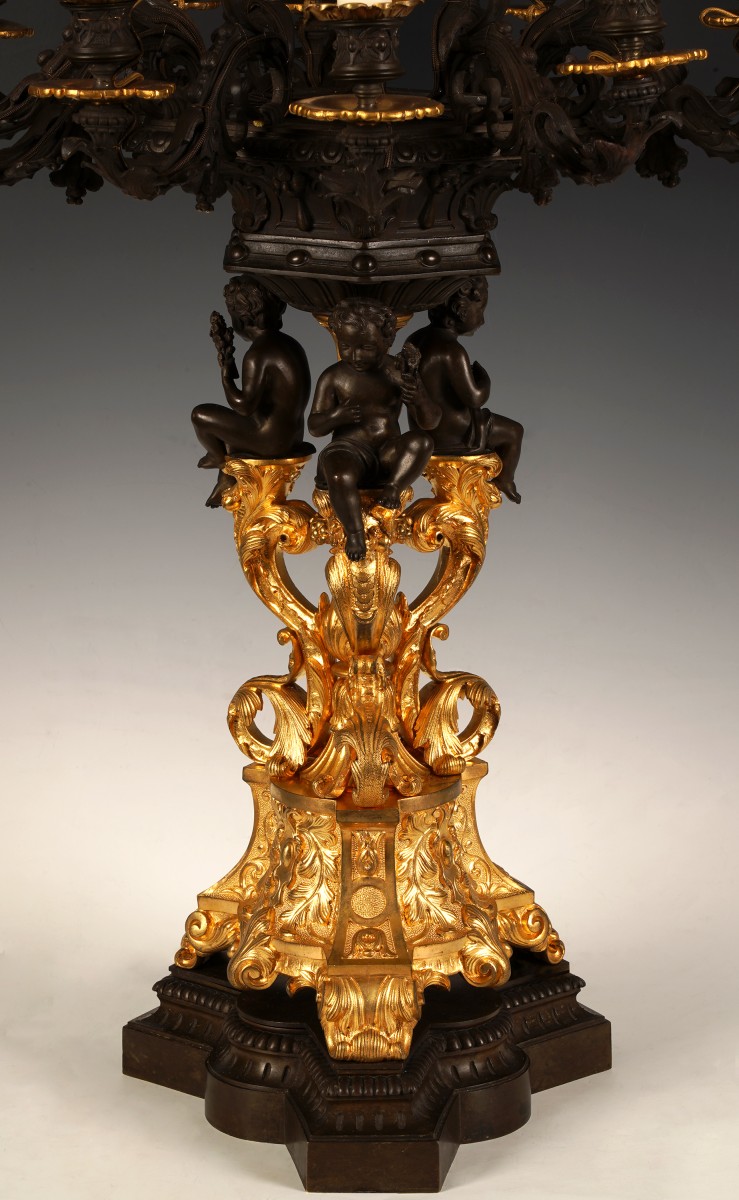

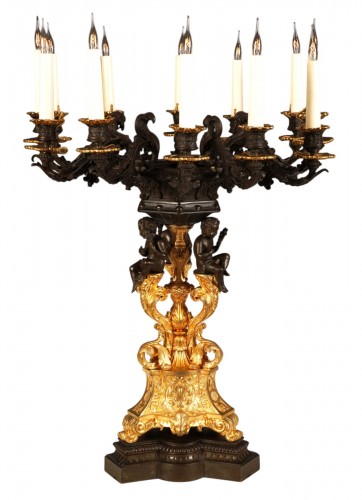
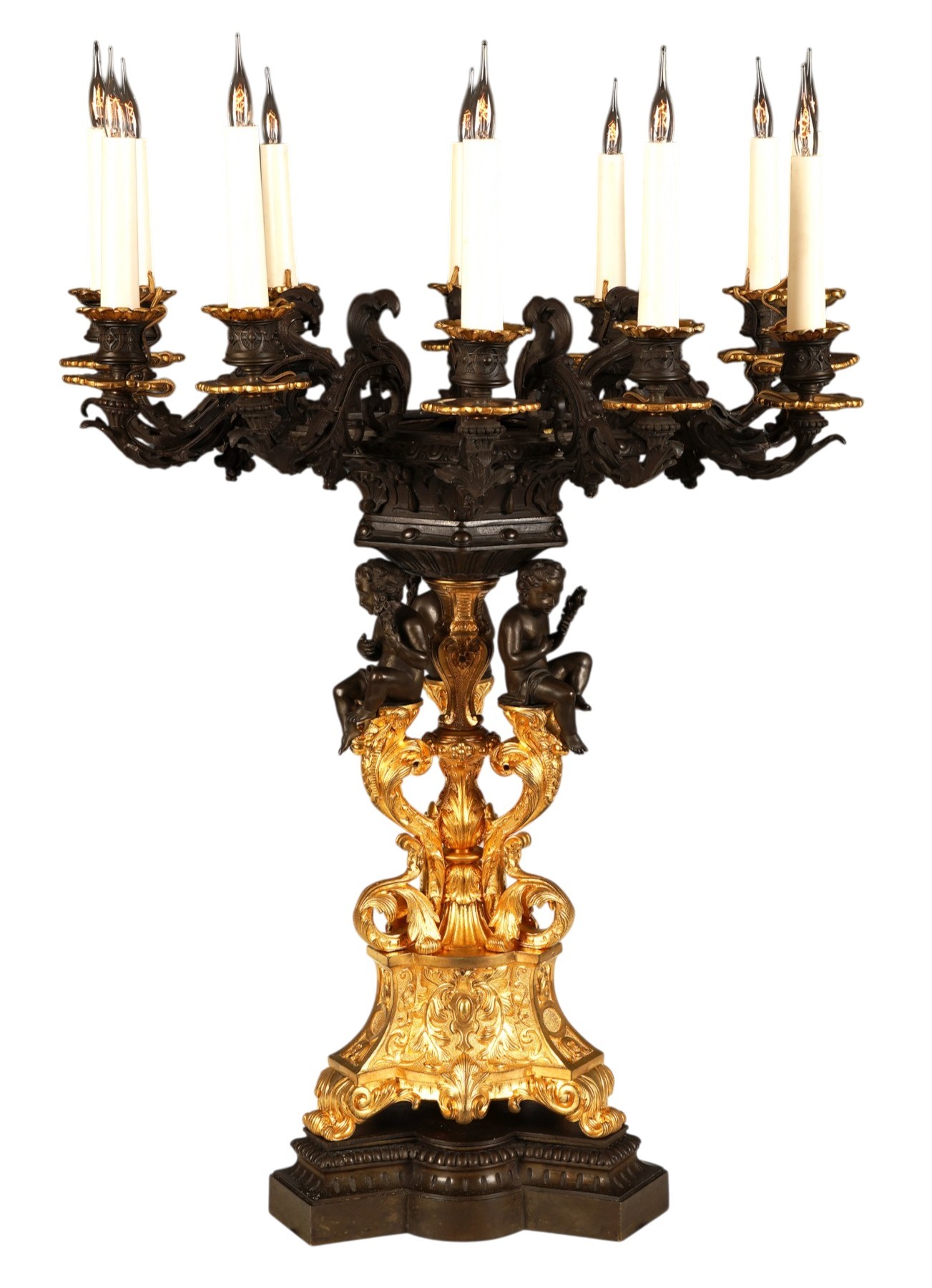
Imposing double-patina centerpiece characteristic of the stylistic eclecticism of the decorative arts under the Second Empire.
The assembly rests on a large polylobed and molded tiered base in dark-patinated bronze. This base supports a powerful pedestal in very richly gilded bronze, whose ornamental repertoire draws directly from the rocaille vocabulary. It is abundantly enlivened with acanthus leaves, powerful scrolls, clasps, and asymmetrical cartouches, demonstrating very deep chasing.
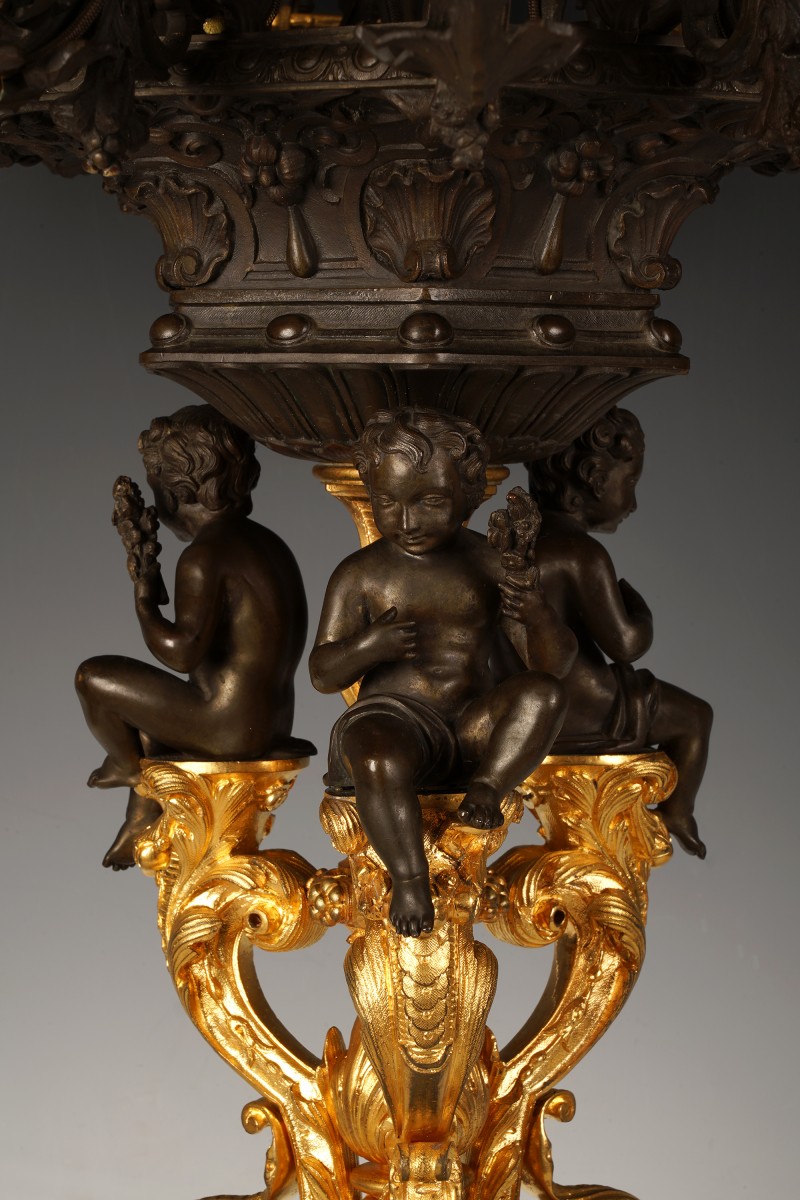
The transition to the upper section is provided by a central node against which lean patinated bronze putti.
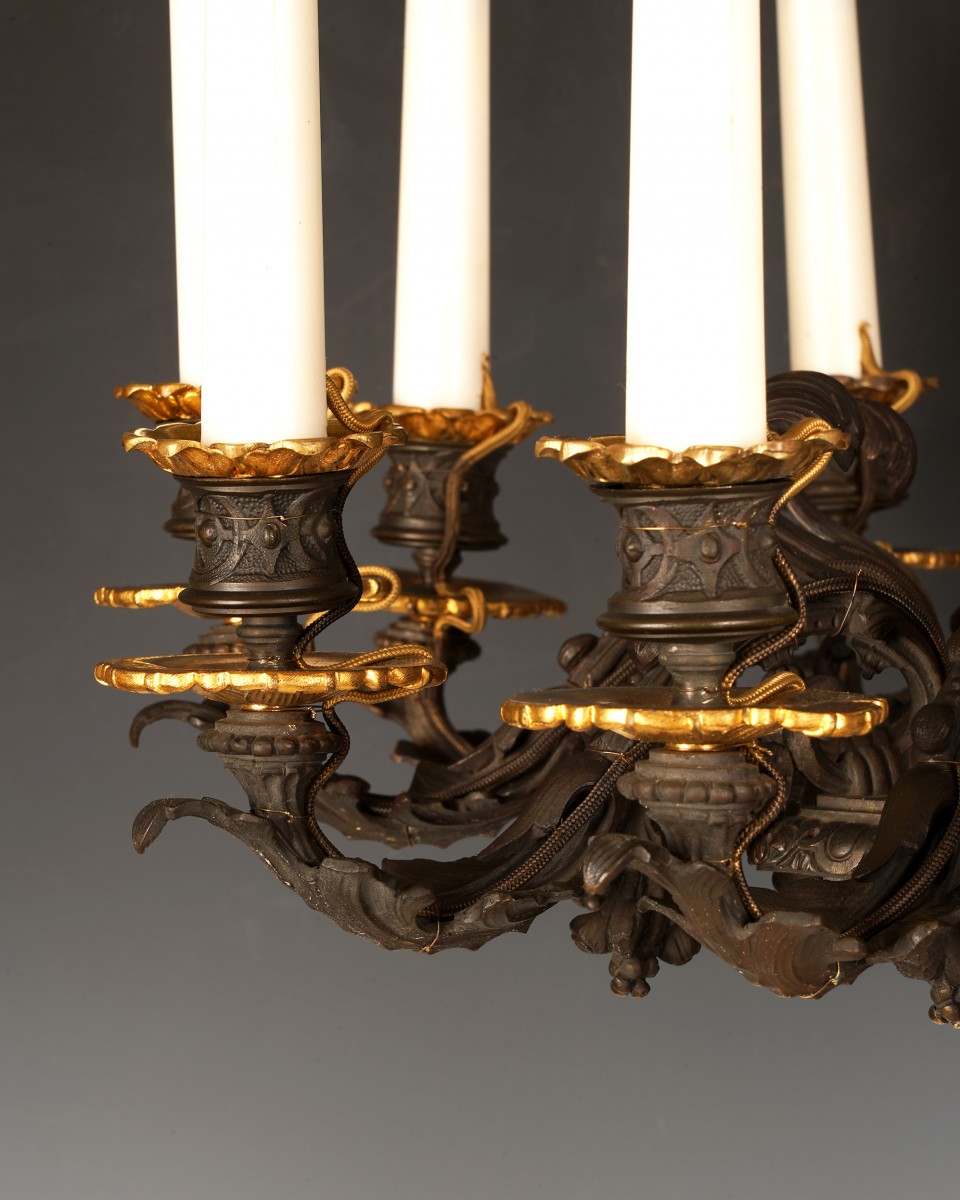
The shaft concludes with an architectural hexagonal capital, decorated with round cabochons. It supports a lush bouquet of light branches. These branches are vigorously contoured and sculpted into foliated scrolls. They terminate in gilded bronze candle nozzles and bobeches, delicately chased with vegetal motifs, creating a final luminous echo at the summit of the piece.
The electrical wiring is a later addition.
BIOGRAPHY
Guillaume Denière (1815-1903) was the pupil of the famous ornementalist Aimé Chenavard (1798-1838) and of the architect Henri Labrouste (1801-1875). In 1844, Denière succeeded his father in the family workshop, established in 1804, at 15, rue Vivienne in Paris. The business was at this time prosperous and four hundred workers worked to satisfy the numerous commissions from King Louis-Philippe and the upper classes. He made bronze furnishings, candelabras and centrepieces. He collaborated with a number of artists, amongst whom Carrier-Belleuse (1848-1913) and Constant Sévin (1821-1888). He turned out several clocks for the Tuileries Palace in 1852, as well as a ‘globe’ clock with rotating dials for the Grand Salon of the Château of Bagatelle. Denière’s work was very often remarked upon at the Universal Exhibitions, so much so in fact that the Emporer Napoleon III bought, at the Paris Exhibition of 1867, a clock set. His renown was by this point international. Amongst his most prestigious commissions, Denière produced 1854 a spectacular bronze centrepiece for the Russian ambassador, Kisselef, and decorative bronzes for the Viceroy of Egypt, Saïd Pacha, as well as railings for the Throne Room for the King of Cambodia, Norodom I, in 1862. At the 1889 Universal Exhibition G. Denière won a gold medal.