Offered by Cristina Ortega & Michel Dermigny
REQUEST INFORMATION
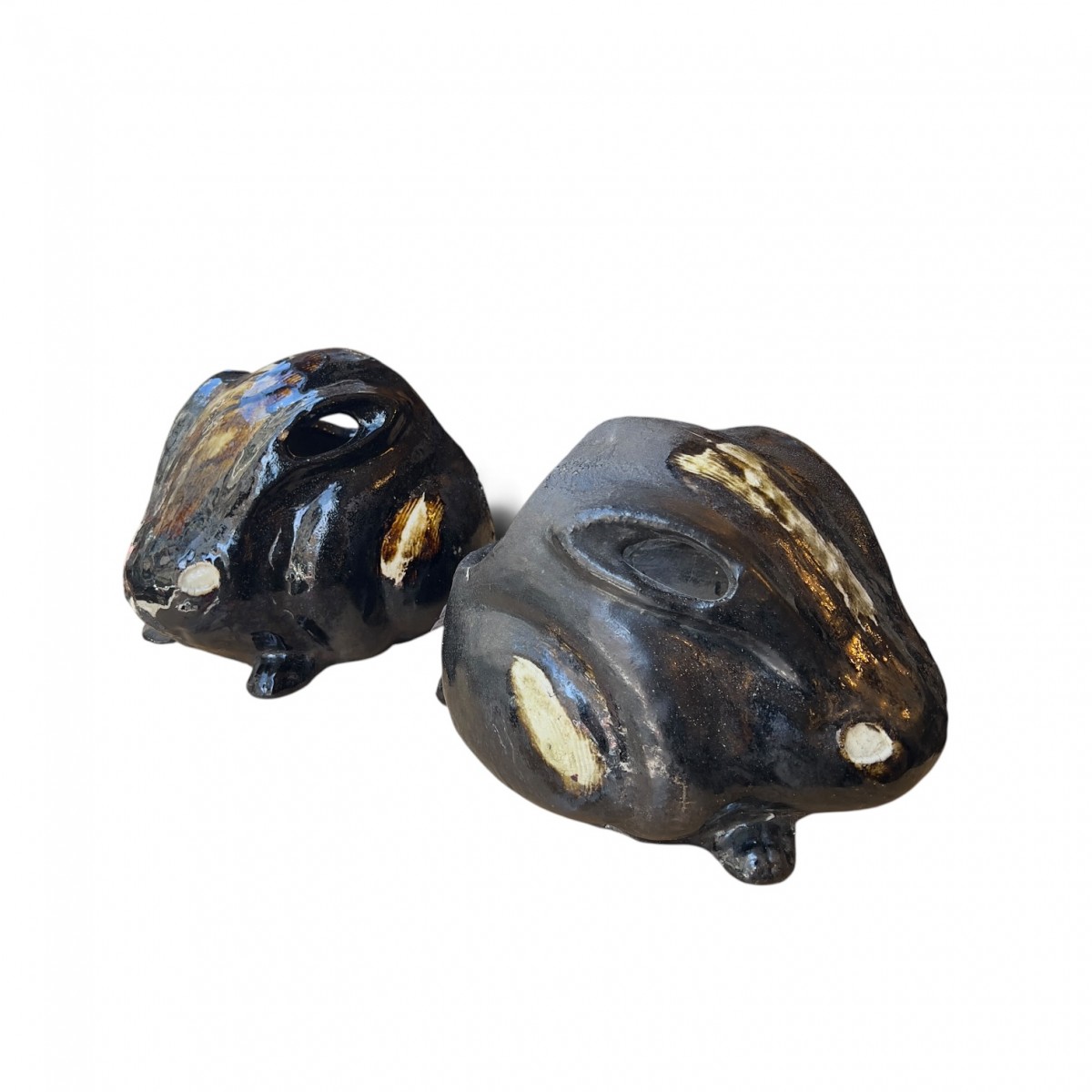

Ennosai Soshitsu (1872–1924), thirteenth-generation head of the Urasenke school of tea, according to the inscription on the original box recorded on the surviving label.
Japan, late 19th century, Meiji period, according to the same documentation.
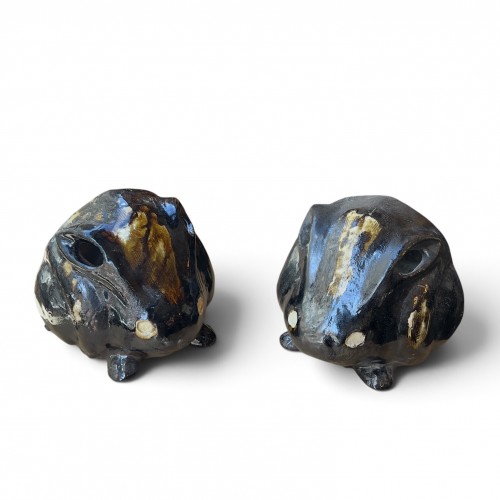
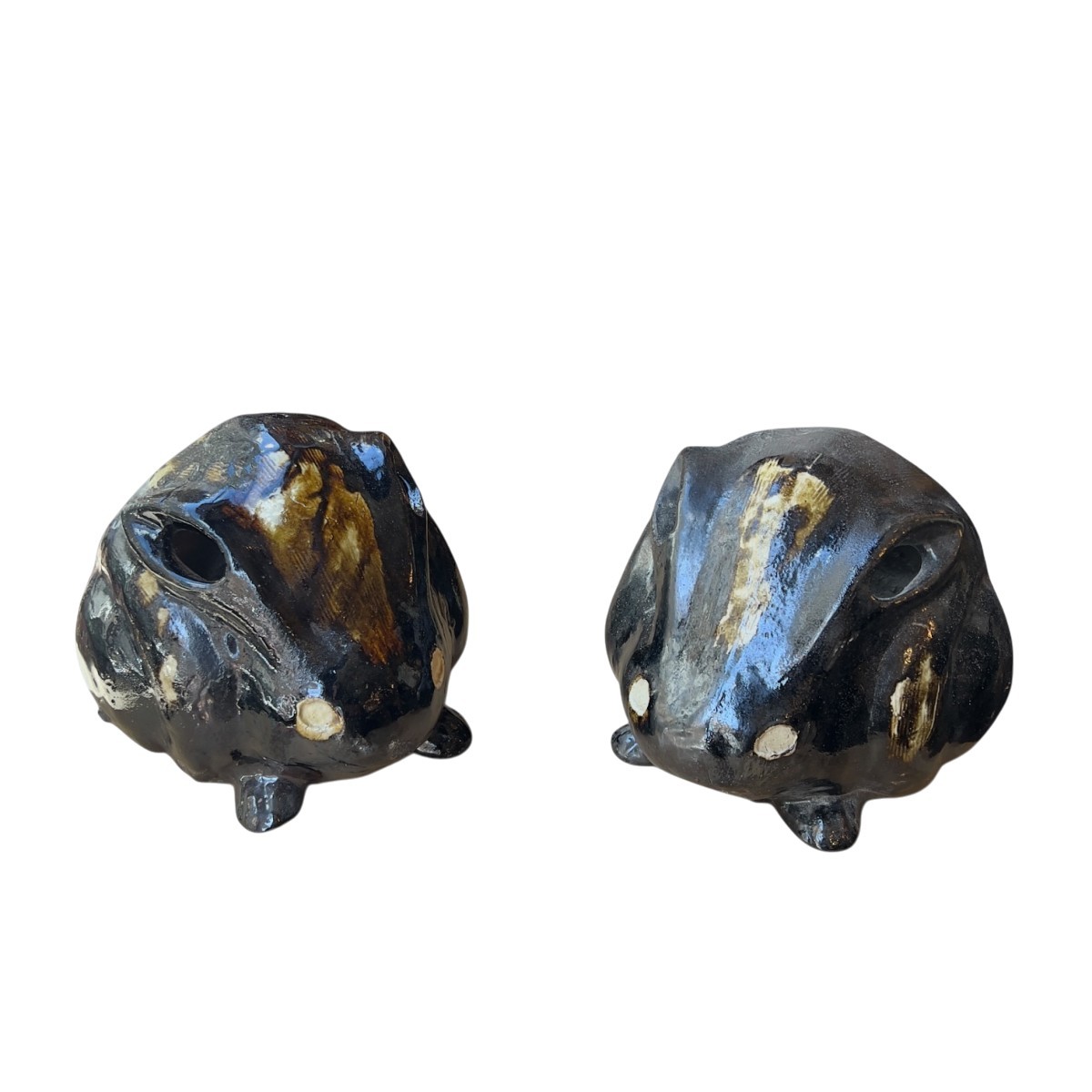
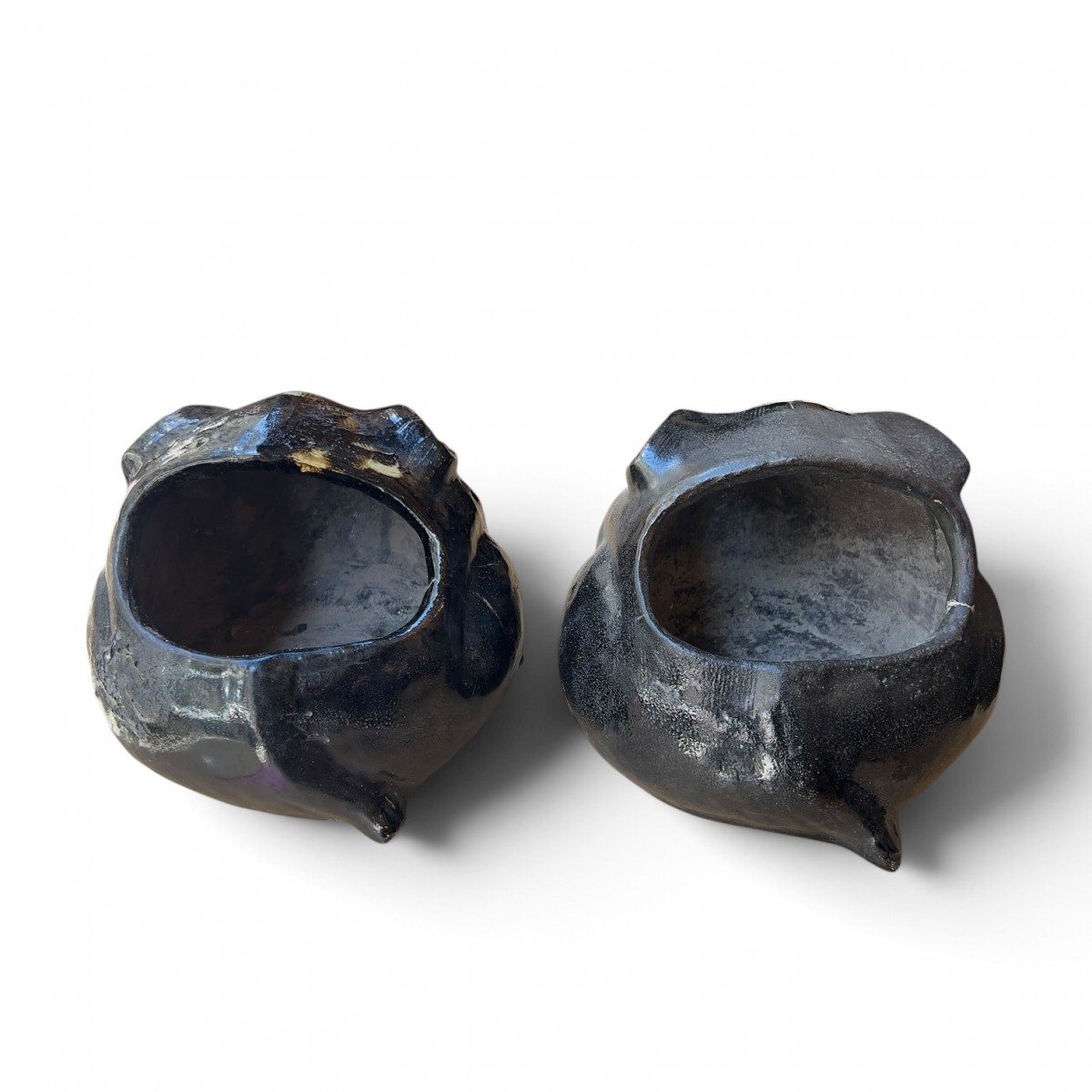
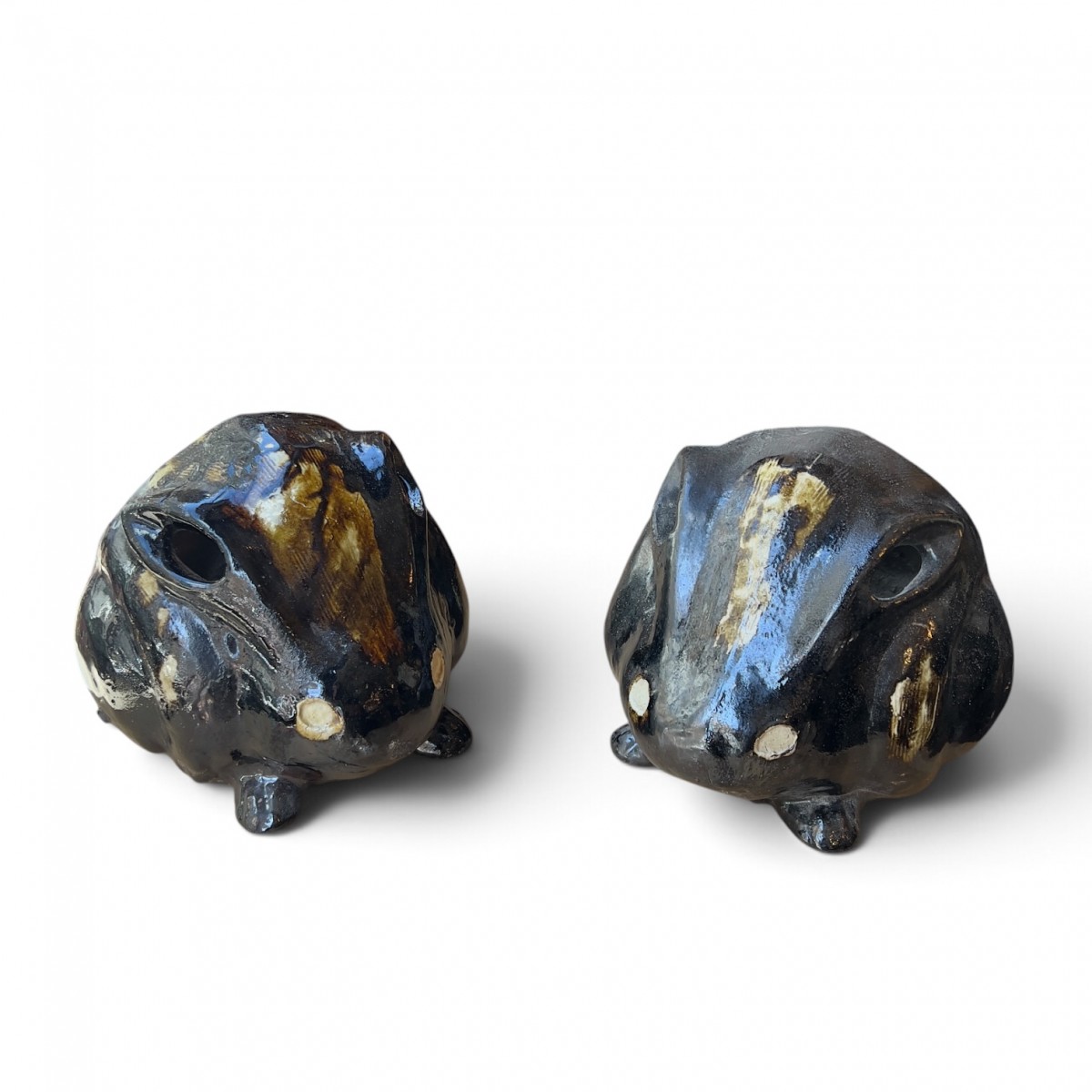
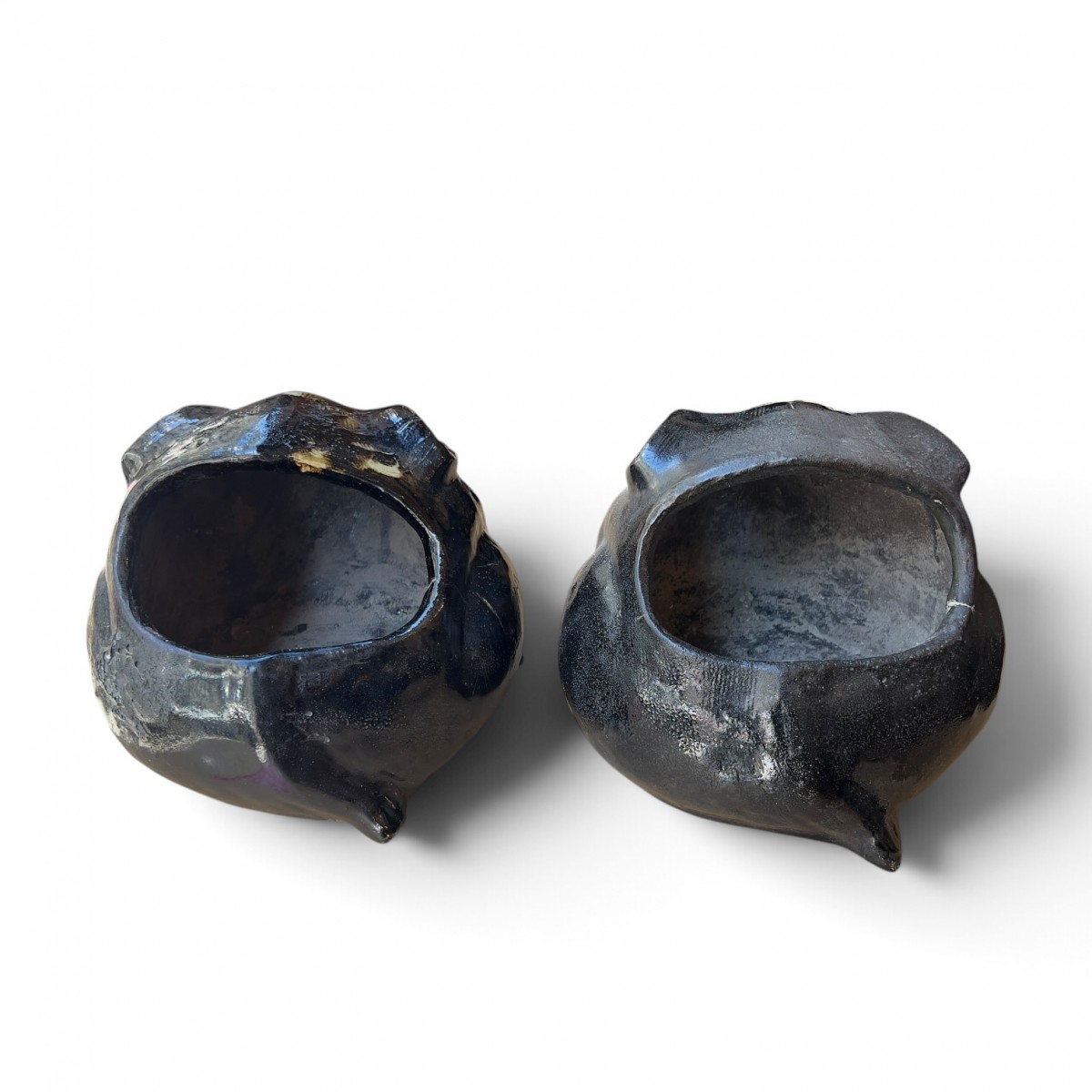
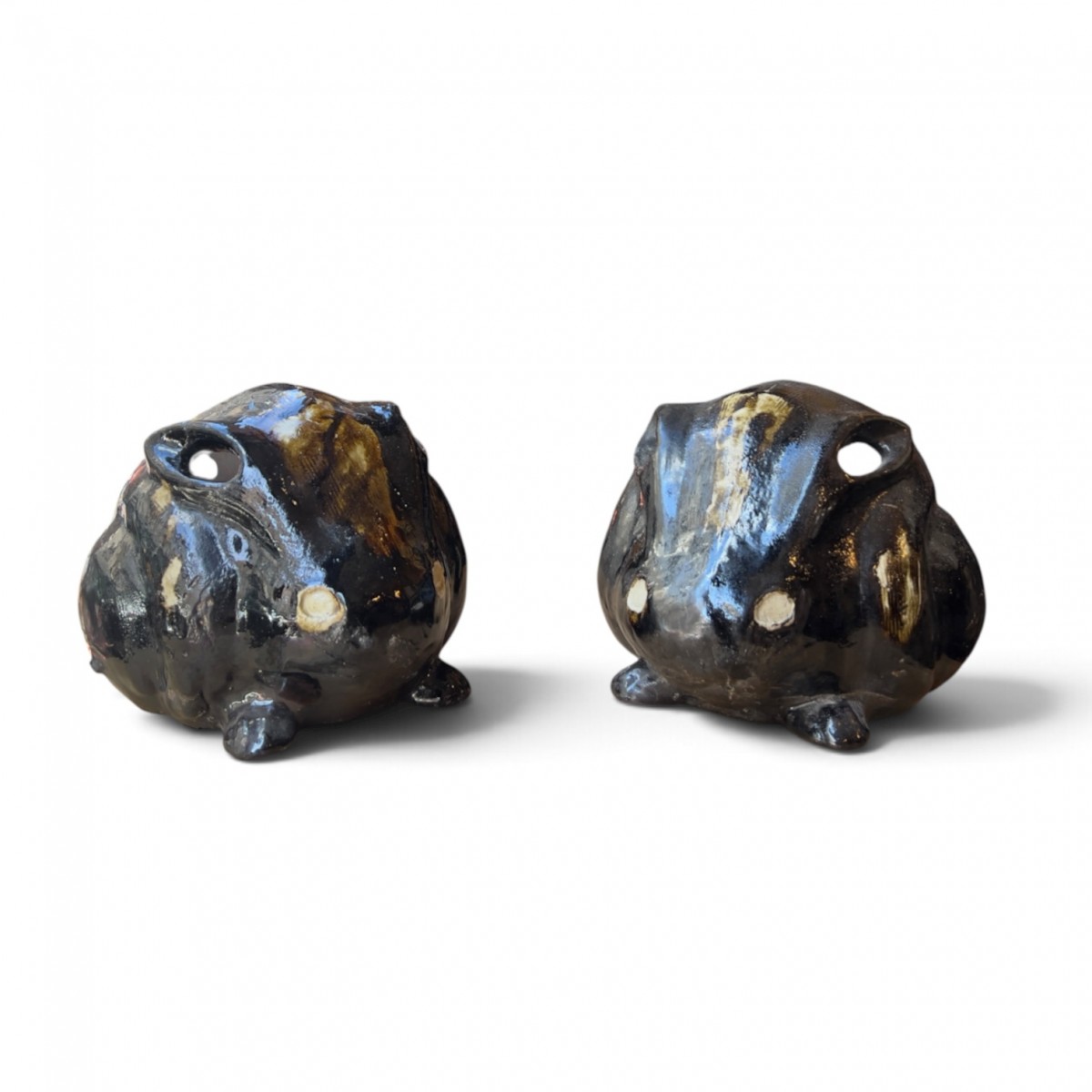
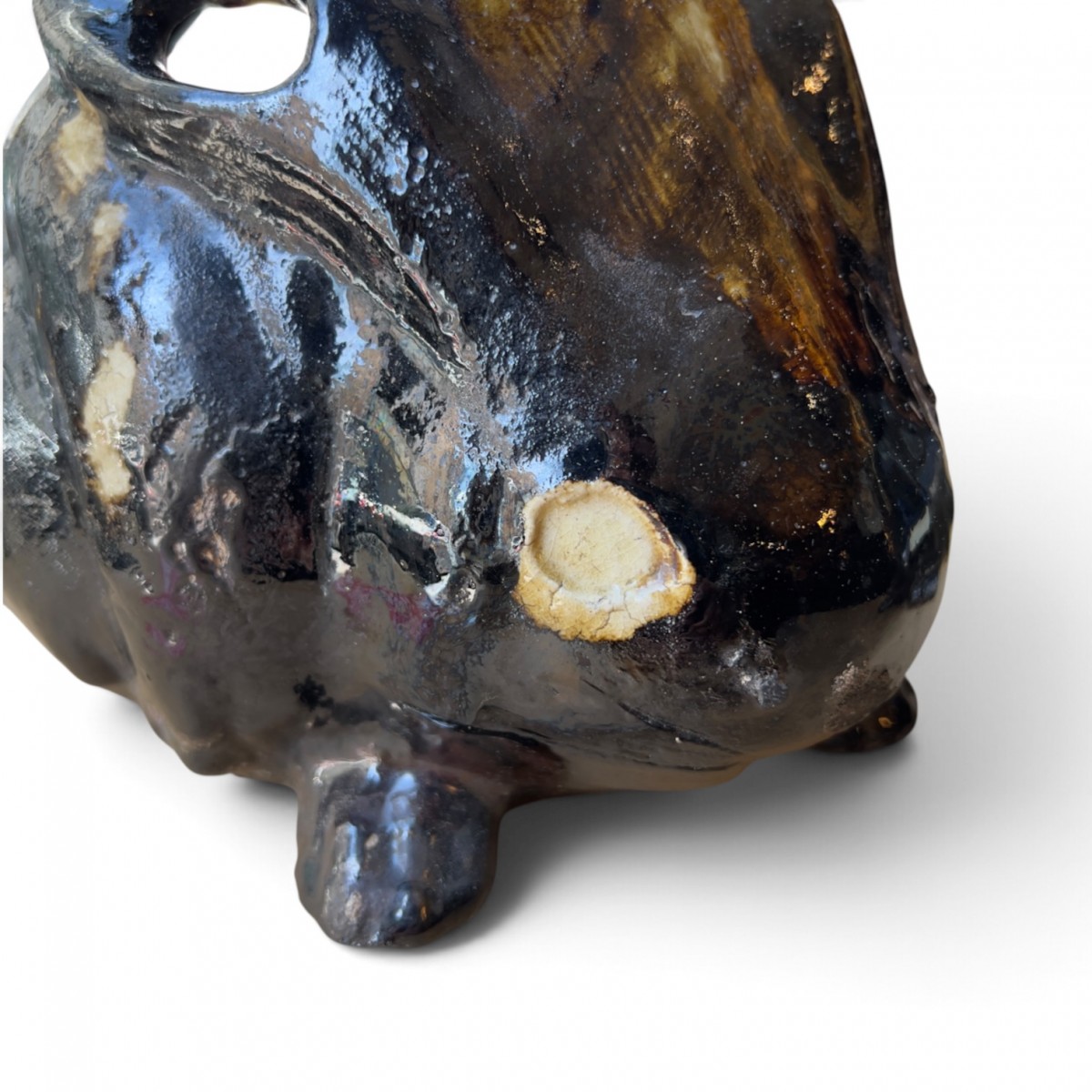
Two crouching rabbits with compact bodies rest on small modelled paws. Their long ears fold back over their heads, forming pierced openings. Cream accents define the eyes and punctuate the black glaze, which is shaded with brown and alternates between glossy and matt areas. Variations in modelling and glazing give each animal a distinct expression.
A large opening in the back reveals their function as hand warmers. The interior held a bed of ash and glowing charcoal. These small braziers belong to a tradition of animal-shaped hand warmers documented in 19th-century Japanese ceramics.
Associated with the moon in Japanese imagery, the rabbit also has a connection with water through the moon’s reflection. This association gave it a protective symbolism against fire, echoed here in the function of the objects.
Ennosai S?shitsu was the thirteenth-generation head of the Urasenke school of tea. He helped develop tea education, particularly in girls’ schools, and promoted its wider dissemination through publications. The old label records that the box lid bore the description of the objects, the words “made by oneself” and his signature.
The original box is no longer present; the descriptive label survives. Good overall condition; the old label records a scratch in the glaze on the left thigh of one rabbit.
Price: €3,500 for the pair. The two hand warmers are sold together.
Approximate dimensions: height 17 cm; length 25 cm; width 20 cm.
Delevery information :
A special care is given to packing. Bigest pieces are crated.
All our shippings are insured with tracking.
As we do a lot of shippings, we do have very special rates. Please inquire!