Offered by Le jardin des Moines
REQUEST INFORMATION
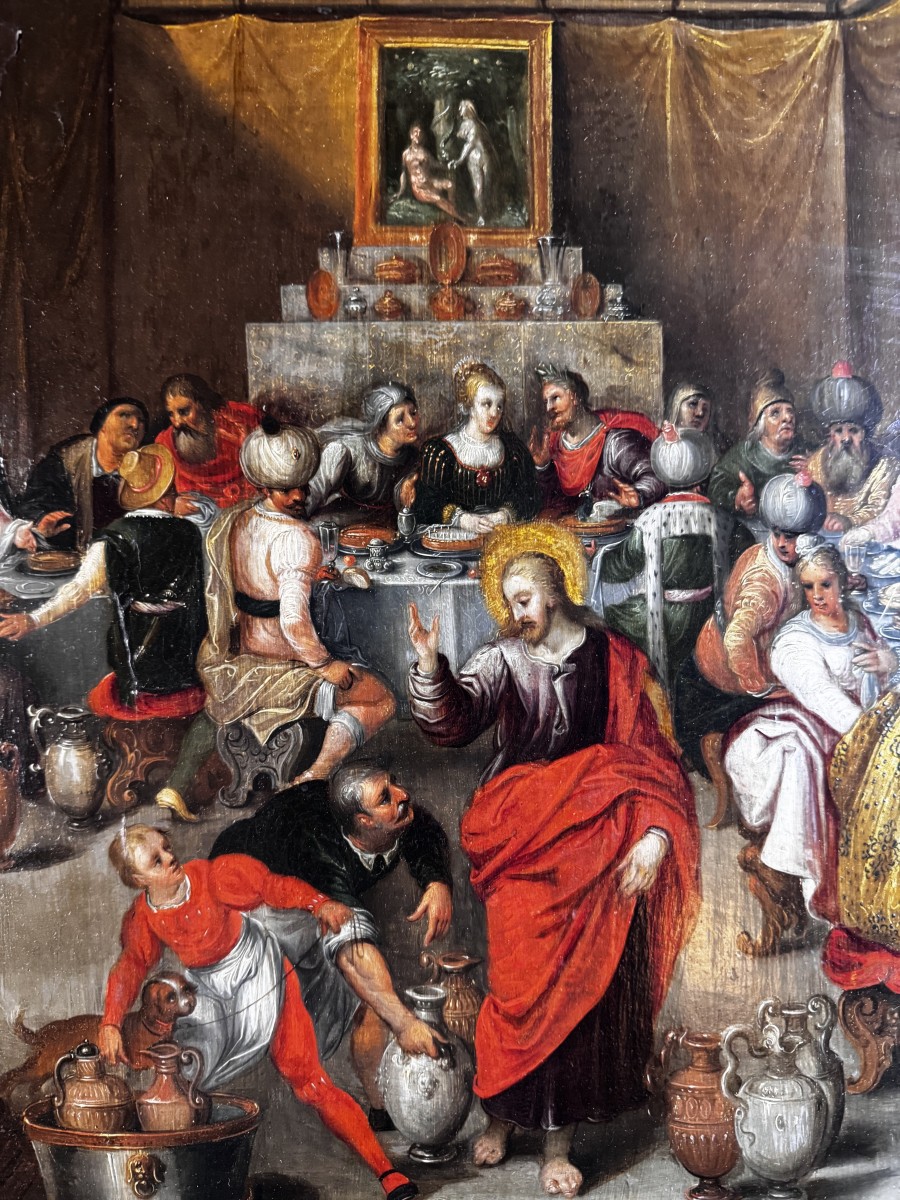
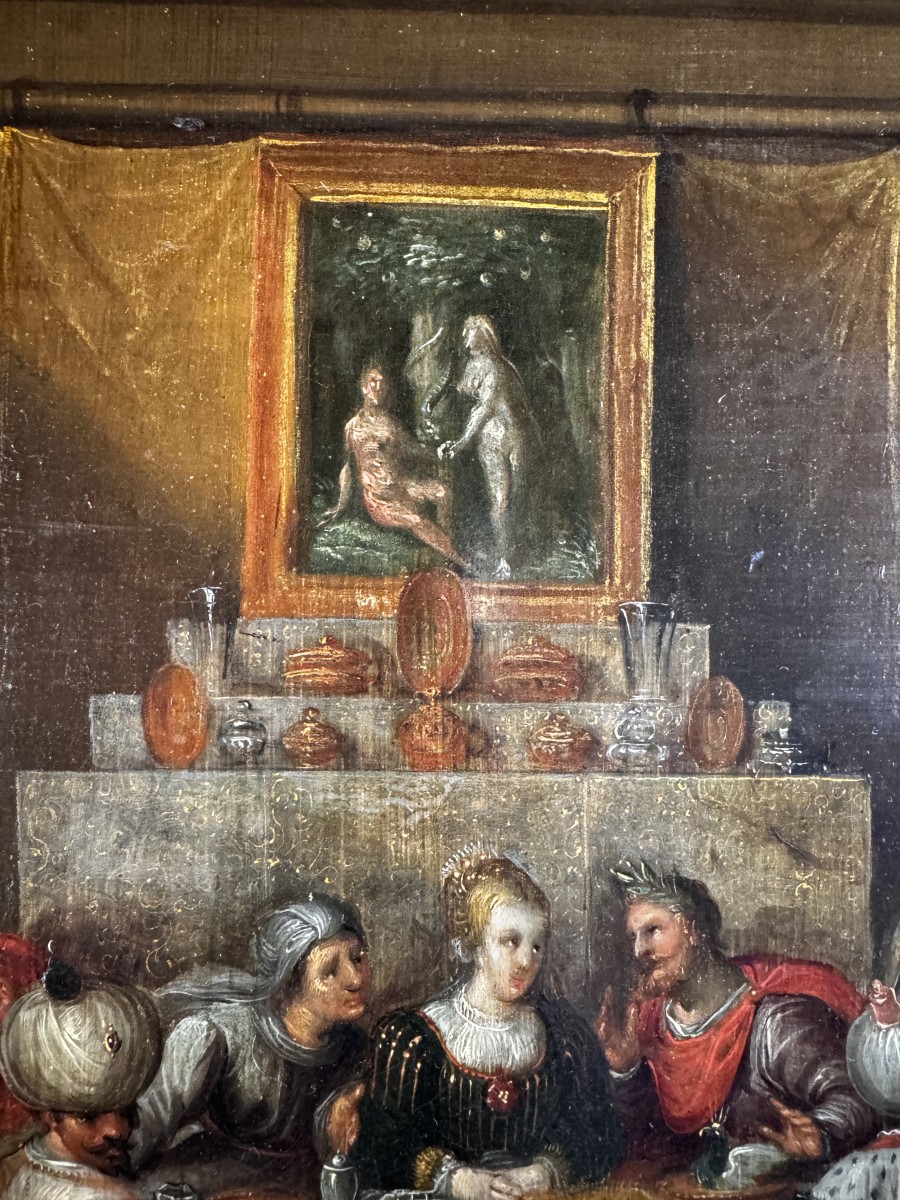
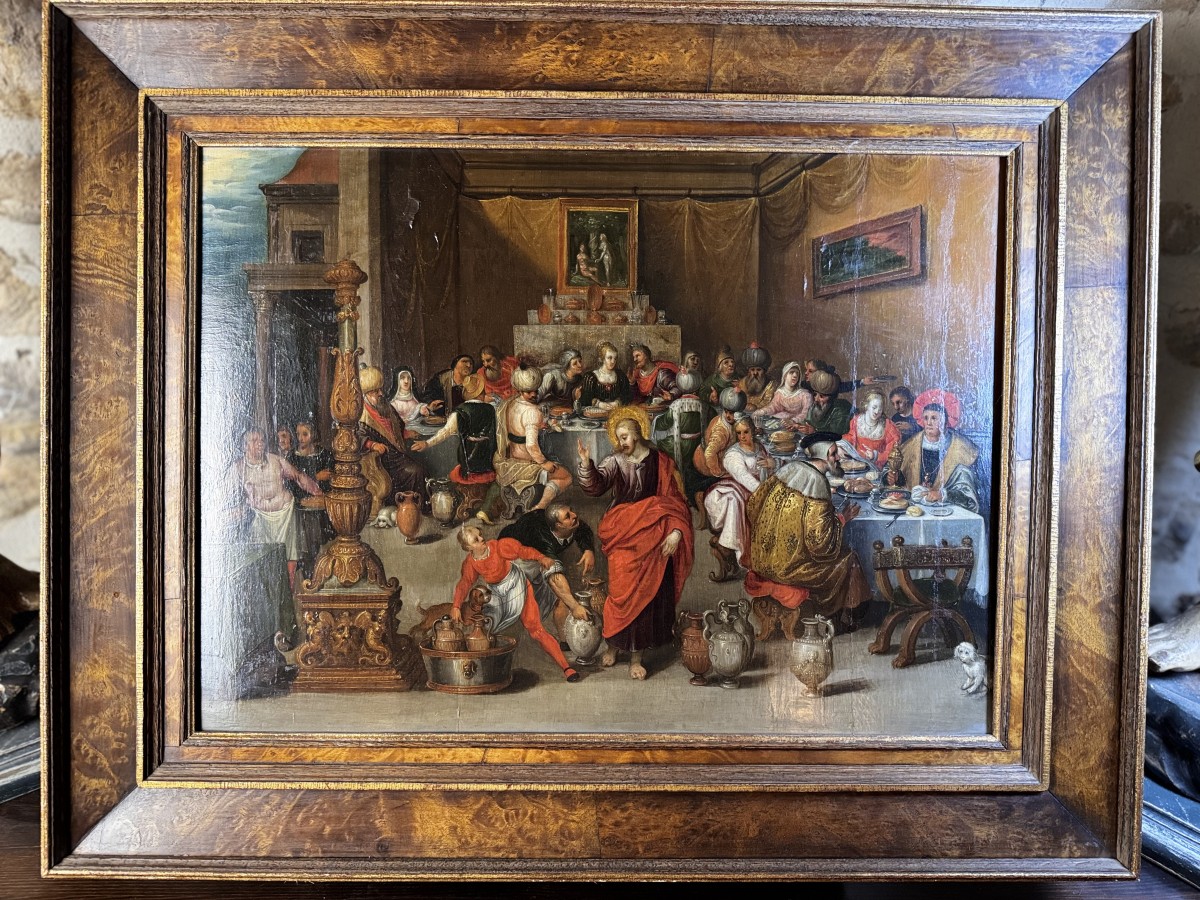

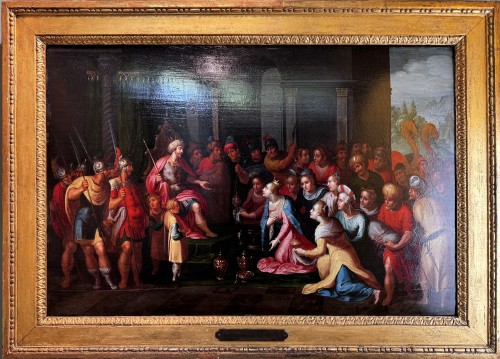
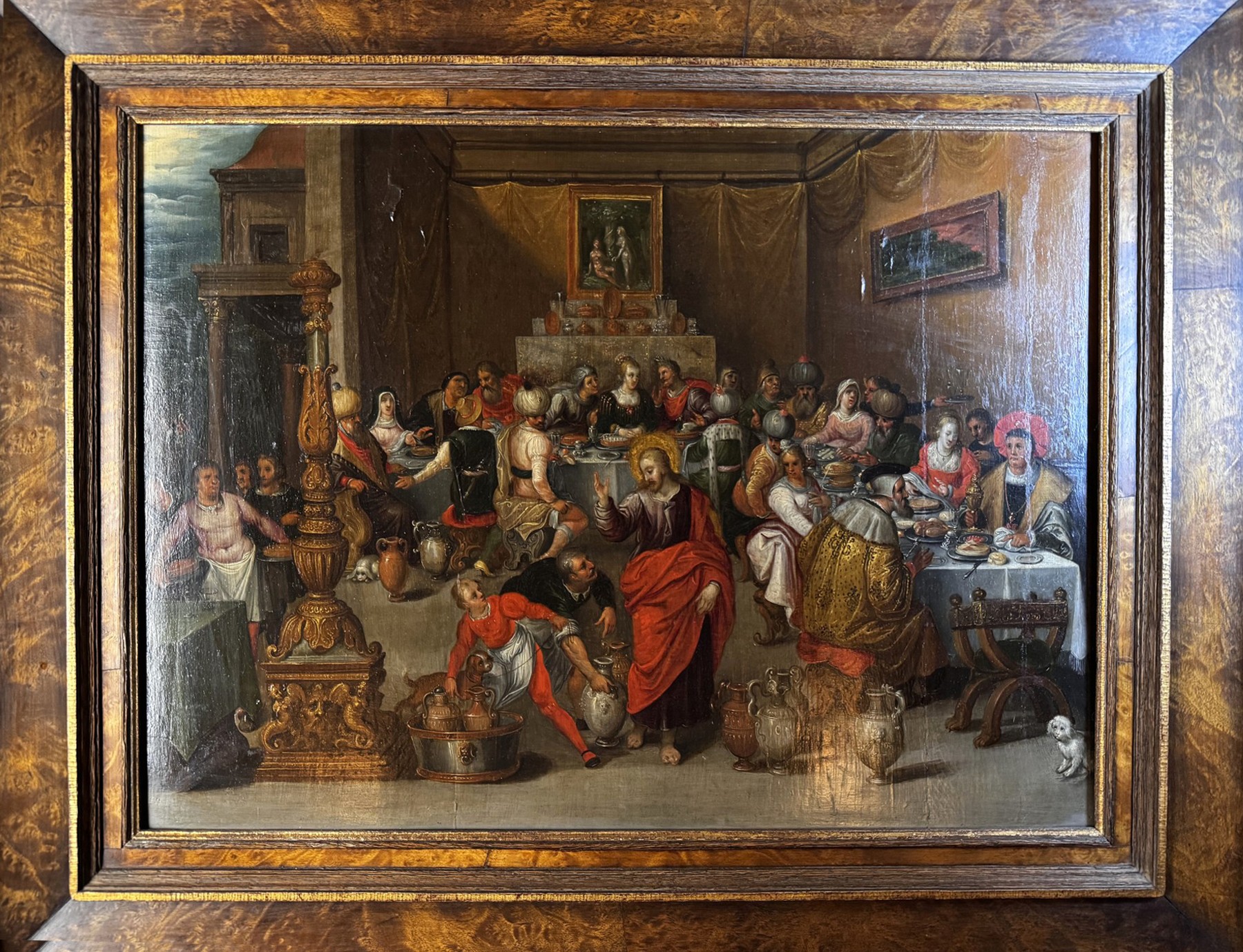
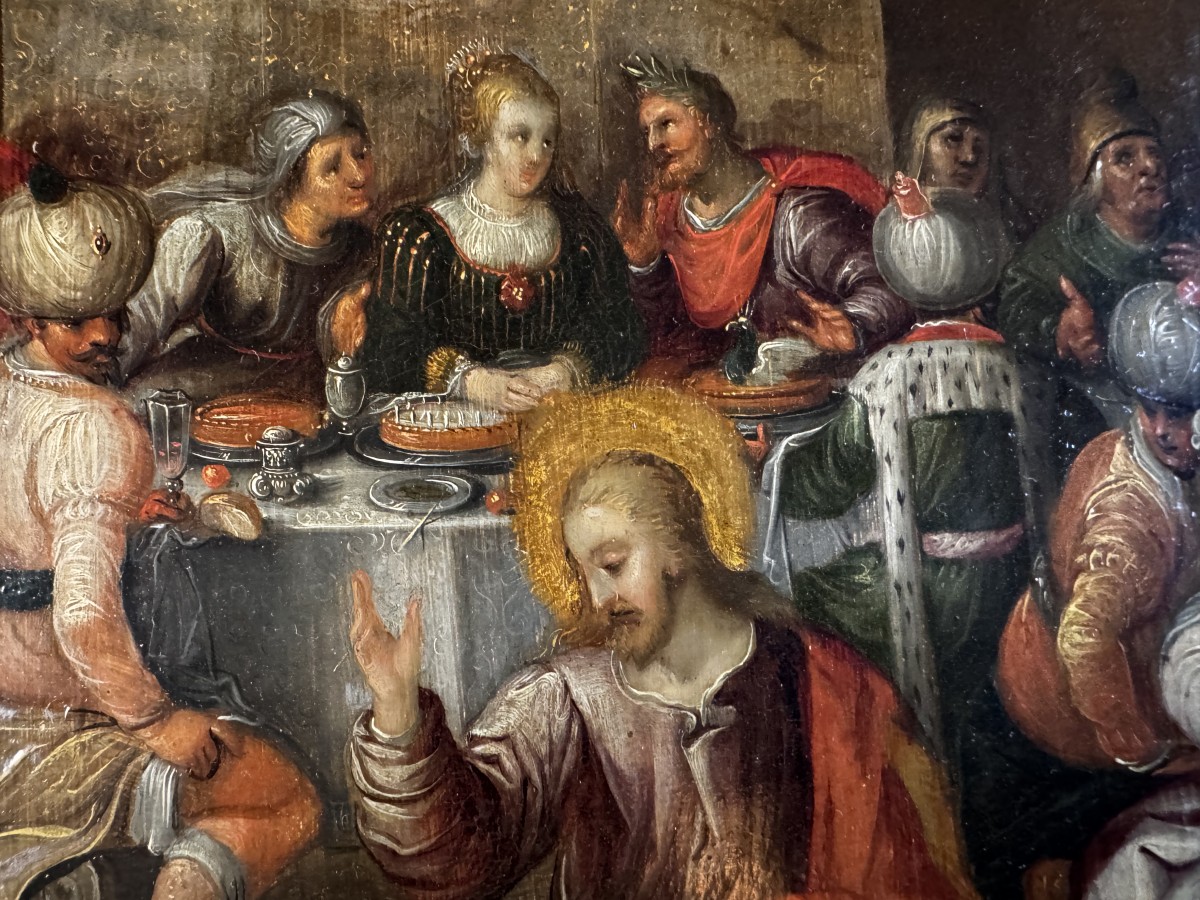
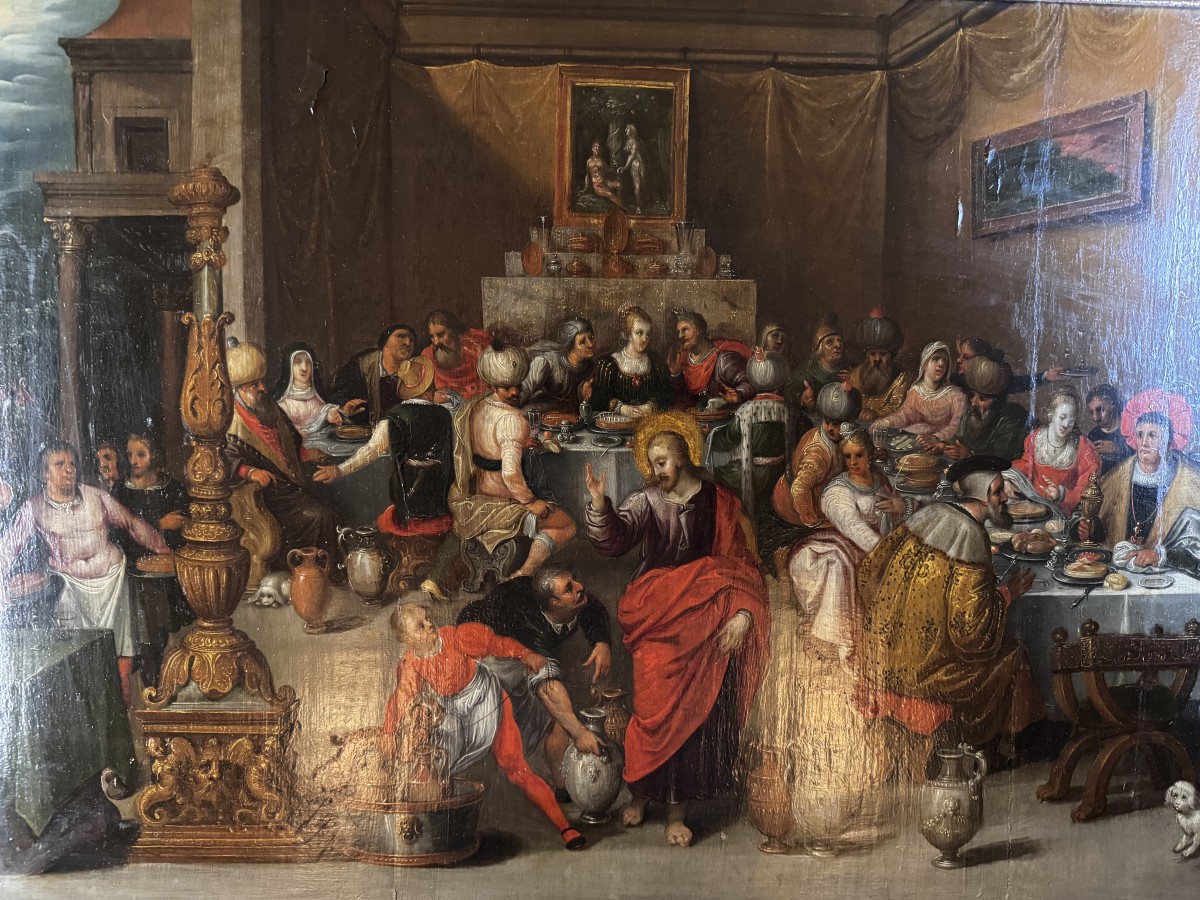
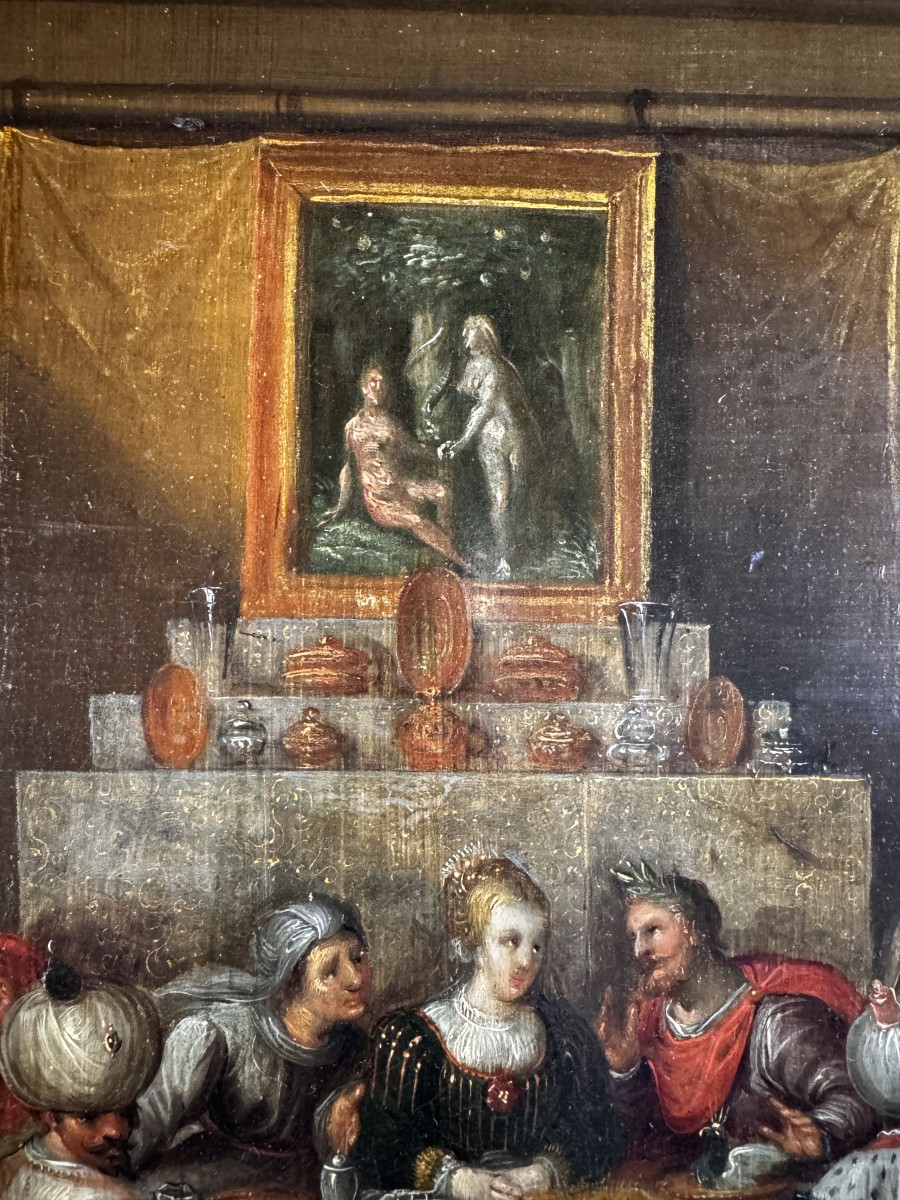
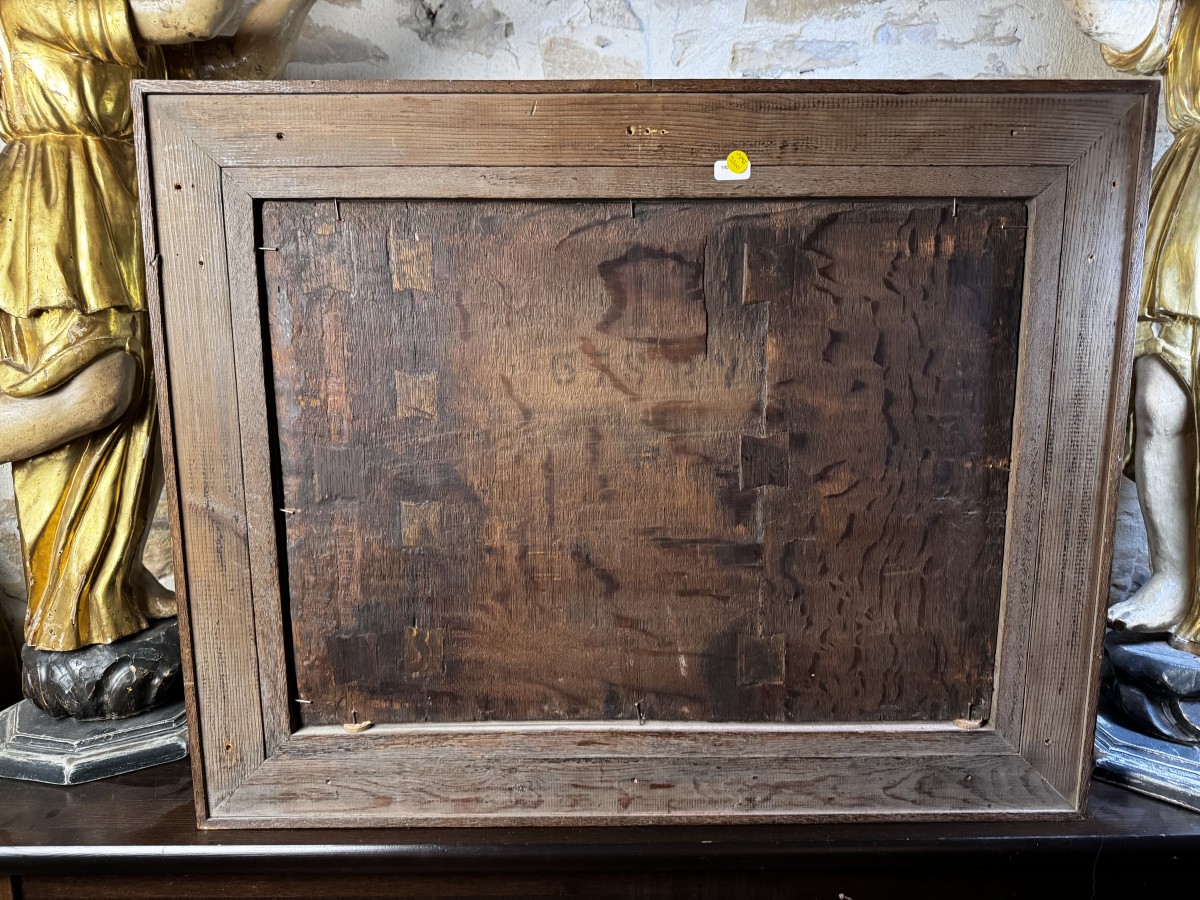
Oil on wood panel, attributed to Frans Francken, depicting TheWedding at Cana, set in a large wooden frame.The composition is distinguished by a profusionof figures, a wealth of detail, and a polychromycharacteristic of 17th-century Flemish painting. At the center of the scene stands Christ,crowned with a halo, dressed in a red robe and a crimson cloak. According to the account inthe Gospel of Saint John, Jesus, his mother, and his disciples are invited to awedding in Cana when the wine runs out. Christ then asks theservants to fill several jars with water; the water is thenmiraculously turned into wine.On the left, several servants are busyaround the well and the jars. In the center, Christ, raising his right hand,performs the miracle. Seated around two tables arranged at an angle are the guests,including the bride and groom, some of whom are dressed inparticularly sumptuous costumes. Three figures on the right side of thecomposition attract particular attention: a scholar seen from behind, wearinga coat richly embroidered with gold and featuring a wide white collar; a youngin a bright red dress, and, beside her, an elderly man wearing a long coat,a wide fur collar, and an imposing red headdress. Theparticularly precise rendering of his face might suggest aself-portrait of the artist, though this hypothesis is difficult to confirm. In the upper part of the room, apainting resting on a pedestal richly laden with food depicts The Fallof Adam and Eve. This depiction could constitute a moral allusion to sinand the human condition, serving as a counterpoint to the wedding scene.The work as a whole thus offers aparticularly rich composition, blending a biblical scene, anecdotal details,careful attention to costumes, and symbolic references. A very similar work is housed at theSimeonstift Museum in Trier.
Condition: minor flaking ofpaint.
Dimensions of the work: 40 by 54.5 cm
Dimensions with frame: 56 by 71 cm
Frans Francken II, born in Antwerp in 1581 and died in 1642, belonged toan important dynasty of Flemish painters. He is particularly known for hisrichly detailed compositions filled with numerous figures, and his religious scenescharacterized by a meticulous accumulation of details. Reference 893