Offered by Galerie Lamy Chabolle
REQUEST INFORMATION

Decorative art from 18th to 20th century
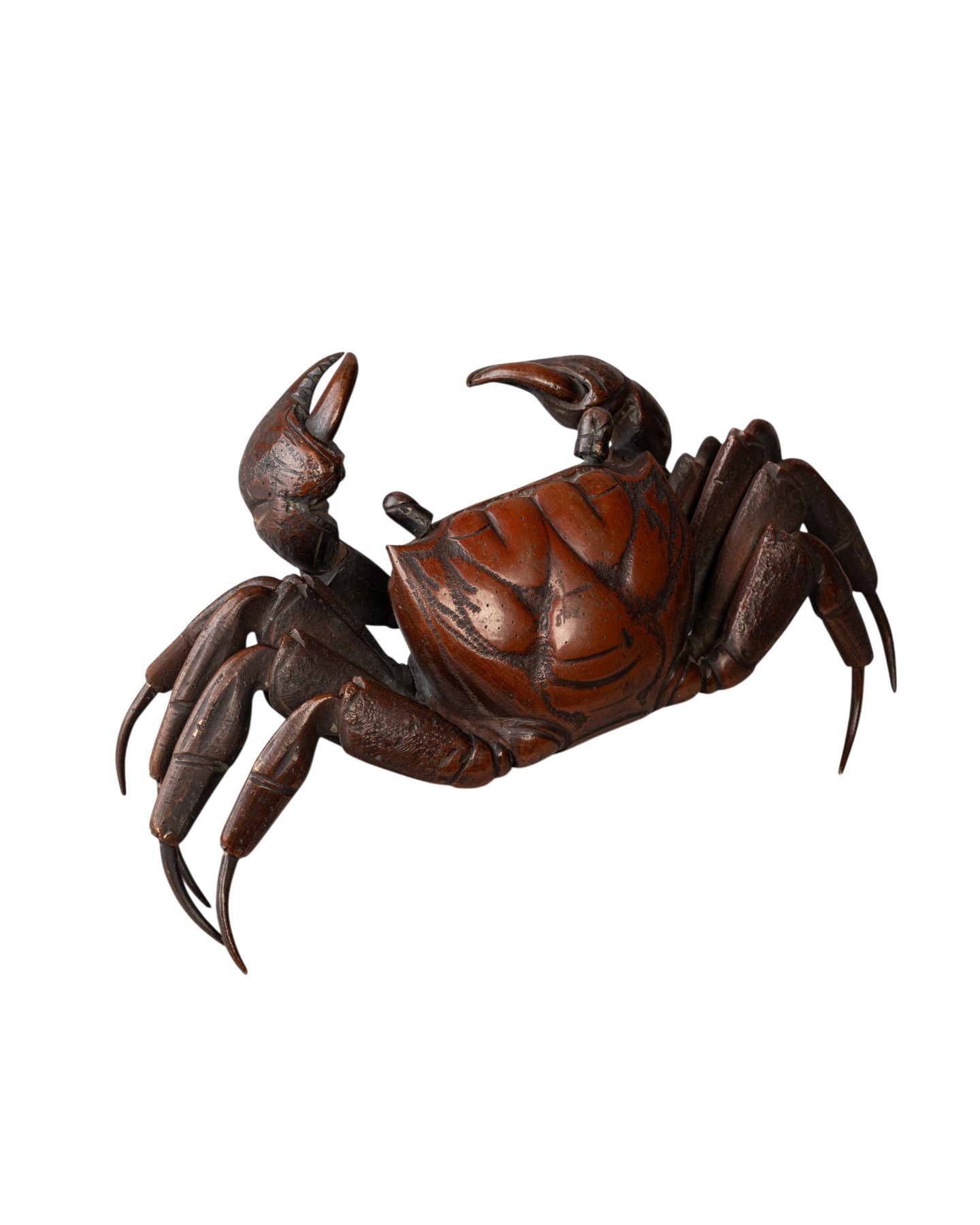
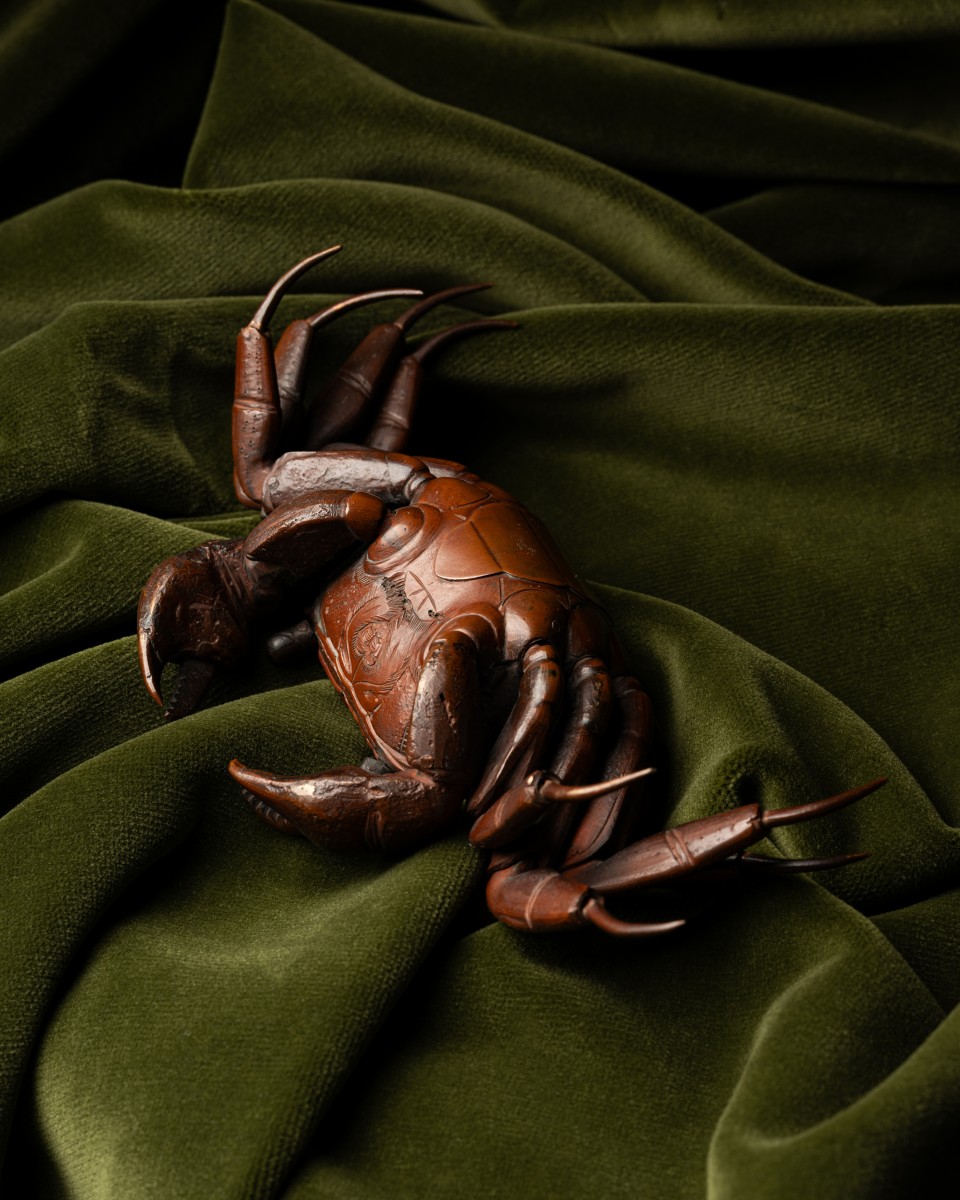
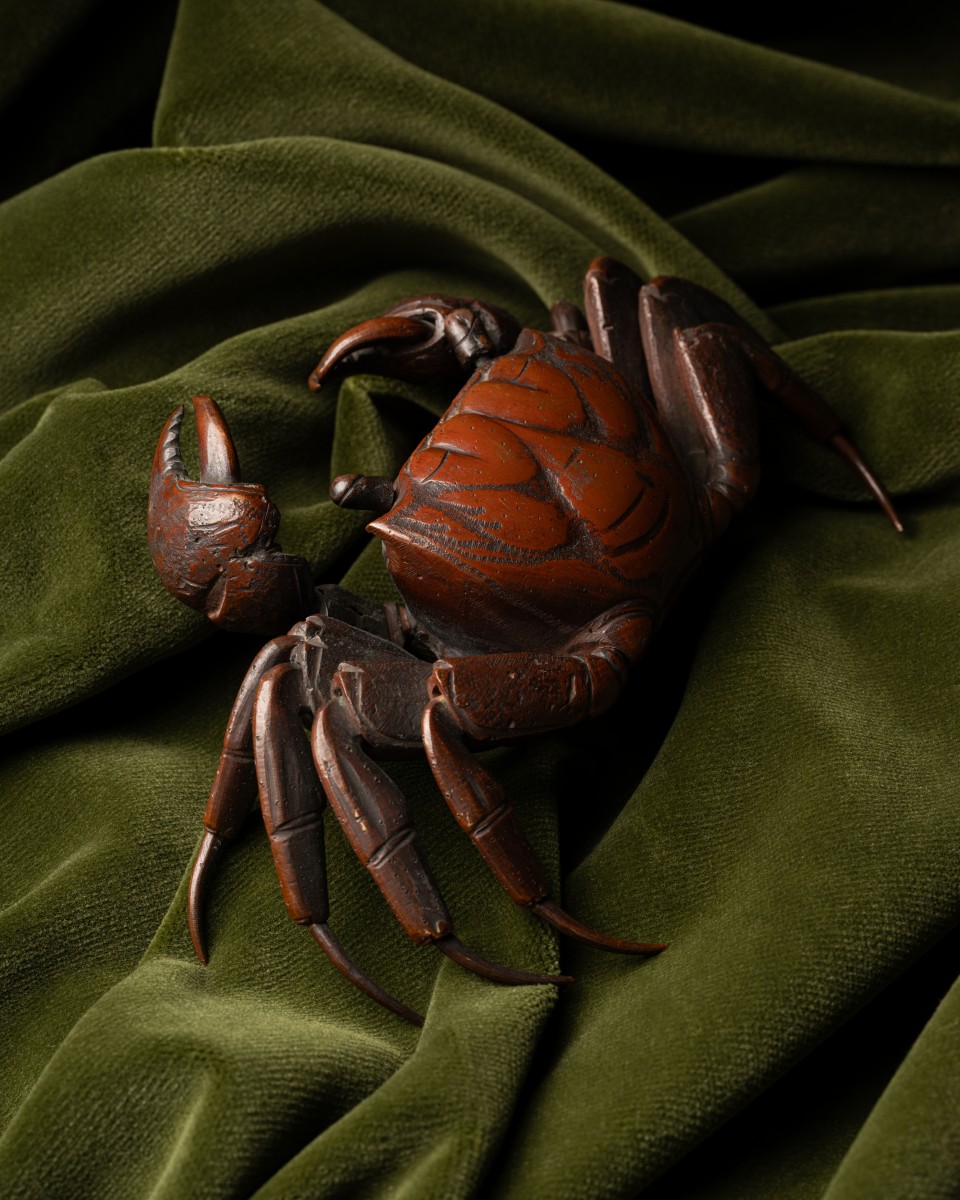
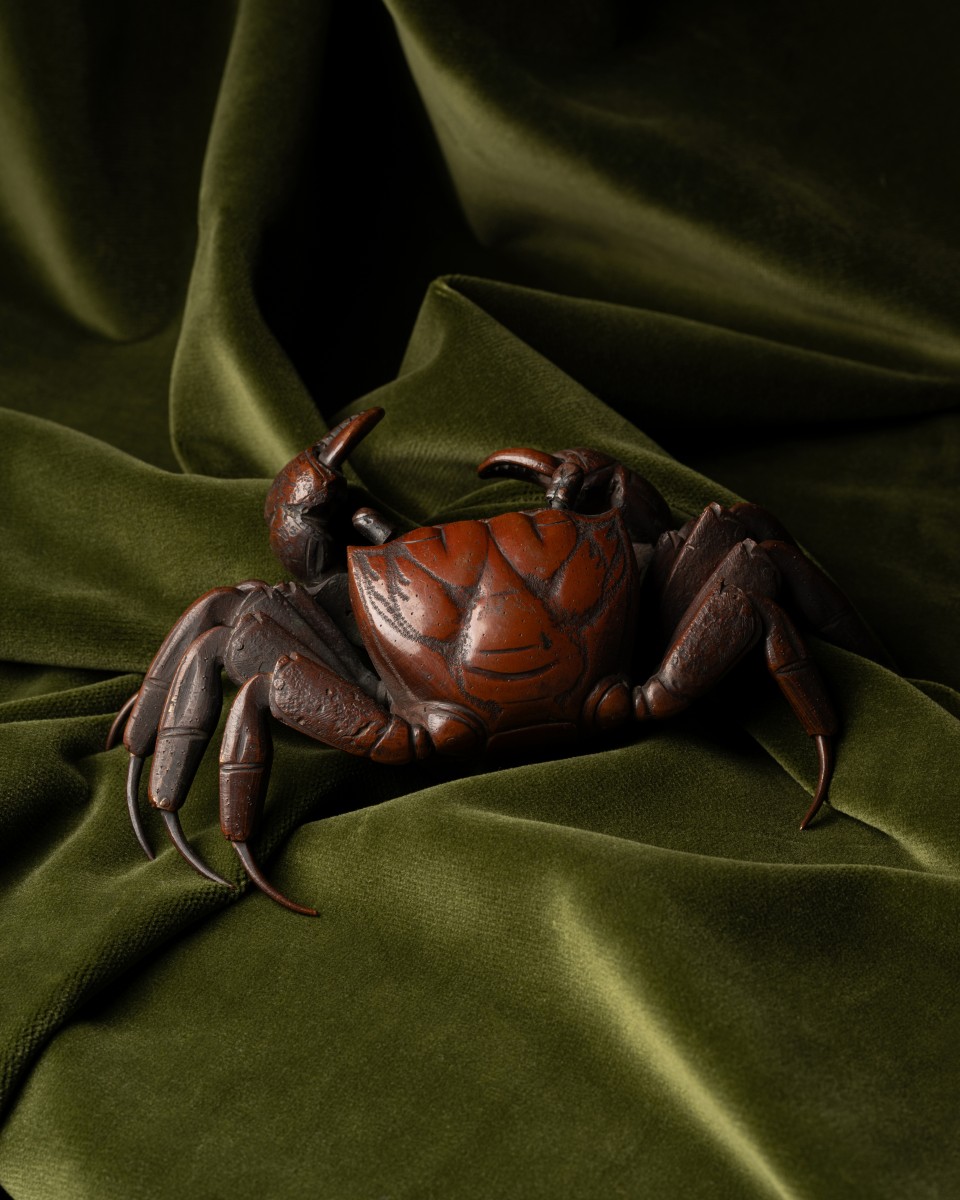
Meiji-era articulated figure of a Crab
Bronze
Japan
Late 19th century
9 x 8 x 18 cm (3.5 x 3.1 x 7.1 in.)
This articulated crab is made of bronze with a warm, reddish patina. Though it bears no signature, its numerous points of articulation — notably the claws, legs and eyes — make it a great example of the Japanese art of okimono (??, or “ornamental figure”) of the jizai (??) type, meaning “free of movement” or “freely articulated.”
Sculptors who mastered the art of jizai since the late Edo period onward learned much of their technique from Japanese armorers, who were highly skilled in making complex, partially articulated metal pieces. Their expertise was in less demand during the modernization of Japan under Emperor Meiji and the bummei-kaika (????) — the “Civilization and Enlightenment” movement marked by the country’s wide opening toward the West.
See Iwao Seiichi, Iyanaga Teizo, et al., Dictionnaire historique du Japon, Tokyo, 1987 ; Harada Kazutoshi, Articulated iron figures of animals. Jizai Okimono, Kyoto, 2010 ; Gérard Siary, Histoire du Japon. Des origines à nos jours, Paris, 2020.